Spotify Curated Playlists: How to Land Placements with spotify curated playlists
Discover how to land placements on spotify curated playlists, optimize your tracks, pitch editors, and grow your audience with proven strategies.
February 2, 2026
Music Marketplace Advisor
Buying & SellingLanding your music on a major Spotify curated playlist is the modern-day holy grail for artists. Forget radio play—this is where real discovery happens now. It’s like plugging your sound directly into the ears of thousands, or even millions, of potential fans who are already listening for exactly what you create.
Why Playlists Are the Engine of Music Discovery
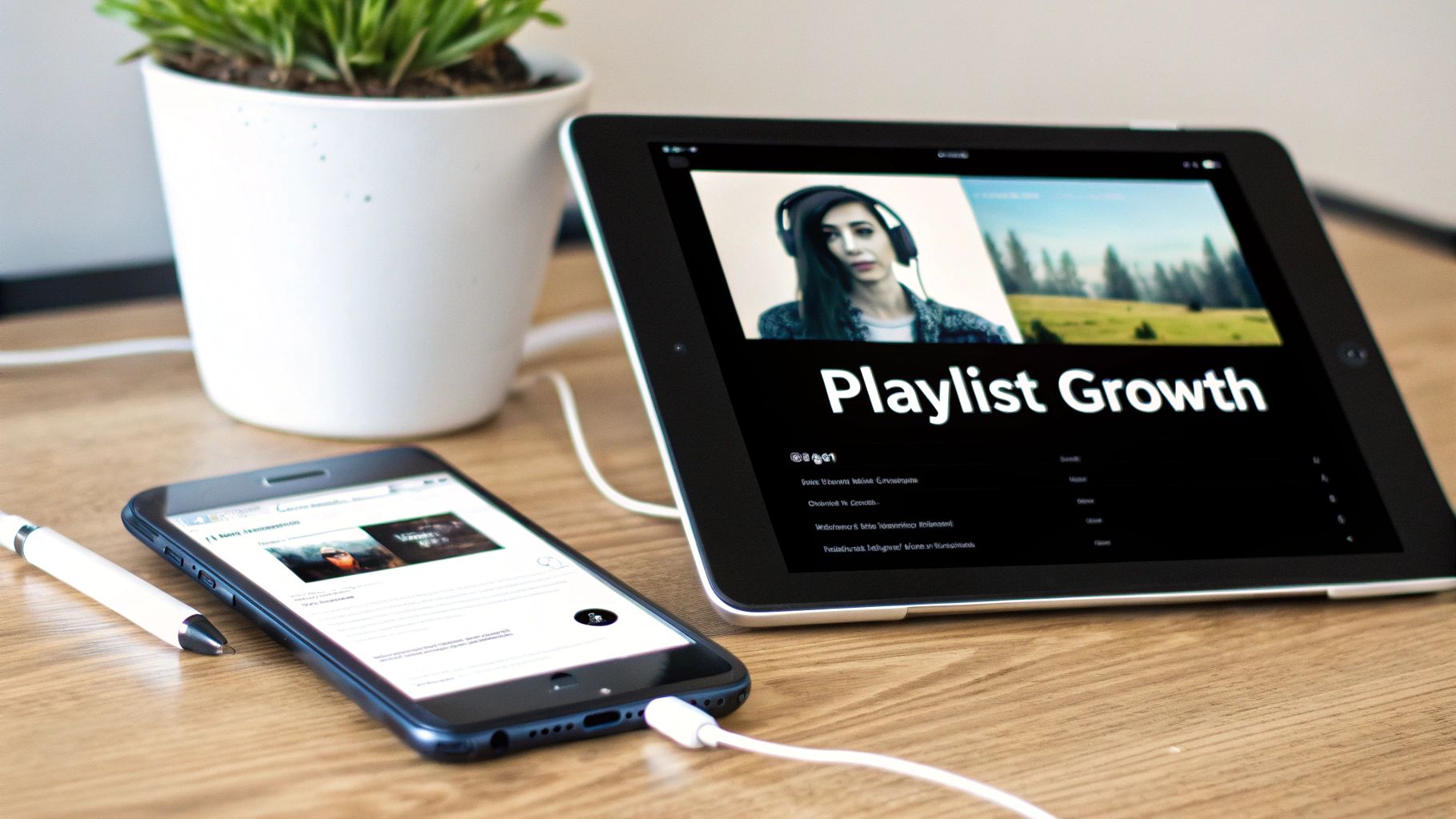
Spotify playlists aren't just background noise; they're dynamic ecosystems that shape what the world listens to. A single good placement can set off a chain reaction, leading to a massive spike in monthly listeners, new followers, and even real-world opportunities like sync deals for TV and movies.
Think of it this way: when your track lands on a big list like Chill Vibes or RapCaviar, it gets an instant seal of approval from a trusted tastemaker. This puts your music in front of a dialed-in audience that’s actively looking for new music in that specific genre or mood. It cuts right through the noise, turning a casual listener into a potential fan in just three minutes.
The Three Types of Spotify Playlists and Their Value
Not all playlists are created equal. To build a smart strategy, you need to understand the three main categories and what each one brings to the table. They all serve a different purpose, and a truly effective campaign hits all three.
| Playlist Type | Who Creates It | Primary Goal for Artists |
|---|---|---|
| Editorial | Spotify’s internal team of music editors and experts | Unmatched credibility, massive visibility, and industry recognition. |
| Algorithmic | Spotify’s data-driven algorithm, personalized for each user | Targeted reach to listeners who are highly likely to enjoy your music. |
| User-Generated | Independent curators, fans, brands, and influencers | Organic growth, niche community building, and social proof. |
Each type plays a critical role. Editorial playlists provide the big, splashy moments, while algorithmic and user-generated lists build a foundation of steady, long-term growth.
The most successful artists don't just chase one big editorial placement. The real momentum comes when you create a flywheel effect, where a placement on one type of playlist feeds your growth on the others.
A Single Placement Can Change Everything
Here’s how it actually plays out. Imagine an indie pop artist drops a new single. After a thoughtful pitch, it gets added to a mid-tier editorial playlist like Fresh Finds Pop. That’s the first domino.
This placement immediately drives a few thousand streams. But more importantly, it generates positive data signals for Spotify's algorithm—people are saving the track, sharing it, and adding it to their own personal libraries.
Seeing this engagement, the algorithm kicks in. The song starts popping up in listeners' personalized Discover Weekly and Release Radar playlists, expanding its reach from thousands to tens of thousands.
At the same time, independent curators who follow Fresh Finds Pop for new music discover the track and add it to their own popular playlists. This groundswell of organic support shows the editors of bigger playlists that the song has legs, making it a candidate for an even bigger placement. What began as one small win has now turned into a self-sustaining growth loop, building a real, dedicated fanbase along the way.
Getting Your Track Ready for the Spotlight
Before you even think about pitching to a playlist curator, you have to get your house in order. This is the foundational work—the stuff that happens behind the scenes—that can make or break your release. Skipping these steps is like building a house on sand; even the most brilliant song can get lost in the noise if it isn't presented professionally.
First things first: the audio itself. Your track needs to sound incredible. That means investing in a professional mix and master and delivering a high-fidelity WAV file to your distributor. Sending an MP3 is a non-starter. Curators and editors are listening on high-end systems, and they can instantly spot a track that lacks the punch and clarity of a properly mastered file.
Nailing the Visuals and the Data
Once your audio is polished, turn your attention to the visuals. Your cover art is the first impression you make, long before anyone presses play. It needs to be high-resolution, professionally designed, and, most importantly, it has to capture the vibe of your music. A cheap or generic-looking cover screams amateur, and that's often enough for a busy curator to skip right over your submission.
Just as critical is the information behind the music—your metadata. This is more than just your name and the song title. It’s the nitty-gritty details like genre, sub-genre, songwriters, publishers, and featured artists. Getting this right is crucial. Clean, accurate metadata helps Spotify’s system properly categorize your track, making it discoverable to both the algorithms and the human editors you're trying to reach. We dive deep into this topic in our guide on optimizing your music metadata for streaming.
A Quick Reality Check: Curators see thousands of new songs every single day. Professionalism isn't optional. Your audio quality, cover art, and metadata are the first signals that you're serious about your craft and that your music is worth their time.
Why Your Release Timeline Is Everything
Here’s one of the biggest mistakes I see artists make: they rush the release. Uploading your music to a service like DistroKid or TuneCore just a few days before you want it to go live is setting yourself up for failure. You have to give yourself a long runway.
The gold standard is to get your music uploaded at least four weeks before your release date. This lead time isn't just a suggestion; it's essential.
Here’s what that four-week window really buys you:
- Breathing Room for Distribution: It gives your distributor plenty of time to process everything and get your track delivered to Spotify without any last-minute drama.
- Access to Pitching Tools: Your song has to be live in Spotify's backend system before it shows up in your Spotify for Artists dashboard. Only then can you actually pitch it. This alone can take a few days.
- A Proper Pitching Window: Spotify’s editors need to receive your pitch before release day. Giving them a few weeks' notice shows you're organized and gives them time to actually listen and consider your track among the flood of other submissions.
- Waking Up the Algorithm: That early submission also allows Spotify's algorithms to start analyzing your track's audio DNA. This helps prime it for potential placement in algorithmic playlists like Release Radar the moment it drops.
While everyone dreams of landing a huge editorial playlist, don't sleep on the power of independent curators and fan-made lists. According to Soundcamps, user-generated playlists drive a massive 36% of all listening hours on Spotify. By preparing your release meticulously, you're not just aiming for the editors—you're making your music discoverable to the entire ecosystem of listeners who could give it that first critical push.
Crafting a Pitch That Spotify Editors Notice
Getting your track uploaded to Spotify is just the first checkpoint. The real work begins when you craft your pitch inside Spotify for Artists. This is your one official, direct line to the editorial team, and with thousands of tracks hitting their desks every single day, you can't afford to waste it.
Think about it from an editor's perspective. They aren't just looking for a good song; they're looking for artists who are serious about their careers. A rushed, generic pitch signals you aren't invested, so why should they be? Your pitch is your chance to tell a story and prove you have a plan.
The Anatomy of a Winning Pitch
Your pitch is essentially a mini-press release for a very specific, very busy audience. You have a limited character count, so every word matters. The goal is to give an editor a complete, compelling snapshot of your song, your story, and your momentum.
A strong pitch always covers these bases:
- The Story Behind the Song: What’s the emotional core? Was it inspired by a specific event? This context is what hooks a listener and helps an editor connect with the music on a human level.
- Your Marketing and Promotional Plan: Are you running a pre-save campaign? Do you have a music video premiere lined up with a blog? Mentioning these things shows an editor you're actively building an audience, not just hoping they'll do it for you.
- Key Career Highlights: If you've got recent press mentions, radio play, or notable collaborations, this is the place to mention them. This is your social proof—it tells editors that other people are already paying attention.
Of course, this all comes after you've nailed the fundamentals of preparation.
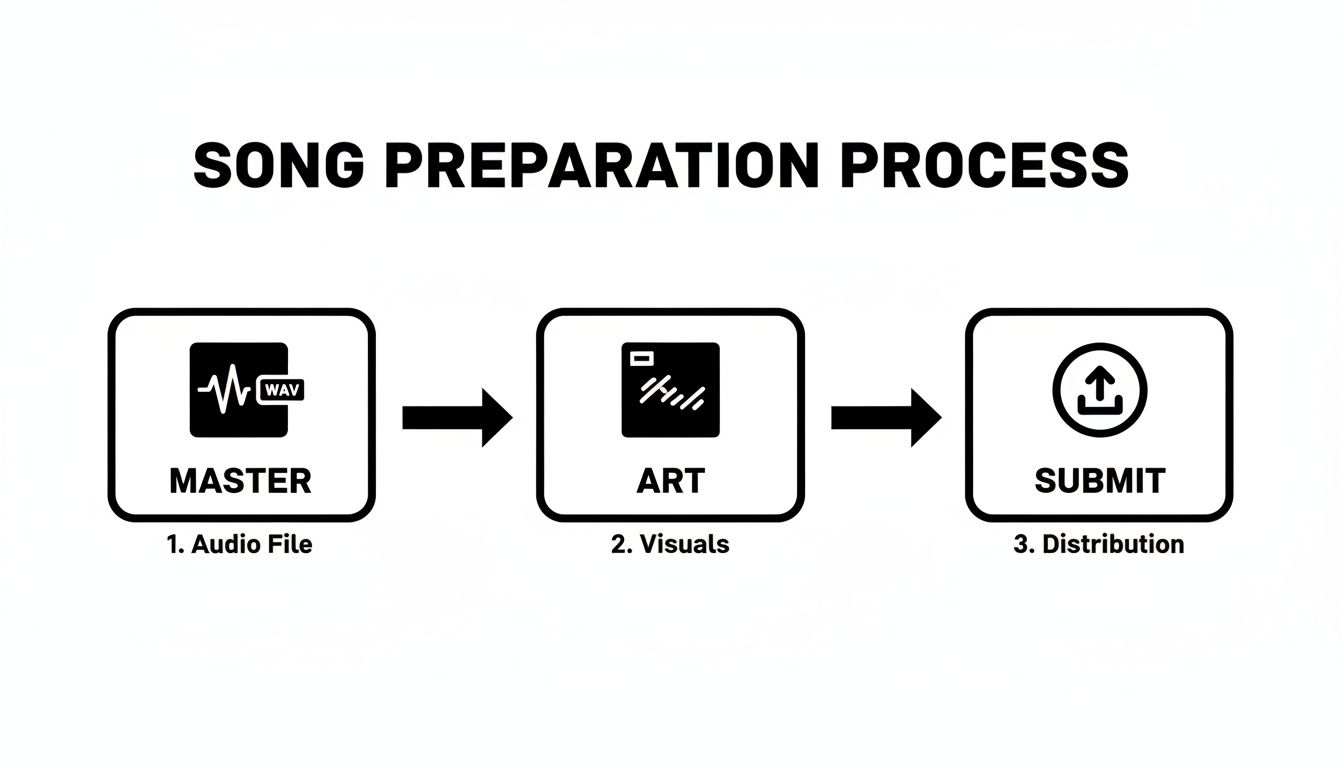
A professional master, great artwork, and clean metadata are the absolute baseline. Without these, your pitch won't even be taken seriously.
Selecting the Right Tags and Genre
This is one of the most critical parts of the process, and it happens before you even write your description. The tags you select determine which editors see your pitch. Spotify’s editorial team is siloed by genre, mood, and region, so tagging your indie-folk song as "Hyperpop" is a surefire way to get it ignored.
Be specific and, most importantly, be honest. If your track is a blend of genres, pick the one that feels most dominant and then use the sub-genre, mood, and style tags to paint a more detailed picture. Don't just tag "Pop" because you're dreaming of a spot on Today's Top Hits. It won't work.
Pro Tip: Do your homework. Spend time listening to Spotify's playlists to see where your music would genuinely feel at home. If your track has the same vibe as the songs on Lorem or Pollen, mentioning those specific playlists in your pitch shows you understand the platform and have a realistic vision for your music.
Writing the Perfect Pitch Description
Now you bring it all together. Your tone should be concise, professional, and authentic. Avoid desperate or generic pleas like "this is my best song yet" or "I hope you enjoy it." That's not helpful. Focus on giving the editor information they can actually use.
Let's look at a real-world scenario. Imagine an indie rock band called "The Wandering Echoes" pitching their new song, "City Lights."
Weak Pitch Example:
"Hey! This is our new single City Lights. We worked really hard on it and think it would be a great fit for your rock playlists. Hope you enjoy it!"
This tells the editor nothing. It's forgettable, lacks detail, and gives them no compelling reason to press play.
Strong Pitch Example:
"City Lights was written after a late-night walk through downtown, capturing that feeling of being both lost and found in a big city. It's a blend of driving indie rock with dreamy, synth-pop undertones, perfect for playlists like All New Rock or The New Alt. We're supporting the release with a targeted ad campaign aimed at fans of The War On Drugs and Dayglow, and we have a premiere confirmed with the 'Birp.fm' blog. Thank you for your consideration."
See the difference? This version tells a story, accurately describes the sound, shows an understanding of Spotify's ecosystem, and outlines a clear marketing plan. This is the kind of professional approach that makes an editor sit up and take notice.
Your pitch is a direct reflection of your project's quality. To dig deeper into building these kinds of narratives, check out our guide on how to write a press release that gets you noticed.
With over 3,000 official editorial playlists, getting your pitch right is your best shot at tapping into Spotify's powerful discovery engine. Your music deserves it.
Looking Beyond Official Editorial Playlists
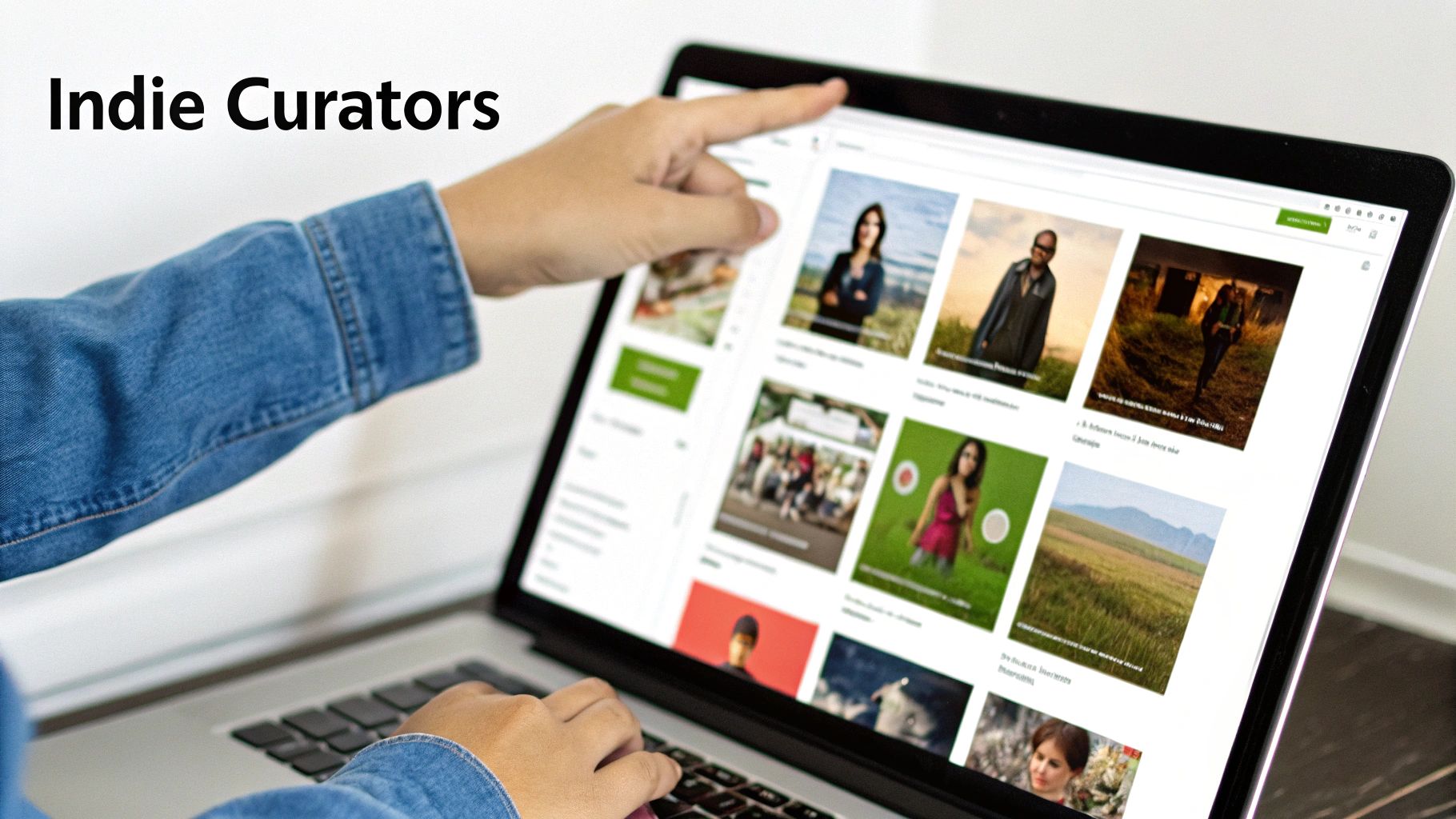
We all dream of landing a spot on a massive editorial playlist like New Music Friday. But if that’s your only goal, you’re missing a huge piece of the puzzle. The world of Spotify curated playlists is a massive ecosystem, and the most successful campaigns I’ve seen cast a much wider net, tapping into the power of independent curators, brands, and even your own fans.
Don't sleep on these independent playlists. They often command incredibly loyal, niche audiences that can be far more valuable than a broad editorial list. Getting your track on a playlist from a respected music blog or an influential artist in your scene connects you with listeners who are already primed to love what you do. These are the people who don't just stream—they buy merch, come to shows, and become genuine fans.
Finding the Right Independent Curators
So, how do you find these tastemakers? It takes a bit of digital detective work, but the payoff is well worth the effort. The goal isn't just to blast your song to every playlist with over 1,000 followers. You’re looking for a genuine fit.
Here’s my go-to process for digging up gems:
- Analyze Related Artists: Go to the Spotify profiles of artists who sound like you and scroll down to the "Discovered On" section. This is a goldmine for finding active, relevant playlists that are already featuring your kind of music.
- Use Social Media: Get on Instagram and Twitter and search for phrases like "Spotify playlist submission" or "[your genre] playlist." You'll be surprised how many curators actively promote their lists and even have submission links right in their bios.
- Explore Music Blogs: The indie blogs you already read and respect? They almost certainly run their own Spotify playlists. These are fantastic targets because they're run by people who are actively searching for the next great undiscovered artist.
Once you have a list of potential targets, do your due diligence. Look at their follower count, how often they update the list, and the overall vibe of the music they feature. A playlist with 5,000 engaged followers is infinitely more valuable than one with 50,000 bots and passive listeners.
Crafting a Personal and Respectful Outreach
When you're ready to reach out, remember the person on the other end is often just a passionate music fan. They can spot a generic, copy-pasted email from a mile away, and it’s an instant trip to the trash folder.
Your pitch to an independent curator should feel less like a business transaction and more like a conversation between two people who love music. Show them you've actually listened to their playlist and explain exactly why your track is a perfect fit.
Follow these simple rules to stay out of the spam folder:
- Find a Name: Always try to find the curator's name. "Hey Sarah" is worlds better than "To Whom It May Concern."
- Reference Their Playlist: Show you've done your homework. Mention a specific song or artist you liked on their list.
- Keep It Short: Get straight to the point. Introduce yourself and your music, explain why it fits in a sentence or two, and give them a direct Spotify link to your song.
- Don't Attach Files: Seriously, never attach MP3s. It clogs up their inbox and looks unprofessional. Always use streaming links.
This personalized approach does more than just get you a listen—it helps you build real relationships with people who can become long-term supporters of your career.
Empowering Your Fanbase to Create Momentum
Finally, don't ever forget about the power of your own audience. Actively encouraging your fans to add your new single to their personal playlists is one of the most potent strategies you have. This grassroots activity sends incredibly strong, positive signals directly to Spotify's algorithm.
This organic engagement is often the very thing that triggers a placement on an algorithmic playlist. When the system sees hundreds of individual users saving your track, it recognizes that your music is gaining real traction with real people. This can be the catalyst that gets you noticed not only by Discover Weekly but by the editorial teams who are watching those data points, too.
In fact, a reported 66% of Spotify users listen to these personalized playlists regularly, and Discover Weekly alone has driven over 2 billion hours of listening since it launched. You can dig deeper into these trends by exploring more about Spotify's user statistics.
What to Do After You Land a Playlist Spot
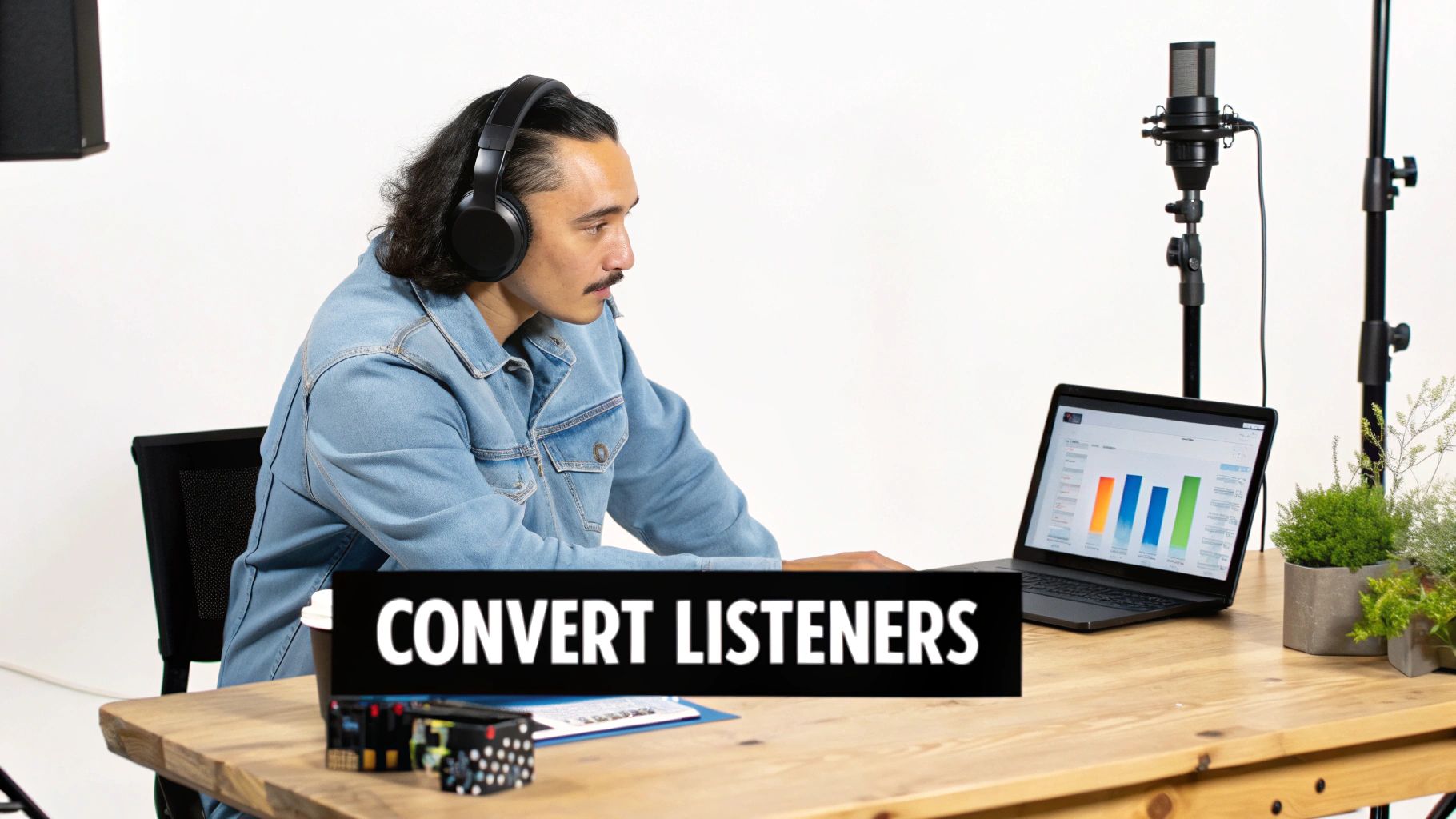
Getting that "you've been added" email from Spotify feels like hitting the jackpot. But that initial surge of streams is just the beginning. The real work starts after you get the placement.
A spot on a major playlist is a huge opportunity, but it's a fleeting one if you don't act fast. The goal isn't just to get a temporary spike in listeners; it's to turn those passive listeners into genuine, long-term fans who will stick around for your next release and the one after that.
So, the moment you get that notification, it's time to shift from pitching to full-on promotion mode.
Spread the Word—Immediately
Your first move? Tell everyone. Don't be shy about it. A playlist placement is a major win, and you should treat it like one.
Get the news out across all your channels—Instagram, TikTok, X, your email list, everywhere. But don't just post a generic "Hey, I'm on this playlist." Make it personal. Shoot a quick video sharing your genuine excitement. If you know the curator, give them a shout-out and a thank you (tag them, but be cool about it). A little gratitude goes a long way and can help build relationships for the future.
Learning how to create engaging social media content is a game-changer here, as it helps you capitalize on the moment and pull new listeners into your world.
A playlist placement is more than a stream count—it's social proof. It signals to both new and existing fans that industry tastemakers are paying attention, which builds incredible momentum around your project.
Dig Into Your New Audience Data
While you’re celebrating publicly, you need to be digging into the data privately. Open up your Spotify for Artists dashboard. This is where you'll find a treasure trove of information about who's just discovered your music.
You can see exactly which playlists are driving the most traffic. Pay close attention to the listener demographics, because this is where the gold is:
- Location: Noticing a sudden listener spike in Austin? Maybe it’s time to book a show there.
- Age and Gender: Knowing who your music is resonating with helps you focus your marketing and create content that truly connects.
- Listeners Also Like: This is huge. It shows you what other artists your new fans have on repeat. Think of it as a cheat sheet for finding perfect tour mates or future collaborators.
This isn’t just about numbers; it’s about turning data into decisions. For a deeper dive, check out our guide on tips to increase your music streams and maximize your earnings.
Connect and Convert
Now that you know who these new fans are, it's time to make a real connection.
Keep an eye on the comments and DMs rolling in on your announcement posts. Respond to as many as you can. A simple reply can turn a casual listener into a committed fan for life.
The ultimate goal here is to get these people off the playlist and onto your artist profile. Your call-to-action should be simple: "Follow me on Spotify." That follow is critical because it means your next song will pop up in their personalized Release Radar playlist.
Use this wave of attention to point people to your other channels. Guide them to your merch store, your tour dates, or your mailing list. A playlist placement is an open door. With the right strategy, you can turn that moment into a career-building foundation, leveraging Spotify curated playlists to build a sustainable future for your music.
Quick Answers to Your Top Spotify Playlist Questions
Diving into the world of Spotify playlists can feel like trying to solve a puzzle with constantly changing pieces. You're not alone if you've got a list of questions about how it all really works. The algorithms, the curators, the etiquette—it’s a lot to take in.
Let's cut through the confusion. I'm going to tackle some of the most common questions artists ask, giving you direct, no-nonsense answers based on real-world experience.
Here's a quick rundown of the big questions we'll cover, with short answers to get you started.
| Question | Short Answer |
|---|---|
| How long does a playlist placement take? | It varies. Editorial can take weeks or never happen. Independent curators can be as fast as a few hours. |
| Can I pay to get on a playlist? | Never pay for a guaranteed spot (that's payola). You can pay for legitimate pitching services, but placement is never guaranteed. |
| How many followers does a playlist need? | Follower count can be misleading. A smaller, highly engaged playlist is often better than a large, inactive one. |
| What if my editorial pitch is rejected? | Don't sweat it. Focus on independent curators and driving your own fan engagement. It's a long game. |
Now, let's unpack these a bit more so you know exactly what to do.
How Long Does It Take to Get a Playlist Placement?
This is the million-dollar question, and the honest answer is… it depends. For an official Spotify curated playlist, you might get lucky and hear back within a week of pitching your track. But more often than not, you won't hear anything at all. It’s nothing personal; those editors are just swimming in thousands of new songs every single day.
Independent playlists are a different story. The timeline can be much, much faster. I’ve seen curators add a song within a few hours of an email because it was the perfect fit for their vibe. On the flip side, some might save your track for a future mood and add it weeks down the line.
My advice? Focus on what you can actually control. Get your editorial pitch in at least three weeks before release day. Start hitting up independent curators about two weeks out. Once that’s done, put your energy into promoting the release yourself.
Can I Pay to Get on a Playlist?
Let's be crystal clear about this: you should never, ever pay a curator for a guaranteed spot on their playlist. That’s called payola, and it's a huge red flag. It’s strictly against Spotify's terms of service and can get your music completely removed from the platform.
Now, this is where it gets a little nuanced. There are legitimate third-party playlist submission services out there. These companies charge you a fee to pitch your music to their network of curators for you. The key difference is that you're paying for their time and their connections, not for a guaranteed placement.
Here’s how to tell them apart:
- Payola (The Bad Stuff): "Give us $50, and your song is on our playlist." This is a direct transaction for a spot on a list, and it's a fast track to getting in trouble.
- Legitimate Pitching Service (An Option): "Our campaign fee is $20, and we'll submit your track to 100 relevant curators." You're paying for a service, not a result.
If you go this route, do your homework. Always look for transparent pricing, real artist testimonials, and case studies before you hand over any cash.
How Many Followers Does a Playlist Need to Be Worth It?
It's so easy to get caught up in follower counts, but that number can be pure vanity. A playlist with 50,000 followers might look amazing on the surface, but if it's packed with bots or listeners who haven't tuned in for months, it’s not going to do a thing for your stream count.
Honestly, a niche playlist with just 1,500 die-hard fans who live and breathe that specific sound can be infinitely more valuable.
Instead of obsessing over the follower number, look for these signs of a healthy playlist:
- Real Engagement: Check out the curator's social media. Are they actively talking about the playlist? Do real people comment and share it?
- Laser-Focused Niche: Is the playlist a perfect home for your specific sub-genre? A targeted audience is always more powerful than a generic one.
- Artist Growth: Click on some of the other artists on the playlist. Can you see a noticeable bump in their monthly listeners after they were added? This is a great sign.
Getting placements on a string of smaller, super-engaged playlists will almost always build more sustainable momentum than a one-off feature on a huge, unfocused list.
What if My Editorial Pitch Is Rejected?
First off, take a breath. It’s not personal. Getting passed over by Spotify’s editorial team is the norm, not the exception. They are sifting through an unbelievable amount of music, and your track not being a fit could come down to anything from timing to the specific mood they're building that week.
A "no" from the editorial team isn't a dead end. It just means it's time to shift your focus.
Here’s your game plan:
- Go All-In on Independents: This is your moment to double down on your outreach to bloggers, independent curators, and influencers who have a real connection with their audience.
- Create Your Own Buzz: Rally your fans. Ask them to save your track and add it to their own personal playlists. Every single one of those actions sends a positive signal to Spotify's algorithm.
- Pitch the Next One, and the Next: Consistency is your secret weapon. A strong catalog of high-quality releases will eventually get you on the radar. Keep making great music, keep refining your sound, and pitch your next single with the same energy.
Landing a big Spotify playlist is a marathon, not a sprint. It takes a solid strategy, a lot of hustle, and the persistence to keep going. Every release is a new shot at connecting with listeners and building the career you want.
Ready to take full control of your music career? OohYeah provides the tools you need to sell your music, merch, and subscriptions directly to your fans, commission-free. Build your community and maximize your revenue by visiting https://oohyeah.app to get started today.