A Modern Guide To Social Media For Music Artists
Master social media for music artists with this complete guide. Learn platform strategies, content creation, fan engagement, and how to monetize your music.
January 17, 2026
Music Marketplace Advisor
Buying & SellingThink of your social media presence as the album art for your entire career. It’s the first impression, the ongoing story, and the fan club, all in one place. Before you can get anyone to press play, you have to build an authentic brand that gives them a reason to care. It’s about turning a simple profile into a world your fans want to be a part of.
Building Your Artist Brand On Social Media
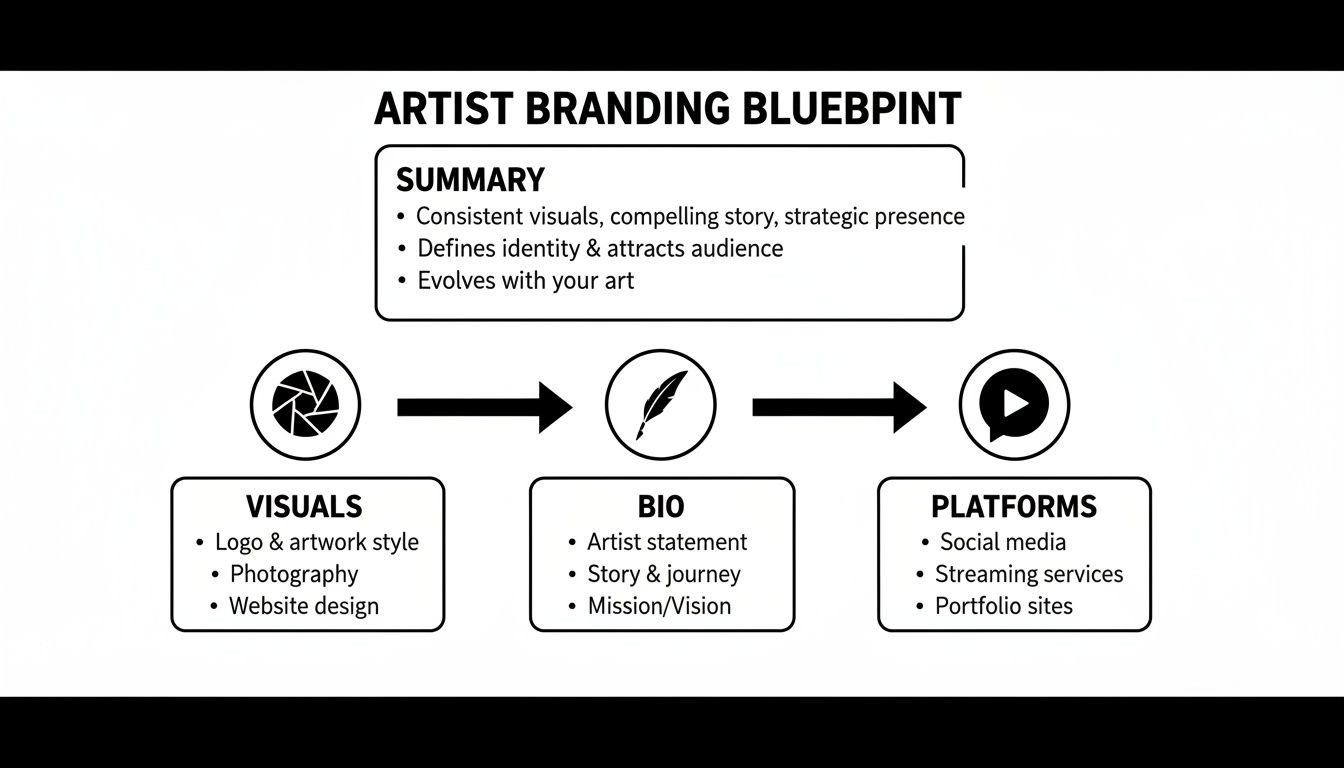
Your social media profile is your digital handshake. It’s where potential fans decide in seconds whether they want to dive deeper into your world. Building a solid brand foundation isn't about faking a persona; it's about finding the most interesting parts of who you already are as an artist and turning that into a consistent online identity.
A strong brand makes you memorable. It gives listeners a reason to follow your journey, not just stream your latest track.
Define Your Unique Artist Identity
First things first, you need to know who you are. Ask yourself: What’s my story? What themes run through my music? Who am I actually talking to? Your brand is a mix of your sound, your look, your personality, and what you stand for. Are you the introspective folk storyteller, the high-energy dance producer, or the soulful R&B crooner?
Let that answer guide every single post. It shapes the way you write captions, the filter you choose for your photos, and the behind-the-scenes moments you decide to share. Consistency is everything. When someone lands on your page, they should instantly get a feel for you and your music. To get a handle on the fundamentals, it's always a good idea to review some general social media best practices.
Craft Your Visual Signature
People scroll fast, and great visuals are what make them stop. Your profile picture, banners, and the overall feel of your grid are the first things anyone notices. It’s worth investing in high-quality photos that actually look and feel like your music sounds.
- Profile Picture: Make it a crisp, high-resolution headshot. It needs to be recognizable even when it’s just a tiny circle in someone's feed.
- Cover Art & Banners: This is your billboard. Use this space for your latest single's artwork, a killer band photo, or a graphic promoting your next show.
- Color Palette: Pick 2-3 core colors and stick with them. A consistent color scheme instantly makes your feed look more professional and deliberate.
Your visual brand is more than just pretty pictures; it’s a non-verbal promise of the experience your music offers. A cohesive look builds trust and makes your content instantly recognizable in a crowded feed.
Write a Bio That Hooks Listeners
You’ve got about three seconds to make someone care. Your bio is your one-shot elevator pitch. Ditch the generic stuff like "Singer/songwriter from Austin." Get specific. What do you do that’s different?
Tell them your genre, add a unique descriptor, and give them a clear next step. Maybe it's "Listen to the new single" with a link, or "Catch us on tour." For a deeper dive into this, our guide on why artists should focus on branding and image has some great strategies. When you have this foundation in place, promoting your music feels less like shouting into a void and more like starting a conversation with a community that's ready to listen.
Choosing The Right Platforms To Amplify Your Music
Trying to be everywhere at once is a surefire way to burn out. When it comes to social media, a smart, focused approach will always beat a scattergun one. The real trick is to put your energy where music discovery is already happening and where you can genuinely connect with potential fans.
Your goal is to meet listeners where they are—actively searching for their next favorite artist. This means playing to the strengths of each platform and making sure they line up with your own goals as a musician.
TikTok Is The Undisputed King Of Music Discovery
There's no getting around it: TikTok has completely changed the music industry. It's become the number one spot for breaking new songs. We're talking about 1.59 billion monthly active users who spend, on average, nearly an hour a day on the app.
What's really crucial for artists is that a staggering 75% of those users discover new music right there on the platform. This isn't just theory; it’s proven. Eight out of ten songs that hit No. 1 on the charts first caught fire on TikTok.
The platform’s algorithm is a discovery engine. You don't need a massive following for your music to connect. A single, creative video featuring your track can genuinely reach millions of potential fans overnight. If you're looking for specific tactics to get started, our guide on how to promote your music on TikTok is a great place to begin.
Picking The Right Tools For The Job
To give you a clearer picture of where to focus your efforts, here’s a quick breakdown of the major platforms and how they serve different needs for artists.
Social Media Platform Comparison For Music Artists
| Platform | Primary Use For Artists | Key Audience | Typical Engagement Rate |
|---|---|---|---|
| TikTok | Viral discovery, short-form video, trend participation | Gen Z, Millennials (18-34) | 5-9% |
| Visual branding, behind-the-scenes, community building | Millennials, Gen Z (25-34) | 1-3% | |
| YouTube | Official music videos, long-form content, live sessions | Broad (18-49+) | 2-5% |
| X (Twitter) | Real-time updates, fan conversations, community engagement | Millennials, Gen X (25-49) | 0.5-1% |
This table isn't about picking a "winner" but about understanding that each platform has a unique role to play in your overall strategy.
Building A Well-Rounded Online Presence
While TikTok is essential for getting that initial spark, a multi-platform strategy is what builds a sustainable career. Think of each channel as a different piece of your artist ecosystem.
Instagram (Reels & Stories): This is your visual home base. Use Reels to jump on trends and share polished performance clips. Then, use Stories to show the raw, unedited side of your creative process. It’s perfect for building a much deeper, more personal bond with your audience.
YouTube (Long-Form & Music Videos): YouTube is still the top dog for high-quality video. This is the official home for your music videos, full live performance recordings, and the in-depth content—like studio diaries or Q&As—that turns casual listeners into hardcore fans. If you're debating short-form video, it's worth it to compare the strengths of TikTok and YouTube Shorts to see how they fit your style.
X (formerly Twitter): Think of X as your direct line to your community. It’s built for quick updates, sharing random thoughts, and having real-time chats with fans. The vibe here is less about perfectly polished content and more about authentic, immediate interaction.
Your social media strategy shouldn't be about being everywhere. It's about being in the right places, with the right content, to connect with the right people. Prioritize the platforms that feel natural to you and align with where your ideal listeners already hang out.
Creating Content That Connects And Converts
Your music is the heart of your career, but great content is what builds the soul of your community. Let's be real: a successful social media presence isn't just about yelling "new single out now!" into the void. It’s about building a compelling world around your art, one that invites listeners to pull up a chair and stay a while. This is how you turn passive followers into die-hard fans.
The trick is to think in terms of content pillars—a few core themes you can always come back to. These pillars are your creative guardrails. They keep your feed interesting, authentic, and balanced, saving you from sounding like a broken record that only ever talks about streams and sales.
Developing Your Core Content Pillars
Think of your content pillars as different TV channels for your audience. Each one showcases a different facet of who you are as an artist and a person. Every artist's pillars will be unique, but most successful strategies are built on a few common-sense foundations.
Here are four essential pillars that are a great starting point for any musician:
- The Music: This is your bread and butter. It's the high-quality performance clips, the lyric breakdowns, the sneak peeks of new songs. It’s why people followed you in the first place.
- The Process: Pull back the curtain and show people how the sausage gets made. This could be raw footage from the studio, a frustrating songwriting session, or just you nerding out over a new piece of gear. This stuff builds immense value and connection.
- The Person: Who are you when the guitar is in its case? Share your hobbies, a funny story, or an opinion on something totally unrelated to music. This is what helps fans connect with you, the human being.
- The Community: Make your fans the hero. This pillar is all about interaction. Run polls asking for their input on merch designs, host live Q&As, and, most importantly, share user-generated content that features your tracks.
When you mix these pillars together, your feed starts to feel less like an advertisement and more like a genuine conversation. The variety keeps your audience hooked because they never know what's coming next—a heartfelt story or a killer unreleased hook.
Filling Your Content Calendar
Once your pillars are defined, planning your content gets so much easier. You’re no longer staring at a blank screen wondering what to post. You have a framework. A simple weekly schedule can help you touch on all your themes without burning out or overwhelming your followers.
Here’s a quick example of what a week could look like for an indie artist:
| Day | Pillar | Content Idea |
|---|---|---|
| Monday | The Person | Share a "weekend recap" story showing off a non-music hobby you enjoy. |
| Tuesday | The Music | Post a 15-second Reel teasing the hook from an upcoming single. |
| Wednesday | The Community | Run an Instagram poll asking fans to vote on two different t-shirt designs. |
| Thursday | The Process | Go live from your home studio for 20 minutes while you work on a beat. |
| Friday | The Music | Post a clip of you performing a cover song that a fan requested last week. |
The most effective content tells a story that your music alone can't. It's the context, the personality, and the shared journey that converts a casual listener into a superfan who buys merch, comes to shows, and champions your work.
This kind of structured approach creates consistency, and consistency is everything for building momentum online. It even lets you batch-create content—like filming several short clips in one afternoon—so you're never scrambling for something to post. This is the engine that drives a powerful social media presence.
From Social Buzz to Streaming Success
That viral moment feels incredible, doesn't it? A video blows up, the comments roll in, and for a minute, you're on top of the world. But that's just the beginning. The real art is turning that fleeting attention into something that lasts—more streams, better playlist spots, and a tangible boost to your career.
Think of it this way: your social media is the spark, and the streaming platforms are the fuel. When you get them working together, a trending sound on TikTok doesn't just stay on TikTok; it shows up as a serious spike in your Spotify plays.
This isn't just a hopeful theory; it's how the game is played now. The numbers don't lie. With Spotify nearing 700 million monthly active users, social media has become the number one A&R scout. A staggering 60% of Gen Z listeners discover new artists right in their feeds. And get this—over 80% of the songs on the Billboard Hot 100 caught fire on TikTok first. You can dig deeper into how these platforms are shaping the industry in this breakdown of Spotify's growth and artist payouts.
The Pre-Save Campaign Playbook
So, how do you build that bridge from a hot social clip to a massive release day? The answer is a rock-solid pre-save campaign. This is your chance to get the algorithms on your side before your track is even out. When fans pre-save your song on Spotify or Apple Music, you're essentially telling the platforms, "Hey, people are already waiting for this."
Start pushing that pre-save link about 2-3 weeks out from release day. Don't just drop the link and hope for the best. Tease it with your best short video clips, show some behind-the-scenes footage, and be direct in your captions. Tell people exactly what you want them to do and why it helps.
Pro Tip: A high number of pre-saves is one of the strongest signals you can send to Spotify. It massively boosts your odds of landing on crucial algorithmic playlists like Release Radar and Discover Weekly right out of the gate, which can set off a chain reaction of new listeners finding your music.
Sparking User-Generated Content
Once the song is live, the mission shifts. Now, you want everyone to make it their song. This is where user-generated content (UGC) comes in, and it's pure gold. When someone else uses your track in their video, it's the most authentic and powerful kind of promotion you can get.
Here are a few proven ways to get the ball rolling:
- Kick off a simple trend. You don't need a complex, choreographed routine. It could be a simple dance, a funny skit format, or a photo dump challenge that perfectly matches the vibe of your hook.
- Run a low-key contest. Offer a small incentive for the best video using your sound. It doesn't have to be expensive—a merch pack, a personal video shoutout, or a quick Zoom call can be more than enough to get people excited.
- Amplify your fans. Make a habit of searching for your sound every day. When you find great videos, don't just "like" them. Comment, share them to your Stories, and stitch them. When people see you're actively engaging, it makes them want to join in.
By thinking through your rollout this way, you're building a direct pipeline from a double-tap on Instagram to a repeat stream on Spotify. You're not just gaining followers; you're building a community of active supporters who are invested in seeing your music succeed.
Engaging Your Community and Building Superfans
Let's be honest: followers are a vanity metric. A real, engaged community? That’s an asset that will define your entire career. The end game for your social media isn't just racking up big numbers; it’s about turning casual listeners into true superfans. These are the people who buy your merch, back your crowdfunding campaigns, and become your most vocal champions. This shift happens the moment you stop broadcasting at people and start building genuine connections with them.
The entire modern music economy is propped up by these relationships. We're seeing over 5 trillion on-demand audio streams globally, and social media is where most of that discovery happens. A track can go from a TikTok trend to a worldwide hit overnight, but turning that flash-in-the-pan virality into a sustainable career comes down to the people who stick around long after the trend dies. Those are your superfans, and they're the ones driving an estimated 80% of real artist revenue through direct support. You can dive deeper into the data by reading about the trends shaping fan economies and music streaming.
Go Beyond The Like Button
Real engagement is all about making your audience feel seen and heard. It's about starting a two-way conversation that makes fans feel like they're a part of your inner circle. It’s the small, consistent actions that build incredible loyalty over time.
You don't need to spend hours a day on this, but you do need to be intentional. Carve out a little time each day to interact directly.
- Respond Thoughtfully: Ditch the generic heart emoji. When someone takes the time to leave a meaningful comment, give them a real thought back. Ask a question to keep the conversation rolling.
- Acknowledge DMs: You probably can’t answer every single message, but even a quick "Thanks so much for the support!" shows you're actually paying attention.
- Spotlight Fan Content: This one is huge. When a fan uses your track in their video or tags you in a great post, share it to your Stories. It's the ultimate form of validation and it's social proof that encourages others to do the same.
This kind of interaction is the bedrock of a strong community. We break down more ways to make these connections stick in our guide on why engaging with fans directly is crucial for music artists.
Create an Exclusive Inner Circle
Once you’ve got that core audience buzzing, the next move is to give them a dedicated place to connect—with you and with each other. Creating an exclusive hub gets your biggest supporters off a "rented" space like Instagram and onto a platform where you call the shots and can deliver unique value.
A superfan isn’t just someone who streams your music; they're an investor in your story. Giving them an exclusive space to gather is how you repay that investment and solidify their long-term loyalty.
You have some great options here, from private Facebook Groups to dedicated channels on Discord or a fan club right on OohYeah. The key is to offer things in these spaces that no one else can get. Think early access to tickets, exclusive merch drops, members-only livestreams, or even a first listen to rough demos. This kind of tiered access makes your most dedicated fans feel genuinely special and turns their support into a foundational pillar of your career.
Got Questions About Social Media? We've Got Answers.
Jumping into social media as an artist can feel like learning a whole new instrument. It’s natural to have questions. Let's tackle some of the most common ones I hear from musicians, with some straightforward, practical advice to get you on the right track.
How Often Should a Musician Actually Post?
Look, consistency is way more important than sheer volume. A great starting point for core platforms like Instagram and TikTok is 3-5 solid posts a week. That’s a pace most artists can actually keep up with without burning out. For a platform like X (formerly Twitter), which moves faster, you can definitely post more frequently without overwhelming your followers.
The real key is finding a rhythm that works for you. Don't try to be everywhere, all the time. Map out your posts in a simple calendar. This helps you balance the "buy my music" posts with the real, human stuff—like behind-the-scenes clips or personal updates—that truly connects with people.
Remember, the goal isn't to flood the timeline; it's to be a reliable presence. When you show up consistently, you build trust. Your fans know you're active and invested, which makes them far more likely to pay attention when you have a big announcement.
What Are the Biggest Social Media Mistakes Artists Make?
I see the same few tripwires over and over again. One of the biggest is treating social media like a megaphone instead of a telephone. Just dropping a link to your new song and walking away is a huge mistake. You're missing the entire point, which is to build a community by actually talking with your fans.
Another classic error is being all over the place. If your visual branding is a mess from one post to the next, or if you disappear for weeks at a time, you’re just confusing people. It's impossible to build any kind of momentum when nobody knows what to expect from you.
Finally, so many artists fly blind by ignoring their analytics. That data is pure gold. It's your audience telling you, in no uncertain terms, what they love and what they scroll past. If you're not checking your insights, you're just guessing, and that’s a tough way to grow.
What's the Best Way to Promote a New Release?
A great release strategy is a slow burn, not a firework. You want to start stoking the flames 2-4 weeks before the song even drops. This is your window to build real, genuine anticipation.
Think of it in four distinct phases:
- The Teaser Phase (2-4 weeks out): Start dropping breadcrumbs. Think short, mysterious audio clips, a sneak peek of the cover art, or a video from the studio session where you wrote the hook. Tell the story behind the song.
- The Pre-Save Push (1-2 weeks out): This is non-negotiable. Funnel all of your energy and traffic toward that pre-save link. A wave of pre-saves tells platforms like Spotify that your track has heat, which can be a game-changer for getting on those big algorithmic playlists.
- Release Week (Go Time): The day is finally here. Go hard on every single platform. Do an Instagram Live to celebrate with your fans in real-time. Actively encourage them to use your sound in their own videos. Make it an event.
- The Post-Release Push (1-2 weeks after): Your job isn't done when the song is out. Keep the energy high. Share the best fan-made content, post screenshots of positive comments, and celebrate every streaming milestone. Keep that momentum rolling.
Ready to take that social media buzz and build something that lasts? With OohYeah, you can bring your music, merch, and biggest supporters all under one roof—and keep more of the money you earn. Start building your artist ecosystem today.