Social Media for Music Your Artist Growth Playbook
A practical guide to social media for music. Learn proven strategies to build a loyal fanbase, drive streams, and grow your career as an artist.
October 23, 2025
Music Marketplace Advisor
Buying & SellingUsing social media for your music is about so much more than just posting tour dates. It's about crafting a powerful, authentic brand that can transform casual listeners into a true, dedicated fanbase. Think of your digital presence as the foundation for everything you want to achieve, from getting your music discovered to actually making a living from it. It's the story you tell and the community you build around your sound.
Building Your Artist Brand on Social Media

Before a single track goes viral, your online identity has to be crystal clear and genuinely compelling. Your social media profiles are, in essence, the album cover for your entire career. This isn't just about the technical setup; it’s about carefully defining the story and personality that set you apart in an incredibly crowded space.
Your artist brand is the sum of your music, your visuals, and your voice. It’s what makes someone stop scrolling and actually listen.
Defining Your Unique Artist Persona
Your persona is the consistent identity you show the world. Who are you? A mysterious electronic producer? A high-energy pop-punk band? A soulful acoustic storyteller? Figuring this out is crucial because it will inform every single piece of content you create from here on out.
To nail down your brand, think about these key elements:
- Your Core Message: What are the emotions or ideas at the heart of your music?
- Your Visual Aesthetic: What colors, fonts, and imagery feel like your sound? A metal band’s feed is going to look completely different from a lo-fi hip-hop artist’s, and for good reason.
- Your Tone of Voice: How do you talk to your audience? Are you witty and sarcastic, deeply inspirational, raw and unfiltered, or more of an educator?
Getting this branding work right from the start is fundamental. It ensures that when someone stumbles upon your profile, they immediately get who you are and what your music is all about. This kind of clarity is a massive factor in determining if https://oohyeah.app/posts/can-social-media-boost-an-artists-career.
Identifying Your Ideal Audience And Platforms
You can't connect with everyone, so don't even try. The goal is to connect deeply with the right people. Who is your ideal listener? Get specific. Picture them: their age, their other interests, and—most importantly—where they hang out online.
A Gen Z audience, for instance, is almost certainly discovering new music on TikTok. An older indie-rock crowd? They might be more active on Instagram or in dedicated Facebook Groups.
A common mistake I see artists make is trying to be everywhere at once. It's far more effective to dominate one or two platforms where your target audience lives than to spread yourself thin across five.
Once you know who you're talking to, choosing the right platforms becomes much simpler. The table below can help you make a strategic choice instead of just guessing.
Choosing the Right Social Platforms for Your Music
Every platform has its own culture and content style. Picking the right ones is about matching your brand and audience to the environment where they'll thrive. This guide breaks down the major players to help you focus your energy where it counts.
| Platform | Best For | Primary Audience | Key Content Format |
|---|---|---|---|
| TikTok | Virality, music discovery, and short-form video. | Gen Z and younger Millennials (16-30) | 15-60 second videos, trends, challenges. |
| High-quality visuals, storytelling, and community. | Millennials and Gen Z (18-35) | Reels, Stories, carousels, high-res photos. | |
| YouTube | Music videos, long-form content, and monetization. | Broad, all ages (especially 18-49) | Music videos, vlogs, live streams, tutorials. |
| Community building, event promotion, and older fans. | Gen X and older Millennials (30+) | Events, groups, long text posts, live video. | |
| X (Twitter) | Real-time updates, direct fan interaction, and news. | Millennials (25-40), industry professionals. | Short text, memes, quick video clips. |
Choosing wisely from the start is essential for any artist building a plan to expand their online presence. Having effective social media growth strategies is absolutely critical for reaching new fans who will actually care about your music.
Optimizing Your Profiles for Discovery
Your profile is your digital business card, so make it work for you. Craft a bio that hooks people instantly. It needs to clearly state who you are, what kind of music you make, and include a clear call-to-action—like a link to your latest single on Spotify.
Use a high-quality profile picture and header image that are perfectly aligned with your visual brand. This cohesive, professional presentation makes your profile memorable and sets the stage for everything that comes next.
Creating Content That Builds a True Fanbase
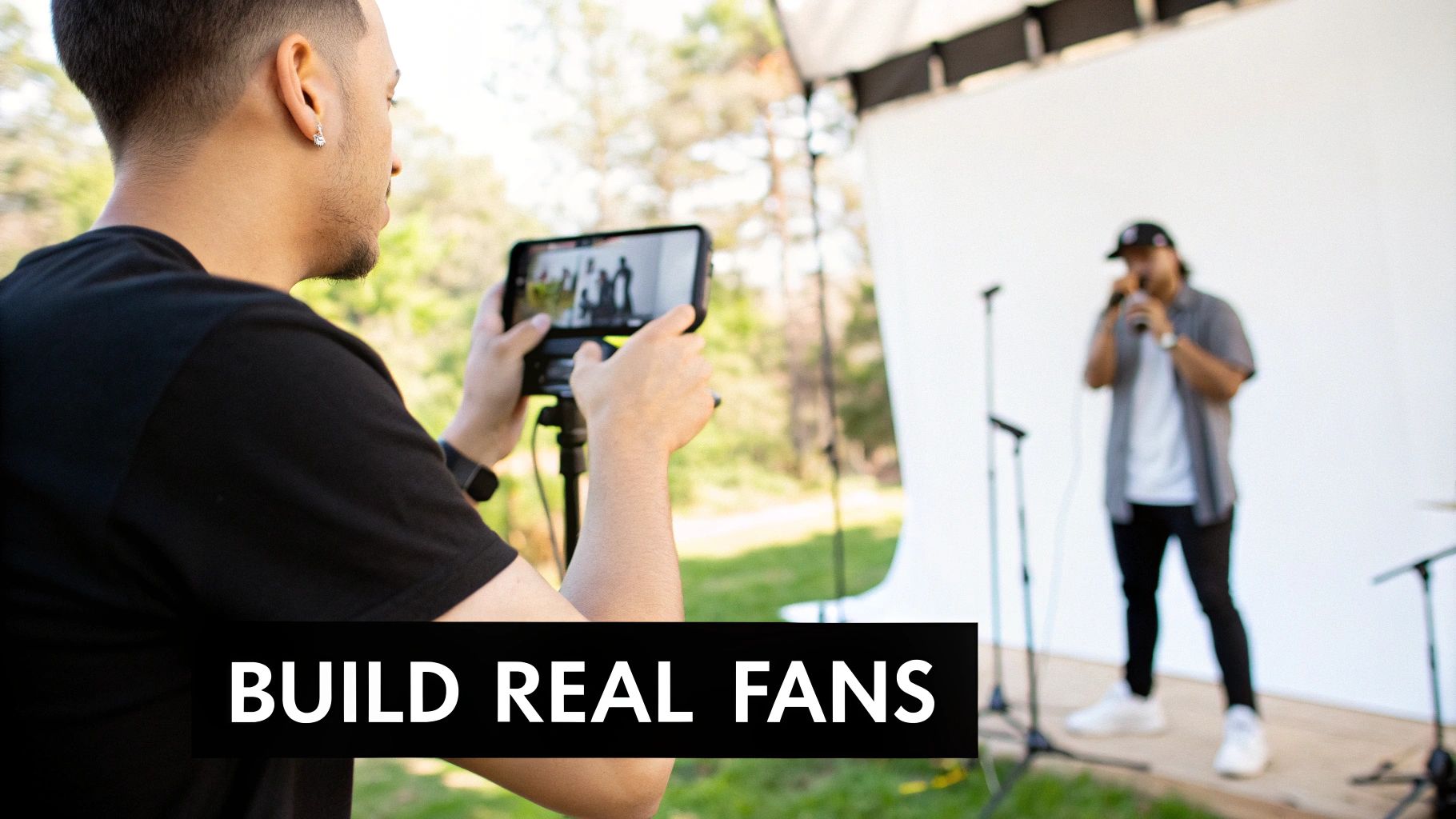
Your music is the reason people show up, but your content is what makes them stay. Think of it like this: your songs are the foundation, but the stories, videos, and conversations you share are what build the house your fans want to live in.
This is where you turn casual listeners into a real community. It’s a shift from just dropping a Spotify link to inviting people into your world and showing them the person behind the music.
Go Beyond the Music
Let's be honest, your fans want more than just your latest single. They want to connect with you. A solid content strategy gives them a reason to stick around between releases by showing them different sides of your artistry and personality.
Instead of just one note, you're creating a chord. Try building your content around a few key pillars:
- Raw Behind-the-Scenes Footage: Forget high-production value for a moment. Share a shaky iPhone video from a writing session, a clip of you tracking vocals in the studio, or the beautiful chaos of loading in for a gig. This stuff feels real and exclusive.
- Quick Tutorials: Are you a beast on the guitar? A whiz with a synth? Film a quick 60-second video showing fans how to play the riff from your most popular song. It provides instant value and gets them engaging directly with your music.
- Personal Stories: Open up about the story behind a lyric that means a lot to you. Talk about the frustration and breakthrough that led to a particular track. These moments build a powerful emotional bridge between you and your listeners.
The goal isn't to become a full-time vlogger. It’s about finding a sustainable rhythm for sharing the parts of your process that feel authentic to you.
Sparking Conversation and Community
Engagement is a two-way street. You need to create a space where your fans feel like they're part of the conversation, not just watching from the sidelines. Interactive content is your secret weapon here.
Use the tools built into these platforms. Run an Instagram poll asking which merch design they like best. Go live for a casual Q&A session where you answer their questions on the spot. Make them feel like they have a voice in your journey.
"I was getting overwhelmed with all the feedback on social media, so I decided to step away from making beat videos for a while. That gave me space to be more patient and intentional with this album." - CARRTOONS
This quote from producer CARRTOONS hits on a crucial point. It’s not about chasing every trend. Focusing on intentional, authentic content will always build a stronger, more loyal following than trying to go viral every week.
The Power of User-Generated Content
You'll know you have a real community when your fans start creating content for you. This is user-generated content (UGC), and it's some of the most powerful social proof you can get.
Here’s how to encourage it:
- Create a Unique Hashtag: Launch a specific hashtag for your new album or tour and encourage fans to use it when they post photos and videos.
- Run a Contest: A cover contest is a classic for a reason. Offer up a cool prize—a merch bundle, a one-on-one video call—and watch the entries roll in.
- Showcase Fan Content: When you see great fan content, share it! Feature your favorite posts, reels, or stories on your own profile (always with credit). It validates that fan and shows everyone else that you're paying attention.
When you actively pull your audience into your story, they stop being passive followers and start feeling like part of the team. This sense of belonging is the key to everything, and it’s exactly why building a fanbase is essential for selling music. Your social media transforms from a megaphone into a community hub.
Tapping Into Short-Form Video for Music Discovery
Short-form video has completely changed how people find new music. Seriously, the game is different now. We're no longer just hoping for radio play or a spot on a big playlist. Today, a 15-second clip can put your music in front of millions of new listeners, literally overnight. For independent artists, this is a massive opportunity.
The real magic is in the algorithms. Platforms like TikTok are built to push engaging content to new audiences, even if you have zero followers. As of Q2 2024, TikTok had over 1 billion monthly active users, and get this—music is a central part of roughly 90% of the most-watched videos on there. This has turned the platform into an absolutely essential tool for artists.
How to Create Videos That Stop the Scroll
You’ve got about three seconds. That’s it. In that tiny window, you need a hook—something visual or sonic—that stops someone from swiping away. Forget about perfect, high-budget production. The goal here is an authentic, attention-grabbing moment.
Here are a few ideas that I’ve seen work wonders:
- Use a Weird Instrument: Film yourself playing the main riff of your song on something totally unexpected.
- Tell a Relatable Story: A simple text overlay like, "POV: You wrote a song about your toxic ex and it blew up," can be incredibly effective.
- Show the Behind-the-Scenes Magic: Share a raw, high-energy clip from a live show or a breakthrough moment in the studio.
You're not trying to direct a blockbuster movie in 30 seconds. You’re trying to create something that feels real and makes someone pause just long enough to get hooked on your track.
Joining Trends Without Losing Your Soul
Hopping on a trending sound or video format can give your content a huge algorithmic boost. But here's the catch: you have to make it your own. Don't just copy what everyone else is doing; adapt the trend to fit your specific vibe as an artist. If a trend just doesn't feel like you, it's better to just sit it out.
One of the biggest mistakes I see artists make is forcing a trend that completely clashes with their identity. Fans can smell inauthenticity a mile away. You're far better off finding trends that actually fit your personality and sound, so your content feels genuine.
Let’s say a dance challenge is going viral, but you're a folk singer-songwriter. Forcing yourself to do the dance will probably look and feel awkward. A much better move? Use the trending audio to create a beautiful acoustic cover. You're still part of the larger conversation, but you’re doing it in a way that strengthens your unique brand.
For a deeper dive into this, check out our guide on how to promote your music on TikTok and other short-form platforms.
TikTok’s "For You" page is the perfect example of this discovery engine at work. It's powered by an algorithm that constantly serves up new content and music.
This is ground zero for discovery. One great video can take a song from total obscurity to the top of the charts.
Working With the Algorithm, Not Against It
If you understand the basics of how these algorithms work, you can give your music a serious advantage. Platforms like TikTok and Instagram Reels reward content that gets a lot of engagement right after you post it. That means things like comments, shares, saves, and total watch time are the metrics that matter most.
To get the algorithm on your side, you need to focus on a few key things:
- Use the Right Hashtags: Don't just use the biggest ones. Mix popular, broad hashtags with more specific, genre-focused ones to find your people.
- Post Consistently: This tells the algorithm that you're an active creator worth paying attention to.
- Engage with Your Comments: When people comment, reply! And do it quickly. This interaction is a powerful signal to the algorithm.
At the end of the day, using short-form video is all about experimenting. Try out different ideas, see what connects with your audience, and don't be afraid to show the real, human side of your art.
Turning Social Followers Into Loyal Streamers
Getting a ton of followers is great, but let's be real—the number that really matters is your stream count. The ultimate goal is to get those people off of social media and over to your music on streaming platforms. That's the leap that turns a viral moment into genuine career growth.
This isn't just a vanity metric; it's how artists make a living today. Back in 2023, a staggering 84% of all recorded music revenue in the US came from streaming. That number tells you everything you need to know about the importance of Spotify and Apple Music. For a deeper dive, check out these music industry trends and their impact.
Crafting Calls-to-Action That Actually Work
You have to tell your audience exactly what you want them to do next, but it can't sound like a desperate sales pitch. Just dropping a "link in bio" and calling it a day isn't going to cut it. Your call-to-action (CTA) needs to be direct and feel like a natural part of your content.
For example, instead of just posting your album art, why not share a quick video talking about the story behind your favorite lyric? Then, you can wrap it up with, "Hear how it all comes together—the link to listen on Spotify is in my bio." You're giving them something interesting first, so asking them to listen feels like the natural next step.
Here are a few other ideas that have worked for countless artists:
- Run Pre-Save Campaigns: This is a classic for a reason. Getting fans to pre-save your music before it drops creates a burst of activity on release day, which the streaming algorithms absolutely love.
- Share Potent Snippets: Post the best 15-30 seconds of your new track as a Reel or TikTok. The CTA can be as simple as, "If you think this part is catchy, wait 'til you hear the whole thing. It's out everywhere now."
- Get Interactive: Use polls or question stickers in your Stories. Ask something like, "What's your favorite track off the new EP so far?" and drop a direct link to the album right there.
This process is all about creating a feedback loop, as this chart shows.
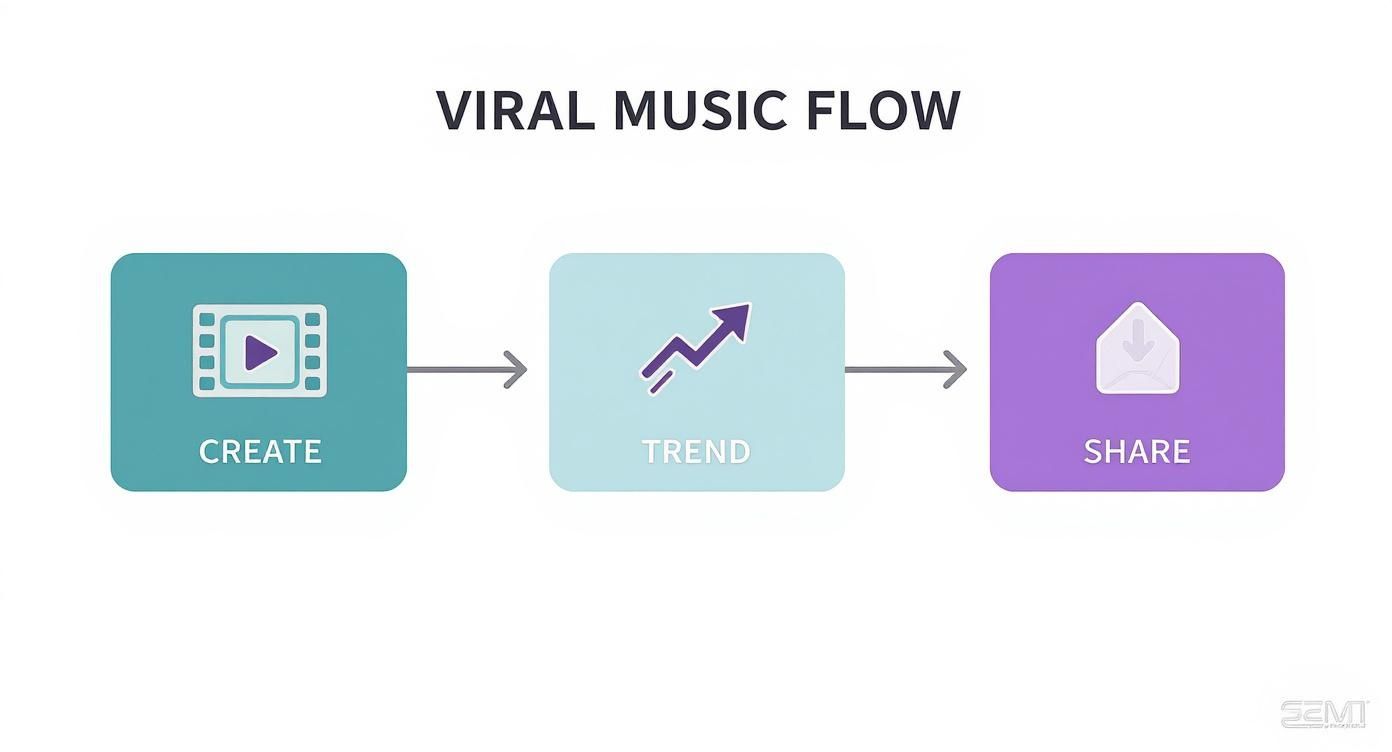
It really is that straightforward: good content catches on, starts a trend, and then gets shared far and wide, bringing new ears to your music.
Optimize That "Link in Bio"
Think of your "link in bio" as your digital storefront. It's incredibly valuable space, so don't just throw a single Spotify link there. Use a tool like Linktree or Beacons to build a clean, simple landing page with all your important links in one place.
Your job is to remove every single obstacle between a fan seeing your post and hitting play on your song. The journey needs to be effortless.
Organize your link hub with a clear hierarchy. Put your newest release right at the top, followed by links to your full artist profiles, tour dates, and merch shop. A well-organized hub means a fan can find whatever they're looking for with a single click, turning that casual follower into a dedicated streamer who helps build your career.
Monetizing Your Music Beyond the Stream
Getting more streams is great, but let's be real—it can't be your only financial game plan. A solid social media presence is what truly opens the door to different, more reliable income streams. This is how you take control of your career and turn that fan excitement into actual financial support, moving beyond the tiny fractions of a cent from streaming royalties.
The direct-to-fan connection you've been building is your single most valuable asset here. Your followers aren't just a number on a screen; they're the first people in line to buy your merch, grab concert tickets, and pay for special experiences. This direct relationship is the foundation of a resilient career that isn’t at the mercy of a single platform's algorithm.
Selling Merchandise Directly to Your Community
Your biggest fans want to support you. Giving them cool merch is one of the most direct and tangible ways they can show that love. Platforms with built-in shopping tools, like Instagram and TikTok, have made this incredibly easy. You can showcase new t-shirt designs, fresh vinyl pressings, or signed posters right in your feed.
But you have to think visually. Don't just post a flat, boring product photo. Shoot a Reel of you wearing the new hoodie while you play a stripped-down version of a popular song. This creates a genuine connection between the merch, the music, and you—the artist they admire. It’s way more powerful than a simple ad.
Your social media is your storefront, your stage, and your fan club all in one. Treating it as a dynamic space to sell products directly to your most dedicated supporters is a fundamental shift that empowers independent artists to build a real business around their music.
Expanding Revenue with Live Events and Exclusives
Your social channels are the ideal place to announce and sell tickets for live shows. Use Instagram Stories with countdown stickers to build hype for a tour announcement. Or, hop on a TikTok Live to drop a special discount code just for your followers. Little things like this create urgency and make your fans feel like they're part of an inner circle.
And it's not just about in-person gigs. The digital music market is projected to hit $53.09 billion by 2030, with live streaming events being the fastest-growing slice of that pie. That’s a massive opportunity. You can sell tickets to virtual concerts or offer intimate digital meet-and-greets to connect with fans anywhere in the world. You can find more details on the digital music market on mordorintelligence.com.
Platforms like YouTube offer so much more than just ad revenue from your music videos, too. You should be looking into all the options. For instance, exploring how to monetize YouTube Shorts can open up totally new income opportunities. Think about tapping into fan funding features, offering channel memberships with exclusive content, or even landing brand partnerships that feel right for you and your audience. The ultimate goal is to build a multi-faceted business where your art—and your bank account—can thrive.
Answering Your Top Social Media Questions
Even with the best plan in place, you're bound to run into some common hurdles when you're in the thick of it. Let's tackle some of the most frequent questions I hear from artists so you can stay focused on making an impact.
How Often Should I Be Posting?
Look, the best posting schedule is the one you can actually maintain without burning out. My advice? Aim for consistency over frequency.
A great starting point for your main platforms, like Instagram or TikTok, is posting 3-5 times per week. It’s so much better to share three genuinely great, engaging posts than to force out seven mediocre ones just to hit a quota. When you're trying to build a real connection with people, quality always wins.
Pro Tip: Don't just post whenever. Dive into your analytics to see when your followers are most active. Scheduling your content for those peak times is a simple way to maximize your reach without creating more work for yourself. A sustainable schedule is key.
What’s the Best Social Media Platform for Musicians?
The honest answer? The "best" platform is wherever your potential fans are hanging out. You've got to meet them where they already are.
For most artists starting out today, it's not about picking just one. It's about having a primary focus while still being active elsewhere. Here's how I see the big three right now:
- TikTok: Hands down, this is the champion for organic music discovery. The algorithm is practically built to help new sounds find an audience. If you want a shot at going viral, you need to be here.
- Instagram: This is your visual headquarters. Think of it as the place to build your brand's look and feel. Use Reels for your short-form video, Stories for the daily, behind-the-scenes stuff, and your main feed for those polished, "album cover" quality posts.
- YouTube: Still the undisputed king for anything long-form. This is home base for your official music videos, lyric videos, and deeper content like studio vlogs or "making of" documentaries.
Pick one of those to be your main engine for growth, but don't neglect the others. They all serve a different purpose in your career.
How Do I Actually Get People from My Profile to Spotify?
You have to make it incredibly, almost ridiculously, easy for them. The goal is to remove every single ounce of friction between them seeing your post and pressing play on your song.
First things first, get a "link in bio" tool. These services create a simple, clean landing page where you can put all your vital links—Spotify, Apple Music, tour dates, merch—all in one spot.
Once that's set up, you need to be direct in your posts. Don't just say "link in bio." That's too passive. Tell them exactly what you want them to do. Try things like, "Hear the full track on Spotify now" or "Go pre-save the single so you get it first." When you're teasing a new song, clip the best 15 seconds for a video and point them straight to that streaming link. The fewer taps it takes, the more streams you'll get. It's that simple.
At OohYeah, we believe in giving artists the tools to build a career on their own terms. Our platform is designed to help you connect directly with fans, sell your music and merch commission-free, and take full control of your creative business. Start building your future with OohYeah today.