A Guide to Selling Band Merch Online
Discover how to start selling band merch online. This guide covers merch design, production, and marketing strategies to grow your music business.
October 18, 2025
Music Marketplace Advisor
Buying & SellingSelling your band's merch online is no longer a "nice to have"—it's a direct line to building a real, sustainable career in music. It’s how you turn casual listeners into genuine supporters. The whole process really comes down to a few key things: creating products people actually want, picking a smart, low-risk production method like print-on-demand, and setting up a digital storefront that’s dead simple to use. With a platform like OohYeah, you can actually manage all of this from one spot, making it far more straightforward than you might think.
Your Blueprint for Selling Merch Online
Turning your creative vision into a steady revenue stream isn't some complex puzzle only major-label artists can solve anymore. Today, selling merch is a fundamental part of a musician's toolkit. It’s a powerful extension of your band's identity and a tangible connection to your fanbase. This guide is your complete roadmap, breaking down every part of the journey into clear, practical steps.
Your merchandise is so much more than just a product. Think of it as a physical piece of the community you’re building around your music. When a fan wears your t-shirt or slaps your sticker on their laptop, they’re essentially becoming a walking billboard for you. It all starts with figuring out what your fans truly want, then moves into the nuts and bolts of production, and finally lands on creating a smooth, hassle-free online shopping experience.
The Modern Merch Landscape
Honestly, the opportunity for independent artists has never been better. The global music merchandise market is on track to hit a staggering $16.3 billion by 2030, with online sales being a massive driver of that growth. Get this: more than 20% of top Billboard artists now sell directly to their fans through e-commerce, and sales from artist-owned brands on platforms like Shopify in the US shot up by over 35% year-over-year in 2024. This shift gives you incredible creative freedom, from pressing limited-edition vinyl to dropping unique digital collectibles that make your fans feel even more connected. You can read more about the rise of band merchandise on powercommerce.com.
The best merchandise does more than just display a logo. It tells a story, references an inside joke, or captures the spirit of a specific album, making fans feel like they're part of an exclusive club.
To really nail this, you need a clear framework. This blueprint will walk you through the key stages of getting your merch operation off the ground and scaling it up.
Here’s a quick overview of what launching your online merch store looks like from start to finish.
Key Stages of Selling Merch Online
| Phase | Key Action | Primary Goal |
|---|---|---|
| 1. Concept & Design | Brainstorming ideas and creating authentic, compelling artwork. | Develop products that resonate deeply with your fan community. |
| 2. Production & Sourcing | Choosing between print-on-demand or bulk inventory. | Find a cost-effective and high-quality production method. |
| 3. Store Setup | Building your online storefront on a platform like OohYeah. | Create a seamless and user-friendly shopping experience. |
| 4. Marketing & Promotion | Announcing your merch drop and running targeted campaigns. | Drive traffic to your store and generate consistent sales. |
| 5. Fulfillment & Service | Packing, shipping, and handling customer inquiries. | Ensure a positive post-purchase experience to build loyalty. |
Each stage is a building block for the next. By approaching it methodically, you can create a merch business that not only looks professional but also genuinely supports your musical journey. We’ll dive deeper into:
- Authentic Design: How to craft products that feel like a natural extension of your music.
- Smart Production: Weighing the pros and cons of print-on-demand versus buying in bulk to fit your budget.
- Effective Sales Platforms: Setting up an online store that actually converts visitors into buyers.
- Targeted Marketing: Getting the word out and building real excitement around your drops.
Platforms like OohYeah are built to bring all these pieces together, giving you the tools to manage your entire operation efficiently. By following this structure, you’re not just selling stuff—you’re building a brand.
Designing Merch That Fans Actually Want
Think of your merchandise as more than just a product; it’s a physical piece of your music, a tangible connection to your brand. Anyone can slap a logo on a t-shirt, but creating something fans genuinely treasure means going deeper. The best merch feels authentic, almost like a secret handshake, turning a simple purchase into a real statement of belonging.
To get there, you have to know what makes your audience tick. What are the inside jokes from your social media? The lyrics they scream back at you during live shows? The imagery from your music videos they can't stop talking about? Tapping into those unique elements is how you turn a generic t-shirt into a piece of memorabilia they'll be proud to wear.
Translating Your Sound into Visuals
Every band has an aesthetic, a visual language that speaks for them. Your design choices—from the colors you use to the fonts you pick—should echo your sound and the specific era of your music. A folk band’s merch will naturally have a different vibe than a punk band's. One might lean into earthy tones and hand-drawn illustrations, while the other goes for bold, raw graphics.
This same thinking applies to the type of products you offer. T-shirts are a staple for a reason, but don’t stop there.
- For a high-energy rock band: Think about things like embroidered patches for denim jackets or even custom guitar picks. These items are not only practical for your audience but also fit perfectly within the culture.
- For an introspective indie artist: You might explore items like lyric journals, art prints of your album covers, or even a custom-blended tea. These kinds of products invite a deeper, more personal connection with your art.
If you’re not sure where to start, data can be your best friend. This infographic breaks down what’s actually selling and what design themes fans are looking for.
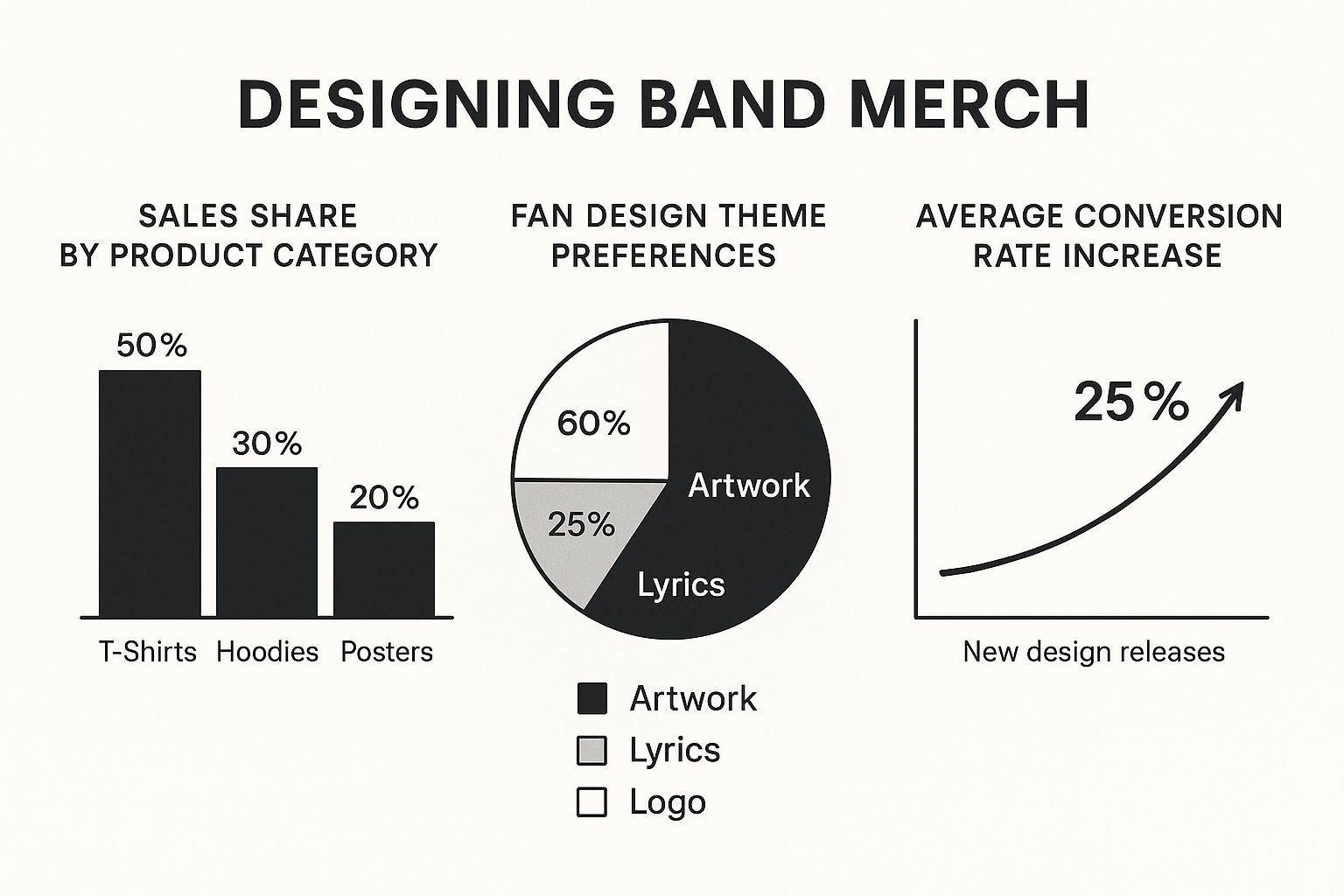
As you can see, apparel is king, but the real takeaway is that artistic designs vastly outsell simple logos. It’s also clear that dropping fresh designs is a powerful way to drive sales.
Sourcing Inspiration and Working with Designers
Inspiration is everywhere—a standout lyric, your album artwork, a vintage tour poster. The trick is to create something that feels special. A subtle reference that only your true fans will get can be infinitely more powerful than your band name in a standard font.
If you’re not a designer by trade, bringing in a professional is one of the smartest investments you can make. To get the best results, you need to give them a clear brief.
- Create a mood board: Pull together images, color palettes, and examples of other merch that you love.
- Tell your story: Give the designer context. Who are you? What is your music about? Who are you trying to reach?
- Get specific: Mention any key lyrics, symbols, or concepts you want to see in the final design.
You can find great freelance designers specializing in band merch on platforms like Fiverr or Upwork. But if you're on a tighter budget, don't be afraid to go the DIY route. Tools like Canva have come a long way and can help you create professional-looking graphics. Just remember to export your final files at a high resolution—at least 300 DPI—to ensure your prints look crisp, not blurry.
"We always recommend that the creator or the brand ask their audience what they want... You can ask through Instagram Stories or email... By polling your audience and involving them in merchandise decisions, you’ll ensure your products resonate and make them feel part of the creative process."
This is golden advice. A direct feedback loop takes the guesswork out of the equation and helps you put your money into designs you already know people want. Building that kind of community is everything. For a deeper dive, check out our guide on why building a fanbase is essential for selling music. Doing this groundwork means you'll have an engaged audience ready and waiting when you start selling band merch online.
Ultimately, designing merch that connects comes down to being thoughtful and authentic. When your products feel like a genuine piece of your world, fans aren't just buying a t-shirt—they're buying a piece of your story.
Getting Your Merch Made and Shipped
Alright, you’ve got some killer designs ready to go. Now comes the big question: how do you actually turn those designs into physical products and get them into your fans' hands? This is a bigger deal than it sounds, as your choice here directly hits your bank account, your profit margins, and how much time you spend packing boxes.
You've basically got two main routes: Print-on-Demand (POD) or ordering in bulk. Neither one is universally "better"—it's all about what makes sense for your band right now. Let's break down what that really means.
The Low-Risk World of Print-on-Demand
Think of Print-on-Demand (POD) as the ultimate safety net. With this model, a t-shirt, hoodie, or poster is only made after a fan clicks "buy" in your store. You never touch the inventory. You never pay for a single item upfront. That nightmare scenario of a garage filled with 500 unsold t-shirts in the wrong size? Gone.
This approach is a lifesaver for a few reasons:
- Testing new ideas is free. Got a wild design idea based on an inside joke with your fans? Throw it up on the store. If it sells, great. If not, no harm done.
- It’s perfect for bands on the rise. If you're still building your audience, POD lets you launch a fully-stocked, professional merch store without spending a dime on inventory.
- You can offer a massive variety. Want to sell your album art on phone cases, coffee mugs, and tote bags? Easy. You can have a catalog of dozens of items without managing a single one.
The catch? Your profit margin on each sale is lower. Since items are printed one at a time, the cost per piece is higher than buying in bulk. But for many artists, completely wiping out the financial risk is a trade-off they're happy to make.
Print-on-Demand isn't just a production method; it's a creative sandbox. It gives you the freedom to experiment with niche designs that would be way too risky for a big bulk order, helping you find out what your die-hard fans truly love.
When Bulk Ordering Makes Sense
On the flip side, you have the old-school method: ordering in bulk. This is exactly what it sounds like—you call up a screen printer and order 100 t-shirts of your most popular design. The massive advantage here is a much, much lower cost for each shirt, which means more money in your pocket from every sale.
Placing a bulk order is the smart move when:
- You have a proven winner. If you have a shirt design that sells out at every single show, ordering it in bulk is a no-brainer.
- You’re hitting the road. You absolutely need stacks of merch on hand to sell at the table after your set. This is where you make a huge chunk of your tour income.
- You’re a stickler for quality. Ordering in bulk means you can get a physical sample in your hands to approve before the full run gets printed.
The downside is pretty clear: upfront cost and risk. You’re putting your money down and betting you can sell everything you just bought. This takes a solid understanding of your sales history and a good feel for what your fans are actually willing to buy.
The Best of Both Worlds: A Hybrid Strategy
Here’s a pro tip: you don’t have to be in just one camp. The smartest artists I see are using a hybrid approach that combines the strengths of both methods. They use Print-on-Demand for their online store to offer a wide variety of designs and test out new concepts year-round.
At the same time, they place bulk orders for their top 2-3 best-selling designs. These are the shirts they take on tour and also stock at home to ship out for online orders, capturing a much higher profit margin. This strategy keeps risk low while maximizing your earning potential. Platforms like OohYeah are built for this, letting you manage products from different suppliers all in one dashboard.
You get a centralized view of your entire operation, making it easy to spot a hot-selling POD design that’s ready to "graduate" to a bulk order for your next tour.
Print-on-Demand vs. Bulk Order Comparison
To really see the difference, it helps to put the two strategies side-by-side. Think of this as your cheat sheet for deciding where to put your money.
| Factor | Print-on-Demand (POD) | Bulk Ordering |
|---|---|---|
| Upfront Cost | $0. You pay nothing until a customer makes a purchase. | High. Requires a significant upfront investment in inventory. |
| Profit Margin | Lower. The cost per item is higher due to individual production. | Higher. The cost per item drops significantly with larger quantities. |
| Inventory Risk | None. You never hold or manage physical stock. | High. You risk being left with unsold merchandise. |
| Product Variety | Unlimited. Easily offer dozens of designs and product types. | Limited. You must choose specific designs and sizes to stock. |
| Best For | Testing new designs, emerging bands, large online catalogs. | Proven best-sellers, tour merchandise, maximum profit. |
There's no single right answer here. The best strategy is the one that fits where your band is today and where you want to go tomorrow. By understanding how each model works, you can make a smart decision that protects your wallet and helps you grow your merch from a hobby into a real business.
Building an Online Store That Sells
Think of your online store as your digital merch table—it’s always open and ready to connect with fans, whether they’re across the country or just saw you live last night. Putting together a professional storefront is about more than just tossing up a few product photos. It’s about creating a smooth, intuitive experience that turns a curious browser into a loyal customer.
Your goal is to build a space that not only screams your band's identity but is also meticulously fine-tuned to drive sales. Your design, product descriptions, and photography all have to work together to tell your story and make the shopping journey completely effortless.
Crafting Product Pages That Convert
The real magic happens on your product pages. This is where a fan decides to click "add to cart." Generic, lazy descriptions just won't fly here. Instead of just stating the obvious—like "100% cotton t-shirt"—give them the story behind the design. Was it inspired by a specific lyric, a wild moment on tour, or the artwork from your latest album? Let them in on the secret.
High-quality photos are non-negotiable, but you don't need a pro studio. Your smartphone, some good natural light, and a clean background can work wonders. Make sure to show your products from multiple angles. If you’re selling apparel, always include a clear size chart. It helps fans get the right fit and saves you the headache of returns.
The best product descriptions forge an emotional connection. They turn a simple hoodie into a piece of memorabilia—a tangible reminder of how they felt at your last show or while spinning your new record.
To really dial in your store's performance, it’s worth digging into the nuts and bolts of improving e-commerce conversion rates. These insights can help you refine everything from your checkout flow to your product layouts, making every visit count. A killer merch store and your music go hand-in-hand; you can see how they connect when you learn how to sell your music online effectively at https://oohyeah.app/sell-your-music.
Strategic Pricing and Smart Promotions
Pricing your merch is always a delicate balance. You need to cover your costs and turn a profit, but the price also has to feel right for your fans. Do a little recon and see what similar bands are charging to get a baseline, but always weigh that against your own costs and the unique value of your designs.
Once your prices are locked in, it's time to get creative with promotions to bump up your average order value (AOV). This is your chance to give fans more bang for their buck.
- Product Bundles: Try packaging a t-shirt with a vinyl record or a hat with a poster for a slight discount. Fans feel like they’re getting a steal, and you move more inventory.
- Limited-Time Offers: Nothing creates urgency like a flash sale or a limited-edition drop. Announcing a "weekend-only" discount can trigger a serious spike in orders.
- Free Shipping Thresholds: This one is a classic for a reason. Offer free shipping on orders over a set amount, like $50 or $75. It’s an incredibly powerful nudge to get customers to add just one more item to their cart.
Optimizing Your Store for Maximum Sales
Beyond the individual product pages, the overall flow of your store is critical. A clean, logical layout helps fans find what they’re looking for without getting frustrated and bouncing. Use obvious categories like "Apparel," "Music," and "Accessories" to guide them straight to the good stuff.
These aren't just minor tweaks; they're proven strategies. For instance, bundling products has been shown to increase average order values by 15–30%. That free shipping threshold? It can boost your AOV by another 30% and lift conversion rates by a staggering 18%.
Ultimately, an online store that truly sells comes down to sweating the details. A user-friendly design, compelling product stories, and smart promotions all come together to create an experience that feels both professional and authentic, transforming your merch operation into a reliable pillar of your music career.
Getting Your Merch in Front of Fans
https://www.youtube.com/embed/UWOuWK2fo6M
Having killer designs and a great-looking online store is a solid foundation, but amazing merch rarely sells itself. You have to get out there and show your fans what you've got. The good news? You don't need a huge budget. What you do need is some creativity and a real connection with your audience.
The trick is to weave your merch into the content your fans already follow. It shouldn't feel like a constant, aggressive sales pitch. Instead, think of it as a natural extension of your band's world—a way for your supporters to grab a tangible piece of the community you're building together.
Use Your Social Media Like a Human
Your social media channels are your direct line to your fans. This is where they hang out, and it's the perfect spot to show off your products in a way that feels exciting and authentic, not like a sterile catalog listing.
Go beyond just posting a clean product shot with a link. Think about the story. Share a behind-the-scenes photo from the design process or post a quick time-lapse video of you unboxing the first shipment of new hoodies. These little moments build a narrative around your products that people can actually connect with.
One of the best things you can do is celebrate the people who support you. Encourage fans to post photos of themselves wearing your gear and create a unique hashtag for it. When you reshare their posts to your Stories or feed, it accomplishes two things at once: it makes that fan feel special, and it gives you powerful social proof that shows everyone else how cool your merch looks in the real world.
Make Your Email List an Exclusive Club
Your email list is gold. Seriously. These are your most dedicated followers—the ones who've literally asked you to show up in their inbox. You need to treat them like the VIPs they are.
This is your prime channel for giving them first dibs on everything. Announce new drops to your email list before anyone else even knows they exist. You can build some serious hype by sending out a few teaser emails in the days leading up to a launch. Then, give your subscribers an exclusive 24-hour head start to shop before you even mention it on social media.
Offering a small, subscriber-only discount code or tossing a free sticker in with their order is a simple but incredibly effective way to reward their loyalty and lock in some immediate sales. It makes being on your list feel like a real perk.
This whole approach creates a sense of exclusivity and urgency that gets people to act fast. It also strengthens that direct line to your core audience, which is essential for the long haul. If you’re hungry for more ideas, our guide on how to market your music as an independent artist has other strategies that pair perfectly with your merch sales.
Put Your Merch in the Spotlight
Your marketing shouldn't be limited to static posts. Bringing your merchandise directly into your live performances, music videos, and livestreams is a seamless and powerful way to show it off.
Here are a few ways to make it happen:
- Music Videos: Make sure you and your bandmates are actually wearing your own merch in your next video. It’s a subtle but effective placement that puts your products in a cool, aspirational context.
- Live Shows: The merch table is a classic for a reason, but don’t forget to bridge the gap to your online store. Put up a sign with a QR code that sends fans directly to your OohYeah shop. You could even offer an "online only" item they can't get at the venue.
- Livestreams: During a livestream, you can casually mention the hoodie you’re wearing or drop a direct link to a new hat in the chat. That personal interaction feels genuine and often leads to immediate clicks and sales.
These tactics make your merchandise part of the experience, not just a separate thing you’re trying to sell. As your band grows, you can even explore more advanced methods. For those looking to get an edge, leveraging AI for ad campaigns can help you optimize your outreach and target the right fans with pinpoint accuracy. By blending these authentic, low-cost strategies with smart, targeted advertising, you can build a marketing engine that consistently drives sales.
Expanding Your Merch Universe Beyond T-Shirts
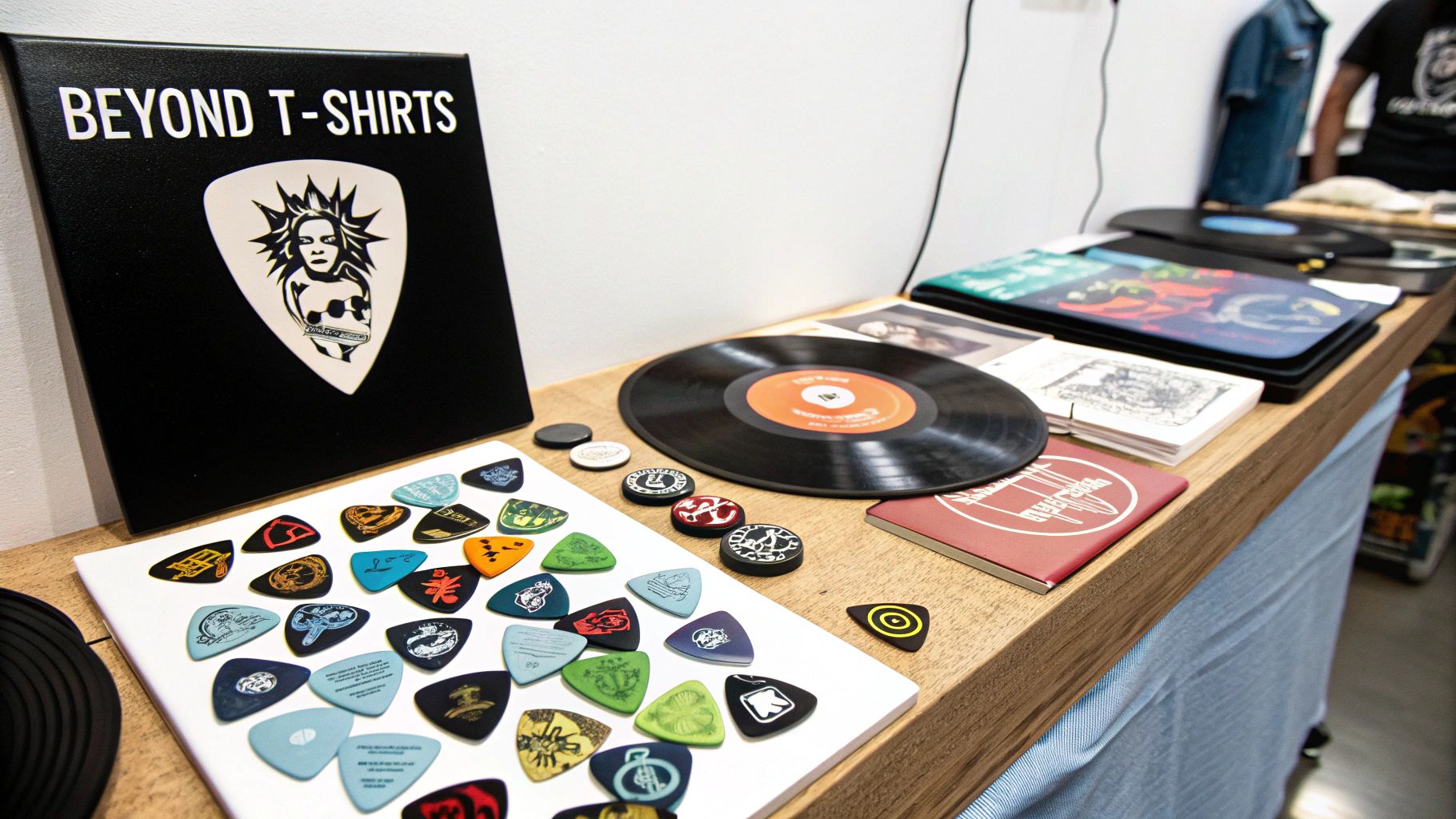
Look, T-shirts will always be the bread and butter of your merch table. They're a classic for a reason. But if that's all you're offering, you're leaving money on the table and missing a huge opportunity to connect with your most loyal fans.
Your true supporters aren't just buying a shirt; they want a tangible piece of your world. This is your chance to get creative and offer them something more, turning your online store from a simple shop into an authentic extension of your art.
Thinking Outside the T-Shirt Box
The most successful merch taps into the little things—an inside joke from a live show, a memorable lyric, or the specific vibe of your latest album. It’s about creating items that make a fan feel like they're part of the club.
So, where do you start?
Small, Cool Accessories: Think about items that fit the music lifestyle. Custom guitar picks, enamel pins for a battle vest, or branded keychains are all low-cost, high-impact items that fans love to collect.
High-Ticket Collector's Items: For your die-hard fans, nothing beats a limited-edition vinyl pressing with unique colorways, a framed, signed setlist, or even handwritten lyric sheets. These are the special pieces people will treasure for years.
Digital Exclusives: Don't forget you can sell things that don't need a shipping label. Offer exclusive B-sides, behind-the-scenes video content, or a download of a live concert. These are pure profit with zero inventory headaches.
We've seen this strategy work wonders. Major artists are blurring the lines between physical and digital by launching limited-time pop-up shops online. They’re selling everything from $20 shoelaces to $60 necklaces, proving that dedicated fans will show up for unique drops. For a deeper dive, you can check out some of the current artist merch trends on atvenu.com.
Your goal should be to build a product ecosystem. A casual listener can easily grab a cool shirt, but a superfan can find something truly special that makes them feel seen.
Ultimately, it all comes down to knowing who you're selling to. If you’re a punk band, custom skateboard decks might be a perfect fit. A folk artist? Maybe branded journals or handmade mugs.
By offering a thoughtful variety when selling band merch online, you cater to every level of fandom and transform your store into a destination, not just a checkout page.
Got Questions About Selling Merch Online? Let's Clear Things Up.
Diving into the world of online merch can feel like a lot at first. A ton of questions probably pop into your head as soon as you start thinking about it. That's totally normal. Let's walk through some of the big ones so you can move forward with confidence.
Probably the first thing on your mind is the cost. How much cash do you really need to get this off the ground? With the rise of print-on-demand, the surprising answer is often zero. Seriously. You don't pay a dime for a product until a fan actually buys it, which completely removes the classic nightmare of being stuck with a garage full of unsold t-shirts.
Then there’s shipping. Just the thought of it—packing, labels, post office runs—is enough to make anyone’s head spin. But it doesn't have to be a logistical headache.
So, How Do I Actually Handle Shipping and Fulfillment?
This is where the model you choose really matters. If you go the print-on-demand route, your fulfillment partner is your new best friend. They handle everything: the printing, the packing, and shipping the order straight to your fan's door. You literally never have to touch a roll of packing tape.
If you decide to order in bulk to get better margins, a platform like OohYeah can be a lifesaver. It integrates with shipping software to pull all your orders into one simple dashboard, letting you print labels and manage everything without tearing your hair out.
Of course, this brings up the question of profit. It’s true that your profit margin on a single print-on-demand item is lower than if you bought 200 shirts upfront. But the key difference is risk—with POD, your financial risk is zero.
Here’s a pro tip we’ve seen work time and time again: Start with print-on-demand. Use it to test out a bunch of different designs and see what your fans actually love. Once you've got a clear bestseller that people are consistently buying, then you can confidently invest in a bulk order of that specific design to seriously boost your profit margin.
Finally, let's talk customer service. Don't overlook this! Being proactive is the name of the game. Make sure your store has a clear FAQ page, always include detailed sizing charts for any clothing, and make a point to answer questions from fans quickly. A great experience turns a one-time buyer into a loyal supporter who will come back again and again.
Ready to take the reins of your music and merch? With OohYeah, you get the tools to grow your fanbase and sell directly to them, all while keeping more of the money you earn. Start building your artist ecosystem today on oohyeah.app.