Unlocking the Code of Record Label A and R
Discover how record label A and R teams find, sign, and develop artists. Learn proven strategies to get noticed and build a successful music career.
December 7, 2025
Music Marketplace Advisor
Buying & SellingAt its heart, the A&R department of a record label is all about talent. These are the folks responsible for discovering new artists, signing them to a deal, and then helping shape their creative and commercial journey. Think of A&R as the creative engine of a label, bridging the gap between raw, undiscovered talent and mainstream success.
The Venture Capital Engine of the Music World
The best way to understand a record label’s A&R (Artists and Repertoire) team is to see them as the venture capitalists of the music world. Instead of backing the next tech unicorn, they're investing in musicians. Their job is to find artists who show serious potential, sign them, and then pour in the resources needed to build a career and, ultimately, release hit records. It's a high-stakes role that demands a unique blend of artistic gut instinct and sharp business acumen.
This role has changed profoundly over the decades. It used to be all about instinct—A&R reps hanging out in smoky clubs, hoping to discover the next big thing. While that still happens, today’s A&R is just as much about data science as it is about art. They still scout live shows, but they also spend hours digging into streaming analytics, social media trends, and playlist momentum to find artists who are already building a buzz on their own.
They aren't just listening for a great song anymore; they're looking for an artist who can build a brand, connect with an audience, and sustain a career. Understanding this shift is key to figuring out how the music industry works.

The Financial Commitment Behind the Music
Signing an artist is a massive financial gamble for a label. The investment isn't just about paying for studio time to record an album—it’s a comprehensive, long-term commitment.
- Artist Development: This includes everything from vocal coaching and media training to helping an artist define their image and brand.
- Production Costs: The label fronts the money for A-list producers, sought-after songwriters, and booking world-class recording studios.
- Marketing and Promotion: Huge budgets are set aside for shooting music videos, running press campaigns, radio promotion, and providing tour support.
The numbers are staggering. In 2023, record labels invested an incredible US$8.1 billion in A&R and marketing across the globe, which accounted for nearly a third of the music industry's total revenue. This figure alone shows just how vital A&R is to launching careers in such a competitive market. It’s this financial firepower that turns an artist’s dream into a reality and lays the foundation for everything that comes next.
Inside the Modern A&R Team
Ever wonder how a record label actually works on the inside? Think of an A&R team like a film production crew. Everyone has a highly specialized job, but they're all laser-focused on a single creative vision: launching a successful artist. It’s a fast-paced, collaborative world where gut feelings and artistic taste have to work hand-in-hand with cold, hard strategy.
This internal structure is designed to make sure every single part of an artist's early journey is handled by an expert.

The team is a finely tuned machine. For any artist trying to get their foot in the door, understanding who does what is a huge advantage. While the exact job titles might differ from a major label to a small indie, the core functions are pretty much the same everywhere.
Key Roles and Responsibilities
At the heart of any A&R department, you'll find a handful of key players, each with a distinct purpose. This table breaks down who does what in a typical setup.
Key Roles Within a Record Label A&R Department
| Role | Primary Responsibility | Key Activities |
|---|---|---|
| Head of A&R | Sets the label's overall artistic direction and has the final say on signings. | Manages the department budget, guides long-term strategy, greenlights major projects. |
| A&R Manager | Acts as the main point of contact for an artist and oversees their project. | Helps select producers, coordinates recording sessions, provides creative feedback, and connects the artist to marketing, legal, etc. |
| A&R Scout | Discovers new talent and brings promising artists to the team's attention. | Attends live shows, scours streaming platforms, analyzes data, builds a network of contacts. |
| A&R Coordinator | Manages the day-to-day administrative and logistical tasks for the department. | Schedules meetings, books studios, handles contracts and paperwork, tracks project budgets. |
Each of these roles is a crucial piece of the puzzle. From the big-picture visionary to the person handling the nitty-gritty details, it takes a village to break a new artist.
Let's unpack these roles a bit more.
The Head of A&R is the executive producer of the whole operation. They're the ones steering the ship, making sure the label's roster feels cohesive and is positioned to win in the current market. They have the final say on who gets a record deal.
Your day-to-day champion is the A&R Manager. Think of them as the director of your project. They are your go-to person at the label, helping you pick the right producer, finding the perfect co-writer, and making sure your recording sessions run smoothly. They’re the bridge between you and every other department, from publicity to legal.
Out on the front lines are the A&R Scouts. These are the people with their ears glued to the ground. You'll find them in sweaty clubs watching new bands, digging through Spotify playlists, and relentlessly networking to find the next big thing before anyone else does.
And holding it all together is the A&R Coordinator. This person is the logistical genius who keeps the trains running on time. They’re managing schedules, booking studios, and tracking all the paperwork. Without them, the creative side of things would grind to a halt.
A&R is not just about finding talent; it's about seeing the future. A great A&R professional identifies an artist's potential and builds the entire world around them to help them realize it.
This complex ecosystem of roles is a huge part of what makes the music industry tick. If you're looking to break in, our guide on how to get into the music industry dives even deeper into these career paths. Every position demands a unique set of skills, but they all share one common goal: turning an artist's raw vision into something that moves culture and succeeds commercially.
How A&R Teams Discover New Artists
The classic image of an A&R scout discovering the next big thing in some smoky, dimly-lit club isn't entirely a myth, but it's only a small piece of a much larger puzzle today. Modern talent discovery is a fascinating mix of old-school gut instinct and new-school data science. Scouts still rely on their ears and their network, but now their intuition is supercharged by powerful analytics.
This hybrid approach gives A&R teams a 360-degree view of an artist's potential. They're not just looking for a unique sound anymore; they're looking for artists who have already proven they can build an audience all on their own.
The Power of Data in Artist Discovery
In today's music world, an artist's digital footprint tells a story. A&R teams are digging deep into the analytics from platforms like Spotify, TikTok, and YouTube to find musicians with real, organic momentum. Forget vanity metrics—they’re looking past simple follower counts to find the numbers that signal genuine potential.
These metrics offer hard proof that an artist is connecting with listeners and can turn online buzz into a real-world fanbase. Some of the key performance indicators they obsess over include:
- Streaming Velocity: How fast a new track is racking up plays.
- Playlist Adds: Getting placed on influential playlists, whether they're curated by editors or just passionate fans.
- Follower Growth Rate: A steady, authentic climb in followers, not just a one-off spike.
- Engagement Metrics: The ratio of likes, comments, and shares to the total follower count. High engagement is a huge green flag.
- Viral Indicators: Popping up on charts like Spotify’s Viral 50 or becoming the sound behind a new TikTok trend.
This data-first mindset is now central to how most labels operate. The A&R role has changed dramatically with technology, especially as AI-powered tools become a standard part of the scouting toolkit. Platforms like Sodatone, now part of Warner Music Group, use machine learning to sift through mountains of data from streaming and social media, helping A&R teams make smarter, data-backed bets. You can read more about these kinds of shifts in these music industry predictions on bridge.audio.
Traditional Scouting Still Matters
For all the talk about data, you can't sign a spreadsheet. The human element is still absolutely critical. A great A&R scout knows some things just can't be measured by an algorithm, which is why hitting the pavement and attending live shows is still a huge part of the job. A packed room at a local venue can tell you more than a viral video ever could.
An artist can have millions of streams, but if they can't connect with a live audience, they don't have a long-term career. Stage presence, charisma, and the ability to command a room are timeless indicators of star potential.
And of course, networking is everything. A trusted recommendation from a manager, entertainment lawyer, or publisher is worth its weight in gold. A warm introduction from a credible source can instantly cut through the noise and get an artist’s demo to the top of the pile.
The Complete Evaluation Checklist
When an A&R team is seriously considering an artist, they're looking at the whole picture, not just one hit song. Signing an artist is a massive investment in a long-term career, and they need to see a complete, well-rounded package. Their evaluation checklist usually boils down to these core areas:
- The Music Itself: Is the sound original and compelling? Is it well-produced? More importantly, does the artist have a consistent and authentic musical identity?
- Brand and Image: Is there a clear brand and aesthetic? Does their visual presentation feel professional and engaging across their website, socials, and press photos?
- Work Ethic and Professionalism: Are they driven and easy to work with? Do they have a professional team in place, or at least the savvy to build one?
- Live Performance: Can they put on a killer show? Do they have that magnetic quality that connects with an audience and makes people want to come back for more?
- Fan Engagement: Is there a real community built around the music? Do they have an active, loyal, and growing fanbase that genuinely interacts with them?
At the end of the day, a successful pitch to an A&R team proves you’re not just a talented musician—you’re a viable business partner ready for the next level.
The Artist Development Journey After Signing
So you got the record deal. The ink is dry, the champagne has been popped, but this is the starting line, not the finish. Now the real work begins.
This is where the relationship between an artist and their A&R team shifts from discovery to an intense, hands-on development process. The primary goal? To take that raw talent and unique vision that got you noticed and shape it into a project that can stand out in a crowded market.
This is a true partnership. The A&R manager becomes your creative guide and internal champion, helping to sharpen your sound, image, and overall brand. It’s not about molding you into something you’re not; it's about amplifying what makes you special. Once signed, this is also the perfect time for artists to build out their world and connect with fans when they explore band merchandise and other creative avenues.
The chart below shows how you likely got here in the first place—through a modern scouting process that blends old-school methods with new-school data.
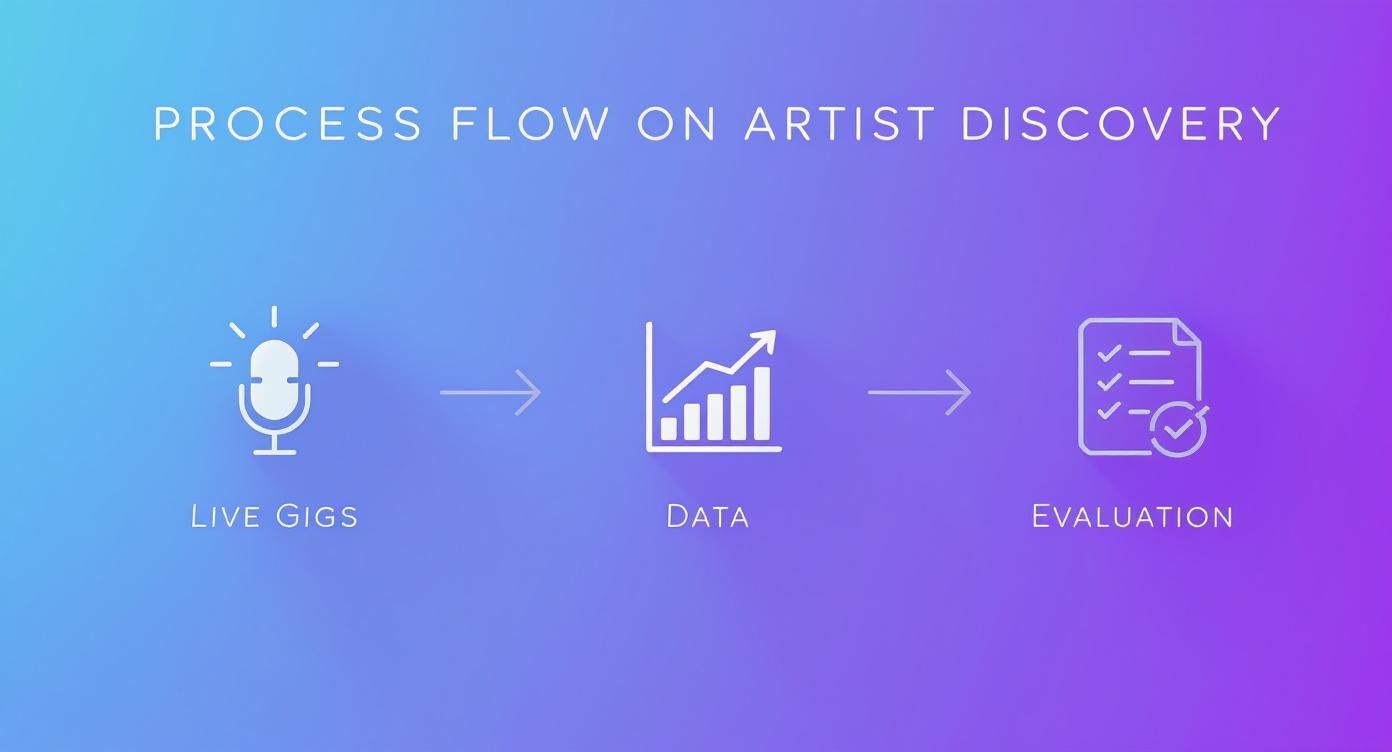
This process, combining boots-on-the-ground scouting with hard data, is how labels identify promising talent before this deeper development journey even kicks off.
Building the Creative Team
One of the most valuable things an A&R manager brings to the table is their Rolodex. They act as a creative matchmaker, using their deep industry network to connect you with the right people who can take your music to the next level. This isn't random; it's a strategic process tailored completely to your sound and goals.
This matchmaking typically includes:
- Finding the Right Producer: Your A&R will help find a producer whose sonic palette and track record align with your vision, ensuring your recordings are crisp, powerful, and commercially competitive.
- Arranging Songwriting Sessions: They can set up co-writing sessions with established songwriters who can help you polish a lyric, nail down a melody, or simply offer a fresh perspective to break a creative block.
- Assembling Session Musicians: Need a killer string section or a legendary drummer? The A&R team can bring in top-tier session players to add that extra layer of professionalism and texture to your tracks.
The A&R team is your advocate inside the label. Their mission is to build a world-class support system around you, giving you the resources and connections needed to create the best album imaginable.
This entire phase is a constant back-and-forth. The A&R manager provides feedback on demos, helps you sequence the perfect tracklist, and makes sure the project stays on schedule and within budget. It's this crucial partnership that transforms an artist with potential into a career musician with a debut album that truly matters, all while keeping the original spark of authenticity intact.
How to Get on an A&R Radar
https://www.youtube.com/embed/Z9Alop7n5EA
Getting noticed by a record label A&R team rarely happens by chance. It's not about a lucky break; it's about methodically building a case that proves you're a smart investment. In an era where anyone can release music, your first job is to create your own momentum.
That means you have to stop thinking only like an artist and start acting like a business owner. Your art is the product, and your brand is how you sell it. This starts with a powerful, cohesive online footprint. Your website, social media presence, and streaming profiles need to tell the same professional story and reflect a clear identity. For example, growing your Instagram following organically isn't just a vanity metric; it's a critical signal to the industry that you know how to build a community.
Cultivate a Dedicated Fanbase
A&R scouts look for great music, but what they’re really searching for is proof of an existing market. The most compelling evidence you can offer is a dedicated fanbase, no matter how small.
The key is deep engagement, not just big, passive numbers. An artist with 1,000 true fans—people who buy merch, show up to gigs, and share every release—is a far better bet than someone with 50,000 followers who barely notice a new post. That core audience is your leverage.
"A&R teams are drawn to heat. Your job as an artist is to create that heat yourself. Build a community so passionate and engaged that they simply can't ignore the buzz you're generating on your own."
This approach completely flips the dynamic. Instead of you chasing them, you're creating a movement they want to join. You build this through consistent gigging, genuine online interaction, and giving your followers real value.
Master Your Professional Toolkit
When you finally start getting that buzz, you absolutely must be ready for that first email or call. Having a professional toolkit on hand shows you're serious and makes an A&R rep's job infinitely easier. This part is non-negotiable.
Your most important tool here is your Electronic Press Kit (EPK). Think of it as your digital resume—it needs to be sharp, professional, and have everything in one place.
A solid EPK must include:
- Your Music: Three of your absolute best songs, professionally mixed and mastered. Make sure they are easy to stream, not download.
- High-Resolution Photos: Professional press shots that instantly convey your brand and image.
- Artist Bio: A short, compelling story explaining who you are and what your music is all about.
- Key Career Highlights: Any notable press, big shows you’ve played, or impressive streaming stats.
- Contact Information: Clear, easy-to-find details for you or your manager.
When you have these elements buttoned up, you’re not just sending links to songs; you’re presenting a complete, professional package.
The Art of the Professional Approach
When it's time to reach out, how you do it is just as important as what you're sending. Forget about mass, generic emails, and never, ever attach large audio files directly. The real work is in the research. Find the specific A&R person at a label whose roster actually makes sense for your sound.
Keep your email brief, personal, and to the point. Introduce yourself, highlight a recent accomplishment to grab their attention, and give them a direct link to your EPK. You want to make it as effortless as possible for them to check you out. Our guide on how to get my music heard offers more detailed strategies on this. Just remember, a single, thoughtful, targeted email will always beat a hundred generic blasts.
Spotting A&R Myths and Red Flags
The A&R world is full of legendary discovery stories, but it's also rife with myths and outright scams. For any artist trying to build a career, learning to tell the difference is a survival skill. You have to approach every opportunity with a healthy dose of professional skepticism.
One of the most persistent myths is that a record deal is a golden ticket to overnight success. The reality? It’s just the starting line for an even more intense phase of work. Another outdated idea is that raw talent is all it takes. Labels today are looking for artists who have already done the hard work of building a brand and connecting with an audience.
Common Misconceptions That Can Hurt Your Career
Buying into these myths can set you up for some serious disappointment and lead you to make bad decisions. Having a clear-eyed view of how the industry actually works is your best defense.
- Myth 1: The "Big Break" Is a Lightning Strike. The truth is, most "overnight successes" are the result of years of grinding, writing, performing, and building a loyal following long before a label shows up.
- Myth 2: The Label Takes Over Everything. Modern record deals are much more like partnerships. The label brings the investment and infrastructure, but they expect you to bring a clear vision and be a hands-on collaborator in your own career.
- Myth 3: You Don't Need a Team Yet. This is a big one. An A&R rep sees an artist with a manager or a solid business plan as a serious professional, not a hobbyist. It shows you're already thinking like a business.
Your career is your business. A record label is a powerful amplifier, but they are investing in the foundation you've already built.
Serious Red Flags You Can't Ignore
Protecting yourself and your music means knowing how to spot the sharks. A legitimate A&R professional from an established label will always operate with a certain level of professionalism—predatory behavior is not part of the playbook.
If you run into any of these situations, your alarm bells should be ringing loud and clear:
- "Pay-to-Play" Demands: Let's be crystal clear: a real record label A&R will never ask you for money. Ever. If someone mentions submission fees, evaluation charges, or costs to get you on a "special playlist," it's a scam. End of story.
- High-Pressure Tactics: Anyone rushing you to sign a contract on the spot does not have your best interests at heart. You should always be given plenty of time to have any agreement reviewed by a qualified music attorney. If they pressure you, walk away.
- Unprofessionalism: Pay attention to the details. Vague, hype-filled promises without substance, emails from a generic Gmail or Yahoo account, and consistently poor communication are all signs you’re dealing with an amateur or a fraud, not an industry pro.
Your A&R Questions, Answered
Getting a handle on the A&R world can feel like learning a new language. Let's clear up some of the most common questions artists have as they start their journey.
Do I Need a Manager Before I Talk to A&R?
It's not a hard-and-fast rule, but having a respected manager in your corner is a massive advantage. Think of them as a vouchsafe—their reputation and industry connections lend you immediate credibility.
An introduction from a trusted manager cuts through the noise. It tells the record label A&R team that you’re serious and have already passed someone else's professional sniff test, making them much more likely to listen.
How Much Does My Social Media Following Really Matter?
The size of your following is one thing, but engagement is the real currency. A&R reps get more excited about an artist with 10,000 highly active fans than one with 100,000 followers who never comment, share, or show up.
What they're searching for is proof of a real, vibrant community. That's the audience that will actually stream your music, buy tickets, and wear your merch.
A&R scouts are looking for signs of a real, active community. High engagement proves you have a dedicated audience ready to support your career long-term, which is less risky for a label to invest in.
What’s the First Thing I Should Do If an A&R Rep Reaches Out?
First off, take a breath. Stay cool and professional. Your goal is to reply quickly and have your Electronic Press Kit (EPK) polished and ready to send over the moment they ask.
This first interaction is as much a test of your professionalism as it is about your music. Be ready to talk about your vision, your creative process, and where you see yourself going. And always, always do your homework to verify their identity and make sure they’re legitimately affiliated with the label they claim to represent.
Ready to take control of your music career? OohYeah provides the tools you need to build your brand, engage your fans directly, and sell your music and merchandise on your own terms. Start building your future today at OohYeah.