A Modern Playbook to Promote Independent Music
Discover how to effectively promote independent music with our playbook. Learn actionable strategies for release planning, fan engagement, and monetization.
February 1, 2026
Music Marketplace Advisor
Buying & SellingTo really make an impact with your music, you have to lay the groundwork long before release day. This pre-release phase is where the magic happens. It’s the behind-the-scenes work of fine-tuning your metadata, planning your distribution, and zeroing in on your audience strategy.
Honestly, this is the part artists often rush through in their excitement, but it’s what separates a release that truly connects from one that just gets lost in the noise.
Building Your Pre-Release Foundation
Long before you even think about hitting 'publish,' you're already determining how your music will be received. This isn't just about ticking off items on a to-do list; it's about methodically building a launchpad that gives every single promotional effort you make later on a fighting chance. Think of it like setting the stage for a gig—without the right lighting and sound check, even an incredible performance can fall flat.
There's a ton of energy in the independent music scene right now. In the U.S. alone, the independent label industry has ballooned to an estimated $668.6 million in revenue, growing at 10.4% annually over the last five years. Platforms like OohYeah are built to help you grab a piece of that action by putting you directly in touch with your listeners, no gatekeepers required.
Defining Your Audience and Goals
You can't hit a target you can't see. Your promotional efforts will feel scattered and weak without a clear picture of who you're trying to reach. Who are these people? What else do they listen to? Where do they hang out online and find new music? Figuring this out is your first real step. A big part of this pre-release work is identifying your target audience so your music finds the right home.
Once you know who you're talking to, you can set real, tangible goals. Your goals might look something like this:
- Audience Growth: Aim to gain 100 new OohYeah followers or 50 new email subscribers.
- Engagement: Shoot for 200 shares, comments, or direct messages on your OohYeah posts.
- Monetization: Target selling 25 commission-free downloads or signing up 10 new subscribers.
Key Takeaway: Vague goals get you vague results. A goal like "get 50 new email subscribers from this release" is way more effective than just "grow my audience" because it gives you a clear finish line to run toward.
Crafting a Realistic Release Timeline
That pre-release anxiety is almost always a symptom of a messy timeline. If you rush, you'll inevitably cut corners on promotion. But if you wait too long, you risk losing all the momentum you’ve built. A well-planned timeline creates anticipation and gives you the breathing room to do things right.
This timeline gives you a bird's-eye view of the key phases: getting your assets ready, planning your outreach, and finally, launching.
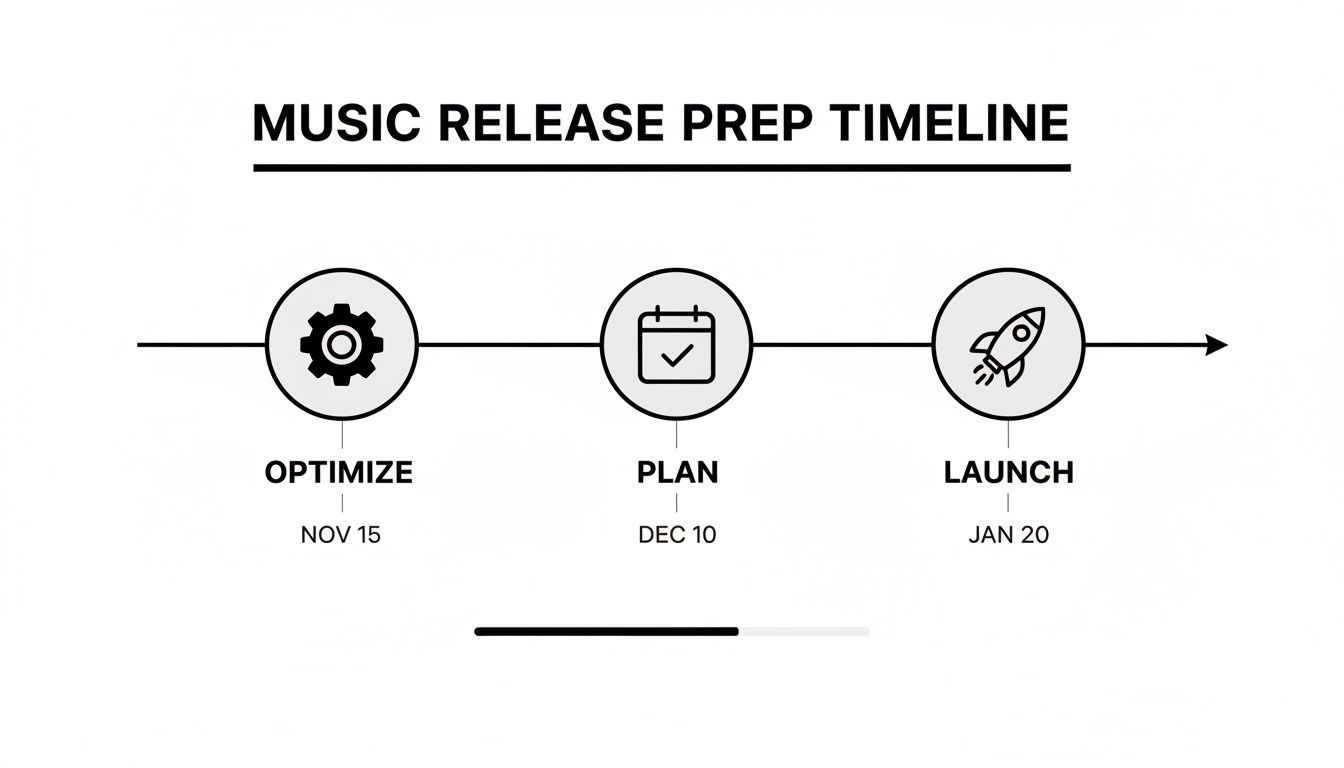
When you break the process down into manageable chunks—from asset prep to post-launch follow-up—the whole thing feels less like a mountain and more like a series of small, achievable hills.
Optimizing Your OohYeah Profile for Launch
Think of your OohYeah profile as your digital home base. Before you start sending people there, you need to make sure it's polished, professional, and ready to turn a casual visitor into a genuine fan. This isn’t just busywork; it's about creating a destination that feels authentic to you.
Before your campaign kicks into high gear, use this checklist to make sure your OohYeah presence is primed for new fans.
Your Pre-Release Campaign Checklist on OohYeah
| Task Category | Action Item | Why It's Critical |
|---|---|---|
| Profile Polish | Update your bio and profile picture. | This is your first impression. Make it count and ensure it reflects your current sound and brand. |
| Content Readiness | Upload high-quality track and cover art. | Crisp, professional visuals signal quality and make your music more shareable. |
| Monetization Setup | Activate subscriptions or downloads. | Don't leave money on the table. Make it easy for new fans to support you from their very first visit. |
| Community Features | Create an initial post announcing the upcoming release. | This warms up your existing audience and gives them something to share, building early momentum. |
Getting these pieces in place first means that every click you work so hard to earn has the best possible chance of turning into a lasting connection.
For a more in-depth look at this process, check out our guide on the best practices for releasing new music online. This groundwork is what makes everything else possible.
Creating a Fan Community That Lasts
Let’s be honest: chasing follower counts and likes is a hamster wheel. Those numbers are fickle, easily tanked by the next algorithm update, and they don't pay your rent. When you promote your music, the real win isn't a viral moment; it's building a core group of people who are genuinely invested in your journey.
Think of this community as your career’s immune system. They're the ones who buy your merch, subscribe to your page, and actually show up when you play a show. They become your most powerful promotional tool because their support is real. Building that takes more than just posting—it requires authenticity and direct connection.
Forging Real Connections on OohYeah
Generic, one-to-many social media posts have a ceiling. To build something that lasts, you need to create small, personal moments that make your fans feel like individuals. This is where a platform like OohYeah gives you a serious edge, with tools built specifically for this kind of direct interaction.
OohYeah’s direct messaging and voice note features are your secret weapons for cutting through the digital noise. Imagine a new fan buys your latest track. Instead of just an automated email receipt, they get a personal voice note from you saying thanks. That one gesture can turn a casual listener into a fan for life.
Here are a few simple ways to put this into practice:
- Welcome New Subscribers: When someone subscribes on OohYeah, shoot them a quick, personalized welcome message. Ask them which of your songs they discovered first.
- Host a Voice Note Q&A: Announce an "Ask Me Anything" where fans send questions, and you reply with short, personal voice notes. It feels incredibly intimate.
- Share Your Process: Send a quick voice memo of a new guitar riff or lyric idea to your top supporters. This makes them feel like they're inside the creative process with you.
These are the small, human interactions that algorithms can't touch, and they form the bedrock of a solid community.
A Quick Story from the Trenches: I once spent an hour sending individual DMs to everyone who pre-saved a single. It was tedious, but the response was incredible. People were blown away to get a real message, and that group became the most vocal cheerleaders for the release.
Turning Social Media Into a Funnel
Stop thinking of your social media profiles as the final destination. They are the signposts pointing everyone back to your OohYeah hub—the one place where you control the experience and can build a much deeper relationship.
Every post needs a purpose. Are you trying to get email sign-ups? Drive traffic to your new single? Sell merch? Figure out the goal before you create the content.
For example, instead of a lazy "New song out now, link in bio," try this:
- Post a short video showing a cool behind-the-scenes moment from making the song.
- In the caption, tell a quick story about what inspired a specific lyric or melody.
- End with a clear call-to-action: "Hear the full story and grab the track commission-free, only on my OohYeah page. Link in bio!"
This approach gives people value and context, giving them a real reason to click instead of just scrolling by. Your social media becomes an effective funnel, not a content graveyard. For artists looking to go even deeper, modern Web3 community building strategies offer some fascinating new models for engagement.
Building Your Most Valuable Asset: The Email List
If there's one thing to take away from this, it's this: your email list is the single most important asset you will ever build as an independent artist. You own it. No algorithm can take it away or limit your reach. It's your direct line to your most dedicated fans.
Your main goal on every platform should be to convince people to subscribe. A simple "join my newsletter" isn't going to cut it. You have to offer them something genuinely valuable in return.
Consider offering an incentive like one of these:
- An exclusive acoustic version of a fan-favorite song.
- A free download of a demo that will never be released anywhere else.
- A digital booklet with lyrics and behind-the-scenes photos.
- First access to new merch drops or ticket pre-sales.
For a deeper dive into turning listeners into lifelong fans, check out our complete guide on how to build a loyal fan base as an independent artist. By consistently putting your energy into these community-first strategies, you’re building a foundation that will sustain your career long after any fleeting viral trend has passed.
Executing a Promotion Strategy That Actually Works
Alright, you've laid the groundwork and started building a genuine community. Now it's time to crank up the volume. This is where we shift from building to broadcasting—using smart tools and targeted outreach to get your music in front of the people who need to hear it. An effective strategy to promote independent music isn’t about just shouting into the void and hoping for the best. It’s about making focused, intelligent moves that cut through all that noise.
This phase is all about calculated decisions. Whether you're running a small-budget ad campaign, hitting up playlist curators, or teaming up with another artist, every action should be a deliberate step toward finding your next true fan.
Mastering Smart Social Media Ads
I get it—paid ads can feel like a black box. But when used correctly, they are one of the most powerful ways to reach listeners well beyond your current followers. The key is to start small, target with laser precision, and focus on what you can learn, not just the vanity metrics.
First thing's first: define your audience. And I mean really define it. Instead of a broad target like "hip-hop fans," get granular. Think about people who are fans of specific artists with a similar vibe to yours, readers of certain music blogs, or even people living in a city you're hoping to tour soon.
You don't need a huge budget. Seriously. $5-$10 per day is plenty to get started. Your initial goal isn't to go viral; it's to gather intelligence. Run a couple of different ad versions—maybe a clip from a live performance against an ad with your slick cover art. OohYeah's analytics will show you which one is getting the clicks and what kind of person is responding. That data is pure gold for your next, bigger campaign push.
Pitching to Curators and Bloggers
Getting your music onto playlists and blogs is a game of personalization and respect. Curators are absolutely bombarded with hundreds of submissions daily, and you can bet that generic, copy-paste emails get deleted on sight. Your outreach has to show you’ve actually done your homework.
Pro Tip: Never, ever send a mass email. Use the curator's name, mention a specific song or artist they recently featured that you genuinely liked, and then briefly explain why your track is a great fit for their specific audience. Keep it short, be professional, and always include a direct, private streaming link.
Here’s a simple structure that has always worked well for me:
- A Personalized Hook: "Hey [Curator's Name], I'm a huge fan of your 'Midnight Indie' playlist. That [Similar Artist] track you added last week has been on repeat."
- The Quick Pitch: "My new single, '[Your Song Title],' has a similar melancholic vibe, and I had a feeling it might really connect with your listeners."
- The Easy Ask: "You can check it out right here: [Private OohYeah Link]. Appreciate your time and consideration."
This approach proves you value their taste and aren't just spamming a list. That little bit of effort goes a long way in building real relationships that can pay dividends for years to come. From giants like Pitchfork to incredible niche tastemakers like GoldFlakePaint, find the outlets that truly align with your sound.
The Power of Artist Collaborations
Teaming up with other artists is probably one of the most effective—and most overlooked—ways to promote independent music. A good collaboration is a powerful cross-promotional engine. Everyone wins by tapping into each other’s established fanbase.
Start by looking for other artists on OohYeah who are at a similar point in their journey. You want someone with a complementary sound, not an identical one. You're searching for a partner, not a competitor.
Here are a few collaboration ideas you can run with right away:
- Playlist Swaps: Create a shared playlist that features both of your tracks, then push it hard to both of your audiences.
- Social Media Takeovers: Trade Instagram or TikTok accounts for a day. It’s a fun way to introduce your music and personality to a new, engaged crowd.
- Collaborative Tracks or Remixes: This is the ultimate partnership. Co-writing a song or remixing another artist's track exposes you to their most dedicated listeners.
- Shared Gigs: Team up to book a local show or co-host a livestream event. You can split the promotional work and the stage, making for a bigger draw and a better show for everyone.
These partnerships foster a real sense of community and mutual support. Instead of trying to claw your way to the top alone, you’re building the ladder together—a much more sustainable, and honestly, more rewarding way to grow.
Turning Your Art Into a Sustainable Career
Getting your music heard is a huge milestone. But turning that attention into a paycheck? That's how you build a future. This is the moment where you shift from an artist with a hobby to an artist running a business, and OohYeah’s direct-to-fan tools are built to help you do just that, without the traditional gatekeepers.
The independent music scene is absolutely thriving. We're seeing a massive shift where indie labels are returning a third of their revenue straight back to artists—a world away from old-school major label deals. This artist-first mentality is why independents commanded a 47% global ownership share in 2023.
OohYeah is built on that same principle. By cutting out the middleman, we make sure you keep more of what you earn. That’s a game-changer for the 13.3% of artists currently making a full-time living from their music. You can read more about this industry shift and what it means for your career.
Building Your Merch Store with Purpose
A merch store is so much more than another revenue stream. It's a physical extension of your brand and a real, tangible connection with your biggest supporters. People buy merch because they want to feel closer to the music and the person behind it. Your job is to create things they'll be genuinely excited to own and show off.
Don't just slap your album art on a t-shirt and call it a day. Think about what makes your sound and your story unique. If your lyrics are poetic and introspective, maybe a beautifully designed journal or a set of lyric cards would connect far better than a generic hoodie.
Here are a few ideas to get the wheels turning:
- Limited Edition Drops: Nothing creates excitement like scarcity. Try a small run of a special t-shirt design or a signed poster, but only make it available for one week.
- Lyric-Based Designs: Pull a short, powerful phrase from one of your songs and make it the centerpiece of a design. It’s an inside reference for your true fans.
- Bundled Offers: Package a new digital single with a physical item, like a custom guitar pick or a sticker pack. It creates a high-value offer that’s hard to resist.
OohYeah’s integrated storefront makes managing all of this surprisingly simple, so you can stay focused on the creative side of things.
Key Insight: The best merch doesn’t just have your name on it; it tells a story. It’s an inside joke for your fans, a memento of a specific era of your music, and a badge of honor for being part of your community.
Creating Subscription Tiers That Deliver Real Value
Subscriptions are the holy grail for building a predictable, recurring income. This is where your most dedicated fans get to support you consistently, and in return, you give them something special. The secret is structuring your tiers with clear, tangible benefits that feel like a genuine value exchange.
You want subscribing to feel less like a donation and more like joining an exclusive club. Think about what you can offer that doesn't cost you a lot of money but is incredibly valuable to a fan—things like access, insight, and recognition.
Here’s a sample tier structure you could set up on OohYeah:
| Tier Name | Monthly Price | Core Benefits |
|---|---|---|
| The Insider | $3 | Early access to new songs, exclusive community posts, and a members-only badge. |
| The Collaborator | $7 | Everything in "Insider," plus monthly behind-the-scenes videos and a direct line to ask you questions. |
| The Patron | $15 | All previous perks, plus a free merch item after three months and a personalized thank-you voice note. |
This kind of model provides a clear ladder of value, encouraging fans to become more deeply invested in your journey over time.
Maximizing Your Earnings with Commission-Free Downloads
When a fan buys your music directly from you, it's a powerful statement. They are making a conscious choice to put their money right in your pocket. OohYeah’s commission-free download feature was designed to honor that relationship, ensuring you keep what you’ve earned without a platform taking a huge cut.
This is a massive advantage when you need to promote independent music. You can run sales or promotions with total confidence, knowing that revenue is actually coming to you.
To make the most of this, you have to be intentional. Actively guide your audience to your OohYeah page. When you announce a new single on social media, don't just link to streaming—make the primary call-to-action a direct link to buy the download. Tell your fans, plainly and honestly, that buying directly is the single most effective way they can support your work. That transparency builds incredible loyalty and makes them feel like true partners in your career.
Using Data to Sharpen Your Next Move
Your promotion strategy shouldn't be a guessing game. Real, sustainable growth happens in a cycle: you make a move, you measure what happens, and you adjust your next step based on what you learned. This is how you stop pouring time and money into tactics that fall flat and start doubling down on what truly connects with your audience.
It’s time to become your own best strategist by learning to read the story your data is telling you.
The modern music world is a strange place. Independent artists now make up over 50% of all music consumed on major platforms, which is a massive win. But the flip side is pretty stark: 77.8% of artists earned less than $15,000 from their music last year, and 67% of artists on Spotify have fewer than 1,000 monthly listeners.
OohYeah is built to help you cut through that noise, using powerful, easy-to-understand analytics to turn listener data into a real, sustainable career. You can get a deeper look at the numbers by exploring more insights on the state of the music industry.
Finding the Metrics That Actually Matter
It’s easy to drown in data. The real skill is finding the insights that will actually move the needle for your career. Inside your OohYeah dashboard, you can skip the vanity metrics and zone in on the numbers that directly impact your growth and your bottom line.
These are the data points that tell you about genuine fan behavior and financial health. Start by focusing here:
- Download & Merch Sales: This is your most direct feedback loop. Which track are people paying for? Is one t-shirt design outselling all the others? This tells you exactly what resonates.
- Subscriber Growth: Don't just track how many subscribers you have—track when they signed up. Did a certain post or a new release cause a big jump? That’s a clue.
- Top Listener Locations: Pinpointing the cities and countries where your most dedicated fans live is gold. It’s the key to planning targeted ad campaigns or mapping out a future tour.
- Referral Traffic Sources: See exactly where your fans are clicking from. Was it a specific Instagram Reel, a feature on a blog, or a link from a friend's page? This shows you which promo channels are worth your effort.
By zeroing in on these key metrics, you can get a clear, honest picture of what's working without getting lost in the noise.
A Real-World Example: I once worked with a singer-songwriter who noticed a small but dedicated cluster of listeners in Austin, Texas, even though she'd never been there. Using that one piece of data, she ran a tiny, hyper-targeted ad campaign for her next single aimed at indie music lovers in that city. The result? A 300% jump in downloads from that area and a couple of features on local music blogs.
Turning Data Into Your Next Move
Data is just a pile of numbers until you use it to make a decision. The goal is to transform what you see on the screen into a smarter, more effective strategy for your next release. It’s an ongoing process of asking questions and letting your analytics guide you to the answers.
Once you have your data, start asking questions like these:
Which city has my most loyal fans?
- Your Next Move: Plan a small, targeted ad campaign for that city. You could also prioritize it for your next tour or even just give those fans a special shout-out in your next OohYeah post.
What was it about that one social media post that drove so much traffic?
- Your Next Move: Break it down. Was it the raw, behind-the-scenes video? The personal story in the caption? The specific call-to-action you used? Find the formula and replicate it.
Why are fans buying my single but not my merch?
- Your Next Move: Maybe it's time for a new design inspired by the lyrics or artwork of that very song. Or, you could create a limited-time bundle that packages the track and a t-shirt together for a discount.
This cycle of analysis and action is the engine that drives a successful career. For a more detailed walkthrough, our guide on using data analytics to grow your music fanbase offers even more tactical advice. Every release becomes a new experiment, and with each one, you get smarter, more efficient, and that much closer to your goals.
Common Questions from Independent Artists
Navigating music promotion can feel like fumbling in the dark. Over the years, I've heard the same questions from countless talented artists—they've mastered their craft, but getting their music heard feels like a whole different, and often frustrating, ballgame. This section is here to answer those recurring questions with clear, straightforward advice.
Let's cut through the noise so you can get back to building your career on a platform like OohYeah.
How Often Should I Release New Music to Stay Relevant?
There’s no magic number here. The real secret isn't frequency, it's consistency. For most indie artists, dropping a new single every six to eight weeks hits the sweet spot. This gives you enough time to properly promote each track without letting the trail go cold for your audience.
A steady cadence keeps the momentum going and your listeners hooked. Keep an eye on your OohYeah analytics to see how people are responding. If a single really catches fire, feel free to give it a longer promotional push. It's all about finding a sustainable rhythm that blends quality music with a reliable presence.
Key Takeaway: A consistent release schedule does more than just put out music; it trains your audience to anticipate your next move. It turns casual listeners into a dedicated following actively waiting for your next drop, which builds an incredible sense of community and excitement.
What Is More Important: A Social Media Following or an Email List?
They both play a role, but your email list is easily your most valuable asset. Period. Social media platforms are rented space—an algorithm can change overnight and completely tank the reach you spent years building.
Your email list, however, is a direct line to your fans that you own and control. It’s where your most loyal supporters gather. The best strategy is to use your social media as a funnel to get people onto that list.
Offer a little something to sweeten the deal for new subscribers:
- A free, commission-free download of an unreleased track via OohYeah.
- Early access to your next music video before it hits YouTube.
- A digital booklet with lyrics and behind-the-scenes studio photos.
Think of it like this: social media is for casting a wide net and finding new people. Your email list is for nurturing the ones who really care.
Should I Spend Money on Ads for My First Release?
It can be a great move, but only if you're smart about it. Before you spend a single dime, you have to get your house in order. That means your OohYeah profile is complete and looks professional, you have high-quality photos and video clips ready to go, and you have a solid idea of who you're trying to reach.
Start small. An experimental budget of just $5 to $10 per day is plenty to start gathering data. Target fans of artists who sound like you, or focus on a city where you’ve noticed a cluster of listeners. The goal of this first campaign isn't to go viral; it's to learn. The analytics will show you who's clicking and engaging, and that information is pure gold for refining your strategy on bigger campaigns later on.
How Can I Get My Music on Playlists Without a Big Budget?
First things first: forget the massive, official editorial playlists for now. They're incredibly competitive. Instead, put your energy into connecting with independent curators and getting on user-generated playlists. It's a grassroots game, and it works.
Start by digging around on platforms like Spotify for smaller, niche playlists that are a perfect fit for your sound. Look for curators who leave a submission link or contact info in their profile description. When you reach out, make it personal.
Mention a specific song on their playlist that you genuinely like, then briefly explain why your track would be a great addition for their audience. On OohYeah, you can even team up with other artists to create and cross-promote your own shared playlists. It’s a fantastic way to build a supportive network that helps everyone grow together.
Ready to take control of your music career with tools built for independent artists? Join OohYeah today and start building your community, selling your music commission-free, and turning your passion into a sustainable business. Get started at oohyeah.app.