Your Guide to Creating a Pink Vinyl Record
Create a custom pink vinyl record with this guide for artists. Learn about manufacturing, artwork design, pricing, and marketing your unique release.
December 2, 2025
Music Marketplace Advisor
Buying & SellingSo, you’re thinking about pressing your next album on pink vinyl. Good call. A pink vinyl record isn't just another way to sell your music; it's a statement piece, a collectible work of art that can define an entire album cycle for an independent artist. This kind of unique physical media forges a much deeper connection with your fans and helps carve out a memorable brand identity.
In a sea of standard black LPs, a pop of color like pink can instantly turn your album into a must-have item.
Why a Pink Vinyl Record Actually Matters
Let's be real: in a world dominated by digital streams, physical media has to offer something more. It needs to create a tangible link between you and the people who love your music. While a classic black record always has its place, a vibrant pink vinyl does something else entirely—it grabs your attention and immediately sets a specific artistic mood.
Think of it as an extension of your album's story. It's a visual hook that makes your record pop on a fan's Instagram feed and stand out on your merch table.
This isn't just about looking cool, either. It’s a genuinely smart marketing move. The vinyl comeback isn't just a trend; it's been a seismic shift in how people consume music. For the first time since 1987, vinyl albums actually outsold CDs in the US, with a staggering 41 million units sold in 2022.
That growth highlights a real, tangible demand for physical music. Fans aren't just buying songs anymore—they're investing in artifacts they can hold, display, and feel a connection to. You can dig into the full stats and learn more about this incredible resurgence directly from the Recording Industry Association of America.
Turning Your Music into a Collectible Experience
When you decide to press a pink vinyl record, you're crafting an experience that goes way beyond the audio. You're tapping into the psychology of collecting and the power of exclusivity. When a fan gets their hands on a limited-edition colored record, they feel a stronger sense of belonging to your community. It’s something special they share with you.
This guide is your roadmap. I’ll walk you through every single step, from the initial idea to getting that beautiful record into your fans' hands.
We're going to cover all the crucial details:
- Mastering Your Audio: How to prep your tracks specifically for the vinyl format to get that warm, rich sound you're after.
- Manufacturing and Pressing: Navigating the process of choosing the right plant, understanding the timelines (they can be long!), and picking the perfect shade of pink.
- Artwork and Packaging: Designing a jacket and inner sleeve that truly complements the record's unique color and tells your story visually.
- Pricing and Marketing: How to set a fair price, run a preorder campaign that actually works, and sell your creation without giving up a huge chunk of your earnings.
Consider this your complete playbook for bringing a high-quality physical product to life—one that your fans will be genuinely excited to own and show off.
Navigating the Vinyl Manufacturing Labyrinth
So, you want to turn your digital tracks into a beautiful pink vinyl record? It can feel like a huge undertaking, but once you understand the moving parts, it’s a process you can absolutely manage. Think of it less as a maze and more as a series of well-defined steps, starting way before any plastic gets melted.
The first thing you absolutely must get right is vinyl-specific mastering. This is not the same master you use for Spotify or Apple Music. A specialized mastering engineer will prep your audio for the physical limitations of a record, taming certain frequencies and managing the low-end to prevent the needle from jumping out of the groove. This step is what gets you that warm, rich sound vinyl is famous for.
This quick overview breaks down the core journey: getting your audio mastered, pressing the actual records, and then getting them into the hands of your fans.
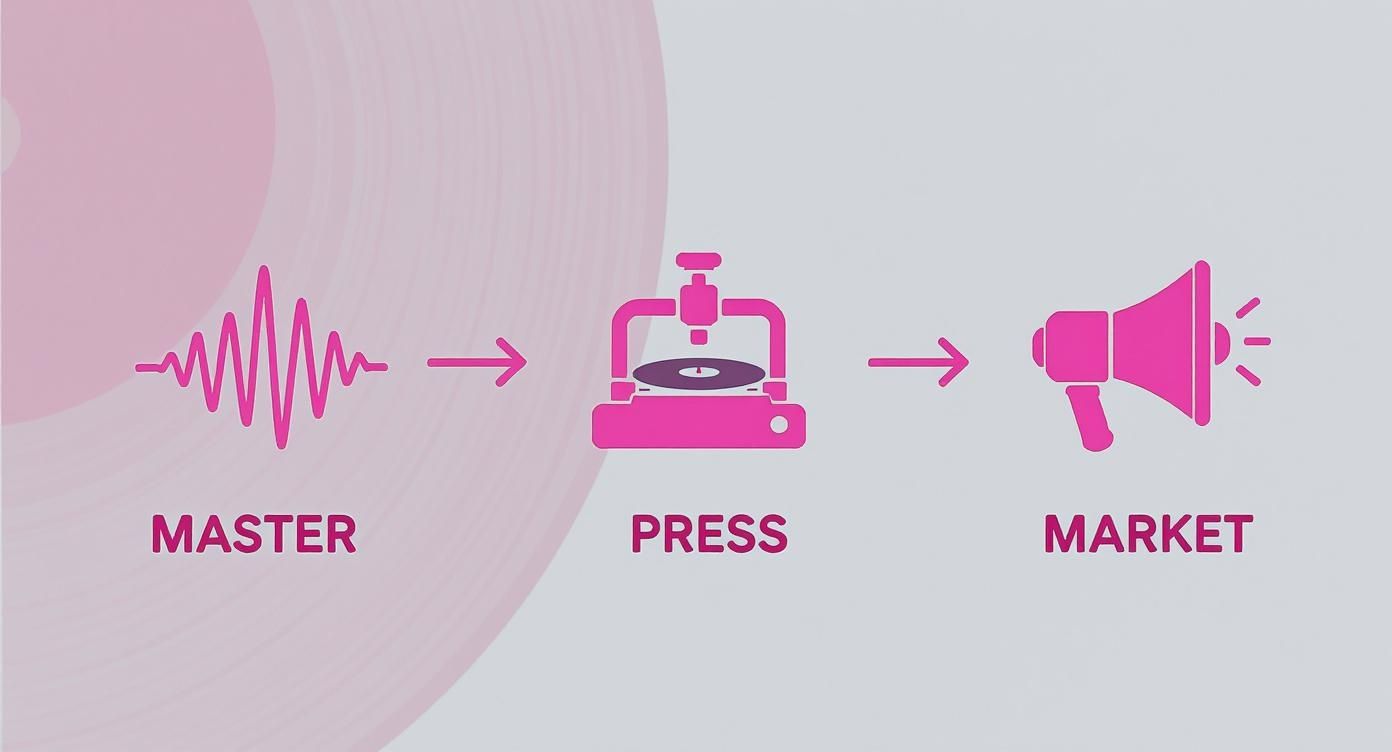
Each of these stages builds on the last. A great master leads to a clean press, which gives you an amazing product to build a marketing campaign around.
Finding the Right Pressing Plant
With a proper vinyl master in hand, your next big mission is finding the right manufacturing partner. Trust me, not all pressing plants are the same. You'll want to do your homework, especially when it comes to colored vinyl. It's a bit of a specialized skill to get consistent color and maintain top-notch audio quality, so look for plants with a solid portfolio of colored records.
As you start reaching out to plants, keep these key factors in mind:
- Minimum Order Quantity (MOQ): Most plants won't press fewer than 250 or 500 copies. For an independent artist, that can be a hefty upfront cost, so make sure it fits your budget.
- Turnaround Times: The vinyl world is known for its delays. A realistic timeline is anywhere from 4 to 8 months, but don't be surprised if it takes longer. Plan for it.
- Color Options: Don't just take their word for it. Ask to see a catalog of their pink vinyl stock. You'll be surprised at the variety—from baby pink and translucent magenta to opaque hot pink and even cool marbled effects.
Here's a pro tip from someone who's been there: Always, always get a detailed, all-in quote. You don't want to be surprised by hidden fees for lacquers, stampers, or freight shipping later on. A good partner will be upfront about every single cost.
Understanding the jargon can also help you find a good fit. It’s worth getting familiar with different manufacturing relationships like OEM and ODM so you know exactly what kind of partnership you're getting into.
From Test Press to Final Product
After you’ve locked in a plant and sent them your master audio and artwork files, the waiting game begins. Eventually, a small box will show up at your door with your test pressings. These are your quality control check—usually on standard black vinyl—and they are your only chance to flag any audio problems before your full run of 500 pink records gets made.
Listen to them carefully. I mean really listen. Use a good quality turntable (or a few, if you can) and listen for:
- Surface Noise: Annoying pops, clicks, or a constant hiss.
- Distortion: Pay special attention to the inner tracks of the record, as that's where distortion is most likely to appear.
- Skips or Locked Grooves: Any spot where the needle gets stuck or jumps.
Once you give the green light, the plant will start the main production run. This is the moment your vision finally becomes a real, physical thing. It takes a ton of patience and attention to detail, but holding that final, beautiful record makes it all worth it.
Designing Artwork to Match Your Pink Vinyl
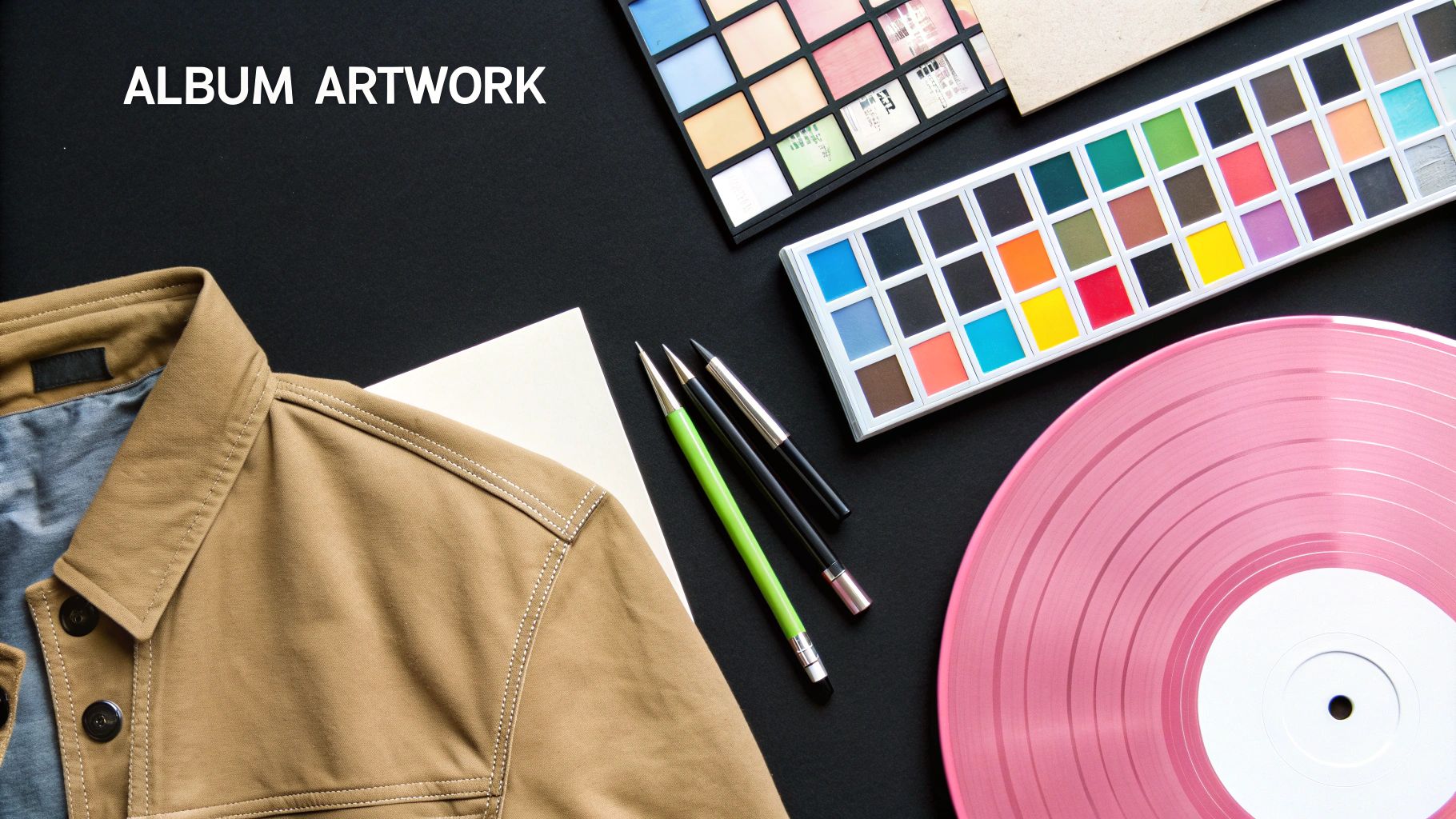
The artwork is the visual handshake for your music. It's the first tangible piece of your album's story that a fan gets to hold. When you're pressing a pink vinyl record, the design isn't just a container—it's an integral part of the whole aesthetic. Your packaging has to amplify that unique color, not fight with it.
This means thinking beyond just the front cover. A gatefold jacket instantly gives your record a more premium feel, offering a bigger canvas for liner notes, lyrics, or some killer photography. Even a high-quality printed inner sleeve can elevate the unboxing experience, revealing another layer of your artistic vision as the listener slides the record out for that first spin.
Harmonizing Colors and Finishes
Picking the right color palette is everything. You can go one of two ways: complement the pink or create a bold contrast. Soft pastels, muted grays, or even monochrome photography can create a really sophisticated look. On the flip side, vibrant, opposing colors like an electric blue or a deep forest green can make the pink absolutely pop.
The finish on the jacket plays a huge role, too. A gloss lamination will make your colors look brighter and more saturated—perfect for a high-energy pop record. A matte finish, however, offers a soft, elegant touch that feels more subdued and artistic. Don't underestimate how much texture contributes to the overall impression of quality.
If you want to go deeper on creating visuals that truly connect, check out our guide on why artists should invest in quality cover art.
Getting the Technical Details Right
This is where so many artists run into expensive, time-consuming problems. Before you even think about sending your files to the pressing plant, you have to make sure they are perfectly prepared. Following the technical specs isn't optional; it's the only way to get a professional product.
The single most critical step is ensuring all your design files are in CMYK color mode, not RGB. RGB is for screens; CMYK is for ink on paper. A design left in RGB will look dull and washed out when printed, completely killing the mood you were going for.
Here are the non-negotiable specs you absolutely must get right:
- Resolution: All your images need to be at least 300 DPI (dots per inch) at their final print size. Anything less will look blurry and pixelated.
- Bleed: Your design must extend beyond the final trim line, usually by about 3mm or 1/8 inch on all sides. This prevents any ugly white edges if the cutting machine is slightly off.
- Templates: Always, always use the official templates provided by your pressing plant. They are sized precisely for their equipment, and ignoring them is a recipe for disaster.
To nail that perfect shade of pink and keep your colors consistent across every part of your release, mastering color management in printing is a skill worth learning. Taking the time to get these details right ensures your final product looks as professional as it sounds.
Choosing Your Pink Vinyl Variant
Not all pink vinyl is created equal. The variant you choose—from a simple solid color to a complex splatter—affects the look, the cost, and even the manufacturing timeline. Here's a quick breakdown to help you decide.
| Variant Type | Visual Description | Typical Cost Impact | Best For |
|---|---|---|---|
| Solid Opaque Pink | A flat, consistent color with no transparency. | Low | Classic, bold statements and artists wanting a straightforward, punchy look. |
| Translucent Pink | See-through color that catches the light beautifully. | Low to Medium | An ethereal, delicate aesthetic. Great for dream pop or indie folk. |
| Pink Splatter | A base color (often clear or another pink) with pink flecks. | Medium to High | High-energy, dynamic albums. Perfect for punk, electronic, or metal genres. |
| Pink Marble/Swirl | Two or more colors mixed for a unique, marbled pattern. | High | Creating a premium, one-of-a-kind feel. Ideal for deluxe or limited editions. |
Ultimately, the right choice depends on your album's mood and your budget. A solid pink can be just as striking as a complex marble if it fits the art direction.
Getting Your Record Priced and Into Your Fans' Hands
Alright, the hard work is done and your beautiful pink vinyl records are hot off the press. Now comes the crucial part: getting them to your fans in a way that actually makes sense for you financially. Pricing is a bit of an art and a science. You want to set a price that feels fair to your supporters but also covers your costs and, you know, makes you some money.
The first thing you have to do is get a real, honest look at your total investment. This isn't just about what the pressing plant charged you per record. To figure out your break-even point, you need to tally up every single dollar you spent to make this happen.
Finding Your Break-Even Number
Before you can price anything, you need to know how many records you have to sell just to get your initial investment back. This means adding up all the expenses. Seriously, don't forget the small stuff—it all adds up and eats into your margin if you ignore it.
Here’s a quick rundown of what should be on your cost sheet:
- Manufacturing Costs: This is the big one—what the pressing plant charged for the vinyl itself.
- Mastering Fees: The cost to get your tracks properly mastered for the vinyl format.
- Artwork and Design: What you paid your graphic designer, illustrator, or photographer for the jacket, labels, and any inserts.
- Shipping and Freight: The bill for getting all those boxes of records from the factory to your door.
- Packaging Supplies: Don’t forget the mailers, bubble wrap, tape, and anything else you need to ship them out safely.
Once you have that grand total, just divide it by the number of records you have available to sell.
Let's say your all-in cost for a run of 250 records comes to $3,500. That means your break-even cost is $14 per record. So, selling them for anything less than $14 means you're losing money on every sale. Given that most new indie LPs sell for $25 to $35, you can see there's a good path to profitability in this scenario.
Why Selling Direct Is a Game-Changer
If you want to keep the most money from your work, selling directly to your fans is the only way to go. It's that simple.
When you go through distributors or big online marketplaces, they’re taking a big slice of the pie. We’re talking commissions of 15% to 40% of the retail price. That money comes straight out of your pocket—money that could be funding your next tour or recording session.
Using a commission-free platform puts you in the driver's seat and lets you keep what you earn. But it's about more than just money. It's about building a real connection. When fans buy from you directly, they know their cash is supporting your art, not some faceless corporation. If you want to dive deeper, you should check out the benefits of selling music directly to fans.
A direct-to-fan model gives you total control. You set the price, you manage the inventory, and you own the customer data. That data is gold for building lasting relationships with the people who actually support your music.
A preorder campaign is one of the smartest moves you can make here. It helps you cover those hefty manufacturing costs upfront and gives you a clear signal of how much demand there is. A great preorder builds momentum and can make your limited edition pink vinyl record feel like an instant success, even before the official release day.
Marketing Your Limited Edition Pink Vinyl
A special record like this deserves a launch plan to match. Your pink vinyl isn't just another item on the merch table; it’s a statement piece, a true collectible, and it should be the anchor of your entire release campaign. Getting this right comes down to building real excitement and a genuine sense of urgency right from the start.
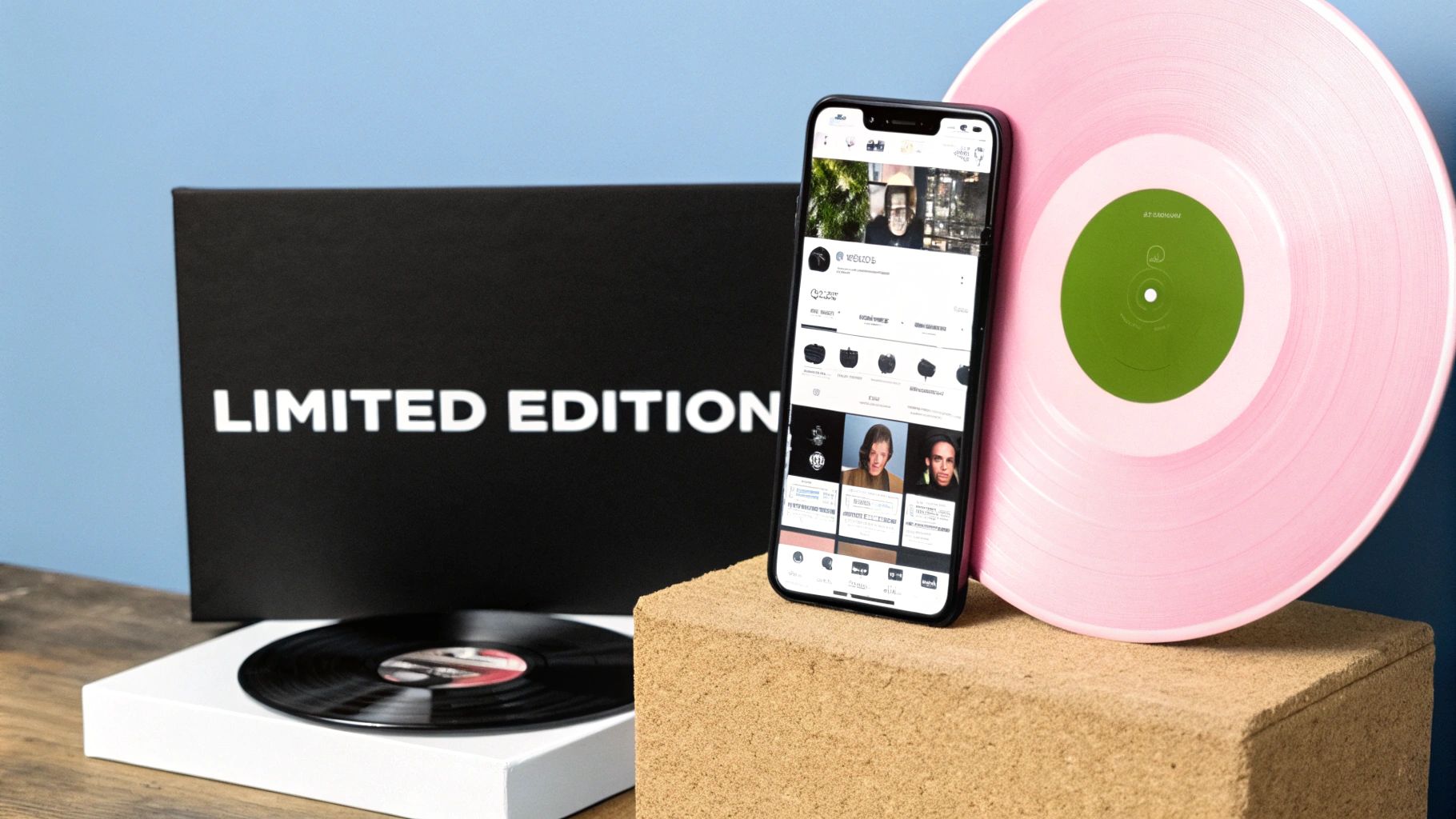
The trick is to frame your pink vinyl record as a limited-edition piece of art. This isn't just marketing spin—it's the truth. When you emphasize its scarcity, you instantly elevate it from a simple product to a must-have for your biggest fans. And don't forget your story. The reason why you chose pink is your most powerful tool. Weave that narrative into everything you post.
Building Anticipation Before the Launch
Your marketing push needs to begin well before any "buy now" links appear. Start teasing the release with stunning, high-quality mockups and professional photos. Make that record look absolutely irresistible. Get up close on the specific shade of pink, the fine details in the gatefold art, and the overall vibe of the package.
This kind of visual-first campaign is made for platforms like Instagram and TikTok, where aesthetics are everything. Think short, dynamic videos showing off the record from all angles, snippets of your music playing while the vinyl spins, or even running a poll asking fans what they're most hyped about.
Your whole goal here is to make your audience feel like they’re being let in on an exclusive event. Drive home the scarcity by consistently using phrases like "limited to 250 copies" or "one-time pressing." This isn't just a record; it's a fleeting opportunity.
To really tie your whole strategy together, you can find a ton of other ideas in our guide on how to market your music as an independent artist.
Executing a Winning Preorder Campaign
A well-planned preorder is your secret weapon. It does two critical things: generates cash flow upfront to help with manufacturing costs and gives you a real-time measure of demand. And remember, your most dedicated fans—the ones on your email list—should always get the first shot.
Here’s a simple, field-tested strategy that works:
- Early Access for Your Email List: Give your email subscribers a 24-48 hour head start before the public announcement. This is a great way to reward their loyalty, and it almost always guarantees you'll start with a strong sales bump.
- The Public Launch: Once that exclusive window closes, go wide. Announce the preorder across all your social media channels with a crystal-clear call to action that directs people exactly where to go.
- Amplify Your Reach: Don't be shy about reaching out to music bloggers, influencers in your genre, and online vinyl collector communities. A single post or feature on the right blog can put your project in front of hundreds of new people who are already primed to buy.
This isn't some newfangled idea, by the way. Colored vinyl has a long history as a collector's item. The 1970s saw a boom in specialty pressings, with records like Graham Parker's 'Pink Parker' EP becoming prized possessions simply because of their unique color. It’s a proven method for making a release feel special.
When you blend great storytelling with a smart, phased rollout, you create an experience where fans feel like they aren't just buying a record—they're investing in a small piece of your journey.
Got Questions About Making a Pink Vinyl Record?
If you're thinking about pressing your music on colored vinyl for the first time, you've probably got a ton of questions. It's totally normal. Everyone from first-timers to seasoned artists has to navigate concerns about sound, cost, and timelines. Let's walk through some of the most common questions that come up when planning a pink vinyl record.
Think of this as your practical guide to making the right calls and avoiding some of the typical roadblocks.
Will Pink Vinyl Mess with My Sound Quality?
This is the big one, right? It's a question rooted in vinyl's past, when some colored records were known to have a bit more surface noise. But I'm here to tell you that with today's manufacturing technology, that's pretty much a myth. Modern pressing plants use high-grade PVC compounds that make the difference between black and colored vinyl basically unnoticeable to the human ear.
What really makes or breaks your record's sound has nothing to do with the color. It always comes down to these three things:
- A solid master. You absolutely need a master specifically made for vinyl. Don't skip this.
- A great cutting engineer. This is the artist who physically carves your music into the master lacquer. Their skill is critical.
- The pressing plant's quality control. A reputable plant won't let shoddy records leave its facility, regardless of color.
So, if you partner with a good manufacturer, your pink vinyl is going to sound incredible. End of story.
What’s a Realistic Budget for a Small Run of Pink Vinyl?
Okay, let's talk money. The final cost will always depend on who you work with, where they're located, and the little details you choose. But for a ballpark figure, if you're planning a small run of 100-200 copies of a standard 12-inch LP, you should probably budget somewhere between $2,000 and $4,000.
That price range usually gets you the basics: vinyl-specific mastering, lacquers, a handful of test pressings to approve, the actual pressing of the records, and standard printed jackets. Remember, anything extra will bump up that cost. Want a gatefold jacket, fancy printed inner sleeves, or a cool splatter effect? Each of those adds to the per-unit price. Always get detailed, itemized quotes from a few different plants before you sign anything.
Seriously, How Long Does it Take to Get Vinyl Made?
This is where you need to practice some patience. The vinyl world does not move fast. From the day you hand over your final audio and artwork to the moment those beautiful pink records land on your doorstep, you're looking at a timeline of 4 to 8 months. And honestly, that's if things go smoothly. The industry is slammed, and delays are common.
I always tell artists to build an extra two or three months of buffer time into their release schedule. Trust me on this. It will save you a world of stress if your plant gets backed up and you have a release date looming.
This timeline covers everything: cutting the lacquers, the plating process, waiting for you to approve the test presses, printing all the packaging, and the main production run. Plan far, far ahead.
Should I Make it a Limited Edition?
Without a doubt. Yes. This is one of the smartest marketing moves you can make. When you frame your pink vinyl record as a limited edition, it's no longer just a piece of merch. It becomes a collectible. A must-have item.
That little bit of scarcity creates a powerful sense of urgency for your fans. Announcing the edition size right up front—"Limited to 250 copies" or "One-Time Pressing"—in your shop and social media posts can dramatically drive preorders. It helps you sell through your inventory faster and makes your fans feel like they're part of an exclusive group.
Ready to sell your masterpiece directly to the fans who matter most? With OohYeah, you can launch your pink vinyl record on a commission-free platform designed for artists. Keep 100% of your sales revenue and build a community around your music. Start selling your music and merch today.