Choosing a Music Platform for Artists
Discover how a music platform for artists can transform your career. Learn key features, analytics, and strategies to find the right platform for your growth.
October 17, 2025
Music Marketplace Advisor
Buying & SellingA modern music platform for artists isn't just a pipeline to get your songs online. It’s the mission control for your entire music business. Think of it as an all-in-one command center where you can manage every release, dig into listener data, collect your royalties, and connect with your fans.
These platforms finally put independent artists in the driver's seat, giving them direct control over their careers.
Your Career's Command Center
It wasn't long ago that artists had to juggle a dozen different services. You had one for distribution, another for analytics, a third for sending out newsletters, and a fourth to sell merch. It was a chaotic mess.
A true music platform for artists brings all of those scattered pieces into a single, cohesive ecosystem. It’s the difference between running your business from a handful of mismatched spreadsheets versus having one clean, intuitive dashboard.
This is a game-changer. Suddenly, you have access to the kind of powerful tools that were once exclusively for major labels. Instead of just releasing your music and crossing your fingers, you can now build a real strategy around your career. The goal here is simple: turn your passion into a smart, sustainable business.
From Distributor to Business Partner
The leap from a basic digital distributor to a full-fledged platform is a big one. Any modern system should, of course, get your music onto Spotify, Apple Music, and TIDAL. But it needs to do so much more to help you actually understand and grow your audience.
Here’s what you should expect from a real partner:
- Global Distribution: Effortlessly get your tracks onto every major streaming service and digital store worldwide.
- Deep-Dive Analytics: Get a clear picture of who is listening, where they are, and which songs are resonating most so you can make smarter decisions.
- Transparent Royalty Management: Easily track and collect every single penny you earn from streams, sales, and other revenue sources. No more mystery reports.
- Direct Fan Engagement: Build a loyal community with tools for direct messaging, exclusive content drops, and even fan subscriptions.
This isn't just about getting plays; it's about building a career. An integrated platform helps you turn casual listeners into a dedicated community while giving you the financial and strategic tools you need to grow for the long haul.
At the end of the day, these platforms provide the foundation you need to build an independent career entirely on your own terms. They take care of the complicated industry logistics so you can get back to what you do best—creating music. To really dig into the mindset behind this approach, check out The Creator's Guide to Building a Business, Not Just a Following. It’s a fantastic resource for understanding this essential shift.
Moving Beyond Streaming Payouts
Let's be honest: trying to build a career on streaming royalties alone is a tough gig. It’s no secret that the per-stream payout model makes it incredibly difficult for most artists to earn a sustainable income. The sheer volume of plays needed is staggering. But that's only looking at one side of the coin.
The real magic of a modern music platform for artists isn't the fractional cents from streams. It's the ability to see those streams as invaluable market research. Every play, every save, and every playlist add is a breadcrumb leading you straight to your most dedicated listeners. When you learn how to read the map, that data becomes worth far more than the royalty check.
This infographic breaks down the two paths your streaming data can take.
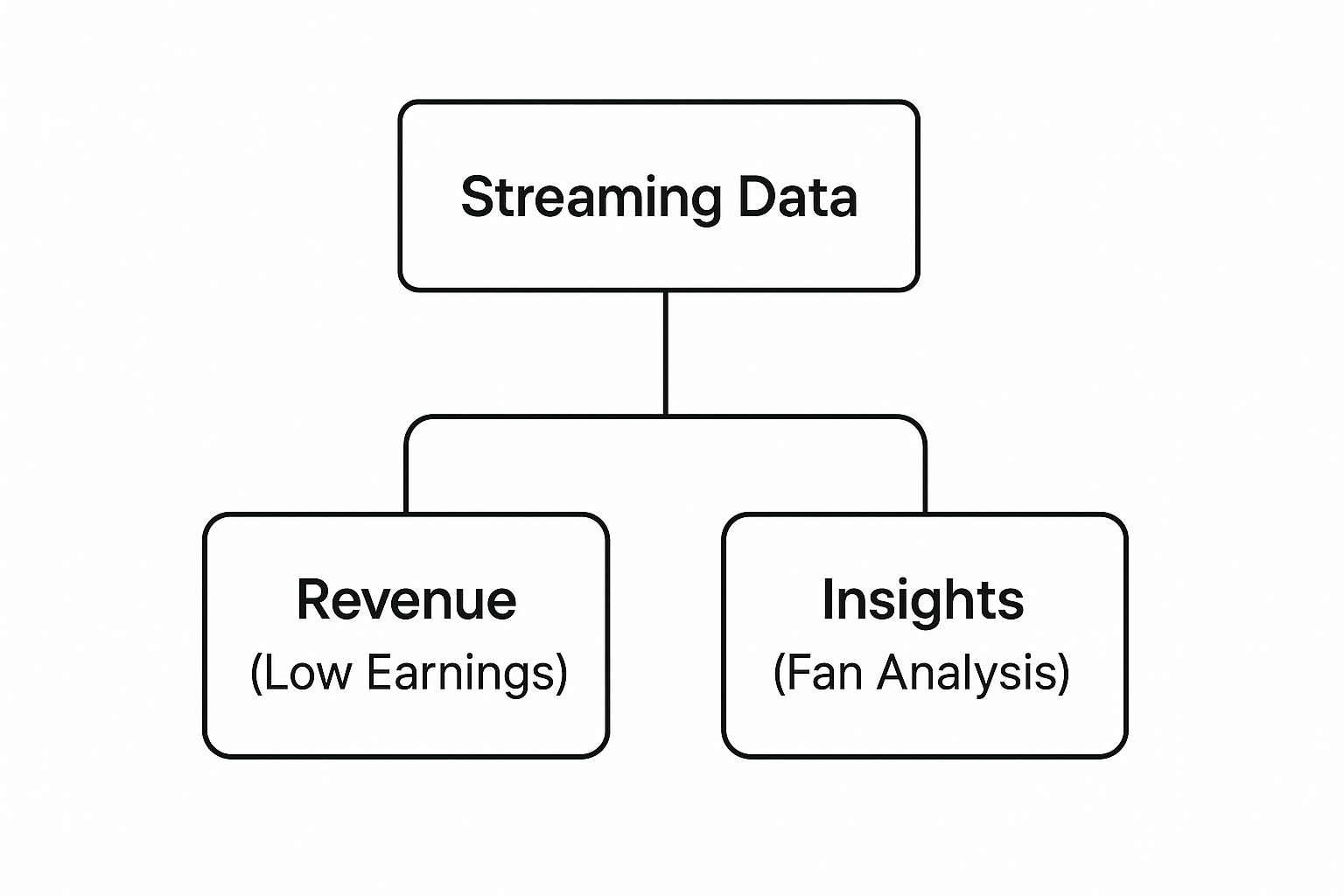
As you can see, direct revenue is just a small sliver of the potential. The real opportunity lies in using fan insights to unlock more lucrative avenues for your music business.
Turning Data Into Dollars
The numbers behind streaming payouts can be sobering. On Spotify, for example, it takes over 31,000 streams just to make $100. This model creates a huge income gap where only a very small percentage of top-tier artists earn a living from streams alone.
But what if you could change the game? A platform like OohYeah gives you the tools to not just see your data but to act on it. It’s about moving past simple play counts and getting to know the actual people who are listening.
Here’s how those insights can shape your business strategy:
- Pinpoint Your Superfans: See exactly who has your songs on repeat. These are your most passionate supporters—the ones most likely to buy merch, join a fan club, or pre-order your next vinyl release.
- Find Your Geographic Hotspots: Notice a spike in listeners in a particular city? That’s valuable intel. You’ve just found your next tour stop or the perfect audience for a targeted ad campaign.
- Shape Your Next Move: Is a deep cut from your last EP suddenly getting a ton of attention? That unexpected popularity could inspire the sound of your next single or even the design for a new t-shirt.
When you shift your mindset from chasing pennies-per-stream to understanding listener behavior, you start to see the true economic power of your music. Streaming becomes the top of the funnel, not the end of the road.
This data-driven approach helps you build a career that doesn't live or die by the algorithm. It allows for a more stable foundation, where you can forge direct connections and offer products you know your audience wants. Exploring different income sources is key; for example, learning about the impact of crowdfunding on the music industry can open up new possibilities for funding your projects directly from your supporters.
Building a Direct-to-Fan Business
The ultimate goal here is to transform listeners into a loyal community that actively and directly supports your work. This is where a unified platform becomes so crucial—it connects the dots between who is listening, where they are, and how you can engage with them. It’s the key to building real, long-term financial independence.
By using your data wisely, you can build an entire ecosystem around your art. To learn more about this powerful model, take a look at our guide on what are the benefits of selling music directly to fans. With the right tools, streaming is no longer just a payout source; it’s the start of a meaningful conversation with your audience.
What To Look For In a Music Platform
Choosing a music platform can feel overwhelming, but it gets a lot easier when you know what to look for. Think of it like equipping a recording studio. First, you need the absolute essentials—the mic, the interface, the monitors. But to really grow and produce incredible work, you'll eventually want the advanced gear that unlocks new creative possibilities. A truly great music platform for artists should give you both.
At the very least, any platform you consider has to nail the fundamentals. These are the core services that get your music out into the world and ensure you get paid for your work. Without a solid foundation, all the fancy add-ons are just window dressing.
The Non-Negotiables: Core Functionality
Before you even look at the "cool" features, make sure any platform you're considering has these three pillars locked down. They are the bedrock of a modern artist's digital strategy.
- Effortless Global Distribution: Your music needs to be everywhere. This means seamless delivery to 150+ major digital storefronts and streaming services—we're talking Spotify, Apple Music, TIDAL, and even social media libraries on TikTok and Instagram. It should be a one-and-done process.
- Clear and Honest Royalty Collection: There should be zero mystery about your earnings. A good platform provides straightforward, detailed financial reports showing you exactly where your money is coming from. Most importantly, it needs a simple, reliable way to get that money into your bank account.
- Actionable Analytics: Data is power. You need more than just raw numbers; you need insights. A strong analytics dashboard will show you which songs are resonating, where your listeners are, and who they are. This is the information that helps you plan your next tour, target your next ad campaign, and make smarter career moves.
These essentials get your music on the map. But to actually build a lasting career, you need more than just a delivery service.
Beyond Distribution: Tools for Real Growth
This is where a basic distributor transforms into a genuine career partner. The best platforms don't just drop your music and walk away; they provide tools designed to help you connect with fans, open up new revenue streams, and manage the business side of your art. This is the stuff that fuels sustainable momentum.
A platform's true worth isn't just in its ability to upload a track. It's in providing an integrated ecosystem where distribution, data, and direct fan engagement work together to build momentum for your entire career.
To help you distinguish between the must-haves and the features that truly accelerate growth, here’s a quick checklist.
Essential Platform Features Checklist
This table breaks down what you should expect as a baseline versus what you should look for in a platform built for long-term success.
| Feature Category | Essential Functionality | Advanced (Growth-Oriented) Functionality |
|---|---|---|
| Distribution & Reach | Delivery to all major DSPs (Spotify, Apple Music, etc.) | Automated delivery to new and emerging platforms; Social media library integration (TikTok, Instagram) |
| Financials & Royalties | Clear royalty statements and reliable payouts | Split payment automation for collaborators; Detailed territory-specific earnings reports |
| Data & Analytics | Basic streaming and download numbers | Deep audience demographics; Playlist placement tracking; Real-time listener data |
| Marketing & Promotion | Basic track and album links | One-click pre-save campaigns and smart links; Integrated promotional tools for ad creation |
| Fan Engagement | - | Direct-to-fan messaging capabilities; Tools for building an email list; Exclusive content hubs |
| Rights & Monetization | - | Publishing administration services; Sync licensing opportunities; YouTube Content ID management |
Ultimately, the best platform is one that can meet you where you are today while also providing the tools you'll need to get where you want to be tomorrow.
Look past the simple upload function and seek out a partner that offers a holistic ecosystem. When you find a platform that pairs robust distribution with integrated marketing, fan engagement, and rights management tools, you've found a powerful engine for your career. This strategic choice is one of the most important you'll make.
How a Unified Platform Builds Your Career
Why are you still juggling a dozen different apps to manage your music career? Piecing together separate services for distribution, analytics, fan mail, and merch is like trying to pilot a spaceship with controls scattered across different rooms. It's clunky, confusing, and kills your ability to react when it matters most.
A truly integrated music platform for artists changes the game by pulling everything into a single mission control. This unified approach connects your distribution, your data, and your fan engagement, creating a powerful synergy that turns a bunch of separate tasks into a real, cohesive strategy for growth.

From Release to Relationship in One Ecosystem
Let's walk through a real-world scenario that can happen entirely within a platform like OohYeah. You’ve just dropped a new track. A few days later, your analytics dashboard lights up with some unexpected activity—a city hundreds of miles away is showing a serious spike in listeners.
Instead of just shrugging it off as a cool statistic, you can act on it immediately, without ever leaving the platform.
- Step 1: Identify the Opportunity. The dashboard flags the geographic hotspot, showing you exactly where your new fans are popping up.
- Step 2: Engage Directly. You use the platform's fan communication tools to send a targeted message just to listeners in that specific city.
- Step 3: Offer Exclusive Value. In the message, you thank them for the support and give them an exclusive download of a demo version or a behind-the-scenes video.
- Step 4: Build Community. That simple, direct interaction makes passive listeners feel seen and valued, turning them into genuinely engaged fans.
This entire loop—from spotting a data trend to building a direct connection—happens in minutes. It's a strategic cycle where every piece of information fuels the next smart move, building real momentum for your career. This kind of agility is flat-out impossible when your tools are all over the place.
The Strategic Advantage of Integration
This all-in-one workflow is more than just convenient; it's a massive strategic advantage. The global music streaming industry is enormous and getting bigger every day. Streaming now makes up 84% of U.S. recorded music revenues, a staggering jump from just 7% back in 2010. With the global market projected to hit over $30 billion by 2025, having a solid system to manage your presence is non-negotiable. Discover more insights about these music industry trends.
A unified music platform doesn't just put your music on a shelf; it gives you the tools to understand who is picking it up and why. This transforms your release strategy from a hopeful shot in the dark into a precise, data-informed campaign for career growth.
By bringing your operations under one roof, you stop wasting time exporting data from one app to another and start focusing on what actually matters: making smarter, faster decisions. The OohYeah ecosystem is built on this very principle, making sure every feature works together to help you turn your artistic vision into a sustainable business.
Building a Real Fanbase—Not Just Algorithmic Plays
In an era of endless playlists, getting a stream doesn't automatically mean you've gained a fan. It's a tough reality. Someone might hear your track on a playlist curated by an algorithm, even love it, but then the next song plays, and they've already forgotten your name.
This is the central challenge for artists today: turning a passive, fleeting listen into a real, lasting connection. A great music platform for artists gives you the tools to cut through that noise. It's about moving past being just another name on a playlist and starting to build a genuine community around your music. The real goal isn't just more streams; it's more meaningful engagement.
Identify and Reward Your Superfans
The first step is figuring out who your most dedicated supporters are. A platform like OohYeah gives you a look behind the curtain with listener data that’s far more insightful than a simple play count. You can see who’s listening the most, what city they’re in, and which of your tracks they have on repeat. This information is pure gold.
These are your superfans. They're the heart of your community. Once you know who they are, you can start building a direct relationship by giving them something special.
- Exclusive Content: Think about creating a private hub just for your top listeners. You could share behind-the-scenes videos, unreleased demos, or give them a sneak peek at new music before anyone else.
- Personalized Recognition: Imagine sending a targeted message to fans in a specific city with a discount code for an upcoming show or some exclusive merch. It's a small touch that goes a long way.
- Intimate Virtual Events: Host a private Q&A or a virtual listening party for your most engaged followers. This makes them feel like they're part of your inner circle.
This kind of direct approach creates a sense of belonging that an impersonal algorithm could never match.
Bypassing the Algorithm with Direct Communication
Passive listening has made it incredibly difficult to build a fanbase from streams alone. Each play is often less of a conscious choice by the listener and more of a product of what the platform's engine recommends next. In fact, industry surveys show that over half of independent labels feel that streaming just isn't effective at building real fan communities. You can explore these music streaming statistics to see just how much the landscape has shifted.
By creating direct communication channels, you bypass the algorithm entirely. You are no longer waiting for a playlist to serve your music; you are actively delivering unique experiences to the people who care most about your art.
This strategy is how you turn casual listeners into a loyal fanbase. These are the people who will buy your merch, pre-order your next album, and champion your career for years to come. It’s an essential foundation, and you can learn more about why building a fanbase is essential for selling music in our detailed guide. Ultimately, it’s about creating a sustainable career built on genuine loyalty, not just fleeting plays.
Finding the Right Platform for Your Career Stage
Choosing a partner for your music isn't a one-size-fits-all deal. What an artist needs when they're just starting out is completely different from what a full-time professional needs to manage their growing business. The platform you choose should fit where you are right now, but also have room for you to grow.
It's a lot like picking a car. When you're first learning, you just need something reliable and easy to handle. But once you're a seasoned driver taking long road trips, you'll want more horsepower, better navigation, and more space. The same logic applies here.
Matching Your Platform to Your Goals
If you're an emerging artist, your main focus is probably on getting your music out there without a lot of hassle or expense. You need a straightforward way to distribute to streaming services, build a digital presence, and start seeing who's listening.
On the other hand, an established artist or a small label needs a much more powerful toolkit. At this stage, it's all about deep analytics to understand your audience, features to manage your team, and marketing tools to launch successful campaigns. The goal shifts from just being online to strategically growing online.
Choosing your platform is a strategic career decision, not just a logistical one. It's about finding a partner that provides the right tools for today while offering the scalability you'll need for tomorrow's success.
Ultimately, the right platform should feel like an extension of your own team. Taking a hard look at where you are in your journey is the first step. For a deeper dive, check out our guide on how to choose the right platform to sell your music. Picking an all-in-one solution built for the long haul is how you set yourself up for real, sustainable success.
Common Questions from Artists Like You
Stepping into the world of music platforms can feel a bit overwhelming. Let's clear up some of the most common questions artists have when figuring out the best home for their music.
What's the Real Difference Between a Distributor and an All-in-One Platform?
Think of a traditional music distributor as a delivery truck. Its main job is to pick up your finished tracks and drop them off at all the major digital stores and streaming services, like Spotify and Apple Music. It’s a vital service, but that's pretty much where the relationship ends.
An all-in-one music platform for artists, on the other hand, is your entire command center. It doesn’t just handle distribution; it gives you the analytics, fan engagement tools, and direct ways to make money all in one place. It’s the difference between just shipping a product and running the entire business.
The core difference comes down to strategy. A distributor just gets your music out there. A true platform gives you the tools to understand who's listening, build a genuine community, and turn your music into a sustainable career.
How Do I Actually Get Paid? A Look at Royalties
On an integrated platform like OohYeah, we’ve built the royalty system to be as straightforward as possible. Every time your music gets played or purchased anywhere in the world, we track and collect the earnings from hundreds of different sources.
That money lands directly in your platform account. Instead of juggling confusing statements from a dozen different services, you get one clean, consolidated report that shows you exactly where every dollar came from. From your dashboard, you can withdraw your funds or set up automatic split payments with your collaborators in just a few clicks.
Is It Hard to Move My Music from Another Service?
Not at all. Moving your catalog to a new platform is a pretty standard part of an artist's journey, and it's designed to be a smooth process. It basically involves asking your old distributor to take down your releases while you upload them to your new home.
The key to keeping your stream counts and playlist spots is making sure the metadata—like your ISRC codes, song titles, and artist name—is an exact match. Any good platform will have a team or guide to walk you through it, ensuring there’s virtually no downtime so you don't lose any of the momentum you've worked so hard to build.
Ready to stop juggling different services and run your music business from a single command center? Join OohYeah today and get the tools you need to build a lasting career on your terms. See what you can build at https://oohyeah.app.