10 Music Industry Promotion Strategies for 2025
Discover 10 effective music industry promotion strategies to grow your audience. This guide covers playlisting, social media, PR, and more for modern artists.
November 17, 2025
Music Marketplace Advisor
Buying & SellingThe path from an unknown artist to a household name has fundamentally changed. In today's digital-first landscape, effective music industry promotion is no longer just about landing a record deal; it's a sophisticated mix of digital savvy, direct fan engagement, and strategic partnerships. Gone are the days of relying solely on gatekeepers. Now, artists have unprecedented access to tools that can amplify their sound and build a sustainable career on their own terms.
However, this access also means the market is more saturated than ever, demanding a multi-faceted strategy that leverages every available channel. This guide cuts through the noise to deliver 10 proven, actionable strategies that are shaping the future of artist growth. We will provide a blueprint covering everything from mastering the algorithms of streaming giants to building a loyal community that directly supports your career.
These tactics are essential for independent artists, producers, and managers looking to thrive in a competitive environment. Let's dive into the specific, practical methods you can implement immediately to build momentum and achieve your breakout year.
1. Streaming Platform Playlist Pitching & Curation
Strategic playlist placement is a cornerstone of modern music industry promotion, transforming a track from undiscovered to a global hit. This strategy involves getting your music featured on curated playlists across major streaming platforms like Spotify, Apple Music, and Amazon Music. Placement on these playlists, whether editorial (curated by platform staff) or algorithmic (generated by user data), exposes your music to millions of potential new listeners, driving streams and triggering further algorithmic recommendations.
The success of this method is evident in major artist campaigns. The Weeknd’s "Blinding Lights" leveraged aggressive playlisting to become Spotify's most-streamed song, while Olivia Rodrigo’s consistent features on playlists like "Today's Top Hits" cemented her breakout success. This isn't just for superstars; it’s a vital tool for independent artists seeking visibility.
Actionable Strategy & Implementation
To effectively pitch your music, timing and preparation are critical. Submitting a track through your distributor's portal (like DistroKid or TuneCore) at least four to six weeks before its release date is non-negotiable. This lead time gives editorial teams a chance to review your submission.
- Optimize Your Pitch: Craft a concise, compelling pitch that details the song's genre, mood, instrumentation, and key marketing drivers.
- Target Independent Curators: Build genuine relationships with independent playlist curators on platforms like SubmitHub or by reaching out directly. A personal connection can be more effective than a cold submission.
- Perfect Your Metadata: Ensure all metadata, including genre tags, moods, and song descriptions, is accurate and detailed. This data is crucial for algorithmic playlists to identify and categorize your track correctly.
Key Insight: Playlist placements create a powerful feedback loop. Increased streams from a playlist signal to the platform's algorithm that your song is popular, leading to inclusion on more algorithmic playlists like "Discover Weekly" and "Release Radar," amplifying your reach exponentially.
2. Social Media & Viral Content Marketing
Leveraging short-form video platforms like TikTok, Instagram Reels, and YouTube Shorts has become an essential pillar of modern music industry promotion. This strategy focuses on creating engaging, shareable content that can ignite viral trends and catapult a song into the mainstream consciousness. By tapping into platform algorithms and user-generated content, artists can achieve exponential exposure and drive significant streaming numbers organically, bypassing traditional gatekeepers.

The power of this approach is undeniable. Lil Nas X’s “Old Town Road” famously exploded through a TikTok meme, becoming one of the best-selling singles of all time. Similarly, Doja Cat has built her career on a foundation of consistently viral moments and authentic engagement, turning social media trends into chart-topping hits. These examples prove that a well-executed viral strategy can be more impactful than a massive marketing budget.
Actionable Strategy & Implementation
Success in viral marketing requires a blend of consistency, creativity, and rapid response. The goal is to create content that is not only entertaining but also easy for others to replicate or build upon, sparking a user-generated content cascade. To learn more about how you can market your music as an independent artist, explore these additional strategies and tips.
- Consistent Content Cadence: Post high-quality content 3-7 times per week on your primary platforms to build momentum and feed the algorithm.
- Trend-Jacking: Immediately jump on trending sounds, challenges, and formats. Reinterpreting a popular trend with your own music can expose it to a massive, pre-engaged audience.
- Authentic Engagement: Interact directly with fans by responding to comments, duetting their videos, and showcasing their content. This builds a loyal community that feels invested in your success.
- Collaborate Strategically: Partner with micro-influencers and content creators whose audience aligns with your target demographic for authentic, cost-effective promotion.
Key Insight: Virality is not just about one-hit wonders. A sustained social media presence creates a direct line to your audience, allowing you to test new material, build a personal brand, and cultivate a dedicated fanbase that will support your music long-term.
3. Influencer & Artist Collaborations
Strategic partnerships are a powerful engine for audience growth in music industry promotion, allowing artists to tap into new, highly engaged fanbases. This strategy involves collaborating with other musicians, producers, or social media influencers to create and promote content together. By merging audiences, both parties benefit from cross-pollination, gaining credibility and exposure that would be difficult to achieve alone.
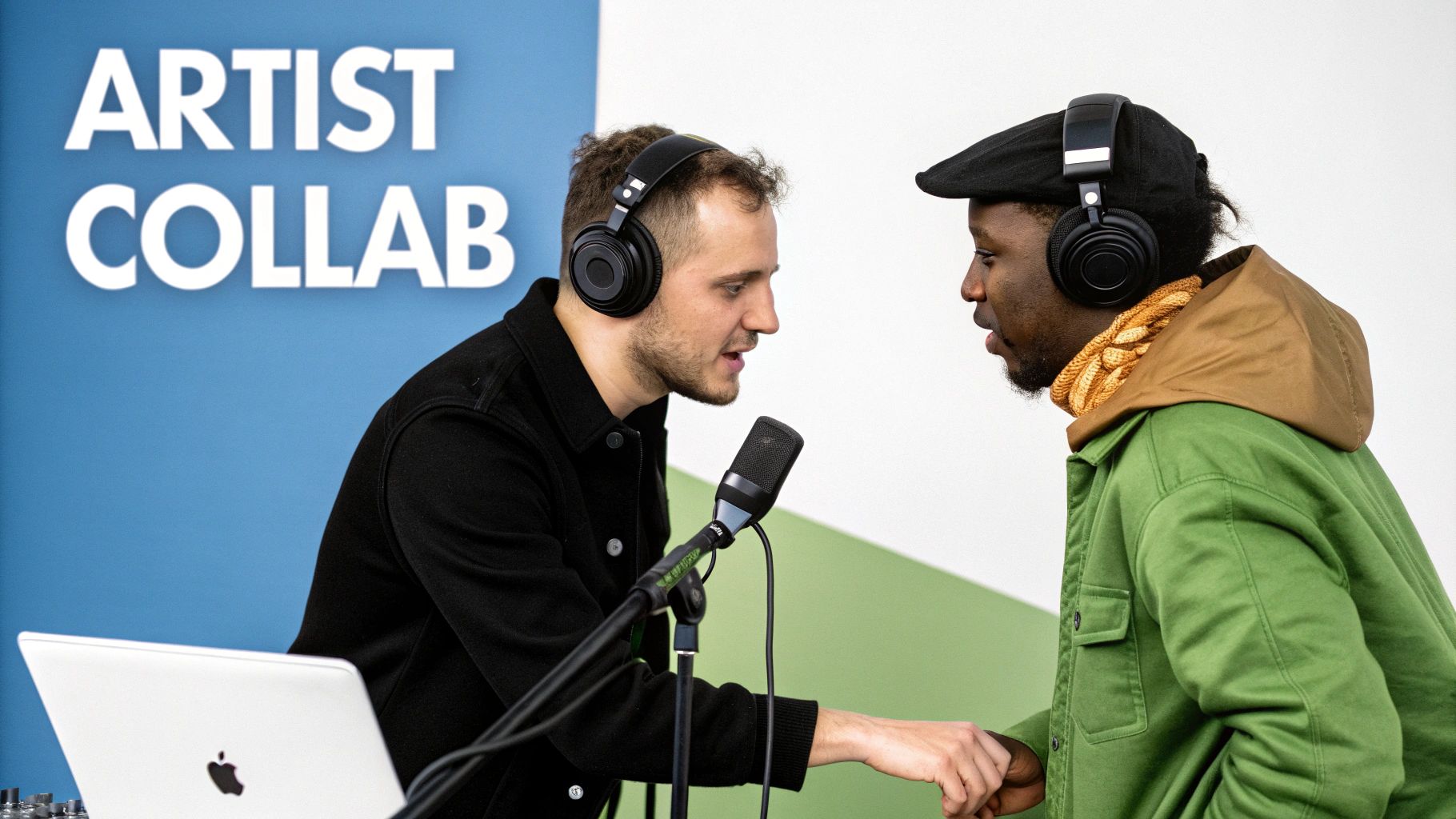
The modern music landscape is filled with examples of this strategy's success. The commercial dominance of tracks like Post Malone and The Weeknd’s "One Right Now" or the feature-heavy catalogs of artists like Ariana Grande and The Chainsmokers proves the model's effectiveness. These collaborations aren't just one-off hits; they are calculated moves to merge brand power and expand market reach. Learn more about why collaborations with other artists can grow your audience.
Actionable Strategy & Implementation
Successful collaborations require more than just creative chemistry; they demand careful planning and clear communication. The goal is to find a partner whose audience and brand align with yours, ensuring the collaboration feels authentic and provides mutual value.
- Identify Aligned Partners: Research artists or influencers whose followers fit your target demographic. Look for complementary styles and genres rather than direct competitors.
- Establish Clear Terms: Before starting any creative work, negotiate and sign an agreement covering royalty splits, ownership rights, and promotional commitments for all parties.
- Coordinate a Unified Launch: Plan a joint marketing rollout. Coordinate social media announcements, press releases, and content schedules to maximize impact and ensure both audiences are activated simultaneously.
- Leverage Micro-Influencers: For niche genres, partnering with micro-influencers can offer higher engagement rates and a more dedicated audience at a lower cost.
Key Insight: A successful collaboration is a force multiplier. It introduces your music to a warm audience predisposed to like your style, creating a direct path to new, loyal fans and significantly boosting your credibility within a new scene.
4. YouTube Channel Optimization & Video Marketing
YouTube serves as both a primary discovery engine and a direct fan engagement platform, making it a critical component of modern music industry promotion. A comprehensive strategy goes beyond simply uploading official music videos; it involves creating a content ecosystem that includes behind-the-scenes footage, live performances, and lyric videos. This approach transforms a channel into a dynamic hub for a fan community, while also creating a long-term passive income stream through AdSense monetization.
Artists like Ed Sheeran and The Weeknd have built massive subscriber bases by consistently delivering high-quality visual content that complements their musical releases. Taylor Swift’s strategic use of YouTube for her re-recorded album rollouts, complete with lyric videos and visualizers for every track, demonstrates the platform's power to dominate music industry conversations and drive chart performance. This multifaceted approach is key to harnessing YouTube’s full potential.
Actionable Strategy & Implementation
Building a successful YouTube presence requires consistency and a deep understanding of the platform's algorithm. Optimizing each video for search and engagement is essential for discoverability and audience retention.
- Optimize for Search: Craft detailed, SEO-friendly titles and descriptions using relevant keywords. Use timestamps in the description to help viewers navigate longer videos and to improve your video's ranking in search results.
- Engage Your Community: Use the Community tab to post updates, polls, and photos. Responding to comments on videos signals to the algorithm that your channel is active, boosting its visibility.
- Master the Thumbnail: Create high-contrast, compelling thumbnails with clear imagery and minimal text. The thumbnail is often the single most important factor in a viewer’s decision to click on your video.
Key Insight: YouTube is the world’s second-largest search engine. By treating every video upload as a strategic piece of SEO-driven content, artists can build a durable asset that continuously attracts new fans and generates revenue long after its initial release, serving as a powerful, self-sustaining promotional tool.
5. Email Marketing & Direct Fan Engagement
While social media offers broad reach, email marketing provides a direct, owned channel to an artist's most dedicated supporters. This strategy involves building and nurturing an email list to share exclusive content, tour dates, and merchandise, bypassing the algorithmic gatekeepers of other platforms. It remains one of the most effective tools in music industry promotion for fostering a loyal community and driving direct revenue.
Major artists leverage this to great effect. Beyoncé’s strategic email announcements for album drops create a sense of direct communication, while K-pop fan clubs like BTS's ARMY use email as a central hub for official updates. However, its true power lies with independent artists who can cultivate a direct-to-fan ecosystem.
Actionable Strategy & Implementation
Building a valuable email list requires offering a compelling reason for fans to subscribe. This initial offering, or lead magnet, is the first step in creating a long-term relationship. For cultivating direct relationships with your fanbase, learn about powerful lead generation through email marketing.
- Create Irresistible Lead Magnets: Offer an exclusive unreleased track, a behind-the-scenes video, or a discount code for merchandise in exchange for an email address.
- Segment Your Audience: Group subscribers based on their location, engagement level, or purchase history to send highly targeted and relevant messages.
- Provide Exclusive Value: Ensure your email content is unique. Offer subscribers first access to tickets, limited-edition merchandise, or personal updates that aren't available on social media.
Key Insight: Unlike a social media following, an email list is an asset you own completely. It is immune to platform algorithm changes and provides a reliable, direct line of communication to your core fanbase, leading to higher engagement and conversion rates for sales and streams.
6. Radio & Podcast Placement Strategy
Securing airplay on radio and features on podcasts remains a powerful pillar of music industry promotion, offering credibility and access to dedicated audiences. This strategy involves pitching music to program directors at terrestrial, college, and satellite radio stations like SiriusXM, as well as reaching out to podcast hosts for interviews or song features. While digital platforms dominate, traditional and new-form audio media builds authority and connects artists with listeners in a focused, curated environment.
This method’s enduring impact is seen in the careers of artists like Adele and Ed Sheeran, whose strategic, multi-format radio campaigns were instrumental in their global chart dominance. More recently, artists gain significant traction through appearances on major podcasts, tapping into established, niche communities that are highly engaged and supportive.
Actionable Strategy & Implementation
A successful radio and podcast campaign requires a targeted, professional approach that respects the gatekeepers of these platforms. Unlike purely digital methods, relationship-building is paramount, and a well-planned pitch can make all the difference in securing valuable airtime.
- Hire a Radio Plugger: For terrestrial and satellite radio, a professional radio promoter with established industry connections is often a necessary investment to get your music heard by key decision-makers.
- Target Niche Podcasts & College Radio: Identify podcasts and college radio stations that align with your genre and artist persona. A personalized pitch to these smaller, passionate outlets can be highly effective.
- Prepare a Radio-Ready Single: Ensure your target track is professionally mixed, mastered, and edited for radio formats, often requiring a shorter "radio edit" that is clean and concise.
Key Insight: Radio airplay directly impacts chart positions through monitoring services like BDS and Mediabase, creating a tangible measure of success. This data can then be leveraged to secure better tour bookings, press coverage, and brand partnerships, making it a crucial component of a holistic music industry promotion effort.
7. Live Performance & Tour Marketing
Live performance is the most direct and impactful form of music industry promotion, transforming passive listeners into a dedicated fanbase. This strategy involves building a following through strategic touring, festival appearances, and local gigs, creating memorable experiences that generate ticket revenue, merchandise sales, and powerful word-of-mouth marketing. A captivating live show forges a tangible connection that digital streams alone cannot replicate.
This method’s power is evident in record-breaking tours like Taylor Swift’s Eras Tour, which became a cultural phenomenon, and Beyoncé’s Renaissance Tour. For emerging acts, strategic festival slots at events like Coachella or Glastonbury can serve as a launchpad, exposing them to massive, engaged audiences. The goal is to build momentum from intimate venues to major stages.
Actionable Strategy & Implementation
Building a successful live presence requires a deliberate, scalable approach. Start by mastering your local scene before expanding regionally and nationally. Partnering with the right booking agents and promoters is essential for accessing better venues and support slots.
- Start Small & Build: Focus on selling out smaller venues (300-1,000 capacity) to create buzz and prove your draw. A sold-out small room is more impressive than a half-empty large one.
- Leverage Every Show: Use performances to build your email list at the merch table and film high-quality content for social media. This turns a single event into ongoing promotional material.
- Optimize Your Offerings: Create VIP packages or exclusive merchandise bundles to increase revenue per ticket holder. Price your general admission tickets competitively to encourage early sell-outs.
Key Insight: A well-executed tour is a content and data goldmine. It not only generates immediate revenue but also provides invaluable insights into where your most dedicated fans are located, informing future marketing campaigns, release strategies, and tour routing.
8. PR & Media Relations Strategy
A strategic PR and media relations approach is fundamental to building an artist's public narrative and credibility. This practice involves cultivating relationships with music journalists, bloggers, and media outlets to secure press coverage, interviews, and features. Effective PR goes beyond announcing a new release; it creates newsworthy moments and generates a sustained media presence that can significantly elevate an artist’s profile and perceived value within the music industry promotion landscape.
This method has been pivotal in launching and sustaining major careers. Chance the Rapper’s consistent interview tours built a strong personal brand, while Billie Eilish's early, targeted PR strategy generated critical buzz long before she became a household name. These campaigns demonstrate how earned media provides an authentic stamp of approval that paid advertising cannot replicate, driving both fan engagement and industry attention.
Actionable Strategy & Implementation
Building a successful PR campaign requires a clear narrative and professional execution. The goal is to make your story irresistible to media outlets by framing your music and career milestones as compelling news. For a deeper dive into crafting the perfect pitch, learn how to write a press release that gets your music noticed.
- Create a Professional Media Kit: Assemble a comprehensive media kit with high-quality press photos, a detailed biography, links to your music, and recent press clippings. This makes a journalist's job easier and presents you as a serious artist.
- Develop Newsworthy Angles: Instead of simply announcing a single, create a story around it. This could be a unique collaboration, a personal milestone, a community project, or an innovative release concept.
- Target Relevant Outlets: Research and pitch to publications, podcasts, and YouTube channels that align with your genre and audience. To expand your media presence and unlock valuable brand opportunities, learning how to get on PR lists is a fundamental step.
Key Insight: Securing coverage in a respected publication acts as powerful social proof. This credibility not only attracts new listeners but also opens doors to other opportunities, such as brand partnerships, festival bookings, and collaborations, by validating your artistic relevance and market appeal.
9. Merch & Direct-to-Fan Sales Integration
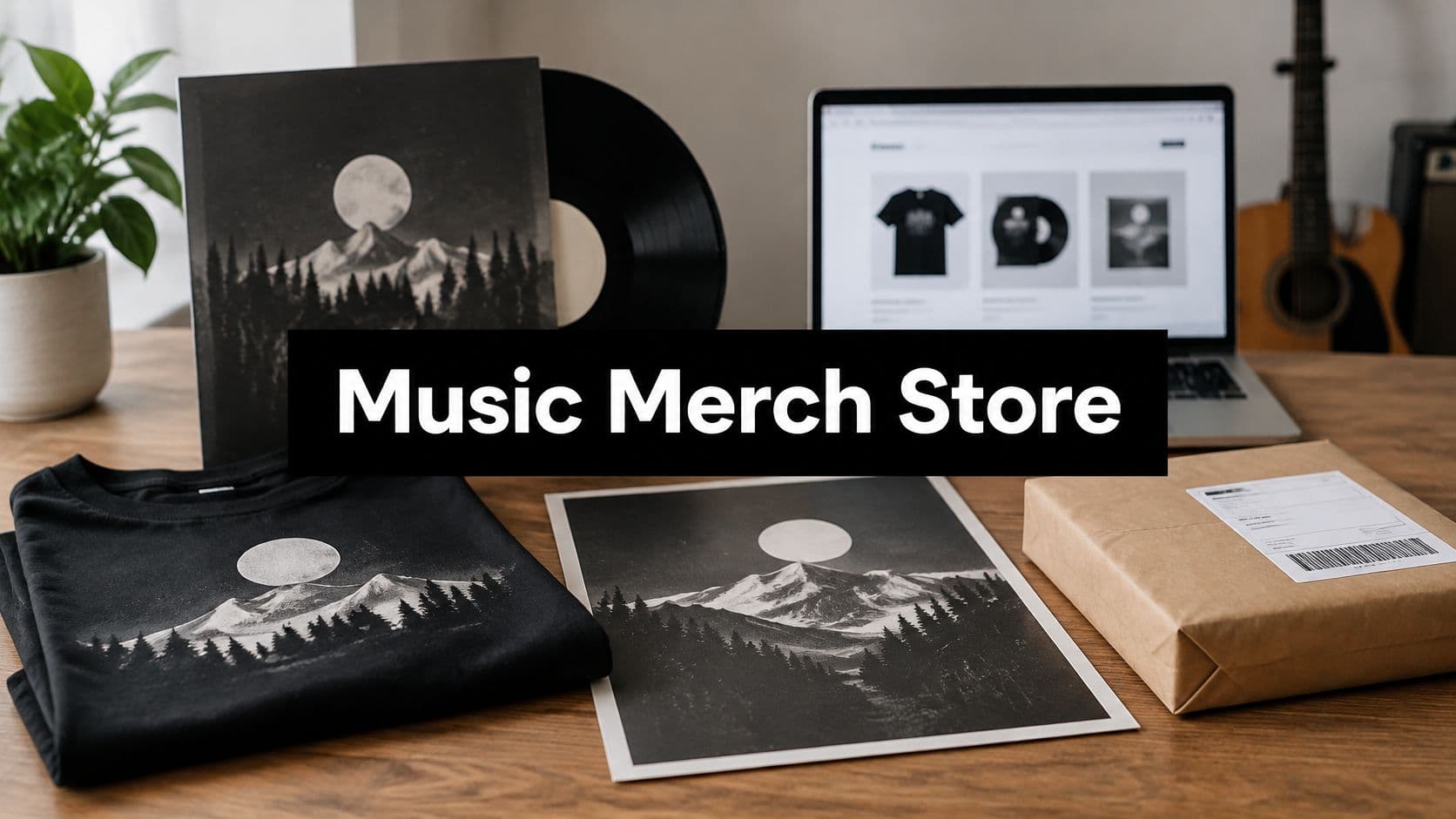
Integrating branded merchandise with music distribution through direct-to-fan platforms transforms listeners into a dedicated community. This crucial music industry promotion strategy builds a powerful ecosystem where physical products like apparel, vinyl, and limited-edition items create tangible connections with fans. This approach increases revenue per fan and extends an artist's brand beyond audio, creating a more immersive and loyal fan experience.
The power of this model is exemplified by artists who have built empires on it. Travis Scott's masterful merchandise drops generate hype and revenue rivaling his music, while Tyler, The Creator's Golf Wang brand has become a cultural phenomenon in its own right. Similarly, Billie Eilish's exclusive collections and The Weeknd’s strategic merch bundles showcase how merchandise can become a primary revenue driver and marketing tool.
Actionable Strategy & Implementation
Building a successful merch operation requires a blend of creative design and smart logistics. The goal is to create desirable products that fans genuinely want to own, not just generic logos on a t-shirt. Platforms like Shopify or Bandcamp make setting up a direct-to-fan store more accessible than ever.
- Create Scarcity with Limited Drops: Instead of maintaining constant inventory, release limited-edition items in drops to create urgency and exclusivity.
- Bundle Products with Music: Pair new album releases or vinyl pre-orders with exclusive merchandise bundles to increase average order value and boost chart positions.
- Leverage Your Email List: Grant your most dedicated fans on your email list exclusive pre-release access to new merch, rewarding their loyalty and driving early sales.
- Use On-Demand Fulfillment: Start with print-on-demand services like Printful or Teespring to test designs and manage inventory risk before investing in large-scale production.
Key Insight: Direct-to-fan sales are not just about revenue; they are about data. Each transaction provides valuable insights into your most engaged fans, allowing you to build a direct line of communication and market future releases, tours, and products more effectively without relying on third-party platforms.
10. Data Analytics & Targeted Advertising (Spotify Ads, Facebook, Google)
Leveraging data analytics and targeted advertising is a powerful form of music industry promotion that turns listener data into direct, measurable growth. This strategy involves using paid advertising on platforms like Spotify, Facebook, Instagram, and Google to reach hyper-specific audiences. By analyzing listener demographics, behaviors, and interests, artists can invest their ad budget with surgical precision, ensuring their music and message connect with potential fans who are most likely to convert into followers and streamers.
This approach is central to modern release campaigns. Major labels use sophisticated ad funnels to drive pre-saves and amplify new tracks, while independent artists can use tools like Facebook Ads Manager to build a fanbase from scratch. For example, running a targeted Spotify Ad Studio campaign to listeners of similar artists can directly influence algorithmic playlists by generating high-quality streams from a specific listener profile.
Actionable Strategy & Implementation
Effective ad campaigns are built on testing, optimization, and a clear understanding of your target audience. Rather than aiming for broad reach, the goal is to achieve high-quality conversions, such as streams, saves, or ticket sales, from a well-defined demographic.
- Start Small and Test: Begin with a modest budget ($5-20 per day) to test different ad creatives, copy, and audience segments. This allows you to identify what resonates before scaling up your spending.
- Build Lookalike Audiences: Use existing data from your Spotify for Artists followers, email list, or website visitors to create "lookalike" audiences on platforms like Facebook. These audiences share characteristics with your current fans, making them highly receptive.
- Focus on Conversion Goals: Design your ads with a clear call-to-action. Whether it's "Listen Now on Spotify" or "Buy Tickets," optimize your campaigns for conversions rather than just impressions or vanity metrics.
- Retarget Warm Leads: Implement retargeting campaigns to re-engage users who have previously visited your website, watched your music video, or interacted with your social media profiles.
Key Insight: The primary goal of running ads, especially on Spotify, isn't always direct ROI. It’s about feeding the platform's algorithm with positive signals. By driving targeted listeners to your track, you increase its chances of being picked up by algorithmic playlists like "Release Radar" and "Discover Weekly," creating organic momentum that far outlasts the ad campaign itself.
10-Strategy Music Promotion Comparison
| Strategy | Implementation Complexity (🔄) | Resource & Cost (⚡) | Expected Outcomes (📊) | Ideal Use Cases (💡) | Key Advantages (⭐) |
|---|---|---|---|---|---|
| Streaming Platform Playlist Pitching & Curation | High 🔄 — curator outreach & timing | Moderate: time + possible pitching fees ⚡ | Large streams & algorithmic momentum, variable ROI 📊 | Singles seeking streaming scale, genre/mood targeting 💡 | Passive streams, playlist-driven discovery, listener data ⭐ |
| Social Media & Viral Content Marketing | Medium–High 🔄 — constant content creation | Low–Medium: cheap production, high time investment ⚡ | Potentially massive organic reach but unpredictable 📊 | Viral-first releases, Gen‑Z audiences, trendable hooks 💡 | Rapid organic reach, direct engagement, low ad spend if viral ⭐ |
| Influencer & Artist Collaborations | Medium 🔄 — partner selection & contracts | Variable: micro (low) to celebrity (high) ⚡ | Immediate audience access and credibility lift 📊 | Cross-audience expansion, feature singles, co-promotions 💡 | Leverages existing fanbases, shared promotion, credibility ⭐ |
| YouTube Channel Optimization & Video Marketing | Medium–High 🔄 — production + SEO | High: production, editing, SEO time & cost ⚡ | Strong discoverability, long-term AdSense revenue 📊 | Visual artists, long-form storytelling, catalog monetization 💡 | Searchable content, multiple revenue streams, community build ⭐ |
| Email Marketing & Direct Fan Engagement | Low–Medium 🔄 — list building & segmentation | Low: platform fees & content time ⚡ | High ROI, reliable conversions and direct sales 📊 | Monetizing loyal fans, pre-sales, VIP offers 💡 | Owned audience, measurable ROI, bypasses algorithms ⭐ |
| Radio & Podcast Placement Strategy | High 🔄 — pitching + long lead times | High: plugger fees and long campaigns ⚡ | Credibility with older demos, steady legacy exposure 📊 | Targeting mature listeners, album campaigns, prestige plays 💡 | Legacy reach, chart/industry prestige, curated audiences ⭐ |
| Live Performance & Tour Marketing | High 🔄 — logistics, routing, production | Very High: upfront production, crew, travel ⚡ | Direct revenue (tickets/merch), deep fan engagement 📊 | Touring acts, festival pushes, experiential marketing 💡 | Multiple revenue streams, strong loyalty, social content ⭐ |
| PR & Media Relations Strategy | Medium–High 🔄 — narrative & relationships | Moderate–High: publicist fees, time investment ⚡ | Earned media coverage and third‑party credibility 📊 | Narrative-driven releases, award campaigns, crisis mgmt 💡 | Credibility boost, press assets for partnerships, longform reach ⭐ |
| Merch & Direct-to-Fan Sales Integration | Medium 🔄 — design, inventory, fulfillment | Medium: production and fulfillment costs ⚡ | Higher per‑fan revenue, brand extension, repeat sales 📊 | Engaged fanbases, tour sales, limited drops 💡 | Better margins than streaming, physical branding, loyalty ⭐ |
| Data Analytics & Targeted Advertising | Medium–High 🔄 — platforms & optimization | Variable: ad spend + specialist skills ⚡ | Measurable conversions, scalable audience growth 📊 | Audience scaling, retargeting, boosting releases algorithmically 💡 | Precise targeting, measurable KPIs, flexible budgets ⭐ |
Orchestrating Your Success: Integrating Promotion into Your Artistry
The journey through the intricate world of music industry promotion reveals a powerful truth: success is not the result of a single, magic-bullet strategy. Instead, it is a symphony composed of many harmonizing parts. The ten pillars we've explored, from targeted playlist pitching to the strategic integration of merchandise, are not just a menu of options to choose from. They are interconnected gears in a dynamic machine designed to propel your music forward.
Lasting momentum is built in the spaces between these strategies. A viral TikTok video (#2) loses its impact without an optimized YouTube channel (#4) to capture new subscribers or a robust email list (#5) to convert fleeting interest into a long-term fan relationship. Similarly, a successful PR campaign (#8) that lands you a feature on a popular podcast (#6) should be amplified across your social channels and used to drive ticket sales for your next live show (#7). This interconnectedness is the core principle of modern music marketing.
From Tactics to a Unified Strategy
The most crucial takeaway is the shift in mindset required for today's artists. You are not just a musician; you are the CEO of your own artistic enterprise. This means viewing promotion not as a chore to be completed after the music is made, but as an integral part of the creative process itself.
- Holistic Integration: Each promotional effort should feed into the next. Your social media content should reflect the narrative you're pitching to journalists. Your live performances should be an opportunity to sell exclusive merchandise.
- Authenticity as Your Anchor: The most potent promotional tool you possess is your unique voice and story. Whether collaborating with an influencer (#3) or crafting a direct-to-fan sales campaign (#9), your efforts must feel genuine and aligned with your brand.
- Data as Your Compass: In a crowded digital landscape, data analytics (#10) is no longer optional. Understanding your audience demographics, engagement patterns, and conversion rates allows you to refine your approach, allocate your budget effectively, and make informed decisions that drive real growth.
Ultimately, mastering music industry promotion is about building a sustainable ecosystem around your art. It’s about creating multiple touchpoints where listeners can discover, engage with, and support your work. By thoughtfully orchestrating these diverse tactics into a cohesive and authentic strategy, you transform isolated promotional pushes into a powerful, self-sustaining career engine. You stop just releasing songs and start building a legacy, one fan at a time.
Ready to unify your promotional efforts and build a direct-to-fan empire? OohYeah provides the tools you need to sell music, merch, and tickets commission-free, all from one central hub. Take control of your career and connect with your audience on your own terms by visiting OohYeah today.