10 Effective Music Industry Marketing Strategies for 2025
Discover 10 proven music industry marketing strategies to grow your fanbase. Learn actionable tactics for social media, streaming, and direct fan engagement.
October 16, 2025
Music Marketplace Advisor
Buying & SellingIn today's oversaturated digital landscape, creating incredible music is only half the battle. The other half is fought and won with intelligent, adaptive marketing that connects your sound with a dedicated audience. Cutting through the noise requires more than just talent; it demands a strategic approach that is both creative and data-informed. This is where effective music industry marketing strategies become the critical differentiator between a fleeting hit and a sustainable career.
This guide moves beyond generic advice to provide a deep dive into the most effective tactics shaping artist careers today. We will break down ten essential strategies, from mastering viral content creation on social platforms to securing high-impact brand partnerships and leveraging detailed audience analytics. Each section is designed to be a practical playbook, offering actionable steps for independent artists, producers, and industry professionals to implement immediately.
Whether you're looking to optimize your streaming presence, build a loyal community through direct communication, or create unforgettable live experiences, these insights will equip you with the tools necessary to grow your audience and build a lasting presence. You will learn not just what to do, but how to execute these plans efficiently to achieve tangible results and maintain creative control.
1. Social Media Engagement & Viral Content Creation
In today’s digital landscape, one of the most powerful music industry marketing strategies involves cultivating a dedicated online community through authentic social media engagement. This approach moves beyond simple promotion, focusing on creating platform-native content that resonates with audiences on TikTok, Instagram, and YouTube. The goal is to spark conversations, encourage user-generated content (UGC), and build a genuine artist-to-fan relationship that can translate into organic, viral growth. Artists like Lil Nas X and Olivia Rodrigo have demonstrated how teasing music snippets and participating in trends can generate massive anticipation and catapult a track to global success before it's even officially released.
Core Principles for Implementation
- Authenticity Over Polish: Prioritize content that showcases your personality. Fans connect with genuine, behind-the-scenes moments more than with overly produced advertisements.
- Platform-Specific Content: Study what works on each platform. A TikTok dance challenge, an Instagram Reel, and a YouTube Short all have different nuances. Adapt your content to fit the format and user expectations.
- Consistent Interaction: Actively respond to comments, share fan creations, and host Q&A sessions. This transforms your social media from a broadcast channel into a thriving community hub.
The following chart illustrates the trade-offs involved in a viral-focused social media strategy.
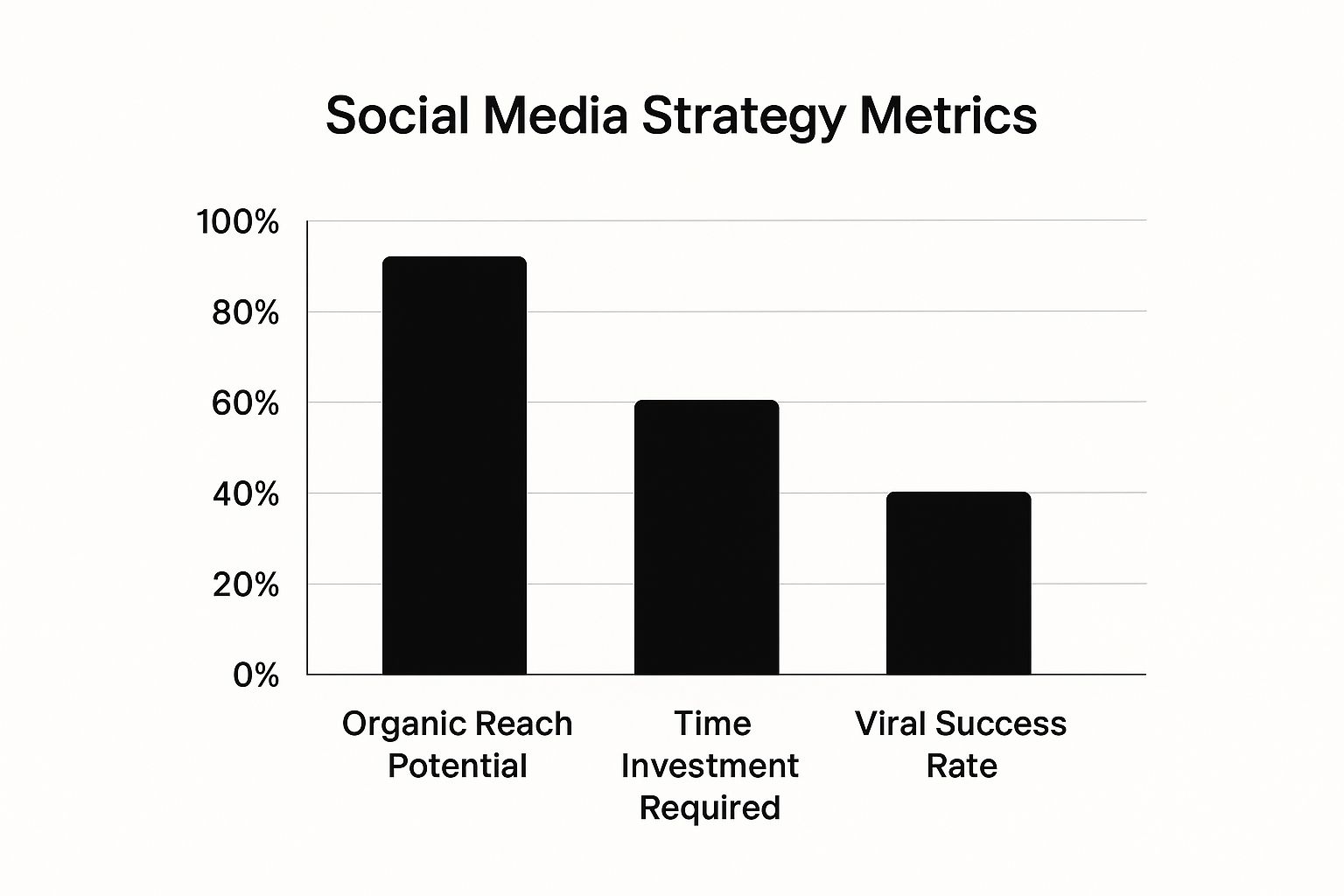
This data shows that while the potential for organic reach is exceptionally high, it demands a significant time investment, with the chance of achieving true viral success remaining relatively moderate. Effective social media management is a long-term commitment, not a one-time viral lottery ticket. For more in-depth techniques, you can explore these detailed fan engagement strategies.
2. Playlist Pitching & Streaming Optimization
In the streaming era, securing placements on influential playlists has become one of the most critical music industry marketing strategies, often surpassing traditional radio in its impact on discovery and consumption. This data-driven approach involves pitching tracks to editorial and independent curators, optimizing song metadata for algorithmic playlists, and leveraging platform-specific tools to maximize visibility. A single placement on a high-traffic playlist like Spotify's Today's Top Hits or Apple Music's Today's Hits can generate millions of streams, creating a powerful launchpad for an artist's career. Success stories like Benee's "Supalonely" and Glass Animals' "Heat Waves" demonstrate how a focused playlisting strategy can transform a track from a niche release into a global phenomenon.
Core Principles for Implementation
- Strategic Pre-Release Pitching: Submit your music to platform editors, like those at Spotify for Artists, at least one to two weeks before your release date. A well-crafted pitch that details the song's genre, mood, and story is essential.
- Cultivate Curator Relationships: Identify and build connections with independent playlist curators in your genre. A personal outreach that shows genuine appreciation for their curation can be more effective than a mass email.
- Encourage Fan-Driven Signals: Prompt your followers to pre-save your track and add it to their personal libraries upon release. High initial save rates signal to platform algorithms that the song is resonating with listeners, increasing its chances of algorithmic playlist placement.
This data highlights that while direct pitching offers significant potential, its success is highly competitive. Therefore, a comprehensive approach that combines editorial pitching with fostering algorithmic growth is crucial. Properly configured song information is key to this process, and you can explore detailed advice on how to optimize your music metadata for streaming to improve your chances.
3. Influencer & Creator Collaborations
Harnessing the power of established online communities, another of the most effective music industry marketing strategies is partnering with social media influencers and content creators. This approach goes beyond traditional advertising by integrating your music organically into content that a creator's audience already trusts and enjoys. By leveraging their authenticity and reach, you can introduce your music to highly targeted demographics in contextually relevant ways, whether as the soundtrack for a TikTok dance, a YouTube vlog, or an Instagram Reel. Artists like Jason Derulo and Saweetie have masterfully used this tactic, turning creator-led trends into chart-topping global hits by tapping into pre-built, engaged fanbases.
Core Principles for Implementation
- Audience Alignment is Key: Focus on influencers whose followers match your target demographic. A niche micro-influencer with a dedicated following is often more effective than a macro-influencer with a broad, disengaged audience.
- Empower Creative Freedom: Provide creators with the track and a general concept but allow them the freedom to craft content in their unique style. Scripted promotions often feel inauthentic and perform poorly.
- Prioritize Long-Term Partnerships: Build genuine relationships with creators rather than pursuing one-off transactions. A creator who becomes a true fan of your music will provide more authentic and ongoing support.
- Formalize the Partnership: When engaging in collaborations, understanding the legal framework is crucial; delve into these detailed influencer agreement contract guidelines to protect both parties and clarify deliverables.
4. Email Marketing & Direct Fan Communication
In an era dominated by algorithms, building a direct line to your audience is one of the most powerful music industry marketing strategies available. Email marketing allows artists to bypass social media gatekeepers and communicate directly with their most dedicated supporters. This strategy centers on nurturing an owned email list by offering exclusive content, early access, and personalized updates. Unlike the fleeting nature of a social media feed, an email lands directly in a fan's inbox, creating a more intimate and impactful connection that drives higher conversion rates for ticket sales, merchandise, and new releases.
Core Principles for Implementation
- Offer a Compelling Incentive: Encourage sign-ups by providing immediate value. Offer an exclusive unreleased track, a discount on merchandise, or early access to concert tickets.
- Segment Your Audience: Don't send the same message to everyone. Group subscribers based on their location, purchase history, or engagement level to send highly targeted and relevant content.
- Prioritize Value Over Volume: Respect your fans' inboxes. Focus on sending high-quality, valuable content consistently, but not so frequently that it becomes spam. A bi-weekly or monthly newsletter is often a good starting point.
- Include a Clear Call-to-Action (CTA): Every email should have a purpose. Whether it's to "Stream the New Single," "Buy Tickets Now," or "Shop New Merch," make the desired action obvious and easy to complete.
This direct-to-fan approach has been a cornerstone for artists like Trent Reznor and Chance the Rapper, who used their email lists to build massive, independent careers. It transforms a casual listener into a member of an exclusive community, fostering long-term loyalty and sustainable monetization.
5. Strategic Brand Partnerships & Sync Licensing
Among the most lucrative music industry marketing strategies is the pursuit of strategic brand partnerships and synchronization (sync) licensing. This dual-pronged approach involves collaborating with brands for mutual promotional benefit and securing music placements in advertisements, films, TV shows, and video games. The goal is to generate significant revenue while exposing your music to new, often massive, audiences in emotionally resonant contexts. A well-placed song can transform an artist's career, as seen when Feist’s "1234" featured in an iPod commercial, driving a 600% sales increase and launching her into the mainstream.
Core Principles for Implementation
- Proactive Pitching & Registration: Don't wait to be discovered. Register your catalog with sync licensing platforms like Musicbed and Artlist, and actively work with sync agents or music supervisors who have established industry relationships.
- Prepare Your Assets: Make your music "sync-ready." This means creating high-quality instrumental versions and stems for editing flexibility and ensuring all master and publishing rights are cleared and easily accessible.
- Targeted Alignment: Research and pitch to brands, films, or shows whose identity and audience align with your artistic brand. A partnership feels authentic and is more effective when the values are shared.
The following chart illustrates the potential impact of a successful sync placement.
This data highlights that while securing a major sync placement has a low probability, the potential return on investment is exceptionally high, offering both substantial revenue and unparalleled audience reach. For artists looking to dive deeper, this guide on how to get your music on TV shows provides a detailed roadmap.
6. Content Marketing & Storytelling
Effective music industry marketing strategies often extend beyond the music itself, using narrative-driven content to forge deeper emotional connections with audiences. This approach involves creating compelling podcasts, video series, documentaries, and visual albums that tell a larger story around the artist's brand and creative journey. The goal is to build an immersive world that fans can invest in emotionally, transforming passive listeners into a dedicated community. Artists like Beyoncé with her visual album 'Lemonade' and Tyler, The Creator with his cinematic album rollouts have proven that a strong narrative can create a cultural phenomenon, driving conversation and engagement far beyond a simple song release.
Core Principles for Implementation
- Document Everything: Capture the entire creative process, including songwriting sessions, studio work, and tour life. This raw footage becomes a valuable asset for future content.
- Embrace Vulnerability: Share authentic personal stories of struggle, growth, and inspiration. Fans connect deeply with artists who are willing to be open and genuine.
- Create Content Pillars: Develop recurring themes for your content, such as your creative process, personal inspirations, or collaborations. This builds consistency and gives fans something to anticipate.
- Invest in Quality: While authenticity is key, flagship content pieces like a mini-documentary or music video benefit greatly from professional production quality to elevate your brand.
By weaving a compelling narrative, artists can build a brand that resonates on a much deeper level than just audio. This storytelling approach is central to creating a lasting artistic identity. To understand this further, explore these insights on why artists should focus on branding and image.
7. Live Performance & Experiential Marketing
Beyond digital streams, creating unforgettable live and experiential moments is a cornerstone of modern music industry marketing strategies. This approach focuses on forging deep, lasting connections with fans through in-person or virtual events that are immersive, shareable, and emotionally resonant. From traditional tours to groundbreaking virtual concerts, experiential marketing transforms passive listeners into a dedicated community. Artists like Travis Scott, with his record-breaking Fortnite concert, have proven that a live experience can become a global cultural event, generating immense buzz and solidifying an artist's brand far beyond the music itself.
Core Principles for Implementation
- Create Shareable Moments: Design your live events with "Instagrammable" moments in mind. Unique stage designs, interactive installations, or exclusive photo opportunities encourage attendees to create user-generated content, extending your marketing reach organically.
- Offer Tiered Experiences: Cater to different levels of fandom by providing VIP packages or exclusive add-ons. These can include meet-and-greets, soundcheck access, or limited-edition merchandise, creating high-value offerings for your most dedicated supporters.
- Bridge the Physical and Digital: Use live shows as an opportunity to grow your online community. Livestream portions of your performance for fans worldwide and use QR codes at venues to encourage email sign-ups or social media follows.
This strategy recognizes that a memorable performance is one of the most powerful conversion tools available, turning a casual listener into a lifelong fan and advocate. To get a better sense of how to structure a compelling live show, consider this guide on creating an unforgettable setlist.
8. User-Generated Content (UGC) Campaigns
One of the most powerful organic music industry marketing strategies is the active encouragement of user-generated content (UGC). This approach mobilizes an artist's fanbase, transforming listeners into active brand advocates by inviting them to create their own content featuring the music. From dance challenges to fan-made videos and remixes, UGC exponentially multiplies reach, builds social proof, and creates a vibrant ecosystem of promotion that feels authentic and fan-driven. The success of Drake's "In My Feelings Challenge" and Megan Thee Stallion's "Savage Challenge" are prime examples of how UGC can drive a song to the top of the charts and sustain its momentum for weeks.

Core Principles for Implementation
- Lower the Barrier to Entry: Create simple, accessible concepts that anyone can participate in. Complex choreography or prompts can discourage casual fans from joining in.
- Incentivize and Acknowledge: Offer rewards for participation, such as featuring the best content on official channels, merchandise giveaways, or exclusive access. Actively sharing and engaging with fan submissions is crucial for building momentum.
- Seed the Campaign Strategically: Kickstart your campaign by collaborating with influencers or highly engaged fans. Their initial participation provides a template and social proof that encourages wider adoption.
The chart below highlights the key dynamics of launching a successful UGC campaign.
This data shows that while the potential for viral reach is extremely high, the success rate heavily depends on community engagement and the initial creative concept. A well-executed UGC strategy can yield incredible organic promotion, turning a song into a cultural moment. To learn more about fostering this type of fan community, you can explore guides on building a music brand.
9. Data Analytics & Audience Insights Strategy
In the modern music industry, guesswork is no longer a viable path to success. One of the most critical music industry marketing strategies is leveraging data analytics to understand your audience and make informed decisions. This involves analyzing listener demographics from platforms like Spotify and Apple Music, tracking engagement on social media, and using audience intelligence tools to optimize everything from tour routes to content release times. It’s about transforming raw numbers into an actionable roadmap for growth, ensuring every marketing dollar and effort is spent with maximum impact.
Core Principles for Implementation
- Geographic Targeting: Use streaming data to identify where your listeners are concentrated. Artists like Lauv have used this data to plan surprise shows in high-density fan cities, resulting in instant sellouts and massive organic buzz.
- Content Optimization: Analyze which social media posts or content types drive spikes in streams or engagement. This reveals what resonates with your audience, allowing you to refine your content strategy for better results.
- Super-Fan Identification: Data helps pinpoint your most dedicated supporters. Programs like Spotify's 'Fans First' use this information to offer exclusive pre-sales and merchandise, strengthening the artist-fan connection and driving revenue.
A deep dive into data is essential; understanding What is Data Driven Marketing? can significantly boost your strategic approach. By consistently monitoring analytics, you can move from reactive promotion to proactive, predictive marketing that anticipates audience needs and market trends before they happen.
10. Pre-Release Hype & Scarcity Marketing
Among the most effective music industry marketing strategies is the art of building intense anticipation and demand before a release. This method leverages psychological triggers like FOMO (fear of missing out) by transforming a standard music drop into a must-see cultural event. Through strategic teasing, countdowns, and exclusive content, artists can capture audience attention and create a powerful sense of urgency. Artists like Taylor Swift, with her cryptic Easter egg campaigns, and Beyoncé, with her groundbreaking surprise album drops, have demonstrated how pre-release momentum can dominate conversations and drive massive first-week engagement.
Core Principles for Implementation
- Cultivate Anticipation Early: Begin your campaign 4-6 weeks before the release date. Use a content calendar to map out a series of teasers, behind-the-scenes glimpses, and cryptic clues that build momentum over time.
- Leverage Scarcity and Exclusivity: Create demand by limiting availability. Offer limited-edition signed vinyl, exclusive merchandise bundles, or a secret bonus track for fans who pre-save the album. This makes the release feel more valuable and collectible.
- Incentivize Early Action: Reward fans for their early commitment. A successful pre-save campaign can be amplified by offering incentives such as early access to tickets, exclusive content, or entry into a special giveaway.
This approach ensures that on release day, you are not starting from zero but are instead capitalizing on weeks of carefully cultivated excitement. It turns passive listeners into active participants who feel invested in the success of the music.
Music Industry Marketing Strategies Comparison
| Strategy | Implementation Complexity 🔄 | Resource Requirements ⚡ | Expected Outcomes 📊 | Ideal Use Cases 💡 | Key Advantages ⭐ |
|---|---|---|---|---|---|
| Social Media Engagement & Viral Content Creation | Medium-High 🔄 | Time-intensive content creation & multi-platform | High organic reach; viral visibility 📊 | Artists seeking organic growth and fan connection | Cost-effective; authentic fan relationships ⭐ |
| Playlist Pitching & Streaming Optimization | Medium 🔄 | Metadata work, pitching efforts, curator relations | Sustained streaming growth & revenue 📊 | Artists targeting streaming playlist discovery | Exponential reach; measurable ROI ⭐ |
| Influencer & Creator Collaborations | Medium 🔄 | Budget varies from low to high; relationship mgmt | Viral cascades & demographic targeting 📊 | Leveraging influencer audiences for music promo | Authentic integration; precise targeting ⭐ |
| Email Marketing & Direct Fan Communication | Medium 🔄 | Ongoing list building, content creation | High conversion rates; owned audience 📊 | Direct fan sales, ticketing, and merch promotions | Direct access; strong ROI; personalized ⭐ |
| Strategic Brand Partnerships & Sync Licensing | High 🔄 | Legal, relationship building, licensing management | Large payments & cross-audience exposure 📊 | Revenue via sync deals; brand association | Significant revenue; long-term residuals ⭐ |
| Content Marketing & Storytelling | High 🔄 | Production resources for video, podcasts, blogs | Deep fan loyalty & brand differentiation 📊 | Artists aiming for emotional connection & branding | Builds lasting emotional investment ⭐ |
| Live Performance & Experiential Marketing | High 🔄 | High cost; logistical complexity | Revenue from tours & VIP experiences 📊 | Monetizing fan experiences, building momentum | Highest profit stream; emotional connection ⭐ |
| User-Generated Content (UGC) Campaigns | Medium 🔄 | Campaign seeding, moderation, engagement | Exponential reach and social proof 📊 | Engaging fans actively as content promoters | Cost-effective; community building ⭐ |
| Data Analytics & Audience Insights Strategy | Medium 🔄 | Tools plus analytic skills needed | Optimized marketing spend & targeting 📊 | Data-driven decisions across marketing strategies | Removes guesswork; identifies opportunities ⭐ |
| Pre-Release Hype & Scarcity Marketing | Medium-High 🔄 | Content calendar, teasing, exclusive offers | Strong initial sales & streaming spikes 📊 | Building anticipation for important releases | Creates event mentality; drives first-week impact ⭐ |
Conducting Your Marketing Symphony
The ten music industry marketing strategies detailed in this guide are not siloed tactics to be executed in isolation. Instead, think of them as distinct sections within a grand orchestra. A powerful social media campaign is the brass section, announcing your presence with force. Intimate email marketing and direct fan communication are the strings, creating deep emotional resonance. Your data analytics strategy is the conductor, ensuring every element plays in perfect time and harmony to achieve a unified, powerful sound.
The most successful marketing campaigns are dynamic compositions. They blend the broad reach of playlisting and influencer collaborations with the focused impact of targeted pre-release hype. They use the compelling narrative of content marketing to fuel user-generated content, turning passive listeners into active participants in your story. Your unique artistic identity, your genre, and your specific career goals will determine the specific arrangement of these elements. What works for a viral TikTok rapper will differ from the approach of an ambient electronic producer, yet the foundational principles remain the same: authenticity, consistency, and a deep understanding of your audience.
Synthesizing Your Strategy for Lasting Impact
As you move forward, the critical takeaway is to adopt a mindset of continuous adaptation and integration. The digital landscape is in constant flux, and the strategies that dominate today may evolve tomorrow. Therefore, your most valuable asset is not mastery of a single platform but the ability to synthesize insights and pivot creatively.
Here are your actionable next steps:
- Audit Your Current Efforts: Objectively review your existing marketing. Which of the ten strategies are you actively using? Where are the gaps? Use a simple spreadsheet to track your efforts against each category and identify areas for immediate improvement.
- Prioritize and Experiment: You cannot do everything at once. Select two or three strategies that align most closely with your immediate goals, whether that's growing your streaming numbers, selling out a local show, or building your email list. Launch small-scale experiments, measure the results, and double down on what works.
- Integrate and Automate: Look for opportunities to connect your strategies. For example, can a successful UGC campaign be repurposed into content for your email newsletter? Can insights from your streaming data inform your next brand partnership pitch? Use tools to automate repetitive tasks, freeing up your time for creative execution.
Ultimately, mastering these music industry marketing strategies is about more than just gaining followers or streams; it is about building a sustainable, resilient career. It's the difference between a fleeting hit and a lasting legacy. By thoughtfully composing and conducting your marketing symphony, you create a powerful, resonant connection with your audience that will support your artistic journey for years to come. Your music deserves to be heard, and a well-executed strategy is the megaphone that will carry it to the world.
Ready to unify your marketing efforts and build a direct-to-fan empire? OohYeah provides the all-in-one platform to sell commission-free music and merch, manage your fan community, and access the powerful analytics you need to grow. Start conducting your marketing symphony from a single, powerful dashboard by exploring OohYeah today.