Effective Music Industry Marketing Strategies to Grow Your Brand
Learn essential music industry marketing tactics to boost your brand, engage fans, and increase your reach. Start transforming your music career today!
October 21, 2025
Music Marketplace Advisor
Buying & SellingThe old days of marketing music are gone. It's no longer about chasing a record deal or begging for radio play. Today, it’s a digital game focused on building a genuine brand and connecting directly with your fans. This is where storytelling, data, and consistent content come together to help you build a career on your own terms.
Defining Your Strategy in Modern Music Marketing
Forget the old playbook. Modern music marketing is all about thinking digital-first, where your artist brand is everything. You can't just drop a track and cross your fingers anymore. Success comes from building a solid foundation that turns casual listeners into a real community. This requires moving past generic advice and crafting a blueprint that’s unique to you.
Think of your marketing strategy as the glue that holds everything together. Without a plan, your social media posts, new releases, and live shows are just random events. A solid strategy weaves them into a single, compelling story that connects with your audience.
Pinpoint Your Ideal Listener
Before you even think about creating content, you have to know who you’re talking to. And no, "everyone" is not an audience. Start by digging into the analytics you already have on platforms like Spotify for Artists or YouTube Studio. Look for patterns in demographics, locations, and even what time of day people are listening.
Are your most dedicated fans all in one city? Do they tune in mostly on weekdays during their commute? This is pure gold. It helps you fine-tune your content, plan your tour stops, and focus your ad spend where it will actually make a difference. I always recommend creating a listener "persona"—a detailed, fictional profile of your ideal fan—to make this whole process feel more concrete.
"The core of modern music marketing isn't just broadcasting your music to the masses. It's about identifying the niche community that will champion your work and then serving that community with unparalleled authenticity and value."
This focused approach stops your message from getting lost in the noise. Trust me, it’s far more powerful to connect deeply with 1,000 true fans than to be a blip on the radar for a million passive listeners. For a deeper dive, this overview on how to market your music as an independent artist offers more specific tactics for finding and engaging your core audience.
Establish a Cohesive Artist Narrative
Your brand is so much more than a logo or a slick press photo. It's the story you tell, the vibe you give off, and the emotional chord you strike with your listeners. What really makes your music yours? What’s the core feeling you want people to walk away with?
This narrative needs to show up everywhere, consistently:
- Your Visuals: Album art, music videos, and social media posts should all feel like they came from the same world—your world.
- Your Bio: This isn't just a resume. It’s your chance to hook new listeners by telling them not just what your music sounds like, but why you make it.
- Your Communication Style: The way you write captions, reply to DMs, and talk to fans should always feel authentic to who you are as an artist.
Think about it: an artist making sad, ambient music is going to look and sound completely different online than a high-energy punk band. That consistency is what builds recognition and makes you memorable.
Set Measurable Marketing Goals
Good marketing runs on clear, tangible goals. Vague ambitions like "get more fans" are useless because you can't track them. You need to set goals that are specific, measurable, achievable, relevant, and time-bound (SMART).
Here are a few practical examples of what this looks like:
- Increase Spotify monthly listeners by 20% in the next three months.
- Grow our email list by 500 subscribers before the next single drops.
- Hit a 5% engagement rate on Instagram posts during the album launch campaign.
Keeping an eye on these numbers shows you exactly what's working and what isn't, so you can adjust your strategy on the fly. As you map out your plan, leaning on resources like an actionable guide to social media marketing for small business can also give you a strong framework for setting and hitting these kinds of digital targets.
Building Your Artist Brand Ecosystem
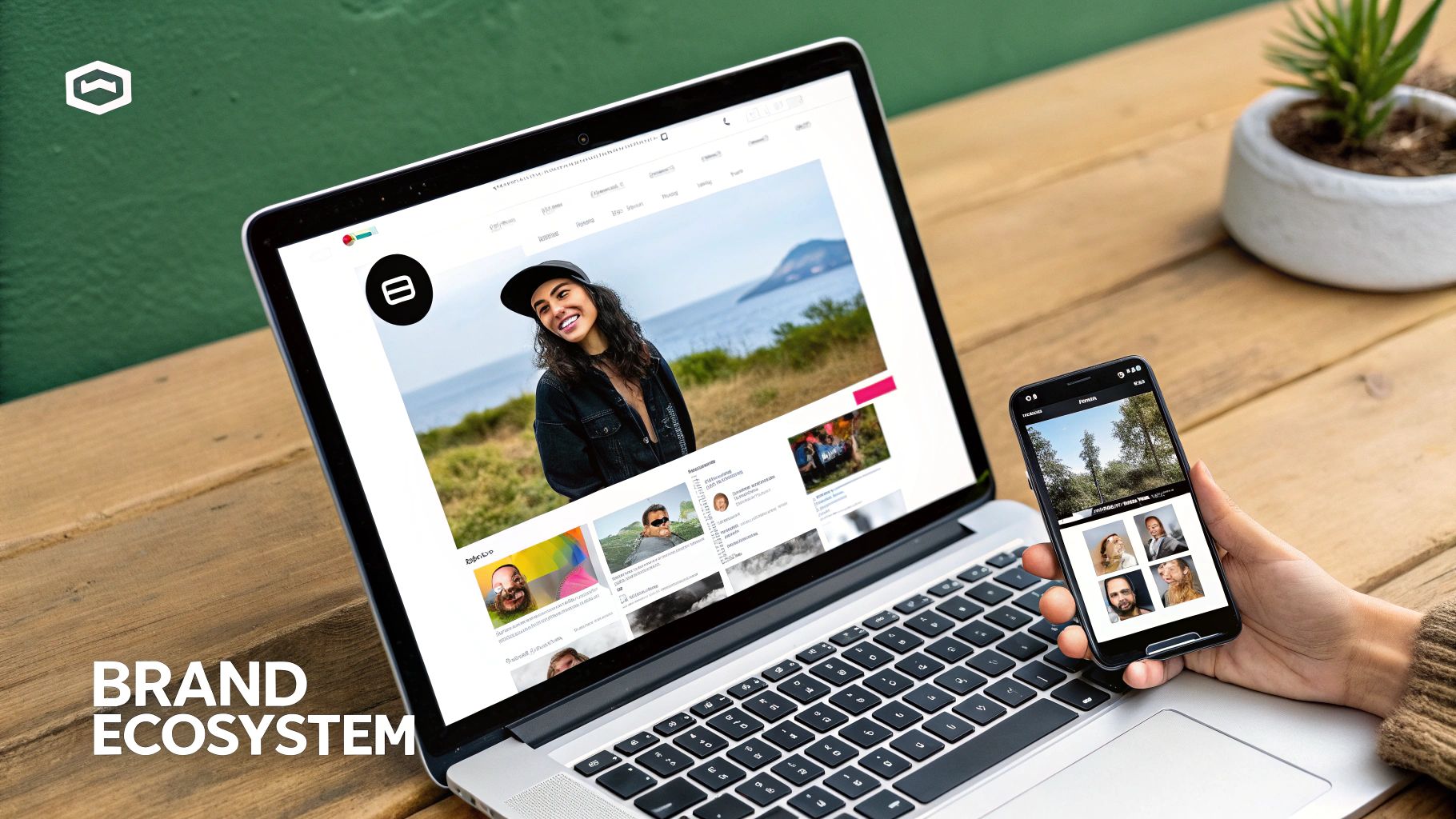
Your digital presence isn't just a random collection of profiles and links. It's your global headquarters, the main stage where fans truly connect with you. I've seen countless artists treat their social media and website as separate things, but the real power comes from turning these outposts into a single, cohesive brand ecosystem. This is the core of effective music industry marketing.
Everything has to work together to tell a consistent and compelling story. From your website's 'About' page to the one-line bio on your TikTok, it should all feel like it's coming from the same artist. When a potential fan discovers you on one platform, their experience needs to feel familiar and connected when they find you on another. That's how you build trust and project a professional, intentional image that’s impossible to ignore.
Your Website as the Central Hub
Let's get one thing straight: your website is your home base. Social media is fantastic for discovery and day-to-day engagement, but you're ultimately just renting space there. An algorithm change or a new policy can cut you off from your audience overnight. Your website, however, is the one digital asset you completely own and control.
It’s the definitive source for everything about you. Think of it as the place where you can consolidate all your vital information, making it dead simple for fans, press, and industry contacts to find exactly what they need without having to dig.
Your website is the anchor for your entire operation. It should be the one-stop-shop for:
- Music and Merchandise: This is where you house your full discography, links to streaming services, and your official merch store.
- Tour Dates and Tickets: Keep an up-to-date schedule with direct links for fans to buy tickets.
- Email List Signup: Honestly, this is non-negotiable. Your email list is a direct line to your most dedicated supporters, free from any algorithm.
- Official Bio and Photos: Make life easy for the media and promoters by offering high-quality, approved assets they can grab and use.
A well-designed site lets you funnel traffic exactly where you want it to go, whether that's to your new single on OohYeah or to your latest hoodie design. If you want to dive deeper into this, we have a detailed guide on why artists should focus on branding and image.
Optimizing Your Social and Streaming Profiles
Every platform in your ecosystem plays a different part, and optimizing your profiles is the key to grabbing attention instantly. Your bio, profile picture, and pinned content need to communicate who you are and what your music is about in a heartbeat.
Take your Spotify bio, for example. So many artists just list their accomplishments. Don't do that. Use that precious space to tell a story that hooks the listener. Maybe it’s a short, punchy sentence that captures your sound or a quick anecdote about what inspired your latest album. The goal is to make a real human connection in just a few lines.
Your digital footprint is the modern-day first impression. A cohesive and professionally managed online presence signals to fans, labels, and collaborators that you are serious about your career and worth their investment.
The same logic applies to your visuals. Your Instagram grid should be more than a random dump of photos. Think of it as a visual mood board for your music. Look at how artists like Billie Eilish use their grids to create a distinct aesthetic that evolves with each album cycle, telling a story through color, imagery, and tone.
Crafting a Compelling Electronic Press Kit
Your Electronic Press Kit (EPK) is your professional music resume, plain and simple. It’s an absolutely essential tool for getting media coverage, booking gigs, and catching the eye of labels and managers. A strong EPK needs to be concise, look great, and be incredibly easy for a busy industry person to navigate.
It must include these key elements:
- A Concise Bio: A short, impactful summary of your artist story and musical style.
- High-Resolution Photos: Offer a variety of approved press shots, including both portrait and landscape options.
- Music Samples: Embed links to your best tracks on platforms like SoundCloud or OohYeah.
- Key Accomplishments: Highlight any notable press mentions, cool playlist placements, or successful tours.
- Contact Information: Provide clear, easy-to-find contact details for your manager, booking agent, or yourself.
This entire ecosystem—your website, social profiles, and EPK—must work in perfect harmony to push your career forward. The need for this kind of strategic digital marketing is clearer than ever. In the first half of 2025, global recorded music revenues hit $18.3 billion, a 5.9% jump driven mostly by streaming. As you can see from these industry revenue trends on midiaresearch.com, that growth underscores how critical it is for artists to build smart, diversified digital strategies to stand out in such a competitive market.
Creating Content That Connects and Converts
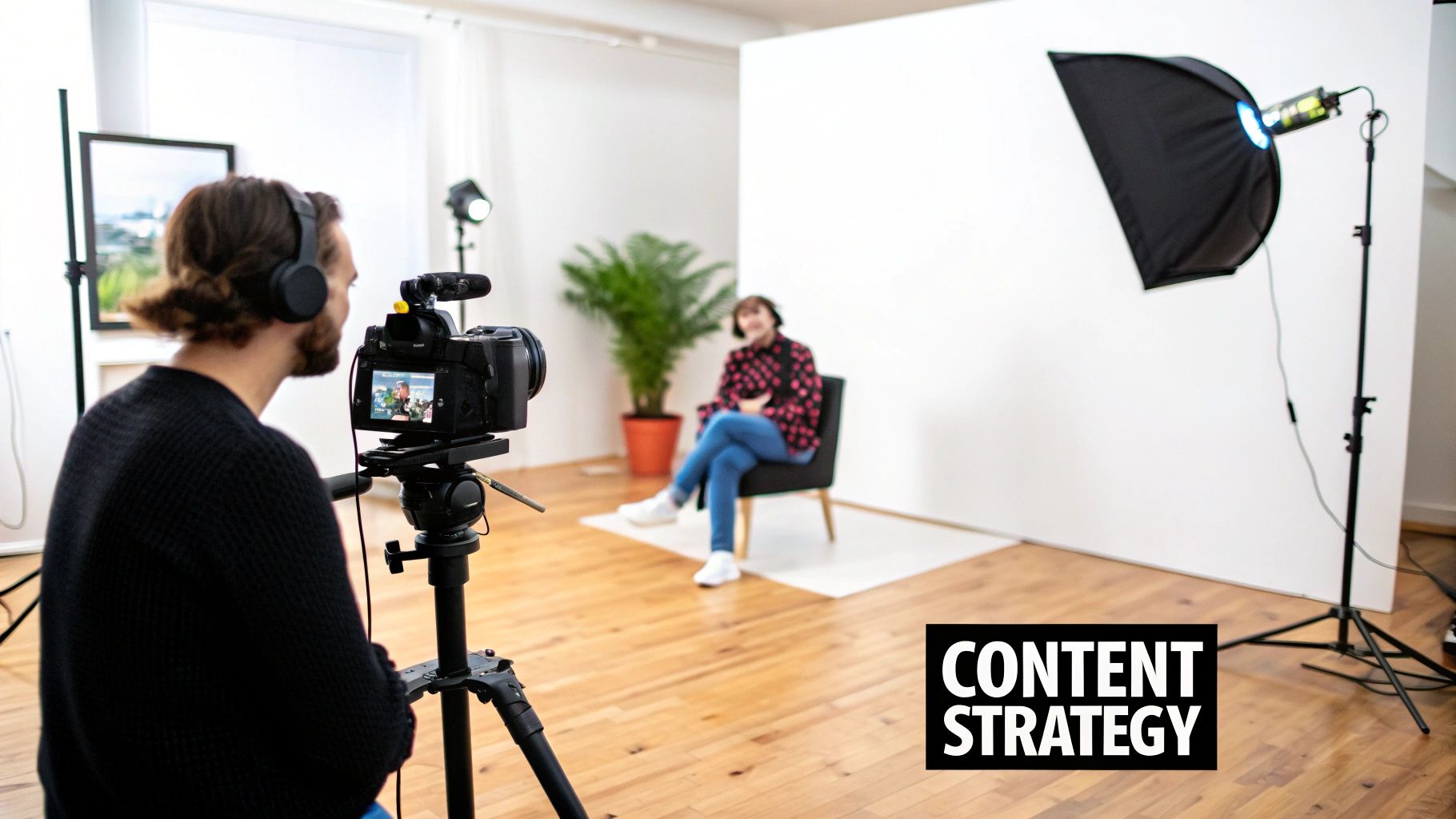
In the world of music industry marketing, just dropping a new song and hoping for the best simply doesn't cut it anymore. Your content is the heartbeat of your fan relationships. It's the engine that turns someone who casually streams your track into a dedicated member of your community.
A great content strategy isn't just about promotion; it's about inviting people into your world. The goal is to build a story that unfolds day by day, making fans feel like they're truly part of your journey, not just an audience for your release schedule.
Go Beyond the "New Music Out Now" Post
Your audience wants to see the real person behind the music. The most successful artists I've seen master the art of mixing polished, professional announcements with raw, unfiltered moments that reveal their personality and process. It’s this variety that keeps your feed from feeling stale and builds a much more authentic artist brand.
Think about weaving these proven formats into your mix:
- Behind-the-Scenes Glimpses: Post candid clips from the studio, a messy songwriting session on your bedroom floor, or a pre-show rehearsal. This stuff demystifies the magic and makes your fans feel like they have an all-access pass.
- Live Q&As: Jump on Instagram Stories, TikTok LIVE, or a YouTube livestream to answer fan questions on the spot. Nothing builds community faster than direct, real-time interaction.
- Teach What You Know: If you're a killer guitarist, show your fans how to play that tricky riff from your latest single. If you're a producer, break down a beat layer by layer. This provides real value and establishes you as an expert in your craft.
When you blend these different types of content, you stop being just a musician in their feed and become a creator they genuinely want to follow.
The real magic of content is when it stops feeling like marketing and starts feeling like a conversation. Your job isn't to sell a song; it's to share a story that your song is just one part of.
Building a Realistic Content Plan
Let’s be honest: consistency is the number one hurdle for most independent artists. A content calendar is your secret weapon against burnout and those dreaded weeks of silence. It doesn't have to be a beast—a simple spreadsheet mapping out your themes for the week can completely change the game.
Start by defining a few core "content pillars." These are the recurring themes that define your brand. Maybe they are "Songwriting," "Live Gigs," "Gear Talk," and "Personal Life." From there, you can plan specific posts under each pillar to keep your feed diverse but on-brand.
Here’s what a simple weekly schedule could look like:
- Monday: A high-energy clip from your weekend show.
- Tuesday: A "work-in-progress" video from a writing session.
- Wednesday: An interactive poll asking fans to vote on a new merch design.
- Thursday: A #TBT post sharing the story behind an old song.
- Friday: A teaser for an upcoming announcement.
This gives you a roadmap. You can always post spontaneously when inspiration strikes, but having this structure in your back pocket means you'll never be scrambling for what to post next.
Tailoring Your Content for Each Platform
What kills it on TikTok can completely bomb on Facebook. A huge part of effective music industry marketing is understanding that you have to speak the native language of each platform.
For example, YouTube is built for deeper storytelling. As many artists look for revenue beyond streaming, they are finding that YouTube is an "incredible platform for artistry." It gives them a space to connect with fans on a level that audio-only platforms just can't match. This visual "proof of work" becomes a powerful part of their story.
Thinking about where to post what can feel overwhelming, so I've put together a quick guide to help you get started.
Platform-Specific Content Strategy
This table breaks down how to approach the major platforms to get the most out of your efforts.
| Platform | Primary Content Type | Key Goal | Example Tactic |
|---|---|---|---|
| TikTok | Short-form video, trends | Discovery & Virality | Use a trending sound, but layer your own original audio underneath. Or, start a simple challenge related to your lyrics. |
| High-quality visuals, Reels, Stories | Brand Building & Community | Post a carousel with behind-the-scenes photos telling the story of a song. Use Stories for daily Q&As and polls. | |
| YouTube | Long-form video, Shorts | Deep Engagement & Storytelling | Release a mini-documentary on the making of your EP or a high-quality live performance video. |
| X (Twitter) | Text updates, quick thoughts, memes | Real-time Conversation | Jump into conversations with fans and other artists, share random thoughts, and react to things happening in your scene. |
By strategically adapting your content for each app, you're not just posting—you're connecting. You're meeting fans where they already are and speaking their language, which is how you turn a casual follower into a true, lifelong supporter.
Using Analytics to Guide Your Marketing
Guessing games have no place in a modern music industry marketing strategy. These days, data is your most reliable compass, pointing you away from wasted effort and toward real results. Too many artists either ignore their analytics or get completely overwhelmed by the sheer volume of numbers.
The secret isn't to become a data scientist overnight. It’s about learning to read the story your numbers are telling.
Platforms like Spotify for Artists and Apple Music for Artists are overflowing with practical insights that can completely change your approach. This isn't about getting lost in spreadsheets. It’s about using specific, actionable data to sharpen your promotional campaigns, spend your budget wisely, and focus your energy where it will actually move the needle on your career.
Identifying Your Core Audience Demographics
First things first, you need a crystal-clear picture of who is actually listening to your music. Your analytics dashboard is a goldmine for this. It’s time to stop thinking of your listeners as a faceless crowd and start seeing them as real people with specific traits.
Start with the basic demographic breakdowns: age, gender, and location. Are your listeners primarily 18-24 year olds in major cities, or do you have a surprise following among an older crowd in a completely different country? This information is pure marketing fuel.
- Smarter Ads: If your top listeners are in London and Berlin, you can run hyper-targeted social media ads in those cities for your next release or show. Simple.
- Relatable Content: Knowing the general age of your audience helps you adjust the language and references in your social media posts so they actually land.
- New Opportunities: See a strong listener base popping up in a specific region? That's your cue to seek out collaborations with local artists or influencers from that area.
This data cuts right through the guesswork. You’re no longer just shouting into the void; you're having a direct conversation with the people who are already connecting with your sound.
Pinpointing Your High-Performing Tracks and Playlists
Not all streams are created equal. Your analytics will show you which of your songs are hitting the mark and—just as importantly—how people are finding them. Take a hard look at your top-performing tracks and dig into the source of their streams.
Is one particular song getting thousands of plays from a cool user-created playlist? Is another track blowing up because it landed on an algorithmic playlist like Spotify’s "Discover Weekly"? This is critical intelligence.
By understanding which songs are your gateways for new fans, you can double down on promoting them. The data doesn't just tell you what happened; it tells you what to do next.
Once you spot a song that's gaining momentum, you can build a whole mini-campaign around it. Create a quick video for TikTok using that track. Pitch it to other playlist curators who feature a similar vibe. To get the most out of this, you have to know what success looks like. Learning more about measuring marketing campaign effectiveness will help you refine your process even further.
Using Geographic Data to Plan Smarter
Geographic data is probably one of the most powerful, yet underutilized, tools in an independent artist's arsenal. Your analytics can show you a city-by-city breakdown of where your listeners live. This is invaluable for planning tours, running local promotions, and building up regional fan communities.
Imagine finding out you have 5,000 monthly listeners in a city you've never even thought about visiting. That one piece of information could completely reshape your touring strategy for the next year.
Here’s how to put this data to work:
- Identify Top Cities: Pinpoint your top five or ten cities by listener count.
- Target Promotions: Run geo-targeted ads for new music or merch specifically to fans in those hot spots.
- Plan Tour Routes: Build your tour schedule around these high-density listener hubs. It’s the surest way to maximize ticket sales.
- Engage Local Press: When you have a show coming up, reach out to local radio stations, bloggers, and publications in your key cities.
Knowing how to interpret this information is fundamental to growing your audience. For a deeper dive, our guide on how to use data analytics to grow your music fanbase offers a more detailed framework. In the end, data-driven decisions will always outperform blind faith, giving you a serious edge in a competitive industry.
Executing a High-Impact Global Music Release
Launching new music isn't a one-day event; it's a full-blown campaign. If you want your release to make a real impact in today's crowded market, you need a plan that builds anticipation, hits hard on day one, and keeps the energy going long after.
This means thinking in three distinct phases: pre-release, release day, and post-release. When you orchestrate your efforts this way, every social media post, every email, and every fan interaction works together to make your new music impossible to ignore. It’s the difference between a release that makes a splash and one that just sinks without a trace.
This infographic lays out the essential flow of a modern global music release campaign.
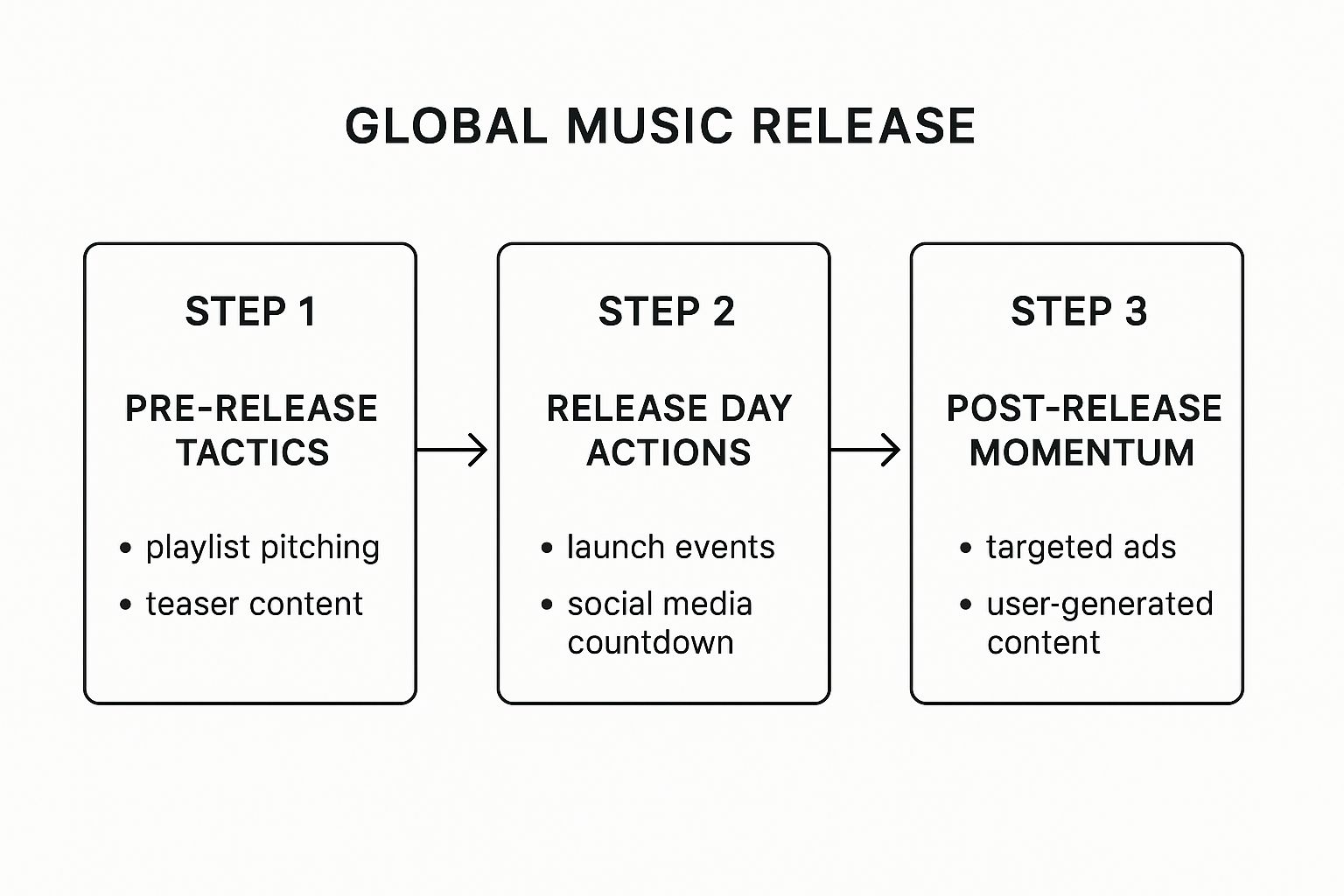
As you can see, each stage builds on the last, creating a powerful sequence that drives discovery and engagement from the very beginning.
Laying the Groundwork in Pre-Release
The pre-release window is where the magic really starts. I'd say this period, usually four to six weeks before the drop, is the most crucial part of the whole campaign. This is your chance to build a solid foundation by getting the word out and making sure key people hear your music.
Your main goal here is to create a sense of genuine anticipation. You want your audience to feel like they're counting down the days right alongside you.
One of your first moves should be pitching your track to playlist curators on Spotify, Apple Music, and Amazon Music. You have to get this done several weeks early to give editors a fair shot at listening and considering your song. Even a small editorial playlist placement can give you a massive initial boost.
At the same time, start dropping teaser content on your social channels. Think short clips from the music video, behind-the-scenes studio photos, or a quick snippet of a catchy hook. It’s all about sparking curiosity and getting people talking.
Maximizing Your Global Reach
The music world is no longer a U.S.-centric game, and your strategy needs to reflect that. The data doesn't lie: the U.S. share of global audio streams is projected to drop from 43.4% in 2019 to just 27.9% by mid-2025.
Meanwhile, non-U.S. streaming is experiencing an explosive 12.6% growth. This signals a massive opportunity in international markets. You can read more about this global music streaming shift on musicbusinessworldwide.com to see how regions in Asia and Latin America are becoming major powerhouses.
To take advantage of this, your pre-release plan needs some international flavor:
- Pinpoint Growth Markets: Dive into your analytics. See where your listeners are. If you have a growing audience in Brazil or Germany, find local music bloggers or influencers to connect with.
- Translate Key Assets: It’s a small touch that goes a long way. Consider translating your press release or social media announcements for your key growth markets.
- Time Your Posts: Don't just post when it's convenient for you. Schedule your content to go live during peak engagement hours in different time zones to get the most eyes on it.
Actions for a Powerful Release Day
When the big day finally arrives, your mission is simple: make as much noise as humanly possible. The first 24-48 hours are critical for triggering algorithmic playlists and hitting the charts, so you need to concentrate your efforts.
This is the day to go live on Instagram, host a virtual listening party on Discord, or premiere your music video on YouTube. Get your fans to save, share, and add your new song to their personal playlists. Your own energy is contagious—show up and rally your community to take action.
A great release day is a celebration you share with your audience. Make them feel like they are an essential part of the moment, because they are. Their early engagement is what fuels the entire campaign's momentum.
Keeping the Momentum Post-Release
The work is far from over once your music is out. The post-release phase is all about keeping that initial interest alive and turning those new listeners into dedicated, long-term fans.
Now's the time to run targeted ad campaigns, pushing a killer clip of your song to potential new fans on platforms like TikTok or Instagram Reels.
Another powerful move is to encourage user-generated content (UGC). Kick off a TikTok challenge or an Instagram contest that gets fans using your new song in their own videos. When your fans become co-creators, they form a much deeper connection to your music and essentially become organic promoters for you. By following this structured approach, you can create a repeatable blueprint that sets every new release up for global success.
Your Top Music Marketing Questions, Answered
Let's be honest, marketing your music can feel like a minefield. You pour your soul into creating the art, but then you're faced with a whole new set of challenges that don't come with an instruction manual.
We get it. You've got questions, and you need real-world answers, not just textbook theories. Here are some of the most common questions we hear from artists on the grind, broken down with practical advice you can use right away.
What's a Realistic Marketing Budget for My Next Release?
This is the big one, isn't it? While there’s no single price tag for a successful release, a good rule of thumb for an independent artist is to set aside anywhere from $500 to $5,000.
Think of this budget as your toolkit. What you spend it on depends entirely on your goals. For instance, are you trying to reach a brand new audience or re-engage your existing fans?
Your budget could be allocated across a few key areas:
- Targeted Digital Ads: Putting money behind posts on Instagram, TikTok, or YouTube to get your music video or single in front of people who are likely to love it.
- Killer Content: This could mean hiring a photographer for new press shots, a videographer for a simple-but-great lyric video, or a designer to make your cover art pop.
- Getting the Word Out: You might hire a publicist for a short campaign or use a submission service to pitch your track to influential playlist curators and bloggers.
The most important thing? Start with what you can afford, track every single dollar, and see what moves the needle. When you find something that works, double down on it. Smart spending beats big spending every time.
Social Media or Playlists: Where Should I Focus My Energy?
This isn't an either/or situation—it's a one-two punch. Thinking you have to choose between them is one of the biggest mistakes an artist can make. They serve different purposes but are incredibly powerful when they work in sync.
Playlists are your discovery engine. Landing on a popular playlist can put your song in the ears of thousands of people who have never heard of you. It's the modern-day equivalent of getting your song on the radio.
But what happens after they hear it? That's where social media comes in. Social media is how you turn a passive listener into a dedicated fan. It's the place where they get to know you—your personality, your story, your sense of humor. They might find you on a playlist, but they’ll stick around because they connect with you on Instagram.
The music world is bigger than ever, and a smart digital game is non-negotiable. The industry pulled in $29.6 billion in 2024, marking a 4.8% increase. While streaming is the main driver, the growth is global and diverse, proving that you need a strategy that can connect with fans everywhere. Check out the full breakdown in the IFPI Global Music Report 2025.
This data confirms it: you need a holistic approach. Use discovery platforms like playlists to find new listeners and social media to build a community around your music.
Ready to stop giving away your hard-earned cash? With OohYeah, you sell everything—music, merch, fan subscriptions—directly to your audience and keep 100% of the revenue. It's your career, your money. Build your empire on one simple platform by visiting https://oohyeah.app to get started.