Music Event Promotion Playbook for Independent Artists
Master music event promotion with a step-by-step playbook for independent artists, DJs, and promoters. Learn ticketing, outreach, and fan conversion tactics.
October 9, 2026
Music Marketplace Advisor
Buying & SellingIn 2023, the top 100 concert tours worldwide generated $4.67 billion in gross ticket revenue. That figure shows why music event promotion should be treated as a commercial operating system, not a last-minute social media exercise.
The counterintuitive part is that reach rarely tells you whether a show is healthy. A post can collect attention while the event loses money after venue costs, artist guarantees, travel, ticketing charges, and production. Sustainable promotion connects artist demand to a venue decision, a ticket sale, a profitable contribution margin, and a direct relationship that remains valuable after the doors close.
Independent artists don't need stadium economics to use this model. They need reliable signals. Presales, tagged links, mailing-list engagement, geographic concentration, repeat attendance, and merchandise purchases reveal where demand is real and where promotion is only creating noise.
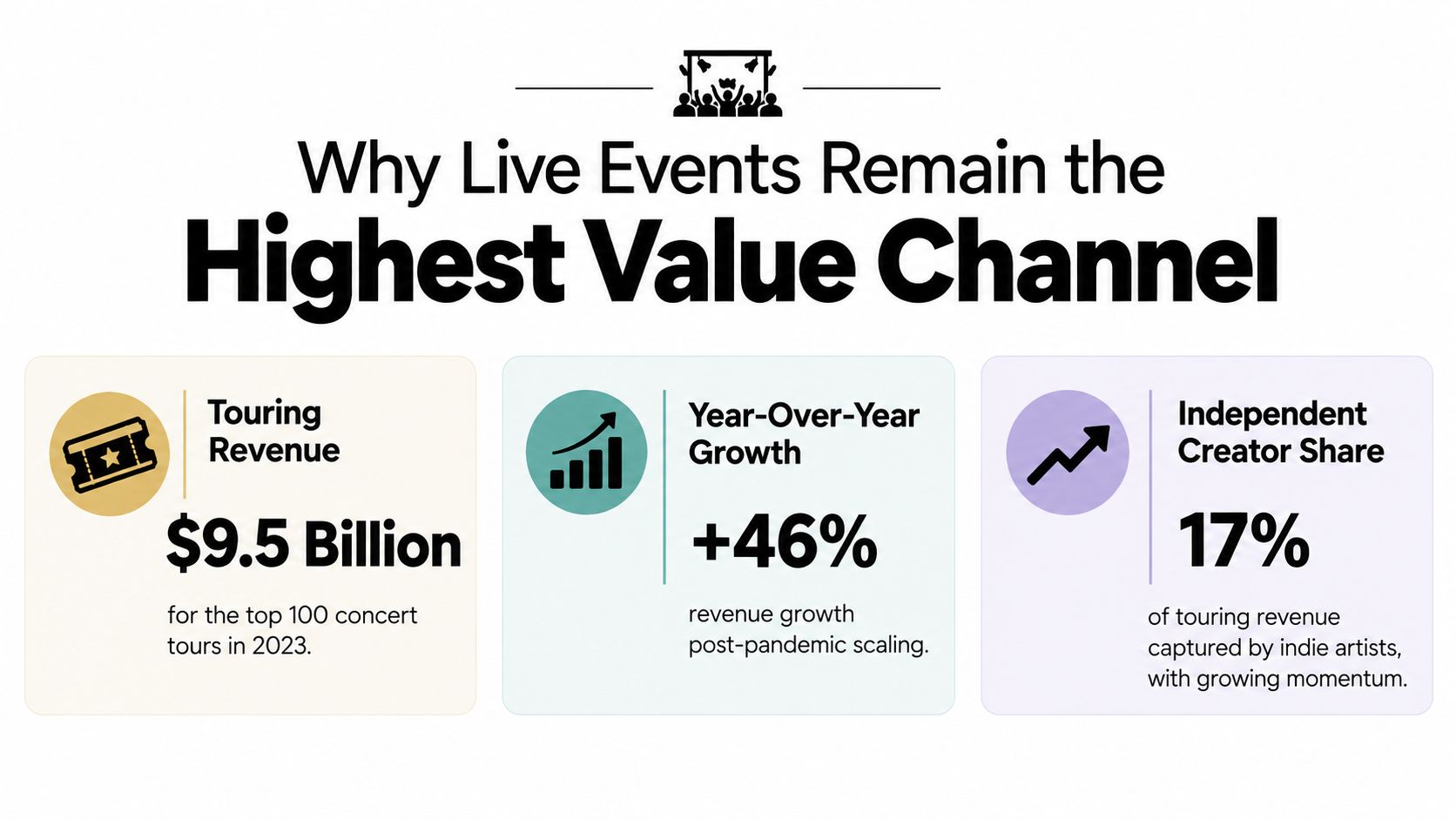
Why Live Events Remain the Highest Value Channel
Live performance has moved well beyond supplementary income. In 2023, the top 100 concert tours worldwide generated a record $4.67 billion in gross ticket revenue, a 51% increase from 2022, and sold approximately 142 million tickets, according to global touring industry data. The average attendance per show reached about 17,800, while approximately 70% of leading tours sold out stadium shows with capacities above 40,000.
Those numbers describe the largest tours, not the financial reality of a self-releasing band or independent DJ. Their practical value is diagnostic. They show that audiences will commit meaningful money and time to live experiences when artist demand, venue choice, routing, ticketing, sponsorship, and communication work together.
Promotion doubles as demand forecasting
A campaign shouldn't only answer, “How many people saw the announcement?” It should answer:
- Where is demand concentrated? Compare ticket clicks and purchases by city, postcode area, or audience segment.
- Who acts first? Prior purchasers and highly engaged fans often provide the clearest early signal.
- Which venue fits the evidence? A modest but concentrated presale can justify a smaller room more confidently than broad, untargeted reach.
- What happens after purchase? Attendance, repeat buying, merchandise sales, and direct sign-ups indicate whether the event created durable value.
The strongest music event promotion therefore performs two jobs. It converts attention into tickets, then turns ticket data into better decisions about the next city, capacity, price, and advertising allocation.
Practical rule: Treat every campaign as a small market test. Don't book a larger room because a video performed well. Book it when buyer behaviour supports the capacity risk.
Venue presentation also affects perceived value. A useful reference is the Love Summer Festival web design case, which shows how event branding and digital presentation can make essential information easier to understand before a visitor reaches the ticket page. Your own event page should make the artist identity, date, venue, ticket action, and experience clear without forcing fans to search.
For independent creators, live events also create a bridge between discovery and ownership. Streaming can introduce a listener, but a show gives that listener a reason to spend, subscribe, share contact details, and return. Use OohYeah's magazine to keep developing the wider marketing and audience strategy around each event rather than treating the ticket launch as an isolated task.
Planning Your Event Timeline and Audience Strategy
A profitable music event is planned from the break-even point backward. Start with the amount each ticket contributes after variable costs, then set the audience, creative, channels, and schedule around that figure. Without this baseline, promotion can generate attention while steadily increasing the loss.
Create one event sheet covering venue costs, artist guarantees, travel, production, ticketing charges, staffing, and expected ancillary revenue such as merchandise. Separate fixed costs from expenses that rise with attendance. The break-even ticket count depends on contribution per ticket and the revenue you expect, not on the room's capacity.
Define audiences before writing copy
One announcement rarely gives every buyer a convincing reason to attend. Divide the available audience by motivation:
- Prior purchasers need a reason to return, such as a new lineup, a different format, or early access.
- Local non-attendees need clear information about the venue, timing, transport, atmosphere, and value.
- Genre-interest communities need evidence that the event belongs in their scene rather than another generic sales message.
- High-engagement fans may respond to presales, limited access, personal invitations, or exclusive content.
Run a short presale survey when the audience is large enough to provide useful responses. Ask whether artist affinity, social connection, novelty, venue appeal, or perceived value matters most. Then match the message to that motivation. Repeating “buy tickets” across every channel wastes attention and gives you little evidence about what converts.
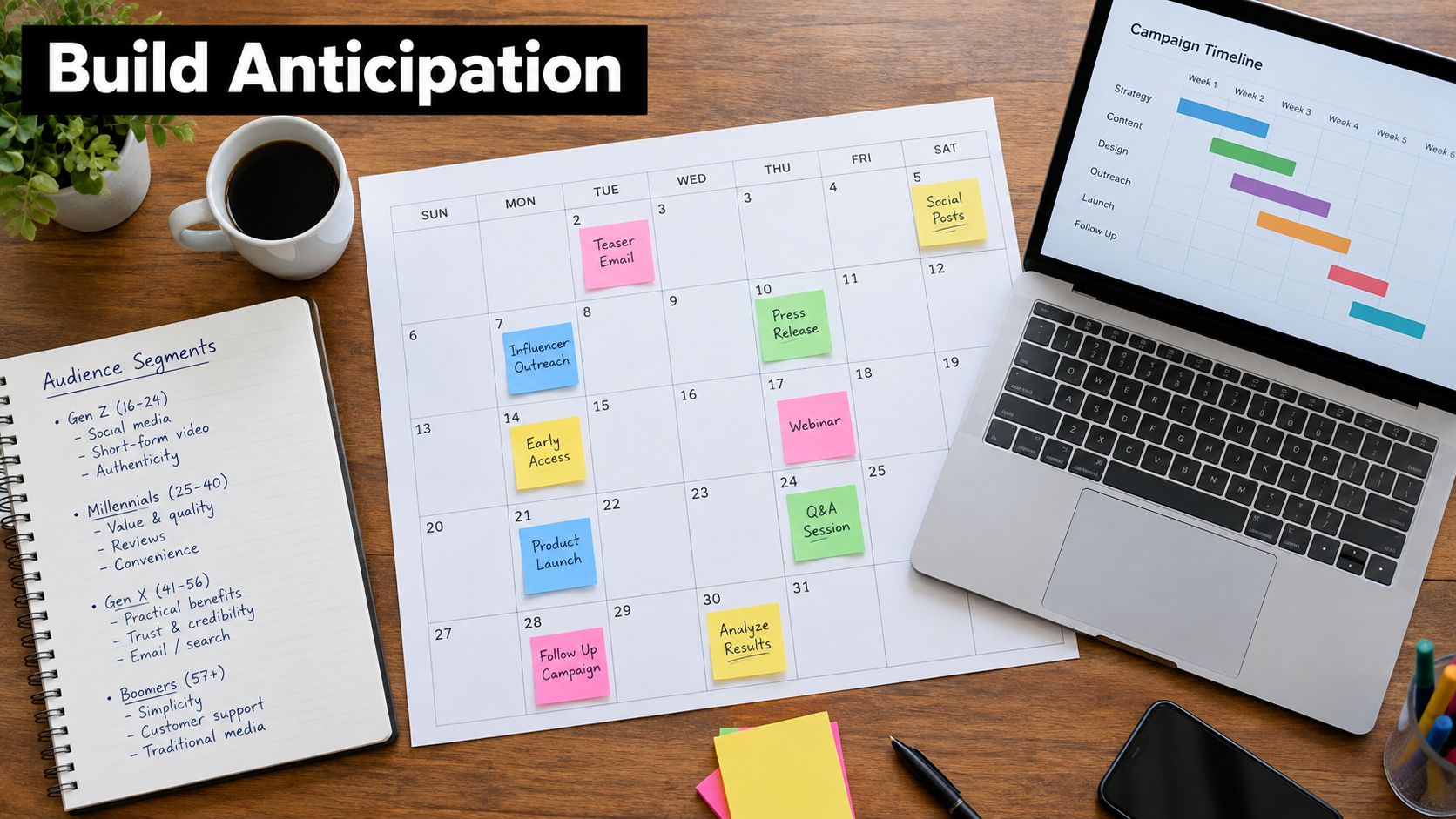
Work backwards from the event date
Set milestones for the announcement, presale, creative releases, artist outreach, local listings, paid testing, reminder messages, and final attendance information. The calendar will vary by event, but each milestone needs an owner and a measurable action. A post going live is an activity. A tracked ticket-page visit or sale is an outcome.
Give each campaign one ticket-page call to action. Add unique tracking parameters to the artist's post, email, venue listing, publicist placement, and paid advert. Separate links show which efforts produce purchases, not merely which channels create visible engagement.
Local context can influence perceived value as much as the lineup. Explain the venue atmosphere, food and drink, accessibility, arrival experience, and social setting. Resources featuring orange county mobile bar event ideas reinforce the broader point: promote the complete occasion, not only the performers. A strong proposition tells people what the music, room, and shared experience will feel like, and why the ticket merits its price.
Set a stop rule before spending begins. If early demand is weak and the economics cannot support more promotion, reduce the campaign instead of treating visibility as a rescue plan. Protecting cash gives you cleaner evidence for the next city, room size, and audience test.
Channel Tactics and Leveraging Direct Artist Platforms
Social media is useful for discovery, but discovery isn't the same as ticket intent. A person can watch a clip, like a lineup graphic, and still never visit the ticket page. The job of channel planning is to connect broad awareness with personal outreach, measurable clicks, and completed purchases.
A balanced promotion mix usually includes paid advertising, public relations, artist cross-promotion, local listings, direct messages, email, and event-page content. Each channel has a different role:
| Channel | Useful role | Main risk |
|---|---|---|
| Social discovery | Introduces the event to new people | Reach gets mistaken for demand |
| Paid advertising | Tests a defined local audience | Spend can rise without purchases |
| Artist outreach | Uses existing trust and relevance | Artists may not follow through |
| Local press and listings | Builds contextual discovery | Coverage can be difficult to attribute |
| Email and direct messages | Reaches known or engaged fans | Poor segmentation creates fatigue |
| Owned artist platforms | Retains data and communication access | Requires consistent follow-up |
Email benchmarks make the gap between attention and action clear. Event emails can achieve approximately 46% opens but only about 1.28% click-through, while automated flows achieve 5.58% clicks and 2.11% placed orders per send, according to event email marketing benchmarks. The lesson isn't to chase a particular open rate. It's to judge campaigns by ticket-page visits, completed purchases, cost per purchaser, and revenue per recipient.
Build messages around the segment
Prior purchasers can receive a personal return invitation. Local non-attendees may need a short explanation of the experience and a direct ticket link. High-engagement fans can receive presale access or an artist note. Clickers who don't buy should enter a reminder flow that answers practical objections, such as timing, venue details, or ticket availability.
Keep every message focused. One campaign should have one primary action, one destination, and one attribution method. Test the subject line, offer, urgency, artist proposition, mobile checkout, and send timing, but change one meaningful variable at a time.
Direct artist platforms add control that rented feeds don't provide. A service such as OohYeah can combine artist profiles, community posts, direct messaging, content publishing, event pages, and analytics, giving an artist another route to communicate with fans and direct them toward ticket information. Explore OohYeah for artists when you need a platform that connects promotion with broader artist commerce.
Social media can start the conversation. Your owned channels should finish it.
Don't abandon social platforms. Use them to create discovery, collect qualified interest, retarget people who clicked, and move willing fans toward a direct relationship. The channel isn't the strategy. The measurement and handoff are.
Smart Ticketing and Pricing Strategies for Break-Even
Ticket pricing can't repair a structurally weak event model, but poor pricing can undermine a viable one. Start with contribution margin. Subtract ticketing costs and other per-attendee expenses from the ticket price, then calculate how many paid admissions cover fixed costs such as venue hire, guarantees, travel, and production.
Use a scenario sheet rather than a single optimistic forecast. Model a cautious outcome, a likely outcome, and a strong outcome. For each, record tickets by price tier, total contribution, advertising cost, merchandise income, and the maximum venue capacity. If the likely case only works at full capacity, the event is exposed before promotion begins.
Use price to support decisions
A tiered structure can reward commitment while capturing more value from later buyers:
- Early access rewards fans who act before the lineup or event momentum develops.
- Standard admission should carry the main financial burden of the show.
- Premium or VIP options can package soundcheck access, better viewing, limited merchandise, or a meet-and-greet when the experience justifies it.
- Bundles can combine admission with merchandise or another owned offer, provided the margin remains clear.
Avoid discounting just because sales feel slow. First identify the problem. Is the artist-market fit weak, is the venue inconvenient, is the message unclear, or is checkout creating friction? A lower price may increase volume while worsening the amount each attendee contributes.
The wider market reinforces the importance of the offer itself. In 2024, 41% of event promoters identified artist bookings as the biggest positive influence on ticket sales, while marketing ranked second at 34%, according to Audience Republic's live event industry report. Promotion can't compensate indefinitely for a lineup that doesn't fit the local audience.
Decide when to pause a city
Track purchases by geography and calculate cost per ticket sale, not just cost per click. A city with plenty of impressions but no profitable buyers shouldn't receive the same budget as a smaller market with concentrated, repeatable demand.
Set a written threshold before you launch. If paid promotion pushes acquisition cost above the contribution available from a ticket, pause it. If a venue's capacity creates too much downside, renegotiate the deal, reduce production, choose a smaller room, or postpone the date. Stopping an unprofitable campaign isn't failure. It's disciplined allocation.
Converting Attendance into Long-Term Fan Relationships
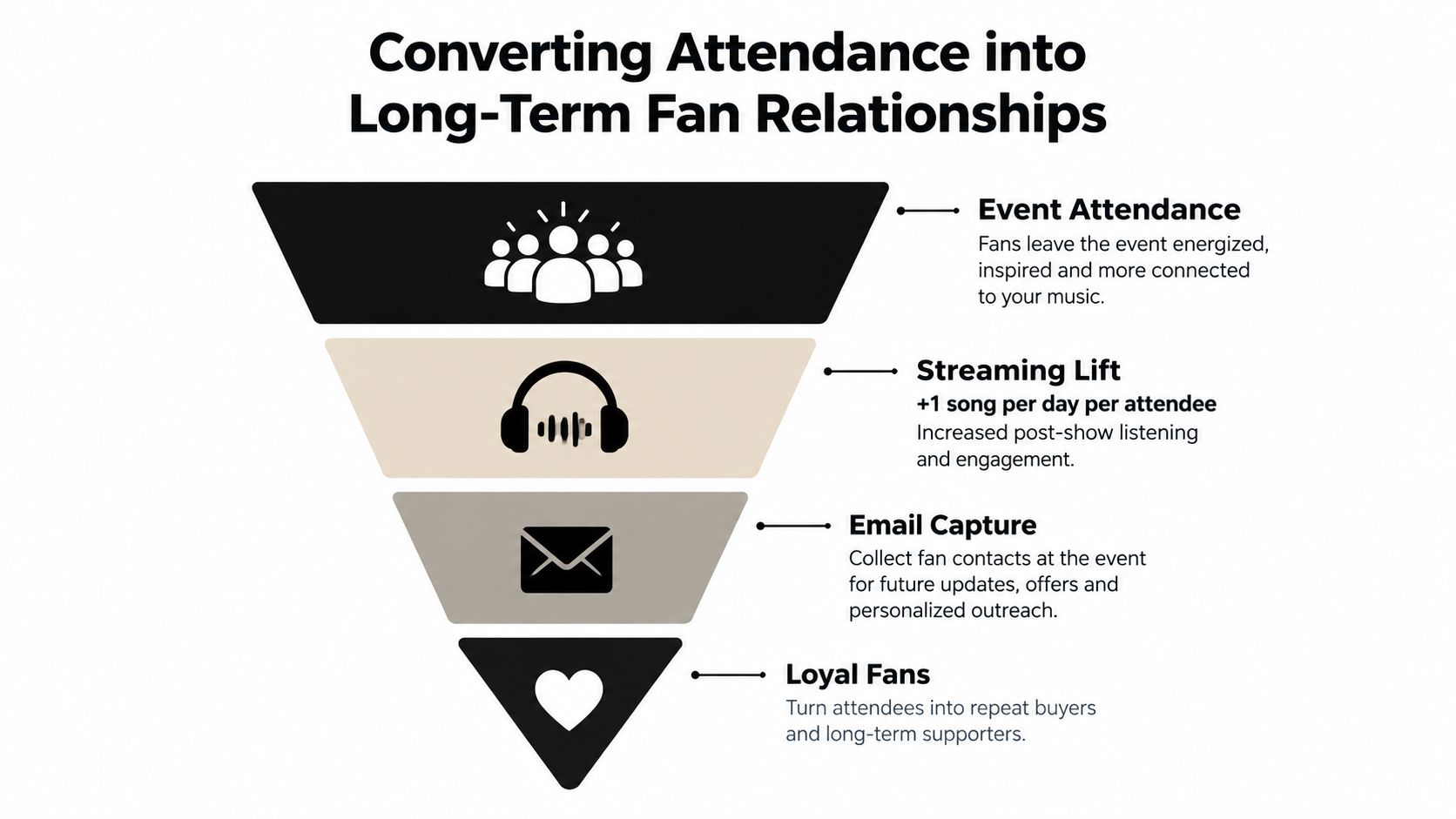
Most promoters stop working when the doors close. That is when attendees still remember the room, the set, and the people they shared it with. Treat the first few days after the show as a high-value opportunity to turn attendance into permission, repeat purchases, and direct fan relationships.
Capture permission at the event
Make contact collection part of the experience. Place a QR code at the exit, on the bar, in the programme, or on a screen. Explain what the attendee will receive, request clear consent, and deliver the promised value quickly.
Useful offers include:
- Exclusive content: A live recording, rehearsal clip, photograph, or unreleased track where rights allow.
- Early access: Advance notice of the next local show or release.
- Practical follow-up: Set times, photographs, playlists, or links to artists from the bill.
- Relevant commerce: Merchandise, subscriptions, or downloads that match the attendee's interest.
Separate attendees from people who showed interest but did not attend. A buyer can receive a thank-you and an invitation to the next event. Someone who clicked without buying may respond better to a recording, a new date, or reassurance about the venue.
Use the first 24 to 72 hours, while the experience remains fresh. Send one concise message with one meaningful offer, one action, and a way to reply. A generic newsletter gives the attendee too much work and too little reason to respond.
The PSW Events fan engagement guide offers a useful framework for keeping people involved after a live experience. Apply it to music by giving fans a clear next action, such as saving a playlist, sharing a track, joining a mailing list, or booking another event.
Track playlist saves, direct sign-ups, repeat ticket purchases, referral codes, merchandise conversion, and subscription activity. These measures show whether the event created an audience you can contact again or only a short-lived burst of attention. OohYeah for fans provides one direct place for fans to discover content and stay connected with artists beyond the venue.
Measuring Success and Optimizing Future Events
A promotion report should make the next decision easier. Don't end with impressions, views, or follower growth. Those figures describe exposure, but they don't tell you whether the event paid for itself or whether the audience will return.
Create one event-level dashboard with four layers:
- Exposure: Record reach, video views, press placements, and listing visibility as context.
- Intent: Track ticket-page sessions, link clicks, presale activity, replies, and saves.
- Conversion: Measure completed purchases, conversion by segment, cost per purchaser, sell-through by city, and revenue per recipient.
- Value: Calculate net revenue per attendee, merchandise or subscription activity, repeat attendance, direct sign-ups, and referrals.
Attach every promotional link to a source and campaign. Keep ticket-platform data separate from platform-native reporting, then reconcile purchases against spend. If an advert reports clicks but the ticket system shows no corresponding buying activity, investigate the page, audience, tracking, or offer before increasing the budget.
Turn each show into a learning loop
Within a short period after the event, collect feedback while details remain fresh. Ask what motivated attendance, how the person heard about the show, what almost stopped them from buying, and what would make them return. Keep the survey short enough to complete, and connect responses to consented audience records where appropriate.
Review the event with the team using questions that lead to action:
- Demand: Which cities and segments produced profitable buyers?
- Offer: Did the lineup, venue, price, and experience match the audience's motivation?
- Channel: Which source produced completed purchases rather than passive engagement?
- Economics: What remained after fixed costs, variable costs, and promotion?
- Retention: How many attendees joined a direct channel or bought again?
A useful postmortem distinguishes a bad campaign from a bad event model. If artist demand was weak, improve the booking and positioning. If demand existed but checkout failed, fix the ticket path. If the event sold well but retained nobody, redesign the post-event capture and follow-up.
Sustainable music event promotion is a feedback system. Plan around break-even, segment the audience, test channels, track real purchases, and convert attendance into permission-based relationships. The result isn't always the largest audience. It's a repeatable event that leaves enough margin and fan equity to support the next one.
OohYeah gives artists and music teams tools for direct fan communication, event pages, content, messaging, and analytics alongside music and merchandise activity. Visit OohYeah to connect your next event campaign with measurable ticket demand and the fan relationships that make future shows easier to sell.