10 Best Music Collaboration Tools for 2026
Find the best music collaboration tools for your workflow. We review 10 top apps for remote recording, file sharing, and real-time production.
July 14, 2026
Music Marketplace Advisor
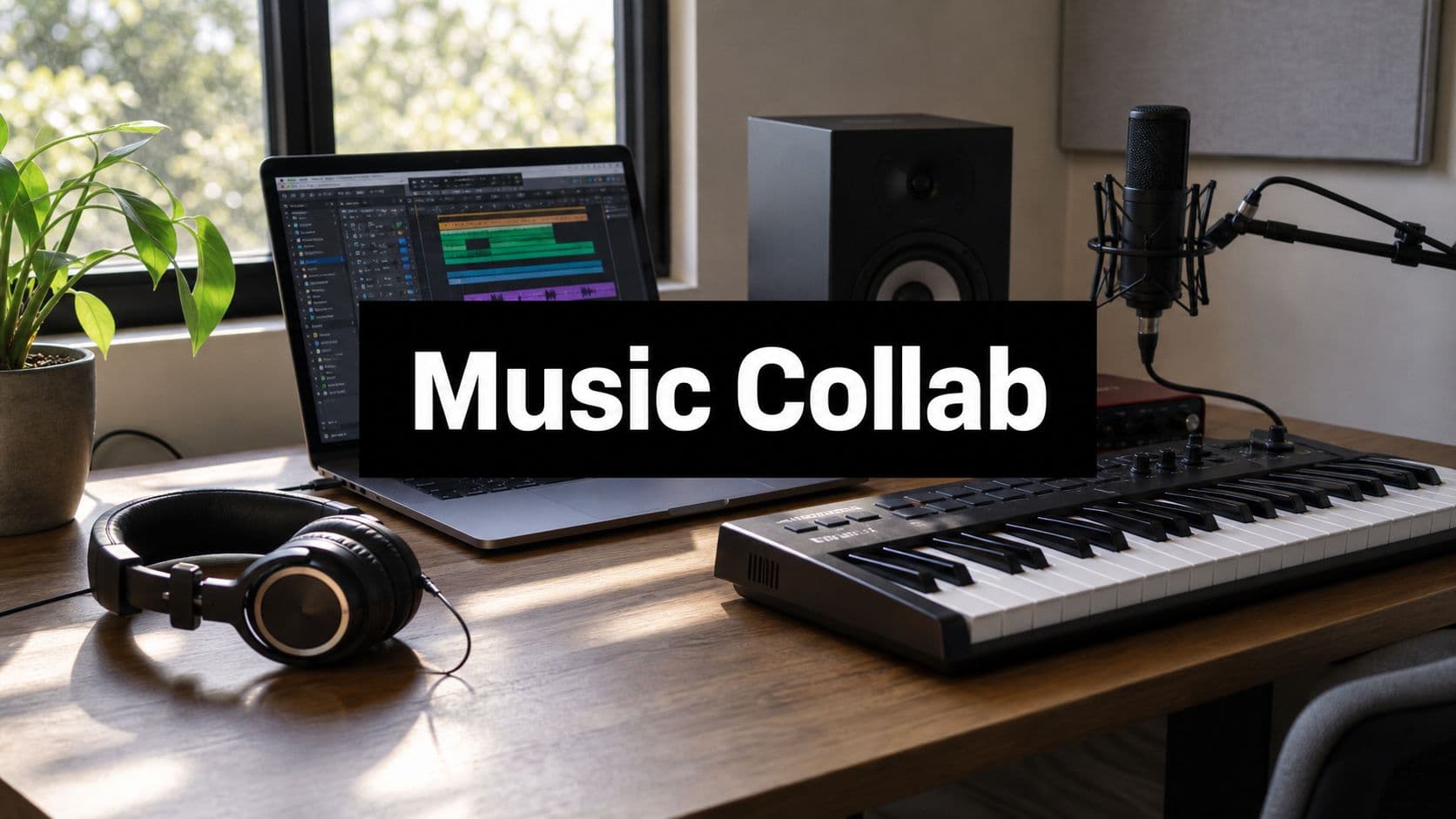
Buying & SellingA producer in Lagos builds the drums. A singer in Toronto cuts the hook on her own schedule. A mixing engineer in Berlin wants live approval before printing the final pass. That project falls apart fast if everyone is forcing one tool to do three different jobs.
The practical fix is to split collaboration by use case. Use one set of tools for real-time streaming and remote direction. Use another for asynchronous review, comments, and version control. Use cloud DAWs when the song itself still needs co-writing, arrangement changes, or idea-building inside a shared workspace.
That distinction saves time, and it prevents the most common mistake I see independent artists make: picking a platform because it is popular, then discovering it only solves one part of the process. A live audio stream helps during vocal production or mix notes. It does not replace organized file review. A cloud DAW can speed up writing. It is not always the best place to finish a serious mix.
The 10 tools below make more sense when grouped this way. Some are best for writing together. Some are best for reviewing and approving work across time zones. Some are built for high-quality remote sessions where a producer, artist, and engineer need to hear decisions in real time.
The strongest workflow usually looks like this: start ideas in a cloud-first environment, move to a review tool once stems and vocals are circulating, then switch to a real-time streaming platform for recording, production calls, or final mix approval. After the track is done, the business side starts. Release planning, audience building, and monetization need their own system too. The OohYeah music business magazine covers that side well, especially if you want to turn a finished collaboration into an actual release instead of another folder on a drive.
If you also handle operations yourself, it helps to pair the creative stack with a broader software guide for music professionals so scheduling, rights, and release admin do not slow down the project.
Below are 10 music collaboration tools worth using in 2026, organized by the job they do best.
1. Splice

A producer starts a beat in Los Angeles, a vocalist in Manila asks for a darker synth texture, and the co-writer in Toronto sends back a new drum idea before anyone books studio time. Splice works well in that stage of collaboration. It helps teams trade the raw materials of a track fast, especially when the project is being built from samples, presets, and starter ideas instead of a live shared session.
That use-case matters. Splice is not the tool for real-time direction, remote punch-ins, or mix approval calls. It sits in the asynchronous, sound-sourcing part of the workflow, where speed and file access matter more than hearing every decision together.
Where Splice fits best
Splice is strongest at the front of the process. Beatmakers, pop writers, and artist-producers can pull sounds quickly, test directions, and keep momentum without stopping to clear licensing questions later. That is a real advantage for independent artists who release often and cannot afford to rebuild a hook because a sample turns into a rights problem.
In practice, Splice does three jobs well:
- Builds the palette early: Good for drums, chops, textures, MIDI ideas, and presets before the arrangement is locked.
- Supports producer-to-producer handoff: Useful when collaborators are swapping project ingredients instead of sitting in the same session.
- Reduces upfront plugin cost: Rent-to-own can make sense if a key plugin is part of your workflow but a full purchase would stall the budget.
Its limitations show up just as clearly. Splice does not replace a review platform like Pibox or a real-time streaming tool like Audiomovers LISTENTO. Once toplines, vocal comps, revision rounds, and client notes start piling up, you usually need a more structured system.
One rule keeps it simple. Use Splice to create options, not to manage approvals.
For independent artists, the practical workflow is straightforward. Start in Splice if the collaboration begins with sound selection or beat building. Export stems once the idea has shape. Then move the project into the right next tool based on the job. A review platform for comments and version control, a live streaming platform for recording or final mix decisions, and then a release plan that turns the finished track into income. If you need help on that business side, OohYeah's artist services for releases and monetization are a useful next step after the creative work is done.
2. BandLab

A common BandLab scenario looks like this. The producer starts a draft on a laptop, a singer cuts a hook from a phone, and a collaborator in another city adds edits that night without asking which DAW everyone owns. That is BandLab at its best.
BandLab belongs in the cloud DAW category of this list. It is less about high-end remote audio streaming and more about keeping a song moving while ideas are still changing. For independent artists, that distinction matters. If the job is writing, demo building, rough arranging, and collecting contributions from people with uneven setups, BandLab is often faster to deploy than a desktop-first workflow.
Where BandLab fits best
BandLab works well when collaboration needs to be accessible first and technical second.
In practice, it is a strong choice for:
- Songwriting and demo sessions: Good for capturing hooks, testing structure changes, and building rough productions with minimal setup.
- Mixed-device collaboration: Useful when one person is on desktop and another is recording from mobile.
- Early team alignment: Comments, version updates, and quick exports make it easier to keep contributors on the same page before the final production path is locked.
The trade-off is clear. BandLab can carry a song surprisingly far, but dense mix work, deep routing, and plugin-specific finishing usually end up elsewhere. Artists who work in Ableton Live, Logic Pro, Pro Tools, or Cubase often use BandLab as the starting room, not the final mastering room.
That makes it more focused than it first appears.
Used well, BandLab solves the asynchronous review part of collaboration and a good portion of the cloud DAW part. It does not replace a real-time approval tool like Audiomovers LISTENTO or Sessionwire when a client wants to hear live mix changes as they happen. It also does not remove the need for a tighter release workflow once the song is finished.
A practical approach is simple. Build the song in BandLab while the arrangement is still fluid. Export stems or multitracks once the parts are settled. Move into your main DAW for detailed production or mixing, then route the finished record into release support and monetization. If you need help after the creative phase, OohYeah's creator support tools can handle the business side after the song is ready.
3. Soundtrap by Spotify

A common indie workflow looks like this. The producer has a laptop, the vocalist is tracking from home, and the songwriter wants to edit lyrics and arrangement ideas without waiting for exported files. Soundtrap fits that stage well because everyone can get into the same browser-based session fast and start working.
Its strength is speed, not depth. For co-writing, demo building, podcast production, and early arrangement work, that trade-off is often worth it. The barrier to entry stays low, which matters when one collaborator is technical and another just needs to record a clean take and leave comments.
Soundtrap lands in the cloud DAW category, but it also overlaps with asynchronous review because collaborators can return to the same project, hear updates, and keep revisions moving without constant live sessions. That makes it useful in the middle of a collaboration stack, especially when ideas are still changing daily.
The limits show up later. Once a track turns into a serious mix session with detailed routing, heavier plugin chains, or stricter edit control, many artists export stems and finish in a desktop DAW.
Here is where Soundtrap usually makes the most sense:
- Fast co-writing sessions: Good for getting writers, vocalists, and producers into one project without setup friction.
- Cross-device collaboration: Handy when contributors switch between desktop, tablet, or phone.
- Shared demo development: Strong for refining song structure, recording references, and collecting feedback in one place.
- Less suited to final mix work: Better as the writing room than the finishing room.
For independent artists, the best use is practical. Start the song in Soundtrap while the hook, arrangement, and rough production are still unsettled. Use it to collect parts and comments asynchronously. Then move the session into your main DAW for detailed editing, mixing, and master prep. After that, the project can move into release and monetization through the platform you use to sell and support the record.
4. Steinberg VST Connect Pro

A singer is in another city, the session is booked for two hours, and the goal is usable takes, not another round of file chasing. That is the job VST Connect Pro handles well. It is a remote recording tool for directed sessions where the producer or engineer needs to run communication, monitor performance, and capture audio into a serious DAW setup.
That makes it a different category from cloud songwriting apps and comment-based review platforms. In a practical collaboration stack, VST Connect Pro belongs in the real-time tracking lane. Use it when the arrangement is mostly settled and the next step is getting performances recorded properly.
The biggest advantage is obvious if you already use Cubase or Nuendo. The host workflow stays close to the DAW, so talkback, cue handling, performer connection, and recording feel like one session instead of a chain of separate tools. For engineers who do remote vocals, overdubs, voiceover, or live instrument tracking, that matters. Less app switching usually means fewer mistakes once talent is on the clock.
There are trade-offs.
- Best fit for Steinberg users: Cubase and Nuendo users get the clearest value because the integration is built around that environment.
- Good for directed recording: Strong choice for vocal production, overdubs, coached takes, and any session where the host needs control.
- Setup quality decides the session: Routing, headphone monitoring, latency, and connection stability need testing before the artist joins.
- Less useful for loose collaboration: If the goal is feedback, version comments, or stem review over several days, other tools are easier.
I would not recommend it as an all-purpose collaboration hub for independent artists. I would recommend it when the project has already moved past ideation and someone needs to capture a real performance remotely without giving up studio-style direction.
A practical workflow looks like this: write and share ideas in an asynchronous tool, move to VST Connect Pro for the actual vocal or instrument session, then send the near-final mix to a review tool for approvals. After the master is done, release strategy matters more than session technology. That is the point where artists can package and monetize the finished project on OohYeah instead of letting completed music sit on a drive.
Visit Steinberg VST Connect Pro
5. Audiomovers LISTENTO

A common remote-session problem looks like this. The mix is 90% there, the artist wants to hear tweaks live, and nobody needs project files, stems, or a new collaboration hub. They just need a reliable high-quality stream while one person stays in control of the session.
That is the lane where Audiomovers LISTENTO earns its place.
In a practical tool stack, I would put LISTENTO in the real-time streaming category rather than asynchronous review or cloud DAWs. It does one job well: send your audio out of the DAW so clients, artists, managers, or mastering engineers can hear changes as they happen. For mix approvals, attended mastering, post sessions, and label playback calls, that is often more useful than a bigger platform with features nobody will touch.
The trade-off is straightforward. LISTENTO helps with listening and decision-making, not co-writing or asset management. If collaborators need to leave timestamped notes over a few days, a review tool is a better fit. If they need to build the song together in the browser, use a cloud DAW instead.
Where LISTENTO works best:
- Live mix and master approvals: Fast feedback while the engineer stays hands-on.
- High-quality remote playback: Better fit than generic meeting apps when sound quality matters.
- DAW-agnostic collaboration: Useful when the other side only needs to listen and respond.
The weak point is also easy to predict. Session quality depends heavily on internet stability and basic routing setup. A great mix review can fall apart quickly if the host has not tested buffer settings, monitor path, and talkback before the call.
For independent artists, the smartest use is usually as one step in a larger workflow. Build songs in a cloud DAW or share drafts through an asynchronous review tool. Use LISTENTO once the track is close enough that live notes will save time. Then, after the final master is approved, move from production to release and monetize the finished project on OohYeah instead of letting the file sit in a folder.
6. Sessionwire

Sessionwire tries to solve the “too many apps” problem. Instead of combining Zoom, a file-transfer service, a remote audio solution, and a chat thread, it gives you a music-specific virtual studio with audio, video, talkback, file transfer, and DAW-aware tools in one place.
That all-in-one approach is useful for producers who spend as much time managing sessions as they do engineering them. If you teach remotely, run vocal sessions with artists who aren't technical, or need a straightforward client experience, Sessionwire can cut friction.
Where Sessionwire feels practical
The value here isn't that each feature is radically unique. It's that the session feels organized. One link, one environment, one place for communication and transfers.
That helps in these situations:
- Remote vocal and instrument sessions: Easier for artists who need a guided setup.
- Teaching and coaching: Video plus audio plus screen-aware workflows make instruction cleaner.
- Studios with frequent approvals: Clients don't need a patchwork of separate tools.
The compromise is that all-in-one platforms still depend on both sides following setup instructions. If someone ignores interface settings or monitoring basics, the experience degrades quickly.
The wider market is moving in Sessionwire's direction. The global music collaboration market is projected to grow from USD 8.5 billion in 2025 to USD 22.4 billion by 2033, a projected 12.9% CAGR, according to Realtime Data Stats' music collaboration market report. Integrated communication features are part of that shift.
Sessionwire makes sense when your remote work is session-heavy and people-facing, not just file-based.
7. Pibox

Pibox is built for the least glamorous part of music collaboration. Revisions. Comments. Approvals. File handoff. It's the tool you reach for when the song exists, the mix is moving, and everybody suddenly has opinions.
Email is terrible at this stage. Messaging apps are only slightly better. Pibox centralizes the discussion around the actual media, which is why labels, educators, and production teams keep using it.
Why review tools matter
Asynchronous review gets overlooked because it isn't flashy, but it saves projects. Time-stamped comments and threaded responses reduce the classic mess where one person texts “verse feels low,” another emails “vocal needs more air,” and nobody's sure which bounce they're hearing.
Pibox is useful when you need:
- Structured feedback: Notes stay attached to exact moments in the track.
- Guest-friendly review: External stakeholders can comment without becoming full platform users.
- Permission control: Helpful when several collaborators need different levels of access.
What it won't do is replace a DAW or live session platform. It exists after creative drafting and before final release. For many teams, that middle stage is where most avoidable delays happen.
Field note: If more than two people can approve a track, use a review platform. Otherwise, you'll spend half your time reconciling feedback instead of finishing the record.
Pibox is one of the best music collaboration tools for keeping revision rounds sane.
8. Kompoz

Kompoz feels different from most tools in this list because it behaves more like a collaboration community than a software utility. That's a feature, not a flaw, if your main challenge isn't session management. It's finding people.
For songwriters, producers, and musicians who want to start a project, invite contributors, assign roles, and build a track asynchronously, Kompoz still has a real place. You won't get a sleek modern DAW experience, but you do get a project-centric environment designed around contribution.
Best for meeting collaborators
Kompoz is strongest when you need the network as much as the software. A songwriter can post a draft, bring in a vocalist, then add a guitarist or mix engineer without pretending everybody needs to be online at once.
Its practical upsides:
- Music-specific community: Better fit than generic freelance or social platforms for songwriting collaboration.
- Role-based project structure: Useful when multiple contributors need clear lanes.
- Asynchronous by design: Good for people in different time zones.
Its drawbacks are familiar. The interface feels more community-driven than production-driven, and creators who expect live editing will find it slow.
For independent artists building relationships, though, that slower structure can help. You can discover contributors, finish songs in stages, then move the completed work into a release path. If you're ready to turn completed tracks and artist products into revenue, OohYeah's creator marketplace gives you a direct way to sell without putting everything behind middlemen.
9. Soundation

Soundation is one of the few tools in this space where “real-time collaboration” feels like the main event. Multiple people can work in the same browser-based project at once, which changes the energy of the session.
That matters most during ideation. If a collaborator can move clips, tweak parts, and react in the arrangement while you're both listening, you don't lose momentum to stem exports and version naming. It feels closer to a writing room than an inbox.
Best use case for Soundation
Use Soundation when the goal is fast group ideation, remote classes, or live sketching with collaborators who value immediacy over technical depth. It's especially effective for demos and early song structure work.
Its trade-offs are easy to predict:
- Great for live brainstorming: Simultaneous editing keeps everyone inside the same moment.
- Minimal setup: Browser access reduces technical excuses.
- Limited compared with desktop DAWs: Advanced production and final mix work still tend to move out later.
Soundation is a strong choice when your team says, “let's build this together right now,” not “let's finish a release-grade mix in the browser.”
10. Mixed In Key Satellite Sessions
Satellite Sessions sits in a useful middle ground. It isn't a full cloud DAW, and it isn't just a file folder with comments. It's a lightweight way for people in different DAWs to exchange audio and MIDI through a shared session hub.
That design is smarter than it first sounds. Cross-DAW collaboration often breaks because nobody wants to leave their preferred setup. Satellite lets each person stay in Logic, Ableton Live, FL Studio, Pro Tools, or another DAW while still participating in a common project flow.
When Satellite is the right choice
This tool works well for writers and producers who already know their DAWs and need a better exchange layer. It's not for live remote recording sessions or high-touch client approvals.
The practical balance looks like this:
- Strong for cross-DAW writing: Collaborators can share ideas without migrating platforms.
- Lightweight inside existing workflows: Less disruptive than moving everyone into one new production environment.
- Limited as a full session tool: You'll still want another app for live feedback, tracking, or formal review rounds.
Satellite is especially handy when one producer starts a beat, another adds chords in a different DAW, and a third sends melodic edits without rebuilding the whole session from scratch. For distributed teams, that can be enough.
Visit Mixed In Key Satellite Sessions
Top 10 Music Collaboration Tools, Side-by-Side Comparison
| Product | Core features | UX (★) | Price / Value (💰) | Target & USP (👥 ✨/🏆) |
|---|---|---|---|---|
| Splice | Curated samples/presets, monthly credits, DAW plugins, rent‑to‑own | ★★★★ Fast sourcing & organization | 💰 Credit‑based subscriptions; can be costly for heavy users | 👥 Producers/beatmakers ✨ Rent‑to‑own plugins, retained downloads 🏆 clear licensing |
| BandLab | Cloud DAW, built‑in mastering, AI tools, distribution & mobile/web apps | ★★★★ Robust free onboarding, social UX | 💰 Free core tier; paid tiers for advanced tools | 👥 Bands/creators/students ✨ Social discovery + built‑in distribution 🏆 cross‑device access |
| Soundtrap (Spotify) | Browser DAW, loops, virtual instruments, podcast tools, cloud projects | ★★★ Low‑friction web workflows | 💰 Freemium; education and personal plans differ | 👥 Songwriters/podcasters ✨ No‑install access & transcript editing |
| Steinberg VST Connect Pro | Live remote audio & MIDI recording into Cubase/Nuendo, talkback, performer app | ★★★★ Studio‑grade remote capture (steeper setup) | 💰 Paid; best value with Steinberg DAWs | 👥 Producers/studio pros ✨ True studio tracking into DAW 🏆 DAW‑tight integration |
| Audiomovers LISTENTO | High‑quality low‑latency streaming (multichannel, Atmos), plugin + apps | ★★★★★ Excellent for live review & attended sessions | 💰 Subscription for full Pro features | 👥 Mixers/mastering/score ✨ Multichannel & Atmos streaming, video sync 🏆 pro review standard |
| Sessionwire | Virtual studio: high‑quality audio, integrated video, talkback, file transfer, plugins | ★★★★ All‑in‑one remote session tool | 💰 Paid tiers; 14‑day free trial | 👥 Producers/educators/studios ✨ DAW plugin suite + Vault storage 🏆 integrated workflow |
| Pibox | Review/approval hub with time‑stamped comments, threaded feedback, role permissions | ★★★★ Streamlines revision & approvals | 💰 Paid team/enterprise plans; guests review free | 👥 Labels/teams/clients ✨ Time‑stamped comments & unlimited external reviewers 🏆 version control for reviews |
| Kompoz | Project workspaces, contributor roles, community forums, file management | ★★★ Community‑centric asynchronous collaboration | 💰 Freemium/community model | 👥 Songwriters/collaborators ✨ Established music community since 2007 |
| Soundation | Browser DAW with true real‑time multi‑user editing, instruments, 20K+ loops | ★★★★ True Google‑Docs style co‑editing | 💰 Free tier; paid for advanced instruments & content | 👥 Remote classes/jam sessions ✨ Live multi‑user editing for ideation |
| Mixed In Key Satellite Plugins | Cross‑DAW session hub, audio/MIDI exchange, session codes for invites | ★★★★ Lightweight DAW‑centric exchange workflow | 💰 Host license required; collaborators join free | 👥 Writers/producers ✨ Cross‑DAW MIDI & stem exchange 🏆 stays inside each user's DAW |
Your Next Hit Is Just a Click Away
The best music collaboration tools don't all solve the same problem, and that's where many artists waste time. They choose one platform and expect it to handle writing, remote tracking, mix review, file management, and release prep. Most tools aren't built for that. The better move is to build a simple workflow around your actual bottleneck.
If you're writing songs with remote collaborators, start with a cloud DAW or a browser-based workspace like BandLab, Soundtrap, or Soundation. Those tools keep the creative stage moving and lower the friction for non-technical contributors. If your session depends on directed performance capture, switch to Steinberg VST Connect Pro or Sessionwire. If the song is already produced and the problem is review, use Pibox. If the issue is attended playback and live approvals, LISTENTO does that job better than trying to force a DAW-sharing setup to behave like a listening room.
A practical independent workflow often looks like this:
- Start the idea: Use Splice for sounds and inspiration, or begin directly in BandLab, Soundtrap, or Soundation.
- Track contributors: Move into VST Connect Pro or Sessionwire when the artist needs coaching, cue mixes, or proper remote recording.
- Handle revisions: Send mix passes through Pibox when multiple people need to comment clearly.
- Run live approvals: Stream final adjustment sessions through LISTENTO if stakeholders want to hear changes as they happen.
- Keep release in mind: Organize final assets, artwork, masters, and credits before launch so monetization doesn't get delayed by admin chaos.
That last step matters more than many artists think. Finishing a song isn't the end of the workflow anymore. It's the handoff point into storefronts, fan engagement, direct messaging, merch, subscriptions, and creator-owned revenue channels. If your collaboration setup produces great work but your release path still depends on fragmented platforms and intermediary fees, you're leaving momentum on the table.
The barriers to remote creation have fallen. You can write with a singer across the country, record a guitarist on another continent, get timestamped mix notes from your manager, and release the result without building your career around gatekeepers. If you want better visibility on the promotion side too, quso.ai's music hashtag guide is a useful companion once the music is ready to post.
Start with the tool that matches your immediate problem. Then build outward. Geography doesn't need to shape your creative ceiling anymore.
Once your track is finished, OohYeah gives you a direct path to monetize it. You can upload music, sell merchandise, offer subscriptions, share exclusive content, and build direct fan relationships from one music-first platform on web, iOS, and Android. For independent artists, that means your collaboration workflow doesn't have to end at export. It can roll straight into release, promotion, and creator-controlled revenue.