7 Best Music Artist Websites Platforms for 2025
Discover the 7 best platforms for music artist websites in 2025. Compare features, pricing, and monetization tools to build your online presence.
September 24, 2025
Music Marketplace Advisor
Buying & SellingIn today's music industry, your official website is the central hub for your brand, your music, and your community. While social media platforms are crucial for discovery, they operate on rented land with unpredictable algorithms and limited control. A professional website gives you complete ownership over your fan relationships, your creative narrative, and most importantly, your revenue streams. It’s the one digital space where you make the rules, enabling direct-to-fan sales, community building, and data collection without a middleman.
This guide provides a strategic breakdown of the 7 best platforms for creating powerful music artist websites. We move beyond surface-level descriptions to offer a deep analysis of each option, complete with screenshots, direct links, and actionable takeaways. Our goal is to equip you with the insights needed to select the ideal foundation for your career, whether you prioritize e-commerce, fan subscriptions, or streamlined portfolio presentation.
To ensure your new site captures attention and drives engagement, it's vital to incorporate modern design principles. Integrating the core concepts from the latest 10 Website Design Best Practices for 2025 will ensure your digital presence is not only professional but also effective. Let's explore the platforms that will help you build that essential digital home.
1. OohYeah
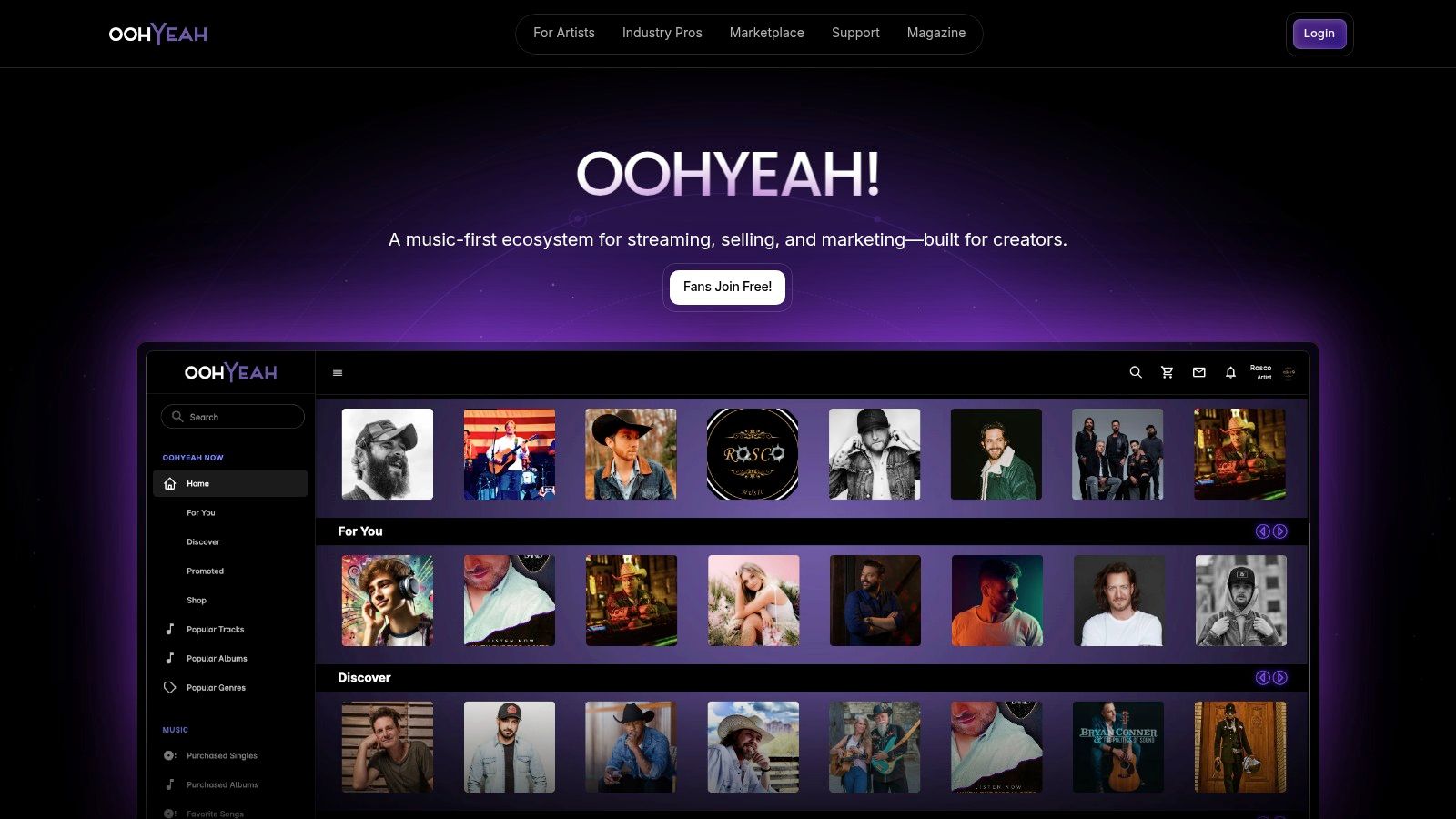
OohYeah distinguishes itself not just as another platform but as a comprehensive, artist-first ecosystem. It consolidates the essential tools for a modern music career into a single, unified hub, making it an exceptional choice for creators seeking control, direct fan engagement, and maximized revenue. This platform is meticulously engineered for artists who want to build a sustainable business directly from their creative work.
Strategic Analysis: The All-in-One Advantage
The core strength of OohYeah lies in its "all-in-one" model. Instead of patching together different services for streaming, merchandise, subscriptions, and fan communication, artists can manage every aspect from one dashboard. This integration is more than a convenience; it's a strategic advantage that provides a cohesive brand experience for fans and centralized analytics for the artist.
The platform’s most compelling feature is its commission-free structure for downloads, merchandise sales, and subscriptions. This directly addresses a major pain point for independent artists: platform fees that erode their earnings. By eliminating these intermediaries, OohYeah ensures that a significantly higher percentage of revenue goes directly to the creator. This financial model transforms fan support into sustainable income, making it one of the best music artist websites for direct monetization.
Key Features and Tactical Applications
- Multi-Format Uploads: Artists can upload and sell a wide range of digital and physical products. This includes high-fidelity audio tracks, digital albums, physical merchandise like apparel, and even exclusive video content.
- Direct Fan Communication: The platform integrates tools like direct messaging, voice notes, and community posts. This fosters a deeper, more personal connection between artists and their audience, moving beyond simple transactional relationships.
- Subscription and Membership Tiers: Create recurring revenue streams by offering exclusive content, early access, or special perks to paying subscribers, building a loyal and supportive community.
- Robust Analytics Suite: OohYeah provides creators with detailed data on sales, streams, and fan engagement. These insights are critical for making informed decisions about marketing campaigns, content strategy, and tour planning.
Platform Accessibility and Usability
Available on web, iOS, and Android, OohYeah offers a seamless experience for both creators and their fans. The interface is designed to be intuitive, simplifying the process of uploading content and managing a digital storefront. While the sheer number of features might require an initial learning period, the platform is supported by an extensive FAQ and educational content to help users get started.
For artists ready to take full control of their distribution and sales, OohYeah provides a powerful, transparent, and financially empowering solution. Explore the platform's full potential and discover how you can sell your music on OohYeah more effectively.
2. Bandzoogle
For artists who need an all-in-one professional hub without the technical overhead of building from scratch, Bandzoogle stands out as the premier purpose-built platform. It is a dedicated website builder designed specifically for musicians, bundling every essential tool into one streamlined interface. This consolidation is its primary advantage; artists can manage their entire online presence, from selling music to managing fan subscriptions, without juggling multiple services and incurring separate fees.
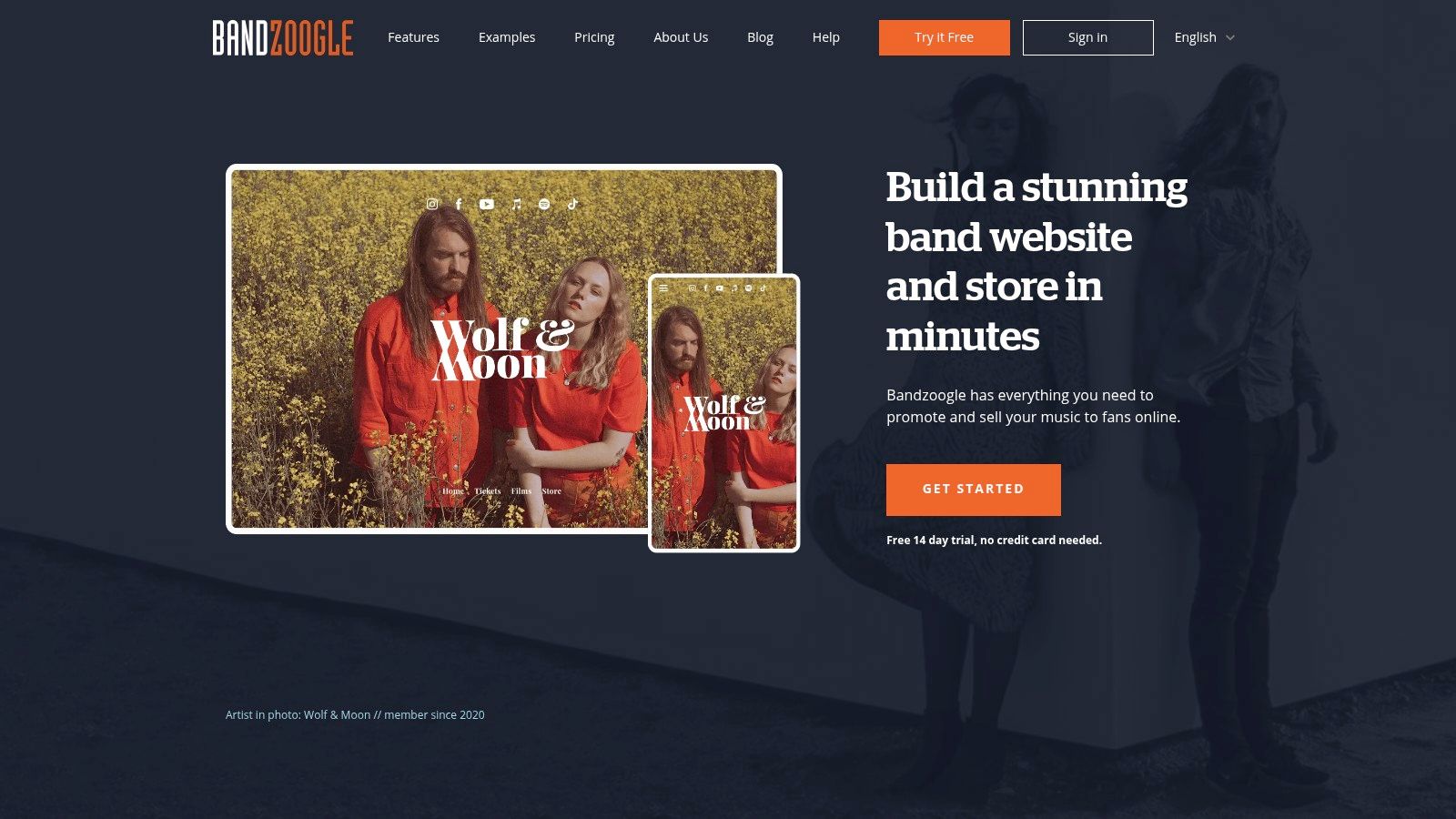
Bandzoogle's greatest strength is its direct-to-fan monetization model. Unlike many platforms that take a percentage of sales, Bandzoogle operates on a 100% commission-free basis for all music, merch, and ticket sales. This means artists keep every dollar they earn, a significant financial advantage that makes it one of the best music artist websites for maximizing revenue.
Strategic Analysis: The All-in-One Advantage
Bandzoogle eliminates the need for third-party apps for core functions. The platform includes an integrated mailing list tool, a tour calendar that syncs with Bandsintown, and robust e-commerce features that support physical merch, digital downloads, and even print-on-demand services. It also features a dedicated EPK (Electronic Press Kit) builder with industry-standard templates, making it simple to create a professional page for promoters and media.
Key Insight: By centralizing essential tools like e-commerce, mailing lists, and EPKs, Bandzoogle reduces both cost and complexity. This allows artists to focus on creation and promotion rather than technical administration.
Actionable Takeaways for Artists
- Launch Quickly: Use musician-specific templates and the guided setup to get a professional site live in under an hour.
- Maximize Sales: Leverage the 0% commission on all sales. Sell digital albums, set up pre-orders, and create product bundles to increase order value.
- Build Your EPK: Utilize the built-in EPK templates to create a password-protected press kit with high-resolution photos, stage plots, and private tracks for industry contacts.
Plans start with a 30-day free trial, with paid tiers ranging from approximately $8.29/month (billed annually) for the Lite plan to more comprehensive Pro plans. Every paid plan includes a free custom domain name, hosting, and access to their award-winning live support team. Find more at https://bandzoogle.com.
3. Squarespace (Music Websites)
For artists who prioritize visual polish and a design-forward aesthetic, Squarespace offers an elegant and powerful solution. It is a general-purpose website builder renowned for its stunning templates and intuitive drag-and-drop editor, but it provides specific tools and layouts tailored for musicians. This makes it an ideal choice for artists wanting a highly professional, magazine-quality website without needing to code.
Squarespace’s core strength lies in its seamless integration of sophisticated design with robust e-commerce and marketing tools. While not exclusively for musicians like Bandzoogle, its platform is more than capable of handling merch sales, digital downloads, and tour date promotions. It excels at creating a visually immersive brand experience, making it one of the best music artist websites for those with a strong visual identity.
Strategic Analysis: The Design-First Approach
Squarespace empowers artists to build a beautiful digital home base with minimal effort. The platform includes dedicated audio blocks for embedding tracks, video blocks for music videos, and event pages that integrate with services like Bandsintown. Its Commerce platform is comprehensive, supporting physical merch, digital products, and even subscriptions for fan clubs. The recent addition of Squarespace Blueprint, an AI-assisted setup tool, further simplifies the initial design process.
Key Insight: By combining award-winning design templates with powerful, integrated business tools, Squarespace allows artists to present a premium brand image while managing sales and fan engagement from a single dashboard.
Actionable Takeaways for Artists
- Elevate Your Brand: Choose from professionally designed, mobile-responsive templates and customize them to match your unique artistic style.
- Streamline Your Store: Use the built-in Commerce tools to sell everything from vinyl and t-shirts to digital EPs. Remember that transaction fees vary by plan.
- Integrate Your Music: Use the Audio Blocks to stream your latest singles or albums directly on your site. This can complement your presence on streaming platforms, a key consideration when you choose the right music distribution service.
Plans begin with a 14-day free trial. Paid plans start at $16/month (billed annually) for the Personal plan and scale up to advanced Commerce plans with more robust features. All plans include a free custom domain for the first year, SSL security, and 24/7 customer support. Find more at https://www.squarespace.com/tour/music-website.
4. Wix Music
For artists seeking maximum design flexibility alongside powerful music-specific tools, Wix Music offers a compelling solution. Built upon the robust, general-purpose Wix website builder, it provides a dedicated suite of features that transform a standard site into a professional music hub. Its primary advantage is combining a highly intuitive drag-and-drop editor with essential artist functionalities, making it accessible for beginners without sacrificing depth.
Wix Music's standout feature is its approach to monetization. Artists using the Wix Music player can sell their tracks and albums with 0% commission, ensuring they retain the full value of their digital sales. This direct-to-fan model is further enhanced by flexible pricing options, including fixed-price, free downloads, or a "name your price" model that empowers fans to contribute what they can, often leading to higher overall support.
Strategic Analysis: The Flexible Design Advantage
Wix decouples music features from a rigid template system. Instead of being confined to a few pre-set layouts, artists can leverage Wix's massive template library and powerful editor to build a completely custom brand presence first, then integrate the Wix Music app. This provides unparalleled creative freedom. The platform supports high-quality FLAC and MP3 formats and includes built-in analytics to track plays, sales, and downloads, giving artists clear data on fan engagement.
Key Insight: Wix’s strength lies in its modularity. Artists are not forced into a "musician template" but can build any design they envision and then add robust, commission-free music sales and streaming capabilities.
Actionable Takeaways for Artists
- Design First: Choose a template that matches your visual brand, then add the Wix Music and Events apps to integrate your core artist functions.
- Empower Fans: Utilize the "name your price" option for a single or new release to encourage fan support and gauge demand before setting a fixed price.
- Integrate Your Ecosystem: Connect the Bandsintown or Songkick apps to automatically sync and display your tour dates, keeping your concert schedule up-to-date with minimal effort.
While Wix offers a free plan, selling music and accepting online payments requires a Business or eCommerce plan, which starts at around $27/month. These plans unlock the full suite of e-commerce tools, including the merch store and payment processing. Find more at https://www.wix.com/music/website.
5. Shopify
For artists whose merchandise operation is a core part of their business, Shopify is the undisputed e-commerce heavyweight. While not a dedicated music platform, it provides a powerful, scalable, and professional-grade retail engine perfect for managing complex merch drops, apparel lines, vinyl pre-orders, and more. Its primary advantage is its robust infrastructure for serious, multi-channel selling.
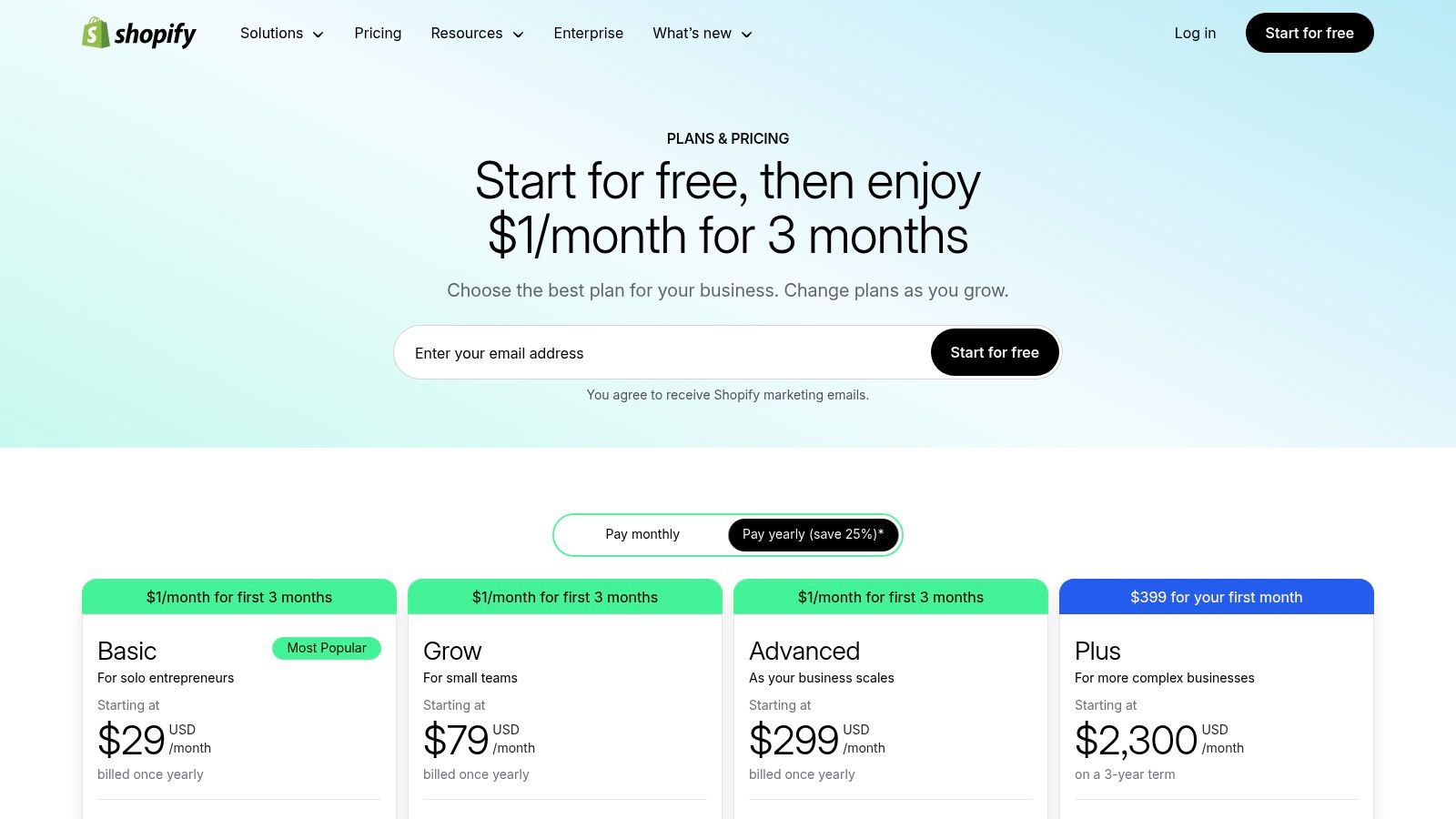
Shopify's greatest strength is its ability to centralize a high-volume sales operation. It unifies online storefronts with social media channels and in-person tour booth sales via its Point of Sale (POS) system. This creates a seamless inventory and analytics hub, making it one of the best music artist websites for artists who treat their merchandise like a serious brand.
Strategic Analysis: The E-commerce Powerhouse
Shopify’s core value lies in its scalability and extensive app ecosystem. With over 8,000 apps, artists can integrate services for print-on-demand, digital downloads, ticket sales, or fan clubs. While more complex than musician-specific builders, this flexibility allows for a completely customized fan experience and business model. For those weighing their options, a comprehensive Shopify vs WooCommerce vs BigCommerce comparison guide can offer deeper insights into which e-commerce platform best fits specific needs.
Key Insight: Shopify transforms an artist's website from a simple promotional page into a sophisticated retail business. Its advanced inventory, shipping, and analytics tools are built to handle growth and complexity far beyond what most all-in-one builders can offer.
Actionable Takeaways for Artists
- Unify On-Tour and Online Sales: Use the Shopify POS system to sell merch at shows, automatically syncing inventory with your online store to prevent overselling.
- Expand Your Product Line: Leverage the app marketplace to integrate print-on-demand services like Printful or sell digital goods like sample packs and tickets.
- Analyze Fan Behavior: Use the built-in analytics to track top-selling products, identify your most valuable customers, and inform future merch decisions.
Shopify plans often start with a promotional rate (like $1 for the first 3 months), with standard plans beginning around $29/month. Transaction fees vary based on the plan chosen, with higher-tier plans offering lower rates. Find more at https://www.shopify.com/pricing.
6. WordPress.com
For artists prioritizing content creation, SEO, and long-term scalability, WordPress.com offers an unmatched platform. While not exclusively designed for musicians, its powerful content management system (CMS) provides the flexibility to build a comprehensive artist hub, from a simple blog to a full-fledged e-commerce powerhouse. Its strength lies in giving artists total control over their content and brand narrative, making it one of the best music artist websites for those who plan to build an extensive online presence.
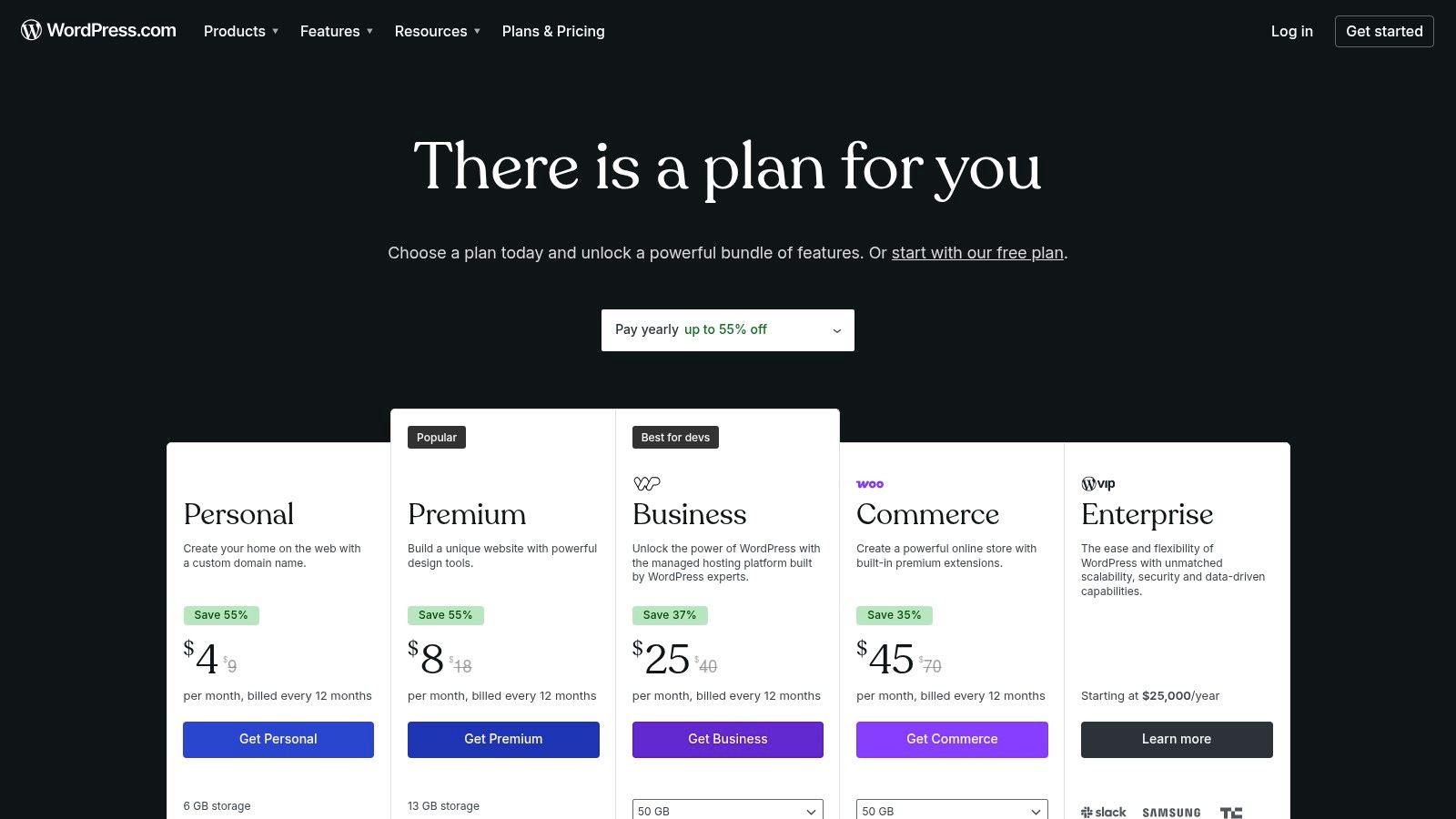
WordPress.com distinguishes itself with its legendary blogging capabilities and superior SEO tools, which are critical for organic discovery. Unlike simpler drag-and-drop builders, it provides a robust framework for creating in-depth content like tour diaries, album background stories, and news updates. This content-first approach helps artists connect with fans on a deeper level and improves their visibility in search engine results.
Strategic Analysis: The Content & Scalability Engine
The core advantage of WordPress.com is its ability to grow with an artist's career. You can start with a basic site and later upgrade to plans that unlock custom plugins and powerful e-commerce functionality through WooCommerce. This allows for the integration of advanced features like member-only content, sophisticated merch stores with countless product variations, and integrations with nearly any third-party service imaginable. Newer AI-assisted tools also help scaffold initial site layouts and draft content, lowering the initial barrier to entry.
Key Insight: WordPress.com is an investment in a scalable digital ecosystem. Its unparalleled plugin support and SEO foundation empower artists to build a content-rich platform that can adapt to any future need, from ticket sales to fan clubs.
Actionable Takeaways for Artists
- Prioritize Content: Use the powerful blog editor to share your story. Write about your creative process, tour experiences, and new releases to build a strong SEO footprint.
- Scale Smartly: Start with a lower-tier plan to establish your site. Upgrade to a Business or Commerce plan only when you are ready to install plugins or launch a full WooCommerce store.
- Leverage Plugins: On higher-tier plans, use plugins to add music players, event calendars (like The Events Calendar), and social media feeds to create a dynamic, feature-rich website.
WordPress.com offers a free plan with limited features. Paid plans provide custom domains and advanced tools, starting from the Personal plan at around $4/month (billed annually) up to the Commerce plan for robust e-commerce solutions. Find more at https://wordpress.com/pricing.
7. Bandcamp
For independent artists seeking a direct-to-fan sales platform with a built-in community, Bandcamp is an indispensable tool. It functions less as a traditional website builder and more as a powerful, music-centric marketplace and artist hub. Artists create micro-sites dedicated to their music and merchandise, allowing fans to purchase digital downloads, physical goods like vinyl and cassettes, and even fan subscriptions directly.
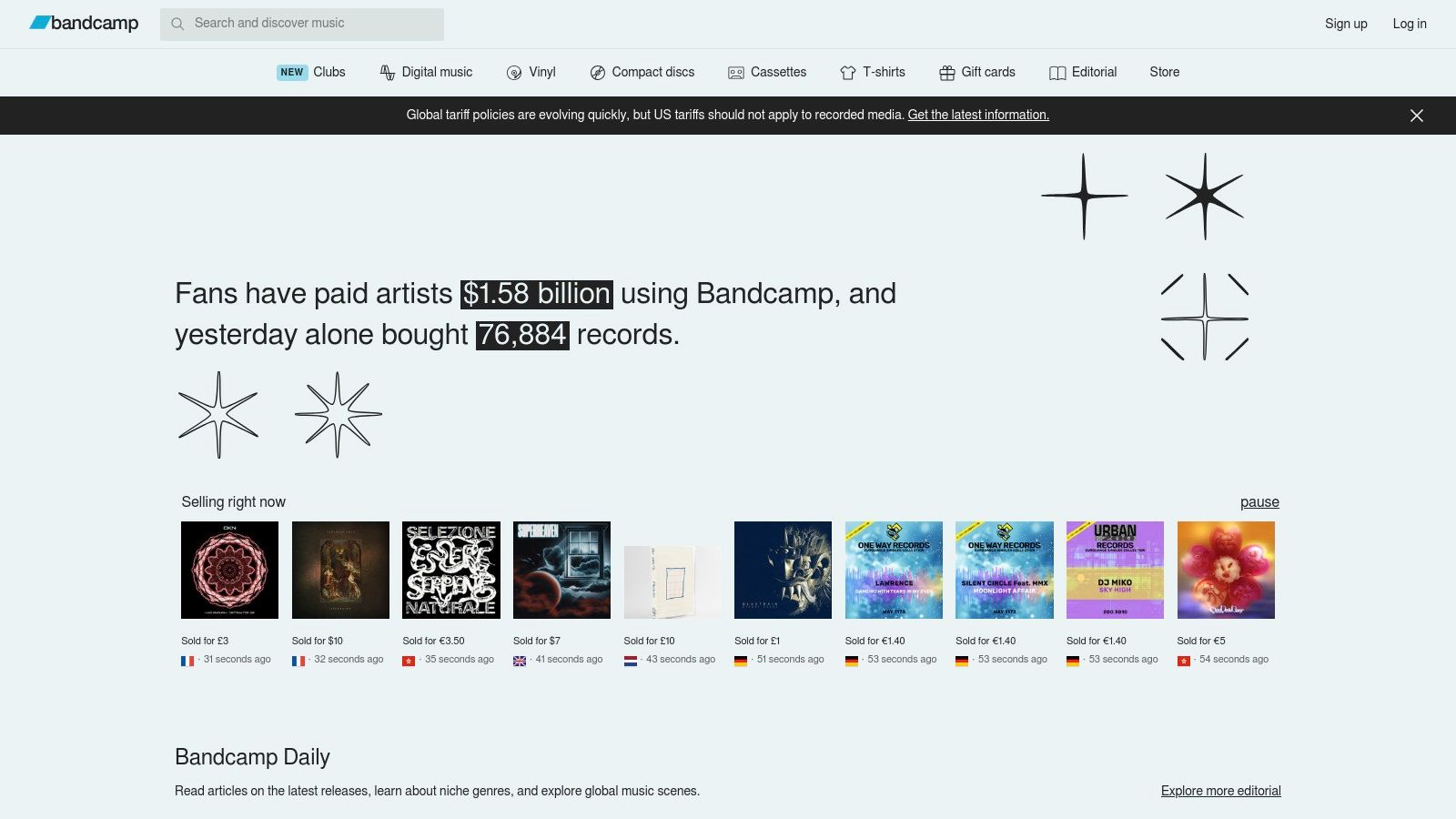
Bandcamp’s core strength lies in its artist-first financial model and dedicated music discovery ecosystem. Unlike subscription-based builders, it's free to create a page and sell products. The platform earns money through a transparent revenue share: 15% on digital sales (which drops to 10% after an artist reaches $5,000 in sales) and a flat 10% on physical merchandise. This model, combined with its popular "Bandcamp Fridays" where they waive their fees entirely, has built immense goodwill among artists and fans.
Strategic Analysis: The Community Marketplace Model
Bandcamp excels by merging e-commerce with a vibrant community. Fans don't just buy music; they discover it through curated editorial features, genre tags, and recommendations from other users. This built-in discovery engine can drive new listeners to an artist's page without external marketing efforts. The platform also empowers artists to test the market for physical products, such as limited-edition vinyl pressings, without significant upfront investment. Learn more about how Bandcamp fits into your independent music distribution strategy.
Key Insight: Bandcamp is more than a store; it's a discovery platform. Its value comes from tapping into an active, paying community of music lovers who are there specifically to support independent artists directly.
Actionable Takeaways for Artists
- Leverage "Name Your Price": Use the "name your price" option on digital downloads to lower the barrier for new fans while allowing superfans to pay more.
- Time Releases for Bandcamp Fridays: Plan major digital and merch drops around Bandcamp's fee-free Fridays to maximize your earnings and capitalize on the increased site traffic.
- Engage with Fan Subscriptions: For your dedicated fanbase, offer exclusive content, early access to new music, and subscriber-only merch through the fan club feature to create a recurring revenue stream.
There are no monthly fees to use Bandcamp, but payment processor fees apply to all transactions. Artists manage their own payouts via Stripe, and in most cases, are responsible for fulfilling their own physical merchandise orders. Explore the platform at https://bandcamp.com.
Top 7 Music Artist Website Platforms Comparison
| Platform | Implementation Complexity 🔄 | Resource Requirements 💡 | Expected Outcomes ⭐📊 | Ideal Use Cases 💡 | Key Advantages ⚡ |
|---|---|---|---|---|---|
| OohYeah | Moderate - Requires exploration of features | Medium - Web/iOS/Android access | High monetization efficiency, direct fan engagement | Independent artists seeking a unified streaming, selling, and marketing platform | Commission-free sales, direct fan interaction, robust analytics |
| Bandzoogle | Low - Fast setup with musician-specific blocks | Low - Website builder tools | Good sales margins, effective fan subscriptions | Musicians needing quick artist websites with built-in sales and marketing | Commission-free sales, EPKs, print-on-demand support |
| Squarespace | Moderate - Design-focused with templates | Medium - Paid plans with ecommerce | Polished professional websites with merch sales | Artists wanting elegant, design-driven official sites | Strong templates, all-in-one hosting and marketing |
| Wix Music | Low - Drag-and-drop design, beginner-friendly | Low to Medium - Business tiers for full features | Commission-free music sales, flexible fan pricing | Beginners needing easy site builder with music sales | Drag-and-drop ease, fan-friendly pricing options |
| Shopify | High - More complex multi-channel setup | High - Monthly fees plus apps | Scalable merch sales across online & physical channels | Artists with serious merch operations and multi-channel selling | Best for merch scale, large app ecosystem, POS integration |
| WordPress.com | High - Steeper learning curve, plugin management | Medium to High - Higher tiers for ecommerce | Strong content hubs with SEO and WooCommerce scalability | Content-heavy artists wanting flexible, expandable websites | Extensive plugin ecosystem, strong SEO, content tools |
| Bandcamp | Low - Simple artist microsites | Low - No monthly fees, platform-managed | Steady direct fan sales with community discovery | Artists focused on direct sales and music discovery | No subscription fees, “name your price”, built-in fanbase |
Building Your Digital Homebase: The Final Verdict
Throughout this deep dive into the best platforms for music artist websites, one central theme has emerged: your website is not just a digital business card, but the central, controllable hub of your entire music career. It's the one space online where you own the relationship with your audience, free from the shifting algorithms and policies of social media platforms.
We've explored a range of powerful tools, from the all-in-one, artist-first ecosystem of OohYeah to the streamlined, template-driven efficiency of Bandzoogle and the design-centric prowess of Squarespace. Each platform offers a unique pathway to establishing your digital presence, but the most effective choice aligns directly with your strategic priorities.
Key Strategic Takeaways Revisited
Your journey from artist to entrepreneur hinges on making informed decisions. Here are the core principles we've uncovered:
- Ownership is Paramount: The primary goal of your website is to build a direct connection with your fans. This means focusing on collecting email addresses, offering exclusive content, and creating a community that you control.
- Monetization Must Be Intentional: Don't just add a "store" button as an afterthought. Whether your focus is on commission-free merchandise, digital downloads, subscriptions, or ticket sales, your monetization strategy should be integrated into the very fabric of your site's design and user experience.
- Function Over Flash: While a visually stunning website is appealing, the most successful music artist websites prioritize functionality. A fan's ability to easily find your music, buy merchandise, and join your mailing list is far more important than complex animations that slow down the site.
Choosing Your Platform: A Final Checklist
To make your final decision, ask yourself these critical questions:
- What is my primary business goal? If it's maximizing revenue from merch, a platform like Shopify or OohYeah's integrated commission-free store is essential. If it’s showcasing a high-end visual brand, Squarespace might be the better fit.
- How much time and technical skill do I have? Tools like Bandzoogle and Wix are built for ease of use, allowing you to get a professional site running quickly. WordPress offers ultimate flexibility but comes with a steeper learning curve and maintenance responsibility.
- Do I need an integrated ecosystem or just a website? A platform like OohYeah provides a unified solution for your website, store, fan club, and distribution, simplifying your tech stack. If you prefer to piece together different best-in-class services, a traditional builder might suffice.
Ultimately, the best platform is the one that empowers you to execute your vision efficiently and effectively. The examples we’ve analyzed prove that a well-crafted website is a dynamic asset for growth, a direct channel for revenue, and the definitive home for your artistic brand. Your digital homebase is waiting to be built; now you have the blueprint.
Ready to build a website that does more than just look good? OohYeah provides an all-in-one platform designed specifically for artists to sell merchandise, music, and memberships commission-free, all from a single, powerful hub. Start building your true digital homebase and take control of your music career today at OohYeah.