Finding a Music Agent Near Me A Guide for Independent Artists
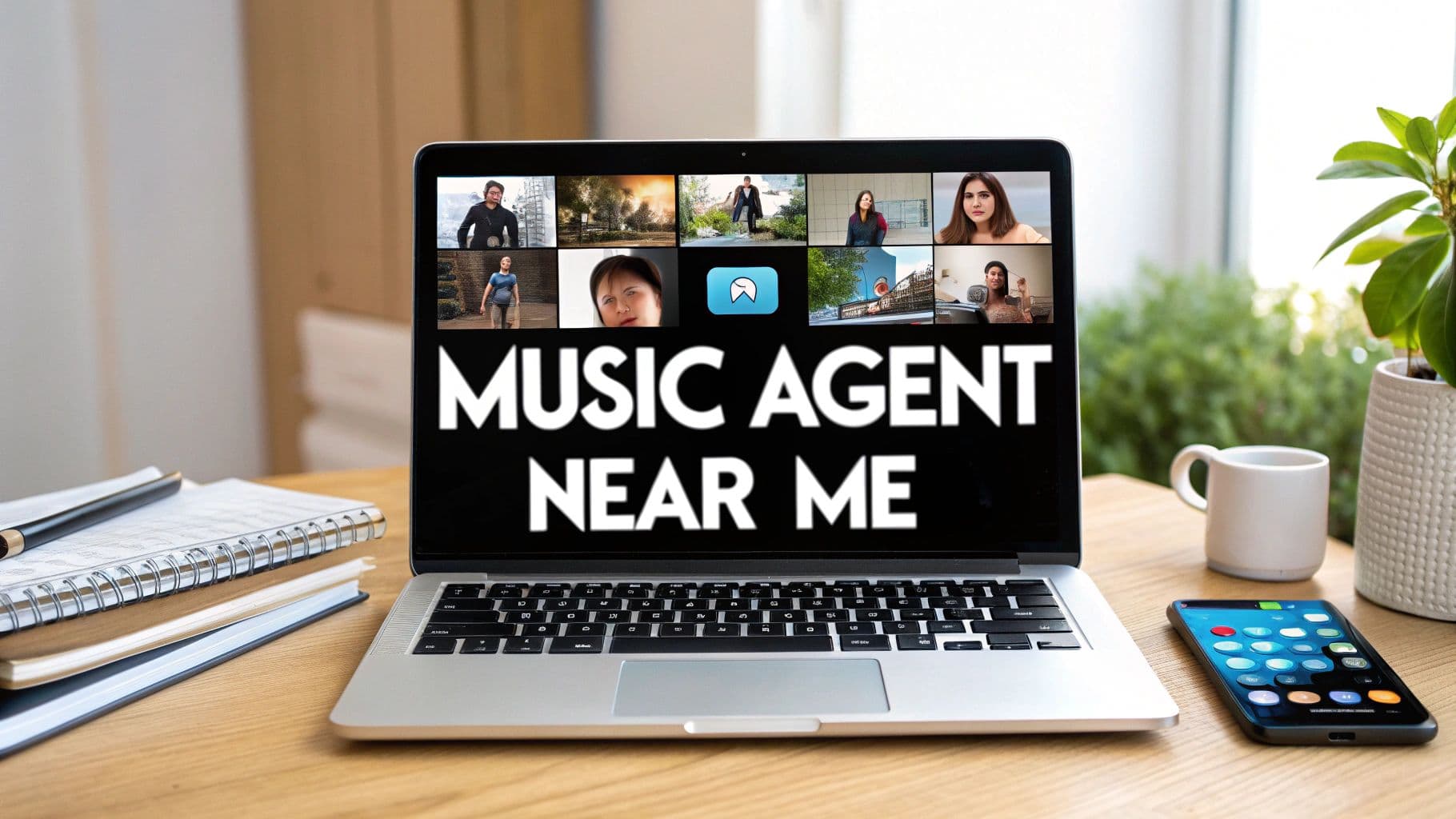
Searching for a music agent near me? Learn how to prepare your EPK, find the right connections, and secure a partnership that accelerates your music career.
February 14, 2026
Music Marketplace Advisor
Buying & SellingBefore you even type "music agent near me" into a search bar, there's some crucial groundwork to lay. Think of it this way: a good agent is looking for a polished, ready-to-market artist, not a passion project they have to build from the ground up. Your mission is to present them with a package so compelling they can't say no.
Build Your Foundation Before You Start the Search
An agent is a strategic partner, someone who stakes their time, connections, and reputation on your success. They won't take that leap of faith unless you've already put in the work. This means having your professional assets organized, easily accessible, and, most importantly, impressive. A messy, incomplete presentation just tells an agent you're not quite ready for the big leagues.
The absolute cornerstone of your artist toolkit is the Electronic Press Kit (EPK). This is your professional resume, and it needs to be airtight. An agent should be able to get a complete picture of who you are and what you do without having to click around and hunt for information.
A solid EPK needs to have:
- A sharp, compelling artist bio that tells your story and hooks the reader.
- High-resolution, professional photos that truly capture your brand and image.
- High-quality live performance videos. Studio music videos are cool, but agents need to see you command a stage and connect with a real audience. This is non-negotiable.
- Links to your absolute best tracks on all the major streaming platforms. Don't throw everything at them; lead with your strongest, most undeniable songs.
- A list of recent wins. This could be notable gigs, impressive streaming numbers, or any press you've managed to get.
Defining Your Brand and Goals
Beyond just having the right materials, you need a crystal-clear understanding of your artistic brand. What makes you different in an ocean of other artists? Who are you trying to reach? An agent needs to see a distinct vision they can pitch to venues, promoters, and festivals. It's not just about the music—it's the whole package: your look, your story, your message.
Your career goals are just as important. Are you aiming to tour the region, or is your sight set on a national run? Do you want to hit the festival circuit or land opening slots for bigger acts? Having specific, well-thought-out objectives shows an agent that you're a serious professional who thinks strategically. For more on this, check out our guide on how to get into the music industry.
An agent's job is to open doors you can't open yourself. But first, you have to build a compelling reason for them to turn the key. A strong foundation proves you're a smart investment, not a gamble.
Let's be real: the music industry is incredibly competitive. A 2025 IFPI report noted that record labels poured a staggering $8.1 billion into A&R and marketing back in 2023, a number that's only expected to climb. As an independent artist, that stat should light a fire under you. It shows just how critical it is to be self-sufficient and prepared. You can get more details on music marketing trends on diymusician.cdbaby.com. By meticulously preparing your professional materials, you’re not just acting like an artist; you’re operating like a business ready for growth.
You've got your EPK polished and your sound dialed in. Now, the real hunt begins: finding a music agent who not only gets your music but can actually move the needle on your career. This isn't about blasting out emails to every agent you can find online. It's about a targeted, strategic search for the right partner.
Your goal is to find professionals who are already invested and successful within your specific corner of the music world. Think of it less like a job application and more like finding a collaborator.
Industry directories are a common first stop. Sites like Booking Agent Info or the annual Music Connection directory can give you a bird's-eye view of the landscape, showing who represents whom. But be careful—these are essentially just massive phone books. They're useful for gathering names, but they won't tell you the most important stuff, like who has the right connections or a genuine passion for your sound.
Before you even start your search, it's worth taking a moment to gut-check if you're truly ready. Are all your ducks in a row?
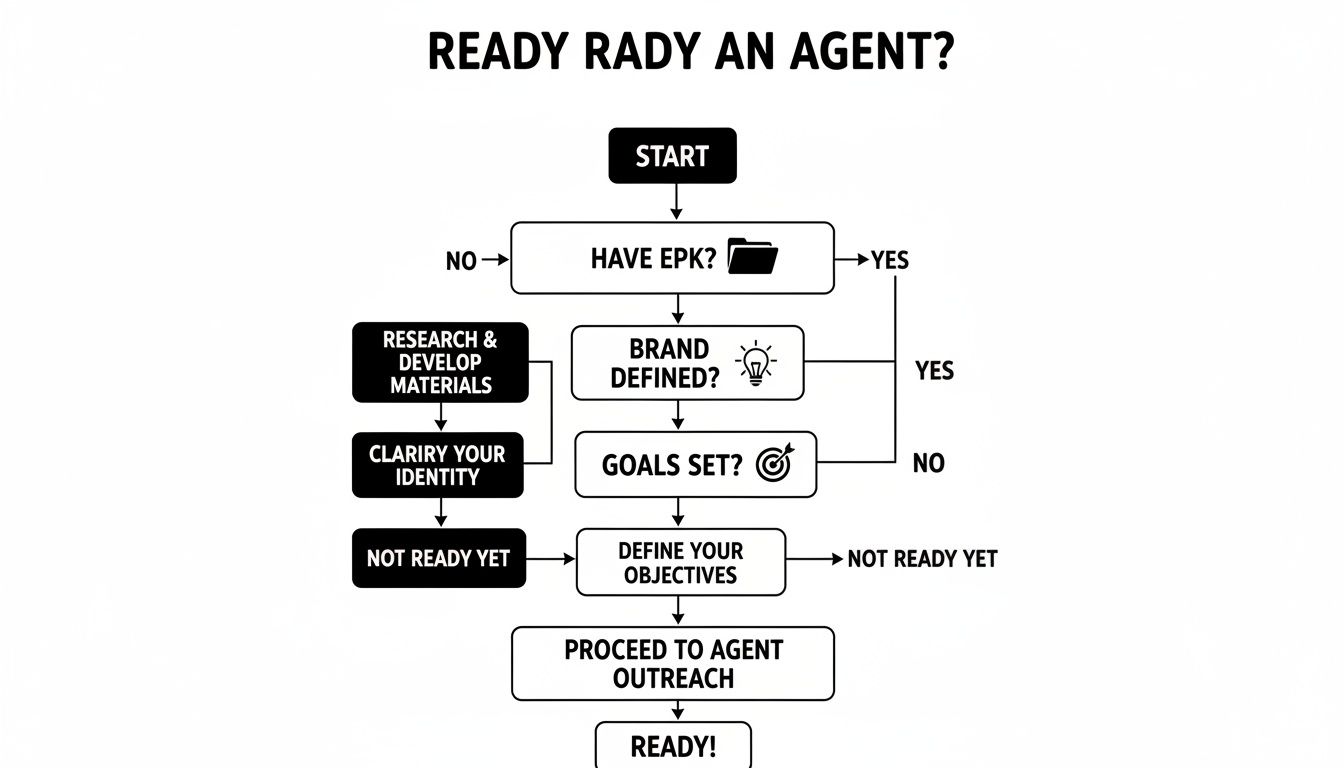
This quick visual should confirm whether you've nailed down the essentials—like a professional EPK, a clear brand, and solid career goals—before you start reaching out.
Start Local: Tap Into Your Music Scene
Honestly, the best connections you'll ever make probably won't come from a cold email. They'll happen in person. Your local music scene is a living, breathing ecosystem of artists, venue owners, promoters, and, yes, agents. Immerse yourself in it.
- Be a Fan First: Go to shows. See who’s playing, especially the bands in your genre that are a step or two ahead of you career-wise. Notice who they're working with and which venues they're booking.
- Show Up for Industry Events: Keep your ear to the ground for local music conferences, panels, or networking nights. These events are literally designed for you to meet the people who can help you.
- Don't Dismiss Open Mics: While they're often a starting point for new artists, you’d be surprised who drops by to scout fresh talent. Show up, play a great set, and be prepared to chat with people afterward.
Real networking isn’t about transactional handshakes; it’s about building genuine relationships over time. You can dive deeper into why networking is important in the music industry if you want to master this skill.
Go Digital: Smart and Strategic Research
Once you've exhausted your local scene, it's time to use online tools for some serious recon. When used thoughtfully, social media can give you incredible insight into an agent's world.
An agent's roster is their resume. Pay close attention to the artists they currently represent—it tells you everything about their taste, their network, and whether you would be a good fit.
LinkedIn and even Instagram are goldmines for this kind of research. Look up agents who work with artists similar to you. What are they posting about? Are they celebrating a client's sold-out tour or a big festival placement? This is proof they’re active and getting results. Professional networking sites can be a huge help here; you can learn a lot by finding potential agents on LinkedIn.
This digital legwork helps you turn a long, generic list of names into a short, targeted list of people who are proven champions for artists just like you.
How to Vet Agents and Ask the Right Questions
Finding a list of potential agents is just the first step. The real work—the deep-dive evaluation—starts now. This isn't just about finding an agent; it’s about finding the right strategic partner who gets your music and your goals.
A bad fit can seriously stall your career momentum. But the right partnership? That can unlock doors you didn't even know were there.
Before you even think about sending that first email, you need to do some serious recon on each agent's current roster. This is probably the most telling piece of intel you’ll find. You’re looking for artists in a similar sonic world as you, but not carbon copies. If an agent’s roster is packed with metal bands, they’re probably not the best person to champion your indie-folk project.
Even more crucial, look at the career paths of their clients. Are they playing bigger rooms than they were a year ago? Are they landing better festival slots? A roster that looks stagnant is a huge red flag. You want someone who builds careers, not just someone who collects clients.
Be brutally honest with yourself: "Looking at their current artists, would I be a priority for them, or just another name on the list?"
Diving Deeper During the Initial Meeting
So you’ve landed a meeting. Great. Now the real interview begins—and I mean you interviewing them. Showing up with sharp, insightful questions shows you’re a pro and helps you get a real sense of how they operate.
Skip the generic stuff. Asking "So, what's your plan for me?" is lazy and puts them on the spot to invent a magic strategy. Get specific. Try questions like these instead:
- On Communication: "How do you prefer to communicate with your artists, and how often? Do you do regular check-in calls or updates?" This tells you everything about their day-to-day style and helps set clear expectations from the get-go.
- On Strategy: "Based on my EPK and recent gigs, what kind of venues or festivals do you realistically see me playing in the next 12-18 months?" This is a great way to see if they've actually done their homework on you and have a tangible vision.
- On Teamwork: "How do you typically work alongside an artist's manager or publicist?" Their answer reveals whether they're a team player, which is absolutely essential for a unified career strategy.
The whole point of this first chat is to check for alignment. A great agent won't just talk about booking gigs. They'll talk about building a sustainable touring career that makes sense for your brand and your long-term ambitions.
Understanding the Financial Commitment
Eventually, the conversation has to turn to money and contracts. Don't be shy about it. The industry standard for a booking agent's commission is 10% of the gross revenue from the shows they book for you.
If anyone asks for a higher percentage or demands a big, non-refundable "retainer" fee upfront, walk away. A legitimate agent makes money when you make money. Simple as that.
Get crystal clear on what that 10% actually applies to. It should only be on performance fees—not your merch sales, not your streaming royalties, and definitely not your publishing income. These details need to be spelled out in black and white in any contract you sign.
This financial clarity is non-negotiable, especially now. In 2024, the global music copyright industry pulled in an incredible $47.2 billion. With direct-to-fan models becoming more important, you need partners who are transparent and on your side. For more on this, check out some of the latest music business trends at completemusicupdate.com.
Properly vetting an agent isn't just about finding opportunities; it's about protecting your career and ensuring you have someone who will help you navigate this complex business, not make it even more complicated.
Crafting Your Outreach for a Professional First Impression

That first email to a potential agent is everything. Think about it from their perspective: their inbox is a constant flood of submissions, and you’ve got maybe ten seconds to convince them you’re a serious artist who understands the business. A generic, copy-pasted email is a guaranteed one-way ticket to their trash folder.
The only way to cut through that noise is with personalization. Before you even think about typing, do some real research. Dig into the agent's website, check out their social media, and, most importantly, look at the artists they already represent. Find someone on their roster whose career path you genuinely admire.
A personalized email shows you're not just spamming every "music agent near me" in a directory. It proves you're specifically interested in their work and see a real fit. That simple effort puts you in the top 10% of submissions right away.
Structuring Your Pitch for Impact
Your email needs to be tight, professional, and incredibly easy to read. Agents are swamped; they don't have time for your life story, no matter how compelling it is. You have to get straight to the point and make your potential obvious.
Start with a clear subject line that tells them exactly what they're opening. Something like "Artist Submission: [Your Artist Name] - [Genre]" is perfect. Then, in the first line or two, mention that research you did. For instance, "I've been following the work you've done with [Similar Artist on Roster], and the festival bookings you landed for them were incredible. I believe my music would complement your roster well."
From there, it’s all about presenting your key assets without any friction. Never, ever attach large audio or video files. Use direct links.
Here’s what you absolutely must include:
- Your Electronic Press Kit (EPK): This is non-negotiable. It’s your professional resume, and it needs to have everything in one place.
- Your Single Best Song: Don't make them guess. Link directly to your strongest track on Spotify, Apple Music, or SoundCloud.
- A High-Quality Live Video: An agent’s job is to book you for shows. They need to see you can command a stage and connect with an audience. Pick a video that proves it.
Showcasing Momentum and Professionalism
Once you've provided the links, you need to give them a quick snapshot of your traction. This is your proof that you’re already building something worth their time and effort. This isn’t about ego; it’s about demonstrating a return on their potential investment.
Focus on tangible metrics that show growth. Things like:
- Consistent monthly listener growth on streaming platforms.
- A proven ability to sell out local venues (mention specific capacities).
- Recent press mentions or positive blog reviews.
- An active and growing social media following.
Wrap up the email with a simple, professional closing. The hardest part is next: being patient. Don't blow it by following up the next day. If you don't hear back, a single polite follow-up after 7-10 business days is fine. Any more than that, and you risk looking desperate. This entire approach shows you're not just another musician with a dream, but a professional ready to be a business partner.
Navigating Contracts and Avoiding Common Pitfalls
Getting that first agency agreement in your inbox is a huge moment. It's exciting, but it can also be pretty intimidating. This document is going to define a critical professional relationship, potentially for years. Don't rush this part. Seriously, it's one of the biggest mistakes I see artists make.
Think of the agency contract as more than just a formality. It’s the blueprint for how you and your new partner will make things happen. It's there to protect both of you, but only if the terms are clear, fair, and understood from the get-go. Skimming over the details is a surefire way to run into trouble down the road.
Demystifying Key Contract Clauses
When you get that document, a few key clauses will jump right out at you. These are the nuts and bolts of your agreement, and you need to pay close attention. Knowing what's standard in the industry will help you immediately spot anything that feels off.
Here are the big three to focus on:
- Term: This is simply how long the contract lasts. A typical starting point is one year. Be cautious if an initial agreement is for more than two years. You want a chance to make sure the partnership is working for both sides before locking into a long-term commitment.
- Scope: This section gets very specific about what the agent represents you for. It should be laser-focused on securing live performances and directly related opportunities. An agent's commission shouldn't touch your record royalties, publishing, or merch sales unless they were directly responsible for that specific deal.
- Key Person Clause: This one is absolutely vital but often gets overlooked. A key person clause states that if your specific agent—the person who signed you and truly gets your music—leaves the agency, you have the right to leave, too. It’s a safety net that keeps you from being stuck at an agency without your champion.
Getting familiar with a standard artist management contract template can give you a great head start on understanding the language and structure before you even see your own.
Major Red Flags You Cannot Ignore
Most agents are hardworking professionals, but you still have to keep your guard up for predatory practices. Some warning signs are so serious that they should be an immediate dealbreaker, no matter how great the agent seems. Your career is on the line.
Never, ever sign a contract under pressure. A legitimate agent will want you to feel confident. They'll encourage you to take your time and have a lawyer review it. Anyone trying to rush you is likely hiding something in the fine print.
Keep an eye out for these massive red flags:
- Large Upfront Fees: A reputable agent makes money when you make money, period. They work on commission. If someone asks for a big "retainer" or "admin fee" before they've even booked a gig, walk away. It’s a classic scam.
- Vague or Overly Broad Scope: If the contract is fuzzy on what the agent can collect commission on, that ambiguity is usually intentional and not in your favor. Knowing how different income streams work is crucial; our article on understanding music licensing can help clear things up.
- Refusal to Allow Legal Review: This is the easiest red flag to spot. An agent who tells you a lawyer isn't necessary or discourages you from getting a legal opinion is not someone you want to work with.
Being vigilant is more important than ever. The industry is currently battling a massive streaming fraud problem, with some experts estimating that over $1 billion is lost to fake streams annually. This just underscores the need for transparent partners who are committed to protecting your income. Hiring an experienced entertainment lawyer isn't just an expense—it's the single best investment you can make in your own career.
Unpacking the Search: Your Questions Answered
When you start looking for a music agent, a few key questions always pop up. It's smart to get these sorted out before you start sending emails. Knowing the difference between key players and how the money works can save you a ton of headaches and help you find the right partner.
One of the biggest mix-ups I see is artists using "agent" and "manager" as if they're the same thing. They absolutely are not. Let's clear that up first.
What's the Real Difference Between a Music Agent and a Manager?
Think of it this way: a music agent, or a booking agent, is your live performance specialist. Their entire world revolves around one thing: getting you paid gigs. They're the ones talking to promoters, negotiating your fees for shows, and putting together a tour that actually makes sense on a map.
A manager, on the other hand, is the CEO of your music career. They’re focused on the big picture—your brand, your marketing, your creative direction, and building out your entire professional team (which, yes, includes finding you a great agent). You'll almost always need a manager before an agent will even take your call.
How Do I Know if I'm Ready for a Music Agent?
You're ready for an agent when you've got so much heat you can't handle it on your own. Agents aren't there to build your career from the ground up; they're there to take something that's already working and pour gasoline on the fire.
Here are a few tell-tale signs you're on their radar:
- You’re consistently selling out the biggest local rooms you can book yourself.
- You have a dedicated online following that actually shows up and buys tickets.
- Your inbox is flooded with more booking requests than you can possibly manage.
An agent’s job is to amplify existing success, not create it from scratch. When the demand for your live shows starts to outpace your ability to manage it, that’s your signal it’s time to start looking.
What's a Standard Commission for a Music Agent?
This one is simple: the industry standard is 10% of the gross income from any live performance they book for you. That’s it.
It's crucial that your contract clearly states this commission applies only to the performance fees they secure. An agent should never get a cut of your merch sales, streaming money, or publishing royalties. If anyone asks for a percentage of your total career earnings or wants a big fee upfront, walk away. Those are massive red flags.
Ready to take control of your music career? OohYeah provides the tools you need to build your brand, sell directly to your fans, and get discovered—all on one platform. Start building your foundation today.