Indio Polo Fields Coachella Guide 2026: Your Essential Tips
Explore the ultimate guide to indio polo fields coachella. Get essential maps, travel logistics, camping details, and pro tips for attendees and artists.
May 21, 2026
Music Marketplace Advisor
Buying & SellingThe email lands. Your manager texts. Someone in the group chat types in all caps. You're playing Coachella.
That part feels easy. The next part doesn't. Suddenly you're thinking about load-in windows, artist check-in, where the Indio polo fields Coachella site sits in relation to everything else, how long it takes to cross the grounds, what your team should carry, where you'll meet after the set, and how not to waste half the weekend solving preventable problems.
That's where most first-timers lose energy. Not on stage, but in the gaps around it.
The Indio polo fields aren't just a concert venue. They operate like a temporary city layered onto a purpose-built sports complex. If you treat it like a normal show, you'll get dragged by the scale. If you approach it like a producer, with routes, timing, backups, and clear handoffs, the whole weekend gets better fast. For more artist-facing reads on navigating moments like this, the OohYeah blog is worth bookmarking before you head out.
Your Definitive Guide to the Indio Polo Fields
A first Coachella booking usually creates two timelines in your head at once. In one, you're already on stage, locked in, cameras up, crowd there. In the other, you're staring at a festival map, trying to work out where your team should enter, how early your photographer needs to move, and whether your offstage plans are realistic.
The second timeline matters more than people admit.
The Indio polo fields Coachella setup rewards people who prep for friction. That means building extra walking time into everything. It means picking one landmark as your meeting point instead of trusting cell service and group chats. It means deciding before arrival who handles artist credentials, who handles content capture, and who is responsible for getting everyone moving when the set is over.
Practical rule: If a plan depends on everyone improvising in real time, it's not a plan.
Artists tend to over-focus on the set and under-focus on the transitions around it. The experienced teams do the opposite. They lock the transitions first, then let the performance breathe.
Use this guide that way. Not as fan advice, but as operating advice. The goal isn't just to get through the weekend. It's to move across the site with less friction, protect your energy, and make the booking count onstage and off.
The Legendary Venue and Its History
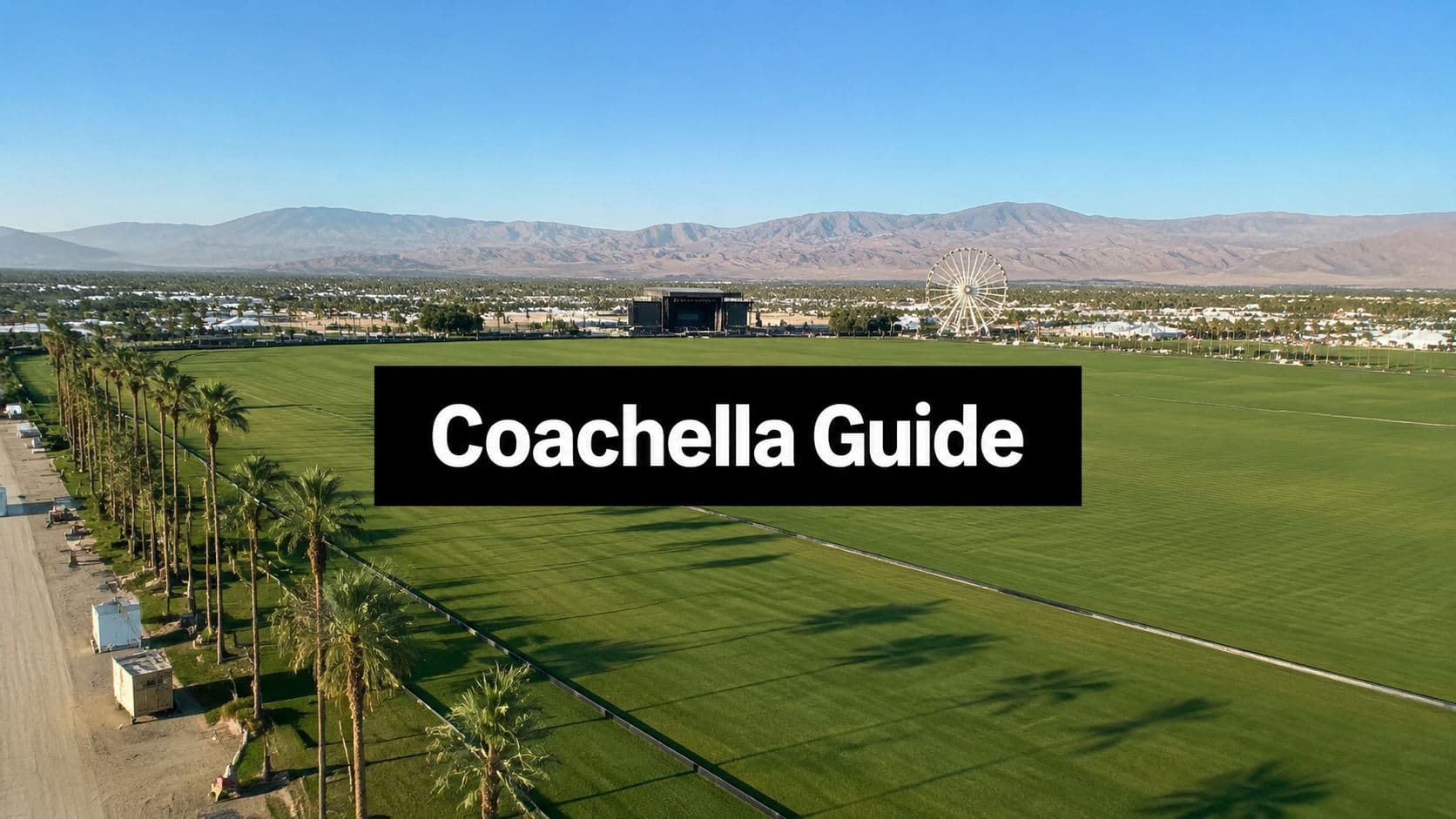
You feel the venue's intent before you know its history. Load-in routes are long. Sightlines open up fast. Crowd flow has room to spread. For an artist, manager, or creator team, that matters because Coachella operates on a property built for movement first, not on a site squeezed into a city grid.
According to the club's own history, Empire Polo Club in Indio, California, was established in 1987 and expanded into a venue with 12 grass polo fields, an indoor polo arena with stadium seating, and two exercise fields (Empire Polo Club history). That original design still shapes how the festival works. The grounds were built to handle traffic across a large footprint, support multiple active zones, and maintain clear separation between different uses of the property.

Why the polo history still matters
A former polo ground gives a festival producer a very specific set of advantages. There is field depth for major stages and brand builds. There are long visual corridors that make wayfinding easier once you know your landmarks. There is enough physical separation to keep guest experience, artist operations, and service movement from collapsing into the same bottleneck.
That is a big reason Coachella feels different from a stadium date or an urban festival. The site was not retrofitted from a parking lot or forced into a downtown street plan. It came with scale, spacing, and infrastructure logic that already suited large-event use.
For performers and industry teams, that history has a practical upside. The venue can support more than the public show at once. While fans see stages and art, artist teams are also working around credential checkpoints, production lanes, transport timing, content capture windows, and offstage meetings. Teams that understand the property's roots usually make better decisions about pacing and movement.
If you are building a content plan around the weekend, prep it before arrival. A simple backstage asset can do more work than a rushed recap posted two days late. Many teams use short landing pages or scannable links for releases, media kits, and post-set promotion, and these steps to make a video QR code are useful if you want one asset that your team, press contacts, and brand partners can all use on site.
What that means on the ground
The venue's history explains several friction points first-time artists often misread:
- Distance changes your schedule. A route that looks short on a festival graphic can eat your buffer once credentials, escorts, carts, or foot traffic get involved.
- Access layers are intentional. Guest paths, artist paths, production routes, and service entries were not designed to overlap cleanly for convenience.
- Open space can be deceptive. The property feels calm at first glance, then starts stretching every transition once the grounds fill up.
The fix is simple. Treat the site like a working campus. Build extra time into every move, keep your team's route decisions tight, and assume the venue will reward preparation more than improvisation. That is the legacy of the polo fields. They were built for organized use, and the artists who perform best there usually operate the same way.
Decoding the Festival Map and Key Landmarks
The fastest way to get turned around at Coachella is to think of the grounds as one big field. They aren't. Treat the site like a set of working zones, each with its own rhythm, density, and best use.
The broad reality is simple. Empire Polo Club is a 1,000-acre venue with twelve polo grounds, making it one of the largest polo clubs on the U.S. West Coast, and that scale creates real operating constraints around water-use efficiency and dust control when the grounds are used for mass events (Wikipedia overview of Empire Polo Club). For you, the practical implication is travel time. Distances that look minor on a festival graphic can eat a chunk of your window if you're moving with a team, carrying gear, or navigating crowd surges.

Think in zones, not in stages
A better way to read the indio polo fields coachella layout is to break it into functional clusters.
| Zone | What it's for | How to use it well |
|---|---|---|
| Main stage corridors | Highest-volume movement and headline traffic | Move early if you need to cross these areas cleanly |
| Tent and secondary stage areas | Faster turnover, denser entry points, more sudden crowd shifts | Pick exact meet-up edges, not vague “near the tent” plans |
| Art fields | Navigation anchors and reset space | Use installations as meeting points because everyone can spot them |
| Food and beverage pockets | Refuel, regroup, short admin stops | Don't schedule team decisions here at peak meal rush |
| Rest and shade pockets | Energy management | Use them before you feel cooked, not after |
If you're attending as talent or with a content team, your map isn't just about what to see. It's about reducing unnecessary crossings. Every cross-site mission costs time, focus, and battery.
Landmarks that actually help
The big stages are frequently remembered. The smarter move is to remember the fixed reference points around them. Art installations are useful because they're visible, distinctive, and easier to identify than generic food rows or vendor tents.
Use landmarks in a precise way:
- Good meeting point: “North side of the large sculpture, closest to the main path.”
- Bad meeting point: “By the art thing.”
- Good regroup point: “Outside the beer garden entrance, left of the sign.”
- Bad regroup point: “Near drinks.”
If your meeting point needs a follow-up text to explain it, it's a weak meeting point.
The walking strategy that works
Don't build your day around back-to-back commitments on opposite ends of the site. That's how people miss intros, arrive flustered, or burn through their best energy before sunset.
Instead:
- Cluster your priorities by area. Stay put when possible.
- Move before the crowd decides to move. The worst walks happen right after everyone has the same idea.
- Send one scout, not the whole group. If someone needs merch, food, or a quick route check, don't migrate as a pack.
- Carry one shareable site screenshot. A marked-up map in your camera roll beats searching for signal.
Creators also benefit from having one lightweight digital handoff tool ready. If you're passing off teasers, exclusive clips, or fan activations, this walkthrough on steps to make a video QR code is practical because it gives your team a clean way to connect offline festival traffic to online content without forcing a long explanation in a loud field.
Where people lose time
The common mistakes aren't dramatic. They're boring.
- Underestimating the crossing time
- Choosing meeting points inside high-traffic choke points
- Waiting until everyone is hungry or tired to make decisions
- Treating the map as static, when crowd flow changes throughout the day
The people who look relaxed on site usually aren't winging it. They've already decided where they'll cross, where they'll stop, and what they'll skip.
Mastering Your Arrival and Accommodations
Your weekend gets shaped before you hear a note of music. Transportation and lodging choices decide how much energy you keep for the actual festival.
The wrong combo creates hidden tax. A long shuttle line after a long day. A rideshare scramble with no clean pickup plan. A nice rental that's too far from your morning call time. Most bad Coachella stories start there.
A quick visual can help frame the trade-offs.

Getting there means choosing your pain point
None of the main transport options is perfect. Each one solves one problem and creates another.
| Option | What works | What doesn't |
|---|---|---|
| Driving | Full control over departure time and what you carry | You own the traffic, the parking walk, and the exit fatigue |
| Shuttle | Predictable process, less parking stress, easier for attendees | You're on someone else's timing and pickup flow |
| Rideshare | Door-to-door in theory | Pickup and departure can get messy fast, especially late |
Driving makes sense if your team has gear, wardrobe, or a tight offsite schedule. It's less fun at the end of the night when everyone is cooked and still facing a long walk plus traffic out.
Shuttles work best for people who value consistency over flexibility. You give up some control, but you remove a lot of parking chaos. For many attendees, that's a good trade. For artists with fragmented schedules, it depends on whether your day is simple or layered with obligations.
Rideshare is the most commonly overestimated option. It sounds easy because it's familiar. At a major festival site, familiar doesn't always mean smooth.
Where to stay depends on your role
An attendee, an artist, and a manager should not automatically book the same way.
Here's the practical split:
- Camping: Best if you want immersion and don't mind noise, close quarters, and less privacy. Great for energy, weak for recovery.
- Hotel: Best for sleep, showers, reset time, and predictable mornings. Usually the safest option if you need to perform well on command.
- Short-term rental: Best for groups who need common space, content prep space, or team coordination. Risk goes up if the property is farther than expected from your daily movement plan.
The best choice is often the least exciting one
For performers, comfort is not a luxury. It's a performance tool. If you're playing, filming, taking meetings, or doing guest appearances, book for recovery first and aesthetics second.
Ask these questions before you commit:
- Can everyone get in and out without confusion?
- Is there enough quiet for sleep and voice recovery?
- Do you have space to stage wardrobe, chargers, and day bags?
- Will the route back feel manageable after a long day?
The “fun” lodging option usually stops being fun when call times start early and everyone is looking for one missing credential.
If your team is still sorting the practical side of artist logistics, use the OohYeah contact page to get pointed in the right direction on creator support questions beyond festival-day basics.
Festival Essentials for Safety and Accessibility
Safety planning is often thought of as being about emergencies. At Coachella, it's mostly about preventing small problems from becoming trip-ruining problems.
The desert environment changes your margin for error. Heat sneaks up. Dust builds over time. Fatigue makes simple decisions harder. If you handle hydration, shade, charging, and regrouping early, the day stays manageable. If you wait until you feel rough, you're already behind.
Build a day-of survival kit
What you carry should reflect the site, not your usual show routine.
- Empty water bottle or hydration pack: Refill often. Don't wait until you feel thirsty.
- Bandana or face covering: Dust can turn a good afternoon into a bad one.
- Portable battery: Phones die faster when you're filming, navigating, and searching for signal.
- Sunscreen: Apply before arrival, then reapply before you think you need it.
- A lightweight layer: Desert nights can feel different once your body's been in sun all day.
That list sounds basic because it is. Basic wins here.
Accessibility and medical planning should be proactive
If you or someone in your group needs accessibility support, handle it before the day gets crowded and rushed. Know where the accessibility services hub is, know how your route changes if mobility is an issue, and know who in your group is responsible for communicating with staff if needed.
The same goes for medical support. You don't need to camp next to a medical tent, but you should know the nearest one to your likely zone. On a large site, direction matters. “Somewhere over there” is useless when someone is overheating or overwhelmed.
A few practical habits help:
- Choose one fixed regroup point per half-day
- Screenshot your passes, maps, and key messages
- Tell one person where you're going before you split off
- Set a battery threshold where you stop filming and start conserving
Don't treat wellness as a side task. On festival grounds, it's part of your production plan.
Safety is different if you're moving solo
Solo attendees, photographers, creators, and industry guests often have a different risk profile because they separate from groups more often and move at odd hours. For that use case, SafePing is a safety and emergency app for solo travelers. It's a sensible add-on if you expect to be navigating pickups, off-hours movement, or solo transitions between festival and lodging.
The point isn't paranoia. It's reducing avoidable uncertainty.
What usually works best on site
A simple rhythm beats heroic recovery.
Morning and early afternoon are for setup. Fill water. Confirm meeting points. Check battery. Late afternoon is where crowd complexity rises. Night is when exit decisions get expensive if you haven't made them already.
People who stay comfortable all weekend usually do the same small things repeatedly. They hydrate before they're thirsty, rest before they crash, and leave an area a bit earlier than the crowd wants to.
The Performer's Edge A Creator's Guide to Coachella
You load in thinking the hard part is the set. Then the day starts slipping. One guest is at the wrong gate, your content person is blocked at a checkpoint, someone forgot the updated set file, and your 30 minute buffer is gone before you touch the stage.
That is how Coachella punishes loose operations. The artists who get the most from this booking usually are not the loudest or the most connected. They are the teams that keep movement clean, communication short, and decisions clear under pressure. If you are playing, shooting, managing, or creating around the festival, treat the day like a live production, not a casual hang with a performance in the middle.

Backstage etiquette affects access
Backstage runs on timing, trust, and repetition. Staff remember the act that was ready. They also remember the team that turned every small ask into a production delay.
Keep your operation tight:
- Limit who comes with you: Extra bodies create extra check issues, transport problems, and confusion near call time.
- Name one decision-maker: Tour manager, day manager, or artist rep. One person answers questions fast.
- Build real buffer time: Walking time, security checks, golf cart delays, and guest issues all eat minutes.
- Keep problems contained: Fix wardrobe, tech, and guest drama off to the side, not in shared work areas.
A good reputation on festival grounds starts with small habits. Staff notice them immediately.
Networking works better when you are useful, calm, and brief
Coachella puts artists, managers, agents, brand teams, media, and creators in the same orbit. That can help your career, but only if you stop treating every introduction like a closing moment. Good festival networking is usually low-pressure in person and specific in the follow-up.
Use the room correctly:
| Situation | Bad move | Better move |
|---|---|---|
| You meet a manager | Deliver your whole story on the spot | Give a clear intro, one relevant detail, and follow up after the weekend |
| You meet another artist | Push for a collab immediately | Start with shared context, then leave room for a later conversation |
| You see media nearby | Ask for coverage with nothing prepared | Have a short angle, one clean asset, and a reason your set matters |
| You meet a promoter | Promise anything to stay in the conversation | Say what markets, formats, or dates actually make sense for you |
The strongest signal is simple. Be the artist or creator who is easy to place, easy to brief, and easy to trust.
Turn one booking into weeks of usable content
A lot of teams get this wrong in one of two ways. They over-film and flatten the actual performance day, or they capture almost nothing and realize later they left value on the table.
The fix is role clarity. Decide before arrival who is there to document, who is there to protect the performance window, and what assets matter most after the festival. For artists and creators, that usually means getting a few clean pieces that can support future pitching, recaps, social edits, and brand conversations.
Prioritize these assets first:
- Arrival footage that shows context without giving away your whole day
- A short prep moment that feels real, not staged
- One clean walk-to-stage clip
- A wide crowd or stage-context shot, if your access allows it
- A fast post-set reaction while the energy is still honest
- One direct message to fans, bookers, or partners you can post later
If your team is building beyond one weekend, keep your follow-up system organized too. A clear artist and creator networking workflow inside the OohYeah Industry Pro platform helps you keep new contacts, opportunities, and post-festival outreach from getting buried once everyone flies home.
The trade-off is always the same. Chase every moment, and the day gets messy. Capture the right moments, and Coachella keeps working for you after the stage lights go down.
Frequently Asked Questions
Can I bring a professional camera?
Assume nothing. Festival camera rules can be strict, and artist, guest, media, and attendee permissions aren't the same. If you're on a team, confirm in advance whether your shooter has explicit access or credentialing. If you're an attendee, don't show up assuming a large lens will slide through because it worked at another event.
What's the smartest way to use a locker?
Treat the locker as a reset point, not random storage. Put in the items you'll need later: your night layer, backup battery, face covering, and anything you don't want to carry through peak heat. Don't bury key items under merch and impulse purchases.
When should I buy merch to avoid the worst lines?
Buy when everyone else is doing something more exciting. Mid-rush and just after major sets usually punish you. If merch matters, build a dedicated window for it instead of hoping you'll “swing by” later.
What's the best meeting-point rule for groups?
Use one visual landmark and one edge description. Don't say “meet at the art.” Say “meet on the left side of the installation facing the main walkway.” Also set a fallback time. If someone loses signal, the clock becomes the backup plan.
How early should performers move before a set?
Earlier than your nerves tell you, especially if your route crosses busy public areas or multiple checkpoints. The mistake isn't arriving too early. The mistake is forcing your team to solve preventable movement problems while your set time gets closer.
If you're building momentum beyond one festival weekend, OohYeah gives artists a direct way to stream, sell, market, and stay connected with fans without handing over control of the relationship. It's built for creators who want the Coachella moment to lead somewhere concrete.