Independent Music Promotions Success Guide
Elevate your indie career with proven independent music promotions strategies. Learn targeted outreach, release planning, playlist pitching, and fan engagement.
December 18, 2025
Music Marketplace Advisor
Buying & SellingIndependent music promotion blends hands-on outreach with a clear-eyed look at data. When you play a coffeehouse one night, tease a track on social channels the next, and send a focused email to fans, you’re building momentum. Take Marsha Echo, for example—she turned a string of local shows into a 50K-stream lift by syncing live gigs with Spotify playlist pitches.
Every outlet has its role. Streaming playlists spark discovery. Social feeds deepen connections. And direct-to-fan platforms like OohYeah help you monetize that interest.
Why Each Channel Matters
- Streaming Playlists drive new ears to your music and can land you on algorithmic or editorial lists.
- Social Media lets you peel back the curtain with behind-the-scenes clips, Q&As, and shareable moments.
- Direct–To–Fan Tools are your storefront for merch drops, subscription bundles, and exclusive releases.
Common Mistakes And How To Avoid Them
Chasing raw stream numbers without checking saves or repeat plays wastes both time and ad dollars. Instead, zero in on what really sticks: fan saves, return listens, and clicks on purchase links.
“Depth of engagement beats viral spikes. Focus on fans who return and interact.”
Test a small Facebook ad or run an organic TikTok challenge. Then compare cost per engagement before you scale.
Key Promotion Channels Overview
Below is a snapshot of the major channels and when to lean on each for the biggest impact.
| Channel | Primary Benefit | Typical Cost | Best Use Case |
|---|---|---|---|
| Streaming Playlists | Discovery and social proof | $0–$50 per pitch | New single rollouts |
| Social Media | Community growth and shareable posts | Variable ad spend | Storytelling and live teasers |
| Direct–To–Fan Tools | Direct sales and subscriber loyalty | Platform fees | Exclusive merch or bonus tracks |
Use this table to decide where to focus your time and budget.
How To Tailor Your Playbook
Every artist’s path is different. Match your tactics to your sound, schedule, and audience habits.
- Split your budget: 30% paid ads, 40% organic content, 30% direct-to-fan offers.
- Batch content: film a studio session one day and slice it into social posts, newsletter snippets, and behind-the-scenes clips.
- Gather feedback: send a quick survey after each release to see what resonated.
The indie sector isn’t small—artists and labels pulled in $668.6 million in 2025 revenue across more than 8,700 businesses, growing at a 10.4% CAGR since 2020. Learn more about independent label market growth. By aligning channels with clear goals, you’ll stop spreading yourself too thin and start building genuine fan relationships.
Planning Your Promotion Calendar
A clear, three-month roadmap keeps you ahead of deadlines and frees up brain space for creative work. Kicking off roughly eight weeks before your release builds steady momentum without creating a last-minute scramble.
When you link press outreach, playlist pitches, social teasers, and email drops in one sequence, everything moves in harmony.
- Pre-Release Phase: teaser clips, artwork sign-off, playlist submissions
- Launch Week: targeted social ads, press releases, livestream events
- Post-Release Phase: data review, follow-up outreach, thank-you messages
Milestone Map
Pinning key dates to your calendar is your best defense against unexpected hiccups. I’ve seen an indie artist shift a blog pitch because a publication advanced its deadline—no stress, just a quick calendar tweak.
- Press Pitch Window: Day –35 to –28
- Playlist Submissions: Day –21 to –14
- Teaser Content Rollout: Day –14 to –1
- Release Announcement: Day 0
- Email Follow-Up: Day +1 to +7
This breathing room means you can pivot when a radio opportunity or podcast invite pops up.
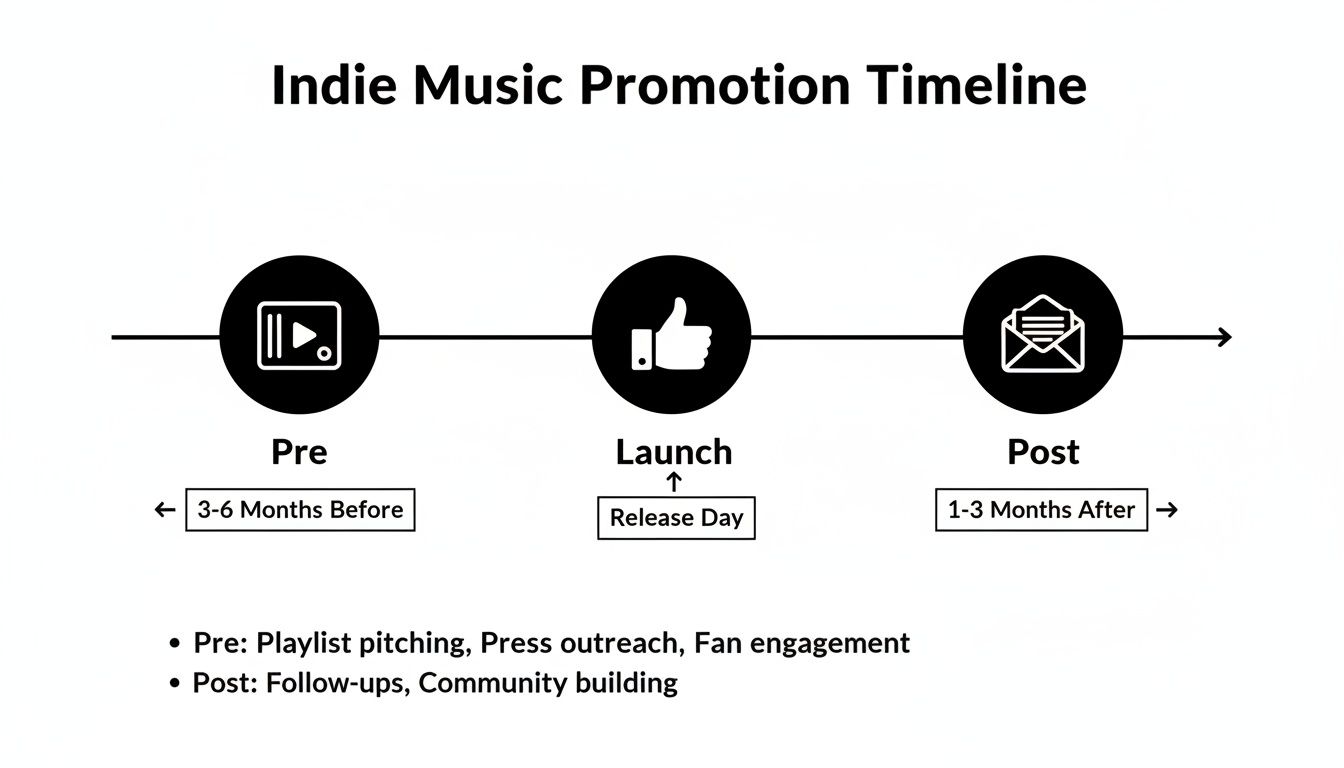
Spreading tasks across these phases keeps burnout low and momentum high. Independent music publishing value climbed to €2.57 billion in 2023, a 5.7% year-on-year rise and a 105.6% jump since 2018. Learn more about independent music publishing growth.
Budget Breakdown
Dividing your spend between paid ads, PR outreach, and direct-to-fan tools ensures broad reach. In our sample, roughly 40% went to social ads, 30% to press releases, and 30% to OohYeah campaigns.
- Ads: $800 for Facebook and Instagram boosts
- PR: $600 for targeted press releases
- Direct-to-Fan: $600 for email drops and exclusive OohYeah content
Batching your content production in one go wards off last-minute scrambles and keeps messaging consistent.
Team Coordination
A tight-knit team that shares deadlines moves faster than one stuck in endless email threads. OohYeah’s collaboration tools sync tasks, feedback, and approvals all in one place.
- Shared calendar with automated reminders
- Role-based access for design, copy, and ad teams
- In-app chat for instant problem-solving
Email Schedule
Emails timed to key milestones drive both streams and engagement. A well-placed teaser can build anticipation, and a follow-up can turn curiosity into clicks.
- Announcement at Day –14 with a pre-save link
- Reminder at Day –3 featuring an exclusive audio clip
- Thank-you note at Day +2 with initial stats
Content Batch Tips
Group similar tasks to get more done in fewer sessions. Film multiple studio clips in one afternoon, then slice them into bite-sized social assets.
- Schedule photo shoots for press kits, socials, and OohYeah storefronts
- Draft captions, hashtags, and email subject lines all at once
- Use scheduling tools to queue posts for Pre-Release and Launch phases
- Repurpose templates across channels to save time
Flexible Scheduling
When unexpected chances arise, swap out a lower-priority task to seize the moment. A surprise podcast slot might replace a routine social post—and yield bigger impact.
Flexibility in your calendar is as critical as the initial plan.
With clear milestones, a balanced budget, and room to pivot, your promotion calendar becomes a launchpad, not a straightjacket.
Targeting The Right Audience
Getting beyond raw follower counts can turn passive listeners into lifelong supporters. Platforms such as Spotify for Artists and social ad dashboards give you clear insights into who’s tuning in and where they’re located.
Indie duo Spectrum Eye discovered that 34% of their streams were coming from local college stations. They leaned into that data—crafting campus-focused messaging—and saw email sign-ups soar by 120%.
Below is a snapshot of the Spotify for Artists dashboard showing listener growth and top regions.
This view highlights a 20% week-over-week jump in streams from female listeners, alongside a 15% rise in North American cities. Simple subgroup targeting can uncover fresh pockets of growth.
Two real-world examples stand out:
- Local College Radio Fans identified through regional ad performance and on-campus event RSVPs
- Soundtrack-Curious Followers found by tracking engagement in film score discussion groups
These insights fed into ad creative tests that delivered a 25% boost in click-through rate.
Analyzing Listener Metrics
Now comes split-testing your ad copy across distinct age brackets and interest groups. For example, Moonrays ran one campus ad featuring live performance shots and another with behind-the-scenes clips.
Use the targeting parameters on social platforms to narrow by:
- Location and city-level heatmaps
- Genre preferences and playlist behavior
- Past engagement patterns
Aim to push cost-per-click below $0.10 before scaling. A recent cohort study found 77.8% of independent artists earned less than $15,000 from their music last year, a reminder of why deliberate promotion and multiple revenue streams matter. Check out the 2025 Music Industry Report for more details.
Next, set up email opt-ins with exclusive drops or behind-the-scenes clips. Test in small $50 batches, then tweak bids and placements after 24 hours.
Strengthening Fan Connections
Don’t let your strategy live exclusively online. Hosting a listening party at a local venue drove 150 new sign-ups, while partnering with genre-focused blogs added 500 monthly streams through guest posts and playlist features.
Encourage fans to create and share their own video clips, tagging your handle. It’s free amplification that builds genuine community.
Tip
Use QR codes on merch tables to funnel gig attendees into your email list.
Focus on fans who engage deeply.
Volume means little without repeat listens.
Tracking these offline actions alongside ad metrics keeps your approach cohesive. Blend digital splits with in-person activation to find the supporters who will stick around.
As you plan your next campaign, weave these data-driven insights into both paid spends and local promotions. Monthly reviews of your segments and creative will keep your efforts sharp—and your fan base growing steadily.
Audience Metrics Snapshot
Here’s a quick look at the key listener stats and recommended thresholds for indie artists on major streaming platforms.
| Metric | Threshold | Actionable Insight |
|---|---|---|
| Weekly Listener Growth | 15% | Double down on ads in high-growth regions |
| Email Signup Conversion | 5% | Offer exclusive tracks or videos to boost sign-ups |
| Click-Through Rate | 2% | Refresh ad copy and calls-to-action |
| Local Stream Share | 30% | Host pop-up events at campus venues |
| Female Listener Increase | 20% | Feature female-led playlists and targeted promos |
Use this snapshot to refine your segments and measure impact month over month.
Leveraging Paid And Organic Channels
Finding the right mix between paid ads and grassroots outreach can stretch every dollar. Small boosts jumpstart awareness, while organic efforts keep fans invested over time.
Imagine spending $500 on a Facebook campaign. In just one week, you reach 20,000 carefully chosen users. Meanwhile, running a low-cost contest on Discord costs under $75 but sparks genuine user content that keeps momentum going.
One indie act split their budget into a $300 Instagram Story push (via Instagram) and a $75 server prize on Discord. The results were telling:
- Instagram Story Ads: $300 over 5 days → 12,000 impressions
- Discord Contest: $75 prize → 150 new server members
- Combined mix cut cost-per-engagement by 25%
Paid Versus Organic Promotion Comparison
Below is a side-by-side look at paid ad campaigns versus organic outreach strategies. Use it to decide where to invest your next dollar.
| Approach | Description | Cost Range | Typical Results |
|---|---|---|---|
| Facebook Ads | Precision targeting by demographics and interest | $300–$500 | 10,000–20,000 users |
| Instagram Boosts | Promoted posts in Stories or Feed | $200–$400 | 8,000–15,000 users |
| Discord Giveaway | Prize-driven server registrations | $0–$100 | 200–500 new members |
| TikTok Challenge | Fan-generated videos around your music | $0 | 1,000–5,000 views |
This comparison highlights how paid options deliver faster reach, while organic methods build lasting community buzz.
Paid Ads Strategies
Successful ad campaigns hinge on clean copy and eye-catching visuals. Start with a crisp headline and a clear call-to-action.
- Experiment with carousels, short videos and single-image ads
- Narrow audiences by location, genre interests or past engagement
- Schedule boosts midweek when scroll times are highest
- Turn earned quotes from press into trust-building carousel ads
Key Takeaway Paid ads deliver predictable reach when you dial in your targeting and creative early.
Organic Outreach Tactics
True engagement comes from real connection. Organize activities that invite fans to participate, not just watch.
- Host exclusive channels on Discord servers for deeper chats
- Launch TikTok challenges that encourage fans to remix clips
- Use playlist submission forums to meet curators in the indie scene
- Run fan contests rewarding top contributors with merch
In one test, spending $200 across two creatives in Facebook Ads Manager lifted click-through rates by 15%—all within organic community threads.
Tracking And Optimization
You can’t improve what you don’t measure. Tie every dollar spent back to a concrete goal.
- Define budgets for each channel and audience segment
- Track CPC, CPA, engagement rate and fan-club growth
- Reallocate underperforming ads into organic experiments to curb waste
Repurposing Earned Press
A single blog shoutout can fuel multiple campaigns. When Pitchfork mentioned DJ Ada Lee, she converted that quote into branded graphics and saw a 30% boost in SoundCloud followers.
- Turn standout phrases into Instagram Stories graphics
- Craft tweet threads that link back to the full article
- Feature press logos on posters and email headers
Paid ads often return about 2× your spend within a month. An artist investing $400 might pull in $800 in direct-to-fan sales in the same period.
By weaving paid initiatives with organic engagement, you build a layered campaign that respects both budget constraints and fan authenticity. Experiment boldly, track every metric and refine your approach until your music promotions deliver steady, sustainable growth.
Measuring Success And Iteration

When you wrap up a promo push, the real work begins. Reviewing results and tweaking your approach is what separates modest spikes from lasting fan growth.
Start by defining SMART Goals that link directly to streams, social buzz, and email engagement. From there, zero in on a handful of core metrics that tell the story behind each play, click, and share.
Key Metrics To Monitor
Streams
Watch weekly and monthly figures for every release to spot rising trends or sudden slowdowns.Engagement
Likes, comments and shares on social posts reveal which messages hit home.Email
Open rates and click-throughs show whether your subject lines and calls-to-action are working.Ad Spend ROI
Calculate how much each campaign costs per conversion and shift budget to top performers.
Tracking And Dashboards
You don’t need a dozen spreadsheets. A single dashboard brings clarity. Tools like OohYeah Analytics, Google Data Studio or Chartio can pull all your data into one place.
A weekly check-in ensures you catch underperformers before they drain your budget. Over time, these fast feedback loops empower you to make bold changes with confidence.
“Data-driven tweaks turned our last single from a niche hit into a regional anthem.”
Real Case Study Wins
An indie band noticed one audience segment outperformed the rest. They doubled ad spend there, and their cost-per-click dropped from $0.15 to $0.08 within days.
Meanwhile, a solo artist paused ads on low-converting playlists. By reallocating 30% of that budget into targeted email blasts, they saw a 22% jump in pre-saves.
| Artist | Tactic | Outcome |
|---|---|---|
| Indie Band A | Increased ad budget | 2× growth in click rate |
| Solo Artist B | Shifted budget to email | 22% more pre-saves in two weeks |
Gathering Qualitative Feedback
Numbers tell you what happened; conversations explain why. Block out time each week for quick chats with:
- Fans via DMs or community posts
- Playlist curators for honest feedback on your pitch
- Press contacts to refine your angle
Use Instagram Stories polls or a short email survey to capture insights at scale. These real-world impressions help you fine-tune visuals, copy and targeting.
Iteration Framework
Review Metrics
Scan streams, social engagement and email KPIs.Pause And Boost
Shut down ads that miss the mark and pour more budget into high-performers.Refresh Creative
Swap images, rewrite headlines or test new hooks based on feedback.Reach Out
Follow up with curators and fans to validate your next ideas.Plan Next Sprint
Set fresh targets and sketch out your next round of experiments.
By repeating this cycle every week, you’ll fuel continuous growth, sharpen your messaging and maximize ROI—all while keeping fans excited for what’s next.
Frequently Asked Questions
Many indie artists juggle pitching, ads, analytics and more—and eventually hit roadblocks. This FAQ walks you through playlist outreach, budget allocation, post-launch tactics and tracking metrics so you’ll always know what to do next.
Playlist Pitching Priorities
Start by identifying curators whose vibe and data align with your sound. For instance, use Spotify for Artists to see which editorial playlists feature tracks with similar BPM and mood.
- Align your track’s mood and BPM with playlist themes
- Use Mailchimp templates to craft concise, personal outreach emails
- Follow up within 7 days to stay on curators’ radar
“Target quality over quantity when pitching playlists.”
Which Metrics Matter Most After Streams
Raw stream counts only scratch the surface. Focus on metrics that reveal real fan engagement:
- Engagement Rate: Comments and saves per stream
- Email Open Rate: How compelling your subject lines really are
- Return Listener Ratio: The percentage of fans coming back for more
Budgeting And Metrics
Divide your spend based on goals and performance insights. A simple split might look like:
- 30% on paid social ads with AdEspresso A/B tests
- 40% on playlist outreach, blog features and PR samples
- 30% on direct-to-fan campaigns via Mailchimp
Make sure every dollar ties back to a specific KPI.
Which Tools Work Best For Independent Music Promotions
No single tool does it all. Combining platforms gives you complete coverage:
- OohYeah Analytics tracks streams, email opens and ad performance
- Spotify for Artists uncovers playlist opportunities
- Mailchimp powers targeted email blasts and audience segmentation
- AdEspresso automates and optimizes your social ads
Key Insight Combining these platforms frees up time for creativity.
How Can I Sustain Momentum After Launch Week
Launch week excitement fades fast unless you keep iterating. One artist, Jordan, leaned on OohYeah data three times in two weeks—swapping visuals and testing new hooks each sprint. After every run, they sent a quick survey to fans and curators, then used that feedback to shape the next push.
Continual tweaks like these keep fans engaged well beyond day one.
Ready to take your independent music promotions further? Try OohYeah for unified tools for pitching, ads, and easy analytics today. https://oohyeah.app