How to Upload Your Song to Spotify in 2024
Learn how to upload your song to Spotify with our guide. Discover how to choose a distributor, prep your files, and claim your Spotify for Artists profile.
November 15, 2025
Music Marketplace Advisor
Buying & SellingSo, you've finished your masterpiece and you're ready to share it with the world on Spotify. The first thing most artists realize is that you can't just upload an MP3 file directly to the platform. To get your music in front of Spotify's massive audience, you'll need to work with a digital music distributor.
Think of them as the essential middleman—the bridge connecting your finished track to all the major streaming services. It's the only official way to do it.
Why You Need a Music Distributor for Spotify
It can be a bit of a surprise, but Spotify relies exclusively on a network of approved distributors to handle the sheer volume of music submitted every single day. They act as your logistical partner, making sure everything is in order before your music goes live.
Their job is to ensure your release meets all of Spotify's strict technical and legal standards. This goes way beyond just sending a file; they manage several crucial tasks you can't tackle on your own.
The Core Functions of a Distributor
First off, a distributor properly formats your audio files and artwork to Spotify's exact specifications, which helps you avoid frustrating rejections that can throw your release schedule off track. They also manage and embed all your metadata—the vital info like artist names, song titles, and songwriter credits. This is absolutely critical for making sure your music is searchable and that you actually get paid for your streams.
On top of that, they handle the money. A distributor will:
- Collect Royalties: They gather all the royalties your music earns from Spotify and every other platform you release on.
- Provide Analytics: You'll get access to detailed streaming data and listener demographics, so you know who's listening and where.
- Deliver Payments: They process your earnings and pay them out to you according to their terms.
Navigating a Crowded Platform
It's also important to understand just how competitive the space is. Releasing music is more accessible than ever, which means an unbelievable amount of new music hits the platform daily.
In 2024, Spotify reported that 12 million artists had music on its service, up from 10 million just the year before. But here's the reality check: of those millions, only about 71,200 artists earned $10,000 or more in royalties. You can discover more insights about Spotify artist payouts and see why a solid distribution strategy is non-negotiable.
A distributor isn't just a technical requirement; it's your first strategic partner. Their tools for playlist pitching, analytics, and royalty management are fundamental for building a career, not just uploading a song.
Choosing the right partner from the get-go is one of the most important decisions you'll make on your journey to getting heard.
2. Choosing the Right Music Distributor for Your Goals
With your music mixed and mastered, you've reached a pivotal moment: choosing your distribution partner. This decision is far more than just finding the cheapest way to get your tracks onto Spotify. Think of your distributor as your pipeline to the entire digital music world—they handle delivery, collect your royalties, and provide the data you need to grow your audience.
The right partner for you really depends on your release strategy. Are you a prolific beatmaker dropping a new track every week? A service like DistroKid might be a perfect fit with its flat annual fee for unlimited uploads. It's built for volume.
But what if you're a band that spends a year crafting a single, cohesive album? In that case, paying per release through a platform like TuneCore or CD Baby could be more cost-effective. It all comes down to how you plan to release your music.
Beyond the Price Tag
The upfront fee is just one piece of the puzzle. The real value often lies in the details—the features and support that will help you long after your release day.
First, and most importantly, check the royalty split. The good news is that most reputable distributors today let you keep 100% of your earnings. But you should always read the fine print. A service that takes even a small percentage might seem fine at first, but that cut can become significant as your streams climb into the thousands and millions.
Your distributor is your business partner. Prioritize services that offer transparent, detailed analytics. Knowing where your listeners are, how they found your music, and which playlists are driving streams is invaluable for your marketing efforts.
You'll also want to look at the "extras." Do they offer easy royalty splits to pay your co-writers and producers automatically? Do they provide tools for creating pre-save campaigns or pitching to editorial playlists? These are the features that separate a simple delivery service from a platform that can actively help build your career. For a deeper dive, check out our complete guide on how to choose the right music distribution service.
Music Distributor Feature Comparison
To help you visualize the differences, we've broken down some of the most popular options. This table highlights the core pricing models and standout features that set each service apart.
| Distributor | Pricing Model | Royalty Split (You Keep) | Key Features |
|---|---|---|---|
| DistroKid | Annual Subscription (Unlimited Uploads) | 100% | Fast delivery, automatic royalty splits, instant Spotify verification. |
| TuneCore | Annual Fee (Per Release) | 100% | Comprehensive sales data, publishing administration add-on, strong support. |
| CD Baby | One-Time Fee (Per Release) | 91% (takes 9%) | Physical CD/vinyl distribution, sync licensing, no recurring fees. |
| Amuse | Free Tier & Pro Tiers | 100% | Free distribution option, royalty splits, fast lane releases for Pro users. |
Remember, this isn't an exhaustive list, but it gives you a clear idea of how different business models cater to different types of artists.
Comparing Your Top Options
Let's make this real. Imagine you're a solo artist focused on building a following by releasing a new single every month. DistroKid's unlimited plan is practically a no-brainer. The value is undeniable.
On the flip side, if your band is crowdfunding a big album project and wants to sell vinyl alongside digital streams, CD Baby's one-time fee and physical distribution options make it a much better fit. Your music stays up forever without any annual bills. Matching your release plan to the right distribution model is the key to a successful launch.
Preparing Your Music Files and Artwork for Release
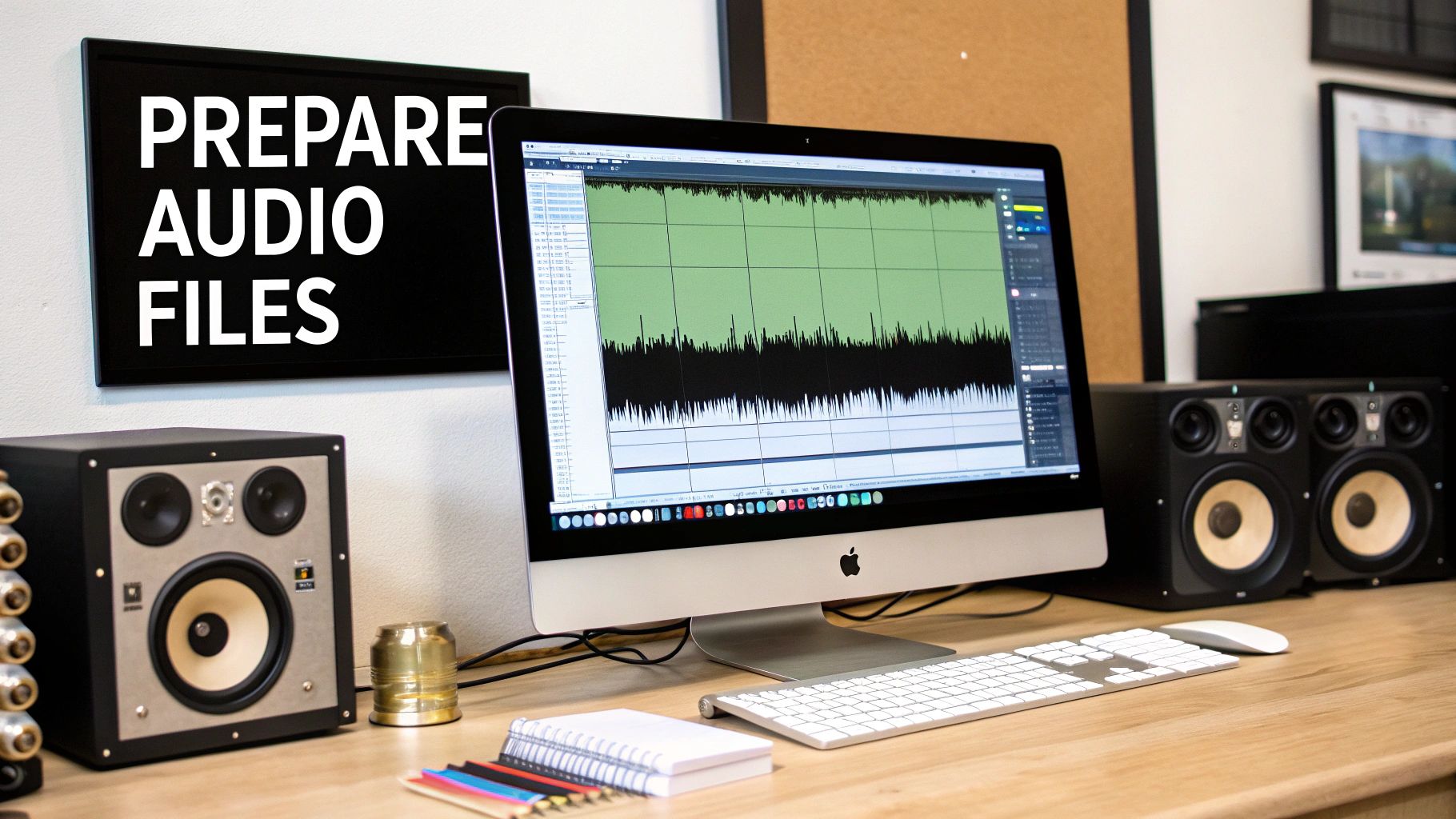
Before you even get close to the upload button, let's talk about what really matters: your assets. The quality of your files is everything. A pixelated album cover or a poorly exported track screams "amateur," and in a sea of new music, that first impression is made in a split second.
Distributors and platforms like Spotify have strict technical requirements for a reason—they're gatekeepers of quality. Nail these specs upfront, and you’ll avoid the headache of submission rejections that can throw your entire release schedule off track. Think of this as the final, critical polish on your masterpiece.
Your Audio File Checklist
When it comes to your audio, precision is the name of the game. That MP3 you've been sharing around? It's not going to fly. Spotify needs uncompressed, high-quality audio to ensure your music sounds its best, and your distributor will reject anything less.
Here’s exactly what you need to deliver from your final master:
- File Format: WAV is the gold standard. It’s a lossless format, meaning it preserves every single detail of your recording.
- Bit Depth: 16-bit is the industry requirement for streaming.
- Sample Rate: 44.1 kHz is the non-negotiable standard for digital music.
Perfecting Your Cover Art
Your cover art is your digital handshake. It’s the visual hook that grabs a listener's attention before they even hear a note. A blurry or improperly formatted image is an instant red flag and a fast track to rejection from your distributor.
Your cover art isn't just a technical requirement; it's a powerful marketing tool. It has to cut through the noise on a crowded screen and tell the world who you are as an artist.
Spotify demands a perfect square, so make sure your final image is exactly 3000 x 3000 pixels. This high resolution ensures it looks sharp everywhere, from a tiny playlist thumbnail to a full-screen display. Save the file as a high-quality JPG or PNG using the RGB color space.
If you want to dig deeper, it’s worth understanding why artists should invest in quality cover art and just how much it can impact listener engagement.
Getting Your Metadata Right So You Actually Get Paid
Think of metadata as your track's digital passport. It’s all the behind-the-scenes data—your song title, artist name, songwriter credits, ISRC code, and release date—that tells Spotify and your distributor exactly who made the track and where the money needs to go.
Nailing this before you upload isn't just a box to check; it's the bedrock of getting paid correctly. A single typo in a songwriter’s name can send royalties into a black hole. Listing the wrong featured artist can get your track mapped to a completely different profile. This stuff matters. It's how every single stream is tracked and tallied.
The Metadata You Can't Afford to Mess Up
When you're in your distributor’s dashboard ready to upload, you'll see a form with a bunch of fields. Don't rush this part. Pour a coffee, slow down, and double-check every single character. Accuracy is everything.
Pay special attention to these key details:
- Song Title: Get this exactly right. No fluff like "(Official Video)" or "(Mastered Version)" in the title itself. That goes elsewhere.
- Artist Name(s): Meticulously list all primary artists, features, and remixers. This ensures everyone shows up properly on Spotify and gets their credit.
- Songwriter & Producer Credits: This is crucial for publishing royalties. Every single person who contributed to the song's creation needs to be listed here.
- ISRC Code: This is the unique identifier for your specific recording—think of it as a fingerprint. Most distributors will generate one for you if you don't have one.
Your metadata is the invisible machinery that drives your music's entire lifecycle on streaming platforms. Get it right, and you get discovered, credited, and paid. Get it wrong, and you become invisible.
This information is what connects your music to Spotify's massive audience of over 696 million monthly active users. With that many people listening, precise data is the only way to make sure your hard work finds its way to the right ears and that every play is accounted for. For more on this, check out the latest Spotify statistics at sqmagazine.co.uk.
Getting paid correctly is just one piece of the puzzle. Smart artists are always looking for new ways to monetize your creative content and build a real career.
If you want to do a deep dive and become a metadata pro, our dedicated guide on how to optimize your music metadata for streaming is the perfect next step.
Alright, you've got your high-quality audio files and all your metadata dialed in. Now comes the exciting part: actually getting your music onto Spotify.
The upload process itself is usually pretty simple through your distributor's dashboard, but there's one small detail that can have a huge impact on your release—the release date.
Here’s a piece of advice I give every artist: set your release date for at least three to four weeks out.
I know it’s tempting to get your music out there as fast as possible, but that buffer is absolutely critical. Why? It gives you a window to pitch your song directly to Spotify's editorial team for playlist consideration. This can only happen after your distributor has delivered the track to Spotify but before it's available to the public. If you rush it, you miss out on one of the most powerful free promotional tools available.
Your Next Move: Claiming Your Spotify for Artists Profile
As soon as your distributor sends you that confirmation email saying your music has been successfully delivered to Spotify, it’s time to act. Don't put this off. Head straight over to artists.spotify.com and claim your profile. This is a non-negotiable step for anyone serious about their music.
Getting verified unlocks your backend dashboard, which is your mission control for managing your presence on the platform. It's the difference between just having music on Spotify and actively building a career there.
Once you're in, you can:
- Customize your artist page: Add your own bio, photos, and social media links. This is your chance to control your image and connect with fans.
- Pitch for playlists: This is where that 3-4 week window comes into play. You’ll submit your unreleased track directly to Spotify's editors from here.
- Access detailed analytics: See exactly who is listening, where they are in the world, and what other artists they listen to.
The entire system hinges on the metadata you prepared earlier. This infographic shows how it all connects behind the scenes.
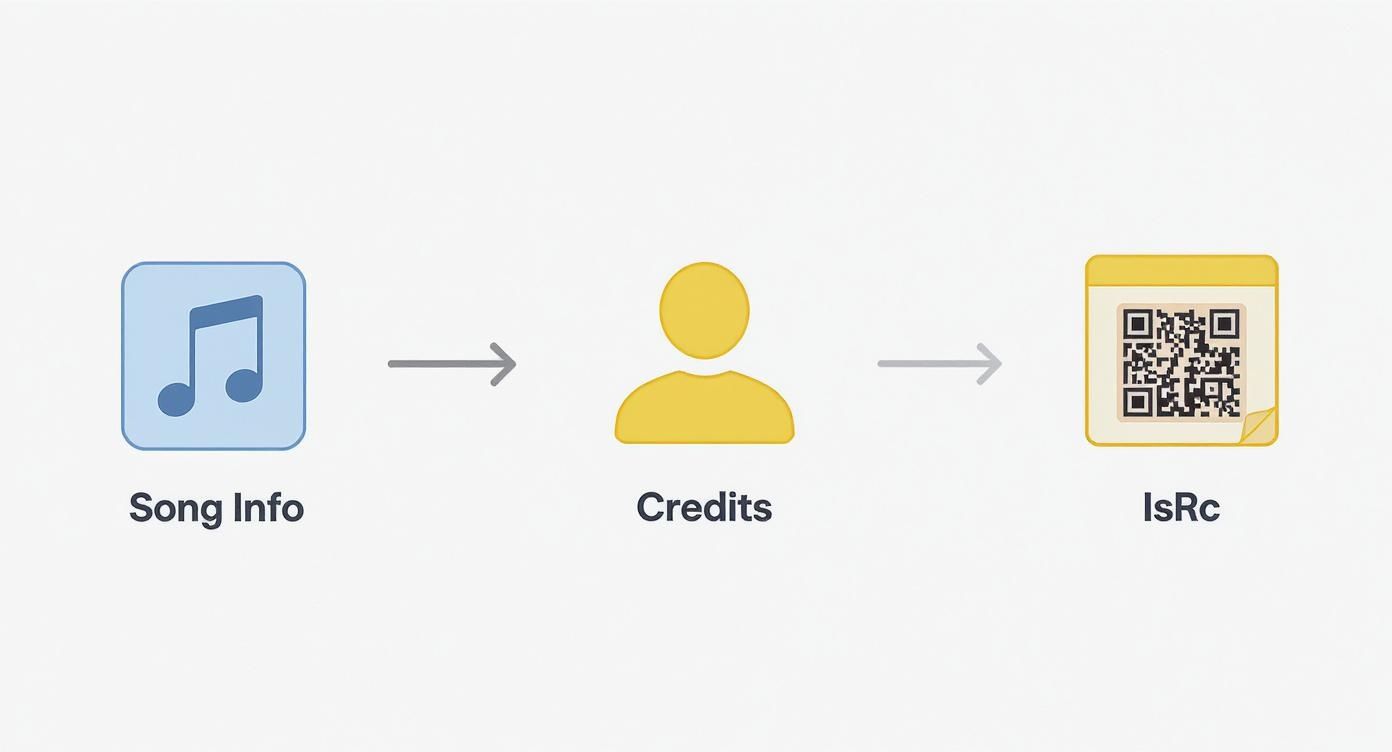
As you can see, getting the song info, credits, and ISRC right from the start is what ensures your track is properly identified, your stats are tracked correctly, and you get paid.
Pro Tip: Think of your Spotify for Artists profile as your central hub for growth. Don't just glance at the numbers. Use that listener data to plan a tour route through cities where you have a strong following or to create social media content that speaks directly to your biggest demographic. It's the most direct feedback loop you'll ever get.
Frequently Asked Questions About Uploading to Spotify
As you get ready to release your music, a few questions almost always pop up, especially if this is your first time. Let's clear up some of the most common ones so you can plan your release without hitting any last-minute snags.
How Long Does It Really Take to Go Live?
This is probably the number one question I get. After you hit "submit" with your distributor, how long until your song is actually on Spotify?
While some distributors can get it done faster, a safe bet is to plan for a 1 to 3 week processing window. Don't cut this close. This buffer isn't just for red tape; it's a crucial part of a smart release strategy.
Pro Tip: Submit your music at least three, or even better, four weeks before your release date. This is the golden rule if you want a shot at Spotify's editorial playlists. It gives the system enough time to process everything, which then allows you to pitch your track through your Spotify for Artists dashboard. Don't skip this.
What's the Deal with Cover Songs?
Yes, you can absolutely release a cover song on Spotify! But there's a non-negotiable first step: you must get the right mechanical licenses. This is how the original songwriters get paid their royalties, and it's a legal must-do.
The good news is that most distributors make this incredibly easy. Services like TuneCore or CD Baby will walk you through purchasing the license for a small fee right inside their upload process. It’s a simple step that keeps everything above board.
Do I Need to Buy My Own ISRC Codes?
I see a lot of confusion around this one. An ISRC (International Standard Recording Code) is basically a unique digital fingerprint for your sound recording. Every single track needs one to track sales and streams accurately.
But here’s the thing: you almost never need to buy them yourself. Your distributor will generate ISRCs for your tracks automatically—and for free—when you're setting up your release. When you see the option to have one assigned, just say yes. It's a critical piece of the puzzle that, thankfully, is handled for you.
Ready to take full control of your music career? With OohYeah, you can sell your tracks, merch, and subscriptions directly to fans with zero commission. Build your brand and your income on a platform designed for artists. Start your journey with OohYeah today.