How to Sell Merchandise Online for Musicians
Learn how to sell merchandise online with this guide for musicians. Discover how to design, produce, and market merch that your fans will love and buy.
September 29, 2025
Music Marketplace Advisor
Buying & SellingSo, you’re ready to turn your music into something your fans can hold, wear, and show off. Fantastic. Selling merchandise is one of the most powerful ways to connect with your audience and build a more sustainable career as an artist.
But before you dive headfirst into designing t-shirts, it’s crucial to take a step back and map out your strategy. A little planning now saves you from major headaches later. This isn't just about picking cool graphics; it's about making smart, foundational choices that fit your budget, your goals, and most importantly, your brand.
Think of it as your business plan for merch. Getting this right from the start is what separates a pop-up hobby from a serious revenue stream.
Key Decisions for Your Online Merch Store
When you're just starting out, a few key decisions will define how your entire merch operation runs. Getting clarity on these points will make everything that follows much, much easier.
Here's a quick look at the fundamental choices you'll need to make.
| Decision Point | Option A | Option B | Key Consideration |
|---|---|---|---|
| Production Model | Print-on-Demand (POD) | Bulk Inventory | Do you prefer zero upfront cost (POD) or higher profit margins (Bulk)? |
| Platform Type | Integrated (e.g., OohYeah) | Standalone (e.g., Shopify) | Do you want an all-in-one music and merch hub or a dedicated store? |
| Brand Focus | Artist-Centric | Sub-Brand | Will merch feature your name directly or a separate brand identity? |
Each path has its own pros and cons, and the "right" answer really depends on where you are in your career and what you want to achieve.
Riding the E-Commerce Wave
Let’s talk numbers for a second. Jumping into merch now means you're tapping into a massive and still-growing market. Global online sales are projected to hit around $7.5 trillion in 2025—that's a huge jump from $5.7 trillion in 2023. This isn't some abstract trend; it's billions of people buying things directly from creators like you on their phones and computers.
This shift gives independent musicians a direct line to their fans, no matter where they are in the world.
A well-planned merch store does more than just sell products—it builds your brand’s ecosystem. Each item acts as a piece of marketing, a conversation starter, and a symbol of your fan community.
Ultimately, your merchandise is a physical extension of your music and your message. The strategy you build today determines how effectively you can share that with the world. Remember, a strong fanbase is the engine that drives merch sales. You can learn more about this in our guide on why building a fanbase is essential for selling music.
And if you’re looking for a little inspiration from other niches, check out how communities have built thriving Bitcoin merch shops—it can spark some great ideas for your own store.
Designing Merch That Your Fans Will Actually Buy

Let's be honest: great merch is so much more than just a logo on a shirt. It’s a tangible piece of your world that deepens the connection with your fans. When they buy your merch, they’re not just supporting you financially; they're showing the world they’re part of your community. The best items feel like a ticket to an exclusive club.
So, think past just slapping your band name on a generic tee. The most successful designs tell a story. Maybe it's a subtle nod to a lyric, a graphic inspired by your album art, or an inside joke that only your core followers will get. That’s how you turn a simple product into a cherished artifact.
Sourcing Your Designs
You don't have to be a graphic design wizard to come up with incredible merch. In fact, some of the best ideas come from collaboration, which frees you up to focus on what you do best: making music. That said, you should always stay close to the creative process.
Here are a few solid ways to bring your merch vision to life:
- DIY Design: If you've got an artistic streak, don't underestimate what you can do. Tools like Canva or Procreate are incredibly powerful for creating print-ready graphics. The biggest upside? You keep 100% creative control and have zero upfront design costs.
- Freelance Designers: Platforms like Fiverr or Upwork are full of talented designers for every budget. The key to success here is a detailed design brief. Give them brand guidelines, a mood board with images you love, and the core concepts you want to see.
- Collaborate with an Artist: This is a fantastic option. Partnering with a visual artist you admire—whether from your local scene or an online community—can lead to some truly unique, co-branded pieces. It's a natural way to cross-promote and reach a whole new audience.
"Develop a product you’re proud of, something you’d personally use or wear. Your own excitement is the most authentic marketing tool you have."
One crucial piece of advice: always get the commercial rights for any design you pay for. A simple contract outlining ownership is a non-negotiable before you even think about printing.
Turning Concepts Into Products
Okay, you've got a killer design. Now what do you put it on? T-shirts and hoodies are classics for a reason, but don't stop there. The most effective merch fits your brand's vibe and gives your fans something genuinely useful or cool.
Think about your genre and your audience. A heavy metal band could kill it with custom guitar picks or embroidered patches. A folk singer might find more success with branded journals or cozy ceramic mugs. It all comes down to authenticity.
What would your fans actually use and love?
Before you sink a bunch of money into a big order, just ask them. Run a poll on Instagram Stories or post a question in your Discord. Involving your fans in the decision not only guarantees you’re making something they want but also builds a ton of hype before you even launch. Figuring out how to sell merchandise online really starts with knowing what to sell, and this fan-first approach is the surest way to create items that fly off the digital shelves.
Choosing the Right Platform to Sell Your Merchandise
Think of your online store as the digital merch table at your biggest show. It's where your fans connect with your brand, and picking the right platform is a make-or-break decision. This isn't just about a "buy now" button; it's about the entire experience you create for your audience. As a musician juggling studio time and tour dates, you need a solution that’s straightforward, works well with your production partners, and doesn't eat into your profits with a bunch of sneaky fees.
The choices can seem endless, but they really boil down to two main paths: platforms built specifically for artists and powerful, general-purpose e-commerce builders. Each route has its own pros and cons, depending on how hands-on you want to be and what your long-term goals are.
All-in-One vs. Standalone Platforms
Integrated platforms like our own OohYeah are designed from the ground up for creators. They let you keep your music, merch, and fan community all in one place. This creates a really fluid experience for your fans—they can listen to your new single and grab the t-shirt for it without ever leaving your ecosystem. It's often the quickest way to get up and running.
On the other hand, standalone platforms like Shopify or Wix are the heavyweights of e-commerce. They offer incredible customization and a huge library of apps for everything from marketing and analytics to complex fulfillment setups. While they take a bit more work to get started, they give you the tools to build a truly massive and scalable merch operation. This decision is similar to another big choice artists face, which you can read about in our guide on how to choose the right platform to sell your music.
The market is massive, with estimates pointing to over 28 million online stores globally by 2025. The big players are Shopify with a 29% market share, Wix holding 20%, and WooCommerce at 17%. Going with a popular, well-supported platform means you'll have plenty of features and a large community to turn to for help.
The image below really drives home the importance of professional product photos, a critical feature for any platform you consider.
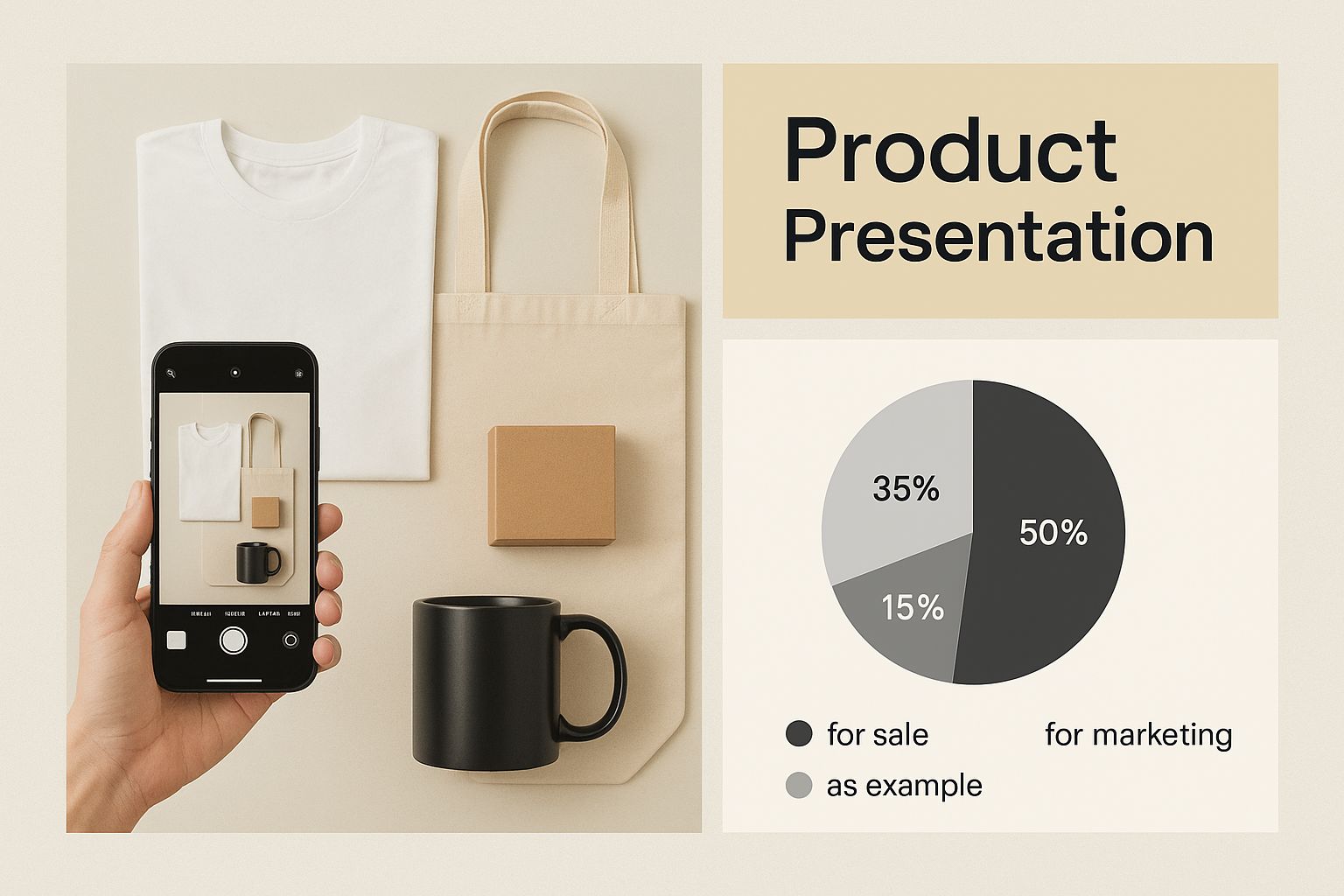
Great visuals are not a luxury; they directly drive sales. Your platform must make it simple to upload and showcase your merch in the best possible light.
Online Store Platform Comparison for Musicians
To help you sort through the options, I've put together a quick comparison of the platforms most artists end up considering. This table breaks down the key factors that will directly impact your wallet and your workflow.
| Platform | Best For | Monthly Cost | Transaction Fees | Print-on-Demand Integration |
|---|---|---|---|---|
| OohYeah | Musicians wanting an all-in-one music and merch hub. | Starts at $15 | 5% + processor fees | Seamless with major POD services |
| Shopify | Artists planning to build a large-scale, custom merch brand. | Starts at $29 | 2.9% + 30¢ (Basic plan) | Excellent; vast app marketplace |
| Wix | Beginners who want an easy drag-and-drop website builder with e-commerce. | E-commerce plans start at $27 | Varies by payment gateway | Good; supports major services |
| Bandcamp | Independent artists focused on digital/physical music with basic merch. | Free to set up | 10-15% (merch) + processor fees | Basic; manual or via third-party |
| Squarespace | Creatives who prioritize beautiful design and aesthetics. | Business plans start at $23 | 3% (Business plan) | Good; official integrations available |
Ultimately, the "best" platform depends entirely on your needs. For a simple, integrated fan experience, an all-in-one solution is fantastic. If you have ambitions to build a merch empire, a powerhouse like Shopify might be the better long-term investment.
Key Factors to Compare
When you’re deep in platform research, it's easy to get sidetracked by flashy features you'll probably never touch. My advice? Zero in on the fundamentals that affect your daily life and your bank account.
- Ease of Use: How fast can you get a new t-shirt design listed for sale? Is the dashboard intuitive, or does it feel like you need a degree in computer science to navigate it? Your platform should be a tool that saves you time, not another full-time job.
- Transaction Fees: Always look past the monthly price tag. Most platforms take a cut of every sale, and that's on top of what payment processors like Stripe or PayPal charge. Those little percentages add up in a big way over time.
- Print-on-Demand Integration: This is non-negotiable if you’re using POD. Make sure the platform has a rock-solid, official integration with your chosen service. A smooth connection automates everything from order placement to shipping, making your life infinitely easier.
- Marketing Tools: Can you easily create discount codes for a flash sale? Does the platform help you recover abandoned carts? These features are what turn casual browsers into loyal buyers and are essential for growing your sales.
Nailing Down Production and Fulfillment

Okay, so your designs are killer and your store is looking sharp. Now for the million-dollar question: how are you actually going to get this merch made and into your fans' hands? This is where the rubber meets the road—the logistics of it all—and you basically have two paths to choose from.
Each route has its own pros and cons, especially when it comes to upfront cash, how much profit you'll make, and how much of your own time you'll have to sink into it. Getting this right is key to building a merch game that actually works for you, both now and down the road.
The Print-on-Demand Route
For a lot of artists, Print-on-Demand (POD) is the perfect entry point. It's pretty straightforward: you work with a company like Printful or Printify, and their system connects directly to your store. When a fan buys a shirt, the order goes straight to them. They print it, pack it up, and ship it out for you.
The beauty of this model is that you never have to buy a single piece of inventory upfront. That makes it a zero-risk way to experiment with new designs. If that experimental tie-dye hoodie doesn't sell, no big deal—you haven't lost a dime.
The trade-off for all that convenience? Your profit margins. They're going to be a lot thinner because you're paying a premium for them to handle everything one item at a time. You also give up some control over the quality of the final product and how long it takes to ship, which are both huge parts of your fan's experience.
The Do-It-Yourself Fulfillment Route
The other option is to go all-in and handle fulfillment yourself. This means you find a printer—maybe a local shop or an online service—and get a bulk run of your merch made. You store it all (hello, boxes in the garage), pack the orders as they come in, and handle all the shipping yourself.
This path definitely requires more of an investment from the jump, both in cash and in physical space to hold everything. You’re the one in charge of sourcing good-quality blanks, double-checking the prints, and making those trips to the post office.
But here's the massive upside: profitability. When you buy in bulk, your cost for each item drops way down, which means you keep a much bigger piece of the pie from every sale. Plus, you have total control over the quality. You can touch the fabric, inspect every print, and make sure every package you send out is perfect.
Choosing your fulfillment method is a strategic decision. POD is great for testing the waters with minimal financial risk. Self-fulfillment is where you maximize your profits and control once you know what sells.
A lot of artists end up doing a bit of both. You could start with POD to figure out which designs are your top sellers. Once you have a clear winner, you can confidently invest in a bulk order of that design to get those better margins. It’s a smart way to balance the risk and reward, letting your merch operation grow right alongside your music. As you get the hang of selling merchandise online, you'll figure out the workflow that truly fits your style and scale.
Marketing Your Merch and Driving Consistent Sales
Look, having killer merch is a great start, but it's only half the job. If your fans don't know it exists, it’s just going to sit there. This is where smart, authentic promotion comes into play, turning those cool designs into a real income stream. The trick is to use the channels you already have to connect with the community you've already built.
Effective marketing for artists isn't about being a pushy salesperson. It's about storytelling. You need to weave your products into your world so it feels natural. Think about it: every social media post, every email, every live show is a chance to show off your brand. You're not just selling a hoodie; you're offering fans a tangible piece of your art and your journey.
Leverage Your Existing Channels
Your most powerful marketing tools are the ones that give you a direct line to your fans. These are the people who already get what you're doing, which makes them the most likely to buy your merch. Stop chasing new followers for a second and focus on the ones you have.
- Social Media Storytelling: Use Instagram and TikTok to show your merch in the wild. Post a picture of yourself wearing the new tee in the studio. Share a fan's photo of your sticker on their guitar case. This feels like a shared experience, not a cold advertisement.
- Your Email List: These are your die-hards. Your email subscribers should be the first to know about new drops. Offer them an exclusive discount or create a special bundle just for them. It’s a simple way to reward their loyalty and spark immediate sales.
- The Stage: A live show is the ultimate marketing opportunity. Wear your stuff on stage. Between songs, give a quick, genuine shout-out to your merch table or point people to your online store. It works.
Using all these channels means you're meeting your fans where they are. And while many marketing basics are universal, promoting physical goods is a bit different from promoting a single. For a deeper look at that, check out our guide on how to market your music as an independent artist.
Create Buzz with Strategic Launches
Don’t just quietly add new items to your store. Turn every launch into an event. Building a little anticipation can make a massive difference in how well that first week of sales goes.
Scarcity and exclusivity are powerful. A limited-edition run or a short pre-order window gives fans a reason to act now instead of "later," creating an urgency that gets results.
For instance, you could run a pre-sale for a new vinyl release that comes with a limited-run t-shirt. This not only helps you fund the pressing upfront but also makes your biggest supporters feel like they snagged something special. Bundling items is another pro move—think a digital album download with a physical hat—to bump up the average order value. To really get a handle on what’s working, it’s essential to learn how to measure advertising effectiveness.
Focusing on these direct-to-fan sales puts you right in the middle of a massive, growing trend. To put it in perspective, retail e-commerce sales in the U.S. hit about $300.2 billion in the first quarter of 2025 alone. That’s a huge indicator that people are comfortable and actively shopping online. You can dig into more current retail trends from the U.S. Census Bureau if you're curious.
Your Top Merch Questions, Answered
Once you decide to sell merch online, the practical questions start popping up pretty fast. It’s one thing to have a great t-shirt design, but it’s another to figure out pricing, legal stuff, and how you’ll actually get that shirt into a fan’s hands. Let's walk through some of the most common hurdles I see artists face and get you some clear answers.
How Much Should I Actually Charge for This Stuff?
Pricing is always a tricky balance. You want to make it affordable for your fans, but you also need to make a profit. A great starting point that I always recommend is the "3x rule".
Here’s how it works: first, add up your total cost for a single item. This includes the blank shirt, the printing, and any platform fees. Let's say a t-shirt costs you $10 all-in. A good retail price would be around $30. This simple formula ensures you've covered your costs, have some cash left for marketing, and actually make a decent profit.
Of course, this isn't a hard and fast rule. Do a little digging and see what other artists in your genre, at a similar stage in their career, are charging. And don't be afraid to price premium items higher. A high-quality embroidered hoodie or a limited-run vinyl record absolutely justifies a higher price tag.
What Legal Stuff Do I Need to Worry About?
You don't need to be a lawyer, but you do need to cover a few bases to protect yourself. The biggest one? Make sure you own the commercial rights to any art you're selling. If you hired a designer, your agreement needs to be crystal clear that you own the final design and can use it for commercial purposes.
Next, get some simple policies up on your store page. It sounds boring, but it's a lifesaver. You'll want pages for:
- Returns and Exchanges: What's the plan if something arrives damaged?
- Shipping Times: Be upfront about how long it will take to get orders out the door.
- Privacy Policy: Just a simple statement on how you handle customer info.
And don't forget, this is income. From your very first sale, keep clean records of all your expenses and revenue. You’ll thank yourself when tax season rolls around.
Having clear, accessible policies for returns, shipping, and privacy isn't just a legal formality—it builds trust and shows your fans you run a professional operation. This small step can significantly reduce customer service headaches down the line.
Should I Use Print-on-Demand or Buy a Bunch of Shirts Myself?
This really boils down to your budget and how much risk you're comfortable with.
Print-on-demand (POD) is a game-changer for artists who are just starting out. It requires zero upfront investment. An item is only made after a fan buys it, which means you'll never get stuck with a garage full of unsold t-shirts in the wrong size. The tradeoff is that your profit margin on each item is quite a bit lower.
Buying inventory in bulk is the more traditional route. It gives you much better profit margins and total control over the quality of your products. The catch? It requires a big chunk of cash upfront and you’re the one who has to store it, pack it, and ship it.
A lot of musicians I know use a hybrid model that works really well. They start with POD to test out different designs and see what sells. Once they have a clear winner, they'll invest in a bulk order of that one best-seller to maximize their profit on it.
Ready to bring your merch vision to life on a platform built for musicians? OohYeah provides the tools you need to sell directly to your fans, all in one place. Start building your store today!