How to Sell Concert tickets Online Like a Pro
Discover how to sell concert tickets online with our expert guide. Learn proven strategies for pricing, platforms, and promotion to ensure a sold-out show.
August 25, 2025
Music Marketplace Advisor
Buying & SellingSelling concert tickets online isn't just about putting a link up and hoping for the best. To do it right, you need to think through four key areas: planning the event with a clear strategy, picking the right digital platform to handle sales, pricing your tickets smartly, and running a marketing campaign that actually reaches your fans. Get these pieces right, and you're not just selling tickets—you're building momentum for a night to remember.
Laying the Groundwork for a Sold-Out Show
Long before you even think about putting tickets on sale, the most important work happens behind the scenes. This is where you move from just planning a gig to strategically engineering a sell-out. It’s all about knowing your market, the artist's real pull, and what your fans are truly looking for.
Know Your Audience, Pick Your Venue
First things first: who are you selling to? Is your audience made up of die-hard followers who will jump at a chance for a VIP meet-and-greet, or are they more casual fans looking for a fun, affordable night out? The answer to that question will shape everything from the tone of your social media posts to the price on the ticket. Dig into streaming data, check social media comments, and look at past sales to get a real picture of your fanbase.
This isn't just a "nice-to-have"; it's foundational. For a deeper look at this, check out our guide on why building a fanbase is essential for selling music.
Once you have a solid profile of your audience, choosing the venue gets a whole lot easier. You're aiming for that sweet spot where demand feels high. Putting an artist who pulls around 450 people into a 500-capacity club creates an incredible, exclusive vibe. Put that same artist in a 1,000-seat theater, and even a great turnout can feel a bit empty. It’s about perception as much as it is about numbers.
Set Goals You Can Actually Measure
Forget vague hopes like "selling out." A real strategy is built on concrete, data-driven goals. This gives you a clear roadmap and lets you know if you need to course-correct along the way.
Here’s what that might look like in practice:
- Sell 30% of all tickets during the first week of a fan-club presale.
- Hit 75% of capacity sold two full weeks before the show.
- Keep the average ticket price above a certain dollar amount to hit your revenue goal.
These aren't just random numbers; they're your benchmarks for success. They tell you when to push harder on marketing or maybe when to ease off. The live music world is always shifting. We’ve seen some fascinating trends lately—Pollstar's mid-year analysis found that while the average number of tickets sold per show shot up by 32.1%, the average ticket price actually dipped a bit. It’s a good reminder that volume is critical, especially when fans are watching their wallets.
A sold-out show is never an accident. It's what happens when you perfectly align the artist's draw, the venue's size, and what your audience is willing to spend—long before anyone clicks "buy."
Nailing this alignment from the start helps you sidestep common mistakes and sets your event up for financial success right out of the gate.
Choosing the Right Online Ticketing Platform
Think of your ticketing platform as the digital front door to your show. It's the first real interaction a fan has with your event, so it needs to be more than just a place to process payments. This decision is crucial—it shapes the fan's entire buying experience, affects your bottom line, and determines the quality of data you can collect.
You've got plenty of options, from industry giants like Ticketmaster to flexible DIY platforms like Eventbrite and creator-centric systems like OohYeah. It’s easy to get bogged down comparing feature lists, but what really matters is finding a partner that truly supports your specific goals.
Look Beyond the Transaction Fees
It's tempting to just pick the platform with the lowest fees, but that's often a shortsighted move. A platform that charges 0.5% less might save you a bit upfront, but if its mobile checkout is a nightmare, you could lose thousands in sales from frustrated fans who give up. The fan experience is where the real value lies.
Here’s what I always tell people to focus on:
- A Killer Mobile Experience: Is the buying process smooth and intuitive on a phone? In this day and age, fans should be able to go from social media ad to ticket confirmation in just a few taps.
- Modern Payment Options: Does it accept more than just credit cards? Fans, especially younger ones, expect options like Buy Now Pay Later (BNPL) for bigger purchases. They see concerts as a 'necessary splurge,' and flexible payments make that splurge possible. With Live Nation selling over 130 million tickets globally in just seven months—a 6% year-over-year jump—it's clear the demand is there. You have to make it easy for people to buy. You can dig deeper into current concertgoing trends to really get inside the modern fan's head.
- Real, Actionable Data: A simple sales count isn't enough. Your dashboard should show you how you're selling tickets. Where are buyers coming from? What time of day do they purchase? This is the information that helps you make smarter marketing decisions.
This graphic really illustrates how your platform's pricing tools can help you execute different strategies to appeal to various fan segments.
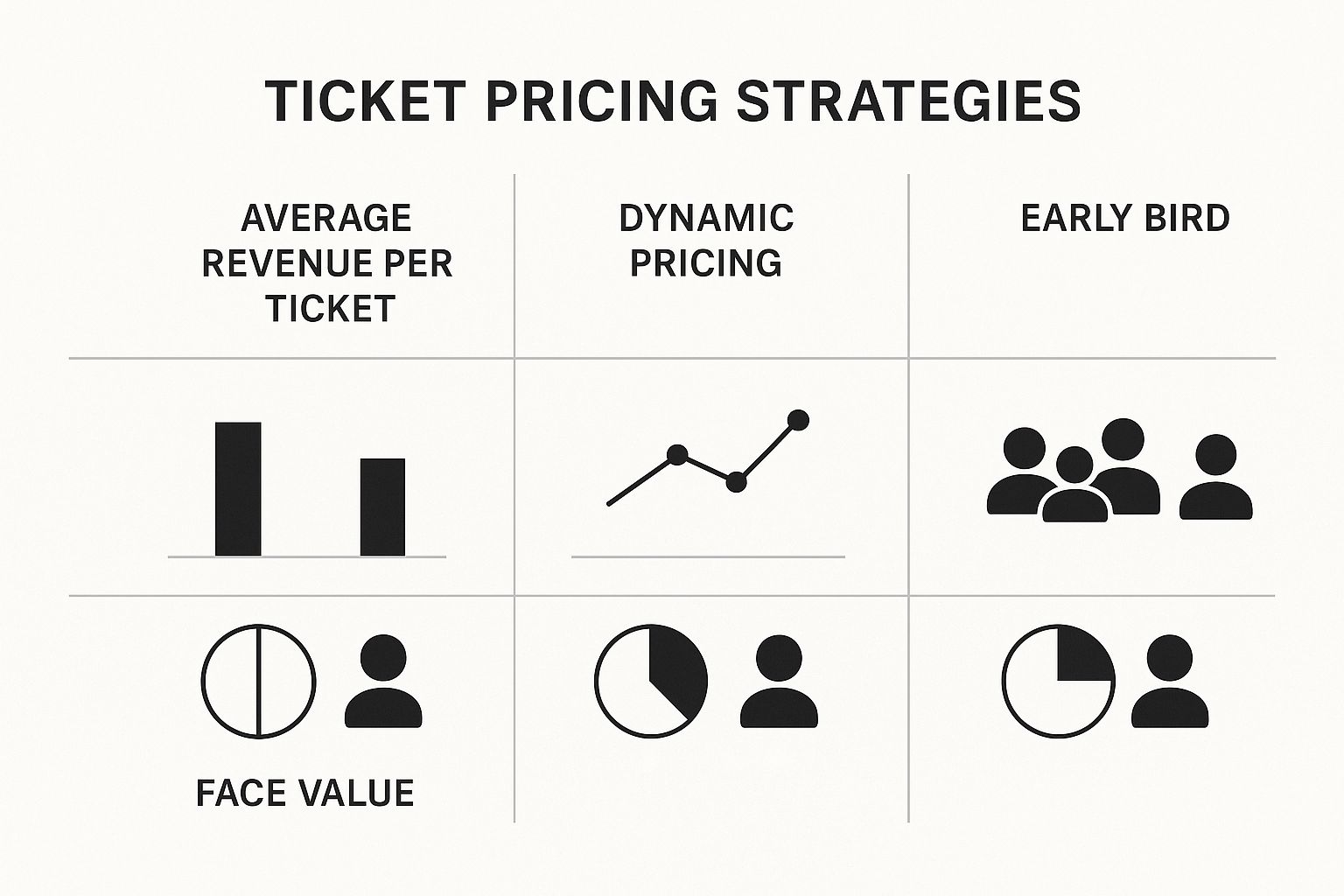
As you can see, dynamic pricing is great for capturing maximum value from your most dedicated fans, but a well-timed early bird discount is perfect for kicking off sales and generating that crucial initial buzz.
Online Ticketing Platform Feature Comparison
Choosing the right platform can feel overwhelming. To simplify, here's a quick comparison of some key features you should consider, looking at how OohYeah stacks up against other popular choices.
| Feature | OohYeah | Ticketmaster | Eventbrite |
|---|---|---|---|
| Artist-Focused Tools | High (Merch/music bundling, direct fan messaging) | Low (Primarily event-focused) | Medium (Basic event management tools) |
| Fee Structure | Low, transparent flat-rate + percentage | High, complex with multiple service fees | Mid-range, tiered based on package |
| Marketing Reach | Emerging (Relies on artist's own marketing) | Massive (Extensive built-in audience) | Broad (Good for general public events) |
| Data & Analytics | Detailed fan-level insights | High-level sales data | Standard event analytics |
| Payout Schedule | Fast, often within days of sale | Slower, typically after the event occurs | Flexible, options for daily or weekly payouts |
Ultimately, the "best" platform depends entirely on your needs. For an independent artist, OohYeah's direct-to-fan tools might be a game-changer, while a major festival might require the sheer scale of Ticketmaster.
Matching the Platform to Your Event Scale
The right platform for an indie band in a 200-capacity club is completely different from what a multi-day festival needs. Your event's scale and audience should guide your choice.
For instance, that indie band would likely thrive on a platform like OohYeah. The artist-friendly fees mean more money stays in their pocket, and the integrated tools let them do cool things like bundle a new digital single with every ticket purchase—all in one place. That's a powerful connection to build with your fanbase.
A great ticketing platform doesn't just process payments; it becomes an extension of your marketing team. It should help you understand your audience, create urgency, and ultimately, build a stronger connection with every fan.
On the other hand, a massive festival promoter might see Ticketmaster's higher fees as a necessary cost of doing business. The access to their huge, built-in audience and the confidence that their servers won't crash during a high-demand on-sale can be worth the price. One last pro tip: always check the payout schedule. Getting your ticket revenue quickly is often essential for paying artist deposits and other upfront costs.
Developing a Smart Ticket Pricing Strategy
Pricing your concert tickets feels like walking a tightrope, doesn't it? Go too high, and you might be playing to a half-empty room. But price too low, and you're leaving money on the table—cash that could be fueling your next album or tour. The secret is getting beyond a simple flat rate and building a flexible strategy that truly connects with your audience and boosts your bottom line.
This is where you move from just selling tickets to mastering the art of the sale. It’s not about just covering your costs; it’s about understanding what that ticket is worth to a fan. The global live music ticket market is enormous, on track to hit around $34 billion. Just look at the mega-tours for proof. Beyoncé's Renaissance tour pulled in an incredible $407.6 million from nearly 1.6 million tickets sold, showing just how powerful smart pricing can be. You can get a clearer view by checking out these live music ticket sales trends.
Implement Tiered Ticketing to Boost Revenue
One of the most effective tools in my playbook has always been tiered ticketing. Instead of a one-size-fits-all price, you create different levels that offer different kinds of value. This simple move allows you to cater to everyone, from the casual fan who just wants to be in the room to the die-hard who wants an unforgettable experience.
Here are the tiers I see work best time and time again:
- Early Bird: Release a limited batch of cheaper tickets right at the start. It’s a great way to reward your most dedicated fans and, just as importantly, it kickstarts sales. That initial spike builds momentum and creates a sense of urgency.
- General Admission (GA): This is your bread and butter—the standard ticket price that most people will buy once the early bird special is gone.
- VIP Packages: This is where you get creative. A VIP ticket isn't just about entry; it's an entire experience. We’re talking front-row seats, access to the soundcheck, exclusive merch, or even a quick meet-and-greet.
For an artist with a solid fanbase, a VIP package that includes something as simple as a signed poster and a photo op can easily sell for double or triple the GA price. That can dramatically increase your average revenue per fan. If you want to dig deeper into this, we've put together a full guide on what is the best pricing strategy for selling music.
Use Presales and Bundles Strategically
Think of a presale as your secret weapon for testing the waters. Before you open sales to the general public, offer tickets to a smaller, dedicated group—like your mailing list subscribers or fan club members. This generates immediate buzz. More than that, the data you get from that first wave of sales is gold. It tells you if your pricing is hitting the mark or if you need to make a few tweaks.
A ticket is so much more than just a way to get into a venue; it's a product you can build on. When you bundle it with other items, you turn a basic transaction into an irresistible offer.
Don't just sell a ticket—sell a complete package. With a platform like OohYeah, it's easy to bundle things like digital downloads, vinyl pre-orders, or exclusive t-shirts right into the ticket purchase. Imagine offering a bundle that includes a ticket and an unreleased demo track. You're not just increasing the value of the sale; you're giving fans a deeper connection to your work. It makes the whole thing feel more special than just another concert ticket.
Executing a Powerful Concert Marketing Plan
https://www.youtube.com/embed/1E_SP6b0-80
A brilliant show and a smart pricing strategy are only two-thirds of the puzzle. You can have the best gig lined up, but without a solid marketing plan, you're just playing to an empty room. The final piece is turning passive interest into active ticket sales, and that means building a campaign that creates genuine excitement around your event.
You need a clear roadmap that outlines every promotional touchpoint from the announcement to the day of the show. A huge part of selling concert tickets online is knowing how to create a digital marketing strategy that actually gets people to click "buy." This structure is what keeps your efforts consistent and, more importantly, effective.
Build Hype with Authentic Content
Let's be real: today's fans connect with authenticity, not slick, corporate ads. Platforms like Instagram and TikTok are your best friends for showing the human side of the event. You have to go beyond the tired "Tickets on sale now!" posts and give people a real reason to feel invested.
Here are a few content ideas that I've seen work time and time again:
- Behind-the-scenes gold: Share short, raw clips from rehearsal, soundcheck, or even the artist just talking about the setlist. This kind of content feels exclusive and pulls back the curtain.
- Fan-focused campaigns: Run a contest asking fans to share their favorite song or a memory of the artist. It builds a real sense of community and gives you a ton of user-generated content to reshare.
- Simple countdowns: Use Instagram Stories to create visual countdowns that build anticipation for the on-sale date or the show itself. It’s simple, but it creates urgency.
This approach turns your concert from just another date on the calendar into a story that people want to be a part of.
Drive Action with Targeted Outreach
While social media is great for building buzz, email and paid advertising are your closers. They're the tools that drive direct sales. Sending a message to your dedicated email list is one of the most powerful things you can do. Make it feel personal—use their name, and always, always include a clear, direct call-to-action.
Offering an exclusive presale code to your email list is a classic for a reason. It rewards your most loyal fans and ensures you get a strong start to your sales campaign. For a deeper dive into building these kinds of connections, check out our guide on how to market your music as an independent artist.
Paid digital ads, especially on platforms like Facebook, let you get laser-focused with your targeting. You can reach users based on their listening habits, their location, and even their engagement with similar artists. It’s incredibly powerful.
This screenshot from the Facebook Ads Manager shows just how granular you can get, targeting audiences by detailed demographics and interests. It’s how you make sure your ad spend isn't wasted.
By zeroing in on fans of similar genres or those living within a 20-mile radius of the venue, you ensure your message hits the people most likely to buy a ticket.
Your marketing shouldn't feel like an interruption. It should feel like an invitation to be part of something special. When you provide value and create genuine excitement, selling tickets becomes the natural next step for your audience.
Finally, don't sleep on local partnerships. Team up with local music bloggers, radio stations, or influencers who can spread the word to their built-in audiences. Trust me, a single share from a trusted local voice can often do more than a whole week's worth of paid ads.
Managing Your Sale and Preparing for Show Day

Alright, your tickets are officially on sale. This is where the real work begins, shifting from planning to actively managing the momentum you've built. Think of your ticketing dashboard as your mission control—it gives you a real-time pulse on how sales are tracking.
Keep a close eye on your sales velocity. It's one thing to have a huge first day, but what about the week after? If you see things slowing down, that’s your cue to jump back in. A targeted email blast or a fresh social media campaign can reignite interest. On the flip side, if tickets are flying faster than expected, don’t keep it a secret. A well-timed 'low ticket warning' creates a sense of urgency that can push anyone on the fence to grab their spot.
Mastering Customer Service and Communication
As the concert gets closer, you'll naturally become the go-to person for your fans. Being ready for their questions is not just about being helpful; it’s about professionalism and making sure they have a great experience from start to finish.
Have clear, simple answers ready for the usual questions:
- Ticket Transfers: What’s the official, secure way for a fan to send a ticket to a friend? Map out the exact steps on your ticketing platform.
- Event Details: When do doors open? Can I bring a bag? A dedicated FAQ page or a pre-written email response will save you a ton of time.
- Last-Minute Problems: What if a QR code isn't scanning? Make sure attendees know who to contact, whether it's a support email or a specific person at the door.
Good customer service can turn a frustrating moment into a positive one. I always recommend sending a pre-show email about 48 hours before the event. Pack it with all the essential info—door times, venue rules, parking tips. This single step cuts down on day-of-show chaos and lets everyone focus on being excited for the music.
The hours leading up to doors opening are the final test of your planning. A well-organized entry process doesn't just prevent long lines; it sets a positive, professional tone for the entire evening.
Nailing the Day-Of-Show Execution
Everything you've planned comes down to show day. The mission is simple: get everyone inside smoothly and without a headache. Before a single fan arrives, make sure your team is completely dialed in.
First, test all your scanning equipment. Whether you're using professional scanners or the OohYeah app on a phone, do several test runs. You need to know they’re fast and reliable.
Next, have a quick huddle with your door staff. They need to know the protocol for common hiccups, like a smudged QR code or a name that doesn't quite match an ID, so they can solve it without creating a bottleneck.
Finally, think about the physical flow of the entrance. Use signs to direct people. You might want separate lines for advance tickets and at-the-door purchases. A smooth entry is the first impression you make, and getting it right kicks off a memorable night on the perfect note.
Questions We Hear All the Time
When you're diving into selling concert tickets online, a few questions always pop up. Getting these right from the start can save you a lot of headaches down the road. Let's walk through the most common ones we get asked.
When Is the Best Time to Put Concert Tickets on Sale?
Timing is everything. You want to hit that perfect window where you have enough time to build momentum, but not so much time that the initial excitement fizzles out.
For a typical mid-sized venue—say, in the 500-1500 capacity range—I've found that putting tickets on sale 8-12 weeks before the show is the sweet spot. It gives your marketing campaigns room to breathe and connect with fans.
If you're planning something bigger, like an arena show or a festival, you need a much longer runway. Think 4-6 months in advance. Whatever the size, a Friday morning launch (around 10 AM local time) is almost always a winning strategy. People are heading into the weekend, making plans, and are just more likely to pull the trigger on a purchase.
How Do I Stop Scalpers from Buying All the Tickets?
Ah, the scalper problem. It's a constant battle, but you have more power than you think. The key is to lean into the security features your ticketing platform offers. At a minimum, you should enable CAPTCHA verification to weed out bots and set a firm ticket limit per customer—four or six is standard practice.
My favorite tactic? Run a presale for your verified fan club or email subscribers. This rewards your most dedicated supporters and puts up a major barrier for scalpers trying to scoop up all the good seats early on.
Some platforms, like OohYeah, are also introducing features like non-transferable mobile tickets tied to a fan's ID, which is a fantastic way to keep tickets in the hands of real fans. Another pro-tip is to release tickets in staggered waves, which can throw a wrench in the plans of bots trying to buy up everything in one go.
What Should I Do If My Ticket Sales Are Slow?
First off, don't panic. Slow sales are usually a marketing problem, not a sign that nobody wants to come to your show. Your first move should be to dig into your platform's analytics. Where are your current buyers coming from? What channels are underperforming?
Once you have some data, here are a few things you can try to get things moving again:
- Rethink your ad targeting. Get super specific with a social media campaign aimed at fans of similar artists, but only within a certain radius of the venue.
- Create an irresistible offer. A limited-time "2-for-1" deal can work wonders. It encourages people to bring friends and instantly doubles your attendance for that sale.
- Team up with a local influencer. A simple ticket giveaway can create a ton of fresh buzz and expose your event to a whole new, engaged audience.
And never underestimate the power of urgency. Sometimes, a well-timed "low ticket warning" email or social post is all it takes to trigger that last-minute rush.
Ready to take control of your sales and connect directly with your fans? OohYeah provides all the tools you need to sell tickets, merch, and music in one place—with zero commission.