How to Save a Life Cover: A Guide for Indie Artists
Learn how to create, license, and release a 'How to Save a Life' cover. A complete guide for indie artists on arrangement, distribution, and promotion.
June 13, 2026
Music Marketplace Advisor
Buying & SellingYou've probably had the same thought a lot of indie artists have. You sit at the piano or pick up the guitar, play the opening chords, and suddenly the room changes. The song still lands. The melody is familiar, the lyric still cuts through, and you can already hear what your version could become.
That's the opportunity and the trap.
A How to Save a Life cover can pull listeners in fast because they already know the song. But that same familiarity makes lazy choices obvious. If you copy the original too closely, people hear karaoke. If you change too much without a clear point of view, people hear a mismatch. The artists who get this right treat the song like a full release project, not a casual upload. They make arrangement choices that support a theme, they record it with intention, they handle licensing before launch, and they promote the story behind the version instead of just posting another clip with a famous chorus.
Your Guide to Covering an Iconic Song
The appeal of this song isn't hard to understand. “How to Save a Life” was released by The Fray on March 26, 2006, and it has stayed active in culture through cover versions across major platforms, which is part of why it remains attractive to artists looking for recognizable material with built-in familiarity, as noted in the song's release history and ongoing cultural presence.
That familiarity gives you a head start. It doesn't give you a finished concept.
Most first-time cover releases fail for one of three reasons. The artist hasn't decided what the song means in their hands. The production copies the original arrangement without matching its emotional pacing. Or the release plan gets treated as admin work instead of part of the creative process.
Practical rule: If you can't explain in one sentence why your version exists, you're not ready to record it.
A strong cover starts with an angle. Maybe your version leans into grief. Maybe it reframes the lyric as a conversation about mental health. Maybe you strip it down until the vocal carries all the tension. Those choices affect everything else, including tempo, key, instrumentation, artwork, video ideas, and where the song belongs editorially after release.
Think of this song as two projects running in parallel:
- The creative project involves arrangement, vocal interpretation, tracking, and mix decisions.
- The release project involves licensing, metadata, distribution, assets, and promotion.
- The audience project asks who this version is for, and why they'll care beyond recognition.
When artists separate those three, the release feels disjointed. When they line them up, the cover feels intentional. That's what gives an iconic song a second life instead of a polite replay.
Reimagining the Arrangement Creatively
A cover like this usually goes wrong in the first rehearsal. The band starts from memory, copies the pulse of the original, adds a few modern sounds, and ends up with a version that is competent but anonymous. If you want this release to travel, the arrangement needs a point of view before anyone hits record.
“How to Save a Life” gives you that opening because the writing is built like a scene. The verses move through a conversation, line by line, with enough space for a singer to shift power, blame, regret, or tenderness inside the same melody. The song's storytelling structure is part of why it stays adaptable, as discussed in this breakdown of the song's writing and story.

Start with the emotional frame
Before choosing sounds, decide what the listener is supposed to feel from your version that they do not get from the original.
That answer has to be specific. “Sad but bigger” is not specific. “A private conversation after the funeral.” “An exhausted mental health plea.” “A recovery song told from the person who stayed.” Those are usable concepts. Once the theme is clear, the arrangement choices stop fighting each other.
The original builds tension through restraint. If you push for a huge chorus too early, you remove the slow-burn ache that makes the lyric work. I usually tell artists to mark where the song should first feel exposed, where it should feel controlled, and where it should finally break open. That map will shape tempo, instrumentation, vocal layering, and dynamics better than any preset pack will.
A few directions can work well:
- Sparse acoustic version works when the vocal can carry detail up close. Pick noise, breaths, and silence become part of the record.
- Ambient electronic version works when the rhythm still feels human. The track needs movement and fragility, not a generic wash of pads.
- Soul or R&B reinterpretation works when the pocket changes the meaning of the phrasing. If the groove is there just to make it sound current, people hear that immediately.
- Piano-led chamber version works when the arrangement earns its lift. Save stacked harmonies or strings for the sections that need widening.
Treat the verses like scenes
This song rewards singers who act the lyric instead of delivering it in tune.
One of the strongest tricks here is contrast inside the lead vocal. Keep one line contained. Let the next one crack a little. Double a phrase only when the lyric needs pressure. Leave a response line dry and close, then open the following line with space around it. You are staging a conversation, even if only one person is singing.
Do not show your full hand in verse one.
You can also change the harmonic feel without losing the identity of the song. The chord progression should stay recognizable, but the voicings can do a lot of work. Suspended tones, open intervals, and lighter left-hand movement on piano create fragility. On guitar, partial shapes usually beat full strums for this song. Full chords all the way through make the lyric feel boxed in.
Fresh framing beats pure nostalgia
A lot of artists reach for this song because people know it. Recognition helps, but recognition is not the concept. Listener response is not just to the title. It is to the frame around the title.
The versions that stick usually connect the song to a present-tense theme, not just mid-2000s memory. Mental health, grief, intervention, relapse, forgiveness, survivor's guilt, recovery. Pick one lane and arrange for that lane. If your visual plan, your vocal choices, and your production all point at the same theme, the release feels intentional instead of opportunistic.
A quick filter helps here:
| Question | Weak answer | Strong answer |
|---|---|---|
| Why this song? | “People know it.” | “The lyric matches the story I'm telling right now.” |
| Why this version? | “It sounds newer.” | “The stripped-back arrangement turns the conversation inward.” |
| Why now? | “I wanted to put out a cover.” | “My audience is already responding to this theme, and this song gives it a clear emotional shape.” |
If the only idea is “make it sadder,” stop and keep writing notes. The song is already sad. Your job is to choose the exact shade. Regret feels different from grief. Grief feels different from guilt. Hope after damage feels different from simple recovery. Once you know which one you are making, the arrangement gets much easier to build, and the legal, release, and promo choices later on will line up with it instead of feeling bolted on.
Recording and Producing a Polished Track
Once the arrangement is locked, recording becomes simpler. Not easier, but clearer. You're no longer asking what the song should be. You're making technical choices that support the answer.
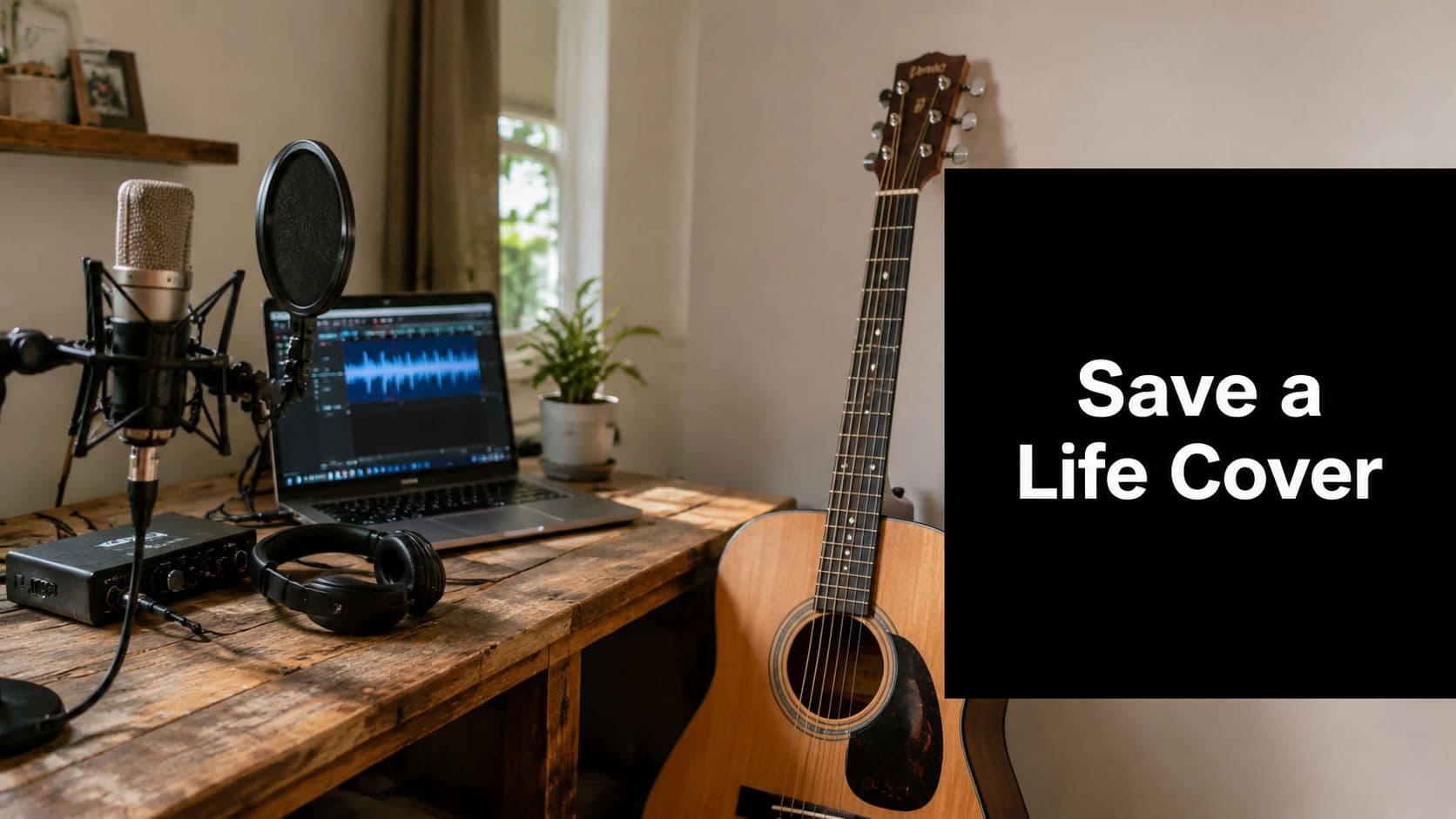
Home studios can absolutely produce a release-ready cover if the session stays disciplined. The biggest mistakes aren't usually expensive gear problems. They're performance and arrangement problems hidden by overproduction.
Capture the vocal before you decorate it
This song lives or dies on vocal honesty. A technically perfect lead with no vulnerability won't land. A slightly rough lead with believable phrasing often will.
Track vocals in sections, not necessarily top to bottom. Get two or three full emotional takes, then punch lines that need clarity. If you're using a condenser mic, keep your position consistent and control the room as much as you can. A dry recording gives you more options later. A boxy room sound stays with you all the way to mastering.
A practical vocal chain for this kind of song usually stays simple:
- Clean capture first with a stable input level.
- Light compression on the way in or after recording if the dynamic swings are too wide.
- Subtract problem frequencies before boosting presence.
- Use reverb and delay as storytelling tools, not as cover for a weak take.
If the first verse is intimate, don't drown it in space. Keep the lead close. Let width arrive later.
A polished track doesn't sound processed. It sounds controlled.
Build the arrangement in layers, not piles
This song wants a gradual emotional rise. That doesn't mean adding a new instrument every few bars. It means managing density.
If you start with piano or acoustic guitar, ask what each added layer changes. Does the pad widen the scene? Does the harmony vocal increase tension? Does percussion move the pulse forward? If the answer is “it makes it bigger,” that's too vague.
Try a producer's checkpoint table before you commit to layers:
| Element | Keep it if it adds | Remove it if it creates |
|---|---|---|
| Piano double | weight in the chorus | clutter in the midrange |
| Ambient pad | emotional width | washed-out articulation |
| Harmony stack | lift on selected lines | constant sweetness |
| Kick or low percussion | forward motion | forced drama |
| String texture | narrative expansion | melodrama |
Mute often. If the chorus still works after muting a track, that track may be ornamental.
Mix for contrast
A good mix for a How to Save a Life cover usually relies more on contrast than loudness. Dry versus wet. Narrow versus wide. Near versus far. Thin verse versus full chorus.
Some practical choices that usually help:
- Automate vocal level phrase by phrase instead of crushing everything with one aggressive compressor.
- Save the widest stereo image for later sections so the arrangement can grow naturally.
- Use delay throws on selected words if you want emphasis without clouding the whole vocal.
- Control low mids early because piano, guitar, pads, and lower vocal harmonies can pile up fast.
Master for translation, not vanity
The final master should travel well across headphones, laptop speakers, car playback, and streaming apps. Don't chase a hyped top end just because it sounds exciting for thirty seconds. Covers like this need repeat-listen comfort.
Before you sign off, do three checks:
- Lyric check. Can you hear every important line without reading along?
- Emotion check. Does the final chorus feel earned, or just louder?
- Translation check. Does the song still make sense when the playback system is small and unforgiving?
If those three pass, the track is usually ready. If not, go back to the mix. Mastering won't fix an arrangement that peaks too early or a vocal that never connects.
Navigating the Legal Labyrinth of Licensing
You finish the master, the artwork is ready, and someone on your team says, “Let's get the video teaser up tonight.” That is the moment covers get artists in trouble. Rights work has to start before release assets start flying around, because your audio plan, video plan, and promo plan do not all run on the same permission.

Mechanical licenses cover the audio release
If you record your own version of “How to Save a Life” and want to release it on streaming services or as a download, you need a mechanical license. That license covers the composition in your newly recorded audio version.
Get this sorted early.
A lot of indie artists assume the distributor handles everything. Usually, the distributor handles delivery. Rights clearance is still your job unless a specific service is doing the mechanical licensing for you. That distinction matters because metadata errors, wrong writer information, or a mismatch between the licensed song and the uploaded track can slow a release or create a takedown problem later.
Use a practical checklist:
Confirm the exact composition
Match the title, songwriters, and publisher data to the song you are covering.Apply through a mechanical licensing service or approved process
Fill in the details carefully. Small admin errors cause big delays.Keep your metadata consistent everywhere
Your master file, distributor entry, artwork text, and license paperwork should all refer to the song the same way.Save every receipt and confirmation
If a platform asks questions later, clean records save time and stress.
Sync licenses cover video uses
The moment you pair your recording with visuals, you need to address synchronization rights. That applies to official music videos, lyric videos, visualizers, and other planned video releases built around the song.
This catches artists all the time. A mechanical license for the audio release does not give you permission to release a music video.
In practice, sync permission is often less predictable than mechanical licensing. It usually involves the publisher, and approval is not always automatic. If your release strategy depends on a concept video, performance film, or narrative visual, start those conversations before you book the shoot. Do not spend money on a video first and hope the rights side works itself out.
Short-form content needs judgment too. A quick behind-the-scenes clip promoting your release is different from uploading the full song as a visual product, but artists should not treat every social post as legally interchangeable. If video is central to the rollout, build the rights plan and content plan together.
Your theme affects the legal plan
This song gets covered constantly. The versions that cut through usually bring a clear point of view, not just a faithful replay of the original. For “How to Save a Life,” that often means framing the release around grief, recovery, intervention, distance, or a more personal angle that changes how the listener hears the lyric.
That creative choice affects the admin.
If your angle is intimate and stripped back, an audio-first release may be the smartest path. Get the mechanical license in place, release the track cleanly, and build promotion around the performance and story behind the arrangement. If your angle depends on strong visual storytelling, rights for video stop being a side task and become part of the production schedule.
The strongest cover campaigns treat arrangement, clearance, release setup, and promotion as one project. That is how you avoid a common indie mistake. Artists spend weeks finding a fresh interpretation, then handle rights like an afterthought and end up blocking the release they already paid to make.
Common cover-release mistakes
I see the same problems over and over:
Assuming platform delivery equals permission
A distributor can accept your upload and still leave you responsible for rights.Treating YouTube or short-form video as a free pass
Visual use is its own category, and casual posting can still create problems.Changing lyrics or melody too aggressively without advice
A straightforward cover is simpler to license than a rewrite or adaptation.Waiting until release week to deal with paperwork
Rights admin moves slower than artists want, especially when video is involved.
Licensing is not the glamorous part of a cover release. It is the part that protects your work, your budget, and your launch date. Handle it early, keep your paperwork organized, and make sure your legal plan supports the version of the song you are trying to put into the world.
Releasing Your Cover on OohYeah and Beyond
By the time your cover reaches distribution, the creative work should already be settled. Release week is not the right moment to decide your title formatting, artist credits, or cover art language. This stage is about precision.
The two main routes serve different goals. Aggregators push your track to broad streaming platforms. Direct-to-fan platforms support deeper ownership of the audience relationship. Most serious indie artists should think in terms of both, not either-or.

Streaming distribution versus direct fan sales
A distributor such as TuneCore or DistroKid is useful when your goal is reach. It gets the track into the ecosystem where listeners already search, save, and playlist music.
Direct sales and exclusive access serve a different purpose. They're better when you want to package the cover with alternate versions, acoustic takes, stems, behind-the-scenes notes, or bonus content that rewards attention rather than passive streaming.
A practical comparison looks like this:
| Release path | Best for | Watch out for |
|---|---|---|
| Aggregator to streaming platforms | discovery, searchability, playlist access | bad metadata, delayed approvals, generic presentation |
| Direct-to-fan upload | higher control, bundles, closer fan relationship | weak offer, unclear messaging, no launch follow-through |
Metadata is where careful artists separate themselves
A lot of cover-song headaches come from metadata, not music.
Your release entry needs to be clean and consistent. The song title should be formatted clearly. Writer credits must be entered accurately. The release should also make it obvious that this is a cover, not an original composition. If the distributor has a dedicated field for cover songs or songwriter attribution, use it carefully rather than improvising in the notes.
Check these items before submission:
- Song title consistency across WAV file, artwork drafts, distributor entry, and press copy.
- Songwriter credits entered accurately in the release form.
- Version labeling if your recording is acoustic, live, stripped, piano, or otherwise distinct.
- ISRC handling according to your distributor's workflow for a newly recorded master.
- Artwork wording that supports your concept without creating confusion about authorship.
Build the release package, not just the upload
The strongest cover releases arrive as a package. Audio file, clean artwork, short-form clip, visual teaser, one-sentence artist statement, and platform-ready descriptions should all be finished before the track goes live.
Release prep is where professionalism shows. Listeners won't see your spreadsheet, but they'll feel the difference between a coordinated launch and a rushed upload.
For this song in particular, your positioning matters. “My cover of a classic” is weak copy. A concise statement tied to your theme is stronger. If your version is rooted in healing, recovery, memory, or emotional support, make that clear in your captioning and release text without sounding exploitative.
That's also why direct-to-fan channels matter. The listeners who resonate with a song like this often want more than a stream. They want context, access, and a reason to stay close to the artist.
Promoting Your Cover to Find Its Audience
Promotion isn't the part that comes after the art. For a cover release, promotion is how you explain why your version deserves attention.
If your campaign starts and ends with “out now on all platforms,” you're asking the song's recognition to do all the work. It won't.

Lead with story, not announcement
The best-performing cover campaigns usually have a clear emotional frame. That doesn't mean oversharing. It means giving the audience a reason to care about your version specifically.
Good promotional angles often sound like this:
- Why this song stayed with you
- What line changed in meaning for you over time
- Why you chose a stripped arrangement instead of a faithful remake
- What theme your version is meant to hold, such as grief, healing, or reflection
That story should appear across your rollout. Use it in captions, intro videos, email copy, and any pitch note you send to curators or blogs.
Short-form content should reveal the interpretation
A strong reel or TikTok clip doesn't need a full chorus and dramatic text overlay. Often a verse line, a short spoken setup, and one emotionally honest camera take works better.
Keep the creative logic consistent:
- Performance clip for rawness
- Studio clip for craft and credibility
- Story clip for emotional context
- Fan follow-up clip after release to keep the conversation going
After your first wave of posts, add a second asset type to deepen engagement.
Playlist pitching and audience fit
Independent playlist outreach still matters, but only if you pitch selectively. Don't send a piano-ballad cover to curators who focus on upbeat acoustic coffeehouse tracks just because they accept submissions.
Build a short list based on actual fit:
- Mood alignment such as reflective, emotional, healing, or singer-songwriter
- Production alignment such as stripped acoustic, ambient pop, or piano vocal
- Audience alignment based on what your existing listeners already respond to
Curators don't need your life story. They need a clear reason your track belongs beside the songs they already program.
One sentence is often enough: what the song is, what makes your version distinct, and what lane it fits.
Promotion works best when it carries the same point of view as the arrangement. If the cover was built around a real emotional angle, your audience will feel that coherence immediately. If the campaign sounds generic, the song will too.
If you're ready to release music with more control over pricing, fan connection, and commission-free downloads, OohYeah gives artists a music-first platform to stream, sell, and market their work directly to supporters.