How to Promote Your Music Online
Discover how to promote your music online with proven strategies. Learn actionable tips for Spotify, social media, and building a loyal fanbase.
September 27, 2025
Music Marketplace Advisor
Buying & SellingEffective online music promotion isn't just about shouting into the void; it starts with a rock-solid, professional digital presence. Before you even think about promotion, you need an artist bio, quality photos, and sharp streaming profiles that instantly show people who you are as an artist. Getting this foundation right makes every other effort—from a simple social media post to a high-stakes playlist pitch—so much more effective.
Building Your Artist Brand Foundation
Before you spend a dime on ads or send your track to a single curator, you have to build your digital foundation. Think of it as your online headquarters. It needs to look professional, feel consistent, and tell a story that grabs people. This isn't just about having profiles; it's about crafting an identity that connects with potential fans.
Without this groundwork, even the most incredible music can easily get lost in the noise. It’s what turns a casual listener into a real fan who sticks around for the long haul.
Crafting Your Essential Press Kit
Your Electronic Press Kit (EPK) is your digital handshake. It’s the single link you’ll fire off to bloggers, journalists, playlist curators, and bookers. A sloppy EPK gets you deleted. A sharp one gets you noticed.
Your EPK absolutely must include these key items:
- A Compelling Artist Bio: This is your story, not just a list of things you've done. Where are you from? What’s the fuel behind your music? What makes you different? Always write it in the third person and keep a few versions handy—a short punchy one, a medium paragraph, and a full-length version for deep dives.
- High-Resolution Photos: Don't skimp here. Invest in a real photoshoot. You need a solid mix of headshots and dynamic performance shots that match your brand's vibe. Critically, make sure they are high-res and easy for the press to download and use.
- Your Best Music: Embed your top 2-3 tracks right in the EPK. Also, provide clear links to your full profiles on major platforms like Spotify and Apple Music so they can explore further.
One crucial detail many artists overlook is protecting their work. A vital part of your brand foundation is knowing how to register copyright for your music. This legal step isn’t just paperwork; it’s about owning your creative output and having control over your career.
Optimizing Your Digital Footprint
For many new listeners, your profiles on streaming services and social media are their first impression of you. They need to look active and professional from the jump.
First things first: claim your artist profiles on Spotify for Artists and Apple Music for Artists. This unlocks control over your profile picture and bio, and more importantly, gives you access to a goldmine of listener data. A verified profile is an instant signal of legitimacy to both fans and industry gatekeepers.
Your online presence is an ecosystem. Your Spotify profile should feel connected to your Instagram, which should reflect the story in your EPK. Consistency across platforms builds a recognizable and trustworthy artist brand.
The image below shows just how central social media is to this entire ecosystem, acting as the hub that connects all the spokes of your career.
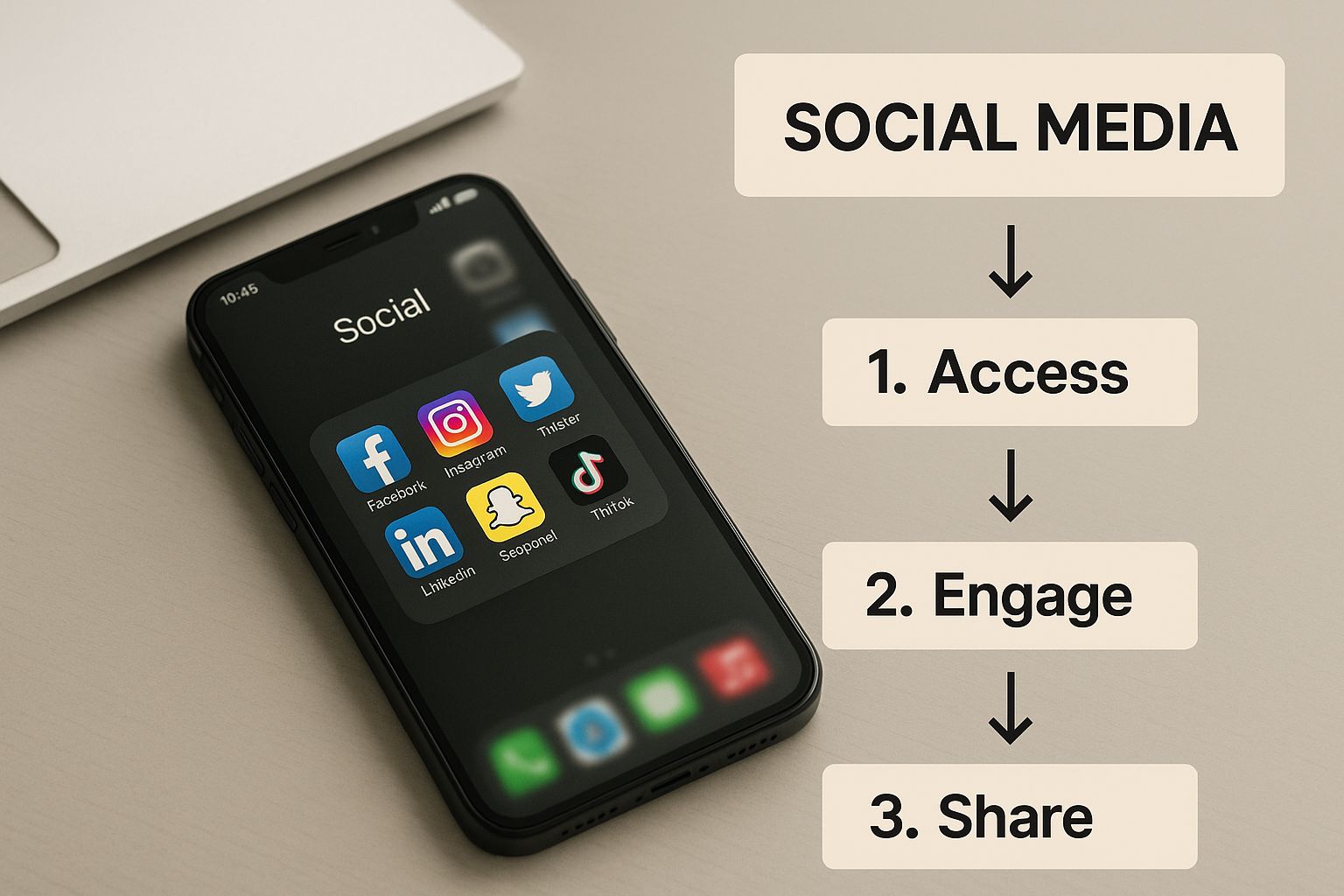
This really drives home how social media becomes your command center for pushing fans to your music, merch, and show tickets.
Now, before you launch, let's get organized. This checklist covers the essentials you should have polished and ready to go.
Your Online Promotion Launch Kit
| Asset | What It Achieves | Where to Use It |
|---|---|---|
| Electronic Press Kit (EPK) | Your professional resume for industry contacts. | Playlist pitches, blog outreach, booking inquiries. |
| High-Res Photos | Creates a strong visual brand and provides press assets. | Social media profiles, press features, website, EPK. |
| Artist Bio (3 lengths) | Tells your unique story quickly and effectively. | Streaming profiles, website 'About' page, social media bios. |
| Verified Artist Profiles | Signals legitimacy and unlocks analytics. | Spotify for Artists, Apple Music for Artists, etc. |
| Consistent Branding | Builds a recognizable and memorable identity. | Across all social media, streaming platforms, and website. |
| Email List Sign-up Form | A direct line to your most dedicated fans. | Website, social media link-in-bio, show announcements. |
Having these assets dialed in means you're not just ready to promote—you're ready to make a real impact.
All this initial work is about more than just looking good; it's about building a genuine community around your music. A strong brand foundation is the first real step toward a sustainable career. For a deeper look into this, check out our guide on why building a fanbase is essential for selling music. That authentic connection is what turns listeners into true advocates for your art.
Winning on Streaming Platforms
Getting your music distributed to platforms like Spotify is really just the entry ticket. The real work begins when you figure out how to get people to actually listen. Making a splash on these platforms isn't about luck; it's about a consistent, smart strategy designed to catch the ear of curators and trigger the algorithms.
You really can't overstate how important this is. The rise of streaming has completely reshaped how artists connect with an audience, and it’s changed the industry from the ground up. In fact, music streaming now accounts for 84% of global music industry revenue. That figure hit $17.5 billion and is on track to approach $30 billion by 2027, all driven by over 600 million paid subscribers worldwide. These platforms are where artist discovery happens today.
The Art of the Playlist Pitch
Playlists are the primary engine for discovery on streaming services. Landing on one, whether it's an official editorial list or a popular user-curated one, can completely change the trajectory of your track. But pitching isn't something you can just wing; it requires precision and a professional touch.
Your first move should always be through your Spotify for Artists account. Make sure to submit your track directly to Spotify’s editorial team at least three to four weeks before it's set to release. This is your one official shot with them, so you've got to make it count.
- Be Specific with Your Data: When you submit, you’ll be asked to tag your song with genres, moods, and instruments. Get as granular and accurate as you can. This is the metadata editors use to find your track when they're building out specific playlists.
- Write a Compelling Pitch: That little description box is your moment to shine. Briefly tell the story behind the song, mention any recent press coverage or social media buzz, and explain what makes it unique. Keep it short, sweet, and personal.
Hunting for Independent Curators
Outside of the official channels, there are thousands of independent curators who manage incredibly influential playlists. These people are often much more accessible and can be the key to generating that first wave of streams that gets your track noticed by the platform's algorithm.
Finding them takes a bit of digital detective work. Start by searching Spotify for keywords related to your genre, mood, or artists you sound like. When you stumble upon a promising playlist, check the description for the curator’s social media handle or website. If you come up empty, a quick Google search of the playlist name and the curator's name often does the trick.
When you reach out, personalization is everything. Mention a specific song you loved on their playlist and briefly explain why your track would be a great fit. A generic, copy-and-paste email is a one-way ticket to the trash folder.
For a great example of what this kind of success looks like, check out this story on how Lilo Key gets 90,000 monthly listeners on Spotify.
Mastering the Pre-Save Campaign
A pre-save campaign is one of the most effective ways to build real anticipation before your release drops. It lets fans save your upcoming track to their library, so it’s waiting for them the moment it goes live. This simple action creates a huge surge of activity—saves, streams, and playlist adds—all on day one.
That initial spike in engagement is a massive signal to the platform's algorithms that your song has momentum. This dramatically increases its chances of getting recommended to new listeners or landing on algorithmic playlists like Discover Weekly.
Here’s a quick-and-dirty guide to running a solid pre-save campaign:
- Use a Third-Party Service: Tools like Hypeddit or DistroKid's "HyperFollow" make it incredibly simple to create a pre-save landing page.
- Offer an Incentive: Give your fans a reason to pre-save. Offer them something cool like exclusive behind-the-scenes content, a private acoustic video, early access to merch, or an entry into a giveaway.
- Promote It Everywhere: For at least two weeks leading up to the release, push that pre-save link across your social media, in your email newsletter, and on your link-in-bio.
Getting a handle on these mechanics is crucial for long-term growth. If you’re looking to go even deeper, our guide on tips for increasing music streams and earnings has a ton of additional strategies.
Analyze and Adapt with Your Data
Your Spotify for Artists dashboard is so much more than a place to watch your stream count go up. It’s a goldmine of critical intelligence. You should be diving into your analytics regularly to understand who is listening to your music and where they're finding it.
Keep a close eye on these metrics in particular:
- Audience Demographics: See the age, gender, and location of your listeners. This is invaluable for refining your ad targeting or planning your next tour.
- Listener Sources: Find out exactly how people are discovering you. Is it from their own library, a specific playlist, or another user's queue?
- Playlist Performance: See which playlists are driving the most streams for your tracks. This tells you which curators you need to build relationships with for your next release.
By truly understanding this data, you can start making informed decisions about your promotion. You'll know exactly what's working so you can double down on it, turning your release strategy from a guessing game into a data-driven plan for sustainable growth.
Creating Content That Connects on Social Media
Let’s be real: social media isn't just a megaphone for shouting "new song out now!" into the void. If you treat it that way, you’ll get scrolled past in a millisecond. The real magic happens when you stop thinking about promotion and start focusing on connection. Your goal should be to build a content strategy that feels authentic, sparks conversation, and actually gives people a reason to care about the artist behind the music.
Forget the old playbook. To truly get your music heard online, you need to invite people into your world with a mix of content that goes way beyond a simple Spotify link.
Developing Your Content Pillars
Posting randomly is a recipe for burnout and inconsistent results. A much smarter approach is to build your strategy around a few key "content pillars." Think of these as the core themes that define your online presence, reflecting who you are as an artist and what you want to share with your audience.
This keeps your feed interesting and prevents it from turning into a non-stop sales pitch. A solid set of pillars for any musician usually looks something like this:
- The Music Pillar: This is your bread and butter. It’s where you post behind-the-scenes studio clips, quick acoustic versions of your tracks, or a video breaking down a specific lyric or production choice. Give people a peek behind the curtain.
- The Personal Pillar: You're more than just your music. Show them! Share your hobbies, what books or films are inspiring you, or a funny story from tour. This is how you build a genuine bond that lasts.
- The Community Pillar: Turn the spotlight on your fans. Run a poll asking for their favorite line from your new song, host a Q&A in your stories, or repost user-generated content that features your music. Make them part of the story.
This balanced strategy is fundamental to understanding how social media can boost an artist's career. It's about showing up as a whole person, not just a product.
Mastering Short-Form Video
If you're not on TikTok and Instagram Reels, you're missing out on a massive opportunity. These platforms are discovery engines, built to put your music in front of millions of people who have never heard of you. But it's not about forcing a cringey dance challenge (unless that’s your vibe, of course). Success here comes from creating compelling, bite-sized stories.
The biggest mistake I see artists make is blindly copying a trend that doesn't fit their brand. The key is to adapt trends to your own artistic voice. See a popular audio format? Maybe you can play a stripped-down version of your song over it. Notice a storytelling trend? Use it to share the backstory of your latest single.
Your social media content should be a conversation, not a monologue. Ask questions, respond to comments, and make your followers feel seen and heard. This active engagement is what transforms passive listeners into a loyal community.
I saw a great example from an indie-folk artist recently. A trend was going around where people shared their "top 3 inspirations." Instead of just listing bands, she created a Reel showing her parents' old vinyl records, talking about how each one shaped her songwriting. It was personal, authentic, and connected with thousands of new fans who shared those same influences.
Creating an Interactive Fan Experience
Posting content is only half the battle. You have to actively create moments for your audience to get involved. When fans feel like they're part of your journey, they become incredibly loyal supporters.
Here are a few simple ideas to get more interaction:
- Run a Q&A Session: The question sticker on Instagram Stories is gold. Let fans ask you anything—about your creative process, your gear, or even your favorite coffee order.
- Host an Instagram Live: You don't need a full production. A quick, informal performance from your living room or a live Q&A from the studio can feel incredibly exclusive and personal.
- Create a TikTok Challenge: Got a song with a catchy hook or a unique rhythm? Create a simple challenge encouraging people to use the sound. It could be a simple video transition, a lip-sync, or their own creative take.
Ultimately, the content you create is the fuel for your entire online presence. By prioritizing genuine connection over constant selling, you're not just building a follower count. You’re building a dedicated community that will be there to stream your music, buy your merch, and support you for years to come.
Owning Your Fan Relationships with Email
Let's talk about something that feels old-school but is actually your most powerful tool: your email list. Social media is great, but you're always at the mercy of algorithms. Platforms can change the rules overnight, and suddenly, that audience you spent years building can't see your posts.
Your email list is different. It's yours. It's a direct, unfiltered line to the people who care the most—the ones who specifically raised their hand and said, "Yes, I want to hear from you." Don't ever underestimate that power. This is how you turn a random Spotify listener into a die-hard fan who shows up to your gigs and buys your merch.
Building Your Email List from the Ground Up
Getting started is easier than you think. First, you'll need a home for your list. I always recommend new artists check out platforms like Mailchimp or ConvertKit. They have free plans that are more than enough to get you going.
Once you’re set up, the real work begins: getting people to actually sign up. You have to make it a no-brainer for them. A hidden form on your "contact" page isn't going to cut it. You need to put that sign-up form everywhere your music and your fans are.
Here are the spots that work best:
- Your Website Homepage: Put it front and center. Don't make people hunt for it.
- Your "Link-in-Bio": Whether you use Linktree or a simple landing page, make your email list the very first button people see.
- Social Media: Actively promote it. Use Instagram Stories with the link sticker. Make a pinned Tweet about it. Tell people why they should join.
- Live Shows: This is a goldmine. Create a simple QR code that links straight to your sign-up page. Mention it from the stage, and have it visible at your merch table.
The secret? Give them a reason to sign up. Nobody gives away their email for free. Offer them something they can't get anywhere else—an unreleased demo, a behind-the-scenes video, or a 15% discount on their first merch order. Make it irresistible.
Writing Emails People Actually Open
Okay, you've got subscribers. Now what? The biggest mistake artists make is treating their email list like a billboard. Blasting out "BUY MY NEW SINGLE!" every week is a surefire way to get people to hit unsubscribe.
Your emails should feel like a personal update for your inner circle. They're not just another marketing channel; they're your direct connection to your most dedicated supporters.
Think of your email list as your digital fan club. Every single person on it is a VIP. Treat them that way, and they’ll stick with you for the long haul.
A solid email strategy is all about balance. You don't need a fancy, over-designed newsletter every time. Honestly, a simple, text-based email that feels like it came directly from you can be way more effective.
Try planning out a few different types of emails:
- The Personal Update: This is where you connect. Share a story about a breakthrough you had in the studio or a funny thing that happened on the road. What have you been listening to? Make it feel like a real conversation.
- The Exclusive Perk: Reward them for being on the list. Give them first dibs on pre-sale tickets, a 24-hour head start on a new merch drop, or a private link to your new music video before it hits YouTube.
- The Community Builder: Get them involved. Ask them to vote on the t-shirt design they like best or suggest a cover song for your next Instagram Live. Make them feel like part of the team.
When you consistently provide value and create that feeling of exclusivity, your email list becomes more than just a promotional tool. It becomes the bedrock of a sustainable music career, built on a real connection with fans who will be there for you for years to come.
Finding New Fans with Targeted Ads
Let's be real: organic reach is fantastic for building a core community, but it can only take you so far. When you're ready to grow beyond your current followers and find new listeners at scale, paid advertising is the most direct path. Smart ad campaigns on platforms like Meta (for Facebook and Instagram) or YouTube put your music right in front of the people most likely to become your next big fans.
This isn't just about "boosting a post" and hoping for the best. It's a strategic way to connect with potential listeners based on their actual interests and habits, helping you build a genuine audience without breaking the bank.
Know Exactly Who You're Talking To
The fastest way to waste money on ads? Showing them to the wrong people. Before you spend a dime, you need a sharp, detailed picture of your ideal listener. The power of tools like Meta Ads Manager lies in just how specific you can get.
A great place to start is by targeting fans of similar artists. If your sound channels the energy of Tame Impala or the intimacy of Phoebe Bridgers, you can build an audience profile that includes people who already follow them. It’s the lowest-hanging fruit and a solid foundation for any campaign.
From there, you can start layering on other details:
- Musical Tastes: Add interests like indie rock, dream pop, or whatever niche you occupy.
- Listener Behavior: Are you selling merch? Target people identified as "engaged shoppers." Looking for active music fans? Focus on those who interact with music-related pages.
- Demographics: Check your Spotify for Artists dashboard. Where do your current listeners live? What's their age range? Use that data to refine your audience by location, age, and language.
Getting this right means your budget is spent making meaningful connections, dramatically upping the odds of someone clicking, listening, and hitting that follow button.
Create Ads That Stop the Scroll
Your ad’s creative is your one shot to grab someone’s attention in a crowded feed. When you’re promoting music, a static image with some text just won't cut it. Video is everything, and you have about three seconds to make an impact.
A great clip from your music video, a high-energy snippet of a live show, or even a well-designed visualizer can all do the trick. The most important thing is that the audio is front and center. You want to make someone stop, listen, and get curious enough to click through to your Spotify or Apple Music profile.
An effective ad doesn’t just sell a song; it introduces an artist. Your ad creative should reflect your brand’s aesthetic and give viewers a glimpse into your world, making them curious to learn more.
This whole world of music discovery is exploding, largely thanks to mobile devices. The global music streaming market was valued at USD 27.5 billion in 2023 and is projected to skyrocket to USD 76.8 billion by 2032. This incredible growth is directly linked to the power of mobile advertising, which has become essential for any serious music promotion campaign. You can dive deeper into these market trends on Dataintelo.
Set a Smart Budget and Watch Your Numbers
You don't need a massive budget to get started. You can run a "Conversions" campaign on Meta for as little as $5-$10 a day. The entire point of this campaign type is to drive a specific action—in our case, a click over to your streaming profile.
Once your ads are live, you have to keep an eye on the metrics to see what’s actually working. Likes and comments are nice, but they don't grow your career. You need to focus on the data that translates to real fan growth:
- Cost Per Click (CPC): How much does it cost every time someone clicks your ad? The lower, the better—it means your ad is efficient.
- Click-Through Rate (CTR): What percentage of people who see your ad actually click on it? A higher CTR tells you the creative and targeting are hitting the mark.
- Cost Per Result: If your goal is getting people to your Spotify page, how much are you spending for each listener you send over?
By tracking these key numbers, you can make informed decisions. Turn off the ads that aren't performing, put more money behind the ones that are, and steadily build your fanbase with a data-driven strategy.
Answering Your Top Music Promotion Questions

Trying to get your music heard online can feel like shouting into the void. With so many different platforms, strategies, and supposed "gurus," it's easy to get paralyzed by all the choices. Let's cut through the noise and answer the real-world questions that artists like you are asking every day.
How Much Should I Really Budget for Promotion?
There’s no magic number here, but I always tell artists to think in tiers. For a brand-new single, a starting budget of $100 to $500 is a perfectly reasonable place to begin. That's enough to run a small, tightly targeted social media ad campaign and get your track submitted to a handful of credible indie playlisting services.
When you're ready to level up, a budget between $500 and $2,000 unlocks more firepower. You could fund a much more extensive ad campaign, hire a PR professional for some dedicated blog outreach, or invest in a serious playlist pitching push aimed at bigger, more influential curators.
The most important thing is to start small and be incredibly strategic. Track where every dollar goes and what it gets you—whether you're measuring cost-per-stream or cost-per-new-follower. Once you find what's working, double down on it. Don't just dump your whole budget on release day; you need to spread it out to keep the momentum going for a few weeks.
Should I Focus More on TikTok or Instagram?
This is a classic question, and the answer really comes down to your audience and your sound. Each platform has a unique role to play in your overall strategy.
- TikTok is your discovery engine. The algorithm is a beast, designed to push your content to people who have never heard of you. It's a goldmine for hooky, ear-catching music and for artists who are comfortable hopping on trends and creating short, engaging videos.
- Instagram is where you build your community. It’s the place to really craft your brand's aesthetic, share behind-the-scenes content that fans crave, and turn those casual listeners you found on TikTok into die-hard supporters.
Honestly, the best approach uses both in tandem. Use TikTok's insane reach to grab new ears, then funnel that new attention over to your Instagram. Once they're there, you can nurture that connection with deeper content and direct interaction, building a solid, loyal fanbase.
Are Playlist Promotion Services a Good Investment?
This is a minefield, so you need to tread carefully. A lot of services that promise a specific number of streams for a flat fee are just using bots and fake playlists. This won't just waste your money—it can actually get your music flagged or even pulled down from streaming platforms.
That said, legitimate playlist pitching services do exist. The key difference is that they don't sell streams; they sell the service of a real person pitching your track to other real, human curators in your genre.
If you're considering a service, here's what to look for:
- Total Transparency: They should be upfront about their process and the types of playlists they target.
- Real Case Studies: Look for testimonials and examples of actual artists they've helped.
- No Guarantees: Any service promising a set number of streams is a massive red flag. Real pitching has no guarantees.
A more reliable (and often cheaper) method is to build these relationships yourself. Hunt down playlists that are a perfect fit for your music, find the curator's contact info, and shoot them a short, personalized email. Show them you've actually listened to and appreciate their playlist. It goes a long way.
How Often Should I Release New Music?
For new artists, the old model of dropping an album every two years is dead. To stay on the radar of both your fans and the algorithms, consistency is everything.
The sweet spot for most indie artists right now is a steady diet of singles. Releasing a new song every 4-8 weeks means you always have a reason to make noise. Every single track is a new "event" you can use to post on socials, pitch to playlists, and run some ads.
This approach builds momentum in a way that long gaps between releases just can't. It keeps your name fresh in people's minds and tells platforms like Spotify and Apple Music that you're an active creator worth paying attention to. Once you have a string of successful singles, you can bundle them into an EP or album to give them a second wind.
Ready to take full control of your music career? OohYeah provides the tools you need to sell music, merch, and subscriptions directly to your fans, commission-free. Build your community and grow your revenue on a platform designed for artists.