How to Monetize Your Music: Proven Strategies to Earn More
Learn how to monetize your music effectively. Discover tips on streaming, licensing, merchandise, and more to generate sustainable income.
September 10, 2025
Music Marketplace Advisor
Buying & SellingTurning your music into a career means treating it like a business. It’s about more than just getting your songs on Spotify; it's about setting up multiple income streams so you can keep creating. The real work begins with protecting your art, getting it out there, and building a genuine connection with the people who listen. From that foundation, you can branch out into merchandise, sync licensing, and live performances to build something truly sustainable.
Building Your Foundation for Music Monetization
Before a single dollar comes in, you need to make a mental shift. You're not just an artist anymore; you're a music entrepreneur. That means laying the groundwork to protect your work legally and prepare it for the market. Skipping this part is a rookie mistake that can cost you money and, even worse, control over your own music down the road.
This setup isn't the most exciting part of being a musician, I get it. But it’s the non-negotiable stuff that separates the professionals from the hobbyists.
Secure Your Copyrights and Royalties
First things first: protect your intellectual property. It’s the single most important asset you have. Every song you write actually has two distinct copyrights, and you need to understand both:
- The Composition: This is the song itself—the melody and the lyrics. As the songwriter, this is your property.
- The Master Recording: This is the specific "version" of the song that you recorded. It's the audio file.
To actually get paid when your music is used, you need to register with a Performance Rights Organization (PRO). Think of PROs like ASCAP and BMI. They're the ones who track when your songs get played on the radio, in a coffee shop, or on a TV show, and then they collect those performance royalties for you.
Here's a look at the ASCAP homepage, a place where hundreds of thousands of songwriters and composers go to make sure they get paid for their work.
Not registering with a PRO is like working a full week and forgetting to submit your timesheet. You did the work, but you won't see a dime for it.
Establish Your Professional Brand
Your brand is so much more than a cool logo. It's the story you tell, the vibe you give off, and the identity that your fans connect with on a personal level. A solid brand makes you memorable. It gives your audience something to believe in.
This means getting your professional assets in order: a sharp electronic press kit (EPK), high-quality photos, and a consistent presence on the social media platforms where your listeners actually hang out. Your brand is the packaging for your music—it has to be compelling enough to make someone press play, buy a concert ticket, or grab a t-shirt.
Key Takeaway: Monetization isn't just about the songs. It’s about building a complete artistic identity that fans want to invest in, both emotionally and financially. A powerful brand is what turns casual listeners into true fans for life.
To give you a clearer picture, here's a quick rundown of the primary ways artists are making money today.
Essential Music Monetization Channels at a Glance
This table breaks down the main income-generating avenues for modern musicians, giving you a sense of the effort involved and the potential return for each.
| Monetization Channel | Primary Platform(s) | Effort Level | Potential Income |
|---|---|---|---|
| Streaming Royalties | Spotify, Apple Music, etc. | Low (post-setup) | Low per stream, high volume |
| Direct-to-Fan Sales | OohYeah, Bandcamp, Website | Medium | High margin, direct payout |
| Sync Licensing | Music Libraries, Supervisors | High | High (per placement) |
| Live Performances | Venues, Festivals, Tours | High | Varies (ticket/merch sales) |
| Merchandise | OohYeah, E-commerce Store | Medium | High margin, scalable |
| Fan Subscriptions | Patreon, OohYeah | Medium | Stable, recurring revenue |
This isn't an exhaustive list, but it covers the core pillars of a healthy music business. The most successful artists don't rely on just one; they build a diverse portfolio of income streams.
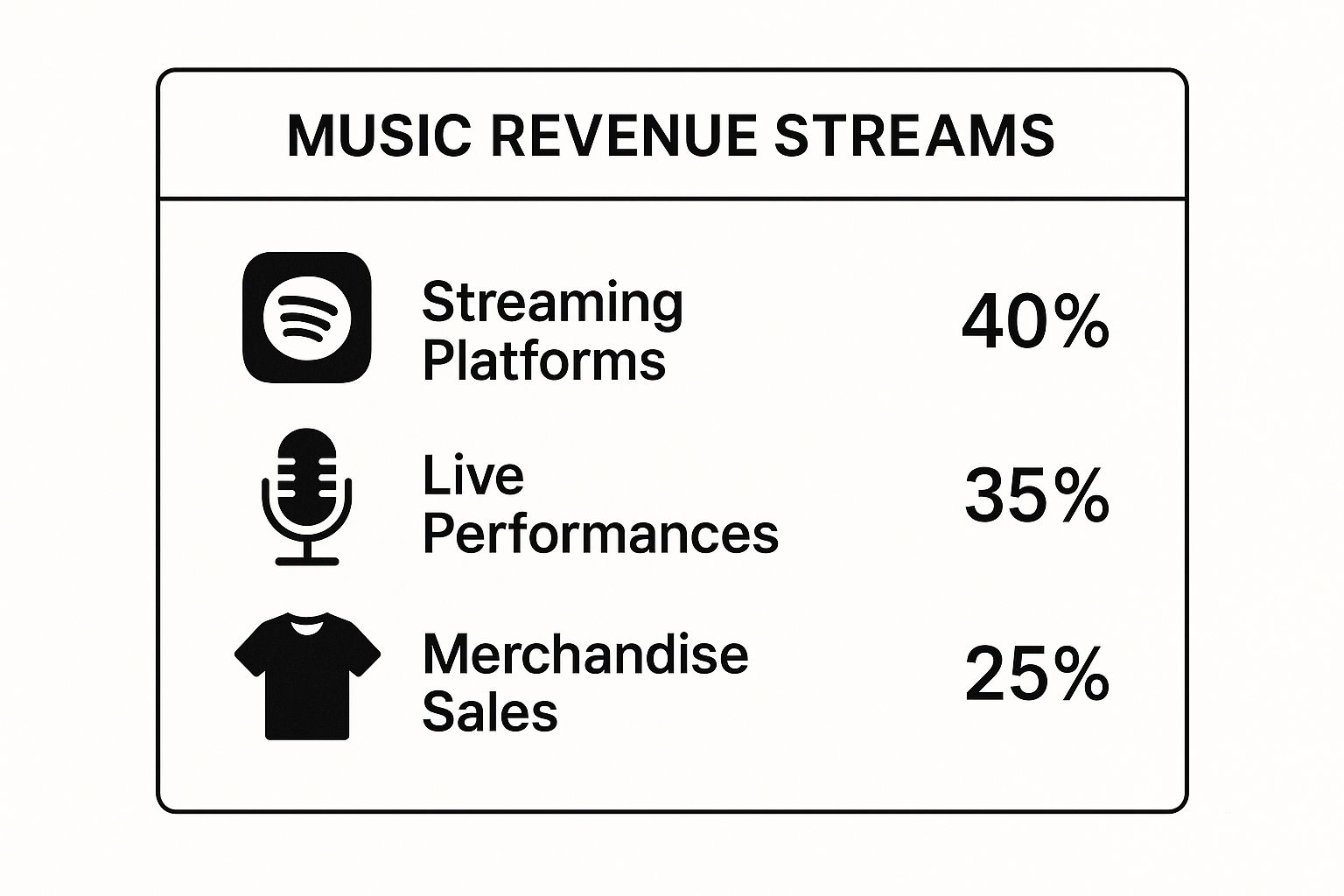
While streaming gets a lot of attention, a smart strategy involves a mix of different revenue sources. Live shows, direct sales, and merchandise are often where the real, sustainable income is made. As you start planning your own approach, it can be helpful to think broadly about building wealth; you can explore various passive income streams to get your creative juices flowing.
By getting these foundational pieces right from the start, you’re setting yourself up not just to make music, but to build a lasting and profitable business around your art.
Getting the Most Out of Streaming and Digital Sales
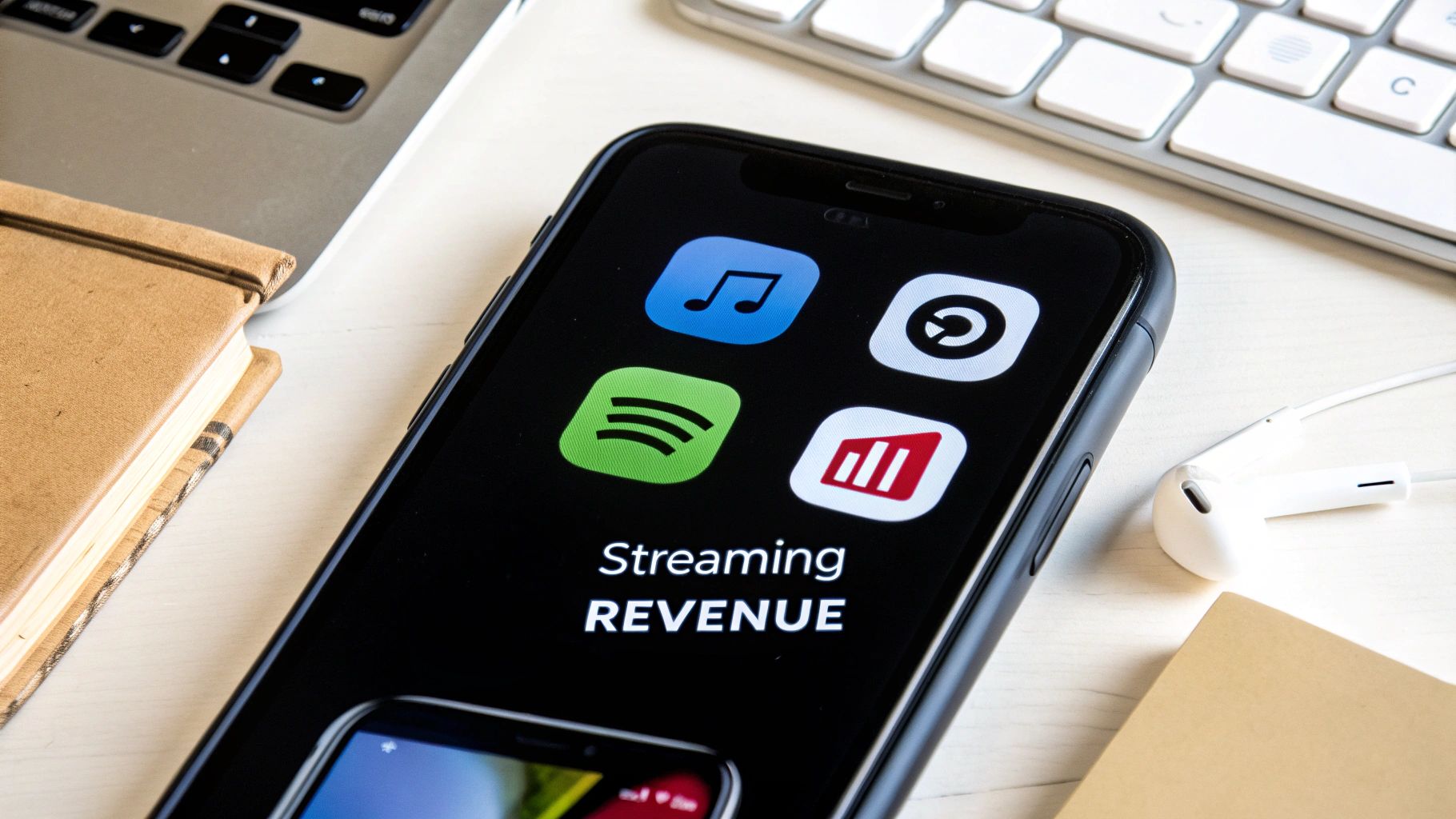
Let's be real: just throwing your music up on streaming platforms and hoping for the best isn't a strategy. It's a starting point. To actually make money from your music today, you have to actively use these platforms as tools for discovery and income, not just set-it-and-forget-it archives.
The numbers don't lie. Streaming is now the engine of the recorded music industry. In the first half of 2025 alone, the U.S. saw paid music subscriptions climb to a staggering 105.3 million. That’s an increase of 6.3 million new subscribers in just one year, pumping revenues up to $2.89 billion for that six-month period. This shows just how essential paid streaming has become for any artist's bottom line.
Choosing Your Digital Distributor
Your music can't just magically appear on Spotify or Apple Music. It needs a digital distributor to get there—think of them as the bridge between your finished tracks and the world's biggest digital stores. Picking the right one is a huge decision that directly affects how much you earn and how far your music travels.
Popular options like DistroKid and TuneCore have different models. Some charge a flat annual fee for unlimited uploads, which is great if you're prolific. Others take a slice of your royalties. You have to weigh your release schedule and long-term plans to see what makes financial sense for you.
Once you've picked a partner, the real work begins with your artist profiles. This is your digital real estate.
- Look Professional: Get high-quality photos and make sure your branding is consistent everywhere.
- Tell Your Story: A boring bio gets skipped. Write something that hooks people and makes them want to know you.
- Connect Everything: Link out to your social media so new listeners can easily find and follow you.
A polished profile tells listeners—and, crucially, playlist curators—that you take your career seriously. For a deeper dive, check out our guide on tips for increasing music streams and maximizing your earnings.
Understanding Where the Money Comes From
Streaming royalties can feel like a black box, but it really boils down to two main types that you, the artist and songwriter, are owed.
- Mechanical Royalties: These are paid every time your song is streamed or downloaded. It's basically a fee for the right to reproduce your composition.
- Performance Royalties: These kick in whenever your music is played publicly, and yes, that includes streams. A Performance Rights Organization (PRO) like ASCAP or BMI collects this money for you.
Your distributor handles the royalties for the master recording, while your PRO chases down the performance royalties. You absolutely must be signed up with both if you want to get paid everything you've earned.
Pro Tip: Don't just focus on audio streaming. Video is a massive income stream that too many artists ignore. Learning how to monetize YouTube videos can add a serious revenue channel from ads and drive new fans to your other platforms.
Looking Beyond Streaming: Direct-to-Fan Sales
While streaming is king for getting discovered, direct digital sales give you a much bigger piece of the pie and a stronger link to your fans. Platforms like Bandcamp or OohYeah’s built-in store let you sell high-quality downloads and exclusive content right to your audience, meaning you keep way more of the money.
Don't just sell the MP3. Get creative and bundle things together. For instance, an indie-folk artist could offer a deluxe digital package with:
- The full album (WAV or FLAC files)
- Instrumental versions of all the songs
- A PDF of handwritten lyrics and behind-the-scenes photos
- An exclusive video of a stripped-back acoustic performance
This turns a simple download into a unique experience. It gives your most dedicated fans a real reason to buy something they could otherwise stream for pennies, rewarding them for their support while adding directly to your income.
Unlocking Income Through Sync Licensing

Ever dreamed of hearing your song in a climactic scene of a hit show? Or maybe as the backdrop for a massive video game trailer? That’s the reality of sync licensing, and it’s a powerful revenue stream that often gets overlooked by artists focused solely on streaming. While it might sound like winning the lottery, landing a sync placement is absolutely achievable if you approach it strategically.
In short, synchronization licensing is when you get paid to have your music "synced" with visual media. This isn't just about blockbuster movies; it covers everything from a brand’s TikTok campaign to a small YouTube channel's intro music. The income from a single placement can be huge, often combining a nice upfront fee with performance royalties that pay out for years to come.
Getting Your Music "Sync-Ready"
Music supervisors and sync agents are the gatekeepers here. They are always on the hunt for the perfect track to capture a specific mood, and they operate on tight deadlines. To even get on their radar, your music has to be polished, professional, and ready to go at a moment's notice.
Think of it like a sync-readiness checklist:
- Instrumental Versions: This is a must. A director might love the feel of your track but can't have your vocals clashing with dialogue. You absolutely need a high-quality instrumental mix for every track you pitch.
- Clean Edits: If your lyrics are explicit, make a clean version. It’s a simple step that instantly opens up a whole world of commercial and advertising opportunities that would otherwise be closed off.
- Stems and Alt Mixes: Having individual track stems (like drums, bass, and vocals on separate files) can be a lifesaver for an editor who needs to tweak your song to perfectly fit a scene. It makes their job easier, which makes you easier to work with.
Beyond the audio itself, your metadata has to be flawless. Embed all your contact info, publisher details, and PRO affiliation directly into the audio files. If a music supervisor can't figure out who owns the rights in under a minute, they’re not going to investigate—they’ll just move on.
Insider Tip: I always recommend creating a private, curated playlist on a platform like OohYeah or SoundCloud just for pitching. Organize it with descriptive titles like "Uptempo Energetic Pop" or "Melancholic Acoustic Folk." This helps supervisors find exactly what they're looking for, fast.
Finding the Right Home for Your Music
Once your tracks are prepped and polished, the next challenge is getting them in front of the right people. Cold-emailing a music supervisor at Netflix is a long shot. The much smarter route is to partner with music libraries and sync agents who already have the relationships.
You'll generally come across two types of deals:
- Exclusive Libraries: These libraries become the sole representatives for the tracks you give them. The trade-off for exclusivity is that they often put more muscle into pitching your music and can land higher-profile, more lucrative placements.
- Non-Exclusive Libraries: With these, you can submit the same songs to multiple libraries at once. It’s a numbers game that can increase your odds of getting a placement, though the upfront fees are usually smaller.
If you're just starting out, non-exclusive libraries are a fantastic way to learn the ropes and get some initial wins. As your catalog grows and you build a track record, you can start exploring those bigger exclusive deals.
Crafting a Pitch That Gets Noticed
When you finally do reach out to a library or an agent, professionalism is everything. Your email needs to be short, to the point, and make their job incredibly easy. Never send large audio files as attachments. Instead, send a streaming link to a small, curated playlist of your absolute best, most relevant work.
For example, if you're in a rock band, you might pitch your song "Midnight Drive" for a car commercial, pointing out its driving rhythm and high-energy feel. This shows you've actually thought about where your music fits, which supervisors appreciate. Having a solid grasp of the business side is essential here; our guide to understanding music licensing can boost your revenue is a great resource for digging deeper into this.
Ultimately, breaking into sync is a marathon, not a sprint. It takes a ton of patience, persistence, and a professionally prepared catalog. But the payoff—both financially and in terms of getting your music heard by millions—can completely change the trajectory of your career.
Turning Fans into Customers with Merchandise
Your music is the heart of your brand, but your brand is so much bigger than just the songs. It's the entire world you've built, the story that your fans feel connected to. Merchandise is how you bring that story into their physical world.
It’s the tangible link between your art and their lives, turning passive listeners into active champions for your music. Honestly, it's one of the most reliable and profitable ways to make a living as an artist.
But creating merch that actually sells is more than just slapping your logo on a cheap t-shirt. You need a real strategy, one that reflects your unique identity and gives fans a piece of the community they love.
Designing Merch That Resonates
The best merch feels like it came directly from the artist. It should be a natural extension of your sound, your lyrics, and your overall vibe. If your music is dark and moody, a neon pink crop top is probably going to miss the mark.
Think about what makes your art unique. Is there a specific lyric that everyone screams back at you during shows? An inside joke that took off on your socials? These are the kinds of details that make for killer merch designs.
If you're just starting out, here are a few solid ideas:
- Apparel: T-shirts and hoodies are classics for a reason. They’re a fantastic canvas for your creative ideas and are always in demand.
- Accessories: Things like tote bags, enamel pins, and hats are perfect lower-cost items. They give fans an easy way to show their support without a big financial commitment.
- Physical Music: In a world of streaming, never underestimate the power of something you can hold. Limited-edition vinyl, signed CDs, or even creatively designed cassettes can become highly sought-after collector's items.
The global recorded music market hit $29.6 billion in 2024, and it’s been growing for a decade straight. While streaming gets all the headlines, vinyl sales just had their 18th consecutive year of growth. This proves fans are more than willing to pay for physical music. You can discover more insights about these music industry trends from Sony Music.
Choosing the Right Fulfillment Model
Okay, so you have some great designs. Now, how do you actually get them made and shipped to your fans? This choice is a big deal—it directly affects your upfront costs, your workload, and how much money you actually make.
Key Insight: Your fulfillment method should match your resources and risk tolerance. Starting with a low-risk option like print-on-demand allows you to test designs and build momentum without a significant financial investment.
Let's look at the two main ways to get this done.
Print-on-Demand (POD) Services For most independent artists, this is the perfect place to start. You team up with a service that handles all the printing, packing, and shipping whenever an order comes in.
- Pros: Absolutely zero upfront cost, no boxes of t-shirts cluttering your apartment, and a huge variety of products to experiment with.
- Cons: You make less profit on each item, and you have less control over the final quality and shipping speed.
Self-Fulfillment This is the old-school approach. You order a big batch of merch from a manufacturer and handle all the storage and shipping yourself (or with your bandmates).
- Pros: Much higher profit margins on every single sale. You also have complete control over the quality, packaging, and overall brand experience.
- Cons: It requires a serious upfront investment. Plus, you’re now responsible for managing inventory and running to the post office.
My advice? Start with a hybrid strategy. Use a print-on-demand store through a platform like OohYeah to test out your designs and see what people actually want to buy. Once you have a clear bestseller, you can confidently place a bulk order for that one item. Sell those at your shows and online for a much bigger profit. This way, you build a merch game that's both sustainable and scalable.
Building Sustainable Income with Your Superfans
In an industry crowded with middlemen, the most valuable thing you can build is a direct line to your audience. Sure, streaming royalties and sync deals are important pieces of the puzzle, but creating a dedicated community of superfans gives you a stable, recurring revenue stream that you actually control. This is the whole idea behind direct-to-fan (D2F) strategies—turning people who just listen into people who actively support your art.
The concept is pretty straightforward: you create a private space for your most passionate fans, who pay a small monthly fee to be a part of it. In exchange, you give them real value they can't get anywhere else. This isn't just a cash grab; it’s about building a tribe that's financially and emotionally invested in your career.
Choosing Your Fan Subscription Platform
To make this happen, you need the right tools. Platforms like Patreon and Ko-fi are great, and some services like OohYeah even bake these features right into your artist hub, keeping everything in one place. The main thing is to make it dead simple for fans to support you.
When you're weighing your options, think about a few key things:
- Fee Structure: What's their cut? Know exactly how much of each subscription you get to keep.
- Feature Set: Can you do what you need to do? Look for tools like direct messaging, exclusive content hosting, and different membership levels.
- User Experience: Is it a pain for your fans to sign up and get around? It shouldn't be.
Finding the right home for your community is the first big step. You can dive deeper into the nuts and bolts of the most effective Patreon and subscription models to figure out what fits your vibe.
This isn’t just some niche trend, either. The big players are noticing. Goldman Sachs Research predicts that global music revenues are on track to nearly double from $105 billion in 2024 to almost $200 billion by 2035. And a huge part of that growth? They point directly to new models like D2F that deepen the artist-superfan connection. You can read more about these music industry forecasts from Goldman Sachs.
Crafting Compelling Membership Tiers
The engine of any great fan club is the value you deliver. You have to design membership tiers that feel special and worth the price. Forget generic perks. Think about what your specific audience would genuinely get excited about. The trick is to make each tier a clear and enticing step up from the one before it.
Key Takeaway: You’re not just selling a product; you’re selling access and a real connection. Fans are backing the person making the music, and your offerings need to reflect that personal touch.
To get your gears turning, here’s a sample structure an indie-pop artist might use.
| Tier Name | Monthly Price | Core Benefits |
|---|---|---|
| The Inner Circle | $5 | Exclusive access to a private community feed, early listens to new music, and a monthly behind-the-scenes newsletter. |
| The Collaborator | $15 | Everything from the previous tier, plus a monthly livestream Q&A, a vote on the next merch design, and your name in the album credits. |
| The VIP Patron | $50 | All of the above, plus a personalized thank-you video, a signed piece of merch, and two free tickets to any headline show. |
See how that works? It offers clear, escalating value at each level, giving fans a reason to pick the tier that matches how much they want to be involved.
Nurturing Your Superfan Community
Once you flip the switch and your subscription is live, the real work starts. This isn't "set it and forget it" income. It requires consistent effort to keep your supporters engaged and feeling like they made the right choice. Think of it like a garden—it needs regular care to thrive.
Focus on making the space feel exclusive and genuinely interactive. Post updates, ask for their opinions, and share the parts of your creative process no one else gets to see. Maybe it’s a raw voice memo of a new song idea or a quick video of you fumbling through a tricky guitar part. That kind of vulnerability is what builds an unbreakable bond.
By putting real energy into your superfans, you're doing more than just securing a monthly paycheck. You're building an army of advocates who will be the first in line to buy your merch, the loudest voices sharing your new single, and the most reliable faces in the crowd at your shows. That loyal tribe is the bedrock of a long and sustainable music career.
Your Music Monetization Questions, Answered
Let’s be honest, figuring out the business side of music can feel like a maze. It’s easy to get stuck on the details and lose your creative momentum. I’m going to tackle some of the most common questions I hear from artists, offering straightforward advice to help you move forward.
How Long Does It Really Take to Earn an Income from Music?
There's no magic "on" switch for making money from your music. So many artists get discouraged because they expect a big payday from streaming right out of the gate, but that's just not how it works. Royalties from platforms like Spotify can take months to process, and when they do, you're looking at fractions of a cent per stream.
A smarter move is to diversify your income streams from day one. While your streaming numbers are slowly climbing, you can be making quicker wins elsewhere. Think about it: you could sell your first t-shirt or a digital album download through your OohYeah store within a week of putting them up. That’s immediate cash flow and, just as importantly, a huge morale boost.
A Realistic Timeline: Landing a sync placement in a film or TV show is a game-changer, but it could easily take a year or more of consistently pitching your music. On the flip side, direct fan support through tips or merch sales can start today. By focusing on a mix of strategies—streaming, direct sales, and fan engagement—over a solid 6 to 12 months, you'll start to see a real, cumulative financial impact. You're building a business, not waiting to win the lottery.
Do I Need a Huge Social Media Following to Make Money?
Absolutely not. This is probably the biggest myth holding artists back. A massive follower count might look impressive, but engagement will always beat sheer numbers. I’d rather have 500 dedicated "superfans" than 50,000 passive listeners who never interact.
Your superfans are the ones who buy every piece of merch, join your subscription tier, and become evangelists for your music. A direct, personal connection with a smaller, highly engaged community is infinitely more powerful for making a living than any vanity metric.
Stop chasing viral moments. Instead, think of social media as a tool to find those true supporters and bring them into an ecosystem you actually control—like your email list or a private community on your OohYeah page.
What’s the Most Overlooked Monetization Strategy?
Sync licensing. Without a doubt. Most indie artists are so focused on the streaming game, which is a battle of scale. You need millions upon millions of streams to generate a livable income.
Compare that to landing a single sync placement. Getting your song in a commercial, TV show, or video game can earn you thousands of dollars upfront in a licensing fee. Plus, you’ll keep earning performance royalties for years whenever that content gets aired.
It might feel intimidating, but the entry points are more straightforward than you think.
- Make Instrumental Versions: This is a must. Music supervisors desperately need tracks without vocals to sit under dialogue.
- Create Clean Edits: Having versions of your songs without explicit language immediately opens you up to a much wider world of commercial opportunities.
- Get in with Music Libraries: These companies are the connectors, pitching catalogs like yours directly to the decision-makers.
By just taking these few steps to prep your tracks, you unlock a powerful revenue stream that most of your peers are completely ignoring.
Should I Focus on One Strategy or Do Everything at Once?
Trying to do it all at once is a surefire way to burn out. You’ll spread yourself too thin and never gain real traction anywhere. The key is to start small and build on what works.
I always recommend new artists start with this powerful trio:
- Digital Distribution: Get your music on every streaming platform. This builds your foundation, gets you listeners, and starts the slow trickle of royalties.
- Print-on-Demand Merch: Set up a store with zero upfront cost. You can test designs, see what fans love, and generate profit from day one without any financial risk.
- An Email List: This is your direct line to your fans, away from the noise of social media algorithms. Use it to announce new music, promote merch, and build a genuine community.
Once you’ve got these core streams humming along, you’ll have the momentum—and the insight—to expand into more advanced areas like sync licensing or a fan subscription. This phased approach is how you build a music career that lasts.
Ready to take control? With OohYeah, you can sell music, merchandise, and subscriptions directly to your fans with zero commission. Start building your sustainable artist business today.