How to Get Into the Music Industry
Discover how to get into the music industry with practical advice on mastering your craft, building your brand, and making strategic connections.
November 7, 2025
Music Marketplace Advisor
Buying & SellingIt takes more than raw talent to make a living in music today; you need a solid grasp of how the business actually works. This means understanding your potential income, figuring out where you fit in, and accepting that digital platforms have completely rewritten the rules, opening up incredible new avenues for independent artists.
Understanding the Modern Music Business
Dreaming of a music career is the easy part. Turning that dream into a sustainable reality means treating it like a business from the very beginning. The old story of being discovered by a big-shot producer while playing in a smoky bar is, for the most part, a fantasy. Today’s industry is a complex machine where pure artistry has to be paired with sharp business sense.
This new landscape is a direct result of the digital shift. Platforms like Spotify, Apple Music, and YouTube have blown the doors wide open for distribution, letting artists in their bedrooms reach listeners across the globe without a major label. But with that access comes a ton of noise. Knowing how to break in means learning how to make your voice heard in a very, very crowded room.
The New Revenue Streams for Artists
The days of relying solely on album sales are long gone. Successful modern artists build their careers by stacking multiple income streams. Putting all your eggs in one basket is a quick path to financial instability.
Here are the key money-makers you need to focus on:
- Streaming Royalties: Yes, the per-stream payout is tiny. But with real volume, it becomes a meaningful source of income. The trick is learning the game of playlisting and keeping listeners hooked.
- Sync Licensing: This is a hidden gem for so many indie artists. Getting your music placed in a TV show, film, commercial, or video game can be a massive win, bringing in both great exposure and a significant upfront payment.
- Live Performances: From intimate local gigs to full-blown tours, playing live is still the lifeblood of an artist’s career. It’s where you connect with fans, sell merch, and build a real community.
- Merchandise Sales: Your brand is more than just your music. T-shirts, vinyl, posters, and other custom items create a direct financial link to your fanbase and double as walking advertisements for your art.
The industry's own numbers tell this story. Despite a recent slowdown, the global recorded music industry just marked its tenth straight year of growth, with revenues hitting $29.6 billion—a 4.8% increase. This tells us that success is now about thinking globally and digitally, not just locally. For a deeper analysis, you can check out the latest global music report.
Diverse Career Paths Beyond Performing
The music world is huge, with dozens of crucial roles that help create, distribute, and promote the art we love. You don't have to be the one on stage to build a successful and rewarding career. If you want a full breakdown of how all the pieces fit together, our guide on how the music industry works is a great place to start.
The most successful people in music are often the ones who understand the entire machine, not just their small part of it. Whether you're an artist, manager, or marketer, a holistic view gives you a significant advantage.
Here's a look at some of the key career paths that make the industry tick. Each role requires a unique blend of passion and expertise.
Key Music Industry Career Paths and Focus Areas
| Career Path | Primary Role | Essential Skills |
|---|---|---|
| Artist Manager | The artist's primary business partner, guiding career decisions, booking shows, and managing finances. | Negotiation, networking, financial literacy, strategic planning. |
| Producer/Engineer | The creative and technical force behind the recording process, shaping the sound of a track or album. | Music theory, audio engineering, software proficiency (DAWs), communication. |
| A&R Representative | The "Artists and Repertoire" pros who act as talent scouts, discovering and signing new artists to labels. | Talent evaluation, trend analysis, industry networking, contract negotiation. |
| Music Marketer | Experts who create and run promotional campaigns, from social media strategy to PR, to build an audience. | Digital marketing, content creation, data analysis, public relations. |
| Tour Manager | The logistics expert who ensures everything on a tour runs smoothly—from travel to show scheduling. | Organization, problem-solving, budgeting, leadership under pressure. |
Understanding this broader landscape is your first step. It grounds you in reality, showing you where the real opportunities are and what it actually takes to build something that lasts in this exciting, ever-changing field.
Honing Your Craft and Defining Your Identity
Before we even talk about getting your music out there, let’s get real about what you’re bringing to the table. Raw talent is a starting point, but it's rarely enough to cut through the noise. The artists who build real, lasting careers are the ones who are absolutely obsessed with refining their skills and, critically, figuring out who they are.
This goes way beyond practicing your scales or learning new plugins. It's about a deliberate, almost academic approach to your own artistic development. Whether you're a singer, producer, or guitarist, the goal is to graduate from technical skill to true artistry.
Think of it this way: legends didn't just stumble upon their signature sound. They poured years—often in total obscurity—into deconstructing their heroes, messing with different styles, and pushing their own creative limits until something unique finally clicked.
Finding Your Unique Sonic Fingerprint
Your artistic identity is your North Star. It's the unique blend of your sound, your message, and your perspective that separates you from the thousands of other artists trying to get noticed. Chasing trends might land you a fleeting moment in the sun, but a distinct identity is what builds a dedicated fanbase for life.
So, how do you find it? It starts with getting specific.
- Deconstruct Your Heroes: Don't just listen to your favorite artists; dissect their work. What’s so special about their chord progressions? How do they structure their melodies? What sonic textures make their production stand out? Break down the elements you love and figure out why they resonate.
- Embrace Your Limitations: Sometimes, the most original ideas are born from constraints. Maybe all you have is a cheap microphone and a beat-up acoustic guitar. Instead of seeing that as a weakness, lean into it. Forge a raw, lo-fi aesthetic that is authentically you.
- Write, Record, Repeat: The only way to find your voice is to use it. All the time. Get into the habit of creating, even when you're not feeling inspired. Write a verse a day. Produce a quick beat every morning. This consistent output is the engine that drives creative discovery.
As you start carving out your unique sound, it's always helpful to sharpen your fundamental skills. Exploring different techniques can spark new ideas, and these songwriting tips for beginners are a great place to start.
Your artistic identity isn't something you find; it's something you build. It’s forged through hundreds of hours of practice, experimentation, and the courage to sound like yourself, even when it’s not what’s popular.
This commitment to your craft is more than just personal growth—it's a core business decision. A strong catalog of high-quality, authentic work is the most valuable asset you'll ever have.
Building a Catalog with Lasting Appeal
In an industry often obsessed with the next viral hit, it’s easy to forget the quiet power of a deep, consistent body of work. But the numbers don't lie.
Recent analysis shows that ‘catalog’ music—tracks older than 18 months—now makes up a staggering 75.8% of all audio streams. New releases account for just 24.2%. This trend is a game-changer, telling us that long-term success increasingly depends on creating music that people want to listen to for years, not just weeks.
This isn’t to say you should ignore what’s current, but it’s a massive signal for anyone trying to build a career: your catalog is your legacy and your long-term financial engine.
A catalog-first mindset means:
- Prioritizing Quality Over Quantity: Every single song you release should be your absolute best at that moment. A small collection of incredible tracks is infinitely more powerful than a huge library of "meh" ones.
- Maintaining Thematic Cohesion: Your work should feel connected. You can—and should—evolve, but there needs to be a common thread, a sonic or lyrical signature that ties your catalog together and defines your artistic brand.
- Thinking Beyond a Single Release: Start viewing each song as a chapter in a larger story. This approach not only builds a more compelling artistic narrative but gives fans a reason to dive into your entire discography, not just your latest drop.
Ultimately, honing your craft and defining your identity is the foundation. It's the hard work that gives you the confidence to network, the material to release, and the unique story to build a brand around. Without it, you're just another voice in the crowd.
Building Your Brand and Digital Footprint

In today's music scene, your songs are just the beginning of the conversation. The rest of the story—the part that gets people to truly connect—is your brand. Think of it as the authentic expression of your artistic identity, not just a marketing checklist.
This is the consistent vibe, message, and look that makes you memorable. It's what turns a casual listener who stumbles upon your track into a dedicated fan who buys merch, shows up to gigs, and tells their friends about you. It’s also what signals to a label or manager that you’re a professional, not just a hobbyist with a demo.
Defining Your Artist Brand Identity
Before you even think about logos or color palettes, you have to get real about what you stand for. Your brand identity is the foundation of everything you present to the world, and if it's not rooted in who you genuinely are, people will see right through it.
Start by digging deep with a few key questions:
- What’s the soul of my music? Think about the core themes and emotions. Is your music introspective and moody? Is it rebellious and loud? Joyful and anthemic?
- Who am I actually talking to? Go beyond "18-24 year olds." What do your ideal listeners care about? What other artists are on their playlists? What little corners of the internet do they hang out in?
- What’s my unique story? Your journey, your influences, your triumphs, and your struggles are what make you you. How can you weave that narrative into everything you do?
As you start to pin down your identity, don't overlook the visual side of things. A great first step is creating a distinctive music logo that truly captures your sound and aesthetic. It becomes a critical visual anchor for everything else you build.
Your brand is the promise you make to your audience. It's a promise of a certain sound, a certain feeling, and a certain perspective. Every post, every photo, and every song should deliver on that promise.
Once you have that clear vision, you can build out the tangible elements: your artist name, logo, color scheme, and the specific tone of voice you use everywhere, from your website copy to your social media captions. Every piece should feel like it belongs.
Crafting Your Essential Digital Toolkit
With your brand identity locked in, it's time to build the assets that will represent you online. These are the non-negotiables every serious artist needs to look professional and make life easy for fans, bookers, and press.
Your digital toolkit really comes down to three must-haves:
- A Professional Website: Social media platforms are great, but you're just renting space there. Your website is your home base—the one corner of the internet you fully own and control. It needs to be the central hub for your music, bio, photos, tour dates, and online store.
- A Compelling Electronic Press Kit (EPK): Think of your EPK as your professional resume, designed to give industry folks everything they need at a glance. It should include a punchy bio, high-resolution photos, links to your best tracks, and any press clippings or big achievements.
- High-Quality Visuals: We live in a visual world, and grainy phone pics won't cut it. Invest in a real photoshoot that matches your brand's aesthetic. You’ll use these images for your website, EPK, social profiles, and any potential press features.
Tapping into Social Media for Community Building
Let’s be clear: social media isn't just a megaphone for shouting "new song out now!" It's a space for building a real, breathing community around your music. The goal isn't just promotion; it's connection.
Different platforms have different strengths, so you need to play to them:
- Instagram: This is your visual diary. Use it for high-quality photos, behind-the-scenes Stories, and short-form video via Reels. It's the perfect place to tell your story visually and chat directly with fans in the comments and DMs.
- TikTok: The undisputed king of music discovery. This is where you can test out new song ideas, show off your personality, and jump on trends in a way that feels authentic to you, not forced.
- YouTube: Your home base for anything longer than a minute. This is for official music videos, live performance recordings, vlogs, or even gear tutorials. It's a powerhouse for deeper storytelling and connecting with your super-fans.
Putting in the work to build this digital footprint is a massive part of figuring out how to get into the music industry. It shows you're taking your career seriously and that you’re ready when the right opportunities come knocking.
Making Connections That Matter
You’ve heard the old saying, "It's not what you know, it's who you know." While that's a bit of an oversimplification, it gets one thing right: your talent can only carry you so far without the right relationships. Building a network isn't about collecting contacts; it's about building genuine, mutually beneficial connections that can open doors you never even knew existed.
This isn't about being slick or transactional. It's about finding your tribe—the producers, managers, fellow artists, and industry pros who get what you're doing and want to see you win. A strong network provides support, feedback, and collaboration opportunities that are absolutely essential when you're figuring out how to get into the music industry.
Digital Handshakes and Online Alliances
In today's world, your next big break could literally be a DM away. But making a real impact online requires a thoughtful strategy, not just blasting your demo link to every A&R rep on social media. The secret is to provide value before you ever ask for anything in return.
Start by zeroing in on who you want to connect with. Think local venue bookers, music bloggers whose taste aligns with yours, or producers you admire. Once you have a list, engage with them authentically.
- Leave thoughtful comments. Go beyond a simple "dope track!" and share what you liked about their work or perspective.
- Share their content. This shows you're paying attention and willing to support others, which makes them far more likely to do the same for you.
- Join the conversation. Dive into music production forums, songwriter groups on Facebook, or industry-specific subreddits. Offer advice, ask smart questions, and become a recognizable, helpful voice.
This slow-burn approach builds familiarity and trust. When you eventually do reach out with a direct pitch, it’s no longer a cold call—it’s a warm introduction from someone they already recognize.
A genuine connection is a two-way street. Focus on what you can offer, not just what you can get. This simple shift in mindset changes everything, turning networking from a chore into a fulfilling part of your career.
The Power of Showing Up
As great as online networking is, nothing beats the impact of a face-to-face conversation. Real-world events are where you can turn those online acquaintances into true allies. The energy of a live show or the buzz of a conference creates chances for spontaneous, meaningful interactions that just can't be replicated through a screen.
Make it a priority to be present. Go to local artist showcases, open mic nights, and industry panels. Even if you're not performing, just being in the room and showing support makes you part of the scene. When you're there, aim for one or two quality conversations rather than trying to meet everyone. It's about depth, not numbers.
If you want to dig deeper into this, our guide on why networking is important in the music industry breaks down exactly why building these relationships is a cornerstone of a lasting career.
For artists trying to navigate where to focus their energy, it helps to understand the different dynamics of online versus offline networking. Each has its place in a well-rounded strategy.
Table: Online vs. Offline Networking Approaches
| Method | Pros | Cons | Best Practice |
|---|---|---|---|
| Social Media | Global reach, low cost, easy to find and engage with contacts | Can feel impersonal, high volume of noise, easy to be ignored | Engage authentically over time. Share their work and add value before making a direct pitch. |
| Online Forums | Niche communities, great for technical feedback and peer support | Can be time-consuming, connections may not lead to business opportunities | Become a helpful, known member of the community. Offer advice and build a reputation as an expert. |
| Industry Events | Face-to-face interaction, high-value contacts, builds strong bonds | Can be expensive (tickets, travel), intimidating, requires confidence | Set a goal of having 2-3 meaningful conversations. Lead with a genuine compliment, not a sales pitch. |
| Local Shows | Builds community, supports your local scene, accessible and low-cost | Smaller pool of contacts, may not have major industry players | Be a regular. Support other artists, talk to the sound engineer, and introduce yourself to the promoter. |
Ultimately, the most effective approach blends both worlds. Use online platforms to identify and warm up connections, then solidify those relationships in person whenever possible.
Making the Right Approach (and Following Up)
Okay, you're at a show and you spot a manager you’d love to talk to. How do you start the conversation without coming across as desperate or annoying?
The trick is to be respectful of their time and lead with a genuine compliment or a relevant question. Instead of launching into your pitch, try something more natural.
"Hey, I really loved the sound you got on that last band's set. What kind of mic setup were you using on the drums?"
This opens the door for a real conversation. If it goes well, ask for a business card or the best way to send them something. The follow-up is just as crucial. A simple, concise email a day or two later can cement the connection.
Example Follow-Up Email:
Subject: Great meeting you at The Viper Room
Hi [Name],
It was a pleasure connecting with you after the show on Tuesday. I really enjoyed our chat about [mention a specific topic you discussed].
As I mentioned, I’m a [genre] artist, and I just released a new track I think you might like. You can listen here: [Link to your best song]
No pressure at all, but I'd love to hear what you think if you get a moment.
Best,
[Your Name]
This approach is professional, respectful, and brief. It reminds them who you are, provides an easy next step, and—most importantly—shows that you value their time. Building your network is a marathon, not a sprint. Every genuine connection you make is another solid block in the foundation of your career.
Releasing Your Music and Getting Heard
You’ve poured your heart into crafting your songs and building your brand. Now for the fun part: getting your music out into the world. It’s never been easier to get your tracks onto platforms like Spotify and Apple Music, but a successful release is about strategy, not just hitting "upload."
To cut through the noise, you need a solid game plan. This covers everything from the technical backend to your promotional push.
Your first move is to partner with a digital distributor. These companies are the essential bridge between your finished master tracks and the major streaming services. Think of them as the logistics pros who make sure your music gets delivered correctly to every digital storefront out there.
Choosing Your Digital Distributor
Who you choose as your distributor affects everything from upfront costs to how you collect your earnings, so don’t rush this decision. While the market is full of options, most independent artists usually land on one of a few key players.
Let's break down some of the most popular choices:
- DistroKid: Famous for its straightforward, fast service. For a flat annual fee, you can upload unlimited music, which is a fantastic deal for prolific artists who are constantly creating.
- TuneCore: This platform offers more flexible payment options, with both annual plans and pay-per-release models. They also provide some serious publishing administration services, a huge plus as your career starts to take off.
- CD Baby: As one of the original indie distributors, CD Baby runs on a one-time fee per release. This is perfect if you only put out music once in a while. They’re also a go-to for physical distribution if you're pressing CDs or vinyl.
Each one has its own dashboard and analytics. Spend some time on their sites and see which interface feels the most natural to you. The goal is to find a long-term partner that fits your release schedule and budget.
Getting Paid The Right Way
Uploading your music is just one piece of the puzzle. You also need a system to collect all the royalties you're entitled to—a critical step that way too many new artists miss. Before you release a single note, you have to register your songs with a Performance Rights Organization (PRO).
PROs like ASCAP, BMI, and SESAC are in the business of tracking and collecting your performance royalties. These are the royalties generated anytime your song is played in public, whether that's on the radio, on a TV show, in a coffee shop, or streamed online. If you're not registered with a PRO, that money literally has nowhere to go. It just sits there, uncollected.
This infographic breaks down some other crucial steps for making the connections you'll need to promote your release.
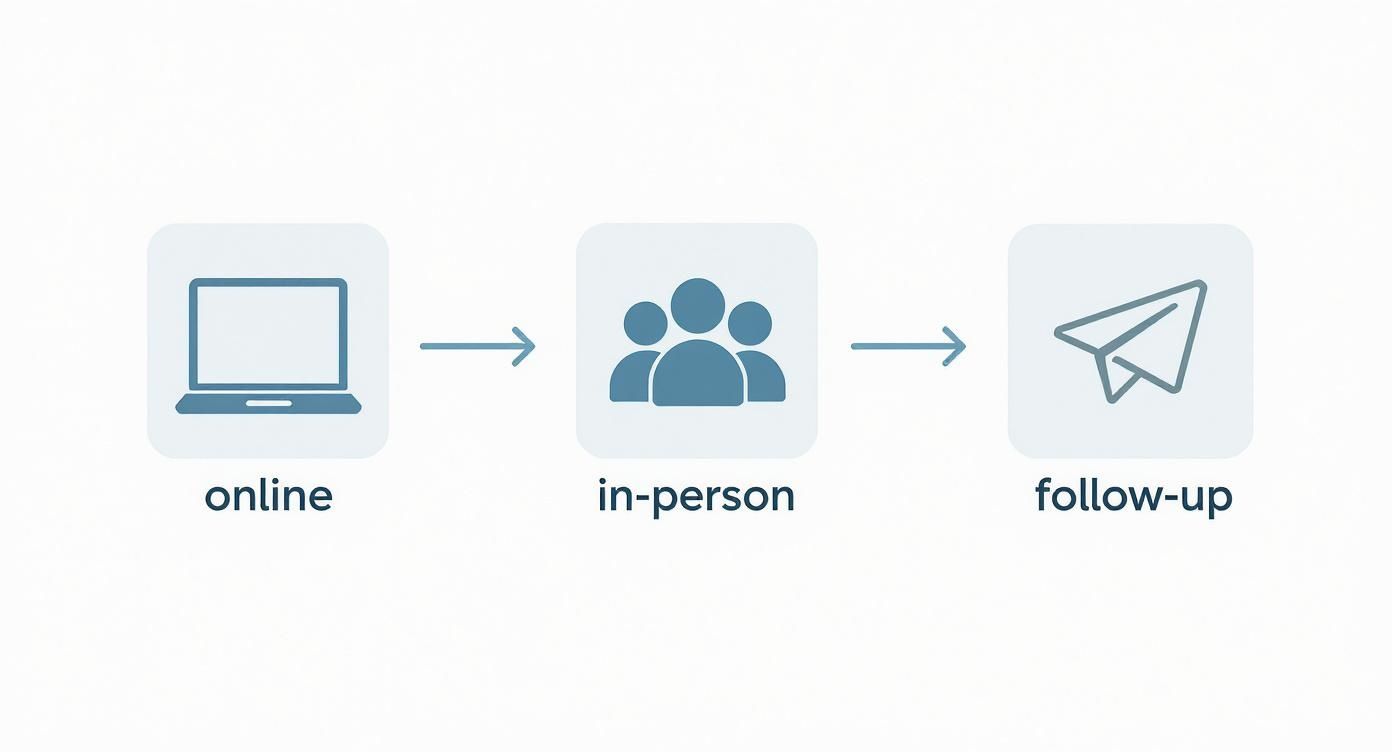
As you can see, building real relationships—both online and in person—is what will give your release the momentum it needs to succeed.
Planning a Release Campaign That Works
Just dropping a song on Spotify and hoping people find it is a surefire way to get lost in the shuffle. A great release is an event. It needs a promotional campaign built around it, and you should start planning at least four to six weeks before your release date.
Why so early? That lead time is crucial for pitching to playlists. Your distributor needs a week or two to get your music delivered to Spotify and Apple Music. Once it’s in their system, you can use your Spotify for Artists account to pitch your track directly to their editorial team. Landing on a major official playlist can be a career-making moment.
Your campaign checklist should also include:
- A Pre-Save Campaign: Get your followers to "pre-save" your song on Spotify or pre-add it on Apple Music. This drives a ton of engagement on release day, which the algorithms love, and it’s a great way to capture fan emails for your mailing list.
- Social Media Content: Don't just post on release day. Map out a full content calendar with behind-the-scenes videos, artwork reveals, audio snippets, and a countdown to build genuine excitement.
- Direct Outreach: Never underestimate the power of a personal email. Reach out to music bloggers, YouTube creators, and independent playlist curators who cover your genre. Make it personal and show them you've actually listened to their content.
Treating your release like a full-blown campaign is a core part of figuring out how to get into the music industry. While you're prepping all your promotional assets, it's also the perfect time to think about your monetization strategy. Platforms like OohYeah are designed to help you sell your music directly to fans, letting you keep a much bigger piece of the pie from all your hard work.
The industry is always changing. The global music business is projected to nearly double by 2035, and artists who succeed will be the ones who adapt. Thinking beyond a single track—by bundling music with other media or using video to find new listeners—is becoming key for both visibility and income. To really build a sustainable career, you have to engage your fans across every format possible. For a deeper dive, check out the full Goldman Sachs forecast on the future of music.
Answering the Tough Questions About a Career in Music
Breaking into music can feel like navigating a maze blindfolded. You hear a ton of conflicting advice, and it's hard to know which way to turn. Let's cut through the noise and tackle some of the biggest questions that pop up for artists just starting out.
This isn't about vague theories; it's about giving you straightforward answers to demystify the business side of your art. From how you'll actually pay the bills to whether that expensive music degree is worth it, we've got you covered.
So, How Much Money Can You Actually Make?
This is always the million-dollar question, and the truth is, there’s no single answer. An artist's income isn't a neat salary—it's a collection of different income streams you piece together over time. When you're first starting, your most reliable money-makers will likely be live gigs and selling merchandise directly to fans.
While getting your music on streaming platforms is crucial for getting heard, the royalties only start adding up once you hit millions of plays. The real game-changer for many independent artists? Sync licensing. This is when you get your song placed in a TV show, a movie, a video game, or an ad. A single placement in a popular TV series can pull in anywhere from $500 to $20,000, and landing a national ad campaign could mean a check for over $50,000.
One good sync placement can genuinely earn you more than a whole year of streaming royalties. It's a powerful and often overlooked income source that can build a sustainable career.
Is Music School a Must-Have?
Let's be clear: a formal degree is not a golden ticket. But that doesn't mean it's useless. Going to a good music school gives you a structured place to seriously sharpen your craft, provides access to high-end gear, and helps you build a foundational network of peers and mentors. You also get a solid understanding of the legal and financial nuts and bolts of the industry.
That said, some of the most successful people in music are completely self-taught. What matters most in today's industry is real, demonstrable skill and a compelling body of work. If you can produce killer tracks, write incredible songs, and build a loyal audience all on your own, nobody will care where—or if—you went to college.
Here’s a quick breakdown to help you weigh your options:
| Path | Pros | Cons |
|---|---|---|
| Music School | Structured learning, access to professional gear, built-in network of peers and mentors. | High cost, potential for creative conformity, curriculum can sometimes lag behind industry trends. |
| Self-Taught | Complete creative freedom, learn at your own pace, lower financial barrier to entry. | Requires immense self-discipline, networking is entirely on you, risk of having knowledge gaps. |
Ultimately, it comes down to your personality, your financial situation, and what you want to achieve. Neither path guarantees a successful career, but with enough hustle, both can get you there.
What’s a Music Publisher, and Do I Really Need One?
Think of a music publisher as the business partner for your songs—not your recordings. Their entire job is to monetize your compositions (the lyrics and melody you write). They handle all the administration, licensing, and royalty collection that comes with being a songwriter.
Here’s a glimpse of what a publisher handles for you:
- Chasing Down Royalties: They make sure you get paid every time your song is performed live, played on the radio, streamed, or used in any other commercial way.
- Pitching for Sync Deals: They have the connections to actively pitch your music to supervisors for placement in TV, film, and commercials.
- Managing the Paperwork: They take care of registering your songs with Performance Rights Organizations (PROs) and manage the complex world of copyright.
When you're just starting, you can absolutely act as your own publisher. But as your catalog of songs grows and your career gains momentum, a good publisher becomes an essential partner who can unlock new opportunities and make sure you're earning what you deserve.
Ready to take control of your music career? OohYeah provides the tools you need to sell your music, merch, and subscriptions directly to your fans—all in one place. Start building your independent business today at https://oohyeah.app.