How to Get Into the Music Business in 2024
Discover how to get into the music business with actionable advice on networking, skill-building, and creating revenue streams that work in today's industry.

October 27, 2025
Music Marketplace Advisor
Buying & SellingBreaking into the music business is really about getting three core things right: honing your craft, understanding how the industry actually works, and building a solid network. It’s a marathon, not a sprint. The ones who make it are the ones who put in the consistent effort and have a real plan, treating their passion like a business right from the start.
Your Realistic First Steps in the Music Business
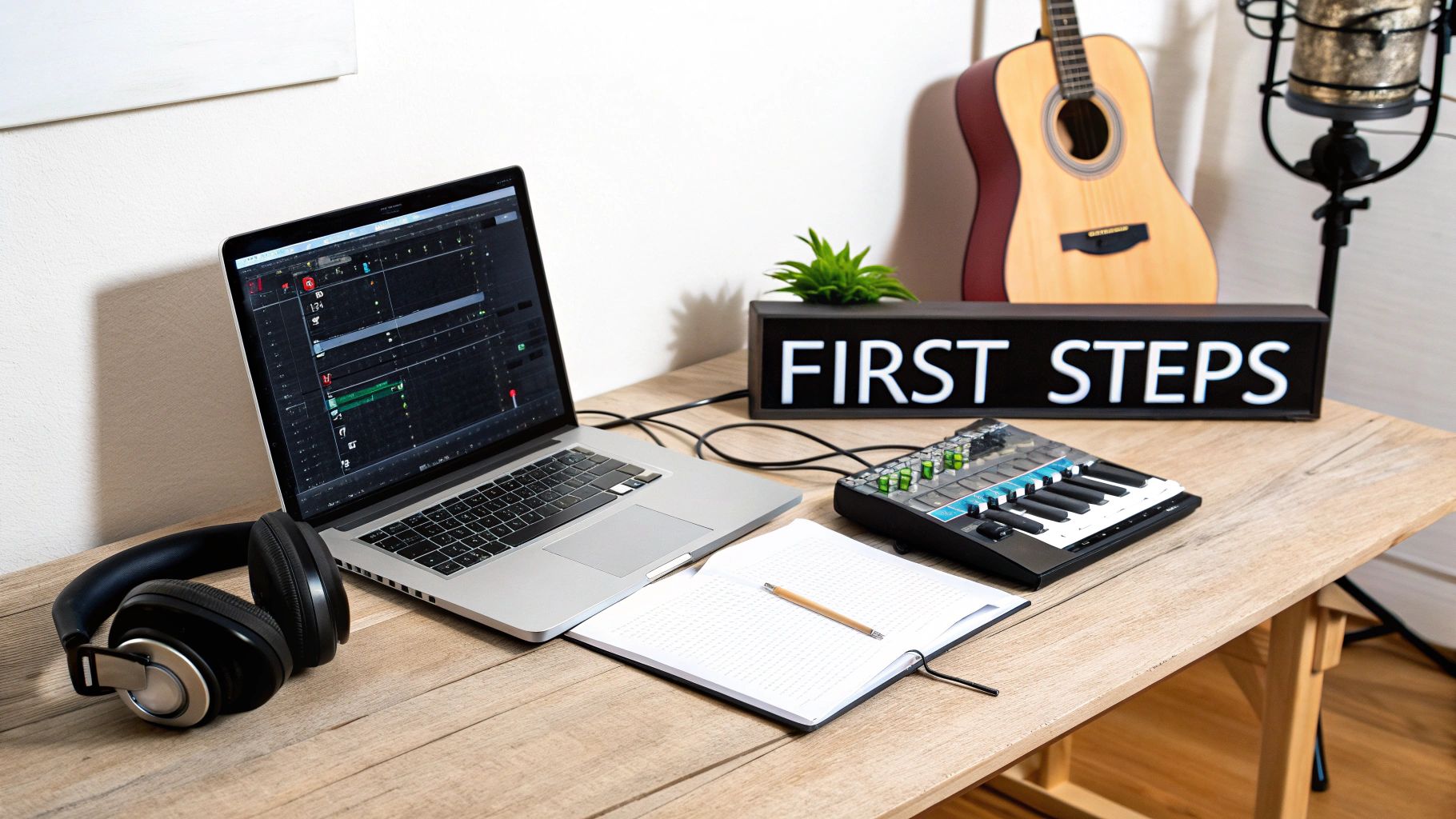
The idea of "breaking in" can feel overwhelming because there’s no single, guaranteed path. Forget the myth of being discovered overnight. A real career is built on a solid foundation, not a lucky break. I like to think of it as a three-legged stool—if one leg is weak, the whole thing topples over.
Whether you're an artist creating a sound no one has ever heard or an aspiring manager learning how to close a deal, these foundational pillars are non-negotiable. It’s great to be a phenomenal musician, but it won’t get you far if you don't understand how your royalties work. Likewise, knowing all the right people is useless if what you're offering—be it your music or your skills—isn't top-notch.
Master Your Craft and Define Your Value
First things first: get so good they can't ignore you. This means dedicated, focused practice. For an artist, this is about more than just playing scales; it’s about carving out your unique sound. For someone on the business side, it means developing real-world skills that solve problems, like knowing how to read a performance rights contract or make sense of streaming analytics.
Your talent is your entry ticket, but your professionalism and business acumen are what keep you in the game. The most successful people in music are those who respect both the art and the commerce behind it.
This early stage is all about building something of value. Once you have a polished skill or a portfolio of incredible songs, you have something real to bring to the table.
Understand the Modern Music Landscape
Let’s be real, the music business is competitive. Job growth for performers might look slow on paper, but that doesn't tell the whole story. The U.S. Bureau of Labor Statistics anticipates around 19,400 openings for musicians and singers each year. Most of that comes from people leaving the industry, which means there are always doors opening for those who are prepared.
What this really tells us is that persistence and a strong network are everything. Most work isn't a 9-to-5 job; it's a series of gigs, sessions, and projects. You can dive deeper into the musician employment statistics on the BLS website.
Laying the Groundwork for Your Network
You need to start building connections long before you think you need them. Your first network is usually local—the other musicians in your scene, the person who books the bands at the corner bar, the sound engineer who always makes you sound great. These relationships are the foundation your career will be built on. Treat every single person you meet with respect and genuine interest.
These three elements—your craft, your business sense, and your network—are the essential building blocks for a sustainable career. They're interconnected and equally important, whether you're behind the mic or behind the scenes.
The Three Pillars of a Music Career
To simplify, let's break down how these foundational elements apply to different roles in the industry.
| Pillar | Description for Artists | Description for Industry Professionals |
|---|---|---|
| Exceptional Craft | Writing, performing, and producing high-quality, distinctive music. This is your core product. | Developing specialized skills in areas like A&R, marketing, law, or tour management. This is your service. |
| Business Acumen | Understanding royalties, contracts, marketing, and how to build a brand around your music. | Knowing how to manage budgets, negotiate deals, analyze data, and create revenue streams. |
| Strong Network | Building relationships with fans, collaborators, promoters, and industry gatekeepers. | Cultivating a robust list of contacts, from artists and managers to lawyers and label reps. |
Embracing these three pillars gives you a clear and actionable framework. It sets you up not just for a lucky break, but for a long-term, successful journey in the music business.
Developing Skills That Get You Noticed
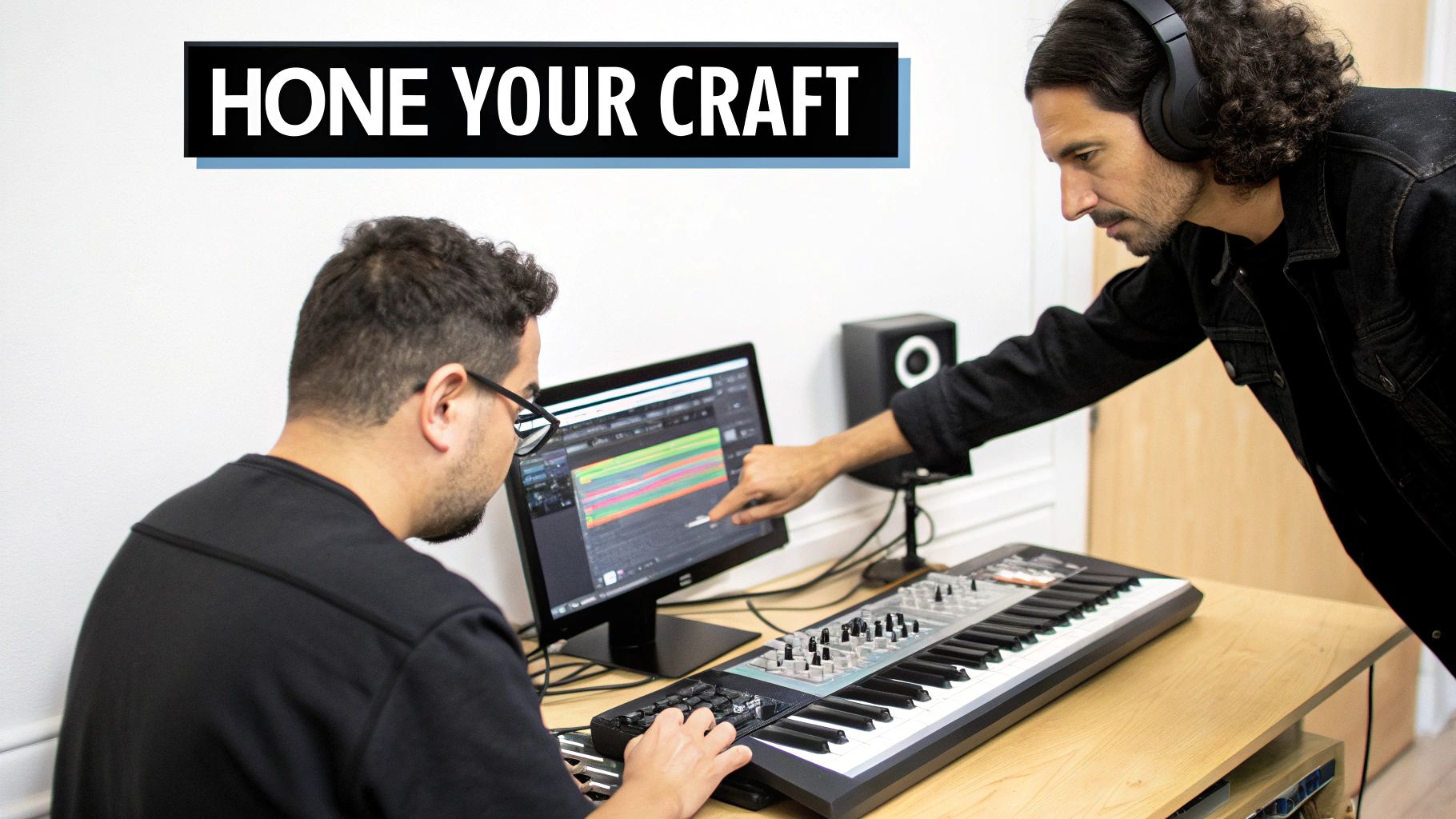
There’s a clear line between the rookies and the pros, and it’s drawn with deliberate, focused skill building. It's not just about talent; it's about craft.
For artists, this means finding your sonic signature by diving deep into production tools and experimenting until something unique clicks. I know a producer who landed a major placement simply because their custom vocal chain was unlike anything the A&R had ever heard.
That's the kind of thing that makes you memorable.
Master Your Production Software
You need to know your tools inside and out. It’s not about having every plugin; it’s about mastering one or two DAWs so they become an extension of your creativity.
- Ableton Live is incredible for real-time sound design and arranging on the fly.
- Logic Pro offers that seamless Mac integration for mixing and deep MIDI editing.
- FL Studio is legendary for its pattern-based sequencing that helps you get beats down fast.
- Reaper is a powerhouse for those who love customization and don't want to break the bank.
Knowing your software is your first and best calling card. It’s the proof in your portfolio.
"Nailing one piece of software can make your portfolio pop instantly. It shows you're serious and capable of delivering professional results."
But your technical skills are only half the battle. To truly compete, you need to understand the language of the business.
Get Your Business Chops in Order
Agents, publishers, and labels expect you to walk into a room understanding the fundamentals. They don't have time to teach you.
For industry pros, being able to read a basic contract or put together a project budget isn’t a bonus—it’s the bare minimum.
- Get comfortable with contracts. Before any meeting, read and summarize the key clauses. Know what you’re signing.
- Live in your data. Use a platform like Spotify for Artists to track your monthly listeners and see which playlists are driving real streams.
- Manage your money. Build a simple spreadsheet to track expenses and forecast revenue. It’s your business, so treat it like one.
- Visualize your wins. When you're pitching an agent, don't just give them numbers. Show them charts and graphs that tell a story.
I once saw an aspiring manager land their artist a tour spot by showing the booking agent a simple table of rising social media engagement rates. That data proved the artist had a dedicated, growing audience ready to buy tickets.
| Skill Type | Artist Focus | Industry Pro Focus |
|---|---|---|
| Software Mastery | Custom sound design and signature mixing | Workflow optimization and custom scripting |
| Data Analysis | Tracking weekly streams and playlist adds | Budget forecasts and calculating ROI |
| Contract Review | Understanding royalty splits and term lengths | Identifying clauses that affect liability and long-term rights |
When you combine your creative talent with a solid grasp of these business skills, you create a portfolio that proves you’re not just a dreamer—you’re a professional.
Weave Your Skills Into a Compelling Pitch
Your pitch needs to be a tight, compelling story that showcases both your sonic identity and your business results. It’s about connecting the dots for people.
For example, show them a graph of your streaming numbers spiking right after you dropped a track featuring a unique plugin preset you developed. That’s a powerful narrative.
- Offer to do a short studio trial to demonstrate your technical savvy.
- Send concise case study emails with hard metrics and embedded audio clips.
- Offer a free "mini-audit" of a track or a budget sheet to show your value upfront.
Find Your Edge Through Collaboration
Working with other talented people is one of the fastest ways to grow. It forces you out of your comfort zone and provides an immediate feedback loop.
Team up with a vocalist to co-produce a track. You’ll both walk away with refined mixing and arrangement skills you wouldn’t have learned alone.
- Set clear goals for every collaboration, like mastering a new EQ technique or automation trick.
- Schedule regular check-ins to share what you’re learning and keep the project on track.
- Document your workflow and save your settings. You'll thank yourself later.
A great collaborative piece in your portfolio demonstrates not just your technical abilities, but also that you can work well with others—a massively underrated skill in this business.
Turn Data Into Dollars with OohYeah
Platforms like OohYeah are goldmines for artists who know how to use them. The analytics dashboards can turn a sea of raw data into a clear story about your audience.
You can also use the platform's direct messaging to pitch collaborations or share new mixes with key industry contacts.
- Check your fan growth metrics on OohYeah every single week to fine-tune your marketing pitch.
- Share exclusive demos as community posts to get instant feedback from your most dedicated fans.
- Track your merch sales figures to highlight your revenue potential when talking to labels or sponsors.
These real-time reports aren't just for you; they are powerful assets to include in your pitch deck.
Data-driven storytelling is what connects your creativity with measurable, real-world impact. It’s the language investors and labels understand.
Stay Sharp with Ongoing Skill Audits
The industry doesn't stand still, and neither should you. Every quarter, take an honest look at your skills, celebrate your wins, and identify the gaps you need to fill.
Set small, achievable goals, like mastering a new plugin or landing a small sync placement for one of your tracks on OohYeah.
- Every 90 days, audit your mix quality against current industry benchmarks. Is it holding up?
- Update a personal "contract cheat sheet" with new terms you come across in OohYeah agreements or other deals.
- Refresh your pitch deck visuals with your latest data points and best new audio clips.
This constant process of auditing and updating keeps your skills sharp and your portfolio relevant. You're never caught off guard. When opportunity knocks, you'll be ready.
Building Your Brand and Professional Network
Your music can be phenomenal, but if no one knows who you are, it's just sound in a vacuum. In the music business, your brand is the story you tell, and your network is the audience that story reaches. These two elements are deeply intertwined, working together to turn raw talent into a tangible career.
Forget the outdated image of schmoozing at stuffy industry mixers. Real networking today is about building genuine, value-driven relationships, and it often starts online. Likewise, your brand isn't just a cool logo—it's the consistent, authentic identity you present across every platform, from your social media bio to the liner notes of your next release.
Crafting a Brand That Tells Your Story
Your brand is your professional identity. It’s the reason someone stops scrolling and clicks on your song out of a sea of options. For it to work, that identity has to be clear, compelling, and consistent everywhere someone might encounter you.
Start by digging into your core message. What do you stand for as an artist? What specific emotions does your music pull out of people? This isn't about manufacturing a fake persona; it's about amplifying the most authentic parts of yourself and your art.
- Visual Identity: Develop a consistent look for your album art, social profiles, and website. Think about specific color palettes, fonts, and photography styles that match your sound.
- Sonic Signature: Your sound is the heart of your brand. Make sure your production quality is professional and always reflects your unique artistic vision.
- Brand Voice: How do you communicate? Are you witty, introspective, or high-energy? Your captions, emails, and interviews should all sound like they come from the same person.
Think of it like this: an indie artist who consistently uses a melancholic, blue-toned visual theme and writes deeply personal lyrics is building a strong, cohesive brand. When a music supervisor for a dramatic TV series is searching for a specific mood, that artist’s clear branding makes them an easy and obvious choice for a sync licensing deal. This is how targeted branding makes opportunities find you.
Your Professional Toolkit: The Electronic Press Kit
An Electronic Press Kit (EPK) is your digital resume, and in today's industry, it's completely non-negotiable. It’s a one-stop shop for promoters, journalists, and A&R reps to get everything they need without having to chase you down for it. A polished EPK signals that you are professional and ready for business.
Your EPK should be a dedicated, easy-to-navigate page on your website containing:
- A Concise Bio: Have a short version (under 100 words) and a longer one (250-300 words) ready to go.
- High-Resolution Photos: Include both portrait and landscape shots that reflect your brand.
- Your Best Music: Embed 3-4 of your strongest tracks using a clean streaming player.
- Career Highlights: Showcase notable press mentions, past show flyers, or awards.
- Contact Information: Post clear details for you or your manager/agent.
Your EPK does the talking for you. It should answer every basic question a promoter or blogger might have, making it incredibly easy for them to say "yes" to booking you or featuring your music.
Strategic Networking That Actually Works
The old saying "your network is your net worth" holds up, but the approach has changed dramatically. It's less about who you know and more about who knows you for the right reasons. Quality trumps quantity every single time.
Instead of spamming hundreds of cold emails, focus on building targeted, meaningful connections. For instance, you could use LinkedIn to identify music publishers who work in your specific genre. Don't just fire off a generic connection request; engage with their posts for a few weeks, then send a personalized message referencing a project they worked on that you genuinely admire. This proves you've done your homework.
That same principle applies offline. Turning a brief chat with another musician at a local show into a lasting collaboration starts with genuine interest. Don't lead with what you need from them. Ask them about their gear, compliment their set, and find common ground. Follow up the next day on social media to continue the conversation. That’s how you plant the seed for a future relationship built on mutual respect. To really get ahead, you need to understand why networking is so important in the music industry and make it a consistent part of your routine.
Remember, cultivating a dedicated fanbase is also a crucial part of your network. These people are your first investors, your street team, and your biggest advocates. Learning proven strategies for building customer loyalty is an investment that pays dividends, creating lasting artistic relationships and a more stable career. After all, a loyal fanbase is a powerful asset when you're pitching to labels or promoters.
Finding Your Place in the Music Ecosystem
https://www.youtube.com/embed/-Vb2bkStOYI
When most people think of a music career, they picture the artist on stage. But behind every single one of those artists is a small army of professionals, each playing a critical role in making the music, the tour, and the business happen. Figuring out how to get into the music business often starts with seeing where your skills fit into that bigger picture.
This isn't a niche field; it's a massive economic engine. A 2021 report showed the U.S. music industry generates around $170 billion in value each year and supports nearly 2.5 million jobs. With approximately 236,269 music-related businesses operating across the country, the opportunities are everywhere.
Even highly technical roles are booming. For example, audio engineering salaries are projected to hit an average of $79,280 by 2025—that's a 22% jump in just six years. The industry is growing, and it needs talented people.
A Glimpse Behind The Curtain
Let's pull back that curtain and look at some of the key roles that keep the industry running. Don't just read the job titles; think about the mission behind each one. Are you a talent-spotter at heart, or do you get a thrill from the perfectly planned logistics of a massive live event?
- A&R (Artists and Repertoire): These are the industry's talent scouts. They're the ones digging through demos, hitting up local gigs, and tracking streaming data to find the next breakout star. Their job is to sign artists and then help shape their creative journey.
- Music Publisher: A publisher is all about the song itself—the composition and lyrics—not just one specific recording of it. They work to land an artist's songs in movies, TV shows, and commercials (known as sync licensing) or get them recorded by other performers.
- Tour Manager: This is the ultimate problem-solver on the road. A tour manager coordinates everything from travel and budgets to schedules and last-minute emergencies, all to make sure the artist gets on stage without a hitch, night after night.
- Digital Marketer: In today's industry, this role is essential. A digital marketer builds an artist's entire online world, running social media campaigns, fine-tuning their Spotify profile for maximum impact, and using fan data to map out the next big marketing move.
Before you can find your spot, you need a map of the territory. Our guide on how the music industry works is a great place to start building that foundational knowledge.
Finding Your Fit: A Day in The Life
To really know if a role is for you, try to picture what a typical day looks like. An A&R rep isn't just chilling and listening to music all day. They're in constant meetings, hammering out deal points, and acting as the crucial link between their artist and the record label. It’s a job that demands a great ear, sharp business acumen, and top-notch people skills.
A tour manager, on the other hand, lives out of a suitcase. Their office is the tour bus, and their success is measured by how smoothly everything runs. This is the perfect path for someone who thrives under pressure and has a gift for planning every detail.
The best career is one that aligns with your natural strengths. Are you a connector of people, a strategic thinker, or a creative visionary? The music industry needs all three.
Whether you're an artist or an aspiring industry pro, building your professional presence is key. This infographic shows how the essential pieces fit together.
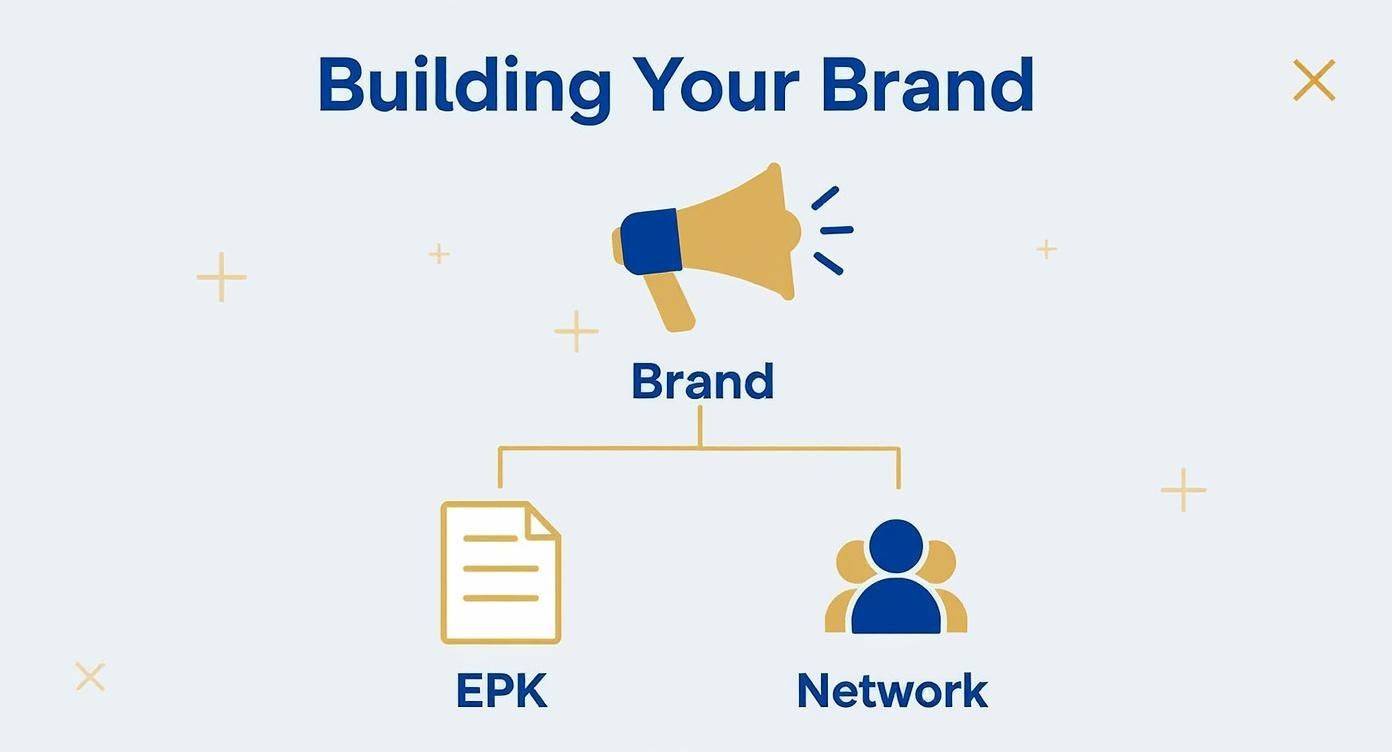
As you can see, a strong, authentic brand is the foundation. It informs how you build professional tools like an EPK and guides you as you grow the network that will ultimately open doors.
Demystifying Key Business Roles
It's easy to get confused by all the different titles and roles on an artist's team. To help clear things up, let's compare some of the most popular non-performance careers and see what it takes to land them.
Key Music Industry Business Roles Compared
| Role | Primary Responsibilities | Essential Skills | Common Entry Point |
|---|---|---|---|
| Artist Manager | Guides the artist's overall career strategy; coordinates the entire team and acts as the main business representative. | Strategic planning, negotiation, financial management, strong people skills. | Internship at a management firm, starting your own company with a developing artist. |
| Booking Agent | Secures live performance opportunities (gigs, tours); negotiates performance fees and routes tours. | Salesmanship, extensive network of venue contacts, logistical expertise. | Mailroom or assistant at a talent agency (e.g., WME, CAA, UTA). |
| Music Publisher | Manages a songwriter's catalog of compositions; pitches songs for sync placements and to other artists. | Copyright law knowledge, A&R instincts, networking with music supervisors. | Internship or coordinator role at a publishing company (e.g., Sony Music Publishing, UMPG). |
| Tour Manager | Manages all logistics while an artist is on the road, including travel, budgets, daily schedules, and personnel. | Meticulous organization, calm under pressure, budgeting, problem-solving. | Working as a roadie or tech, managing local bands, tour coordinating assistant. |
While these roles often collaborate, their day-to-day functions are distinct. A manager is the CEO of the artist's career, while a booking agent is a specialized salesperson focused solely on live shows.
To find your perfect niche, you have to keep up with where the business is headed. Staying on top of the latest key entertainment industry trends for creators will help you spot emerging opportunities before everyone else does. At the end of the day, a successful career is about finding that sweet spot where your passion meets a real need in the market.
How to Actually Make Money from Music
Let's be real: creating music that connects with people is the reason you're here. But turning that passion into a reliable paycheck is what allows you to keep doing it. Building a sustainable career isn’t about one big break; it’s about building a system of diverse income streams that work together.
The old model of relying on album sales is long gone. If you're banking solely on streaming royalties, you're leaving a ton of money on the table. While streams are a piece of the puzzle, the real financial stability often comes from less obvious places like sync licensing, direct fan support, and smart merchandising.
Beyond Streaming: Your Core Revenue Streams
Think of streaming as your digital billboard—it gets your name out there, but it’s not the whole business. To really thrive as an independent artist, you have to adopt an entrepreneurial mindset. Each song is a product with the potential to generate revenue in multiple ways.
Here are the essential streams you need to focus on building from day one:
- Music Royalties: This is your foundation. It covers mechanical royalties from streams and sales, plus performance royalties from radio, live shows, or even being played in a coffee shop. Getting this set up correctly is non-negotiable.
- Live Performances: Nothing beats playing live. It’s a direct line to your audience and a dependable source of income, from ticket sales to the merch you sell at the back of the room.
- Sync Licensing: Getting your music into films, TV shows, commercials, or video games can be a game-changer. A single sync deal can sometimes pay more than millions of streams combined.
- Merchandise: T-shirts, vinyl, and other branded gear aren't just promo items. They are high-margin products that give your fans a tangible way to support you directly.
- Direct-to-Fan Support: Platforms like Patreon or the subscription tools on OohYeah allow your most loyal fans to back you with recurring payments, usually in exchange for exclusive content and a closer connection.
First Things First: Securing Your Royalties
Before you can collect a dime, you have to register your work. This is the single most common mistake new artists make, and it costs them dearly.
You absolutely must affiliate with a Performance Rights Organization (PRO) like ASCAP, BMI, or SESAC. These organizations are the only way to collect performance royalties when your music is played publicly. Without them, that money simply vanishes.
Next, you need a distributor like DistroKid or TuneCore to get your music onto Spotify, Apple Music, and other platforms. They are the ones who will collect the mechanical royalties generated by every stream and download and get them to you.
Think of your PRO and distributor as your financial back office. Setting them up properly from the start ensures that every play and every sale generates income that is rightfully yours. Don't skip this.
Unlocking High-Value Sync Licensing Deals
Sync licensing can feel like a hidden corner of the industry, but it has the power to change an artist's entire trajectory overnight. A placement in a hit Netflix show or a major ad campaign provides a significant upfront fee—often anywhere from $500 to over $20,000 for an indie artist—and puts your music in front of a massive new audience.
But here’s the catch: music supervisors almost never take unsolicited music. They work through trusted gatekeepers to make sure all the rights are cleared and the music is high quality.
This is where you need to connect with:
- Sync Agents: These are specialists with deep relationships in the film, TV, and advertising worlds. They pitch your music for specific projects and handle all the deal-making.
- Music Libraries: These are curated catalogs of pre-cleared music that supervisors browse for the perfect track. Getting into a respected library is like putting your music on the right shelf for discovery.
To get their attention, you need a professional, well-organized catalog of your best tracks with all the metadata—mood, genre, keywords—already embedded.
Building a Thriving Direct-to-Fan Business
The relationship you have with your fans is your single most valuable asset. Monetizing that connection directly creates a stable income stream that you control. This is exactly where a platform like OohYeah comes in, giving you a space to sell merch and offer exclusive content without a middleman taking a massive cut.
Get creative here. Don't just sell a t-shirt. Offer limited-edition vinyl, signed posters, or behind-the-scenes access to your recording sessions. For a deeper dive into more ideas, check out our guide on how independent artists make money from music.
All of this is happening within a growing global music market. The latest IFPI Global Music Report shows consistent revenue growth for over a decade, driven by streaming and fresh investment in new talent. This healthy economic climate creates real opportunities for artists who blend their creativity with a smart business strategy.
A Few Questions That Always Come Up
When you're trying to figure out how to get into the music business, it can feel like everyone has a different map. As you start your journey, some questions pop up over and over. Let's tackle a few of the big ones with some straight-up, practical advice.
Do I Really Have to Move to LA, Nashville, or New York?
Ah, the classic question. The short answer? Not anymore. At least, not right away. The old rulebook said you had to be in a major music city to even have a shot, but the internet has completely rewritten that chapter.
Your first mission is to conquer your hometown. Build a real, dedicated following right where you are. Sell out the local clubs. Get people talking. Use your social channels and platforms like OohYeah to forge connections with collaborators and industry folks from anywhere on the globe.
The smart play today is to build undeniable heat in your own backyard. Once you have that momentum, you can make strategic trips to the big hubs for showcases, co-writing sessions, or key meetings. Make them want you to come to them, don't just show up and hope for the best.
Now, let's be real. If your dream is a highly specialized role—like becoming a go-to session player for major label artists, an A&R scout, or an engineer at a legendary studio—then yes, being physically present in one of those cities still gives you a massive advantage. The sheer concentration of opportunity is hard to replicate.
What's the Biggest Mistake Most Newcomers Make?
This one is easy, and it's a costly one: ignoring the "business" part of the music business. Too many gifted artists and aspiring pros get so wrapped up in their craft that they assume their talent alone will get them discovered.
That's a myth, and a dangerous one at that. You have to think of yourself as the CEO of your career from day one. That means taking the time to learn about music publishing, understanding the basics of marketing, and getting familiar with what a standard contract looks like. It’s about being proactive and building your network, not just waiting for some gatekeeper to magically find you.
Treating your career like a startup is your best insurance policy against bad deals, missed chances, and burnout. Your business smarts are every bit as crucial as your creative talent.
How Much Does a Music or Business Degree Actually Matter?
A formal degree can definitely be helpful, but it's not the golden ticket some people think it is. Its real value depends entirely on what you want to do in the industry.
- For performers: If you're diving into technically demanding genres like classical or jazz, a formal music education can be priceless for honing your skills and discipline.
- For business roles: A music business degree is great for building a solid foundation of knowledge. Even more valuable, though, is the built-in network of classmates and professors you get from day one.
At the end of the day, however, this industry runs on proven experience and tangible results. A killer internship, a portfolio of amazing tracks you produced, or a track record of growing a local band's audience will always speak louder than a diploma. The winning formula is a mix of constant learning—whether it's a degree, online courses, or workshops—and getting your hands dirty with real-world experience. What you can do will always be your most powerful resume.
Ready to take control of your music career and build your business from the ground up? OohYeah provides the tools you need to sell your music, merchandise, and exclusive content directly to your fans—all in one place. Start building your sustainable career today at https://oohyeah.app.