how to get in the music industry: start your career
how to get in the music industry: practical steps to build skills, network effectively, and launch your career.

December 1, 2025
Music Marketplace Advisor
Buying & SellingGetting into the music industry is about more than just raw talent. It's a calculated blend of sharpening your skills, building a brand that people connect with, and actually understanding the business you're trying to break into. The artists who last are the ones who treat their passion like a startup—they define their unique place in the market and build a solid foundation to launch a real, sustainable career.
Building Your Foundation in the Music Business
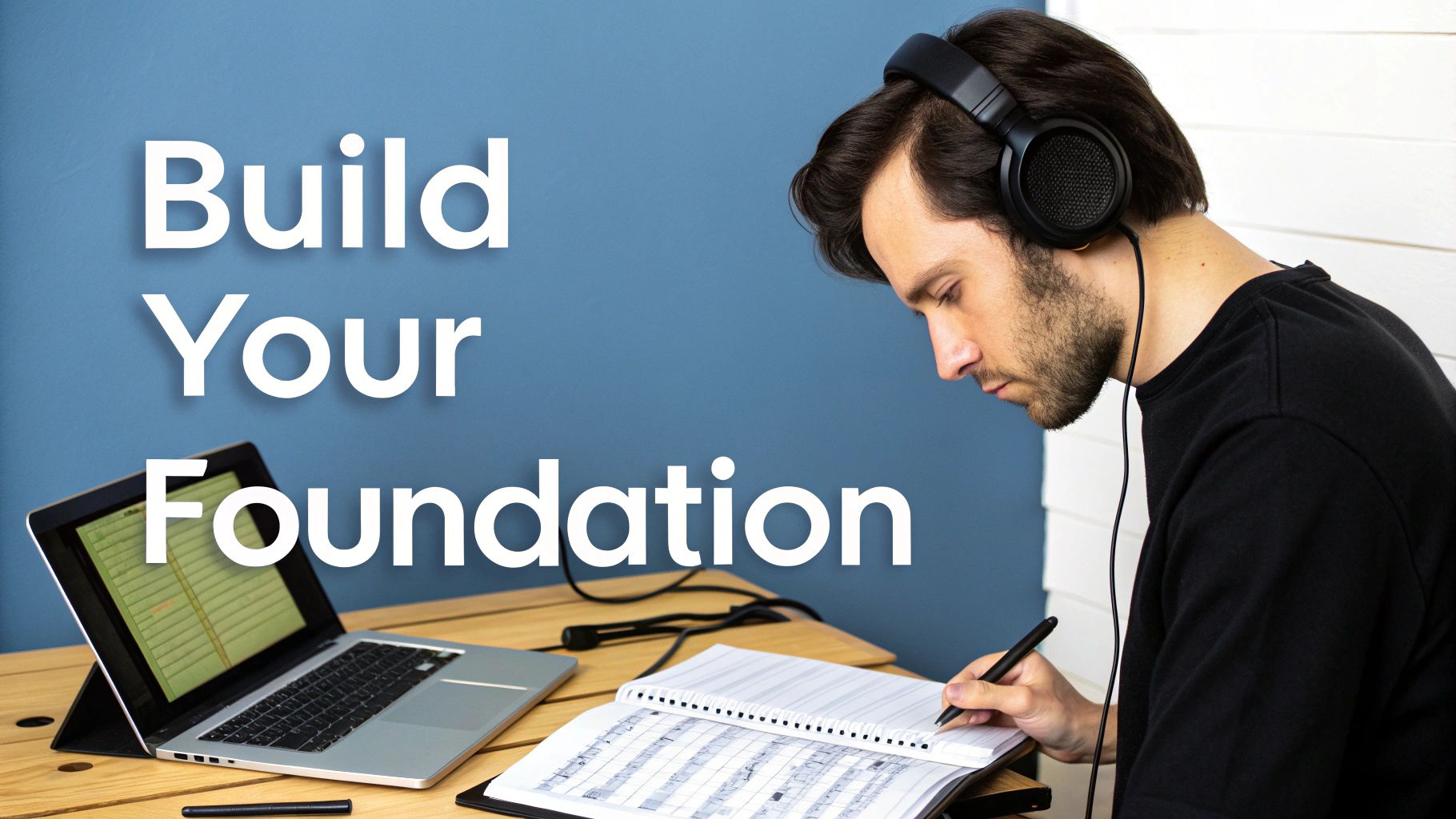
Before you even dream of sold-out shows or chart-topping hits, you have to lay the groundwork. This is the unglamorous part of the journey, but it’s what separates the career professionals from the flash-in-the-pan acts. It all starts with some honest self-reflection.
Where do you fit into this massive ecosystem? Are you a performer, a songwriter, a producer, a mix engineer, or a manager? You can't be everything to everyone, so figuring out your specific niche helps you focus your time and energy where it will actually make a difference.
Define Your Role and Hone Your Craft
Once you know your lane, the real work begins. Honing your craft isn't just about practicing—it’s about deliberate, goal-oriented improvement. A vocalist might take lessons to expand their range. A producer could lock in and master a new DAW or deconstruct the song structures of current hits to see what makes them tick.
To give you a better idea, here’s what that looks like in practice:
- Artists & Performers: Work on developing a sound and stage presence that are uniquely yours. This means constant practice, writing original material, and hitting up local open mic nights to build confidence and get real-world feedback.
- Songwriters: Double down on storytelling, melody, and structure. Co-writing is one of the best ways to sharpen your skills and build your network at the same time.
- Producers & Engineers: Start building a portfolio of high-quality tracks. A great way to get started is by offering to produce for local artists to gain experience and show what you can do.
To help you map out your path, this table breaks down some common industry roles and the skills you'll need to get there.
Essential Roles and Required Core Skills in Music
This breakdown of common music industry roles and the fundamental skills required can help you align your passion with a viable career path.
| Industry Role | Core Skillset | First Steps to Take |
|---|---|---|
| Artist/Performer | Musical proficiency, stage presence, songwriting (optional but recommended), basic music theory. | Play open mics, record demos, build a social media presence, collaborate with other musicians. |
| Songwriter | Strong grasp of melody, harmony, rhythm, and lyrical storytelling. Often proficient in at least one instrument (guitar/piano). | Co-write with others, build a song catalog, pitch songs to publishers and artists, learn about music publishing. |
| Music Producer | Expertise in a Digital Audio Workstation (DAW), knowledge of arrangement, sound design, and mixing. Strong project management skills. | Produce for local artists, create a portfolio on SoundCloud or your own site, intern at a recording studio. |
| A&R Representative | Excellent ear for talent, deep industry knowledge, networking skills, understanding of market trends. | Scout local shows, build a network of contacts, intern at a record label or publisher, create a music blog or playlist. |
| Music Manager | Business acumen, negotiation skills, marketing knowledge, excellent organization and communication. | Offer to help a local band with booking/promotion, read music business books, network with industry professionals. |
Choosing a role and developing the right skills is the first step toward turning a passion into a profession.
Understanding the Business Side of Music
Here’s a hard truth: talent without business sense is one of the fastest ways to fail. You don’t need an MBA, but you absolutely must understand how money flows and how rights are managed. This is where so many creatives stumble—they focus only on the art and ignore the commerce that makes it all possible.
Understanding music rights, revenue streams, and contracts from day one is non-negotiable. It's the difference between building a career you own and one that owns you.
If you're new to the business side, our guide on how the music industry works is a great place to start. It offers a detailed look into these mechanics.
The global music industry isn't just surviving; it's growing. The IFPI Global Music Report showed a tenth straight year of growth, with total revenues hitting US$29.6 billion—a 4.8% increase. This signals a world of opportunity for those who are prepared.
That growth is exciting, but it also means more competition. Your foundational knowledge is your competitive edge. It helps you make smart decisions about everything from distribution deals to royalty splits, ensuring you’re not just another artist in the crowd, but a professional ready to build something that lasts.
Crafting Your Brand and Professional Toolkit
Talent might get you in the room, but a killer brand and a pro toolkit are what keep you there. Let's be real: being a great musician isn't enough anymore. You need a story—something that connects with fans, venue bookers, and A&R reps on a human level. This is all about building an identity that feels authentic to you but looks undeniably professional to everyone else.
Think of your brand as the instant answer to the question: "What do you sound and feel like?" It’s the blend of your genre, your look, your lyrics, and the vibe you put out online. Get this right, and everything else falls into place.
This isn't about inventing a fake persona. It's about finding the most interesting parts of who you already are and turning up the volume. Are you a gritty, blues-rock guitarist? Your brand shouldn't look like a polished pop act. Your photos, fonts, and colors should feel like they came straight out of your songs.
Develop a Cohesive Visual Identity
Once you've nailed down your story, you need to translate it into a look. Your visuals are your handshake; they're often the very first impression you make, so they have to be sharp and perfectly aligned with your music. When everything looks cohesive, it builds instant recognition and signals that you’re serious about your career.
A few things you absolutely need:
- A Professional Logo: This could be a stylized take on your name or a simple symbol that captures your sound. The key is making sure it works everywhere—from your album art and social media profiles to a t-shirt.
- A Consistent Color Palette: Pick two or three core colors that match the mood of your music. Stick to them across your website, social media, and press materials. It’s a simple trick that makes you look instantly more professional.
- High-Quality Photography: Seriously, don't skimp here. Invest in a real photoshoot. You need a mix of great headshots, dynamic performance photos, and more creative, on-brand images. Grainy, poorly lit photos can tank your credibility in a second.
Build Your Electronic Press Kit
Your Electronic Press Kit (EPK) is your digital resume, and it needs to be flawless. It's the go-to package you'll send to promoters, bloggers, and industry contacts so they can get everything they need without having to dig for it. A polished EPK says you're organized, professional, and ready to go.
An EPK isn’t just a bunch of files in a folder. It’s a carefully curated pitch. It should be clean, easy to scan, and make someone say "wow" in under 60 seconds.
Here’s what every solid EPK must include:
- Your Bio: A short, punchy biography (around 150-250 words) is perfect. Tell your story, mention your biggest wins, and focus on what makes you different.
- High-Resolution Photos: Offer a handful of your best promo shots that are cleared for press use. Make them easy to download.
- Your Best Music: Don't send your whole catalog. Link to 2-3 of your absolute strongest tracks that define your sound. You want to make an immediate impact.
- Links to Social Media and Website: Provide direct links so they can see your online footprint and how you connect with your audience.
- Contact Information: Make it dead simple for them to get in touch. List clear contact details for yourself or your manager.
This simple toolkit makes it incredibly easy for the right people to write about you, book you, or sign you.
Establish a Strong Online Presence
Think of your online presence as your storefront—it's open 24/7. Everything needs to look consistent and professional, from your website to your social profiles. Start by building a simple, clean website to act as the central hub for your EPK, music, tour dates, and merch.
From there, pick the social media platforms where your ideal fans actually hang out. You don't have to be everywhere at once. Mastering effective social media scheduling strategies is a game-changer for maintaining a consistent presence without burning out. It lets you plan ahead and keep the conversation going.
Ultimately, a strong brand and a professional toolkit show the world you're not just a hobbyist. It proves you've invested in yourself and are ready for whatever opportunity comes your way.
Putting Your Music Out There: A Guide to Effective Release and Distribution
You've poured everything into creating your music. Now comes the moment of truth: getting it into the world and into the ears of people who will love it. This isn't just a matter of uploading a file and hoping for the best. A smart, strategic release is what separates the artists who get heard from those who get lost in the noise.
Think of your release plan as the final instrument in your track. It shapes the entire experience, ensuring your music not only sounds professional but also lands on the right platforms where new fans are waiting to find you.
From Your Room to a Radio-Ready Record
The good news? You don't need a multi-million dollar studio anymore. So many incredible tracks start life in a home studio with just a solid microphone, an audio interface, and a Digital Audio Workstation (DAW). The real secret is capturing a clean, well-recorded take from the very beginning.
Once you have your raw tracks, it's time for mixing and mastering—the magic that turns a great demo into a commercially competitive song.
- Mixing is where you artfully blend every instrument and vocal track. A great mix makes sure each element has its own space to shine, creating a balanced and cohesive sound.
- Mastering is that final coat of polish. A mastering engineer will optimize the track's overall loudness, EQ, and stereo width, making sure it sounds incredible everywhere, from high-end headphones to a tiny phone speaker.
Picking Your Digital Distribution Partner
With a polished master in hand, you need a way to get your music onto Spotify, Apple Music, and all the other major streaming services. That's where a digital music distributor comes in. They are the essential link between you and the digital stores.
Independent artists have a ton of great options, like DistroKid, TuneCore, or CD Baby. Each one operates a little differently; some have an annual fee for unlimited uploads, while others might take a commission or charge per release. Do your homework to find the one that fits your budget and how often you plan to release music. For a deeper dive, check out our guide on the best strategies for independent music distribution.
This is a great visual of how your brand development feeds directly into building your professional press kit, which is crucial for a successful online launch.
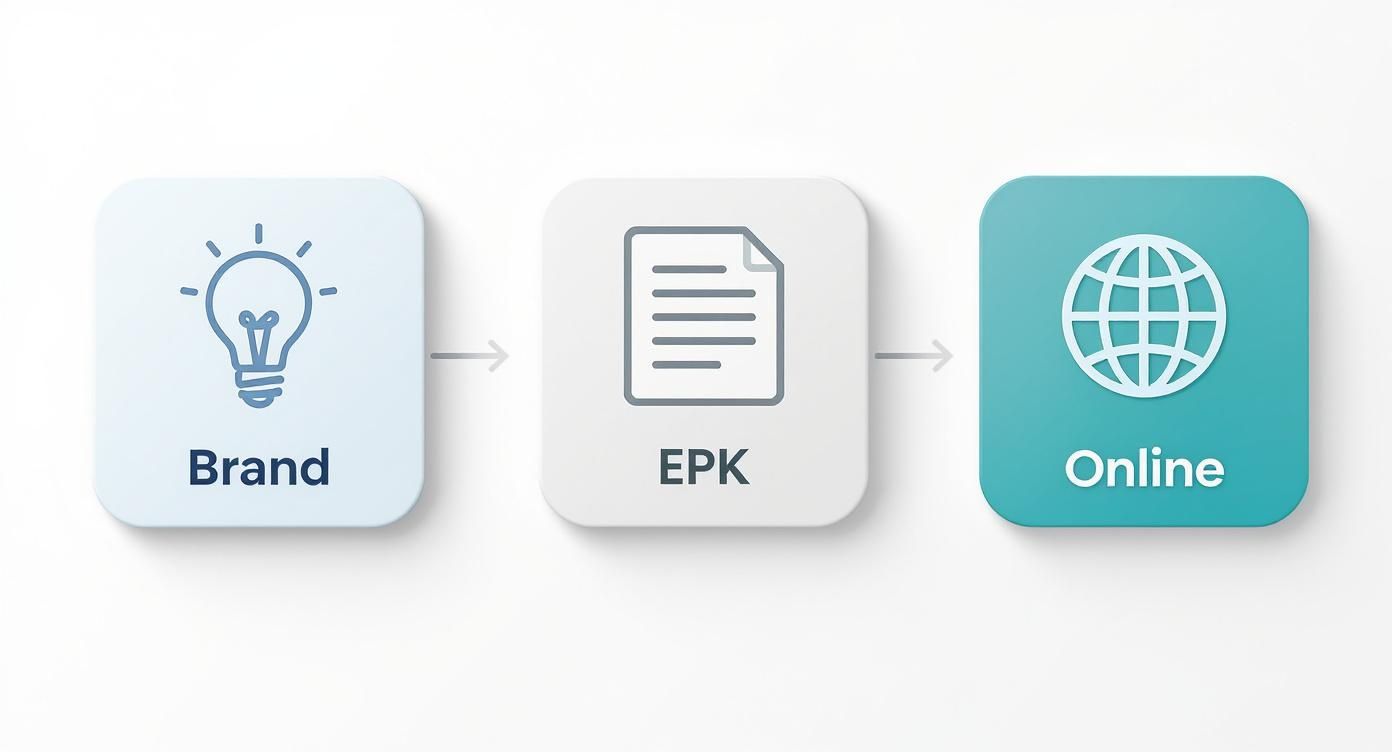
As you can see, a solid brand identity is the foundation. It informs the creation of your EPK, which then becomes the core of your promotional efforts when you're ready to release new music.
Making Sense of the Streaming World
Let's be clear: being online isn't optional. Streaming is the primary way people discover and listen to music today, completely changing the game for artists. The numbers don't lie—music streaming now accounts for between 84% and 89% of the industry's total revenue.
In the US alone, there are over 105.3 million paid premium music subscriptions, which is a 6.3 million jump from the previous year. If you want to build a career, you have to be where the listeners are.
Don’t treat your release plan as an afterthought. It’s a creative process that’s just as vital as writing the song. A brilliant track with a weak release strategy is a surefire way to get overlooked.
Finally, as you get your music out there, you have to protect it. Understanding copyright isn't just for lawyers; it's a fundamental part of building a real, sustainable career and can save you from massive headaches. A fantastic place to start is learning how to avoid copyright strikes on YouTube, as those principles are valuable across the board. Releasing music is more than an art form—it’s a business move that demands foresight and a solid grasp of how the industry works today.
How to Network and Build Real Industry Connections
That old saying, "it's not what you know, it's who you know," has never been truer than it is in music. Talent gets your foot in the door, but a strong, genuine network is what keeps you in the room and builds a lasting career. This isn't about collecting contacts; it's about building a real community of peers, mentors, and collaborators who have your back.
The biggest mistake I see artists make is treating networking as transactional. They're always looking for what they can get. You have to flip that script. Focus on playing the long game by giving value long before you even think about asking for something.
Move Beyond the Cold DM
Look, blindly firing off your SoundCloud link to an A&R rep or a manager is the fastest way to get ignored. Their inboxes are a war zone. To even have a chance, your outreach has to be personal, strategic, and professional.
Instead of the generic "check out my music" plea, your goal should be to start an actual conversation.
- Engage First, Ask Later: Before you even think about sliding into those DMs, follow them. For a few weeks, interact with their posts. Leave thoughtful comments. Show them you’re actually paying attention to what they do and not just spamming a list.
- Find Common Ground: When you do finally reach out, have a real reason. Did they just sign an artist you genuinely admire? Tell them that. Did they say something interesting on a podcast? Reference a specific point they made.
This simple shift in approach shows you've done your homework and respect their time, which makes them infinitely more likely to listen.
Your network should be a support system, not just a Rolodex. Focus on building real friendships with the people on your level. The producers, artists, and managers you grind with today will be the industry leaders you're making deals with tomorrow.
Mastering the Art of the Follow-Up
Making the initial connection is just step one. The real work—and where most people fail—is in the follow-up. A quick, polite follow-up message can turn a fleeting introduction into a solid connection.
After you meet someone at a show or connect online, shoot them a short message within 24-48 hours. Just remind them where you met or what you chatted about. The goal isn't to make an ask; it's just to stay on their radar and reinforce the connection you made.
Where to Build Your Industry Network
Opportunities to connect are everywhere if you know where to look. A solid strategy involves a mix of hitting the pavement and working the digital channels. Both have their own unique advantages.
Digital Networking Hotspots
- LinkedIn: It’s not just for suits and corporate gigs. A&R reps, music publishers, and managers are all on there. When you connect, always send a personalized note mentioning their work.
- Instagram: This is where the industry lives day-to-day. Follow professionals, engage with their content, and build a slow rapport. It’s a great place to show your personality.
- Online Communities: Dive into Facebook groups, Discord servers, and subreddits for your specific genre or skill set (like songwriting or beat-making). These are goldmines for finding collaborators.
In-Person Opportunities
- Local Shows: Go to gigs. Seriously. Support other musicians in your scene and make it a point to introduce yourself to them, the sound engineer, and the venue staff.
- Industry Conferences & Workshops: Events like SXSW or even smaller, local music business seminars are built for networking. Go in with a game plan and a list of people you'd like to meet.
- Open Mic Nights: These are invaluable for meeting other musicians who are on the same journey. It's a low-pressure way to perform, get feedback, and find your future bandmates or creative partners.
At the end of the day, understanding why networking is so important in the music industry is just the beginning. The real progress comes from consistently showing up, offering value, and nurturing the relationships that will become the foundation of your entire career.
Monetizing Your Talent and Diversifying Your Income

Let's talk about the part that turns your passion into a career: getting paid. It’s easy to get lost in the creative process, but building a sustainable financial model is what gives you the freedom to keep making music. Thriving in this industry means you have to think beyond a single paycheck and start building a portfolio of income streams.
Relying on streaming royalties alone is a tough road, especially when you're just starting out. The artists I've seen build careers that last are the ones who treat their music as the centerpiece of a much bigger business.
Understanding Your Royalties
Royalties are the bedrock of a musician's income, but the whole system can feel intentionally confusing. Getting a handle on the different types is the first step to making sure you're collecting everything you've earned. They mostly fall into two big categories: money from your master recordings and money from the song itself (the composition).
Here's a quick rundown of what that actually means:
- Mechanical Royalties: You earn these whenever your song is reproduced. Think of it as a copy being made—this applies to everything from a fan streaming it on Spotify to a record label pressing it on vinyl.
- Performance Royalties: These are generated when your song is played publicly. That could be on the radio, in a coffee shop, at your own concert, or even as background music on a TV show. This is where organizations like ASCAP and BMI come in; they track these plays and collect the money for you.
- Master Recording Royalties: This is the money paid to the owner of the specific recording of your song. If you're an independent artist, that's you. If you're signed to a label, they likely own the master and will pay you a percentage.
Seriously, if you haven't already, go sign up with a Performing Rights Organization (PRO) like ASCAP or BMI right now. If you don't, you're literally leaving money on the table that they can't send you.
Expanding Beyond the Stream
While royalties are absolutely essential, they’re just one piece of the financial puzzle. Real stability comes from diversification. This strategy doesn't just bump up your total earnings; it insulates you from the ups and downs of any single revenue source.
If your streaming numbers take a dive one month, it won't be a catastrophe if you’re still making money from other ventures. Each income stream is another pillar holding up your career.
The modern artist is an entrepreneur. Building multiple revenue streams isn't just a smart financial move; it’s a necessary strategy for long-term career sustainability and creative freedom.
To give you a clearer picture, let's compare some of the most common ways artists are making money today. Some require more upfront effort, while others can become a steady trickle of passive income over time.
Music Industry Revenue Streams Comparison
| Revenue Stream | Earning Potential (Low-High) | Key Platforms/Methods | Effort Required |
|---|---|---|---|
| Merchandise Sales | Medium-High | Your website, OohYeah, Bandcamp, live shows. | Medium |
| Live Performances | Low-High | Local venues, festivals, corporate gigs, online concerts. | High |
| Sync Licensing | High | Sync agents, music libraries, direct pitches. | High |
| Teaching/Coaching | Low-Medium | Private lessons, online courses, workshops. | Medium |
| Fan Subscriptions | Low-Medium | OohYeah, Patreon, fan clubs. | Medium |
As you can see, there are a lot of avenues to explore. Getting a feel for what works for your brand and your audience is key to building a robust and reliable income structure.
Unlocking the Power of Sync Licensing
Sync licensing—getting your music placed in TV shows, films, commercials, or video games—can be a total game-changer. I’ve seen a single placement completely transform an artist's financial situation. Fees for indie artists can start around $500 for a small TV spot and soar past $20,000 for a major ad campaign.
The most common route is to work with sync agents who already have deep connections with music supervisors. To even get in the door, you need what they call "one-stop" tracks. This just means you control 100% of both the master recording and the publishing rights, making it super simple for a supervisor to license your song without legal headaches.
Building a Direct-to-Fan Business
Never underestimate how much your biggest fans want to support you directly. Creating ways for them to do that cuts out the middlemen and forges a much stronger bond between you and your community.
- Merchandise: Don't just slap your logo on a cheap t-shirt. Get creative. Think about unique items that your fans would actually love, like signed posters, custom guitar picks, or limited-edition vinyl.
- Fan Subscriptions: Platforms like OohYeah are built for this. You can offer exclusive content—demos, behind-the-scenes videos, early access to tickets—to fans who pay a small monthly fee to be part of your inner circle.
This direct-to-fan model generates consistent, predictable revenue and builds a loyal community that feels truly invested in your journey. By combining these strategies with your royalties, you can create a financial foundation that will support your artistic vision for years to come.
Answering Your Biggest Questions About Breaking Into Music
If you're just starting out, the path into the music industry can feel like a maze. There's so much conflicting advice and a ton of myths that can send you in the wrong direction. Let's cut through the static and tackle some of the most common questions artists and aspiring pros run into.
So, Do I Actually Need a Music Degree?
This one comes up all the time, and the short answer is no. A formal education can definitely give you a solid foundation and a built-in network, but it is absolutely not a requirement for a successful career. Plenty of top artists, managers, and label execs learned everything they know by doing it, not by sitting in a classroom.
At the end of the day, what really moves the needle is your skill, your hustle, and your professionalism. A killer portfolio and real-world results speak volumes louder than a diploma. Put it this way: a label would much rather sign an artist with 10,000 real streams and a loyal fanbase than someone with a degree but zero audience.
How Much Money Does It Realistically Take to Get Started?
This is a "how long is a piece of string" question—the cost can be all over the map. The good news is that you can get off the ground with a pretty lean budget these days. Affordable home studio gear and cheap digital distribution mean you can get a professional-sounding track made and released for just a few hundred bucks if you're smart about it.
Of course, the costs can pile up fast once you start paying for professional mixing, a music video, or a real marketing push. The trick is to spend your money where it counts.
Don't spread your budget thin. It’s far better to invest in one incredible, professionally mastered song with a focused promotional campaign than to drop a low-quality album that disappears into the void.
Once you start making a little money from your music—whether it's from streams, merch, or shows—the smartest thing you can do is pour it right back into your career. That's how you build real, sustainable growth.
How Do I Get a Manager or a Record Deal?
Ah, the classic chicken-and-egg dilemma. But it's simpler than it seems. Managers and labels aren't in the business of discovering diamonds in the rough; they're in the business of scaling up artists who already have something going on. They're looking for proof that you can build an audience by yourself.
So, your first job isn't to chase them down. It's to create a buzz they can't ignore.
- Drop music regularly. This shows you're a serious creator with a process.
- Build a real community. Grow your following on social media and pack out your local shows.
- Get the numbers to back it up. Streaming stats, merch sales, and ticket counts are hard evidence of your potential.
Once you have that traction, you suddenly become a very interesting prospect. The goal is to build something so cool and so compelling that they feel like they're missing out by not being a part of it. Make them come to you.
What's the Biggest Mistake You See New Artists Make?
Hands down, the most common pitfall is getting so lost in the art that you completely forget about the business. I've seen countless incredible musicians hit a wall because they never bothered to learn the basics of marketing, networking, or even simple financial planning. They assume great music is enough on its own. It's almost never enough.
Another huge mistake is just dumping music online with zero game plan. Uploading your new single to Spotify and hoping for the best isn't a strategy—it's a lottery ticket. A real release needs a rollout plan that starts weeks, if not months, in advance. This means pitching playlists, creating content, and getting your fans hyped before the song is even out. A great song with a bad release plan is a recipe for being ignored.
Ready to take control of your music career? OohYeah is the all-in-one platform built to help independent artists like you sell, stream, and engage with fans directly. From commission-free merch sales to fan subscriptions, get the tools you need to build a sustainable business around your music. Start building your future today at OohYeah.