How to Get in the Music Business: A Creator's Step-by-Step Guide
Discover how to get in the music business with a creator-first guide. Build your sound, brand, and income with actionable steps.
January 6, 2026
Music Marketplace Advisor
Buying & SellingGetting into the music business today is a mix of great art and smart moves. The path forward is built on four key pillars: creating music that stands out, building a unique brand, connecting directly with your fans, and knowing how to make money from your work.
Your Realistic Entry Point Into Today's Music Business
Let's kill a myth right now: you don't need a major label deal to build a career in music. The game has changed. The power has shifted back to the creators, opening up more doors to success than ever before. Understanding how to get in the music business today means seeing yourself as both an artist and an entrepreneur. Your journey starts by shifting your mindset from just "making music" to building a real business around your sound.
This new reality is driven by direct-to-fan platforms and a worldwide audience that's just a click away. The opportunity is massive, but it requires a plan. You have to treat your music career with the same focus a startup founder gives their new company.
This flowchart breaks down the modern music career into its essential parts, from the creative spark to actually getting paid.
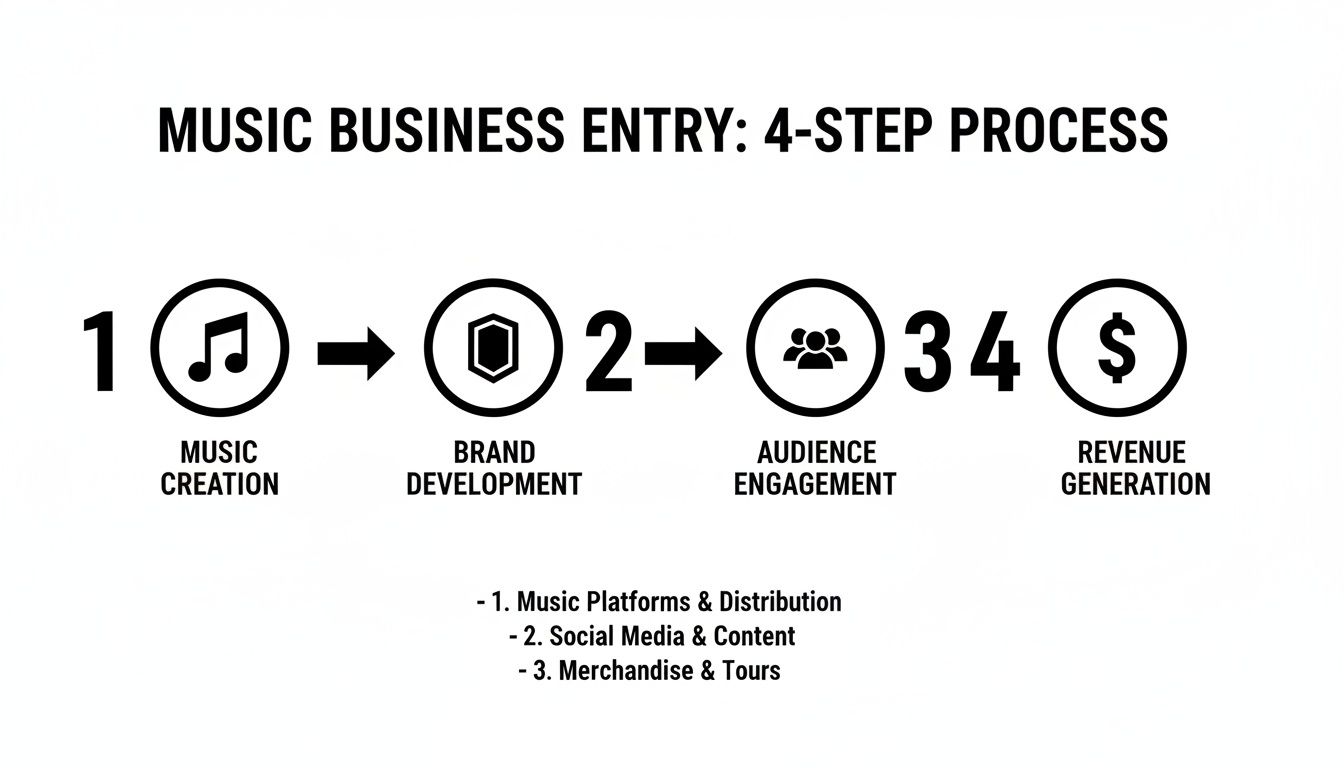
The visual drives home a critical point: your music is the product, but your brand, your audience, and your financial strategy are what turn that product into a sustainable business.
Four Pillars of Your Music Career
To build something that lasts, you need to pour your energy into these four areas. Think of them as the legs of a table—if one is weak, the whole thing wobbles. Each pillar supports the others, creating a solid foundation for growth.
Here’s a quick breakdown of the core areas you need to master.
| The Modern Music Business Four Core Pillars | | :--- | :--- | :--- | | Pillar | Why It's Critical | Your First Actionable Step | | Exceptional Music | This is the heart of everything. Your sound must be high-quality, authentic, and memorable enough to cut through the noise. It’s the non-negotiable starting point. | Finish and professionally mix/master at least one track that truly represents your sound. | | Distinct Brand | Your brand is your story. It’s the visuals, personality, and vibe that make people connect with you over thousands of other artists. It’s why they choose you. | Define your visual identity. Create a simple mood board with colors, fonts, and images that capture your artistic essence. | | Direct Audience Connection | Building a genuine community is far more valuable than just racking up followers. It’s about creating real relationships with listeners who will actually support you. | Start a simple email list or a private community (like Discord) and offer something exclusive to your first 50 members. | | Diverse Revenue Streams | Relying on a single source of income is a recipe for disaster. Real sustainability comes from multiple streams: merch, live shows, licensing, fan subscriptions, and more. | Design a simple t-shirt or piece of merchandise, even if you just use a print-on-demand service to test the waters. |
Mastering these interconnected areas isn't optional; it's the only way to build a career that can withstand the industry's inevitable shifts. For a deeper look at the moving parts, our guide on how the music industry works breaks down the entire structure.
The Opportunity In Today's Market
The money in music has been completely rewired by digital platforms. The global recorded music industry recently hit an incredible $29.6 billion in revenue. Where did that money come from? Streaming. It pulled in $20.4 billion, making up 69% of all recorded music income.
What does that mean for you? With 752 million paid streaming subscribers worldwide, the path to direct monetization has never been clearer for independent artists.
This isn’t just about getting discovered anymore; it’s about building a business. The tools are there, the audience is listening, and the potential for independent success has never been greater. Your job is to build a career that is as creative in its business strategy as it is in its music.
Developing a Sound That Cuts Through the Noise
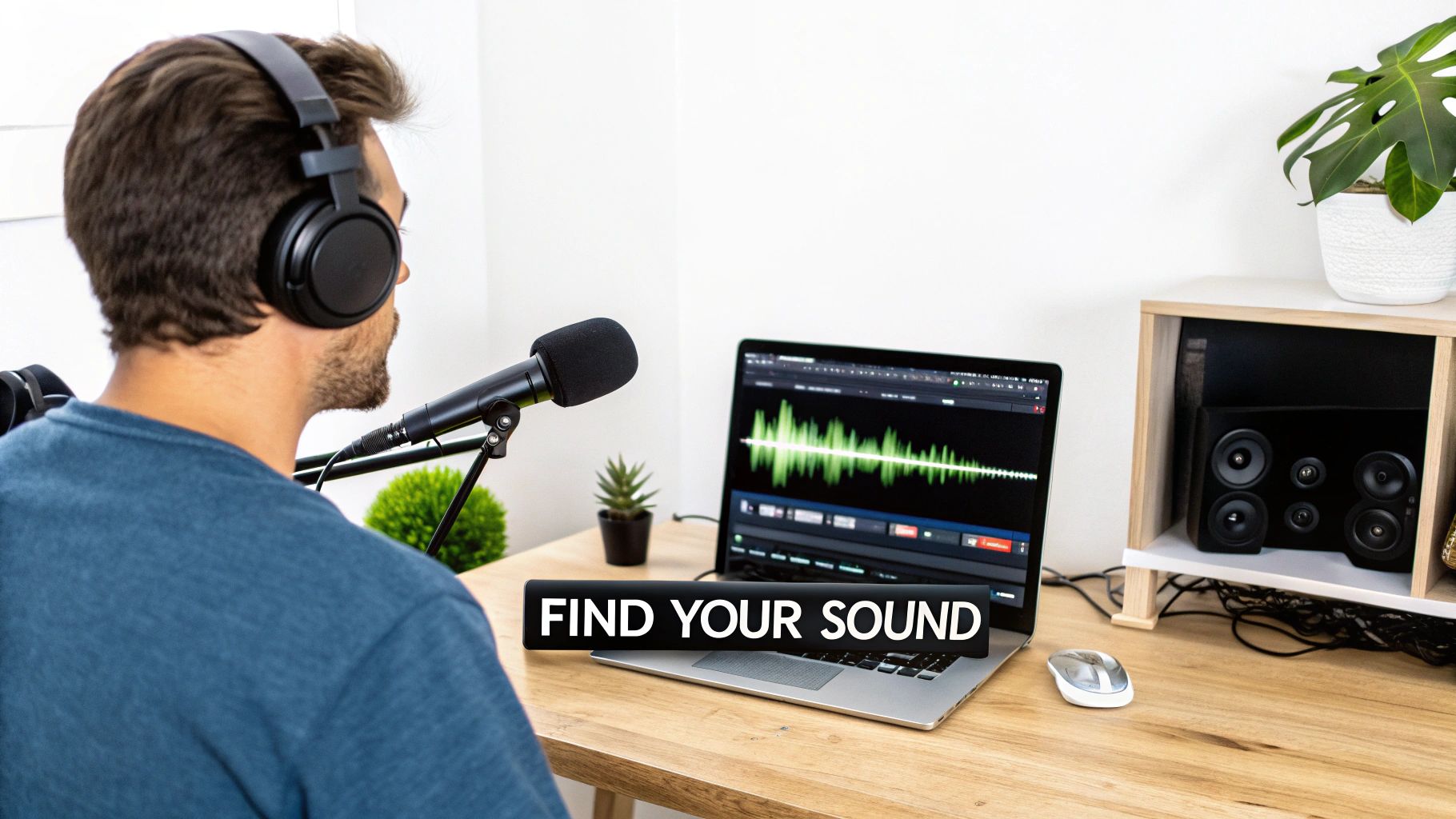
Before you ever think about a brand, a logo, or a marketing plan, you need to focus on the one thing that truly matters: the music itself. This is your foundation. Learning how to get in the music business starts with deliberately crafting a sound that is undeniably you.
The goal isn't just to make technically "good" music. It's to create something with a distinct sonic signature—that special something that makes a listener stop scrolling, turn up the volume, and wonder, "Who is this?" That's what turns a casual listener into a real fan.
Deconstruct Your Influences
Every artist is a product of their inspirations. One of the most effective ways to find your own voice is to start by taking apart the music you already love. I'm not just talking about casual listening; I mean really dissecting it like a scientist.
Put together a "study playlist" of songs that give you chills. Then, for each track, start asking yourself some hard questions to figure out what makes it tick.
- Arrangement: How do they build tension from the verse into the chorus? What instruments pop in and out, and when?
- Production: Are the drums hitting hard and clean, or are they gritty and lo-fi? Is the vocal right in your ear, or is it swimming in a sea of reverb?
- Songwriting: What makes that hook so addictive? How does the story in the lyrics progress from start to finish?
When you shift from just enjoying the music to actively analyzing it, you start building a mental toolbox of techniques and textures. You’re learning the "why" behind the sounds that move you, which you can then apply to your own work.
Establish a Feedback Loop
Working in a bubble is the quickest way to hit a creative wall. To really sharpen your skills, you need honest, constructive feedback from people whose opinions you actually respect.
This isn't about chasing likes and fire emojis on social media. It’s about building a small, trusted circle of peers—other producers, songwriters, or musicians—who can give you specific, actionable advice.
Build a "feedback crew" of 3-5 people. Instead of just sending a track and asking, "What do you think?" guide them with specific questions. Try things like, "Does the transition at 1:15 feel clunky?" or "Is the main synth getting buried in the mix?" This gets you much better results.
This process gives you a dose of objectivity. It lets you hear your own music through fresh ears, helping you spot flaws you’d never notice after listening to the same eight-bar loop for six hours straight.
Experiment to Define Your Sonic Identity
Once you understand your influences and have a solid feedback system, the real fun begins. This is where you start blending your skills with bold experimentation to forge your unique sound.
Your signature style often lives at the intersection of different genres. Maybe you love the raw, distorted guitars of garage rock but are also obsessed with the synth arpeggios of electronic music. Your unique sound could be born from smashing those two worlds together.
A Few Experiments to Find Your Voice:
- Blend Genres: Take a chord progression from a folk song and try producing it with heavy 808s and trap-style hi-hats.
- Play with Vocal Textures: Record the same vocal line three times: once clean, once through a guitar pedal, and once whispered. Layer them or see how each one changes the song's entire mood.
- Use Unconventional Tools: Go record the sound of rain or city traffic and chop it up into a percussion loop. Sample a weird sound from an old vinyl record you found for a dollar.
Having the right gear is also a huge part of this discovery process. Exploring the best DAWs for beginners can open up new creative avenues and make your workflow much smoother.
Ultimately, your sonic identity is a living thing—a blend of your influences, skills, and personal taste that will evolve over time. It isn't a destination you arrive at, but a path you continuously walk. This sound is the core of your art, and it's the number one reason anyone will ever care about your music.
Building Your Professional Brand and Artist Toolkit
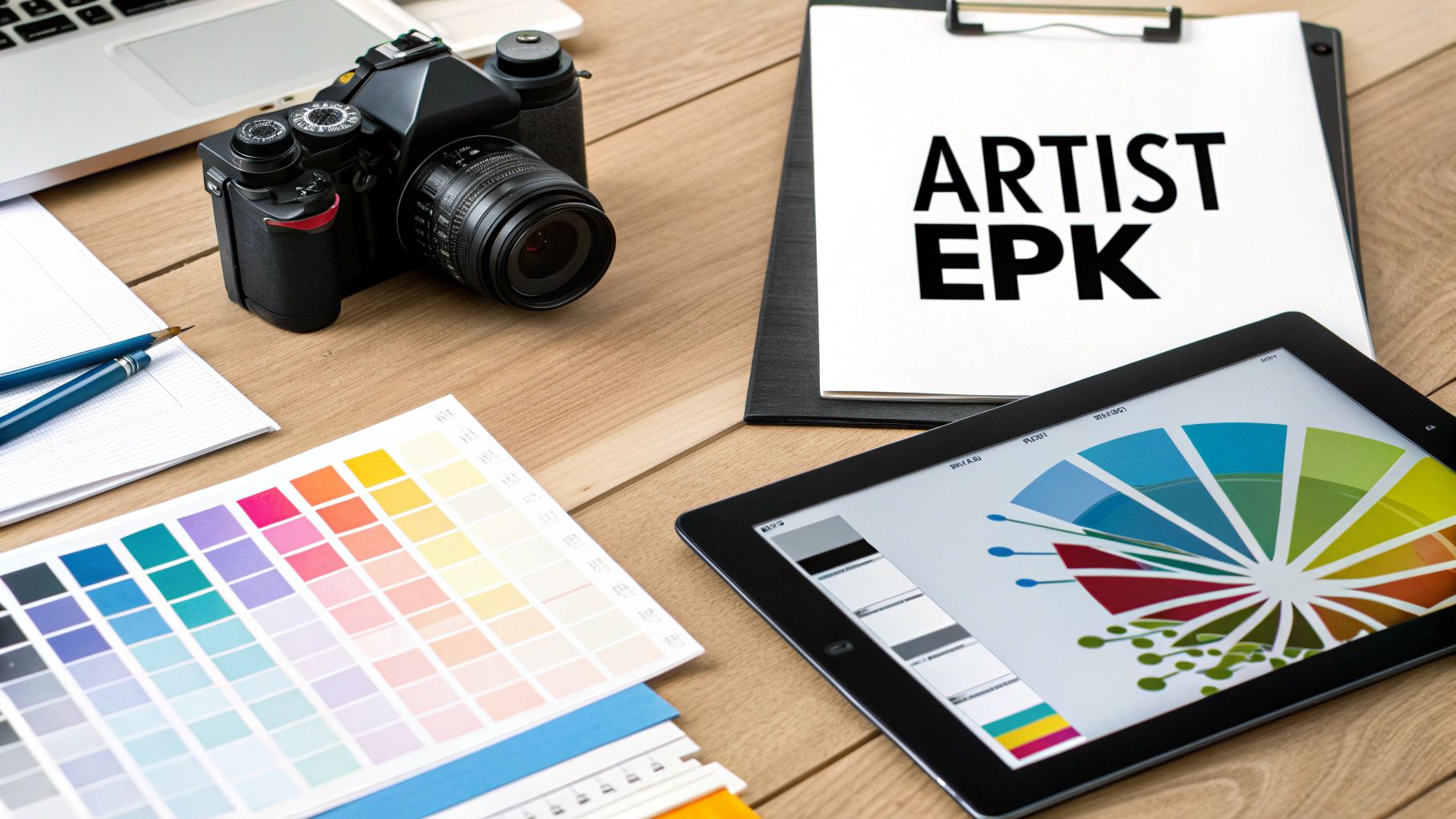
Your sound might be the foundation, but your brand is what makes you unforgettable. In a world overflowing with new music every single day, a strong artist identity is what separates you from being just another track on a playlist and becoming someone's favorite artist.
This is your professional handshake. It’s that critical first impression you make on the industry gatekeepers—the playlist curators, bloggers, venue bookers, and A&R reps. Building your brand is the moment you stop being just a musician and start operating as a professional artist with a clear vision.
Crafting Your Visual Identity
Think of your visual brand as the world your music lives in. It’s so much more than a cool logo; it's the entire aesthetic that gives listeners a complete experience. It should feel like a natural extension of your sound, turning your music into something people can actually see and feel.
A great starting point is creating a mood board. This isn't just for graphic designers; it's a practical way to nail down your aesthetic. Pull together images, color palettes, textures, and even fonts that match the emotions your music brings out.
- Color Palette: Does your music call for dark, moody tones to match introspective lyrics, or are you all about bright, vibrant colors for high-energy tracks? Pick 2-3 primary colors and a few supporting shades to build your look.
- Typography: The fonts you choose for your website, social media, and album art say a lot. Are they clean and modern, or maybe something more gritty and hand-drawn?
- Photography Style: Your artist photos need to capture your vibe. Are you going for raw, behind-the-scenes shots or something more polished and high-fashion?
Once you’ve defined these core elements, the key is consistency. Apply this look across every single platform to build instant recognition and show everyone you’re a pro.
Writing a Bio That Connects
Your artist bio is your story, and it's one of your most powerful marketing tools. It’s often the very first thing a promoter, journalist, or potential fan will read to figure out who you are. A truly great bio goes way beyond a boring list of accomplishments; it tells a story that people can connect with.
Ditch the stuffy, third-person bio that sounds like it was written by a robot. Write with your own voice. Share the why behind your music. What makes you tick? What unique life experiences have shaped your sound?
Your bio is your chance to turn your musical journey into a narrative. Don't just say you're a "genre-bending artist." Show it. Talk about how your obsession with old-school soul and modern electronic music crashed together to create your sound. Give people a story they’ll want to repeat.
It's a good idea to have a few different versions ready to go: a short one-liner for social media, a solid paragraph for your EPK, and a more detailed version for your website.
Assembling Your Electronic Press Kit
Let's talk about your EPK, or Electronic Press Kit. This is your professional music resume. It’s a clean, simple, all-in-one package that gives anyone in the industry everything they need to know about you. A sharp, well-organized EPK tells people you’re serious and makes it incredibly easy for them to book you for a show, review your music, or feature you in an article.
Your EPK should be a slick one-page website or a polished PDF—no clunky folders of random files. The goal is to make it easy for busy people to find what they need and download high-quality assets in a couple of clicks.
What Every EPK Must Have
- Your Music: The main event. Include streaming links to your 2-3 absolute best tracks, plus a clear link to download high-quality MP3s or WAVs.
- Professional Photos: Offer a handful of high-resolution press shots. Make sure you have both color and black-and-white options, as well as both portrait (vertical) and landscape (horizontal) orientations.
- A Compelling Bio: Include those different bio lengths you wrote so people can easily copy and paste what they need for their specific format.
- Key Stats & Highlights: This is where you show off a bit. List any impressive press coverage, major playlist placements, past show highlights, or notable streaming numbers.
- Contact Info: Don't make people hunt for this. Clearly list the best email for booking, press, and general inquiries, whether it's you or a manager.
This toolkit is what will open doors for you. It's the professional package you’ll send out again and again, and its quality is a direct reflection of your own professionalism. And as you put your brand out there, knowing how to avoid copyright strikes on YouTube is essential for protecting your content and your channel. Remember, your brand and your toolkit are living things—they'll grow and change right alongside your career.
Building a Digital Home for Your Fans

So your music is out there and your brand feels solid—what now? It’s time to build the place where your fans can gather. Don’t think of your online presence as a bunch of disconnected profiles. Instead, picture it as a solar system. At the very center is your main hub, maybe a personal website or a dedicated fan platform like OohYeah. All your social media accounts are the planets orbiting around it, each one designed to pull people back to that core.
This “hub-and-spoke” approach is critical for building a career that lasts. Social media is fantastic for getting discovered and for daily chats, but you’re building on rented land. Your account could get shut down tomorrow, or a simple algorithm tweak could tank your reach overnight. Your central hub is the one piece of digital real estate you truly own, where you can build direct, unfiltered relationships with the people who actually support your music.
It's More Than Just a Follow Count
The modern music business runs on direct fan connection. The Global Music Production and Distribution industry has ballooned into a $38.2 billion market, and a huge part of that growth comes from digital experiences and artists talking directly to their fans. With paid streaming subscriptions in the U.S. soaring past 100 million, it's crystal clear that having a smart digital strategy isn't just a nice-to-have anymore. It's essential. You can dig into the growth of the digital music market at IBISWorld.com.
Real success isn't about vanity metrics. It’s measured by genuine engagement—the comments, the shares, the DMs, and most importantly, whether your audience will follow you off-platform. The real goal is to turn passive social media followers into an active community that gets excited for your next release, buys your merch, and actually shows up.
This means you have to change how you think about social media. Stop using it as a megaphone for announcements and start treating it like a community clubhouse.
Creating Content That Builds a Community
Your content needs to do more than just sell your music; it has to invite people into your world. Fans fall in love with the person behind the art just as much as the art itself. Here are a few ways to make content that actually builds a real community around what you do.
- Share the messy parts: Don’t just show off the polished final track. Post a 10-second clip of you fumbling a guitar riff or a screenshot of your chaotic DAW session. Being vulnerable makes your creative process feel human and relatable.
- Pull back the curtain: Give your followers a quick tour of your home studio, show them the process of packing up merch orders, or introduce them to your bandmates over a beer. These little glimpses into your life build a surprisingly powerful connection.
- Ask for their opinion: Get your fans involved in your decisions. Run a poll asking them to pick between two t-shirt designs. Ask which song they think should be the next single. It makes them feel like they're part of the team, not just consumers.
- Talk to them live: Hop on an Instagram Live or host a Q&A. There’s almost nothing more effective for building community than answering fan questions in real-time.
This whole approach shifts your audience from being passive listeners to active participants. They become invested in your story because you’ve made them a part of it.
Your social media should be the party, but your email list or fan hub is the exclusive after-party. It's where you have direct, meaningful conversations with the people who truly care about your music and want to be part of your inner circle.
The Underestimated Power of an Email List
In a world of constantly shifting social media algorithms, your email list is pure gold. It's a direct line to your most dedicated fans—a line you own and control completely.
Building one doesn't have to be a grind. The easiest way to start is by offering something valuable in exchange for an email address. People in marketing call this a "lead magnet," and it’s a killer tool for growing your community.
Simple Lead Magnet Ideas:
- An exclusive track: Give them a demo or B-side that no one else can hear.
- A merch discount: A simple 15% off code for your store can be a huge motivator.
- Handwritten lyrics: A PDF with your scribbled lyrics and a short story about the song is a unique, personal touch that fans love.
Once they’re on your list, you have a direct way to build that relationship. You can share personal updates, offer first dibs on tickets, and create a bond that goes way deeper than a simple "follow." This is how you build a fanbase that will stick around for the long haul.
4. Monetizing Your Art and Diversifying Your Income
You've poured your soul into creating incredible music and building a real community around it. That's the heart of it all. But to make this a long-term career, you have to start thinking like an entrepreneur. A sustainable music career is a business, and that business needs a solid financial engine.
The biggest mistake I see new artists make is pinning all their hopes on streaming revenue. Those fractional pennies per stream just aren’t going to pay the rent.
The real key to financial stability is a mental shift. Stop focusing on low-margin volume (like a million streams) and start focusing on high-margin value. That means creating and selling products, experiences, and access directly to the fans who already love what you do. This approach builds a resilient career, giving you the freedom to create without the constant pressure of chasing tiny royalties.
Moving Beyond Streaming Royalties
For most independent artists, streaming platforms are best viewed as a discovery tool, not a paycheck. Think of Spotify or Apple Music as the top of your funnel—it's where new listeners find you. The real money is made further down that funnel, where you can connect with them on a deeper level.
Let's put it in perspective. A million streams might net you a few thousand dollars, if you're lucky. But selling a few hundred merch bundles or a handful of exclusive experiences to your core fans can generate the same income, and you keep a much bigger piece of the pie. It’s about working smarter, not just harder.
Here’s where your focus should be:
- Direct-to-Fan Merchandise: This is your secret weapon. Selling t-shirts, vinyl, hats, or posters directly from your own website or a platform like Bandcamp cuts out the middlemen. That means you keep a huge portion of the revenue.
- Digital Products: Don't sleep on digital goods. Think high-quality WAV downloads of your album, instrumental versions for producers and DJs, or even digital lyric books and behind-the-scenes photo galleries.
- Exclusive Subscription Content: Platforms like Patreon let you offer premium content to your biggest supporters for a recurring monthly fee. This creates a predictable and steady income stream you can actually count on.
The Lucrative World of Sync Licensing
One of the most powerful—and often overlooked—ways to monetize your music is sync licensing. This is the art of getting your songs placed in television shows, films, commercials, or video games. A single sync placement can be a complete game-changer, often paying more than years of streaming royalties combined.
The potential earnings from sync are no joke. An indie artist can earn anywhere from $500 - $20,000 for a single TV show placement, and that can jump to over $50,000 for major ad campaigns. And that's just the upfront fee—it doesn't include the backend performance royalties you earn every time the show or ad airs.
Breaking into the sync world requires a professional game plan. Music supervisors—the people who actually choose the music—are swamped. They rarely listen to unsolicited tracks sent directly from artists. Instead, they work with trusted sources like sync agents who represent a catalog of pre-cleared music.
Your job is to get your music "sync-ready." This means having high-quality WAV files, instrumental versions of every track, and all your legal paperwork (like split sheets) organized and ready to go. From there, you can start researching and pitching to sync agencies that fit your genre. A great placement doesn't just give you a financial boost; it introduces your music to a massive new audience.
Comparing Your Options
Choosing where to focus your energy can be tough. The table below breaks down some of the most common revenue streams, giving you a clearer picture of the potential rewards and the level of control you retain.
Artist Revenue Stream Comparison
| Revenue Stream | Potential Income | Artist Control | Typical Platform Fees |
|---|---|---|---|
| Streaming Royalties | Low per stream | Very Low | N/A (paid by platform) |
| Direct-to-Fan Merch | High | High | 10-15% (e.g., Bandcamp) |
| Digital Sales | Medium | High | 10-15% (e.g., Bandcamp) |
| Sync Licensing | Very High | Medium | 25-50% (sync agent's cut) |
| Fan Subscriptions | Medium & Stable | High | 5-12% (e.g., Patreon) |
| Crowdfunding | High (Project-Based) | High | 5-10% (e.g., Kickstarter) |
As you can see, the streams that give you the most direct control over your pricing and relationship with your fans often have the highest profit margins.
Leveraging Your Community for Growth
Your community is your single greatest asset, and it can become a powerful source of funding for your next big project. Crowdfunding has completely changed the game, allowing artists to finance albums, music videos, and tours without signing away their rights to a record label.
A successful crowdfunding campaign is a direct reflection of the relationship you've built with your fans. This isn't about begging for money; it's about inviting your community to be a part of your story and your art.
To make your campaign a success, remember this:
- Offer Rewards That Matter: Go beyond a simple digital download. Think bigger. Offer unique, tiered rewards like signed vinyl, exclusive t-shirts, personalized video messages, or even a private house concert.
- Tell a Compelling Story: Your campaign video and page need to communicate why this project matters. Make your supporters feel like they aren’t just buying a product, but investing in an artistic vision they believe in.
- Build Momentum Early: Your core group of dedicated fans will be your first backers. Get them on board in the first 48 hours to create social proof and attract wider support.
By diversifying your income, you build a safety net for your career. Every stream—whether from sync, merch, or fan-funding—makes you more stable and less dependent on any single source. For songwriters, there are even more paths to explore. You can dive deeper in our guide on how to make money as a songwriter and turn your compositions into a reliable income.
Building Meaningful Industry Connections
We’ve all heard the old cliché, "it's who you know." While there's some truth to it, that saying is dangerously incomplete. In music, a better way to think about it is, "who knows you, trusts you, and actually wants to work with you."
Getting your foot in the door often comes down to building a network of genuine relationships, not just a long list of contacts. This isn't about spamming inboxes or blind ambition. It’s about being strategic and, most importantly, human.
Give Before You Ask
Want the fastest way to get your email deleted? Lead with a big ask. Before you ever hit up a manager, agent, or publisher for their time, you need to bring something to the table first. This simple shift changes the entire dynamic from a cold pitch to a warm introduction.
This "value" doesn't have to be some grand gesture. It can be as simple as:
- Sharing their work: See a project they're promoting? Share it on your socials with a thoughtful comment that proves you actually listened.
- Making a helpful introduction: Know two people who could benefit from connecting? Make the introduction, no strings attached.
- Offering insightful feedback: If an A&R rep or a blogger asks for thoughts on a new track, give them specific, constructive feedback that showcases your ear.
The golden rule here is to build your reputation as a giver, not just a taker. When you consistently offer value to others, people naturally become more interested in what you're doing. They'll be far more willing to listen when you eventually have something to ask for.
Cultivate Your Local Scene
It’s easy to get fixated on chasing big-name contacts in L.A. or Nashville, but your most powerful network often starts right in your own backyard. Your local scene is a living, breathing ecosystem—and it’s the perfect training ground.
Go to local shows. Actually watch the other bands. Buy their merch. Get to know the sound engineer, the door person, the venue booker. These are the people who make a music community tick.
By becoming a genuine, supportive member of your scene, you build a reputation as someone people want to be around and collaborate with. That collaborative mindset is your single greatest networking asset. To learn more, check out our deep dive into why networking is so important in the music industry.
Common Questions About Building a Music Career
Trying to find your way into the music industry can feel like you've been dropped into a maze without a map. Let's clear up some of the biggest questions that artists grapple with when they're just starting out.
Do I Really Need a Record Label to Make It?
Not anymore. That idea is a relic of a bygone era. Today, a record label is just one possible path, and it’s definitely not a requirement for a successful career.
The game has completely changed. Independent artists now have access to incredible tools for getting their music out there, marketing it, and selling directly to their fans. This puts you in the driver's seat, giving you total creative and financial control. Building a sustainable career on your own terms is more possible now than ever before—it just requires thinking like an entrepreneur from day one.
What Kind of Money Can an Independent Artist Actually Earn?
Honestly, the sky's the limit, but your income is directly connected to how strong your fanbase is and how many different ways you're making money. While streaming is a part of the picture, the real, sustainable income usually comes from sources with much higher profit margins.
To build a solid financial foundation, you should be looking at:
- Merch: Selling apparel, vinyl, and other physical goods directly to your audience is a huge earner.
- Exclusive Content: Think about fan clubs or subscriptions that give your dedicated followers access to B-sides, demos, or early-bird tickets.
- Sync Licensing: Getting your music placed in TV shows, films, video games, or commercials can be a game-changer financially.
- Live Shows: For many artists, touring and playing live is still the heart of their business.
There's no fixed salary in this business. Your income grows as you treat your music career like a real business, not just a side project.
One of the biggest myths is that a high stream count equals success. The truth is, a healthy music business is built on multiple income streams that you own and control, which reduces your dependency on those tiny per-stream royalty payments.
I'm Just Starting. What’s the First Thing I Should Focus On?
Before anything else, focus on one thing: making incredible music. Your songs are the foundation of your entire career. They are the product, the art, and the very reason anyone will ever care about what you're doing.
Don't get bogged down with branding, building a social media following, or figuring out monetization strategies just yet. None of that will matter if the music isn't there. Pour all your initial energy into honing your sound, writing compelling songs, and getting them professionally produced. Without amazing tracks, even the most clever marketing plan will fall flat. This is the one step you simply cannot skip.
Ready to build your music business on a platform designed for artists? OohYeah gives you all the tools you need to sell your music, merch, and subscriptions directly to your fans, 100% commission-free. Take full control of your career at https://oohyeah.app.