How to Build a Fanbase From Scratch in 2024
Discover how to build a fanbase with proven strategies. This guide offers actionable steps to find, engage, and grow a loyal community around your work.
October 26, 2025
Music Marketplace Advisor
Buying & SellingBefore you can even think about building a fanbase, you need a blueprint. This isn't about manufacturing some slick persona; it's about digging deep and amplifying the real, authentic core of who you are as an artist. You need to get crystal clear on what you're about, what you stand for, and who your music is for. Nailing this from the jump makes every single thing you do afterward more targeted, genuine, and effective.
Defining Your Brand to Attract True Fans

Starting out, building a following can feel like shouting into a void. If you don't have a defined identity, your music and your message just become part of the background noise. It's a classic mistake: trying to appeal to everyone, and ending up connecting with no one.
The fix is to flip that script. Stop worrying about mass appeal and start by figuring out what makes you you. This isn't just about picking a color scheme for your Instagram; it’s the strategic heart of your entire career.
Think of your artistic brand as a mash-up of three crucial pieces:
- Your Core Values: What drives you? Is it social justice? Raw, unfiltered emotional honesty? Or maybe it's just about creating high-energy, feel-good moments for people to escape into.
- Your Artistic Style: This is your sound, your look, your entire aesthetic. Are you dark and moody? Vibrant and experimental? Minimalist and classic? It’s the unique flavor you bring to your music and visuals.
- Your Personal Story: Where did you come from? What have you been through? Your backstory is what makes you relatable and gives people a human narrative to connect with.
Answering these questions gives you a compass. Suddenly, every decision—from the font on your album art to the way you write a caption—becomes easier because it all points in the same direction. You're building a cohesive world for your fans to step into.
Finding Your First 100 Fans
Forget the dream of hitting a million followers overnight. The real game is finding your first 100 true fans. These are the people who will do more than just stream your new single; they’ll buy the t-shirt, share your posts with their friends, and actually show up to your early gigs.
To find them, you have to know who you're looking for. Get specific and create an "ideal fan" profile. I'm not talking about a generic demographic—I mean a real person. Give them a name, an age, a job, a story.
Let's say you're a folk artist whose songs are all about environmentalism. Your ideal fan might be "Alex," a 28-year-old who spends weekends hiking, shops at thrift stores, and follows climate activists on social media. Boom. Just like that, you know where to find more people like Alex. You can look in online communities dedicated to sustainability, on blogs about outdoor adventure, or among the followers of similar artists who champion the same causes.
Key Takeaway: Your brand is the promise you make to your audience. It tells them what to expect from you and why they should care. A strong, authentic brand filters out casual listeners and attracts die-hard supporters who resonate with your entire artistic vision.
Translating Identity Into Action
Once you have this clear picture of your brand and your ideal fan, everything you do becomes more purposeful. Instead of just throwing random stuff at the wall on social media, you can create content that speaks directly to Alex’s interests. Your efforts are no longer scattered; they're laser-focused on building real connections.
This upfront work is so important because it lays the groundwork for sustainable growth. With a clear identity, you become a magnet. People who share your values and get your unique style will naturally find their way to you. Understanding exactly why building a fanbase is essential for selling music is the key to framing all these strategic moves.
By doing this foundational work, you ensure you're not just collecting passive followers. You're carefully cultivating a community of people who actually believe in what you're doing. And that is the most critical first step in building a fanbase that will stick with you for the long haul.
Crafting Content That Truly Connects
Your art is the heart of it all, but your content is the handshake. It’s the bridge that closes the distance between your music and the people who are meant to hear it. If you want to build a real fanbase—not just a follower count—your content has to be more than just an advertisement. It needs to be an invitation into your world.
This isn't about spamming "New single out now!" every day. It's about slowly and intentionally building a story, piece by piece, that gives people a reason to do more than just listen. You want them to feel connected, invested, and a genuine part of your journey.
Beyond the Music: A Content Mix That Works
A great content strategy is all about balance. Think about it like a real conversation—you wouldn't just talk about yourself the whole time, right? You need a mix of content that serves different goals. Some posts are for grabbing new eyeballs, others are for sparking conversations, and some are for strengthening the bond with the fans who are already there.
Here’s a practical look at the content pillars you should be building:
- Behind-the-Scenes Access: Pull back the curtain and show the process, not just the polished final product. This could be a raw phone clip of you wrestling with a new melody, a time-lapse of your studio setup, or even just a quick tour of your creative mess. This stuff demystifies the art and makes you incredibly relatable.
- Personal Storytelling: Share the why behind your music. What real-life moments sparked that lyric? What personal struggles did you have to push through to finish this project? Vulnerability is magnetic; it forges a connection that a polished press photo never could.
- Value-Driven Content: Give your audience something genuinely useful. If you’re a killer guitarist, post a quick tutorial on a cool chord progression you love. If you’re a producer, share a simple but effective tip for mixing vocals. This positions you as a knowledgeable peer and gives people a reason to follow you for more than just release announcements.
This blend creates a much richer, more compelling narrative around your music. It tells people who you are, what you stand for, and why they should invest their time and emotion in what you do. This level of depth is a huge part of your artistic identity, and you can explore this more in our guide on why artists should focus on branding and image.
Show Up as Your Authentic Self
Authenticity is the only currency that matters online. People are drawn to artists who feel like real, complex human beings. This doesn't mean you have to overshare or air out your private life, but it does mean letting your genuine personality come through.
Got a quirky sense of humor? Let it fly in your captions. Are you passionate about a certain cause? Talk about it. This is how you attract fans who resonate with you as a person, not just as a musician.
Key Insight: Your content has to make people feel something. Whether it’s inspiration, a laugh, or a sense of curiosity, that emotional spark is what turns a passive scroller into an active fan.
Platforms like TikTok and Instagram Reels are built for this kind of raw, personality-driven content. Honestly, a 15-second clip of you goofing off in the studio can often build more of a genuine connection than a slick, expensive music video.
Meet People Where They Are
Building a fanbase also means understanding how people actually spend their time. The data shows that over half of U.S. adults (54%) get their news from social media, and dedicated users on platforms like Facebook spend around 32 minutes there every single day. This tells us that your future fans are already online, actively scrolling and looking for connection.
When you understand these habits, you can create content that feels native to their daily experience instead of like an interruption. The goal is to build an immersive world around your music. For a deeper dive, check out these excellent tips on creating engaging social media content that really hits home.
Ultimately, every post, story, and video is another chance to invite someone new into your world, share another piece of your story, and give them a damn good reason to stick around for whatever you do next.
Choosing the Right Platforms for Your Community
The pressure to be everywhere at once is real, but it’s a trap. Spreading yourself thin across every social media app is a fast track to burnout and mediocre content. You can’t build a real community if your energy is scattered. The secret to building a fanbase that actually sticks around is to be strategic—pick one or two platforms where you can genuinely show up and connect.
Think deep, not wide. Instead of posting sporadically on five different apps, mastering a single channel will get you much further. This focused approach lets you really get a feel for the platform’s culture, learn its quirks, and build a concentrated, interactive community instead of a scattered, silent following.
Where Does Your Audience Live Online?
First things first: you need to figure out where your ideal fans—the ones you defined earlier—actually spend their time online. If your music has a younger, trend-driven vibe, platforms like TikTok and Instagram are probably where you need to be. If your art is more visual and your fans appreciate deeper storytelling, YouTube might be your home base.
Don't just guess. Do a little homework:
- Look at Similar Artists: Where are artists with a similar sound and audience most active? Check out their top-performing content, but more importantly, read the comments. What are people talking about?
- Ask Your Current Fans: Even if you only have a small group of followers, ask them directly where they find new music. A simple poll on your Instagram Stories can give you surprisingly clear direction.
- Understand Platform Demographics: Every platform attracts different age groups and behaviors. Matching your efforts with these demographics is a game-changer.
Fan growth really depends on the platform's user base. For example, Facebook is still a giant with 3.065 billion monthly active users. Its largest demographic is the 25-34 age group, which makes up 31.1% of its users. But younger audiences are all about platforms like TikTok for their daily scrolling. You can dig into more social media demographics to fine-tune your strategy.
Platform Demographics and Content Strategy Alignment
Choosing the right platform is about aligning your music and style with the audience that lives there. This table breaks down where you might fit best.
| Platform | Primary Demographics | Best Content Formats | Engagement Strategy Focus |
|---|---|---|---|
| TikTok | Gen Z & Younger Millennials (16-24) | Short-form video, challenges, trends, duets | Virality, humor, raw behind-the-scenes moments |
| Millennials & Gen Z (18-34) | High-quality photos, Reels, Stories, Carousels | Aesthetics, community building via DMs/Stories, lifestyle | |
| YouTube | Broad (Millennials & Gen X are key) | Long-form video, music videos, vlogs, tutorials | In-depth storytelling, building a loyal subscriber base |
| Older Millennials, Gen X, Boomers (25-55+) | Live streams, event promotion, community groups | Direct community management, sharing news/updates | |
| X (Twitter) | Millennials (25-49), journalism/tech focus | Short text updates, memes, quick video clips | Real-time conversation, witty commentary, industry networking |
Ultimately, this isn't just about numbers; it's about finding the online culture that feels most like home for you and your future fans.
Align Your Content With Platform Culture
Every social platform has its own unwritten rules. What kills it on TikTok might totally flop on YouTube, and a killer tweet won’t necessarily work as an Instagram caption. To succeed, you have to tailor what you create to fit the environment.
The easiest way to get this is to spend time on each platform just as a user. Pay attention to the content that makes you stop scrolling. Is it the raw, unedited vlogs? The quick, high-energy edits? The beautiful, curated photos? This kind of observation will teach you more about a platform's culture than any analytics report ever could.
This infographic highlights how deeply a platform like Facebook is embedded in people's lives, making it a powerful tool if your content feels like it belongs there.
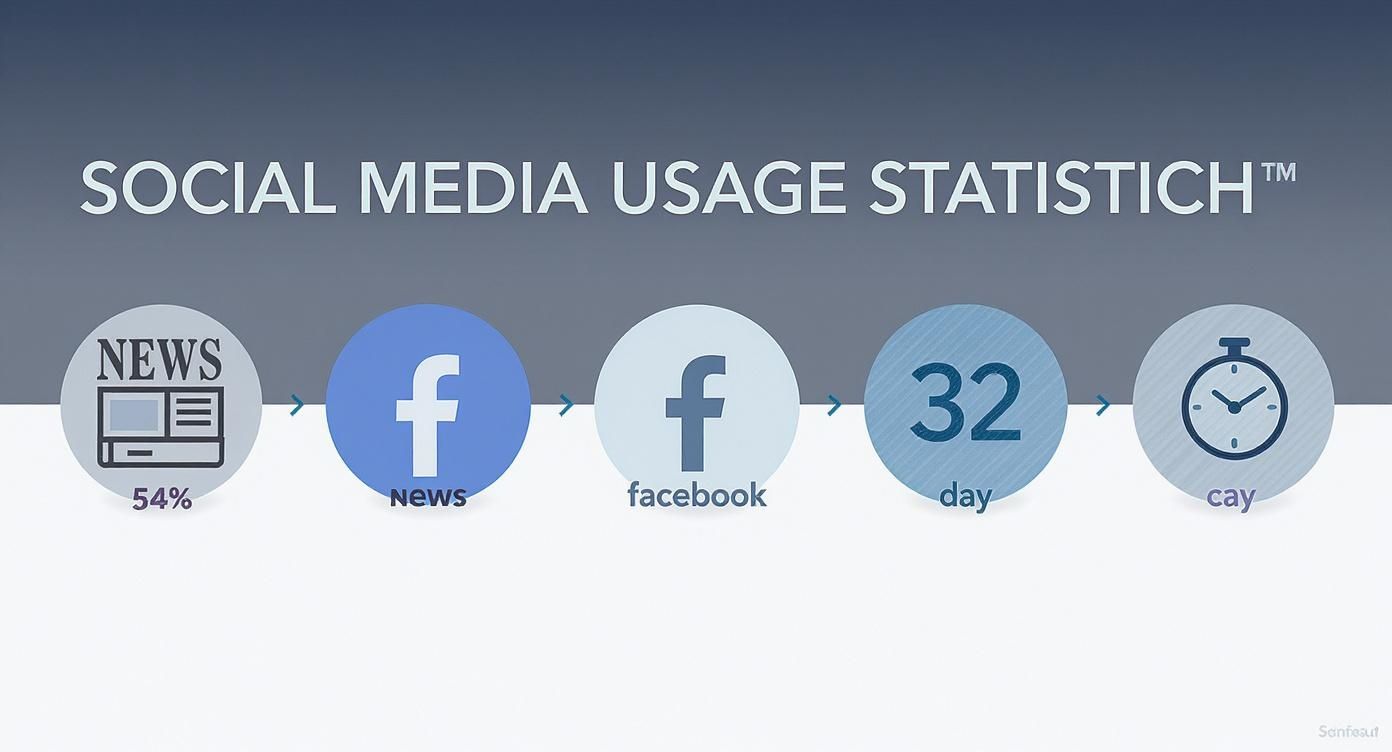
This just shows that these platforms are part of a daily routine. If your content feels native and valuable, you have a consistent opportunity to connect.
Mastering Your Chosen Channels
Once you've picked your one or two primary platforms, commit to them. That doesn't mean you can't have profiles elsewhere, but your main creative energy should be focused here.
Expert Tip: Consistency beats frequency every time. It's way better to post three high-quality, engaging videos on YouTube per month than it is to post 30 low-effort clips that nobody watches. Quality is what builds loyalty.
For your chosen platforms, map out a simple content plan. For instance, if you decide Instagram is your main stage, your strategy could look something like this:
- Reels (3-4 times a week): Use these for behind-the-scenes clips, song snippets, and fun trends to pull in new followers.
- Stories (Daily): This is for your core community. Use polls, Q&As, and casual updates to make them feel like insiders.
- Feed Posts (2-3 times a week): Share your best photos, carousels, and big announcements here to build your brand's aesthetic.
A focused strategy like this means every single thing you post has a purpose. You’re not just posting to post—you’re strategically building connections and growing a fanbase that feels seen and valued. That’s the real foundation for a long-term, sustainable career.
Mastering Engagement to Build a Loyal Following

It’s easy to get caught up in follower counts, but let’s be honest: those big numbers don't pay the bills or sell out shows. The real measure of success is a fanbase that’s alive and engaged—people who feel like they're a part of your story, not just watching from the sidelines.
Engagement is where you transform a one-way broadcast into a real conversation. Every like, comment, and DM is a chance to forge a stronger bond, turning a casual listener into a true fan who feels seen and heard.
Sparking Meaningful Conversations
Posting your latest track and then logging off is one of the biggest missed opportunities I see. The real work—and the real reward—happens in the moments after you post. Think of your comment section as a digital town square, a place where your community comes to connect.
Instead of a generic "thanks!" for a nice comment, try asking a follow-up question. If someone writes, "Love this new song!" you could reply with, "So glad to hear that! Was there a specific lyric that hit you?" That simple shift changes everything. It shows you're actually listening and invites a much deeper connection.
You can also use your captions to get the ball rolling. Try ending your posts with open-ended questions that are easy and fun to answer:
- "What's one song (mine or someone else's) that got you through a tough time?"
- "If you had to give this instrumental a title, what would it be?"
- "Describe your current mood using only song titles."
These kinds of prompts give people an easy way to jump into the conversation and share a little bit of themselves. It builds a relationship where fans feel genuinely valued.
Using Interactive Features to Your Advantage
Today's social platforms are loaded with tools designed for interaction, and you should be using them. Things like polls, quizzes, and Q&A sessions are your best friends for building an active fanbase. They’re fun, require very little effort from your audience, and give you instant feedback.
A weekly "Ask Me Anything" on Instagram Stories, for instance, can quickly become a ritual your followers look forward to. It’s a chance to pull back the curtain and show your personality in a raw, unscripted way. You can use polls for everything from deciding on your next cover song to picking a t-shirt design.
When you involve your fans in these small decisions, you give them a sense of ownership. They stop being just consumers of your music and start feeling like active participants in your journey.
This is the bedrock of a modern music career. Platforms like OohYeah are built for this, offering tools for direct messaging and private communities where these connections can truly deepen. We actually dive deeper into this in our article on why engaging with fans directly is crucial for music artists.
Creating Exclusive Experiences for True Supporters
While public engagement helps you grow, creating special, exclusive experiences is how you lock in lifelong loyalty. This is all about rewarding the people who consistently show up for you.
Consider creating an Instagram "close friends" list for your top fans, where you share early song snippets or behind-the-scenes clips. You could host a private livestream or start a group chat on a platform like Discord for your most dedicated followers. These gestures might seem small, but they make your core fans feel like true insiders.
A key part of this strategy is building out effective loyalty programs that give people a reason to stick around. This could mean discounts on merch, early access to tickets, or even personalized video messages for your top supporters.
Here’s a simple way to think about layering these experiences:
- Public Engagement (Everyone): This is your baseline—replying to comments, running public polls. The goal is broad connection.
- Semi-Exclusive Content (Engaged Fans): Think "close friends" stories or access to a special Discord channel. This rewards people who consistently interact.
- Top-Tier Exclusives (Superfans): This is reserved for your ride-or-dies. Offer them things like exclusive merch drops, early ticket access, or personal interactions.
This tiered approach ensures every level of fandom feels recognized and creates a clear path for a casual listener to become a superfan. At the end of the day, mastering engagement isn't about some secret algorithm. It’s about being human—showing up, listening, and treating your followers like the people they are.
Expanding Your Reach Beyond Social Media
Relying entirely on social media for fan connection is like building your dream house on rented land. It feels great, until the landlord—in this case, an algorithm—changes the rules overnight. Platforms fade, accounts get suspended, and suddenly that connection you've worked so hard to build can vanish.
A truly resilient career requires diversifying your touchpoints. The goal isn't just to chase viral moments; it's to build lasting assets that create a web of influence. You want fans to connect with you across multiple platforms, strengthening their loyalty and ensuring your message always cuts through the noise.
Building Your Most Valuable Asset: Your Email List
Let me be blunt: your email list is the single most important asset you can build as an artist. Period. It's a direct, unfiltered line to your most dedicated supporters—the people who have literally raised their hands and said, "I want to hear from you."
Think about it. A social media post might be shown to 5% of your followers if you’re lucky. An email lands directly in their inbox, waiting for them. The catch? You have to give them a compelling reason to sign up. No one wants more junk mail.
Here are a few proven incentives that actually work:
- Exclusive Content: Offer a free download of an unreleased demo, a PDF of your handwritten lyrics, or a link to a secret behind-the-scenes video.
- Early Access: Give your subscribers first dibs on concert tickets, new music, or limited-edition merch before anyone else. This creates genuine FOMO.
- Subscriber-Only Discounts: A simple discount code for your merch store can be a powerful motivator, rewarding them for their loyalty.
Once they're on your list, keep providing that insider value. Share the real stories behind your songs, give them the first look at new projects, and make them feel like they're part of the inner circle. This is how you nurture casual listeners into true superfans.
Tapping Into New Audiences Through Collaboration
One of the fastest ways to find new fans is to get in front of people who are already primed to like what you do. Strategic collaborations introduce you to curated communities built by other creators you trust.
Key Takeaway: Stop trying to build every fan from scratch. Instead, tap into existing streams of engaged listeners by partnering with peers who share a similar audience or artistic ethos. This is about borrowing credibility and introducing yourself to a warm audience, not a cold one.
And collaboration doesn't just mean hopping on a track together. Think bigger.
- Podcast Appearances: Find podcasts that fit your niche, whether it's about a specific genre, songwriting, or a lifestyle that aligns with your brand. Being a guest puts your voice and story directly into the ears of thousands of potential new fans.
- Blog Features and Playlist Placements: Reach out to music bloggers and playlist curators who feature artists like you. A thoughtful review or a spot on a popular playlist can drive serious discovery.
- Cross-Platform Takeovers: Team up with another artist for an Instagram Live session or a TikTok Duet chain. This kind of cross-pollination is a fun, organic way to expose both of your audiences to new music.
As you plan these moves, it helps to remember the sheer scale of the opportunity. By 2025, there will be an estimated 5.24 billion active social media users globally. This massive population highlights the potential waiting for you when you step outside your own bubble. You can dig deeper into the growth of social platforms at Backlinko. Expanding your reach is about strategically fishing in a very, very large pond.
Questions From the Artist Trenches
When you're grinding away, trying to build something real with your fans, a ton of questions pop up. It's easy to get stuck or wonder if you're even on the right path. Let's tackle some of the most common hurdles artists face with some straightforward, practical answers to keep you going.
How Much Time Do I Really Need to Spend on This Every Day?
Forget about a magic number. The real secret is consistency over intensity. Seriously, one solid, focused hour every single day will do more for you than a chaotic eight-hour scramble once a week. You've got to keep the momentum going, so your audience doesn't forget you exist between releases.
Here’s what a sustainable daily habit could look like:
- 15-20 Minutes: Dive into your comments and DMs. Reply to people. Show them a human is on the other side of the screen. This is non-negotiable.
- 20-25 Minutes: Work on your next piece of content. Maybe that’s editing a short-form video, writing a caption that tells a real story, or just planning a simple poll for your Instagram Story.
- 15-20 Minutes: Go out and engage. This isn't just about posting; it's about being part of the conversation. Comment on posts from artists you admire, jump into a relevant Reddit thread, or find a fan's post and share it.
This routine is totally manageable. It keeps you present and growing without leading to total burnout.
I Have No Budget. What Can I Actually Do?
This is a common one, but I want you to reframe it. Building a fanbase isn't about outspending everyone else; it's about out-connecting them. Some of the most potent growth strategies are completely free. They just require your creativity and effort, not your credit card.
Put your energy into organic growth—the kind that builds real relationships. Start by making killer content that people want to share. Behind-the-scenes videos, a stripped-down acoustic performance on your couch, a quick tutorial on your process… this stuff costs nothing but your time.
Your best marketing tool is a fan who feels seen. A personal reply to a comment or a quick shout-out in a story can build more loyalty than a thousand-dollar ad campaign ever will. Make them feel like part of the inner circle.
Another fantastic, no-cost tactic? Team up with other artists on your level. A simple joint Instagram Live session can instantly put you in front of a brand new, highly relevant audience.
When Is It Okay to Start Selling to My Fans?
This is the tricky one, right? But the answer is actually pretty simple: you can think about monetization from day one, as long as you always lead with value. Where artists go wrong is they ask for the sale before they've given the audience a reason to care.
You have to build a foundation of trust first. Share your music, talk to people, and let them into your creative world. Once you have a small but mighty core of engaged followers—even just 50-100 people who consistently like, comment, and message you—you can start introducing low-pressure ways for them to support you.
Think about these as your first steps:
- A Digital Tip Jar: Set up a Ko-fi or Buy Me a Coffee link. It lets fans show their appreciation with a small, one-time thank you.
- Exclusive Downloads: Use a platform like OohYeah to offer a high-quality demo or a special live recording for just a few bucks.
- Test the Waters with Pre-Orders: Before you drop a bunch of money on t-shirts, run a pre-order campaign. It gauges real interest and makes sure you don't end up with a garage full of unsold merch.
The goal is to make these offers feel like a natural next step in your relationship with your fans, not a sudden cash grab.
Ready to put these ideas into practice with tools built specifically for you? OohYeah is the all-in-one platform where you can sell your music, merch, and subscriptions directly to your fans, completely commission-free. Take control of your music career and start building something that lasts.