how do you get followers on spotify: quick growth tips
Learn how do you get followers on spotify with proven profile optimization, playlist strategies, and smart promotion to grow your audience fast.
November 3, 2025
Music Marketplace Advisor
Buying & SellingGetting more followers on Spotify really comes down to two things: making your profile a place people want to follow and then actually getting them there. Think of your profile as your home base. It needs to look good and feel inviting. Your promotion strategy is the map that brings the right people to your door, the ones who are most likely to stick around.
Building Your Foundation on Spotify for Artists
Before you spend a dime on promotion, you have to get your own house in order. Your artist profile is the ultimate destination for anyone who discovers your music. It's not just a landing page—it’s your digital storefront, your press kit, and your first handshake all rolled into one.
Someone might stumble upon your track in a playlist, but it’s your profile that’ll convince them you're an artist worth following. It's what turns a casual listener into a genuine fan.
Every single element on your page tells part of your story. A blurry, low-res photo sends a message that you might not be taking this seriously. On the other hand, a well-written bio can forge an instant connection. Skipping these details is like throwing a party without cleaning up first—it just leaves a bad impression.
Polish Every Corner of Your Profile
Your first job is to do a full audit of your Spotify for Artists account. Go through it and make sure every single field is filled out with current, high-quality stuff. This isn't just for looks; it gives both listeners and Spotify’s algorithm clear signals about who you are and what your music is about.
Here are the non-negotiables:
- Your Artist Bio: This is your space to tell your story. Don't just list your achievements. Talk about your influences, what your music means to you, or a cool behind-the-scenes fact. And please, keep it updated!
- High-Quality Imagery: Your header and artist photos are your visual brand. Use professional, high-resolution shots that actually match your sound and personality.
- Artist Pick: This is a killer feature. It lets you pin whatever is most important to you right now—your new single, an album you're on, or even a playlist of songs you love. It gives people an immediate, concrete next step.
A complete and professional profile doesn't just attract followers; it builds trust. It shows you're a serious artist committed to your craft, making fans more likely to follow and support you long-term.
Connect Your Digital World
Your Spotify profile shouldn't be an island. Link up your social media accounts directly on your profile to create a smooth journey for anyone who wants to dive deeper.
Adding links to your Instagram, X (formerly Twitter), and Facebook opens up new avenues for fans to connect with you. This kind of cohesive online presence is fundamental to figuring out https://oohyeah.app/posts/how-to-attract-fans-to-your-music-profiles on every platform, not just Spotify.
It all starts with creating a comprehensive social media marketing plan where every move has a purpose. Your Spotify profile is the central hub, and all your other channels are the roads leading people straight to it.
If you want to grow your following on Spotify, you have to learn how to make the algorithm your biggest fan. It's not some mysterious black box; it's a recommendation engine that responds to clear signals. And the biggest signal you can send is activity.
Spotify’s system is designed to notice and reward artists who are consistently putting out new music. It’s not just about the quality of a single track, but the momentum you build over time.
Think of it this way: a single every four to six weeks keeps you fresh on the platform's radar. This steady rhythm doesn't just cater to your existing fans; it continuously gives the algorithm new data to learn who you are, who your listeners are, and who else might love your sound. It's a feedback loop that you can control.
Building a Relationship with the Algorithm
Your release calendar is your most powerful tool here. Planning your singles, EPs, or albums in advance turns your creative process into a predictable schedule that Spotify's system can anticipate and support.
This consistent activity is your ticket to getting featured on some of the most powerful algorithmic playlists out there—the ones that drive serious discovery.
Release Radar: This is a personalized playlist that updates every Friday for users, filled with new tracks from artists they follow or listen to often. If you're releasing music consistently, you're essentially guaranteeing a weekly spot in your followers' most important playlist.
Discover Weekly: This is where the magic of new audience discovery happens. Spotify curates this playlist based on a user's unique taste, matching them with artists they've never heard before. Your track gets a shot here when your sound and data align with what a potential fan already has on repeat.
Getting placement on these playlists is a massive win. It’s like having a direct line to millions of listeners who are actively looking for their next favorite artist.
The concept is really straightforward: the more you feed the Spotify algorithm new material, the more it will work to place your music in front of potential new followers. This is the engine of sustainable, long-term growth on the platform.
Pre-Saves and Metadata: Your Secret Weapons
Long before your track goes live, you can start telling the algorithm it’s going to be a big deal. The key is a pre-save campaign. Every time a fan pre-saves your upcoming release, it’s a vote of confidence that tells Spotify there's built-in demand. This can give your song a huge advantage in its crucial first few days.
Just as critical is your metadata. This isn't the most glamorous part of the job, but it’s essential. The details you input—genre, mood, instrumentation, related artists—are the signposts the algorithm uses to understand and categorize your music. Nailing this helps Spotify place your song on the right editorial playlists and recommend it to the right listeners.
From what we've seen, artists who release music on a regular schedule have a 30-40% higher chance of getting recommended by Spotify's algorithm. For more on this, Artist Push has a great breakdown of recent trends.
When you put it all together—a steady release schedule, smart pre-save campaigns, and meticulous metadata—you’re giving the algorithm everything it needs to champion your music. It's a foundational strategy, and we dive even deeper into tips for increasing music streams and earnings in our detailed guide.
A Practical Guide to Spotify Playlist Pitching
If there's one thing I've learned, it's that getting your music onto playlists is the most powerful lever you can pull to find new listeners. It's today's version of getting a song on the radio, but instead of just a one-time spin, you're placing your track directly into the daily soundtrack of potential fans. But it's not a one-size-fits-all game.
To really move the needle, you need to understand the three main types of playlists and how to approach each one.
Editorial Playlists: Think of these as the big leagues. Curated by Spotify's own in-house team, playlists like RapCaviar or Lorem are the holy grail. A single placement here can mean an explosion of streams and followers overnight because they have massive, dedicated audiences.
Algorithmic Playlists: As we've touched on, playlists like Discover Weekly and Release Radar are pure data magic. You can't directly pitch to an algorithm, but you can definitely influence it. Consistent releases and clean, accurate metadata are your secret weapons here.
User-Curated Playlists: These are the heart and soul of Spotify. Built by music bloggers, influencers, indie labels, and passionate fans, their reach can vary wildly. Don't underestimate them, though. Getting on the right niche playlist can connect you with a super-engaged audience that's hungry for exactly your sound.
Pitching to Spotify's Official Curators
Spotify gives every artist a direct line to its editors through a built-in submission tool. Using it for every single release is absolutely non-negotiable.
Here’s the process: log into your Spotify for Artists account at least one to two weeks before your release date. Head to the "Music" tab, find your "Upcoming" releases, and select the song you want to push. You’ll get a form asking for details like genre, mood, instrumentation, and even the cultural context of your track. Don't rush this part. The more specific and accurate you are, the better chance you have of landing on the right editor's radar.
Treat your editorial pitch as your elevator pitch. You get a small description box to tell the story behind the song. What inspired it? What's the vibe? A genuine, compelling narrative helps your track stand out from the thousands of others submitted every single day.
The Art of Reaching Independent Curators
While the official playlists are the ultimate goal, user-curated playlists are where you can build real momentum and relationships. It takes a bit of detective work, but it’s well worth the effort.
Start by digging around on Spotify itself. Search for keywords related to your genre ("chill indie driving," "underground hip hop," etc.) and find playlists that fit. Check the playlist descriptions for contact info or social media links. You can also use services like Submithub or Groover, but I’ve often found that direct, personal outreach gets the best results.
This infographic breaks down the core activities that feed Spotify’s algorithm, which in turn boosts your chances of getting noticed by curators.
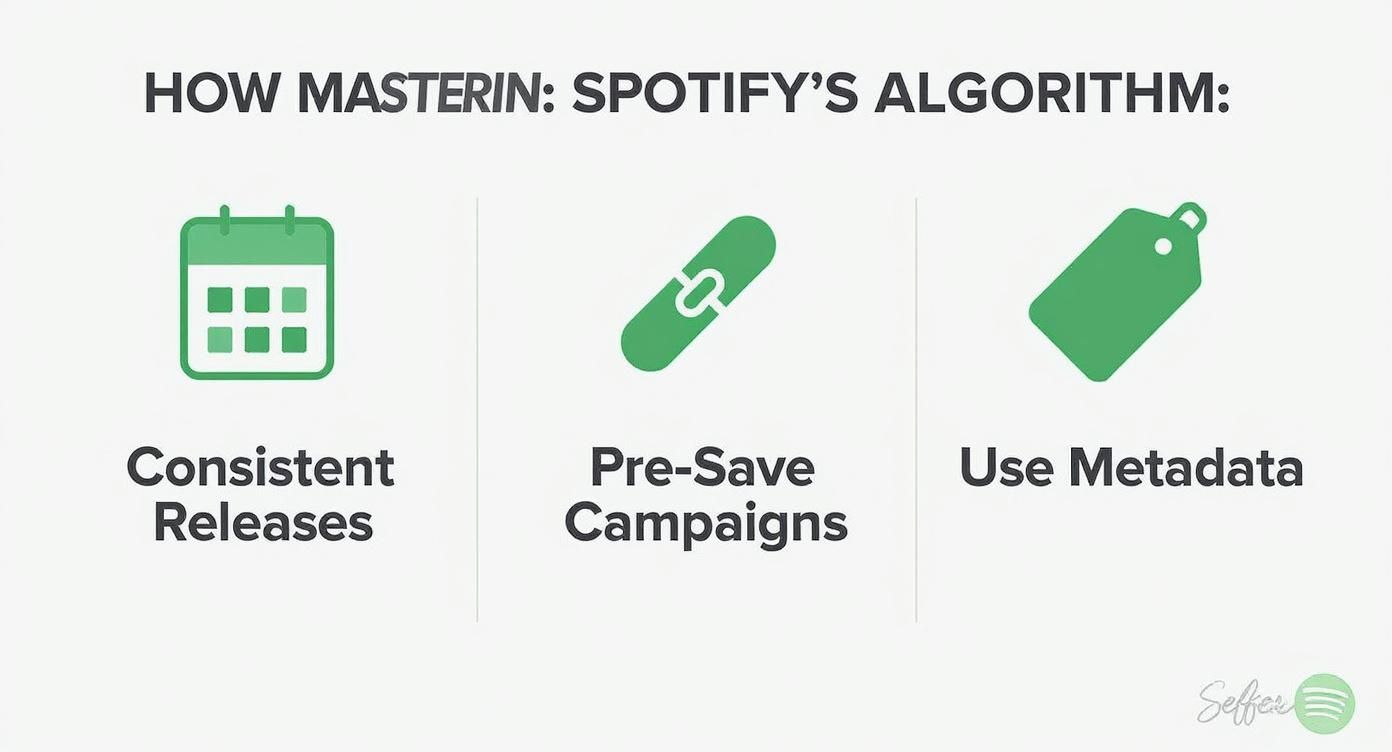
As you can see, a steady release schedule, smart pre-save campaigns, and meticulous metadata aren't just busywork—they're the foundation of a solid pitching strategy.
When you do reach out, please, never send a generic, copy-pasted email. Make it personal. Mention the playlist by name, tell the curator about a specific song you liked, and explain why your track is a perfect fit for their audience. Keep it short, professional, and always include a direct link to your music. Building a real connection is always more valuable than just begging for a placement.
To help visualize your approach, here’s a breakdown of how to tackle each playlist type.
Spotify Playlist Pitching Strategy
| Playlist Type | Reach Potential | Pitching Method | Key Tip |
|---|---|---|---|
| Editorial | Very High | Use the official Spotify for Artists pitch tool for unreleased music. | Submit at least 7-14 days before release and write a compelling song description. |
| Algorithmic | High | Indirect influence through consistent releases and listener engagement. | Focus on pre-save campaigns and encouraging fans to follow you on Spotify. |
| User-Curated | Low to High | Direct outreach via email, social media, or pitching platforms. | Personalize every message. Research the curator and their playlist before contacting them. |
Ultimately, a diversified strategy that targets both massive editorial lists and hyper-specific user-curated ones will give you the best shot at long-term growth.
Grow Your Audience Through Smart Collaboration
Trying to build a fanbase all by yourself can feel like an uphill battle. But here's a secret that seasoned artists know well: one of the fastest ways to get more followers on Spotify is by teaming up with other creators. A smart collaboration is a true force multiplier, putting your music in front of a brand-new audience that's already wired to like what you do.
When you join forces with another artist on a track, you're essentially getting a direct endorsement to their entire listener base. It’s a powerful signal for their fans to check you out and, more importantly, hit that follow button. This kind of audience cross-pollination is a core strategy for growth, something we dive into deeper in our guide on why collaborations with other artists can grow your audience.
The impact can be immediate. I’ve seen artists gain thousands of new followers within hours of dropping a track with a more established act. This is especially true in massive streaming markets like Brazil, where users listen for an average of 2.4 hours per day. Collaborative tracks frequently top the local charts there, creating a snowball effect of discovery and follower growth.
Finding the Right Creative Partners
The magic of a great collaboration lies in finding the right fit. Chasing an artist just because they have a massive follower count rarely works. Instead, look for someone whose sound and vibe genuinely complement your own. Authenticity is everything—listeners can tell when a partnership is forced versus when there’s real creative chemistry.
A good place to start is with artists who are at a similar point in their career but maybe operate in a slightly different genre or niche. This creates a win-win scenario where you both introduce each other to a unique pool of potential fans.
- Become a Spotify detective: The "Fans Also Like" section on an artist's profile is your best friend for finding potential collaborators.
- Build real connections: Don't just slide into their DMs with a proposal. Engage with them on social media first. Share their work, leave thoughtful comments, and build a relationship organically.
- Show up in the real world: Nothing beats networking in person. Go to local shows and open mic nights. You’ll be surprised at how many great partnerships start with a simple conversation.
A great collaboration should feel natural. The goal is to create something that both of your audiences will genuinely enjoy, leading to a natural exchange of followers who appreciate the combined sound.
Expanding Beyond the Music
Don't let the collaboration end once the track is uploaded. The real magic happens when you team up on the promotion. Think about all the ways you can join forces across different platforms to maximize your collective reach and funnel everyone back to Spotify. These activities create a story around your partnership, giving fans more reasons to get invested in both of you.
Try a few joint promotional activities to get the ball rolling:
- Co-host an Instagram Live: Jump on a live session together. Talk about how the track came to be, answer questions from fans, and maybe even play a stripped-back acoustic version.
- Swap some playlist love: Create a shared playlist on Spotify that features each other's music alongside your biggest influences. Then, promote it to both of your audiences.
- Do a content crossover: Make a guest appearance on each other's podcast, YouTube channel, or even do a simple social media takeover for a day.
These tactics go beyond just getting streams; they're rooted in proven community building strategies. Each time you collaborate on content, you reinforce the partnership and give more and more people a reason to follow both of you on Spotify.
Driving Off-Platform Traffic to Your Spotify
While fine-tuning your Spotify profile is crucial, the reality is that many of your most loyal future followers will find you somewhere else first. Your social media, website, and email list aren't just separate channels; they're the bridges that bring new listeners directly to your Spotify profile, ready to hit that follow button.
The mission is simple: make following you on Spotify the most logical and easiest next step for anyone who stumbles upon your work. Every single one of your digital touchpoints is an opportunity to guide potential fans and turn a casual listen into a dedicated follow.
Optimize Your Digital Real Estate
Think of every online profile you have as a signpost pointing straight to your music. The easiest wins are right in front of you. Go through your social media bios on Instagram, TikTok, and X (formerly Twitter) and make sure your Spotify link is front and center.
But don't just drop a link and hope for the best. You have to ask for the follow. A simple, direct call-to-action like "Follow me on Spotify for new music" works wonders compared to a naked URL.
Your artist website is another piece of prime real estate. It's incredibly easy to embed a Spotify Follow button right on your homepage or contact page. This little integration is a game-changer, capturing visitors who found you through a blog feature or a random Google search and converting them from passive observers into active listeners.
Your off-platform promotion isn’t just about making noise. It’s about creating clear, frictionless pathways that guide potential fans from where they are to exactly where you want them to be on Spotify.
Create Content That Converts
The secret to getting more followers often lies in the content you create off of Spotify. Your goal is to make promotional content that feels completely natural on each platform but always serves the main purpose: driving traffic back to your Spotify profile.
Here's how that looks in practice:
- TikTok and Instagram Reels: Short-form video is everything right now. Create quick, engaging clips using your own sound. Give people a peek behind the curtain with studio footage, explain the story behind your lyrics, or even try to start a new trend. The key is to always include a clear call-to-action in the caption or as on-screen text, like "Hear the full track and follow me on Spotify!"
- YouTube: Do you have music videos, lyric videos, or live performance clips? Your YouTube descriptions are a goldmine. Slap your Spotify profile link and links to specific tracks right at the very top of every single description box.
- Email Newsletters: These are your die-hards. Your email list is full of your most engaged fans. When you drop new music, they should be the first to know. Send a dedicated email with a direct link to the track on Spotify and a bold, clear request for them to follow your profile.
By adopting this multi-channel strategy, you're essentially casting a wider net and catching potential fans from every corner of the internet. When you consistently funnel traffic from your strongest platforms back to Spotify, you build a powerful, self-sustaining engine for growth that's always working for you.
Answering Your Big Questions About Spotify Follower Growth
As you start putting these strategies into action, you're bound to run into a few common questions. I see these pop up all the time with artists I work with. Getting these sorted out early will save you a ton of headaches and help you focus on what really matters.
Let's dive into some of the most frequent ones.
How Many Followers Is a "Good" Number?
Honestly, there’s no magic number here. What’s “good” completely depends on where you are in your career.
If you’re just starting out, hitting your first 1,000 followers is a huge milestone. It’s a signal to Spotify’s algorithm and to playlist curators that something is starting to happen—that you're building a real audience. For a more established artist, a target might be more in the 50,000 to 100,000 range, which shows you have a seriously dedicated fanbase.
The real metric to obsess over isn't the total number, but your growth rate. A slow, steady climb is always better than a flat line.
Can You Just Buy Spotify Followers?
The short answer is yes, you can. The much more important answer is that you absolutely, positively should not.
Buying followers is the quickest way to kill your credibility and sabotage your relationship with the Spotify algorithm. You’re paying for bots, not fans. These fake accounts will never stream your music, save your tracks, or share your songs. They provide zero real engagement.
Spotify is smart. Its algorithm can easily spot a massive jump in followers that isn't backed up by any listening activity. This is a huge red flag that can get your music buried, or worse, removed entirely.
Think of it this way: Every real follower is an investment in your career. Every fake follower is a debt that actively works against you. It's just not worth it.
How Long Does It Actually Take to Get Followers?
Building a genuine following takes time. It’s a marathon, not a sprint.
If you’re starting from zero, getting those first thousand followers can take anywhere from a few months to a year of consistent work. That means releasing music regularly, pitching to playlists, and hustling on your social channels.
But here’s the thing: growth isn't always linear. A big playlist placement or a track that blows up on TikTok can change your trajectory overnight. The whole point of laying the groundwork—polishing your profile, building a catalog, staying active—is to be ready to catch that wave when it comes. You have to create the conditions for lightning to strike.
Ready to take full control of your music career? OohYeah provides the tools you need to sell your music, merch, and subscriptions directly to your fans, commission-free. Build your community and grow your revenue on a platform designed for artists. Learn more and get started at https://oohyeah.app.