How Do Artist Make Money A Modern Musician's Guide
Discover how do artist make money with proven strategies for streaming, merch, and direct-to-fan sales. Build a sustainable music career with our expert guide.
January 16, 2026
Music Marketplace Advisor
Buying & SellingLet's be real—making a living from your music today has nothing to do with chasing that one big record deal. It's about building a real business, piece by piece, from several different income streams. The old-school model of relying on album sales is ancient history. Now, it's all about a smart mix of digital royalties, direct-to-fan sales, merch, and so much more.
The Modern Artist's Blueprint for a Sustainable Career
It’s time to kill the "starving artist" cliché for good. The musicians who are actually succeeding in this climate are acting like entrepreneurs. They know a long-term career is built on multiple pillars of income, not just a single winning lottery ticket. The big question has changed from "How do I get signed?" to "How do I build my own ecosystem?"
This shift in thinking means looking beyond just the music itself. It’s about building a genuine, direct relationship with your fans and then creating different ways for them to support you financially. This guide is designed to walk you through the practical, no-fluff strategies that can help you turn your artistic passion into a viable profession.
Getting Real About the Money
The road for an independent artist isn't easy, but it's more possible than ever to carve out a living. The financial picture for artists in 2025 is stark: 77.8% of independent musicians earned less than $15,000 from their music in the past year.
But there's good news in the numbers, too. We're seeing progress. Now, 13.3% of indies are able to support themselves entirely through their music, a solid jump from 11% in 2023. These aren't just numbers; they show that with the right strategy, it can be done. For artists looking to master this new landscape, it's worth learning how to monetize their content and build a robust creator business.
The secret is diversification. Putting all your eggs in one basket, like streaming royalties, is a surefire way to create financial stress. The real goal is to build a web of revenue streams where each one feeds and supports the others.
This infographic breaks down the core business model for today's artist.
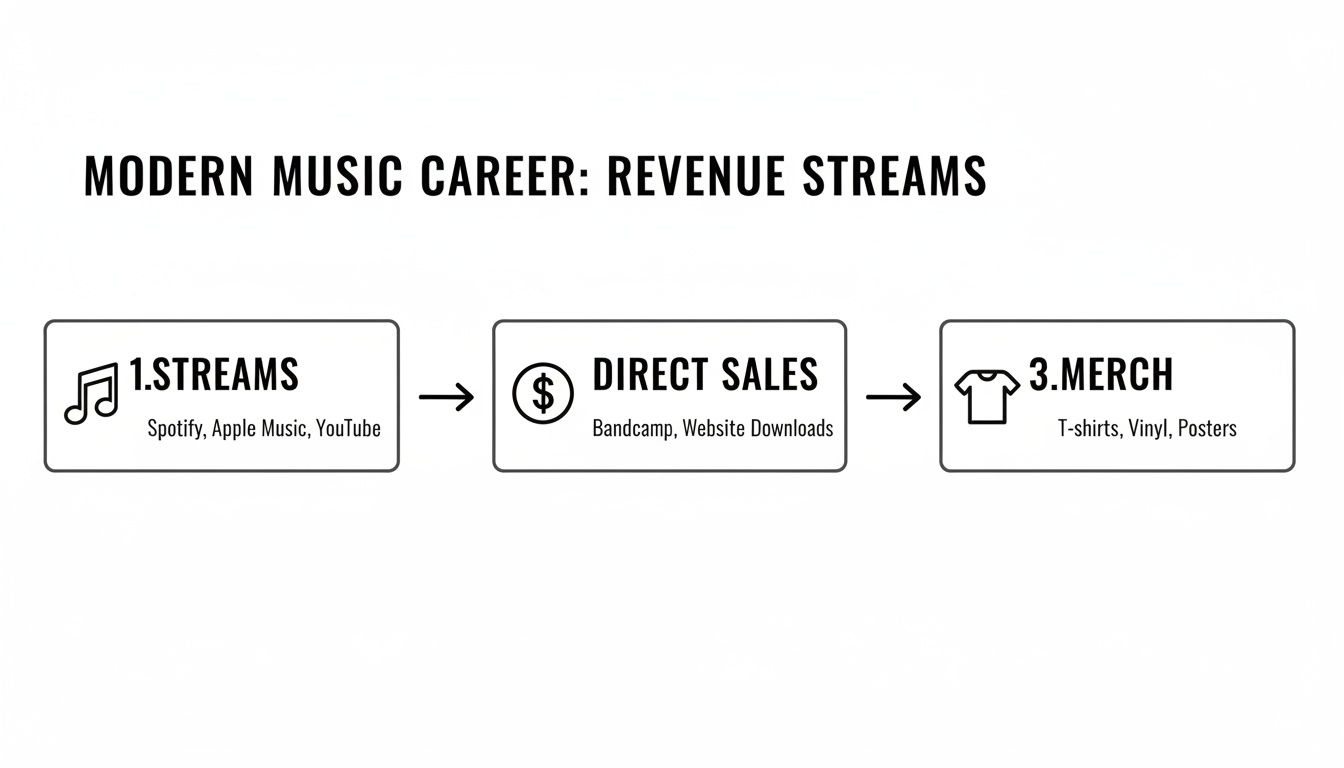
Think of it this way: streaming is your discovery engine. It introduces people to your music and funnels the most dedicated listeners toward higher-value opportunities like buying directly from you or picking up some merch.
Your Roadmap to a Lasting Career
Building a business with so many moving parts requires the right toolkit. This is where platforms like OohYeah come in, designed specifically to bring all these income channels under one roof. It gives you more control over your business and lets you keep a much larger slice of the pie.
Throughout this guide, we're going to dive deep into:
- Digital Royalties: Squeezing every last penny out of streaming and digital downloads.
- Direct-to-Fan Commerce: Selling your music, merch, and unique content right to your audience.
- Recurring Revenue: Creating predictable income with fan clubs and subscriptions.
- Live Gigs & Licensing: Cashing in on performances and getting your music placed in TV, film, and ads.
The table below provides a quick snapshot of the key income streams we'll be covering.
Key Income Streams for Today's Independent Artist
| Income Stream | Primary Platform/Method | Revenue Potential |
|---|---|---|
| Streaming Royalties | Spotify, Apple Music, etc. | Low per stream, high volume |
| Direct Music & Merch Sales | Your own OohYeah store | High margin, direct fan connection |
| Subscriptions & Fan Clubs | OohYeah Memberships | Recurring, predictable income |
| Sync Licensing | Music libraries, publishers | Potentially very high, project-based |
| Live Performances | Tours, local gigs, livestreams | High, dependent on draw and sales |
| Teaching & Services | Lessons, production work | Stable, service-based income |
By getting a handle on these different areas, you can build a strong financial foundation that allows your creativity to flourish. If you want to dig into even more detail on what's working right now, be sure to read our complete guide on how independent artists make money from music. This is your roadmap for taking control of the business side of your art.
From Streaming Pennies To Direct-To-Fan Profits
Streaming is the new radio. It’s unavoidable, and it’s where most people will probably hear you for the first time. But let's be real—discovery doesn't pay the bills. The hard truth is that streaming pays fractions of a penny per play, making it a volume game that's stacked against independent artists.
Think of platforms like Spotify and Apple Music as the very top of your funnel. They're great for casting a wide net and catching the attention of casual listeners. The real work begins after that first listen: turning that casual interest into a direct relationship where you call the shots. This is how you move from chasing algorithmic payouts to actually building a career.
The Two Sides of Digital Royalties
Every time your song plays on a streaming service, it generates a couple of key royalties: performance and mechanical. Performance royalties go to the songwriter when the music is played publicly (yep, streaming counts). Mechanical royalties are for the right to reproduce the song, which technically happens with every single stream or download.
It's a complex system, and while global royalties hit a record €13.97 billion in 2024, the digital slice of that pie is what matters here. Digital sources pulled in over €5 billion for the first time ever, making up 39.8% of the total. You can dig into the numbers yourself in the 2025 CISAC Global Collections Report.
This highlights just how massive streaming has become, but it also shows how many hands are in the pot—labels, publishers, distributors—all taking a cut before a dime ever gets to you.
Let this sink in: a single fan buying your $10 digital EP directly is often worth more to you than that same fan streaming your music thousands of times.
This isn’t about ditching streaming. It’s about using it smarter. Use your presence on the big platforms as a megaphone to guide your true fans somewhere their support can make a genuine difference.
Building Your Direct-To-Fan Sales Engine
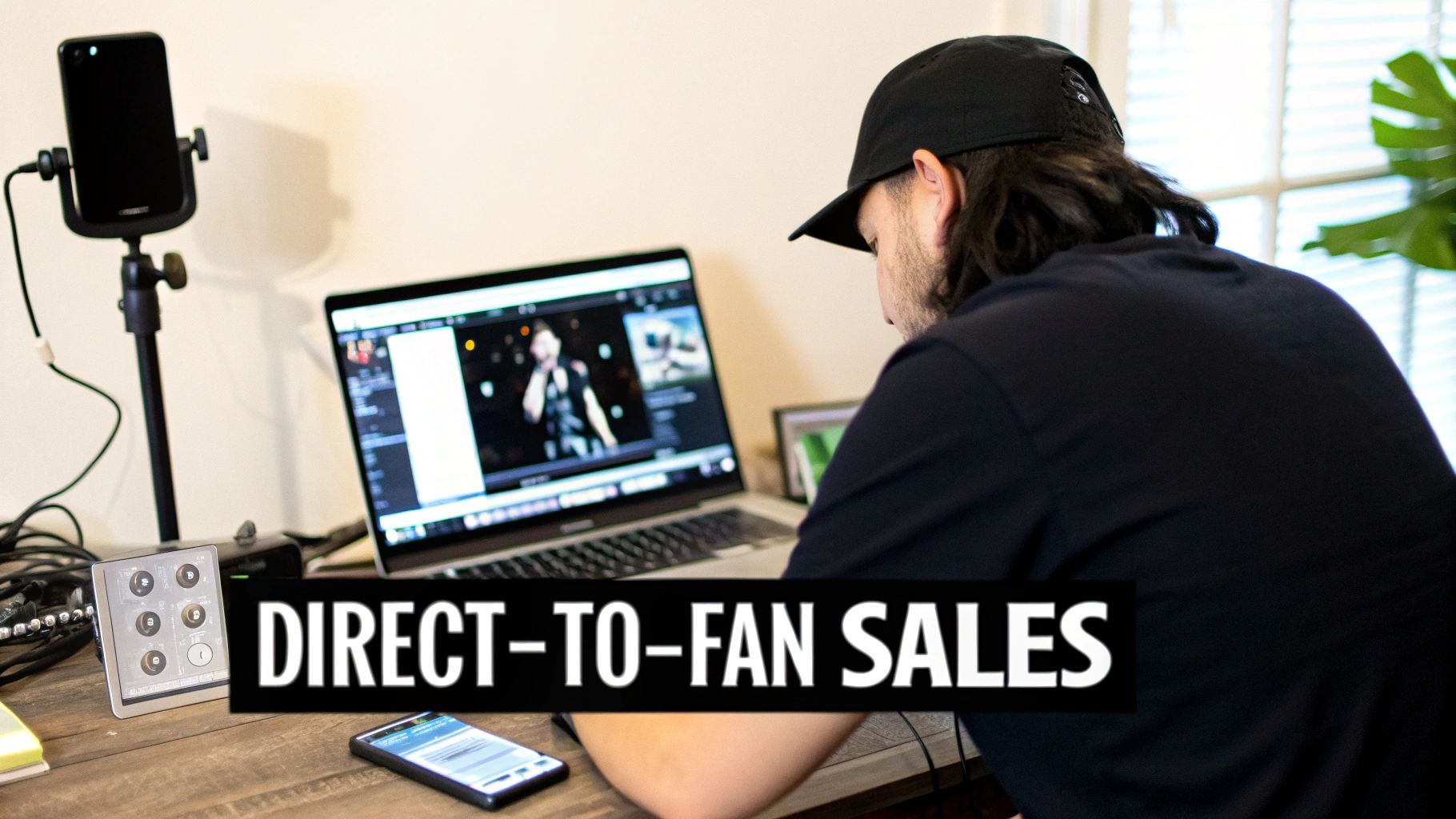
This is where direct-to-fan (D2F) comes in. It’s all about taking back control. When you sell digital downloads, exclusive tracks, or high-quality audio files from your own storefront, you cut out the middlemen and keep way more of the money. That’s exactly what a platform like OohYeah is for—it lets you build a central home for your music and merch, and you keep 100% of your sales. No platform fees.
Let’s walk through how this plays out for a real artist.
- The Funnel: An indie folk artist drops a new single everywhere. But in their Spotify bio, on their socials, and on any podcast they guest on, they’re always pointing people to one place: their OohYeah page, where an exclusive acoustic version of the full EP is waiting.
- The Offer: This isn't just a lazy re-release. The exclusive EP has stripped-back acoustic versions, a raw demo with the artist talking through the idea, and high-res WAV files. It's special content for people who truly connect with the music.
- The Result: A listener finds the artist on a playlist, loves the single, and sees the link in the bio. Instead of the artist earning maybe $300 from 100,000 streams, they sell that $10 exclusive EP to just 50 dedicated fans. That’s $500, straight into their pocket.
This simple shift changes the entire dynamic. It turns passive listening into active support and gives your fans a real, tangible way to invest in what you do. For a deeper look at this strategy, check out our guide on the benefits of selling music directly to fans.
Turn Fans Into Partners with Recurring Subscriptions
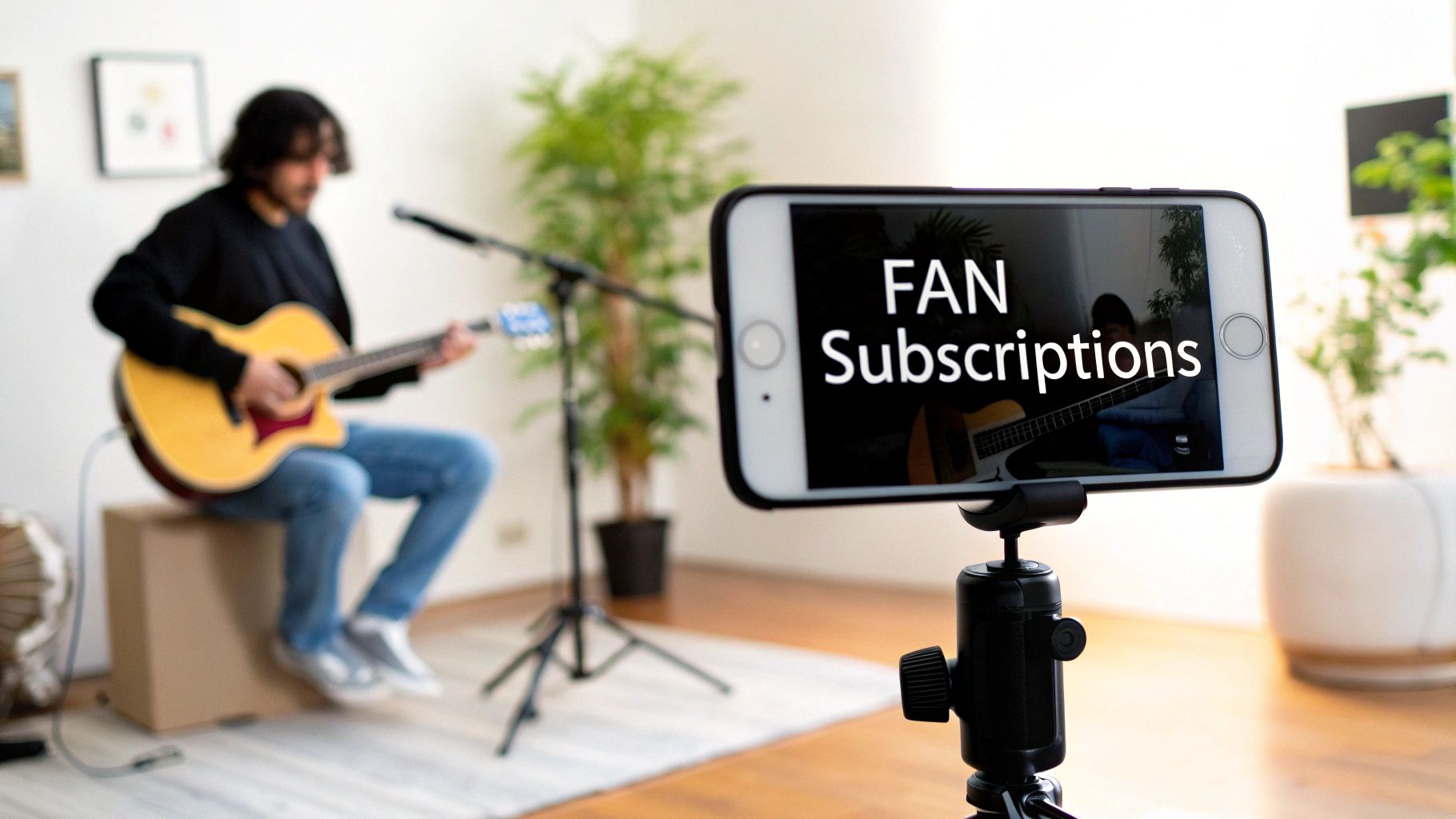
One-off sales are great, but they don't pay the rent consistently. If you're looking for a way to build a more stable, predictable income, fan subscriptions are the answer. This isn't just about selling a product; it's about building a true partnership with your most dedicated supporters.
Think about it: your core fans want more than just the finished song. They're invested in your journey and crave a deeper connection. A fan club or subscription model gives them a backstage pass, a way to be part of the creative process. In return, you get a reliable monthly income stream that can fund your next album or simply keep the lights on. It’s a powerful shift from just selling things to building a community.
How to Structure Your Subscription Tiers
Putting together your subscription tiers can feel daunting, but the key is to offer real value without burning yourself out. You don't need to create a mountain of new work. Instead, focus on repackaging things you're probably already doing.
Access and exclusivity are your best friends here. What do you have that feels special? A platform like OohYeah makes the technical setup easy, so you can focus on the fun part—deciding what to offer.
Here are a few ideas that have worked well for other artists:
- The "Inner Circle" Tier ($5/month): This is your entry-level, easy-yes offer. Think behind-the-scenes photos from the studio, a members-only blog or newsletter, and access to a private community chat like Discord. It's all about making them feel included.
- The "Supporter" Tier ($10/month): Here, you can build on the first tier by adding more tangible perks. Give them early access to new singles before they hit Spotify, share exclusive demo tracks, or offer a monthly discount code for your merch store.
- The "VIP" Tier ($25/month): This is for your ride-or-die fans. The benefits should feel truly exclusive. You could host a monthly live Q&A session, credit their name in your next album's liner notes, or guarantee them first dibs on concert tickets.
The goal isn't to create a ton of extra work. It's about repackaging your creative process into exclusive content. A quick phone video of you writing a new riff can be a powerful piece of content for a paying subscriber.
Launching Your Fan Club the Right Way
Once you’ve got your tiers sorted, it’s time for the launch. Don’t just drop a link on your website and hope for the best. You need to treat this like a real event and build some excitement. Your existing audience is your prime target, so make your pitch personal and clear.
Start by teasing the launch on social media for a week or two. Post hints like, "Working on a new way for us to connect," or "Something special is coming for my biggest supporters."
When launch day arrives, here's a simple game plan:
- Announce It with Heart: Ditch the corporate speak. Record a video or write a post explaining why you're launching this. Be honest about how their support directly fuels your ability to create music.
- Sell the Benefit, Not Just the Feature: Instead of just listing "Access to Demos," frame it as "Hear my new songs the moment they're written, long before anyone else." Make them feel the exclusivity.
- Make It Easy to Join: Your call to action needs to be front and center. Pin the link to your OohYeah subscription page at the top of your social profiles and add it to your email signature.
- Add a Little Urgency: A launch incentive can work wonders. Offer the first 50 subscribers a small bonus, like a personalized thank-you video or a limited-edition digital collectible.
This kind of subscription model can be one of the most effective strategies for an independent artist to find financial stability. For a deeper look at the various platforms and tactics, check out our guide to Patreon and subscription models for musicians. By inviting your listeners to become active partners, you build a foundation that allows you to focus on what you do best: making music.
Turn Your Artistic Brand Into Tangible Products
Your music is the soul of your operation, but don't underestimate the power of your brand. It's a real asset you can turn into a physical, profitable income stream. For a lot of working musicians, merchandise isn't just a fun extra—it’s a primary moneymaker that often brings in more reliable cash than streaming. It's how you give your most dedicated fans a physical piece of the world you’ve built.
Merch is more than just a transaction; it's a connection. A t-shirt, a poster, or even a custom guitar pick becomes a badge of honor for a fan, letting them fly their flag for you out in the world. This isn't just about selling stuff; it's about weaving a tighter community around your art.
Go Beyond The Basic Band T-Shirt
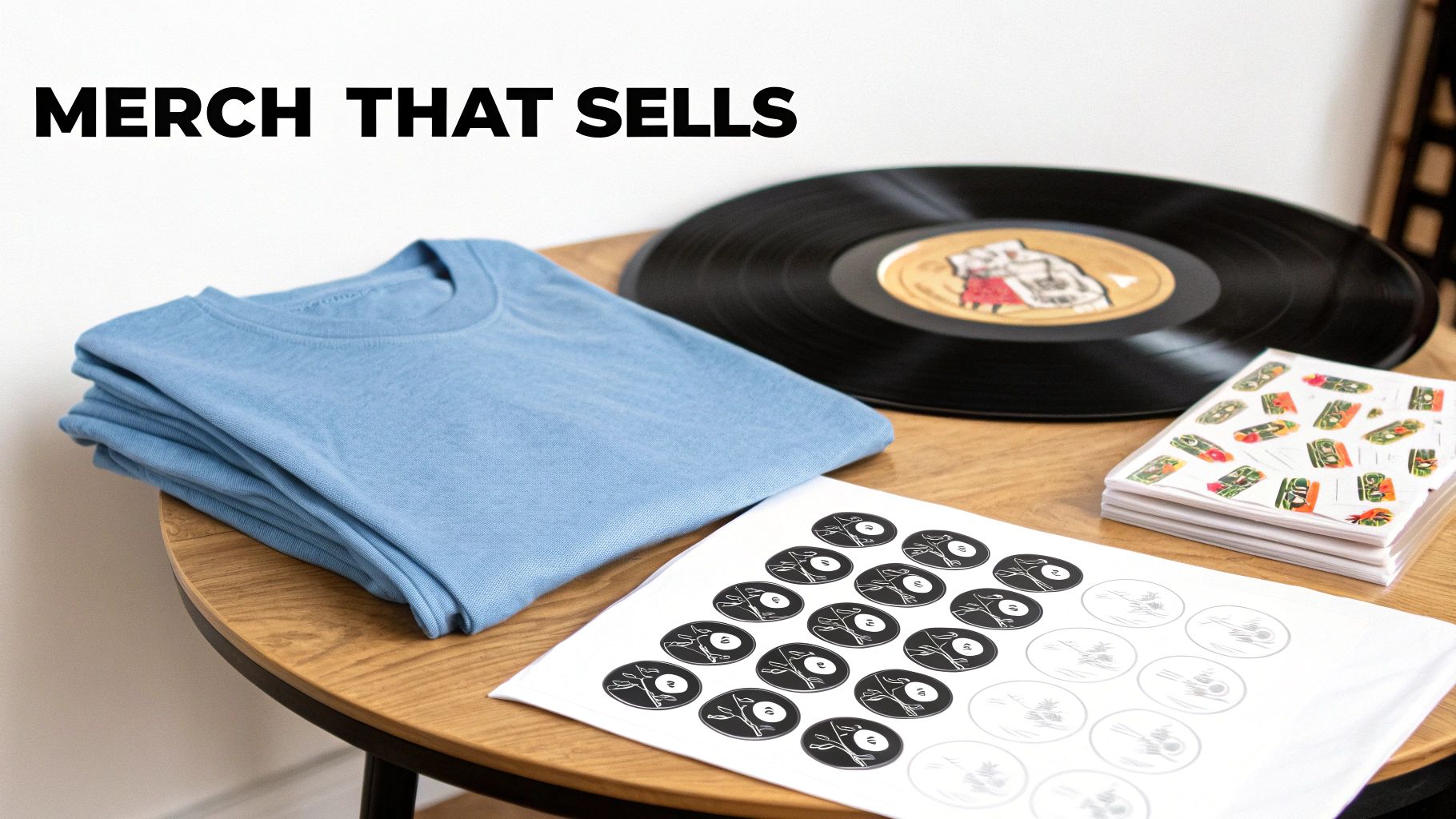
Sure, classic tees and hoodies are staples for a reason, but thinking outside the box can unlock fresh revenue and get your fans genuinely excited. Your merch should feel like an extension of your music. What makes your artistic identity unique? Translate that into something people can hold.
You don't have to stick to apparel. Think about products that echo your music's vibe or lyrical themes.
- Limited-Edition Vinyl Pressings: Nothing creates buzz like scarcity. A special color variant or a signed edition of your latest record can become an instant collector's item.
- Lyric Zines or Art Books: Pull together your lyrics, behind-the-scenes photos, and personal notes into a beautifully designed booklet. It's an intimate look into your process that die-hard fans will love.
- Custom Accessories: Things like enamel pins, embroidered patches, and branded tote bags are often low-cost to produce but have a high perceived value.
If you're looking for more ideas, check out a solid guide to effective promotional products for some inspiration. The goal is to create products that feel authentic to you and offer fans something special they can't find anywhere else.
A solo artist I know funded their entire summer tour exclusively through a pre-order campaign for a limited-run vinyl and an accompanying lyric zine. They created a bundle, built hype on social media for two weeks, and sold out before ever paying a cent for production.
Smart Execution With Print-On-Demand
The biggest hurdle for most artists is the upfront cost. What happens if you order 100 shirts and only sell 20? You’re stuck with boxes of inventory and a hole in your pocket. This is exactly why print-on-demand (POD) services are such a game-changer.
With POD, you just create a design and list the item in your store. When a fan buys it, the POD company prints, packs, and ships it for you. You only pay for the product after you’ve made the sale. That means zero upfront cost and zero risk.
Getting this set up is surprisingly simple. OohYeah, for example, integrates directly with leading POD providers. You can build your storefront, upload your designs, and have a fully functional merch operation running in an afternoon—without ever having to touch a shipping label.
Pro-Tips For Maximizing Merch Sales
Just having merch isn't enough. You need a game plan to actually move it. How artists make money from their merch table often comes down to smart marketing and creative sales tactics.
Here are a few proven strategies that actually work:
- Create 'Merch Drops': Instead of keeping all your items available forever, release new designs as limited-time or limited-quantity "drops." This creates a sense of urgency and makes each release feel like an event.
- Bundle Physical and Digital Goods: Want to increase the value of a purchase? Bundle a t-shirt with a digital download of a B-side or an early-access code for tickets. It’s a simple move that can significantly boost your average order value.
- Showcase Merch in Action: Product mockups are fine, but they’re boring. Wear your own gear in photos, videos, and during live streams. When fans see you rocking your own stuff, it makes them want it that much more.
When you start treating your merchandise as a core part of your artistic output, you build a powerful, sustainable income stream that both strengthens your fan relationships and funds your next big project.
Live Shows and Sync Placements: Your Biggest Paydays
Think of your online presence as the engine driving your music career forward. Live shows and sync licensing? That's the rocket fuel. These two avenues are where some of the most significant paychecks in music are made, taking your songs from a file on a hard drive to a shared experience or the soundtrack to a pivotal scene. This is how you level up from earning cents on streams to landing larger, project-based income.
It's hard to overstate the financial power of live music. While recorded music revenues hit an impressive $29.6 billion in 2024, live performances pulled in another $23.1 billion. That staggering number came from 151 million fans attending over 54,000 events, proving that playing live isn't just about promotion—it’s a fundamental part of a modern artist's business. You can dig deeper into the industry's growth on artists.badenstock.com.
Turning Your Live Gigs into Gold
Whether you're playing for tips at a local bar or headlining a ticketed livestream, every single performance is a money-making opportunity. The real trick is to look beyond the performance fee or the initial ticket sale. A live show is a pop-up shop where you have a captive audience of your most dedicated supporters.
A smart gig strategy means getting a few different things working in harmony.
- Smart Ticketing: Don't just set one price. Create urgency with early-bird discounts to get the ball rolling. Then, offer VIP packages that might include a pre-show meet-and-greet or an exclusive piece of merch. You're creating different value tiers for different fans.
- The Merch Table Advantage: Your merch table needs to be a destination, not an afterthought. Make it look great and easy to browse. The secret weapon? A show-exclusive item. A limited-run tour poster or a t-shirt design you can only get at the gig creates a powerful sense of "I need this now."
- On-Stage Promotion: You have a microphone and the audience's full attention—use it! Talk about the story behind a song, mention your new subscription tier on OohYeah, and point to a QR code on stage that links directly to your store. Make it personal and direct.
The moments after a great live set are your most powerful sales window. A fan who just had an incredible, emotional experience with your music is infinitely more likely to buy a shirt or join your fan club than someone who just stumbled upon you on a playlist.
Getting Your Music into TV, Film, and Games (Sync Licensing)
Sync licensing is all about getting your music placed in visual media—think TV shows, movies, commercials, or video games. This can be one of the most financially rewarding moves an artist can make, often bringing in a hefty upfront fee plus long-term performance royalties. It’s also incredibly competitive and demands a professional approach.
Music supervisors are the gatekeepers here. They are constantly on the hunt for the perfect song to fit a scene, and your job is to make your music both easy to find and easy to license.
Getting Your Catalog Sync-Ready
Before you can even dream of a big placement, you need to get your house in order. Music supervisors are on brutally tight deadlines; they don't have time to untangle messy rights issues or wait for you to find a high-quality file.
Here’s your sync-ready checklist:
- High-Quality Masters: Have professionally mixed and mastered WAV files for every single song. No exceptions.
- Instrumental Versions: This is non-negotiable. Often, a director needs the instrumental to run under dialogue. Without it, you're out of the running.
- Clear Rights: You must know, without a doubt, who owns the master recording and who owns the publishing (the songwriting). If you have co-writers, get those split agreements in writing.
- Organized Metadata: Tag your files properly. Include keywords describing the mood, tempo, genre, and lyrical themes (e.g., "uplifting," "driving beat," "indie-pop," "first love," "heartbreak"). This is how supervisors find you.
Using a platform like OohYeah to host your catalog can act as a polished, professional portfolio. You can create a private, password-protected page just for music supervisors, giving them one clean link to stream your work, download instrumentals, and see that you're an artist who's ready for business. This simple bit of organization can make all the difference, setting you apart and opening doors to some truly incredible opportunities.
Your Top Questions About Artist Income, Answered
Let's cut through the noise. When artists ask how to actually make a living when streaming pays pennies, they deserve real answers, not just vague advice. Here are some of the most common questions I hear, with practical solutions you can use today.
What Can I Really Expect to Make from Streaming?
Let's be blunt: streaming platforms are discovery tools, not your primary paycheck. They introduce your music to millions of potential fans, but the payout per stream is notoriously low.
For perspective, an independent artist pulling in 500,000 plays might only see about $1,500 before everyone else takes their cut. It’s a tough reality.
That's why the real strategy is to treat streaming as the very top of your sales funnel. Its main job is to bring people into your world. Once they're listening, your goal is to guide them from a platform like Spotify directly to your own OohYeah page, where the real connection—and income—happens.
Think of it this way:
- It’s a fantastic way to build an audience without massive upfront marketing costs.
- For many independent artists, it still generates around 63% of their total royalty income.
- Most importantly, it’s the first step in turning a casual listener into a dedicated fan.
"A single fan buying your $10 EP directly from you can be worth more than thousands of individual streams. That’s the math that matters."
This is where your OohYeah tools come in handy. Dive into your listener demographics and use the heatmaps to see exactly where your fans are. Pinpointing these hotspots lets you do things like schedule virtual shows for specific time zones or run targeted ad campaigns that actually work.
A simple action plan could look like this:
- Check the listener retention rates on your top 10 tracks. Which ones hold their attention?
- Create content that speaks to your hotspots, like radio shout-outs or city-specific merch designs.
- Use what you learn from your best-performing tracks to craft smarter, more effective ads.
Following these steps helps you turn passive listeners into active supporters and direct buyers.
How Can I Sell Merch Without Going Broke on Inventory?
The old model of ordering hundreds of t-shirts and hoping they sell is dead. Print-on-demand (POD) services have completely changed the game, eliminating financial risk.
With POD, you don't handle inventory, production, or shipping. You just focus on creating killer designs. When a fan places an order, the service prints and ships it directly to them. You just collect the profit. It's a brilliant, hands-off way to get started.
My advice? Don't overwhelm people with dozens of options.
- Start with just one or two standout designs and test them with your most dedicated fans.
- Create urgency by running limited-edition drops and use countdown timers on your OohYeah page.
- Bundle merch with music—like a t-shirt plus an exclusive track—to sweeten the deal and increase the average order value.
“We sold out our first t-shirt drop in two hours. The only thing we did differently was add a countdown timer and post a few behind-the-scenes videos of the design process.”
A few practical design tips:
- Use high-contrast designs. You want your graphics to look sharp on any color fabric.
- Think seasonally. Offer beanies in the winter or tank tops and stickers in the summer to stay relevant.
- Showcase your fans! When people send you photos wearing your gear, share them. It’s social proof that builds trust and encourages others to buy.
With OohYeah, you can connect a POD provider to your store in just a few minutes and have total control over your pricing and profit margins.
Should I Stay Independent or Sign with a Label?
This is the classic dilemma. A record deal can offer a tempting advance and marketing muscle, but it almost always comes at a cost: creative control and a significant chunk of your revenue.
When you stay independent, you keep 100% of your direct sales revenue and, most importantly, you own your master recordings and publishing rights. That's your long-term wealth.
Many savvy artists are now building a powerful independent career first, proving their value and their audience. When labels come knocking, they're in a position to negotiate from a place of strength, not desperation. Plus, owning your rights means you can collect passive income from future sync deals for years to come.
Instead of just hoping for a deal, use your OohYeah analytics to build an undeniable case for your success. Show them the numbers.
Here’s a smarter way to approach labels:
- Compile all your streaming data, sales figures, and fan engagement metrics into a single pitch document.
- Propose a profit-share model instead of a traditional, low-royalty percentage.
- Negotiate a trial period or a deal where the label's recoupable expenses are capped.
“After we left our deal and went fully independent, our revenue tripled in just six months. We had the direct fan connection they didn't.”
This hybrid approach—building independently and then partnering smartly—often gives you the best of both worlds.
How Do I Get My Music into TV Shows, Films, or Ads?
Sync licensing is one of the most exciting income streams for artists. A single placement can pay a one-time fee of a few thousand dollars (or much more), plus ongoing performance royalties every time it airs.
To get started, you need to be professional and prepared. Music supervisors are busy people. Make their job easy.
Get your sync portfolio in order. This means compiling high-quality masters, instrumental versions of every track, and complete, accurate metadata. With OohYeah, you can create a private, password-protected page to host all of this, giving supervisors a single, clean link to access everything they need.
| Your Prep Work | Why It's Non-Negotiable |
|---|---|
| Master WAVs | Essential for broadcast quality. |
| Instrumentals | Needed for scenes with dialogue. |
| Metadata | This is how supervisors find you. |
While a sync agent can be a huge help, you can also start pitching on your own.
- Register all your work with a Performance Rights Organization (PRO) like ASCAP or BMI to ensure you collect your royalties.
- Consider non-exclusive sync libraries like Musicbed or Artlist to generate passive opportunities.
- Do some research and reach out directly to music supervisors on LinkedIn or through professional directories. A short, polite, and well-organized pitch can work wonders.
Keep your OohYeah portfolio updated with your latest and best work. You never know when the perfect opportunity will arise.
By building out each of these income streams—from streaming and merch to subscriptions and licensing—you create a resilient and profitable music career that isn't dependent on any single platform.
Interested in bringing all these revenue channels under one roof? Try OohYeah today at https://oohyeah.app and take control of your music business.