EP in Music: The Ultimate Guide for Independent Artists
What is an EP in music? Our guide covers length, track count, streaming platform rules, release checklists, and marketing for today's independent artist.
April 27, 2026
Music Marketplace Advisor
Buying & SellingYou’re probably in a familiar spot. You’ve got a handful of strong songs. One single feels too small to say what you want to say, but a full album feels expensive, slow, and heavy. You don’t want to disappear for a year making a long project only to return to an audience that has moved on.
That’s where the EP in music becomes powerful.
A good EP isn’t a half-finished album. It’s a format with its own logic. It gives you enough room to show range, build a story, and give fans something substantial, while staying lean enough to release without crushing your budget or momentum. For a new independent artist, that balance matters more than is often acknowledged.
The other reason EPs matter is career design. If you treat an EP as just “a few songs bundled together,” you’ll miss the bigger opportunity. An EP can test a new sound, sharpen your artist identity, create a reason to talk to fans again, and open up direct ways to earn from music, merch, exclusives, and community support.
That’s the mindset shift. Don’t ask, “Is an EP smaller than an album?” Ask, “What job do I need this release to do for my career right now?”
Introduction The Modern Artist’s Most Powerful Tool
Most independent artists don’t struggle with a lack of ideas. They struggle with choosing the right release format for the stage they’re in.
If you’ve written four or five songs that belong together, you’re already in EP territory. That usually means you’ve moved beyond a one-song introduction, but you’re not trying to build the long arc of a full-length record. You need something focused, manageable, and strong enough to move your career forward.
That’s why the EP works so well for emerging and developing artists. It lets you release with intent.
The real decision most artists are making
You’re often choosing between three pressures at once:
- Creative pressure: You want enough space to show who you are, not just what one song sounds like.
- Financial pressure: You need a project you can finish without dragging yourself into debt or endless delays.
- Audience pressure: You need to stay present, because long silence is hard to recover from.
A smart EP sits in the middle of all three.
Practical rule: If the songs feel connected, but you can still describe the project in one sentence, you probably have an EP and not an album.
An EP also gives you room to learn in public. That matters. Early in your career, every release teaches you something about your listeners, your best-performing songs, your visual identity, and your workflow. A full album can teach those lessons too, but it asks for much more time and commitment up front.
The artists who build sustainable careers usually get good at two things. They release consistently, and they make each release do more than one job. An EP can introduce your sound, re-engage old listeners, support shows, create products fans can buy, and lead into your next chapter.
That’s not a compromise. That’s strategy.
Defining the EP From Vinyl Roots to Streaming Dominance
A new artist often asks a simple question that turns messy fast: “If I put out five songs, is that an album, an EP, or just a bunch of tracks?” The answer depends on both history and platform rules. If you understand both, you make better release decisions and avoid packaging your music in a way that confuses stores, fans, or your own rollout.
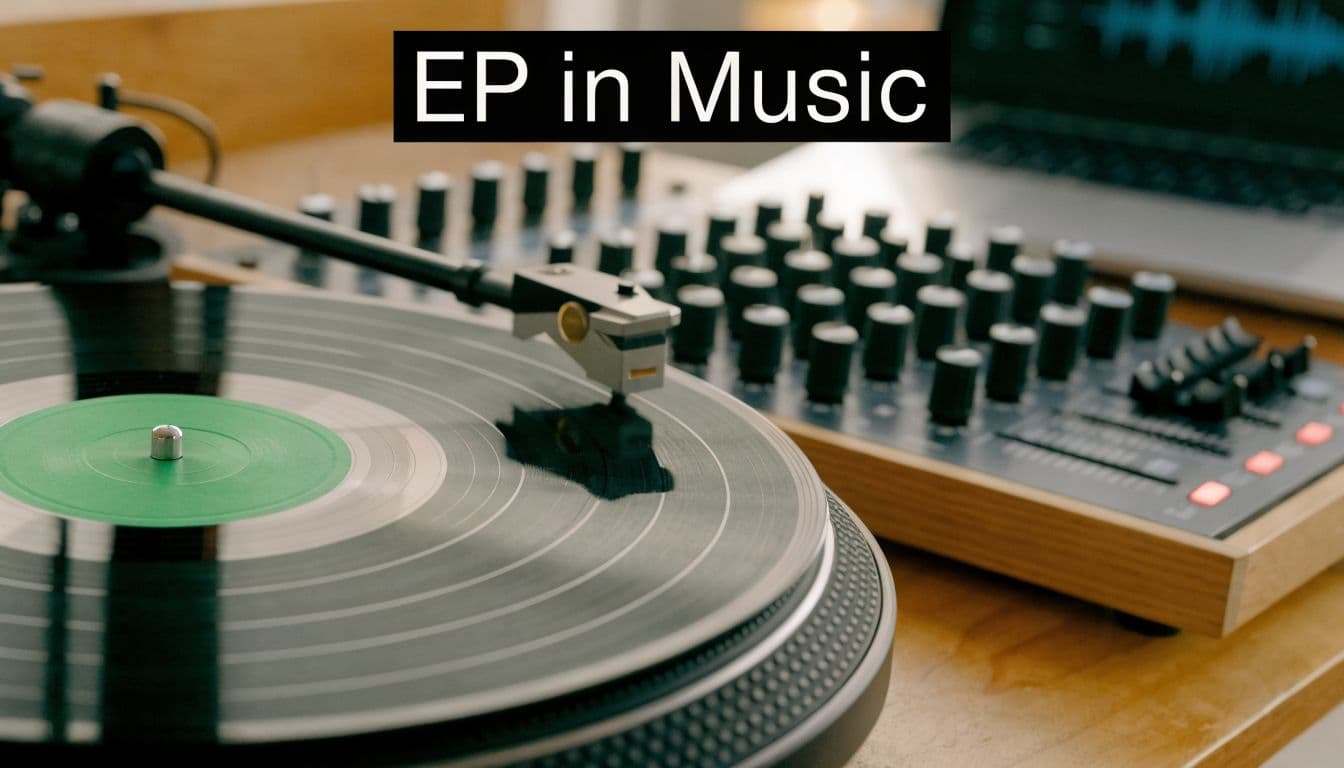
EP stands for Extended Play. It has always lived in the middle ground between a single and a full-length album. That middle position is the point. The format was built to give artists more room than one song could offer, without the cost and scale of a full LP.
That started in the vinyl era. RCA introduced EPs in the United States in 1952 on 7-inch 45 rpm records. EMI followed in Britain in 1954, and the format became especially strong in parts of Europe, where it took on a major commercial role, according to Orphiq’s history and definition of the EP format.
That history still matters because it explains what an EP is for. An EP works like a well-packed carry-on bag. You do not bring everything you own. You bring what serves the trip. For an independent artist, that usually means enough songs to make a clear impression, enough cohesion to feel intentional, and a release size you can fund, promote, and sell without stalling your next move.

What an EP usually looks like today
Streaming platforms use technical rules, not artistic feelings. A listener may hear six songs and casually call it an EP. A distributor or store may classify that same project by track count and total runtime.
A common working standard is simple:
| Format | Typical Track Count | Typical Runtime | Primary Use |
|---|---|---|---|
| Single | 1 track, sometimes with an alternate version | Short | Focus attention on one song |
| EP | Often 4 to 6 tracks | Usually under 30 minutes | Present a focused statement with room for identity |
| Album | Often 7 or more tracks, or a longer total runtime | Usually over 30 minutes | Deliver a larger body of work |
Those are useful guardrails, not artistic laws. Different stores and distributors can apply their own labeling rules, so the practical move is to check your distributor’s current specs before you upload anything. For a plain-language artist reference, this guide explaining what an EP means in music breaks the format down clearly.
Why the EP became even more useful in the streaming era
Streaming did not invent the EP. It gave the format a new home.
On vinyl, an EP solved a physical product problem. It gave buyers more music at a lower price point than an LP. On streaming and artist-first platforms, it solves a career-building problem. It gives you enough material to tell a story, build a campaign, create fan offers, and learn what your audience responds to, without waiting a year to finish an album.
That difference matters for independent artists trying to build income, not just attention. A single can bring someone in. An EP gives you more to sell around. You can package early access, bonus content, demos, alternate versions, lyric breakdowns, signed digital extras, or fan bundles around a small but complete project. That is one reason EPs fit direct-to-fan platforms so well. They give supporters a fuller experience than one track, while staying manageable for the artist who has to fund, release, and follow up on the project.
The definition that helps artists make better decisions
For industry paperwork, an EP is a short release that usually falls between a single and an album in length.
For career strategy, use a more practical definition:
An EP is a focused body of work that gives listeners enough music to understand you and gives you enough material to promote, package, and monetize without the weight of a full album cycle.
That definition keeps you out of a common trap. Many new artists add weak songs because they want a project to feel bigger. Bigger rarely wins. Clear wins. If four strong songs create a complete world, that is a stronger EP than seven songs with three fillers.
A good EP answers one question well: “What should a new fan understand about this artist after listening?” If your project can answer that clearly, you are using the format the way it was always meant to be used.
Why Choose an EP Strategic Advantages for Indie Artists
An EP is often the smartest format for an independent artist who needs a project that can earn, teach, and grow an audience at the same time.
Albums ask for a long runway. Singles keep you visible, but they rarely give enough room to build a full offer around your music. An EP sits in the useful middle. It is large enough to feel like a real chapter in your career and small enough to fund, finish, and sell without burning out.
That balance matters if you are building without a label budget.
It gives new listeners a fast, accurate read on your artist identity
A single introduces a song. An EP introduces an artist.
That distinction shapes everything that comes after. Booking, press interest, fan retention, sync conversations, and direct sales all get easier when people can understand your sound quickly. Four or five well-chosen tracks can show your core style, your emotional range, your production choices, and the lane you want to own.
An EP works like a well-designed storefront. One item in the window may catch attention. A curated set of products tells people what kind of business they just walked into.
For a new independent artist, that clarity is valuable because it helps fans decide why they should stay.
It creates something you can actually package and sell
This is one of the most overlooked advantages of the format.
A single is hard to build a meaningful offer around unless you already have heavy audience demand. An EP gives you multiple assets from one release. You can offer the full project, music-only versions, early demos, commentary tracks, acoustic versions, digital zines, lyric sheets, private livestream access, or limited fan bundles. That makes artist-first platforms such as OohYeah especially useful, because the EP gives supporters a reason to spend more than the price of one stream.
In practical terms, an EP can become a small product line. Each song adds another entry point. Each extra piece of content adds another offer tier. Instead of asking fans to support one track once, you are giving them several ways to buy into your world.
That is how a release starts supporting a career, not just a release week.
It keeps your timeline realistic while still building momentum
Independent artists usually face the same three constraints. Time, money, and attention.
An album can tie up all three for too long if your audience is still growing. An EP gives you enough material to plan a campaign, test messages, and stay present without disappearing for a year. As noted earlier, shorter formats now make up a large share of releases, which reflects how many artists are choosing faster, more manageable cycles.
That is useful in a few common situations:
- After a creative shift: you need a focused project that introduces your new sound without committing to a full album statement.
- Before shows: you want something fans can buy, stream, and connect with on a more significant level than a standalone single.
- Between bigger releases: you want to keep audience interest warm while collecting feedback that can shape the next era.
A good EP cycle gives you more than content. It gives you information.
It lowers the cost of learning
Every release should teach you something. Which songs hold attention. Which hooks convert casual listeners into followers. Which stories make fans reply, share, and buy.
An EP is one of the best formats for that kind of learning because the importance is considerable enough to be meaningful but still manageable. You can test a new producer, a darker sound, more personal writing, live instrumentation, or a tighter visual concept without betting your whole year on one oversized project.
If the response is strong, you have a clear foundation for the next release. If the response is mixed, you still gained data, content, and fan insight from a project you could afford to make.
That is a healthier way to build.
It gives you more campaign moments from one body of work
A single usually gives you one headline moment. An EP gives you a sequence.
You can announce the concept, introduce the lead track, preview another song live, share the artwork, release behind-the-scenes clips, explain the story of the project, and then continue promoting individual tracks after release. Each piece gives fans another reason to pay attention.
More importantly, those moments do not have to end at streaming. Each one can point toward a direct offer. Pre-orders. Fan memberships. Bonus downloads. Paid listening events. Limited digital bundles. The EP format supports this better than many artists realize because it contains enough material to justify a fuller fan experience.
For an indie artist trying to build steady income, that extra surface area matters. More songs create more chances for discovery, but they also create more chances to convert interest into support you can own directly.
Navigating Distribution and Platform Rules
Release week often exposes a problem that started much earlier.
An artist uploads a project they planned as an EP. Spotify shows one thing. Apple Music shows another. The artist bio is correct on one service, a feature credit is mismatched on another, and the release page is missing details that matter for payouts. None of that changes the songs. It does change how professional the release looks, how easy it is to find, and whether the money flows to the right people.
Metadata works like the label on a shipment. If the box is packed well but the label is wrong, delivery gets messy.

Platform rules are similar, but not identical
As noted earlier, streaming services do not always sort EPs the same way. A release can be one clear artistic statement to you and still appear under different catalog labels across platforms.
That affects more than aesthetics. Fans may browse your catalog differently depending on whether a project sits with albums, singles, or EPs. Industry contacts often scan your profile quickly, so classification shapes first impressions. Some platform features and release page layouts can also change based on how the system reads the project.
For an independent artist, the lesson is simple. Do not treat EP classification as a minor admin detail. Treat it like release design.
What to verify before upload
A pre-release check saves time, prevents support tickets, and protects your revenue setup.
- Track count: Count every audio file that will ship with the release, including intros, interludes, remixes, and alternate versions.
- Total runtime: Check the full project length before you upload, because platform rules can depend on the complete release, not just song count.
- Title consistency: Match artist names, featured credits, and song titles across your audio files, cover art, distribution form, and social rollout.
- ISRCs and release data: Assign codes correctly and keep your release information in one clean document.
- Credits and splits: Confirm writers, producers, and ownership shares before release day, while everyone is responsive and the details are still fresh.
If you are still comparing distributors, this guide to choosing the right music distribution service can help you choose one that fits your release habits and business goals.
Distribution choices shape your fan funnel
This is the part many guides miss. Distribution is not only about getting music onto streaming services. It is also about deciding where the listener goes next.
If your EP sends all attention to platforms you do not control, you may get streams but miss the stronger business opportunity. If your release plan also points fans toward artist-first platforms such as OohYeah, you can connect the EP to direct offers like paid exclusives, bonus tracks, fan clubs, listening events, or digital bundles. That turns the EP from a piece of content into a small business asset.
A smart release setup asks two questions at once. Will the music appear correctly on major platforms? Will this release also guide fans toward places where I can build repeat support?
Keep your paperwork clean
Strong organization protects both visibility and income.
You do not need a label office. You do need one reliable system. A simple master folder can hold your audio masters, artwork, final lyrics, metadata sheet, split details, and promo assets. If someone asks for a correction, a license detail, or a missing credit, you should be able to find it in minutes.
Clean records also help long after release day. They make royalty questions easier to fix, future re-releases easier to manage, and direct sales bundles easier to build. A well-prepared EP gives each platform the best chance to display your work properly, and it gives you a stronger foundation for getting paid from both streaming and direct fan support.
Your Step-by-Step EP Release Blueprint
A month from now, a new listener finds your music, likes one song, and clicks through the rest of the release. In a few minutes, they decide whether you feel like an artist with a clear point of view or someone still testing ideas in public.
That is why the blueprint matters.
A good EP is more than a small batch of songs. For an independent artist, it works like a well-built starter home for your audience. Fans can enter easily, understand what you do, and find reasons to stay, support, and buy.

Step 1 Choose the job of the release
Start with one sentence: “This EP exists to…”
Keep it plain. No marketing jargon. No attempt to sound profound.
Examples:
- This EP exists to introduce my sound after three disconnected singles.
- This EP exists to give new fans a clear entry point before my fall shows.
- This EP exists to mark a shift in my writing and lead fans toward a paid fan community.
- This EP exists to give my existing listeners a tighter project they will replay and support directly.
That sentence becomes your decision tool. Song choice, artwork, release timing, video ideas, and direct offers all get easier once the job is clear.
Step 2 Choose songs that can carry the same world
Track count matters less than fit.
An EP can be short and still feel complete if the songs share a center of gravity. Artists often get confused here because they assume cohesion means everything must sound similar. It does not. A great EP can contain tempo changes, different moods, and one experimental track, as long as the listener still feels the same artist guiding the whole trip.
Use four questions before you lock the tracklist:
| Question | Why it matters |
|---|---|
| Do these songs strengthen the same story, mood, or era? | The project feels clearer to listeners |
| Can I finish every track at a high standard? | Quality affects trust more than quantity |
| Is the runtime comfortable for my audience and genre? | Pacing shapes replay value |
| Does each song earn its place? | Filler weakens the whole release |
If one song keeps surviving only because you spent money on it, that is a warning sign. Past effort is not a reason to include a track that weakens the set.
Step 3 Record with consistency in mind
Aim for a cohesive EP that feels like a single, unified release.
You are building a room, not collecting furniture from five different houses. The vocal tone, drum sound, synth choices, guitar textures, and ambience should tell the listener they are still inside the same artistic space.
A few habits help:
- keep a reference playlist for tone and energy
- reuse a small set of signature sounds
- note recurring lyrical themes and keywords
- decide song order before the final master stage
Sequencing early is especially useful. A song can be strong on its own and still feel misplaced in position two or four. Order changes how the project breathes.
Step 4 Mix and master as a project, not as isolated songs
Many independent artists approve mixes one by one, then hear the full EP back-to-back and notice the problems immediately. The lead vocal feels dry on one track and distant on the next. The low end jumps around. One song sounds bright and modern, another sounds cloudy and older.
Give your engineer the full context. Tell them where each track sits in the sequence and what role it plays. Opening song, emotional centerpiece, live favorite, closing statement. Those roles affect how a listener experiences the whole release.
Then test the EP in real listening situations:
- headphones
- speakers
- car
- phone
- one uninterrupted front-to-back listen
Ask one question each time: does this feel like one body of work?
Step 5 Build the release package fans can recognize and buy
On a short project, presentation does a lot of heavy lifting. The visuals often become the memory anchor that helps listeners recall the music later.
Your package should include:
- Cover art that stays clear at thumbnail size
- A short description of the project
- Track titles formatted consistently
- Artist photos that match the tone of the music
- A simple offer tied to the release, such as bonus audio, demo versions, lyric sheets, a digital bundle, or access to a fan space on a platform like OohYeah
That last point matters for career sustainability. If your EP has no attached offer, you may earn attention but miss income. Even a modest direct product gives your strongest listeners a way to support the release beyond streaming.
Later in the process, this kind of walkthrough can help you sanity-check your rollout thinking:
Step 6 Prepare metadata before launch week
Metadata is the label on every box in your storage unit. If the labels are wrong, you waste time, lose money, and create confusion when opportunities arrive.
Create one clean document with:
- release title
- artist name
- track titles
- featured artist formatting
- ISRCs
- songwriter and producer credits
- lyrics
- release date
- cover art file name
This one document helps with uploads, credits, press requests, collection societies, and direct-sale bundles. It also reduces small mistakes that make a professional release look careless.
Step 7 Build a calendar you can realistically support
A release date is not the plan. It is one checkpoint inside the plan.
Give yourself enough time to finish the music, prepare content, rehearse if needed, and set up your direct-to-fan path. For an independent artist, the strongest release week usually comes from steady preparation, not last-minute intensity.
Your calendar should include time to:
- announce the EP
- send assets to collaborators
- film and edit short-form content
- prepare your sales or fan-support page
- line up release-day posts and emails
- rehearse songs for live use
- follow up after launch with clips, stories, and offers
The big lesson is simple. A successful EP release is not only about getting songs finished. It is about building a small, repeatable system that turns one project into audience growth, direct support, and a stronger next step.
Marketing and Monetizing Your EP for Sustainable Growth
Release day arrives. Streams tick up for a moment, friends repost the link, then attention starts to slide by day three. That pattern is common when an EP is treated like a file to upload instead of a product system to sell, support, and build on.
The stronger approach starts earlier. Marketing begins once you know what role this EP plays in your career. Is it your introduction, your proof of consistency, your bridge into live shows, or your first serious offer for paying fans? Once that answer is clear, promotion becomes easier because every post, email, clip, and product has a job.
The better question is this. How can this EP create repeated chances for fans to listen, buy, return, and support the next release too?

Build the campaign around the EP's identity
Fans respond to meaning before they respond to announcements.
If all they see is a release date and cover art, they have very little to hold onto. If they understand why these songs belong together, what season of your life they came from, or what sound you were chasing, the EP starts to feel like a world they can enter.
Use the material already inside the project. Studio clips, lyric fragments, rehearsal footage, artwork drafts, demo snippets, and short explanations of the choices behind the songs all work because they come from the same core story.
Useful campaign angles include:
- Origin: Why these songs belong together
- Process: How you built the sound
- Shift: What this release says about your growth as an artist
- Entry point: Which song a new listener should hear first, and why
Give the EP more than one way to earn
Streaming is only one shelf in the store.
For an independent artist, an EP can also be a paid download, a signed physical item, a merch bundle, a members-only release, a live-show product, or a reason to join your fan community. You do not need every format. You need the few that fit your audience and are realistic for you to maintain.
This is also where artist-first platforms matter in a practical way. OohYeah lets artists sell music, exclusives, and merch directly to fans in one place, which helps keep the EP connected to the buying experience instead of sending supporters across disconnected tools. That matters for sustainable income because fewer middle steps usually means fewer lost sales and more control over the fan relationship.
Monetization ideas that support a longer career
Good monetization should feel like better service, not pressure.
A useful test is simple. Does the offer make the fan experience richer while also giving you margin, data, or repeat contact? If yes, it is probably worth building.
Here are strong options:
- Bundle the digital EP with merch: A shirt, poster, lyric card, or signed insert turns the release into something collectible.
- Sell alternate versions: Demos, acoustic takes, music-only versions, or commentary tracks work well for dedicated supporters.
- Create a direct-download option: Some fans want ownership, not rental-style access through streaming apps.
- Use the EP to anchor community offers: Listening rooms, Q&A sessions, early access, or subscriber-only drops deepen fan habits.
- Tie it to live experiences: A release show, rehearsal stream, or venue-only edition gives the project another sales moment.
A small audience with buying habits can support a career far better than a larger audience that only scrolls past a link.
Use video to keep the EP working after release week
One EP should create months of material.
You do not need a high-budget video for every song. You do need enough visual assets for the music to keep circulating. Performance clips, lyric videos, studio sessions, vertical edits, and live-room takes all help songs travel to different platforms and different kinds of listeners. If you want a practical framework to get your music heard on YouTube, that guide is useful because it focuses on discoverability, not just uploading.
Stretch the release into a cycle
Treat the EP like a season, not a weekend.
One song can lead with a visualizer. Another can return later with a live version. A fan-favorite lyric can become a short-form hook. The artwork can move onto merch. The best behind-the-scenes clip can become a subscriber bonus. This is how one project keeps producing value after the first spike of attention fades.
For a broader promotional system, this music marketing guide for independent artists gives a useful framework.
Build for repeat support, not one-time attention
The biggest business advantage of an EP is focus. It is large enough to create a story, enough songs to build products around, and compact enough to release without disappearing under the weight of an album campaign.
Handled well, your EP becomes more than music. It becomes a paid product, a reason to collect fan emails or follows, a tool for stronger direct-to-fan sales, and a foundation for the next offer. That is what sustainable growth looks like for an independent artist. Consistent releases, clear offers, and a fan relationship you control more directly.
Conclusion The EP as Your Strategic Masterstroke
The best way to think about an ep in music is simple. It’s a focused release format built for movement.
It gives you more room than a single and far less burden than a full album. That makes it ideal for artists who are still shaping identity, building audience habits, refining their sound, and creating a release rhythm they can sustain. When you handle it well, an EP becomes more than a collection of songs. It becomes a creative statement, a technical product, a marketing engine, and a revenue opportunity.
That’s why the format matters so much for independent artists. It respects both sides of the job. The art and the business.
If you’re sitting on four or five songs that feel connected, don’t dismiss them because they aren’t an album. Ask whether they could be your sharpest next move. A great EP can introduce you properly, deepen fan trust, and give you something tangible to build around for months instead of days.
The artists who last usually don’t wait for perfect conditions. They choose formats that let them keep creating, keep learning, and keep earning.
An EP can do exactly that.
If you’re ready to turn your next release into more than a stream, OohYeah gives artists one place to share music, sell directly, offer exclusives, connect with fans, and keep more control over how a release becomes a lasting career asset.