10 Best Ways to Discover New Music in 2025
Looking for the best ways to discover new music? Explore our comprehensive list of 10 strategies, from algorithms to communities, to refresh your playlists.
December 14, 2025
Music Marketplace Advisor
Buying & SellingIn an era of endless streaming, the paradox of choice can often leave listeners stuck in a musical rut, defaulting to the same familiar artists on repeat. While algorithmic recommendations have their place, the most rewarding musical discoveries often come from a more intentional and proactive approach. The key to breaking free from sonic stagnation isn't just about passively receiving suggestions; it's about actively engaging with a diverse ecosystem of tools, communities, and creative pathways. This guide is designed to equip you with a comprehensive toolkit for that very purpose.
We will explore the ten best ways to discover new music, providing actionable strategies that move far beyond surface-level recommendations. You will learn to harness the power of human-curated playlists, dive deep into artist influences, and tap into vibrant online music communities. We'll cover everything from specialized discovery platforms and traditional music journalism to the immersive experience of live shows and the collaborative fun of shared listening.
This is not just another list of generic tips. Instead, you'll find a blueprint for building a dynamic, personalized discovery process. Whether you are an independent artist searching for inspiration, an industry professional scouting talent, or a dedicated audiophile looking for your next obsession, these methods will empower you to curate a listening experience that is both exciting and deeply rewarding. By adopting these strategies, you can transform your music discovery from a passive activity into an intentional journey, consistently unearthing sounds that resonate and inspire. Prepare to unlock a world of music you never knew was waiting.
1. Streaming Platform Algorithmic Recommendations
Leveraging the machine learning engines of major streaming services is one of the most powerful and accessible methods for finding new music. These complex algorithms analyze your listening history, saved tracks, skipped songs, and even the time of day you listen to curate personalized suggestions. They are the invisible force behind features designed explicitly for discovery.
This approach is ideal for listeners who want a continuous, low-effort stream of tailored recommendations. It excels at finding artists who sonically align with your established tastes, making it an excellent starting point for branching out.
How to Maximize Algorithmic Discovery
To make this one of the best ways to discover new music, you must actively guide the algorithm. Your passive listening provides data, but intentional actions provide much clearer signals.
- Train the Algorithm: Actively "like," "favorite," or add songs to your library. Conversely, use the "dislike" or "hide song" feature. Each action refines the platform's understanding of your preferences.
- Curate Your Own Playlists: Creating specific, mood-based or genre-focused playlists gives the algorithm concentrated data points. A playlist titled "Upbeat 80s Synthpop" sends a more precise signal than a random collection of saved tracks.
- Follow Artists and Labels: Following an artist ensures you see their new releases but also signals your affinity for their sound, influencing recommendations for similar musicians.
Key Algorithmic Features to Explore
- Spotify: Discover Weekly offers a fresh list of personalized suggestions every Monday, while Release Radar focuses on new tracks from artists you follow or listen to.
- Apple Music: The "Listen Now" tab features personalized stations and playlists like New Music Mix that are updated weekly.
- YouTube Music: This platform uniquely combines audio listening with video-watching habits. Understanding how YouTube's algorithm drives video visibility can provide insight into why you're being recommended certain music videos, live sessions, or artist channels, opening another avenue for discovery.
Key Insight: Algorithmic discovery is a feedback loop. The more actively you engage with the music you love (and dislike), the more precisely the platform can serve you hidden gems that match your unique taste profile.
2. Curated Playlists and Editorial Content
Beyond algorithms, human curation offers a powerful, context-rich path to musical discovery. Expertly crafted playlists by platform editors, music journalists, and trusted influencers provide a narrative and cultural lens that machine learning often lacks. These selections group tracks by mood, theme, cultural moment, or emerging genre, reflecting deep industry knowledge and a passion for music.
This approach is perfect for listeners who appreciate a story behind the music and trust the taste of seasoned experts. It excels at introducing you to influential new releases and contextualizing music within broader cultural trends, making it another one of the best ways to discover new music.
How to Maximize Curated Discovery
Engaging with curated content requires seeking out trusted voices and understanding their unique perspectives. It's about finding human guides whose tastes and expertise resonate with your own.
- Follow Key Curators: Identify and follow specific playlist creators and music publications on streaming services. This ensures their latest selections appear directly in your library or homepage.
- Read the Editorial: Don't just listen to the playlist; read the accompanying articles, reviews, or descriptions. Publications like Pitchfork or Stereogum provide valuable context that enhances the listening experience and explains why a particular artist is significant.
- Diversify Your Sources: Follow a mix of major editorial teams (like Spotify's) and independent curators or publications. This provides a balanced perspective, combining mainstream hits with niche, under-the-radar discoveries.
Key Curated Sources to Explore
- Editorial Playlists: Spotify’s RapCaviar and Lorem or Apple Music’s A-List series are industry-defining playlists that can launch an artist's career. They serve as a barometer for what's current and influential in a genre.
- Music Publications: Reputable outlets like Pitchfork, Stereogum, and even The New York Times regularly publish "Best New Music" features and curated playlists. Their recommendations are backed by critical analysis and deep musical knowledge.
- Independent Influencers: Curators like Anthony Fantano (The Needle Drop) have built massive followings based on their distinct taste and critical reviews, offering a personal and often more adventurous alternative to platform-led curation.
Key Insight: Human curation provides the "why" behind the music. While algorithms excel at identifying sonic similarities, expert curators connect music to culture, history, and emotion, offering a more holistic and intentional discovery experience.
3. Social Media and Music Communities
Beyond passive listening, social platforms offer a vibrant, community-driven approach to music discovery. These digital spaces function as global word-of-mouth networks where trends are born, niche genres thrive, and artists connect directly with fans. From the viral sounds of TikTok to the deep-dive discussions on Reddit, social media has democratized the process of finding and sharing new tracks.
This method is perfect for listeners who enjoy the cultural context surrounding music and want to tap into what is currently capturing collective attention. It excels at surfacing unexpected hits and connecting you with communities of like-minded fans who can offer highly specific recommendations that algorithms might miss.
How to Maximize Community-Led Discovery
Engaging with these platforms is key to making this one of the best ways to discover new music. Unlike algorithmic feeds, the value here comes from active participation and following the digital breadcrumbs left by other passionate music lovers.
- Follow Niche Creators and Communities: Instead of just following major artists, seek out genre-specific influencers, playlist curators on Instagram, and join dedicated Reddit communities like r/indieheads or r/hiphopheads.
- Engage with Trending Audio: Pay attention to the songs powering trends on platforms like TikTok and Instagram Reels. Often, these are tracks from emerging artists on the verge of a breakout.
- Participate in Discussions: Join Discord servers dedicated to your favorite artists or genres. Participating in conversations and "what are you listening to" threads is a direct line to peer-to-peer recommendations. For more insight into how these platforms impact musicians, you can learn about how social media boosts an artist's career.
Key Social Platforms to Explore
- TikTok: The undeniable leader in creating viral music hits. Its algorithm rapidly surfaces catchy hooks, making it a powerful engine for discovering tracks before they hit the mainstream charts.
- Reddit: Offers hyper-specific subreddits for nearly every genre and subgenre imaginable, providing curated community discussions, new release threads, and "if you like this, try this" recommendations.
- Instagram & Threads: Many users share their current listening via Stories, and dedicated music accounts curate visual playlists and highlight underground artists. Threads has become a hub for real-time discussion on new releases.
Key Insight: Social media discovery is driven by human curation and cultural relevance. By tapping into these communities, you move beyond what an algorithm thinks you'll like and into what people are actively passionate about right now.
4. Music Journalism and Publications
Engaging with music journalism offers a curated, human-centric alternative to algorithm-driven discovery. Publications, from legacy magazines to independent blogs, provide critical analysis, in-depth reviews, and narrative features that contextualize new music. This method relies on the expertise and taste of seasoned critics and journalists to spotlight noteworthy artists and releases.
This approach is perfect for listeners who appreciate context and storytelling alongside the music itself. It excels at identifying artistically significant, innovative, or culturally relevant new music that might not immediately surface through popular streaming trends, making it one of the best ways to discover new music with depth.
How to Maximize Journalistic Discovery
To effectively use publications for discovery, you need to find and follow sources that align with your interests while remaining open to their expert recommendations. This is a more intentional and research-oriented method.
- Identify Your Curators: Find publications or individual journalists whose tastes generally resonate with yours. Following a specific critic's work across platforms can introduce you to a consistent stream of quality recommendations.
- Explore Niche and Independent Blogs: While major publications have broad reach, smaller blogs and platforms like Substack or Bandcamp Daily often champion underground and emerging artists long before they hit the mainstream.
- Read Beyond the Scores: Pay attention to the descriptions and comparisons within reviews, not just the final score. A critic might articulate why an album is compelling, even if it's in a genre you don't typically explore.
Key Publications and Critics to Explore
- Pitchfork: Its Best New Music and Best New Track sections are influential for discovering critically acclaimed indie, electronic, and experimental artists.
- Resident Advisor: An essential resource for fans of electronic music, offering news, reviews, and features focused on the global electronic scene.
- The Needle Drop: Anthony Fantano's YouTube channel provides video reviews that have become a major discovery engine for a diverse range of genres.
- OohYeah Magazine: For insights focused on independent artist culture, industry trends, and monetization strategies, exploring dedicated resources like the OohYeah Magazine provides a unique perspective that connects discovery with the creator economy.
Key Insight: Music journalism provides the "why" behind the music. It moves beyond simple sonic similarity to uncover artists making a cultural or artistic impact, offering a richer and more informed discovery process.
5. Podcast and Radio Shows
Tapping into the curated world of podcasts and radio shows offers a human-centric alternative to purely algorithmic discovery. These platforms feature dedicated hosts, DJs, and music experts who hand-select tracks, provide context, and share stories behind the music. From legacy broadcasters to niche internet stations, these shows act as trusted filters, guiding listeners through a sea of new releases.
This method is perfect for those who appreciate curation with a personal touch and enjoy learning the narrative behind the music. It excels at introducing listeners to genres or scenes they might not have found otherwise, often championing emerging artists before they hit the mainstream.
How to Maximize Discovery Through Audio Shows
To make this one of the best ways to discover new music, you need to actively engage with the curators and the content they produce. Simply listening is a great start, but a more focused approach yields better results.
- Find Your Curator: Identify hosts or stations whose taste aligns with yours. Follow them across platforms, as their personal recommendations on social media can be as valuable as their on-air selections.
- Utilize Show Notes: Most modern podcasts and many radio shows publish detailed tracklists in their show notes or on their websites. This makes it easy to identify a song you enjoyed and add it directly to your library.
- Explore Niche and Specialty Shows: Look beyond mainstream programming. Independent stations like KEXP or genre-specific podcasts on platforms like Mixcloud often provide deeper, more adventurous selections that cater to specific tastes.
Key Platforms and Shows to Explore
- Legacy Radio: Institutions like BBC Radio 1 and NPR's All Songs Considered have a long history of breaking new artists. Their online archives and podcasts make their programming globally accessible.
- Internet Radio: Stations like KEXP are renowned for their live sessions and eclectic DJ sets, offering a powerful platform for independent musicians to gain exposure. Understanding the dynamics of getting played can be crucial for artists, offering insights into how to get radio airplay for your music.
- Digital Platforms: Apple Music Radio (formerly Beats 1) features shows hosted by major artists and influential DJs. Similarly, Spotify has invested in podcast-style shows that blend music and commentary for a unique discovery experience.
Key Insight: Unlike an algorithm that predicts what you might like based on data, a human curator can surprise you with something you need to hear. Trusting the taste of a good DJ or host is a time-tested and rewarding path to musical discovery.
6. Live Music Events and Concert Discovery
There is a unique, visceral connection formed when experiencing music in a live setting that digital streams cannot replicate. Attending concerts, festivals, and even intimate venue shows offers a direct line to new sounds, allowing you to witness an artist's raw talent and stage presence firsthand. It’s a powerful, in-the-moment discovery process driven by pure performance.
This method is perfect for those who crave a sensory experience and enjoy the community aspect of music. It excels at unearthing emerging artists, especially through opening acts and curated festival lineups, providing a memorable context that helps new music stick with you.
How to Maximize Live Music Discovery
To make attending shows one of the best ways to discover new music, you must be strategic and go beyond simply showing up for the headliner. Preparation and active engagement can turn a single concert into a gateway to multiple new artists.
- Arrive for the Opening Acts: The support slot is a crucial platform for up-and-coming musicians. Make a point to arrive early and give them your full attention; you may discover your next favorite band before they become widely known.
- Research Festival Lineups: Before attending a large-scale event like SXSW or Pitchfork Music Festival, spend time listening to the undercard artists on the lineup. Create a playlist of unfamiliar names and identify a few must-see acts on the smaller stages.
- Follow Local Venues: Your city’s independent music venues are curated sources of new talent. Follow their social media accounts or subscribe to their newsletters to stay informed about upcoming shows from touring and local artists.
- Engage with the Community: Talk to other attendees at shows. Ask them who they're excited to see or which artists they've recently discovered. The shared passion in a live music environment makes for excellent, organic recommendations.
Key Platforms and Events to Explore
- Bandsintown and Songkick: These platforms are essential tools for tracking when your favorite artists are touring nearby. They also recommend similar artists playing in your area, creating a personalized concert discovery feed.
- Genre-Specific Festivals: Events like Afropunk Festival or genre-specific showcases at SXSW provide a concentrated dose of new music within a particular scene, making it easy to find artists that align with your tastes.
- In-Store Performances: Follow local independent record stores, as many host free, intimate in-store performances with touring and local acts, offering a unique and personal discovery experience.
Key Insight: The live music ecosystem is designed for discovery. From the opening act chosen by a headliner to the carefully curated festival bill, every show presents an opportunity to find artists whose energy and sound resonate on a deeper, more personal level.
7. Collaborative and Shared Playlists
Tapping into the musical tastes of your social circle and online communities transforms music discovery into a shared, interactive experience. Collaborative playlists allow multiple people to add, remove, and reorder tracks, creating a dynamic collection that evolves with the group's collective input. It’s a direct line into the listening habits of people you trust or whose tastes you admire.
This method is perfect for those who enjoy the social aspect of music and want recommendations that come with a personal touch. It moves beyond impersonal algorithms, offering a human-curated selection that often leads to more eclectic and surprising finds. This social approach is one of the best ways to discover new music that resonates on a personal level.
How to Maximize Collaborative Discovery
To get the most out of shared listening, participation and clear communication are key. A successful collaborative playlist is more than just a dumping ground for songs; it's a musical conversation.
- Establish a Theme or Mood: Create focus by setting a clear purpose for the playlist, such as "Road Trip Bangers," "Focus Work: Ambient & Lofi," or "2010s Indie Throwbacks." A theme encourages more thoughtful and relevant contributions.
- Engage with Contributions: Don't just add your own songs. Listen to what others have added and provide feedback. Use platform features like reactions or comments, or simply start a conversation about a track you discovered through the playlist.
- Cross-Pollinate with Different Groups: Create separate collaborative playlists for different groups of friends, family members, or online communities. Each group will have its own unique musical fingerprint, expanding your discovery net.
Key Collaborative Platforms to Explore
- Spotify & Apple Music: Both platforms offer native "Collaborative Playlist" features, allowing you to invite friends to add and edit tracks in real-time. This is the most direct and popular method for group curation.
- Discord Servers: Many music-focused Discord communities have dedicated channels for song recommendations or bots that facilitate group listening sessions and playlist building.
- Community-Driven Projects: Look for music exchange initiatives on platforms like Reddit (e.g., themed music exchanges) where users are paired up to create personalized playlists for one another, offering a deeply personal discovery experience.
Key Insight: Collaborative playlists are a powerful discovery tool because they leverage social proof. A recommendation from a friend or a community you respect carries more weight than an algorithmic suggestion, often leading to more committed listening and genuine new favorites.
8. Artist Deep Dives and Band Rabbit Holes
Moving beyond surface-level listening, a methodical exploration of a single artist's world is a profoundly rewarding way to unearth new music. This involves treating an artist's career not just as a collection of songs, but as a nexus of influences, collaborators, side projects, and production choices. By following these threads, you can branch out into entire musical ecosystems.
This approach is perfect for the dedicated music enthusiast who enjoys the research process and wants to understand the context behind the music they love. It transforms passive listening into an active investigation, building a web of interconnected artists and genres that starts from a single, familiar point.
How to Maximize This Discovery Method
To make this one of the best ways to discover new music, you need to go beyond just listening to an artist's top tracks. The goal is to become a musical detective, following clues left in liner notes, interviews, and production credits.
- Follow the Personnel: Look up the producers, session musicians, and engineers who worked on your favorite albums. For instance, exploring the session musicians behind Steely Dan's records can lead you to a treasure trove of incredible jazz, rock, and fusion artists.
- Trace the Influences: Use interviews, documentaries, and biographical articles to learn which artists inspired your favorite musicians. Listening to David Bowie’s influences like The Velvet Underground or Little Richard provides a direct line to the DNA of his sound.
- Investigate Collaborations and Side Projects: Artists rarely exist in a vacuum. Investigating Thom Yorke's side projects like The Smile or Atoms for Peace opens doors to different sonic textures and collaborators outside of Radiohead's primary discography.
Key Resources to Explore
- Databases: Websites like AllMusic and Discogs are invaluable for their comprehensive credit listings, allowing you to click through from an album to its producer, bassist, or backup vocalist and see their other work.
- Annotation Platforms: Genius provides community-sourced annotations on lyrics, which often include details on samples, interpolations, and musical references, creating direct links to other tracks and artists.
- Music Journalism: In-depth artist profiles and album reviews from reputable music publications often discuss an artist's creative process and influences, providing a curated starting point for your research.
Key Insight: A deep dive treats every song as a potential starting point for a new journey. By exploring the full context of an artist's career, you aren't just finding one new song; you are uncovering entire networks of interconnected creativity.
9. Music Recommendation Websites and Databases
Beyond mainstream streaming platforms lie specialized websites and databases built from the ground up for music discovery. These tools leverage vast datasets, user-generated content, and sophisticated algorithms to map the musical universe, offering a more analytical and visual way to find new artists and genres. They analyze relationships between artists, track attributes, and listener data to provide recommendations that often feel more intentional than purely algorithmic playlists.
This approach is perfect for the avid music explorer who enjoys digging into the data behind the music. It’s for those who want to understand the connections between genres or visually explore the sonic landscape to find artists who are related, but not necessarily identical, to their current favorites.
How to Maximize Discovery with Databases
To make this one of the best ways to discover new music, you need to think like a researcher and use these tools to jumpstart your exploration. Instead of passively receiving suggestions, you actively seek them out by navigating musical relationships.
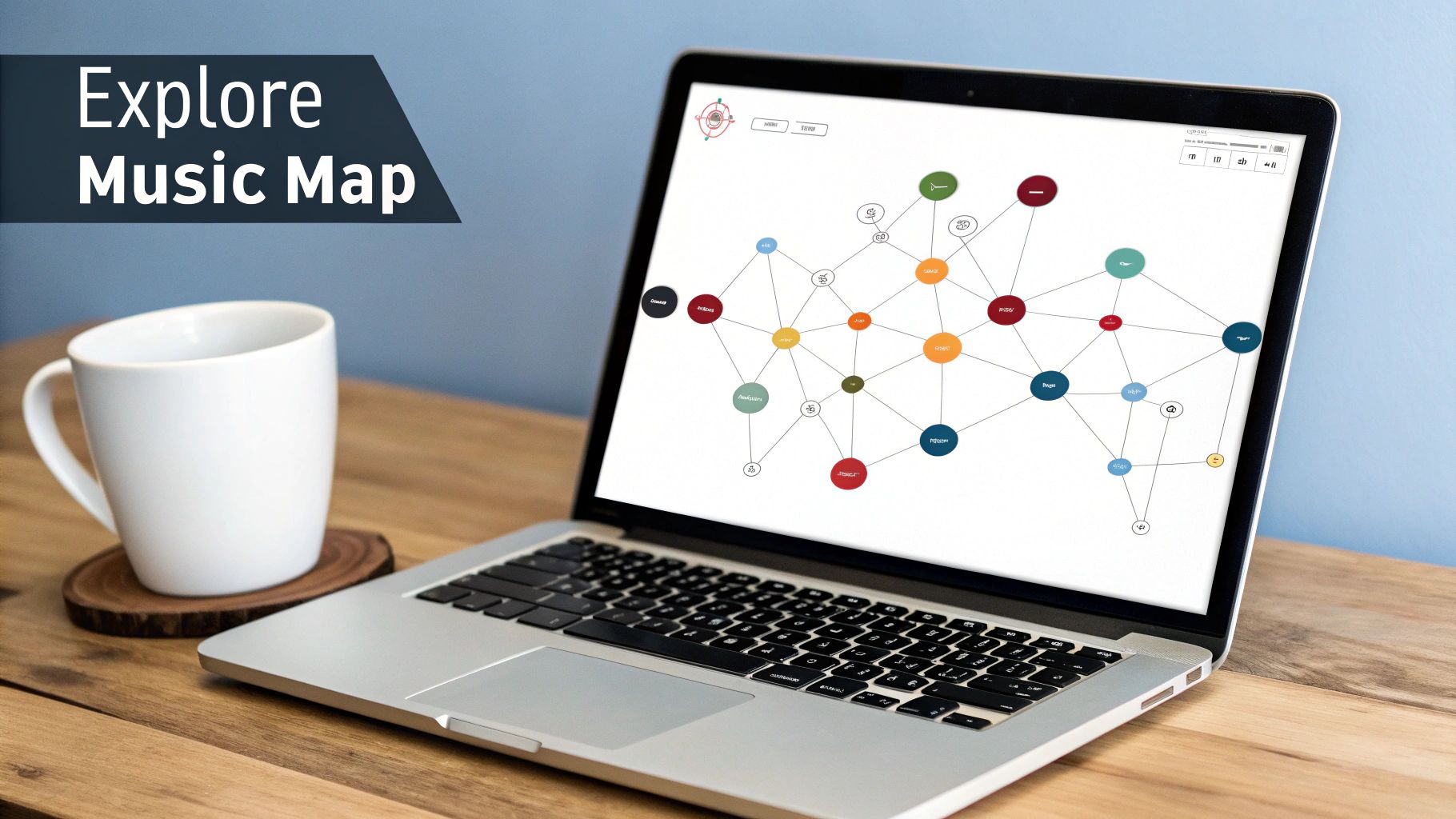
- Visualize the Connections: Start with a tool like Music-Map to see a web of related artists. The closer an artist's name is to your starting point, the more similar their sound is perceived to be.
- Explore Genre-Scapes: Use a platform like Every Noise at Once, which plots thousands of music genres on a scatter-plot. Clicking on a genre plays a sample, and clicking the arrow next to it reveals a map of artists within that genre.
- Analyze Your Own Habits: Connect your streaming account to services like Stats for Spotify or Last.fm. These platforms analyze your listening history to provide personalized reports and recommendations based on deep data, not just recent plays.
Key Platforms and Tools to Explore
- Last.fm: A veteran in music tracking, its "scrobbling" feature logs what you listen to across various platforms, building a rich profile to power its highly specific recommendations.
- AllMusic: An encyclopedic database that offers detailed artist biographies, album reviews, and a "Related Artists" tab that is often curated by music experts.
- Chosic: Offers a suite of tools that use Spotify’s API to find music based on specific moods, genres, BPM, and other attributes, allowing for highly targeted searches.
Key Insight: Specialized music databases empower you to move beyond passive listening. They provide the context and connections behind the music, turning discovery from a happy accident into a deliberate and rewarding investigation.
10. Artist Interview and Documentary Content
Diving into in-depth interviews, documentaries, and behind-the-scenes content provides a narrative-driven path to musical discovery. This method goes beyond the music itself, exploring the creative processes, influences, and stories that shape an artist's sound. By understanding an artist's inspirations, you gain a curated list of new musicians and genres to explore, recommended by a creator whose work you already admire.
This approach is perfect for listeners who enjoy context and storytelling alongside their music. It's for the fan who wants to know why a song sounds the way it does, and it excels at uncovering foundational artists or contemporary peers who have directly influenced a musician's creative journey.
How to Maximize Discovery Through Content
To make this one of the best ways to discover new music, you need to listen and watch actively, treating the content as a map to new sonic territories. It's about connecting the dots between artists.
- Listen for the Influences: Pay close attention when artists discuss their heroes, the albums they grew up with, or the peers they admire. Make a note of these names and seek them out later.
- Explore Genre Documentaries: Watch documentaries that cover entire musical movements or scenes, like the punk explosion or the rise of hip-hop. These films often spotlight dozens of pivotal and lesser-known artists.
- Follow the Collaborators: Interviews often reveal key collaborators, producers, and session musicians. Exploring the discographies of these behind-the-scenes figures can lead you to a wide network of related projects.
Key Content Platforms to Explore
- Podcasts: Shows like Song Exploder deconstruct tracks piece by piece with the artist, while Rick Rubin's Broken Record features long-form conversations that reveal deep-seated influences.
- Documentaries: Streaming services like Netflix and platforms like BBC iPlayer are rich with music documentaries on specific artists, labels (like Motown), or historical periods.
- YouTube Series: Channels like Genius's "Open Mike" or KEXP's live sessions are packed with interviews and performances. Following an artist's own channel often provides access to "making-of" content and personal recommendations.
Key Insight: Artist-centric content transforms music discovery from a passive act into an educational journey. Every mentioned influence or recommended album is a direct, high-quality suggestion from a trusted creative source.
Top 10 Music Discovery Methods Comparison
| Method | 🔄 Complexity | ⚡ Resource / Speed | 📊 Expected outcomes (⭐) | 💡 Ideal use cases | ⭐ Key advantages |
|---|---|---|---|---|---|
| Streaming Platform Algorithmic Recommendations | High — complex ML pipelines | High resources (data + compute); fast delivery | Personalized, scalable discovery — ⭐⭐⭐⭐ | Daily personalized discovery at scale | Real-time personalization; huge catalog |
| Curated Playlists and Editorial Content | Medium — human curation workflows | Moderate (editor time); moderate refresh rate | High-quality thematic picks — ⭐⭐⭐⭐ | Thematic listening, cultural moments, new-release highlights | Expert context and storytelling |
| Social Media and Music Communities | Low — user-driven, organic processes | Low resources; very fast trend propagation | Viral, high-variance impact — ⭐⭐⭐ | Rapid viral discovery; emerging-artist exposure | Organic virality and authentic recommendations |
| Music Journalism and Publications | Medium — research and editorial process | Moderate resources; slower cadence | Deep contextual recommendations — ⭐⭐⭐⭐ | In-depth reviews, historical and critical context | Critical analysis and long-form insight |
| Podcast and Radio Shows | Medium — production + curation | Moderate resources; real-time/episodic speed | Personality-driven discovery — ⭐⭐⭐ | Passive listening, commuting, thematic deep-dives | Host credibility and curated mixes/interviews |
| Live Music Events and Concert Discovery | High — logistical planning | High resources (time, money); slow to attend | Strong emotional impact and discovery — ⭐⭐⭐⭐ | Local shows, festivals, discovering opening acts | Authentic, direct artist exposure; community |
| Collaborative and Shared Playlists | Low — simple collaborative tools | Low resources; fast updates | Diverse, trusted recommendations — ⭐⭐⭐ | Group listening, parties, friend-shared finds | Socially vetted, fun, reduces algorithm bias |
| Artist Deep Dives and Band Rabbit Holes | High — intensive research effort | Time-consuming; low speed | Deep appreciation and lineage discovery — ⭐⭐⭐⭐ | Serious fans, research, building collections | Comprehensive context; uncovers deep cuts |
| Music Recommendation Websites and Databases | Medium — tooling + data integration | Moderate setup; efficient once configured | Targeted, visual exploration — ⭐⭐⭐⭐ | Genre mapping, targeted discovery, researcher use | Visual maps, advanced filtering and attributes |
| Artist Interview and Documentary Content | Medium — production and storytelling | Moderate–high production; slow consumption | Context-rich inspiration — ⭐⭐⭐ | Learning artist influences, motivation to explore mentions | Direct artist insight and narrative context |
Cultivating Your Unique Soundtrack
The journey to find your next favorite song, artist, or album is not a passive activity but an active, rewarding pursuit. Throughout this guide, we've explored a diverse toolkit of the best ways to discover new music, moving far beyond simply hitting shuffle on a default playlist. From the hyper-personalized suggestions of streaming algorithms to the human-curated excellence of editorial playlists, and from the vibrant communities on social media to the hallowed grounds of live music venues, each method offers a unique portal into new sonic territories. The true mastery of music discovery lies not in choosing one path, but in skillfully weaving these strategies together into a cohesive, personalized system.
You are no longer just a listener; you are a curator, an explorer, and a vital part of the music ecosystem. The methods detailed, such as deep-diving into artist influences, following the threads of music journalism, and engaging with specialized podcasts, empower you to build a richer, more meaningful relationship with the music you love. This is about transforming your listening habits from a static consumption model into a dynamic, interactive experience.
Synthesizing Your Discovery Strategy
The most impactful takeaway is the power of a hybrid approach. Relying solely on algorithms can trap you in a feedback loop, reinforcing your existing tastes without truly expanding them. Conversely, relying only on manual methods can be time-consuming and inefficient. The sweet spot is in the synergy between the two.
- Algorithmic Foundation: Let platforms like Spotify and Apple Music do the initial legwork. Use their "Discover Weekly" and "New Music Mix" playlists as a starting point, a first-pass filter to introduce you to new artists within your established genres.
- Active Curation Layer: Build upon that foundation with active exploration. Did an algorithm suggest a band you like? Don't just add one song to your library. Dive into their full discography, read interviews, and see who they cite as influences or who they've toured with. This is where you find the hidden gems.
- Community and Context: Finally, enrich your discoveries with community and context. Join a subreddit, follow a music critic on social media, or tune into a radio show dedicated to your niche. This adds a human element, providing stories, background, and shared enthusiasm that an algorithm can never replicate.
This multi-layered process ensures you are constantly feeding your curiosity while efficiently sorting through the vast ocean of new releases. It’s a system designed for sustainable, long-term musical enrichment.
Beyond Listening: Becoming a Patron of the Arts
In today's creator-focused economy, discovering new music is intrinsically linked to supporting the artists behind it. Platforms designed with a direct-to-creator model are becoming increasingly crucial for the health and sustainability of the industry. When you find an artist you believe in, your support can take many forms: buying merchandise directly, subscribing to their exclusive content, or attending their live shows.
Understanding the mechanics of artist support is a key part of modern fandom. To fully cultivate your unique soundtrack, understanding the broader landscape, including the profound effects of the impact of crowdfunding on the music industry, reveals new avenues for artist support and discovery. This knowledge transforms you from a passive consumer into an active patron, directly contributing to the creation of the art you love.
By consciously choosing where and how you engage with music, you cast a vote for the kind of music industry you want to see: one that is more equitable, direct, and artist-centric.
Your journey of discovery culminates in this realization: every stream, every ticket purchase, and every share is a meaningful action. Embrace the full spectrum of tools at your disposal, from sophisticated AI to grassroots communities. Follow the rabbit holes, share your finds with friends, and never stop seeking out the sounds that move you. The goal is not just to find new music, but to build a living, breathing soundtrack that reflects who you are and supports the creators who inspire you.
Ready to put these strategies into action on a platform built for true discovery and direct artist support? Explore OohYeah, a commission-free ecosystem where artists and fans connect authentically. Find exclusive content, merchandise, and a community dedicated to celebrating music by visiting OohYeah today.