Finding the Best Music Distribution Platform in 2026: The Top 7 Compared
Discover the best music distribution platform for your needs. We compare fees, features, and royalties for the top 7 services to help you succeed in 2026.
February 15, 2026
Music Marketplace Advisor
Buying & SellingGetting your music onto streaming platforms is just the first step. The real challenge is finding a partner that aligns with your financial goals, marketing needs, and long-term vision. The modern music industry offers more paths to success than ever, but navigating the crowded field of distributors can be overwhelming. Each platform promises the world, but the fine print reveals crucial differences in royalty splits, hidden fees, marketing support, and fan engagement tools.
This guide moves beyond surface-level comparisons to provide a detailed roadmap for your decision. We will dissect the top seven platforms, evaluating their core features, pricing structures, and ideal user profiles with screenshots and direct links for each. We'll explore who benefits most from an artist-first ecosystem like OohYeah versus a rapid-fire service like DistroKid or an industry staple like TuneCore. The process requires a strategic mindset. In fact, many of the considerations for selecting a distributor mirror those involved in understanding how to choose a digital marketing agency for your brand; it’s about finding the right fit for your specific objectives and growth stage.
By the end of this comprehensive breakdown, you will have the clarity needed to select the best music distribution platform not just to release your next track, but to actively build and sustain your career on your own terms.
1. OohYeah
OohYeah emerges as a standout choice for artists seeking to build a sustainable, direct-to-fan music business. Unlike traditional distributors focused solely on pushing tracks to third-party streaming services, OohYeah provides an all-in-one, commission-free ecosystem. This model empowers independent artists, producers, and managers to consolidate their entire operation, from music sales and merchandise to fan subscriptions, into a single, unified hub.
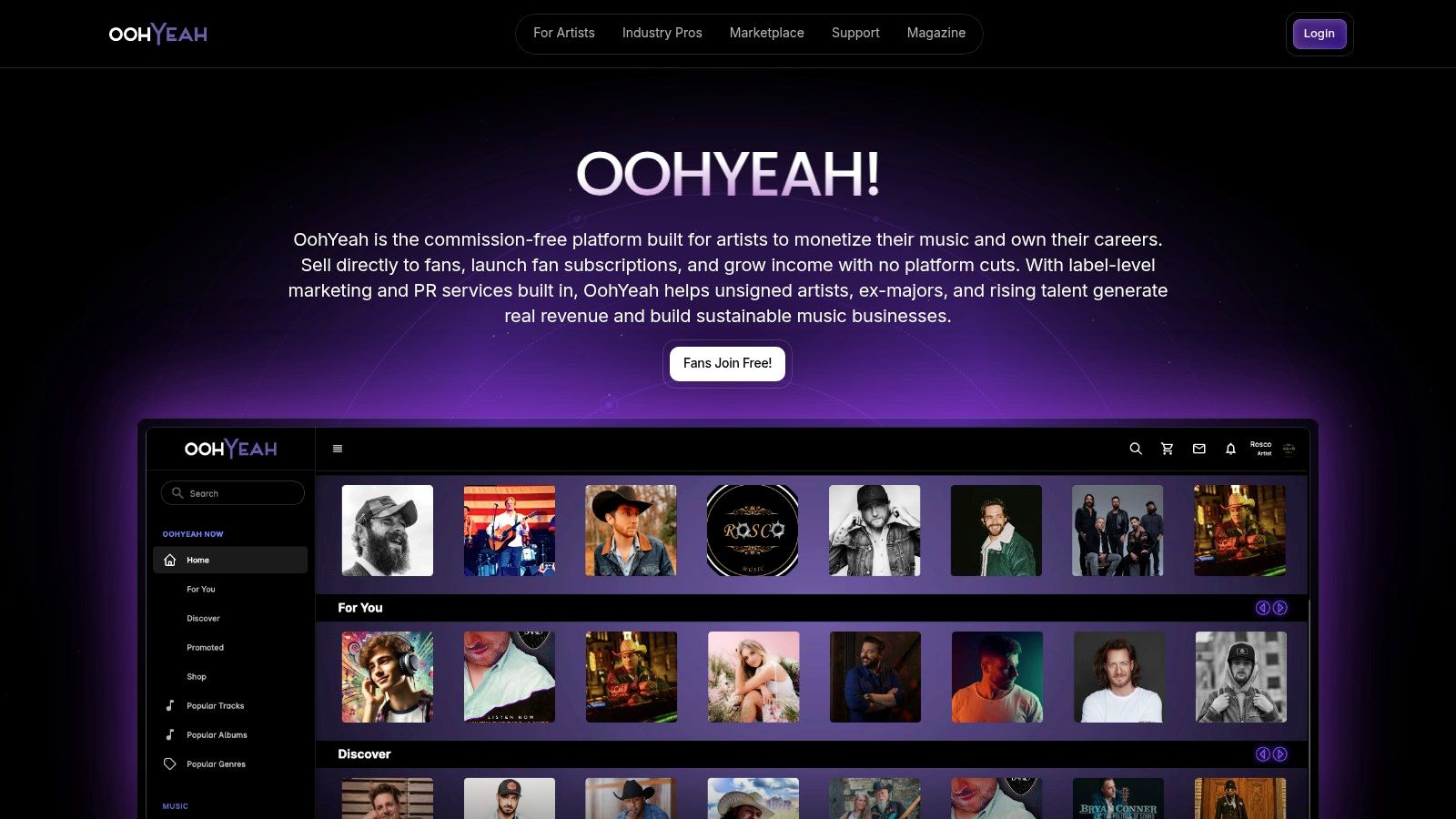
The platform's core philosophy is built on artist empowerment and transparency. By advertising a 0% platform commission on artist earnings (standard payment processing fees from providers like Stripe still apply), OohYeah ensures that creators retain the maximum possible revenue. This makes it a compelling contender for the title of best music distribution platform for artists prioritizing direct monetization over passive streaming royalties.
Key Features and Capabilities
OohYeah’s feature set is designed to function like a full-service record label, but with the artist in complete control.
- Unified Commerce Hub: Artists can sell digital downloads, physical merchandise, and exclusive subscription tiers directly from their profile. This eliminates the need to manage separate platforms for music, merch, and fan clubs, streamlining operations significantly.
- Deep Fan Engagement Tools: The platform goes beyond simple distribution with built-in features like direct messaging, voice notes, community posts, and live-streaming capabilities. These tools foster a dedicated community, turning passive listeners into active, paying supporters.
- Integrated Marketing & PR Suite: OohYeah includes professional-grade marketing and PR tools directly within the dashboard. Artists can manage promotional campaigns, access detailed analytics, and leverage discovery features to connect with industry professionals without needing an external team.
- Cross-Platform Accessibility: With a presence on the web, iOS, and Android, artists can manage their careers from anywhere. Fans can join for free, removing barriers to entry and making it easy to grow an audience.
Who is OohYeah Best For?
OohYeah is ideally suited for independent artists and creators who have an established or growing fanbase and want to take full control of their revenue streams. It is particularly effective for:
- Independent Artists & Bands: Those looking to build a sustainable career by selling directly to their audience.
- Producers & DJs: Creators who offer sample packs, exclusive mixes, or production tutorials can leverage the subscription and digital sales features.
- Artist Managers: Professionals can use the platform to manage multiple artists' careers from a single, powerful dashboard.
Pricing and Access
A major differentiator for OohYeah is its pricing model. There are no subscription fees for artists to use the platform's core features. Fans also join for free. Artists set their own prices for all products, from single tracks and albums to merchandise and monthly subscriptions, and retain 100% of the revenue generated on the platform, less any third-party payment processing fees. This transparent approach is a significant advantage over platforms that take a percentage cut of artist earnings.
Practical Implementation
To maximize OohYeah's potential, artists should treat it as their central online headquarters.
- Build a Comprehensive Profile: Upload your full catalog, including back-catalog releases, and create a visually appealing merchandise store.
- Launch a Subscription Tier: Offer exclusive content like behind-the-scenes videos, early access to new music, or members-only live streams to create a recurring revenue stream.
- Engage Your Community: Use the direct messaging and community post features to interact with fans daily, building loyalty and driving sales.
While OohYeah excels at direct-to-fan monetization, artists seeking widespread placement on major DSPs like Spotify and Apple Music should confirm if they need a separate distributor for that purpose, as the platform's documentation focuses primarily on its self-contained ecosystem. Understanding your primary goals is crucial, and you can learn more about how to choose the right music distribution service to align your strategy with the right platform.
| Feature Area | OohYeah Offering | Advantage |
|---|---|---|
| Monetization | 0% platform commission on sales | Maximizes artist revenue |
| Toolkit | Music, merch, subscriptions, marketing in one | Streamlines artist workflow |
| Fan Interaction | DMs, live-streams, community posts | Builds strong, loyal fanbases |
| Access | Free for artists and fans to join | Low barrier to entry for growth |
Website: https://oohyeah.app
2. DistroKid
DistroKid has built its reputation on two core principles: speed and simplicity. For the independent artist or prolific creator who needs to get music onto major platforms quickly and without friction, DistroKid is often the first port of call, making it a strong contender for the best music distribution platform available. It bypasses the complex, multi-layered approval processes of some distributors, offering a streamlined, self-serve interface designed for rapid deployment.
The platform's primary appeal lies in its "unlimited uploads" model. For a single annual fee, artists can release as much music as they want, a feature that is particularly advantageous for those who produce content consistently. This simple pricing structure removes the per-release decision-making anxiety, encouraging creativity and frequent engagement with listeners.
Key Features & User Experience
DistroKid’s interface is famously minimalist and user-friendly, prioritizing function over flair. The upload process is a straightforward, step-by-step form that can be completed in minutes. Once submitted, music often goes live on major platforms like Spotify and Apple Music within 24-72 hours, one of the fastest turnaround times in the industry.
- Unlimited Uploads: Pay one annual fee to release as many songs, EPs, and albums as you desire.
- Keep 100% of Royalties: Artists retain all their earnings from the digital service providers (DSPs).
- HyperFollow: Each release automatically generates a free, powerful pre-save and marketing landing page.
- Automated Royalty Splits: The "Teams" feature allows you to automatically divide earnings with collaborators, producers, or bandmates, saving significant administrative hassle.
Pricing Structure
DistroKid’s pricing is tiered to accommodate different artist needs.
| Plan | Price (Approx.) | Key Features |
|---|---|---|
| Musician | $22.99/year | Unlimited song uploads for 1 artist, YouTube Content ID, Spotify Verified Checkmark. |
| Musician Plus | $39.99/year | All Musician features, plus support for 2 artists, customizable release dates, and daily sales stats. |
| Ultimate | $89.99/year | All Musician Plus features, plus support for 5-100 artists, ideal for small labels. |
Note: While DistroKid doesn't take a commission, some features like YouTube Content ID, Shazam integration, and a "Leave a Legacy" option (to keep music on stores permanently) are available as optional add-on purchases during the upload process. Payouts are subject to processor fees.
Pros and Cons
Pros:
- Exceptional Speed: Unmatched ingestion speed to DSPs.
- Simple Annual Fee: Predictable, budget-friendly pricing for prolific artists.
- Artist-Friendly Tools: Features like automated splits and HyperFollow simplify the business side of music.
Cons:
- Upsells for Core Features: Some services that are standard elsewhere (like YouTube Content ID) come at an extra cost.
- No Physical Distribution: The platform is focused entirely on digital releases.
- Minimum Payout Threshold: You must accumulate a certain amount before you can withdraw your earnings.
Who is DistroKid Best For?
DistroKid is the ideal solution for the modern DIY musician, rapper, or producer who values speed, autonomy, and a straightforward business model. If you release music frequently and want to manage the entire process yourself without a middleman, DistroKid provides the tools to do so effectively. For those just starting, learning how to effectively market these quick releases is crucial. A great next step is to explore resources on how to get your music heard to maximize the impact of each drop.
Website: https://distrokid.com
3. TuneCore
TuneCore stands as one of the original pioneers in the DIY digital distribution space, offering artists a robust and established pathway to major online stores. Its reputation is built on a foundation of flexibility and comprehensive service, catering to both emerging artists and established professionals. As a leading candidate for the best music distribution platform, TuneCore provides a unique blend of pay-per-release and unlimited subscription models, allowing creators to choose the financial structure that best suits their release strategy.
This dual-model approach is TuneCore's key differentiator. Artists who release music infrequently can opt for a simple, one-time fee per single or album, while prolific creators can leverage the cost-effectiveness of an unlimited annual plan. This flexibility, combined with its expansive reach to over 150 digital stores worldwide, makes it a powerful and adaptable choice.
Key Features & User Experience
TuneCore’s platform is professional and feature-rich, guiding artists through a detailed upload process to ensure all metadata is correctly formatted for global partners. While the interface is more comprehensive than some minimalist competitors, it provides granular control over the release. The platform also offers significant add-on services, including music publishing administration and social media tools.
- 100% Royalty Retention: Artists keep every cent of their earnings from digital stores and streaming platforms.
- Expansive Store Network: Distribute your music to over 150 DSPs and digital stores in more than 200 countries and territories.
- Flexible Pricing: Choose between pay-per-release or various tiers of unlimited annual distribution plans.
- TuneCore Social: An integrated tool to help manage and grow your presence on social media platforms.
Pricing Structure
TuneCore’s pricing accommodates a wide range of artist needs, from a single release to a full label roster.
| Plan | Price (Approx.) | Key Features |
|---|---|---|
| New Artist | Free | Unlimited releases to social platforms (TikTok, Instagram, etc.), 80% of royalties. |
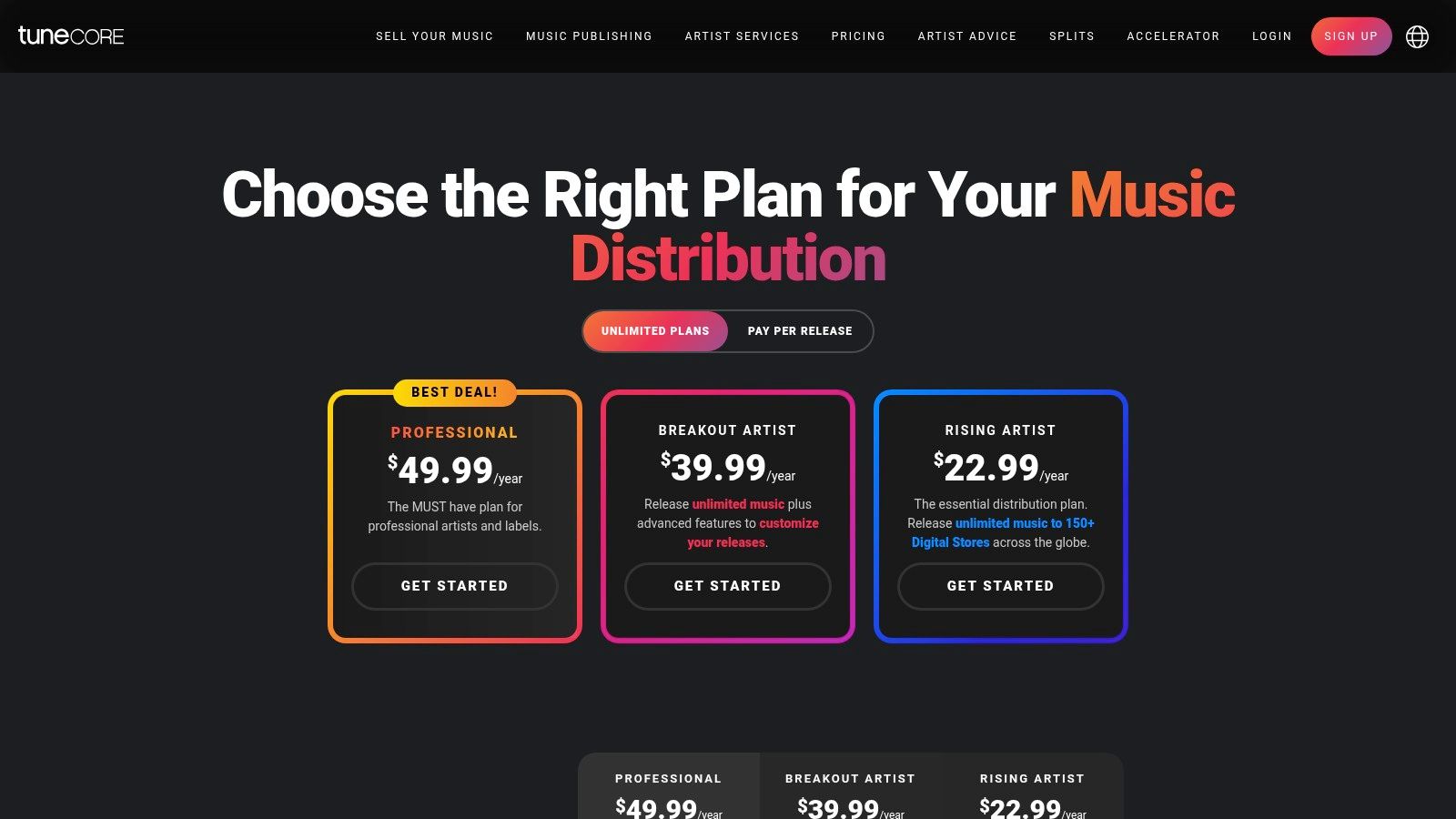
| Rising Artist | $19.99/year | All New Artist features, plus unlimited releases to 150+ DSPs, keep 100% of royalties, and schedule release dates. |
| Breakout Artist | $34.99/year | All Rising Artist features, plus Store Automator and advanced analytics. |
| Professional | $49.99/year | All Breakout Artist features, plus premium support, promotional opportunities, and multi-artist label support. |
Note: The classic "Pay-Per-Release" model is still available, starting at $14.99 per single and $34.99 per album for the first year. These require annual renewal fees to remain in stores.
Pros and Cons
Pros:
- Flexible Pricing Models: The choice between subscription and pay-per-release caters to all types of artists.
- Established Brand and Reach: A long-standing, trusted name with one of the most extensive distribution networks.
- Comprehensive Services: Offers valuable add-ons like publishing administration and social media management.
Cons:
- Annual Renewal Fees: The pay-per-release model requires yearly payments to keep music live, which can add up.
- Feature Gating: Some essential features, like advanced analytics, are only available on higher-priced subscription tiers.
- Slightly Slower Turnaround: Release ingestion can sometimes take longer than hyper-fast services like DistroKid.
Who is TuneCore Best For?
TuneCore is an excellent choice for career-minded artists who appreciate flexibility and are looking for a comprehensive suite of tools beyond basic distribution. It’s particularly well-suited for artists who may only release one major project per year and prefer the pay-per-release model, as well as for those who want to bundle distribution with publishing administration. Once your music is live, the next step is discovering tips to increase music streams and maximize your earnings to capitalize on TuneCore's wide reach.
Website: https://www.tunecore.com
4. CD Baby
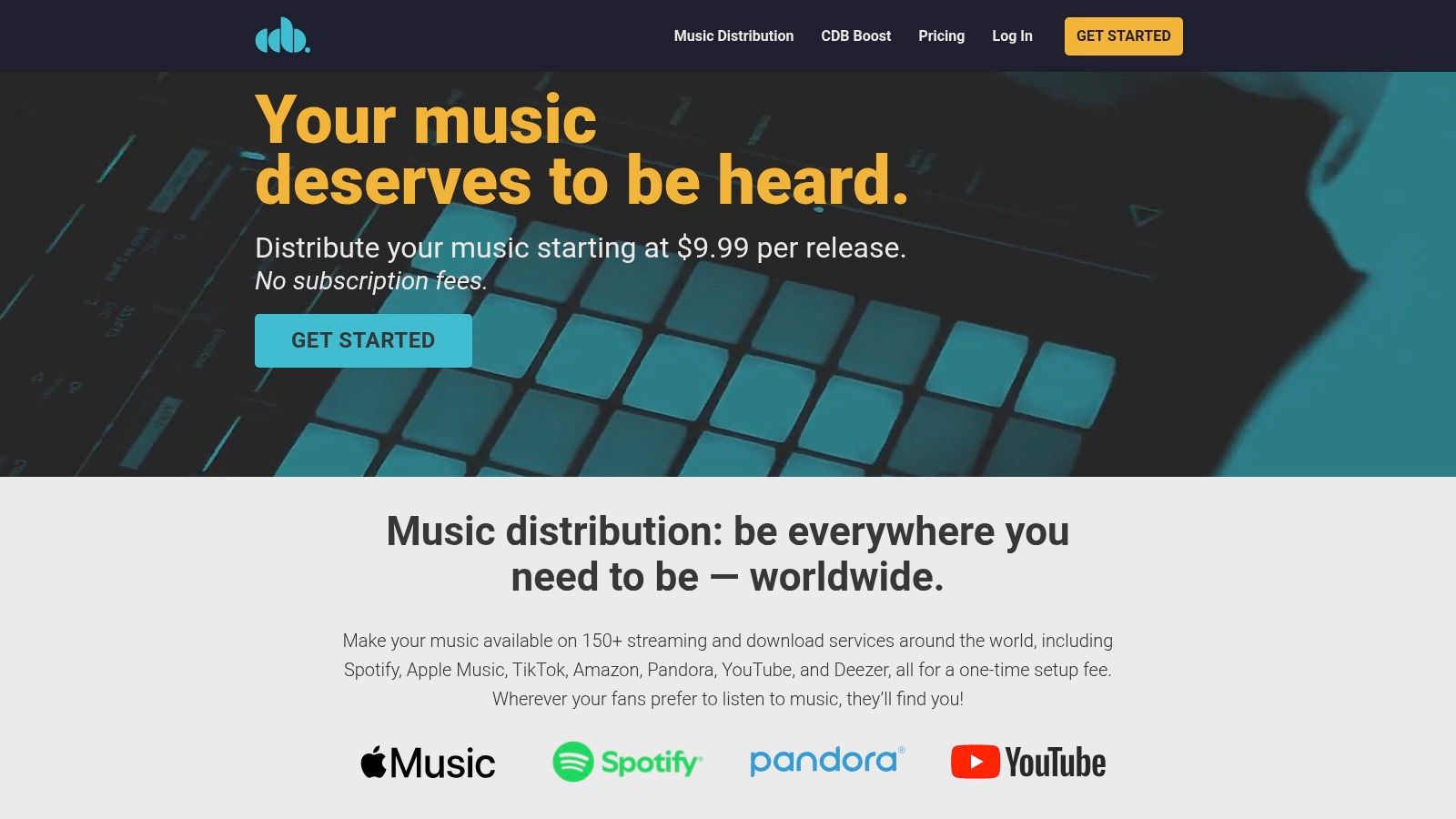
CD Baby stands as one of the original pioneers in independent music distribution, earning its place by championing a "pay-once, distribute forever" philosophy. Unlike subscription-based models, CD Baby focuses on per-release pricing, making it an excellent choice for artists who release music less frequently or want their back catalog to remain online permanently without recurring fees. It has built a reputation on reliability and a comprehensive suite of artist services that extend beyond simple distribution.
For artists who see their releases as long-term assets, CD Baby offers a compelling proposition. By paying a single upfront fee, your music is delivered to a vast network of over 150 digital stores and streaming platforms worldwide. This model removes the pressure of annual payments to keep your music live, making it a sustainable option for managing a growing catalog over many years and a strong candidate for the best music distribution platform for long-term projects.
Key Features & User Experience
CD Baby's platform is comprehensive, offering a guided submission process that ensures all metadata is correctly formatted for global partners. While not as minimalist as some newer services, its dashboard provides detailed sales and streaming data, along with access to a wide array of tools designed to help artists monetize their work more effectively.
- One-Time Fee Per Release: Pay for your single or album once and it stays on digital platforms for good. No recurring artist subscriptions.
- Global Digital Distribution: Your music reaches over 150 DSPs worldwide, including major platforms like Spotify, Apple Music, and Amazon Music.
- Comprehensive Monetization: Includes social video monetization (YouTube, Facebook, Instagram) and sync licensing opportunities for TV, film, and games.
- Royalty Collection Services: Offers assistance with collecting publishing royalties and registering with bodies like SoundExchange to ensure you receive all earned revenue.
Pricing Structure
CD Baby's pricing is based on a per-release model, with different tiers offering varying levels of service.
| Plan | Price (Per Release) | Key Features |
|---|---|---|
| Standard Single/Album | $9.99 / $29.99 | Global distribution, social video monetization, sync licensing, weekly artist payments. |
| Pro Single/Album | $29.99 / $69.99 | All Standard features, plus worldwide publishing royalty collection and song registration with global collection societies. |
Note: CD Baby takes a 9% commission on digital distribution revenue. Additional commissions apply to other services like sync licensing (40%) and YouTube Content ID (30%). This commission-based structure is a key differentiator from flat-fee subscription models.
Pros and Cons
Pros:
- No Recurring Artist Subscription: Ideal for artists with an evergreen back catalog who want to avoid annual fees.
- Long-Standing Industry Reputation: Established relationships with stores and a trusted track record.
- Comprehensive Revenue Collection: Goes beyond distribution to help artists capture publishing and other royalties.
Cons:
- Takes a Revenue Share: The 9% commission on distribution earnings can be significant for high-streaming artists.
- Higher Upfront Cost for Prolific Artists: The per-release fee model can become expensive for those who release music frequently.
- Add-ons Increase Costs: Sync licensing and other advanced services come with their own commission structures.
Who is CD Baby Best For?
CD Baby is the perfect fit for the singer-songwriter, band, or artist who releases a thoughtfully produced album every few years and wants it to have a permanent digital home without ongoing financial commitment. It is also highly suitable for legacy artists or those managing an extensive back catalog. If your strategy is focused on long-term asset management rather than rapid, frequent releases, CD Baby provides a stable and comprehensive ecosystem.
Website: https://cdbaby.com
5. UnitedMasters
UnitedMasters positions itself as more than just a distributor; it’s a talent pipeline for the modern music industry. The platform blends high-quality digital distribution with unique access to brand partnerships, sync licensing, and marketing opportunities, all managed through a sleek, mobile-first interface. This makes it a compelling choice for emerging artists who want not only to release their music but also to build a sustainable career and brand.
The core philosophy of UnitedMasters is to empower independent artists by providing them with the tools and connections typically reserved for major label acts. It offers a direct pathway to opportunities with massive brands like the NBA, ESPN, and Apple, creating a distinct value proposition that sets it apart from more traditional distributors.
Key Features & User Experience
UnitedMasters is designed for the artist on the go, with a powerful mobile app that allows users to upload music, track analytics, and manage payouts directly from their phone. The platform emphasizes not just releasing music but understanding its performance through detailed streaming data and social media analytics.
- Brand & Sync Opportunities: Gain exclusive access to submit your music for placements in TV shows, films, video games, and advertising campaigns with major brands.
- Keep 100% of Royalties: On paid plans, artists retain all their earnings from digital service providers (DSPs).
- Mobile-First Workflow: A dedicated app provides a seamless experience for managing your entire music business from your smartphone.
- Artist-Centric Tools: Includes features like a masterlink tool, social media post creator, and detailed analytics to track your audience growth.
Pricing Structure
UnitedMasters offers clear, tiered pricing that caters to artists at different stages of their careers.
| Plan | Price (Approx.) | Key Features |
|---|---|---|
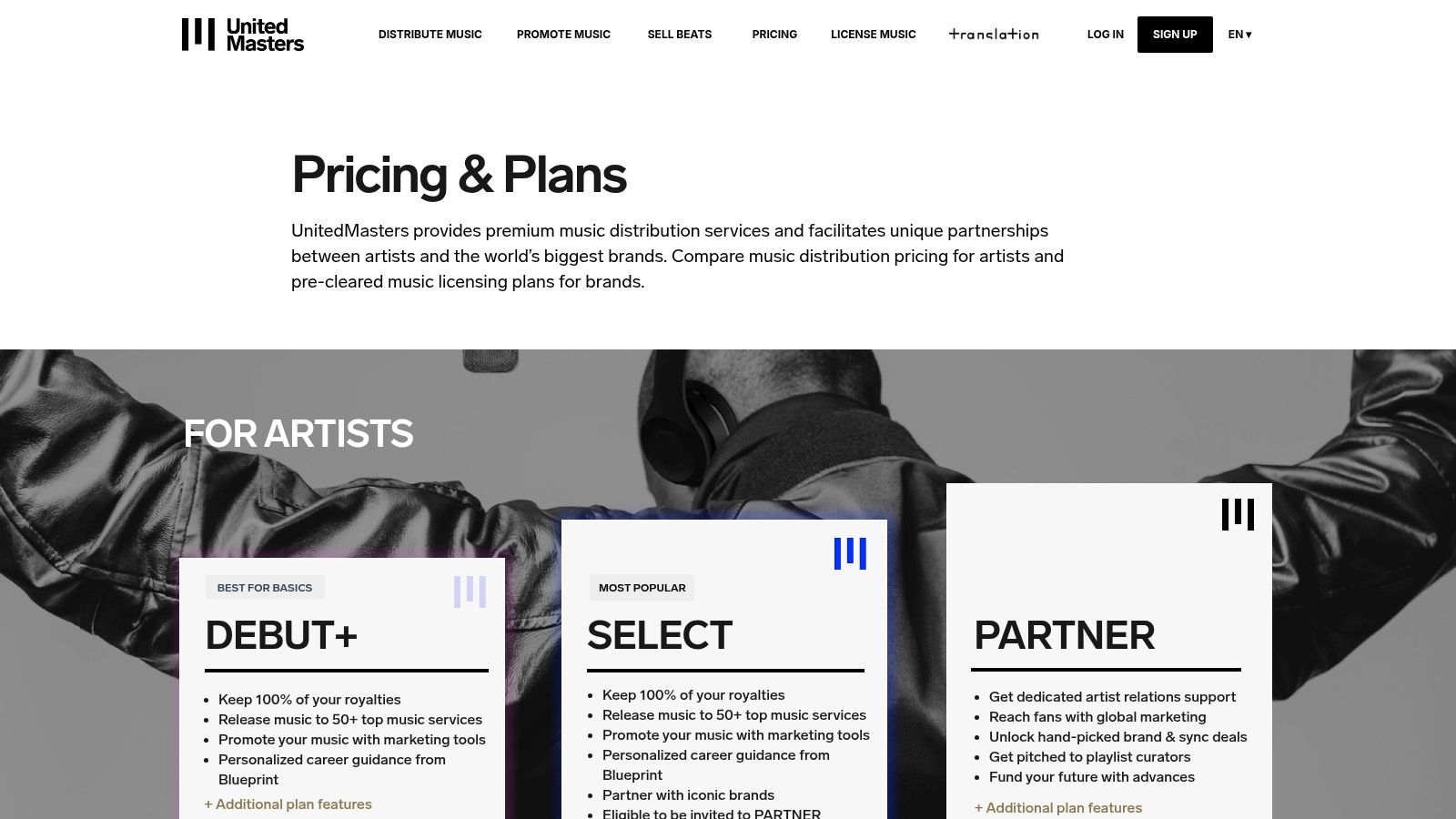
| Debut | Free | Release music once a month, keep 90% of royalties, basic support. |
| Artist | $59.99/year | Unlimited releases, keep 100% of royalties, premium support, advanced analytics, priority releases. |
| Partner | Invite-Only | All Artist features, plus dedicated support, sync representation, and exclusive brand collaborations. |
Note: The free Debut plan is an excellent entry point, but the Artist plan unlocks the full potential of the platform for serious creators. Access to the most high-profile brand opportunities is often reserved for the invite-only Partner tier.
Pros and Cons
Pros:
- Direct Path to Brand Deals: Unique, integrated opportunities for sync and brand partnerships.
- Excellent Mobile Experience: Manage your entire music career effectively from your phone.
- Artist-Focused Model: Annual plans allow artists to keep 100% of their earnings.
Cons:
- Leaner Store Count: Distributes to fewer outlets compared to some larger competitors.
- Exclusive Opportunities are Gated: The most valuable brand deals are often for Partner-tier artists, which is invite-only.
- Annual Fee Structure: May be less cost-effective for artists who only release one or two singles per year.
Who is UnitedMasters Best For?
UnitedMasters is the best music distribution platform for the entrepreneurial, brand-conscious artist. If you are a hip-hop artist, R&B singer, or electronic producer looking to do more than just upload tracks, this platform provides the infrastructure to build a business. It's ideal for creators who are active on social media and understand the importance of marketing and strategic partnerships in today's music landscape.
Website: https://unitedmasters.com/en/pricing
6. Symphonic Distribution
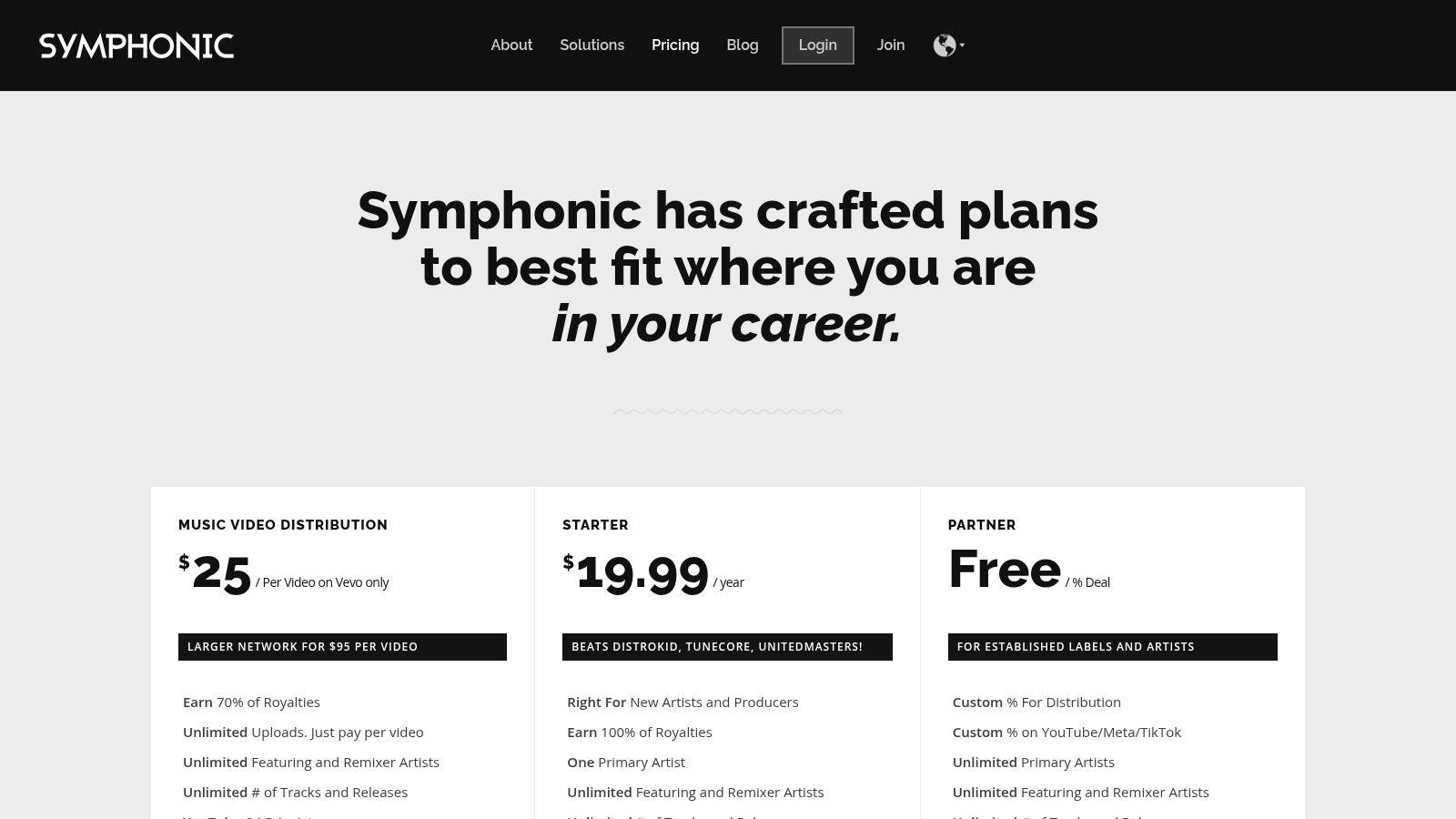
Symphonic Distribution positions itself as a growth partner for artists, offering a distinct two-tiered approach that scales with your career. It provides a robust, competitively priced DIY platform for emerging artists while also offering a curated, label-services path for those gaining significant traction. This hybrid model makes it a unique and compelling choice for artists who envision a clear trajectory from independent creator to established professional.
The platform's core strength is its scalable infrastructure. Artists can start with the affordable "Starter" plan to get their music everywhere, then apply for the "Partner" program once they meet certain criteria. This provides a clear upgrade path to professional services like marketing, playlist pitching, and dedicated client management without having to switch distributors, solidifying its place as a candidate for the best music distribution platform.
Key Features & User Experience
Symphonic’s dashboard is comprehensive, providing detailed analytics and transparent reporting. The upload process is thorough, guiding users through the necessary metadata to ensure releases are properly registered. While the Starter plan is self-serve, the platform is known for its supportive ecosystem, especially for its Partner clients who gain access to a dedicated team.
- Scalable Service Tiers: Start with a simple DIY plan and apply to upgrade to a Partner account for access to high-level label services.
- Keep 100% of Royalties: The Starter plan allows artists to retain all their earnings from major digital service providers.
- Comprehensive Services: Offers video distribution to platforms like Vevo and Tidal, sync licensing opportunities, and publishing administration.
- Access to Advances: Qualifying Partner clients can apply for funding, a feature typically reserved for traditional record labels.
Pricing Structure
Symphonic offers a simple annual fee for its entry-level plan, with its Partner program operating on a custom percentage-based model.
| Plan | Price (Approx.) | Key Features |
|---|---|---|
| Starter | $25.99/year | Unlimited releases for 1 artist, keep 100% of royalties, free royalty splits, detailed analytics. |
| Partner | Custom % Split | Application-based; includes all Starter features plus marketing, DSP pitching, dedicated support, and funding opportunities. |
Note: While the Starter plan is straightforward, Partner terms are negotiated on a case-by-case basis. There is a minimum payout threshold, and some specialty stores or services may incur additional fees.
Pros and Cons
Pros:
- Clear Upgrade Path: A structured system for artists to grow from DIY to a professionally supported act.
- Full-Service Offerings: Access to video distribution, sync, and advances sets it apart from many competitors.
- Artist-Focused Model: Both tiers are designed to support artist growth with robust tools and opportunities.
Cons:
- Pro Services are Gated: Marketing, playlist pitching, and dedicated support are reserved for application-based Partner clients.
- Application Process: Not all artists will qualify for the advanced Partner tier.
- Minimum Payout Threshold: Artists must accumulate a certain amount of earnings before they can make a withdrawal.
Who is Symphonic Distribution Best For?
Symphonic is best for the career-minded artist or small label that wants a long-term distribution partner. If you are serious about building your career and desire a platform that can provide more hands-on support as you grow, Symphonic’s model is ideal. The Starter plan is a perfect entry point, while the Partner tier offers the high-touch services needed to elevate a project to the next level.
Website: https://symphonic.com/pricing/?utm_source=openai
7. ONErpm
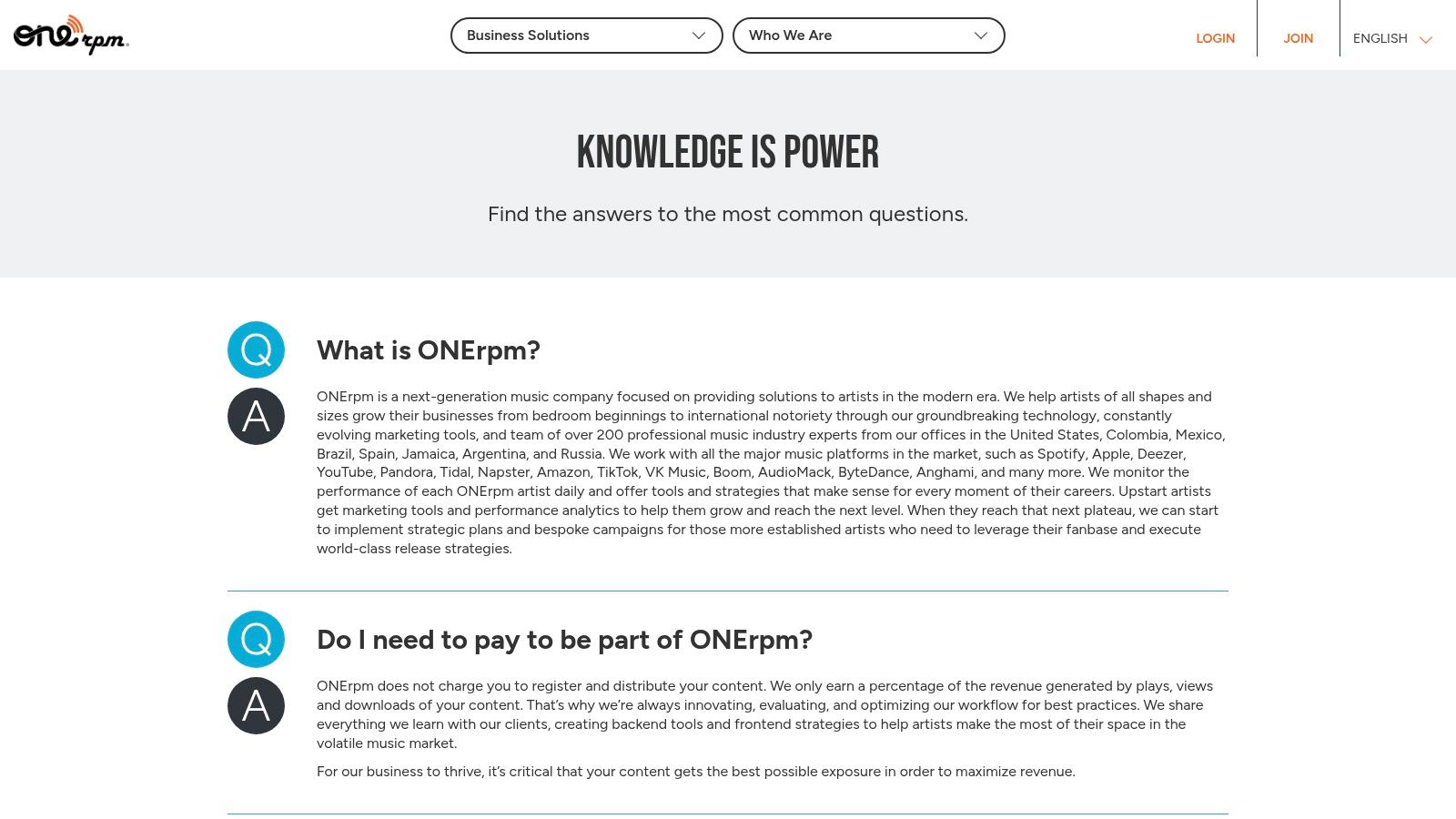
ONErpm operates on a fundamentally different model than most subscription-based services, positioning itself as a partnership-focused distributor. It forgoes upfront or annual fees in favor of a revenue-sharing agreement, making it an excellent choice for emerging artists who want to release music without initial financial risk. This approach emphasizes a shared journey, where the platform’s success is directly tied to the artist’s, making it a unique contender for the best music distribution platform.
This model allows artists to test the waters, release singles, or launch their careers without committing to a yearly subscription. ONErpm combines standard digital distribution with a suite of services more akin to a modern label, including marketing support, multi-channel network (MCN) services for YouTube, and a global team dedicated to amplifying its artists.
Key Features & User Experience
ONErpm provides a comprehensive dashboard that gives artists access to distribution, marketing tools, and detailed analytics. The platform is designed to be more than just a delivery service; it aims to be a growth engine for its roster. The user experience is robust, offering deeper functionalities than many simpler distributors.
- Revenue-Share Model: No upfront fees for distribution. ONErpm takes a percentage of the royalties earned.
- Global Footprint: Strong presence in international markets, particularly Latin America, with multi-language support and localized teams.
- YouTube MCN: Advanced YouTube Content ID and channel management services to maximize video revenue.
- Marketing & Promotional Support: Select artists may gain access to marketing campaigns, playlist pitching, and other promotional opportunities.
Pricing Structure
ONErpm's model is based on commission, not subscription fees. The artist's share varies depending on the revenue source, which provides transparency but requires careful review.
| Service | Artist's Royalty Share | Key Details |
|---|---|---|
| Digital Stores | 85% | Covers major platforms like Spotify, Apple Music, and Amazon Music. |
| YouTube | 70% | For monetization on an artist's own channel through ONErpm's MCN. |
| Ringtones | 50% | Revenue generated from mobile carrier ringtone sales. |
Note: The royalty splits are straightforward, with no hidden fees for distribution. Payouts are made monthly via PayPal or Payoneer once the artist's account reaches the minimum threshold.
Pros and Cons
Pros:
- Zero Upfront Cost: Eliminates the financial barrier to entry for releasing music.
- Extensive International Reach: Excellent for artists targeting a global audience, especially in non-English speaking markets.
- Potential for Marketing Support: Offers label-like services that go beyond simple distribution.
Cons:
- Lower Royalty Share: The percentage-based model means artists keep less of their earnings compared to 100% royalty platforms.
- Less Self-Serve Control: Some processes may be less automated or immediate compared to platforms like DistroKid.
- Selective Support: Higher-level marketing and promotional support is not guaranteed for every artist.
Who is ONErpm Best For?
ONErpm is the ideal platform for developing artists and those with a strong international focus who prefer a partnership model over a subscription service. If you want to avoid upfront costs and are willing to trade a percentage of your royalties for distribution and potential marketing support, ONErpm offers a powerful, risk-free pathway to get your music to a global audience. It's particularly well-suited for artists who see distribution as a collaborative effort.
Website: https://onerpm.com/onerpm-answers-common-questions/?utm_source=openai
Top 7 Music Distribution Platforms Comparison
| Platform | Implementation Complexity 🔄 | Resource Requirements ⚡ | Expected Outcomes ⭐📊 | Ideal Use Cases | Key Advantages 💡 |
|---|---|---|---|---|---|
| OohYeah | Medium (🔄🔄) — all-in-one setup and content upload | Low monetary (no platform cuts) but high time/marketing | ⭐⭐⭐ — High direct revenue retention, moderate external reach (DSPs not guaranteed) | Independent artists prioritizing direct fan monetization, merch & subscriptions | Commission-free model, built-in fan engagement and marketing tools |
| DistroKid | Low (🔄) — fast, self-serve release workflow | Low annual fee, minimal setup; rapid ingestion (⚡⚡) | ⭐⭐⭐⭐ — Very fast DSP delivery and unlimited uploads; strong reach | DIY artists who want quick releases and simple annual pricing | Very quick ingestion, simple pricing, collaborator splits |
| TuneCore | Medium (🔄🔄) — flexible options to configure | Variable (annual or per-release fees); broader feature set | ⭐⭐⭐⭐ — Broad store reach, artist verification, scalable for labels | Artists needing choice between unlimited subscription and per-release | Choice of pricing models, established brand and wide DSP coverage |
| CD Baby | Low–Medium (🔄🔄) — straightforward per-release process | Pay-once per release; add-ons increase cost | ⭐⭐⭐ — Good for evergreen catalogs; revenue share reduces net on some collections | Catalog owners or artists preferring one-time distribution fees | Clear pay-once pricing, long industry track record, optional sync/royalty services |
| UnitedMasters | Low–Medium (🔄🔄) — mobile-first workflow with tiers | Simple yearly plans; some brand opportunities invite-only | ⭐⭐⭐ — Strong brand/sync pathways but fewer stores than some rivals | Emerging artists seeking brand deals and mobile-first release tools | Integrated brand/sync access, mobile-first experience, artist-friendly royalties |
| Symphonic Distribution | Medium–High (🔄🔄🔄) — DIY starter to curated Partner path | Starter is competitive; Partner requires application and more resources | ⭐⭐⭐⭐ — Label-style services available (marketing, advances) for Partner clients | Artists or small labels wanting an upgrade path to pro services | Clear upgrade path, marketing to DSPs, advances and client management |
| ONErpm | Low (🔄) — revenue-share onboarding, simple process | No upfront fees; revenue-share model reduces immediate cost | ⭐⭐⭐ — Zero-cost entry good for testing; artist share varies by channel | Artists testing releases without committing to annual fees; international focus | Zero upfront cost, extensive international/multi-language support |
Your Next Move: Choosing a Partner for the Long Haul
Navigating the complex world of music distribution can feel overwhelming, but making an informed choice is one of the most powerful steps you can take for your career. We've explored a range of powerful platforms, from the rapid-release efficiency of DistroKid and TuneCore to the long-term catalog security of CD Baby. Each service offers a distinct pathway to getting your music onto major digital service providers (DSPs) like Spotify and Apple Music.
The core takeaway is that there is no single "best music distribution platform" for every artist. The ideal choice is deeply personal, tied directly to your current career stage, your long-term goals, and the kind of relationship you want to build with your audience. Your decision should be a strategic one, not just a logistical one.
Recapping Your Options: A Quick Guide
To distill our in-depth analysis, let's frame your decision around your primary artistic needs:
- For the prolific creator focused on speed and simplicity: If your strategy involves frequent releases and you want a straightforward, no-frills path to all major stores, DistroKid and TuneCore excel. Their subscription-based models are built for high-volume output.
- For the artist building a permanent catalog: If you prefer a one-time fee for lifetime distribution and value physical distribution options alongside digital, CD Baby remains a stalwart choice. It’s about securing your music’s legacy without ongoing costs.
- For the brand-focused artist seeking industry opportunities: If you see your music as part of a larger brand and are eager for sync licensing and brand partnership opportunities, UnitedMasters offers a compelling, label-services-lite model.
- For the established artist or label needing comprehensive services: For those with growing catalogs who require more hands-on support, marketing assistance, and detailed analytics, Symphonic Distribution and ONErpm provide a more robust, full-service partnership.
Beyond Distribution: The Shift to a Creator Economy
The fundamental question is evolving. It's no longer just, "How do I get my music on Spotify?" The more critical question for the modern artist is, "How do I build a sustainable business around my music?" This is where the paradigm shifts from simple distribution to a holistic creator ecosystem.
Key Insight: True independence isn't just about owning your masters; it's about owning your audience relationship. Relying solely on DSP royalties, which are often fractions of a penny per stream, is not a viable long-term business model for most artists.
This is why platforms like OohYeah are emerging as the next frontier. They recognize that distribution is just one piece of the puzzle. The real power lies in creating a direct-to-fan hub where you control the experience, the pricing, and the data. It’s about integrating your music distribution with commission-free merchandise sales, exclusive content subscriptions, and direct engagement tools. This model transforms passive listeners into an active, supportive community.
Your Actionable Next Steps
Before you commit, take these final steps to ensure you’re choosing the best music distribution platform for your unique journey:
- Define Your 12-Month Goal: Are you focused on releasing a single every month, or are you dropping one major album? Your release frequency will immediately narrow down your options between subscription and per-release models.
- Audit Your Income Streams: Beyond streams, where is your revenue coming from? If merchandise, exclusive content, or fan clubs are part of your plan, prioritize a platform that either integrates these or allows you to easily link to a central hub.
- Read the Fine Print (Twice): Pay close attention to policies on takedowns, switching distributors, and what happens if you stop paying an annual fee. Understanding your exit strategy is just as important as your entry point.
Ultimately, your distributor is more than a service; it's a foundational partner in your artistic enterprise. Choose a partner that not only delivers your music today but also equips you with the tools to thrive in the creator-centric music industry of tomorrow.
Ready to move beyond a simple distributor and build a true, independent music business? OohYeah provides the tools to consolidate your entire operation into one commission-free platform, integrating music distribution with direct-to-fan sales, subscriptions, and more. Take control of your career and build a direct relationship with your audience by exploring OohYeah today.