How to Build an Artist Store Online: A Step-by-Step Guide
Create a thriving artist store online with this practical guide. Learn how to set up, price products, and grow direct-to-fan revenue effectively.
October 10, 2026
Music Marketplace Advisor
Buying & SellingIn 2024, streaming generated 69% of worldwide recorded-music revenue, while paid-subscription users grew to 752 million globally, according to IFPI data reported by Reuters. That shift changes what an artist store online needs to do. It shouldn't sit in the corner as a merchandise page you remember during release week. It should give fans a direct way to buy music, support a project, access something exclusive, and stay connected without relying entirely on a third-party feed.
Launching the storefront is the easy part. The hard work appears afterward: choosing products people actually want, explaining delivery costs before checkout, handling customer messages, reconciling stock, and deciding whether a sale is worth the labor it creates. A store that looks polished but loses money on shipping or leaves buyers confused won't build a durable career.
The practical approach is simple. Start with a focused offer, choose infrastructure you can operate consistently, measure the path from product view to payment, and build permission-based relationships with buyers. The sections below follow that order.
Why Your Online Store Matters Now
Worldwide recorded-music revenue reached $29.6 billion in 2024, streaming accounted for 69% of that total, and paid subscription accounts rose to 752 million globally, according to IFPI's 2025 Global Music Report, as covered by Reuters' coverage of the IFPI report. For artists, that matters because attention now lives online first, while purchases still need a destination you control.
A streaming audience can look healthy and still produce very little direct income. Listeners save tracks, replay singles, and follow playlists, but none of that guarantees they will buy anything unless you give them a clear offer and an easy place to act on it. An online store turns passive listening into a direct commercial step: a download, a signed copy, a shirt, a fan-club tier, or access tied to the release.
The store is the relationship layer
The core job of the store is not just processing transactions. It is where the artist-fan relationship becomes usable. You learn what people buy, which formats attract casual supporters versus committed ones, and whether your audience responds better to collectibles, access, or convenience. Streaming platforms are strong at reach. Your store needs to be strong at conversion, margin, and contact permission.
That sounds straightforward until the operational friction shows up. I have seen artists sell out a first drop and still regret the launch because shipping ate the margin, preorder timelines slipped, or customer messages piled up faster than expected. A store only helps if it is set up for the kind of workload you can manage after release week.
Practical rule: Treat your store as an owned relationship channel, not a list of products.
That changes what you launch with. A small catalog is often better than five weak ideas. One digital product with immediate delivery and one physical item you can pack reliably will usually teach you more than a broad range that creates stock errors and refund requests. If a buyer has a good first experience, you earn the chance for a second sale.
The size of the subscription market also points to a practical opportunity. You do not need to convert a massive audience. You need a believable offer for the small slice of listeners who want to go further than streaming. That is why the store matters now. It gives serious fans a direct path to support the work, and it gives you a sales channel that is not limited to whichever platform currently sends the traffic.
Choosing the Right Platform for Your Artist Store
The platform decision determines more than your colors and checkout button. It affects customer-data access, payment handling, recurring costs, product flexibility, reporting, and how much work remains yours after launch.
A general e-commerce platform can offer deep customization and a broad app ecosystem. That flexibility comes with setup work, subscription costs, integration decisions, and maintenance. An artist-first marketplace can reduce technical friction and place music commerce in a context fans already understand, but it may offer fewer controls for unusual workflows.
Match the platform to your operating reality
Use these questions before comparing templates:
- Who owns the customer relationship? Confirm whether you can export buyer records, manage consent, and communicate with customers outside the platform.
- What are you paying for? Separate platform subscriptions, payment-processing costs, marketplace commissions, fulfillment charges, storage, refunds, and currency conversion.
- Can it support your actual catalog? Check digital downloads, physical products, subscriptions, bundles, preorder limits, inventory tracking, and delivery rules.
- Will you operate it after release day? A platform that requires frequent technical maintenance may be a poor fit if you manage music, shows, and fulfillment alone.
- Can fans buy on mobile? Test the entire journey on a phone, including product selection, address entry, payment, and download access.
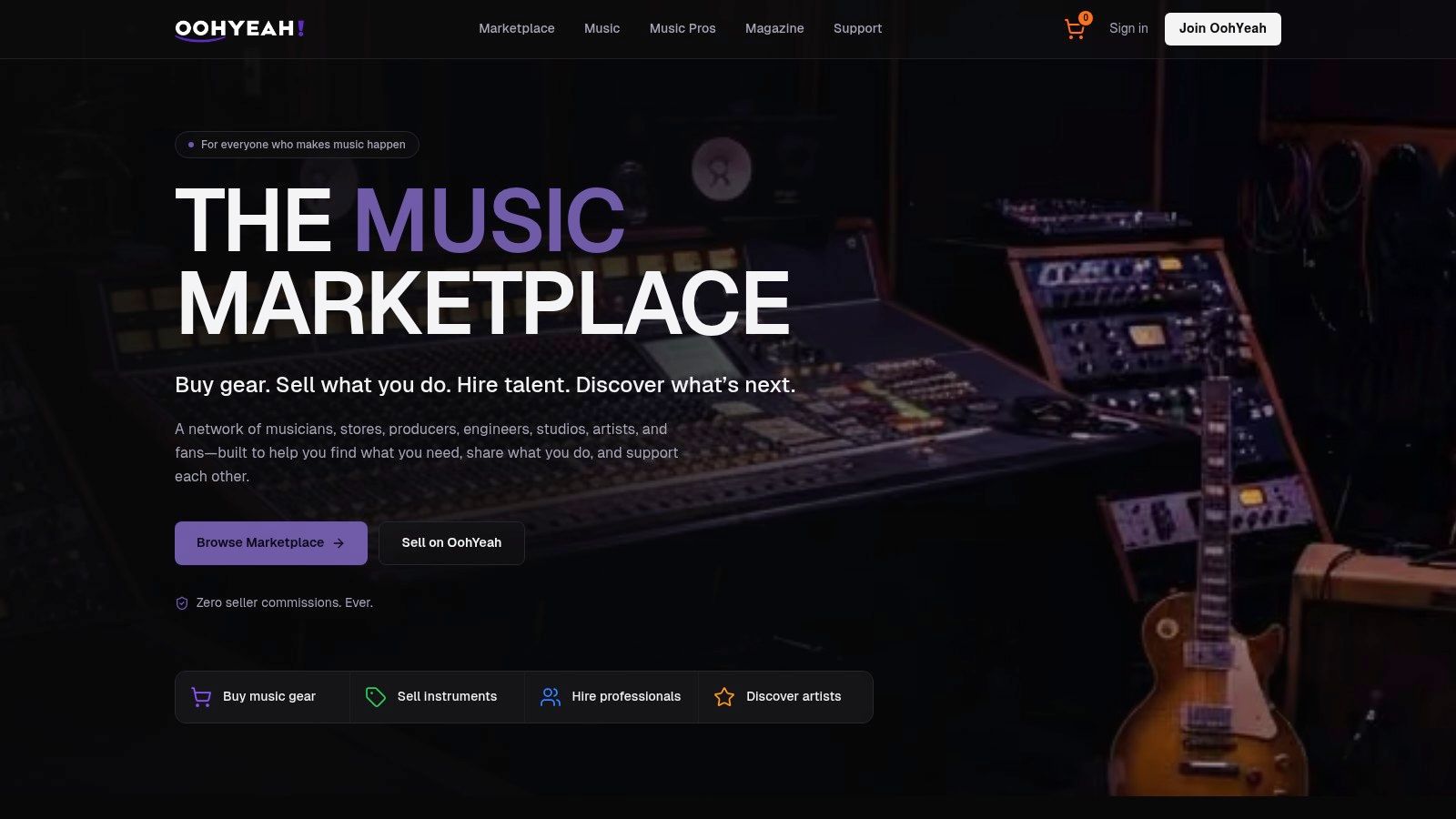
An interface such as the OohYeah artist-store dashboard illustrates the useful separation between an artist profile, music, and store activity. The important question isn't whether a dashboard looks modern. It's whether you can find orders, update products, check performance, and answer a buyer without opening several unrelated systems. OohYeah provides artist profiles with dedicated music and store areas for music, merchandise, exclusives, digital products, and subscriptions. You can review its artist-facing setup at OohYeah for artists.
Compare control with convenience
A self-hosted WooCommerce setup can suit an artist with technical support and a strong reason to control the entire site. Shopify can be easier to manage for a growing physical catalog, although app costs and payment arrangements need close attention. Artist-first tools can make sense when the priority is direct music commerce rather than building a large general retail operation.
For a broader comparison of hosted and self-managed options, Shopify vs WooCommerce UK provides useful context. Don't select a platform because another artist uses it. Select it because its ownership model, checkout, product types, and daily workload fit your business.
Create a short operating test before committing. Add one digital product, one physical product, and one recurring offer if you plan to use subscriptions. Place a test order on mobile, inspect the customer email, attempt a refund, and confirm how you would export or review the buyer record. Those steps reveal more than a polished demo.
Deciding What to Sell, Digital, Physical, or Both
Only 21% of concert attendees bought merchandise in 2025, while average merchandise spend per attendee rose 3% year over year, and smaller venues outperformed larger ones, according to AtVenu's year-in-review data. That is the starting point for product decisions. A store needs a tight offer that matches how fans buy, not a bloated catalog that gives people more pages to ignore.
Start with fan intent.
Digital downloads are the lightest products to run. They suit fans who want ownership, bonus tracks, alternative mixes, stems, liner notes, or high-quality files they can keep. They also work for niche offers that streaming does not cover well, such as instrument-only versions for creators or producer packs for other musicians. The catch is perceived value. If the download looks interchangeable with what a listener already gets on streaming, conversion will be weak. Platforms that support direct, commission-free style download sales, such as the artist marketplace for digital releases and merch, can make these smaller offers practical.
Limited physical editions work for a different reason. They give the fan an object with presence, memory, and scarcity. Numbered vinyl, signed inserts, lyric sheets, cassettes, photo zines, or small art prints usually outperform generic logo items when they connect clearly to a release or era. They also create friction fast. Stock ties up cash. Packaging takes space. Damage claims, missing parcels, and sizing exchanges show up after launch, not before.
Preorders sit in the middle. They are one of the safest ways to test a physical product before committing to a full run, especially when demand is uncertain. But they only stay safe if communication is precise. Put the dispatch window in plain language. Explain what happens if manufacturing slips. State whether cancellation is allowed before fulfillment. If those basics are vague, support inbox volume climbs and trust drops.
Subscriptions can produce recurring income through demos, private updates, early ticket access, or monthly digital drops. They also create a recurring delivery obligation. I have seen artists set up memberships with good intentions, then burn goodwill because the release rhythm became another deadline hanging over the music itself. If cadence is uncertain, a one-time bundle is often the cleaner offer.
AtVenu's year-in-review also notes that physical formats and merchandise are projected to grow at roughly 8.45% annually through 2031. That does not mean every shirt, poster, or pressing deserves a production run. Category growth will not fix weak artwork, confusing sizing, high international shipping, or a product nobody asked for.
Start with a controlled product mix
A smart first launch usually includes one accessible digital item, one distinctive physical product, and one bundle that makes the relationship between them obvious. Do not print every colorway, garment cut, or format variant before buyers show you what has demand.
Check each product against five filters:
- Audience fit: Is it for listeners, collectors, working musicians, or another segment?
- Distinctiveness: Can a fan understand why it matters in a few seconds?
- Fulfillment burden: Can you store, pack, ship, and support it without derailing the rest of the business?
- Geography: Does international delivery make the final price hard to justify?
- Validation: Can you test interest with a preorder, waitlist, limited drop, or small first run?
A focused store is easier to sell. One strong bundle gives fans a clear story. Ten unrelated items turn the visit into homework.
Pricing, Bundling, and Checkout Optimization
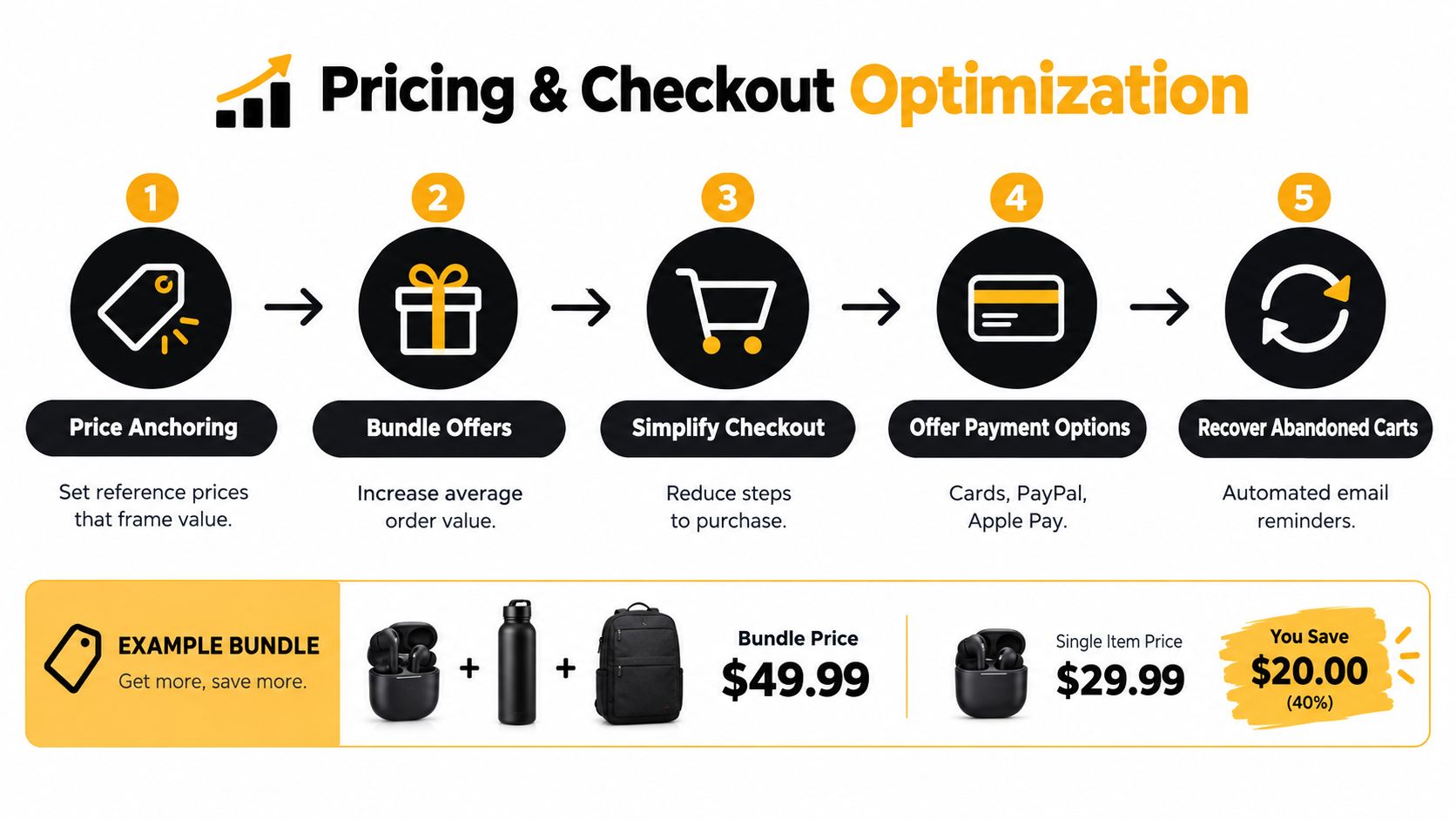
Baymard's synthesis of 49 independent studies reports a global cart-abandonment rate of 70.19% in its checkout and cart-abandonment research. Baymard attributes the rest mainly to long checkouts (17%), late total-cost visibility (16%), site errors (13%), return-policy objections (12%), and missing payment methods (9%). The same research also notes that 58.6% of U.S. shoppers sometimes abandon because they are browsing or not ready to buy. That combination matters. A cart is interest, not commitment, so checkout work should focus on removing friction without misreading every exit as a pricing problem.
Treat checkout like an operating system for revenue. Track product view, add-to-cart, checkout start, and payment success, then break those numbers down by device, traffic source, country, and product type. If mobile traffic adds products but stalls at payment, that points to form friction or wallet support. If one country converts poorly, shipping cost visibility or payment options are usually the first places to look.
Fix the visible friction first
Start with the problems buyers can see before they abandon. Show the product price, shipping, tax, and estimated total as early as your setup allows. If fees appear only on the last screen, even a well-priced item can feel dishonest. Artists lose sales here all the time, especially on lower-ticket products where shipping changes the emotional math of the order.
Then shorten the path to payment.
- Enable guest checkout if your platform supports it.
- Remove any field you do not need to fulfill the order.
- Make mobile forms easy to complete with the right keyboard types.
- Offer payment methods buyers in your target markets already use.
- Test the full purchase path after every meaningful checkout change.
Do those five things before spending time on cosmetic redesigns. Fans do not abandon because a checkout page lacks personality. They abandon because it is slow, confusing, or asks for too much work.
Price the whole order, not just the item. If a made-to-order shirt takes longer to ship, say that before payment. If a print needs tracked delivery to arrive safely, build that expectation into the product page and cart. Clear timing and clear totals reduce support emails as much as they improve conversion.
Bundles deserve the same discipline. The best bundles either simplify a decision or create a benefit that feels real. A digital release paired with a signed physical edition can work because the relationship is obvious. A membership paired with an exclusive download can work for the same reason. Random leftovers packed together to raise average order value usually underperform, and they often create more packing mistakes.
Margins get distorted fast when artists price from the unit cost alone. The pricing information for what artists pay for Vocuno is a useful reminder to compare the full cost of any tool, not just the headline plan. Apply that same logic to your own offers. Count production, packaging, payment processing, shipping materials, customer support time, refunds, and the units that never sell. A bundle that looks profitable on paper can turn mediocre once those costs show up.
Run checkout changes as small tests, not a full rebuild. Fix total-price visibility first. Reduce form complexity next. Then test payment methods, bundle presentation, and abandoned-cart emails one at a time so you can see what changed behavior and what merely changed the layout.
Fulfillment Options That Match Your Operational Capacity
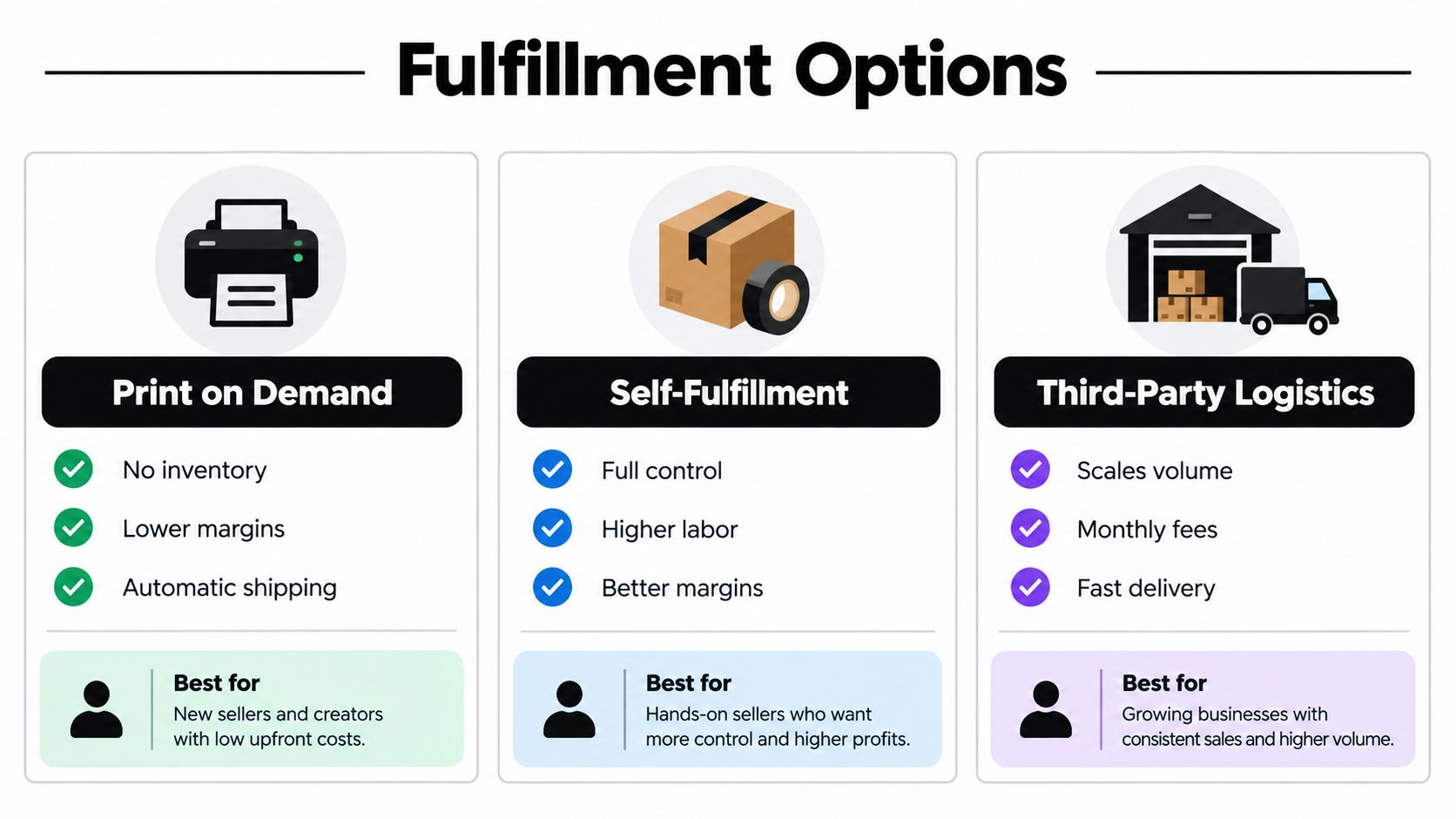
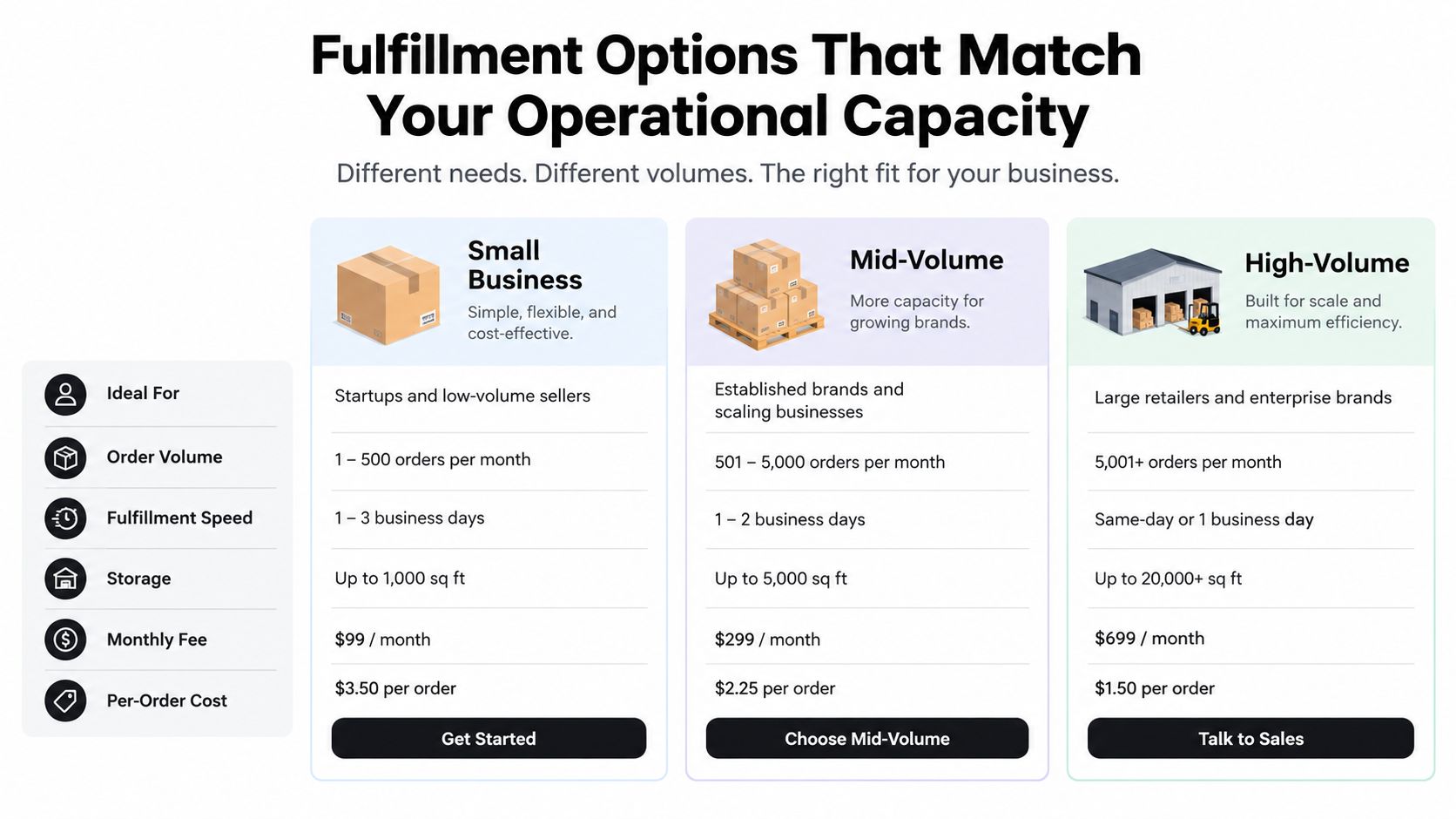
Fulfillment becomes expensive when artists count only the postage. The actual workload includes receiving stock, checking defects, storing boxes, printing labels, answering delivery questions, replacing damaged orders, and keeping product availability accurate.
Print on demand
Print-on-demand services remove the need to purchase and store inventory in advance. They suit artists testing a design or offering apparel across several sizes, especially when storage space and cash flow are limited.
The trade-off is lower margin, less control over production, and dependence on a supplier's catalog and delivery standards. Order samples before launch. Check fabric weight, print placement, color accuracy, packaging, and the customer emails your buyer will receive. A fan doesn't care that a supplier made the mistake. They contact you.
Self-fulfillment
Self-fulfillment gives you control over packing quality, inserts, signed items, and shipping choices. It works well for small drops, preorders, and products that need a personal touch. It also turns your home, rehearsal room, or studio into a warehouse.
Keep a basic stock record with product variant, quantity available, damaged units, reserved preorder units, and reorder status. Decide in advance where stock will live and who packs orders when you're touring. “I'll do it after the show” is not a fulfillment plan.
Third-party logistics
A third-party logistics provider can store inventory, pick orders, pack products, and hand shipments to carriers. It becomes more attractive when order volume, geography, or release schedules exceed your available time.
The hidden costs need scrutiny. Ask about storage, receiving, pick-and-pack, packaging, returns, minimums, account setup, inventory reporting, and special handling. A warehouse can save labor while adding fixed obligations, so model the complete cost against your actual order pattern.
Digital products require their own operating discipline. Test download permissions, file sizes, broken links, refund handling, and access after payment. Buyers should know whether they receive a permanent file, ongoing access, or a subscription benefit.
Use this operating decision
| Current situation | Suitable starting model | Main safeguard |
|---|---|---|
| Testing a design or keeping inventory minimal | Print on demand | Sample every product before promotion |
| Small, distinctive release with personal packaging | Self-fulfillment | Assign packing time and storage space |
| Regular orders that compete with music work | Third-party logistics | Audit every fee and return process |
| Downloads, bonuses, and memberships | Digital delivery | Test access, permissions, and support emails |
The right model can change. Start with the least complex system that protects quality, then move work outward when fulfillment consistently takes time away from creation, promotion, or customer care.
Promoting Your Store and Building Long-Term Direct Income
A launch post creates a moment. A direct-to-fan system creates continuity.
A 2025 survey of 3,000 creators in the United States and United Kingdom found that 95% used direct-to-fan models, while 94% were preparing for potential platform disruption, according to Epidemic Sound's creator-economy report. The same survey reported that 58% earned income from fan-driven purchases, including merchandise, subscriptions, or online courses.
The operational implication is straightforward. Use social platforms for discovery, but move interested people toward a permission-based relationship. Invite fans to join an email list or approved messaging channel, explain what they'll receive, and make unsubscribing easy. Keep records portable where the platform allows it, and don't assume a follower list is an asset you control.
Build promotion around the product's reason to exist
A release sequence can be simple:
- Show the object: Share the artwork, packaging, production detail, or listening experience.
- Explain the access: State what the buyer receives and when.
- Give a clear deadline: Use a preorder or limited window only when the deadline is real.
- Follow up responsibly: Remind interested fans without sending repeated pressure.
- Close the loop: Confirm dispatch, delivery, or digital access and invite support questions.
International buyers need more than a currency selector. Explain delivery regions, likely timing, taxes or duties where relevant, and how you handle failed delivery. Transparency protects trust even when the final cost varies by destination.
Influencer partnerships can help when the creator's audience overlaps with your music and product. A practical introduction to ecommerce influencer marketing can help you evaluate fit, disclosure, creative control, and tracking instead of paying for reach without a clear purchase path.
Recurring income also needs retention work. State the billing cadence, benefits, cancellation process, and what happens if a payment fails. A subscription isn't passive revenue. It is a promise you must keep repeatedly.
For artist education and ideas around releases, commerce, and fan engagement, the OohYeah magazine can sit alongside your own testing process. The strongest long-term setup connects three decisions: a platform you can operate, offers fans understand, and communication channels you can maintain.
OohYeah gives artists a unified place to present music, sell merchandise, digital products, exclusives, and subscriptions directly to fans, with marketplace and promotional tools in the same ecosystem. Build a focused offer, test the purchase journey, and visit OohYeah to explore whether its artist-store tools fit your next release.