Selling Unreleased Demo Tracks Direct to Fans: Set a Price
Learn how selling unreleased demo tracks direct to fans works, from pricing and downloads to payments, payouts, access controls, and choosing a release format.
November 23, 2026
FRANKLY with Frank Lee
Yes. Artists can sell unreleased demo tracks direct to fans and set a price for each release. Singles, EPs, and albums let you package one or more tracks in a format that suits your demos.
A direct sale should feel clear for both sides. Fans want an easy way to access the music, and you need to understand how payments turn into artist payouts. This guide walks through the key steps, including downloads, payment processing, and whether fans need an account to buy. It also explains how release format shapes the offer, so you can decide how to share a single demo or group several tracks together. With the mechanics in view, you can make a confident plan for putting unfinished music in front of the fans who want to hear it.
Key Takeaways
- Choose whether each demo can be downloaded, and make the access terms clear to fans.
- Understand how checkout, payment processing, and artist payouts fit together before setting up a release.
- Plan private sharing and access controls around how you want fans to reach the music.
- Match your price and release format to the demo, then consider OohYeah! for artist profile hosting and digital music downloads.
Can people download my music?
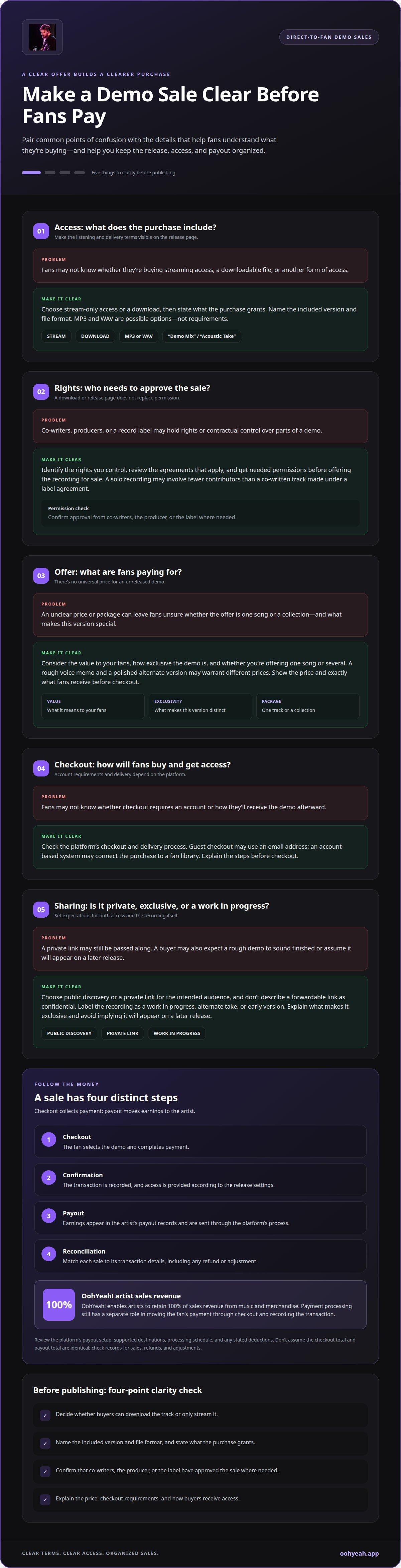
Whether fans can download an unreleased track depends on the platform’s settings. Before publishing, check whether you can choose between streaming access and a downloadable file, then state clearly what the purchase includes. A stream-only offer may suit a rough recording, while a download gives supporters a copy to keep.
Copyright and licensing depend on who created the recording and the agreements that apply to it. Before selling a demo, identify the rights you control and any limits set out in writing. A release page or download does not replace permission from anyone who shares rights or controls the recording.
Co-writers, producers, and record labels may hold rights or contractual control over parts of a demo. Review the relevant agreements and get the necessary permissions before offering it for sale. A solo recording may involve fewer contributors than a co-written track made under a label agreement.
There’s no universal price for an unreleased demo. Consider its value to your fans, how exclusive it is, and whether the offer includes one song or a collection. A rough voice memo and a polished alternate version may warrant different prices. State the price and what fans receive before checkout.
Choose file formats your audience can use and that suit the recording you’re sharing. For example, you might offer an MP3 for convenient listening and a WAV file for a less compressed copy. These are options, not requirements. Keep the track title and version clear, such as “Demo Mix” or “Acoustic Take,” so buyers know what they’ll download.
Before publishing, use this short permission checklist:
- Decide whether buyers can download the track or only stream it.
- Name the included version and file format on the release page.
- Confirm that your co-writers, producer, or label have approved the sale where needed.
- Explain whether the purchase grants a personal download or another form of access.
Payment processing and artist payouts
A fan pays through the release page’s checkout. The payment processor authorizes the transaction, then the purchase is recorded. The buyer receives access to the demo, while the sale appears in the artist’s account or payout records. Keep these steps distinct: checkout collects payment, and payout moves earnings to the artist.
Before publishing, review how the platform handles payments after checkout. Check its payout setup, supported destinations, processing schedule, and any deductions stated in its terms. These details affect when earnings arrive and how much reaches you. Don’t assume the checkout total and payout total are identical; review the transaction record for sales, refunds, and adjustments.
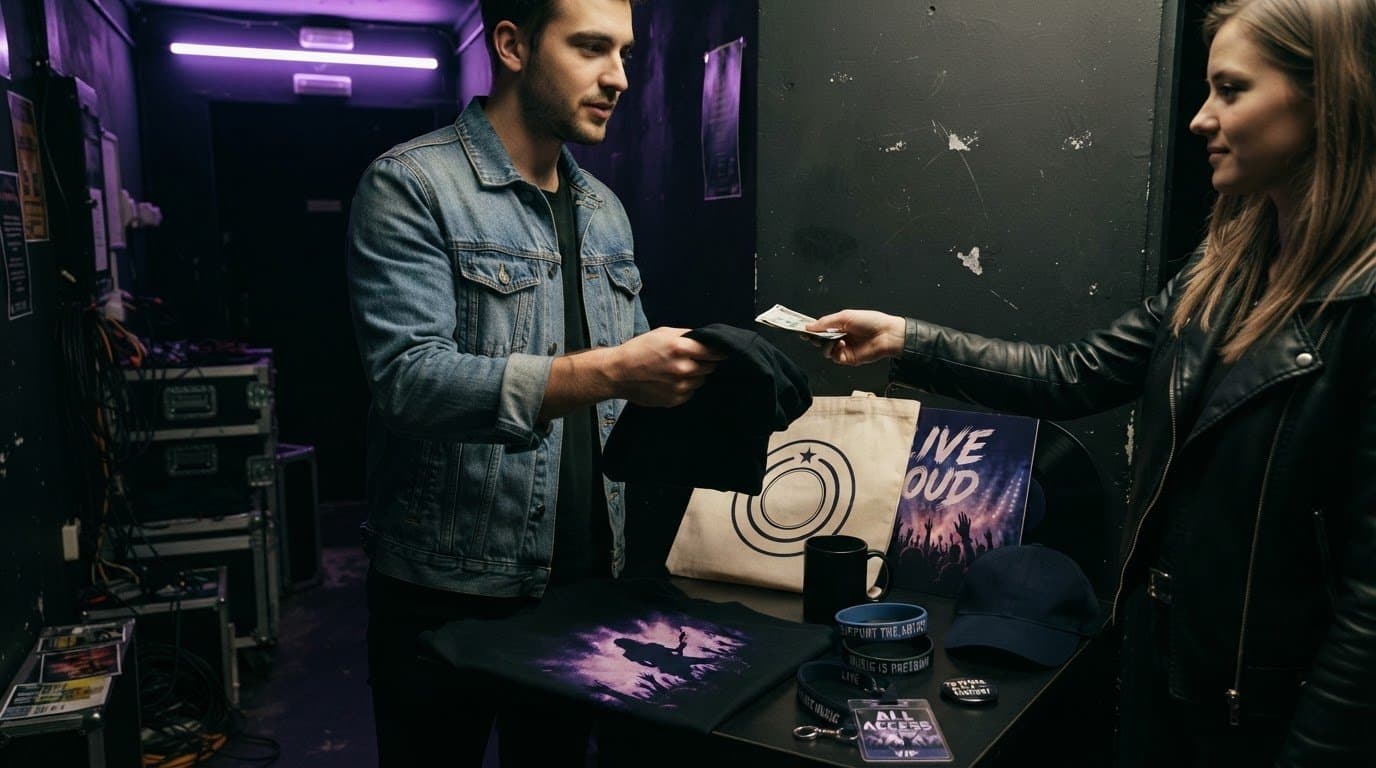
OohYeah! enables artists to retain 100% of sales revenue from music and merchandise. That makes the artist’s share clear. Payment processing still has a separate role: it moves a fan’s payment through checkout and records the transaction. Keep your release price and payout information visible, so supporters understand the purchase and you can track its proceeds.
Use this simple sequence to understand each sale:
- Checkout: The fan selects the demo and completes payment.
- Confirmation: The transaction is recorded, and access is provided according to the release settings.
- Payout: Earnings are reflected in the artist’s payout records and sent through the platform’s process.
- Reconciliation: Match each sale against its transaction details, including any refund or adjustment.
For example, if a fan buys a demo and later requests a refund, the transaction record helps distinguish the original sale from its adjustment. Clear release descriptions also reduce confusion about what the payment covers, such as one track or a collection. Keep records organized by release, rather than grouping unrelated sales together. A direct-sales page can bring the release and its purchase details together; explore direct music sales as one way to connect with fans.
Interest in direct sales is not limited to artists already using them. In a survey, 28% of artists said they already sell downloads or want to start. That suggests download sales may be relevant to artists considering how to present releases and manage proceeds.
Do fans need an account to purchase?
Not always. Whether a fan needs an account depends on the platform’s checkout and delivery process. Guest checkout may allow a purchase using an email address, while an account-based system may connect the purchase to a fan library. Explain the steps before checkout so buyers know how they’ll access the demo.
Private sharing depends on the platform’s access controls. A private link may keep a release out of public discovery, but recipients could still pass it along. If you share a demo with a small group, send the details directly and say who the offer is for. Don’t describe a link as confidential if recipients can forward it.
Promote an exclusive demo without confusing it with a future release. Label it clearly as a work in progress, alternate take, or early version. For example, explain that the demo offers a snapshot of your writing process, not the final master. This gives supporters a reason to listen while keeping expectations about a later release clear.
Selling a demo has risks. A buyer may share a downloaded file, and listeners may expect a rough recording to sound finished. Set expectations in the description: identify the recording as a demo, explain what makes it exclusive, and avoid implying that it will appear on a later release.
Before sharing, decide how fans should discover, buy, and access the track:
- Choose public discovery or a private link for the intended audience.
- State whether checkout requires an account or supports guest purchase.
- Describe how buyers receive access after payment.
- Label the recording and clarify whether it differs from future releases.
For example, a private preview for supporters could use a direct purchase page, while a demo intended for wider discovery could be publicly available. Choose the setup based on your audience and the access you want to offer. Clear terms help fans understand what their purchase includes and reduce confusion if the song changes later.
Selling music directly to fans
Choose a music platform that supports direct fan purchases and offers a clear way to present your music. A public artist profile can help fans discover your work, while a dedicated release page can guide them from finding a track to buying it. Selling unreleased demo tracks direct to fans works best when the page explains what the release includes and how buyers will access it.
Match the release format to the music. A single can spotlight one demo, while an EP or album can group several tracks together. You might bundle alternate versions of one song or release several works in progress as an EP. Give each release its own price and description so the offer fits the music, rather than forcing every demo into the same format.
Prepare the release in a clear sequence. First, ready the audio and confirm you control the rights needed to sell it. Choose the track or collection, set a price, and write a description that identifies it as unreleased. Then publish it on the page where fans can find it. Test the purchase and access process before sharing the page.
- Prepare: Select the demo files and confirm the included versions.
- Package: Decide whether to sell a single, EP, or album.
- Present: Add a title and explain what makes this release distinct.
- Publish: Set the price and choose a public profile or Discover placement.
- Share: Announce the release to fans with a direct path to its page.
Keep the offer specific. A description such as “early acoustic demo, separate from the planned studio version” tells fans what they’re buying without promising what a future release will sound like. Selling unreleased demo tracks direct to fans can also connect you with listeners who value hearing work in progress.
Ready to put your release in front of fans? Set up direct music sales and share your demos through a public artist profile.
Singles, EPs, and albums can each include one or more unreleased tracks. Choose a format that suits the amount and type of material you’re ready to share.
OohYeah!
OohYeah! gives artists a direct way to share music and connect with supporters. Artist Profile Hosting brings your presence together, while Digital Music Downloads and Exclusive Content Access let you offer music and special material to fans. The Merchandise Marketplace adds another way for supporters to engage.
For unreleased demos, OohYeah! can fit when you’re ready to bring your artist profile, music, and exclusive content into one direct-to-fan space. Choose the offerings that suit how you want to share your work and build stronger connections around it.
Contact OohYeah! to discuss your direct-to-fan plans.
Make your next demo release your own
Selling unreleased demo tracks direct to fans can be more than a way to share unfinished music. It lets you shape how listeners encounter your creative process. Choose a demo that represents the story you want to tell, then add context that reflects your work. That personal framing gives supporters a reason to connect with the release on its own terms.
Start with one clear question: what do you want fans to take away from hearing this track? Your answer can guide the release description, the audience you share it with, and how it fits alongside future music. Move at a pace that suits your creative direction. You decide how to bring fans into the story behind your demos.
Ready to explore a direct-to-fan approach for your music? Start a conversation with OohYeah! Your next release can begin with a choice that feels like yours.
Frequently Asked Questions
Can I sell my music directly to fans?
Yes. Choose a platform that supports direct music purchases, then decide how each release fits your audience. You could offer a demo to supporters before sharing a finished recording more widely. Keep the description distinct from later versions, and make sure you have the rights needed to sell the recording.
How do artists collect payments and deliver demo tracks securely?
Choose a sales platform with a clear checkout and digital delivery process. Upload a buyer-ready copy rather than your working master, and review the access settings before publishing. Test the full purchase journey, from checkout confirmation to opening the delivered file. This can catch mismatched versions, unclear instructions, or access problems before fans encounter them.
How do platform fees and payout terms compare for direct-to-fan music sales in the United States?
Compare how platforms charge artists and handle payouts rather than focusing on a single fee label. Some charge recurring artist subscription fees for sales tools, while others may apply transaction charges. OohYeah charges artists recurring subscription fees for access to its platform and sales tools. Review the relevant terms for payout timing, deductions, refunds, and account requirements before choosing a setup.