Maximizing Direct Music Sales After Release With Fan Offers
Maximizing direct music sales after a song release: use fan offers, website sales, searchable descriptions, and ongoing promotion that turns fans into buyers.
November 3, 2026
FRANKLY with Frank Lee
A release doesn’t stop working after launch week. Rather than moving on after two weeks, keep promoting the song and use weeks 3 through 8 to share milestones and social proof. A practical path to maximizing direct music sales after a song release is to make it easy for fans to discover the track, buy it, and support you directly.
A strong launch matters, but continued promotion gives a song more chances to find its audience. Learn how to avoid common release mistakes and turn attention into meaningful fan support with a focused website, searchable music descriptions, and direct offers. The practical steps below help keep a release visible, guide fans from discovery to purchase, and give supporters reasons to connect beyond a single stream.
Key Takeaways
- Keep promoting after release week, using fresh updates and fan responses to give the song new chances to reach listeners.
- Make your website a clear home for your music, merchandise, and email sign-up so fans know where to go next.
- Write track and album descriptions with specific, natural language that helps listeners understand and discover your music.
- Give supporters a direct way to buy music or access exclusive content, and make each offer feel connected to your work.
1. What Are Common Music Release Strategy Mistakes to Avoid?
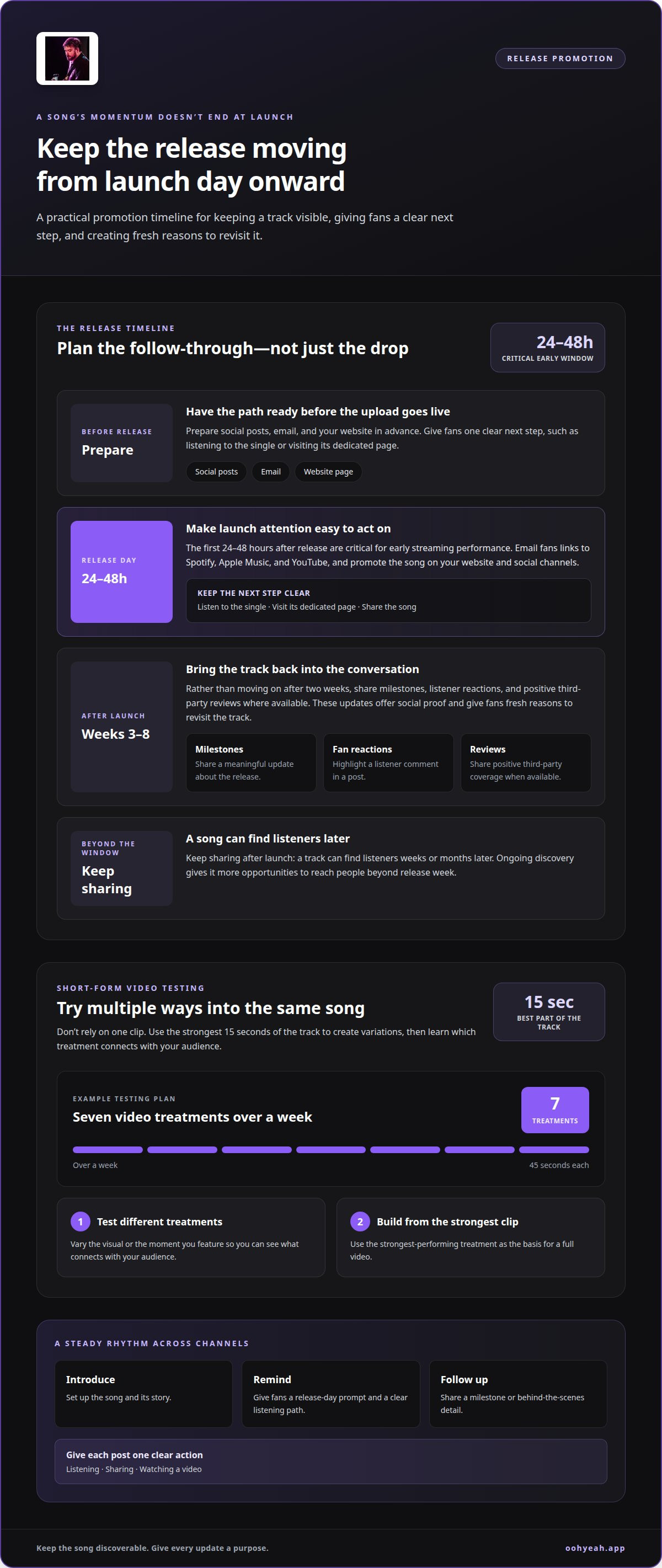
One common mistake is treating release day as the finish line. The first 24–48 hours after release are critical for early streaming performance, so prepare your social media posts, email, and website before the upload goes live. Give fans a clear next step, such as listening to the single or visiting its dedicated page. A ready-to-use plan helps you make the most of launch-day attention.
Don’t abandon a song after two weeks to begin another release cycle. Use weeks 3 through 8 to share milestones, listener reactions, and positive third-party reviews where available. These updates offer social proof and give your audience fresh reasons to revisit the track. For example, highlight a fan comment in a post, then link back to the song or its page.
Posting without a steady rhythm can leave fans unsure when to look for updates. Plan a sequence across social media, email, and your website: introduce the song, share a release-day reminder, then follow up with a milestone or behind-the-scenes detail. Give each post one clear action, such as listening, sharing, or watching a video.
Short videos can keep the song moving, but don’t rely on one clip. Use the best 15 seconds of the track to create multiple short-form variations. One approach is to test seven 45-second video treatments over a week, then use the strongest-performing clip as the basis for a full video. The different treatments help you see which visual or moment connects with your audience.
On release day, email fans links to Spotify, Apple Music, and YouTube, and promote the song on your website and social channels. Keep sharing after launch: a track can find listeners weeks or months later. A plan for ongoing discovery gives it more opportunities to reach people beyond release week.
2. Using a website to sell merchandise and collect email subscribers
Give listeners one reliable place to find your music, merchandise, show details, and email sign-up. Your website can be that central hub, while social posts and playlist mentions lead people there. Make the latest release easy to spot, then offer a clear next step, such as listening, browsing merchandise, or joining your mailing list.
Make each page useful before asking visitors to sign up for email. A music page might feature your latest single, a short description, and listening options such as Apple Music. A merchandise page can show available items and explain how they connect to your music or visual style. For example, a shirt design inspired by a lyric gives fans a tangible way to carry a song into everyday life.
Put the email sign-up where visitors can find it easily, such as near the release announcement or merchandise details. Explain what subscribers will receive, then send updates relevant to their interests: a new track, a behind-the-scenes note, or a show announcement. Keep each message focused and make the listening or purchase link easy to spot.
Offer a specific reason to join. One example is a personal holiday greeting for the first 50 people who email you. The gesture feels direct and gives supporters a clear action. You can also promote a new release through your website, then use a follow-up message to share a lyric, a recording detail, or a related playlist. These touchpoints help turn a single visit into an ongoing connection.
As you add pages, keep navigation simple: music, merchandise, shows, and sign-up. Send social media visitors to the page that fits the post, rather than dropping everyone on the homepage. A dedicated artist page for music and fan support can make that direct path easier to build.
3. Using keywords in track and album descriptions
A useful description tells listeners what a track sounds like and uses clear terms that help people find it. Start with genre, mood, and subject, then add distinctive details. For example: “An indie soul track with warm guitar, late-night vocals, and lyrics about starting over.” This paints a picture without crowding the copy with unrelated search terms.
Write for listeners first. Name an influence or scene only when it genuinely fits the music. If a track draws on Chicago house, say so; don’t add “Chicago” just to attract searches. Include the artist name, track title, and relevant style terms naturally. A clear description helps people decide whether the song suits what they want to hear.
Adapt your wording to each platform’s fields. A Spotify track description, YouTube video description, and Instagram caption serve different purposes, so don’t paste the same block everywhere. Keep the core details consistent, then tailor the call to action. On YouTube, for example, share the song’s story before inviting viewers to listen or follow your work.
Before publishing, read the description aloud, remove repeated adjectives, and check that every keyword accurately describes the track. Add a positive third-party review when you have one and the platform allows it. A specific quote can add context and social proof; a vague list of genre labels adds little.
Descriptions can help maintain momentum beyond the initial upload. Revisit them when a song reaches a new audience or receives a meaningful review, and update your website and digital listings where possible. Note which phrases prompt useful responses, such as comments about a lyric or production detail. That feedback can sharpen future descriptions and help connect your music to your wider career, without promising a particular platform result.
4. Selling music, merchandise, and exclusives directly to fans
A direct sale lets a fan buy your music instead of only streaming it. Streaming platforms and digital music stores can help listeners discover a record, while a direct offer gives interested fans a clear purchase path. Use streaming for discovery and make a direct purchase option available to supporters ready to buy. This balance can support maximizing direct music sales after a song release without treating every listener alike.
Build an offer around the song rather than presenting a generic product list. Pair a digital album with cover art or a lyric note, or connect merchandise to a music video concept. Exclusive content might include a demo, alternate version, or behind-the-scenes recording. Describe exactly what fans receive so they can choose what suits their interest.
Sales channel and payment-processing charges vary by setup, so compare the applicable costs before setting prices. For digital albums, CDs, vinyl, or bundles, account for format, production, fulfillment, and what each offer includes. A bundle can combine a digital record with merchandise or exclusive content, but make its contents and value easy to understand.
For US sales, tax handling depends on the product and relevant jurisdiction. For physical orders, clearly state shipping costs, delivery expectations, and fulfillment details. For digital offers, explain how delivery works. Include these details at checkout so buyers understand the transaction before paying.
Connect discovery with purchase through social posts. A TikTok clip can feature a music video moment, then point interested listeners to a focused offer. Don’t rely on an algorithmic boost alone; give fans a direct destination for their next step. Maximizing direct music sales after a song release means making that path relevant and easy to follow. Set up a direct music and fan offer that supports the connection.
Streaming platforms and digital music stores can help listeners discover a record, while direct sales give interested fans a clear way to buy it. The section offers no basis for comparing how much revenue each channel generates.
OohYeah!: Artist Profile Hosting
OohYeah! gives artists a direct place to connect music with fan offers. Artist Profile Hosting brings an artist’s presence together with Digital Music Downloads, a Merchandise Marketplace, and Exclusive Content Access. Artists retain 100% of their sales revenue from music and merchandise, making this a practical option for creators who want fans to support them beyond streaming.
Use the profile when you’re ready to give listeners one destination for discovering your work and choosing how to support it. A new release can lead fans to a download, merchandise, or exclusive content, all tied to your artist presence. Visit oohyeah.app to explore OohYeah! for your music and fan offers.
Build Your Next Release Around Fan Choice
Make direct support a natural part of following your music. Give fans a clear route from hearing a song to choosing how to engage, then pay attention to which offers prompt genuine interest. Use those responses to shape future releases and strengthen the connection between your work and the people who value it.
That is the heart of maximizing direct music sales after a song release: invite participation without making every interaction feel like a pitch. Try thoughtful ways to bring your music closer to listeners, and let your community’s response guide what comes next. You do not need to change everything at once. Start with one focused step, then build on what you learn.
Talk with OohYeah! about your music sales plans and take the next step on your terms.
Frequently Asked Questions
What Are Common Music Release Strategy Mistakes to Avoid?
Common mistakes include leaving fans without a clear next step, sending them to an irrelevant page, and treating streams as the only sign of support. Before a campaign goes live, test every link on a phone and confirm it leads to the page promised in the post. A video about a new song should lead to that song, not an unrelated homepage or an old release.
What direct-to-fan platforms let artists sell music downloads, CDs, and vinyl?
Direct-to-fan platforms differ in the formats they support, so match the platform to your offer. OohYeah! offers Artist Profile Hosting and Digital Music Downloads for digital releases, along with a Merchandise Marketplace for fan items. For CDs or vinyl, make sure your sales setup clearly explains the products, fulfillment, and buyer expectations.
What release-week strategies drive direct music sales from fans?
Give each release-week message one purpose: introduce the song, share a detail about its creation, or invite fans to support it directly. Keep the artwork, song title, and destination consistent so people recognize the release. A short note explaining what a purchase supports can make the offer personal without turning every update into a sales pitch.
How can artists build an email list and convert subscribers into music buyers?
Tell visitors exactly what they will receive by signing up, such as release news, studio notes, or early access to exclusive content. Use subscribers’ interests to shape relevant messages. Someone who signed up through a new single announcement may appreciate a note about its recording, while a fan interested in merchandise may welcome a product update. Keep every email useful and focused.
How do preorders, exclusive editions, and merchandise bundles affect sales?
Preorders let interested fans commit before a release, while exclusive editions offer a distinct version or additional content. Bundles connect related items, such as a digital album and a design inspired by its cover. List every included item clearly and plan physical fulfillment before promoting a bundle. Present these as options for fans, not guaranteed ways to increase sales.
How can artists promote direct music sales on social media and streaming platforms?
Use social posts to build interest, then direct fans to the specific place where they can buy or support the release. Keep streaming links and purchase options distinct so listeners understand the difference. Update artist profiles with current release details, and make captions specific to each clip or track. A TikTok excerpt, for example, can introduce a lyric before directing fans to the full offer.