How to Set Up an Online Band Merch Store and Understand the Costs
Learn how to set up an online band merch store, compare platforms, calculate production costs, and start selling custom music merchandise to fans today.
October 21, 2026
FRANKLY with Frank Lee
You don’t need separate storefronts for songs and shirts. The practical answer to how to set up an online band merch store is to choose a selling platform that can bring your music and merchandise together, or connect a merch shop with your music page. Either way, make it simple for fans to find your products and check out on their phones.
It’s easy to focus on designs and overlook the bigger decision: where your store lives affects how fans browse, buy, and support your band. Choose a setup based on what you plan to sell, how you’ll produce and ship it, and how much control you want over the storefront.
This guide covers creating custom merch, comparing platforms, choosing between print-on-demand and bulk orders, and planning for costs. You’ll also learn how to set prices, promote your store through social media and email, and decide whether to sell music and merch in one place. The aim is a straightforward store that fits your band and helps fans support you directly.
Key Takeaways
- Choose products that fit your band’s sound, visual identity, and fans’ interests, then use their feedback to shape what you offer.
- Compare print-on-demand with bulk production by weighing inventory needs, fulfillment, product quality, and order timing.
- Build a realistic budget around design, production, shipping, and promotion, then set prices that account for costs and profit.
- Promote new merch with social posts, email exclusives, and live-show moments that give fans a reason to engage.
- Compare platforms for how well they bring music and merchandise together, and make the mobile shopping experience easy to use.
How can I make and sell custom band merch?
Build your merch around your fans, your sound, and a clear path from design to purchase. Retailers collect sales tax on taxable retail sales, so identify the licenses and permits that apply to your location and sales activity. Use original or properly licensed artwork.
Choose Products for the Band’s Audience
Match product ideas to what your fans enjoy and how they connect with the band. If fans wear band shirts at shows, try a few shirt styles; if they collect physical music, consider vinyl records, CDs, or cassettes. Accessories can broaden your range. Use fan feedback and social media polls to gauge interest before committing to inventory.
Match Products to the Band’s Brand
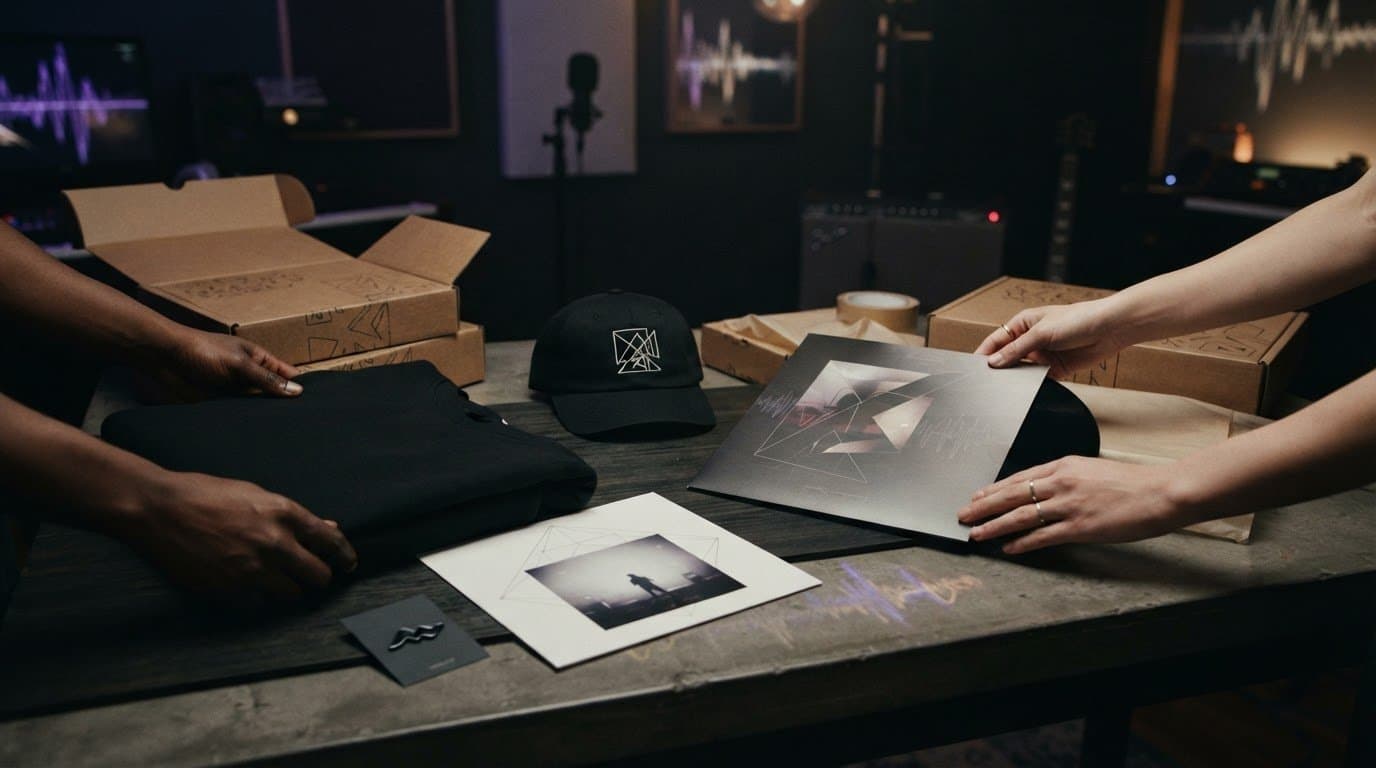
Choose products that reflect the music, visuals, and personality your band already shares. A bold graphic may suit a high-energy live act, while a minimal design may fit a quieter visual identity. Keep logos, colors, and artwork consistent across products, and use only images or lettering you own or have permission to use. Original, properly licensed designs make the merch distinctly yours.
Choose an Online Sales Platform
Pick a platform that fits your products and the way fans already find your music. A direct-to-fan page or band website can present shirts, accessories, and music together. Compare the steps fans take to browse and pay, and check that the store works smoothly on phones. A confusing checkout can derail a purchase, even when the design is a strong fit.
- Test interest before expanding your range. Share mockups of different styles and ask fans which designs or items they’d choose. Compare responses with what fans already buy or wear at shows. Use those signals to plan a focused first release instead of filling the store with products your audience hasn’t shown interest in.
- Plan production before opening sales. A pre-sale lets fans order before production, helping you estimate quantities and fulfill orders after the deadline. For bulk orders, review design specifications carefully and allow time for production. This can help prevent avoidable changes and last-minute rush orders.
- Make each product page clear and easy to scan. Show design images, explain the item’s style, and state how fans can buy it. Organize the range so supporters can find shirts, music formats, and accessories without searching through unrelated options. Track which products draw interest and use that response to guide future releases.
Selecting suppliers and print-on-demand services
Set up payments through your store’s payment gateway, then explain shipping costs, delivery expectations, and return steps before checkout. For global shipping, show the destinations your fulfillment setup serves and clearly present the relevant shipping details, so fans know what to expect before ordering.
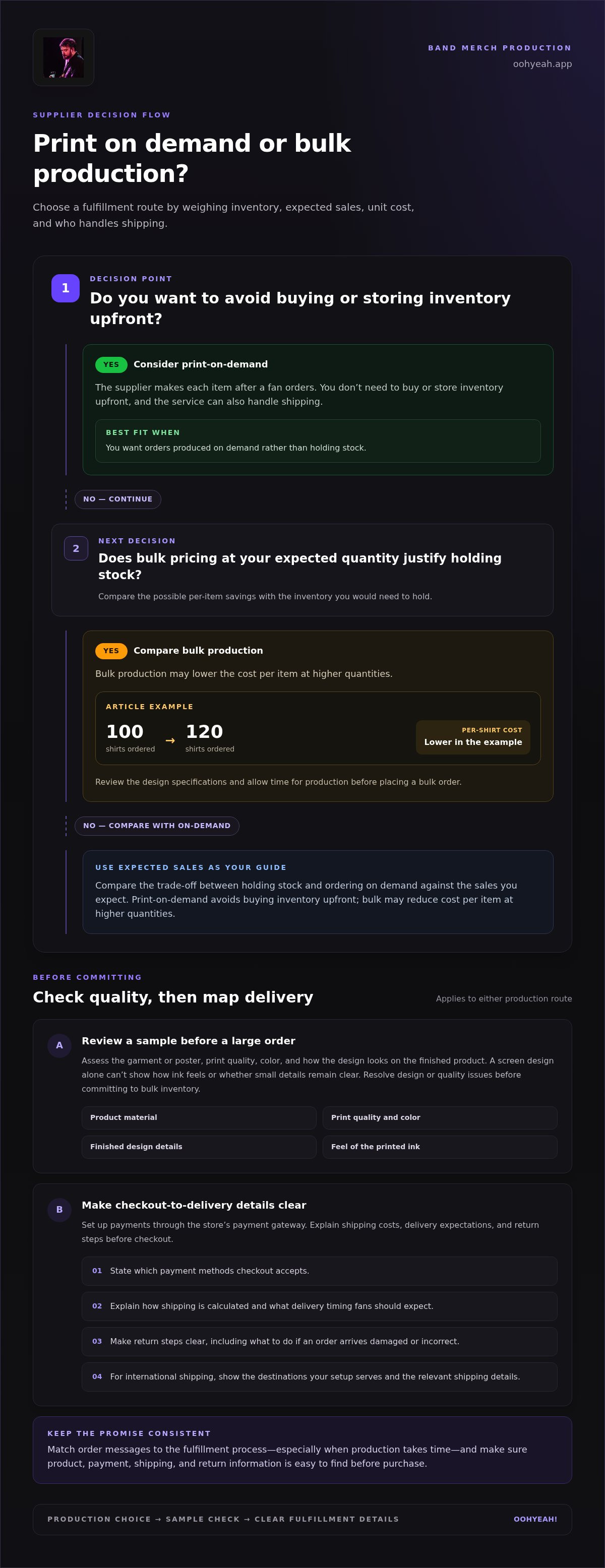
- Compare print-on-demand with bulk production. With print-on-demand, a supplier makes each item after a fan orders, so you don’t need to buy or store inventory upfront. The service can also handle shipping. Bulk production may lower the cost per item at higher quantities: in one example, ordering 120 shirts rather than 100 lowers the cost per shirt. Compare the trade-off between holding stock and ordering on demand against your expected sales.
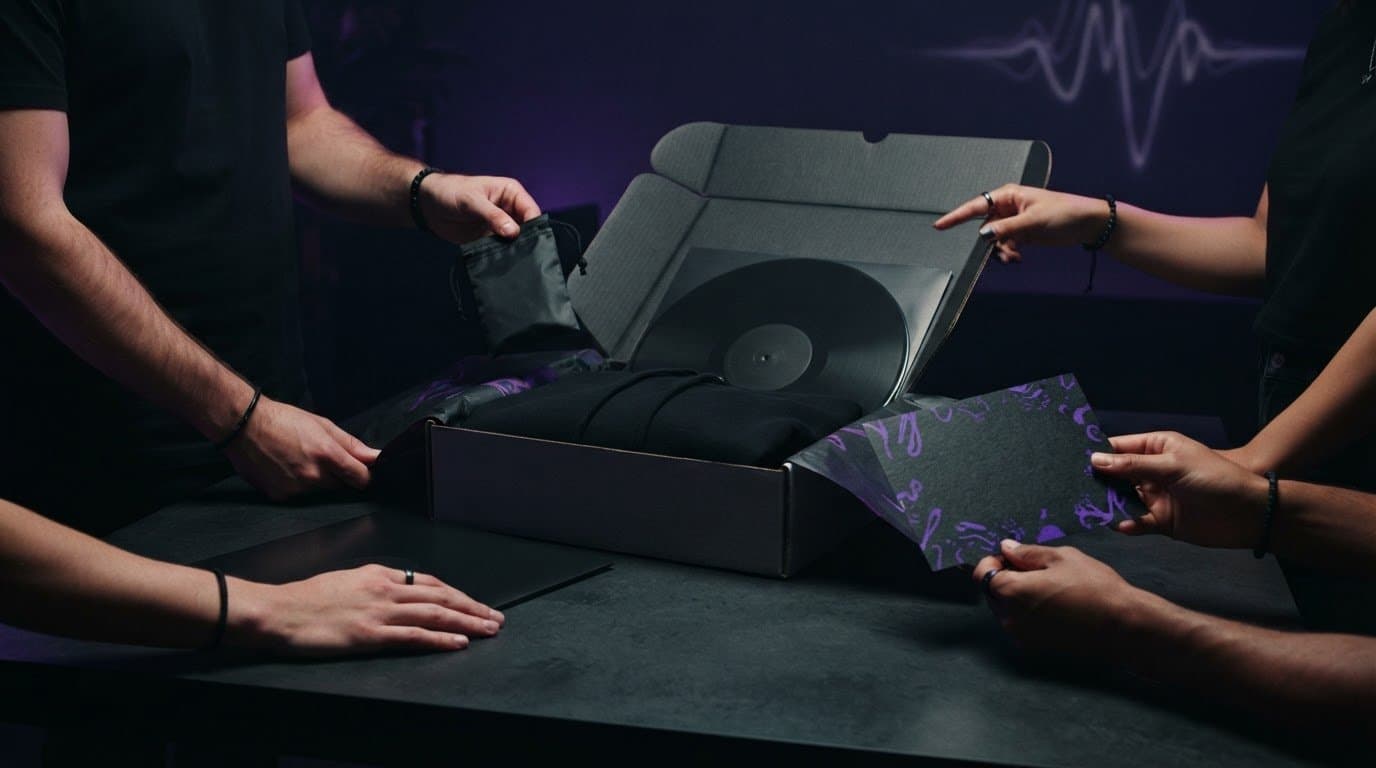
- Review a sample before a large order. Ask suppliers for samples so you can assess the garment or poster, print quality, color, and how the design looks on the finished product. A screen design alone can’t show how ink feels or whether small details remain clear. Compare the sample with your artwork and product description, then resolve any design or quality issues before committing to bulk inventory.
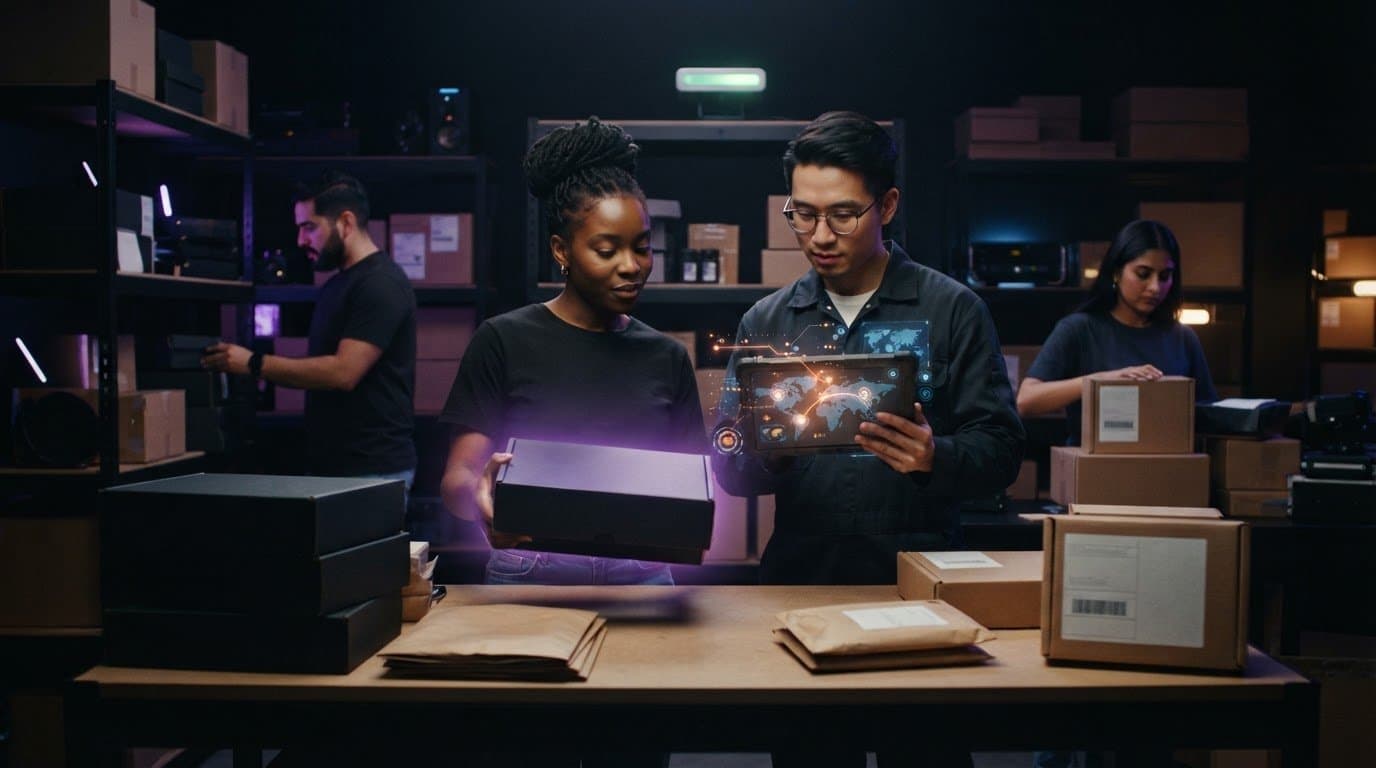
- Map fulfillment from checkout to delivery. With print-on-demand and dropshipping, the supplier produces and ships an item after an order comes in. Set up product details, the payment flow, and shipping information so each step is clear to the buyer. For international orders, make destination options and delivery expectations clear. Keep order messages consistent with the fulfillment process, especially if production takes time.
- Write payment, shipping, and return details in plain language. Explain which payment methods your checkout accepts, how shipping is calculated, and what fans should do if an order arrives damaged or incorrect. Match your return policy to the products and fulfillment process, and make it easy to find before purchase. Track demand and order issues by product, such as shirts versus posters, to improve future supplier choices. If you share bonus material alongside a release, exclusive content access for supporters can complement the merch offer.
Allow enough time to process custom merchandise orders. Compare print-on-demand with bulk manufacturing, and review samples before committing to a large order.
How much does it cost to start selling band merch online?
Your startup budget depends on design, production, shipping, marketing, and inventory choices. To launch, prepare a branded store, product listings, payment and shipping settings, and original or properly licensed artwork. Trademarking a logo or key designs can help protect your band’s brand.
-
Set Up a Branded Online Store
Build a store page around the same name, logo, colors, and visual style your band uses elsewhere. Add clear product photos and descriptions, then organize items so fans can find a shirt or music format without digging through unrelated content. Before sharing the page, check that the artist name and design look consistent across the store, product pages, and checkout.
-
Price Merchandise and Calculate Margins
Set each price by adding production, shipping, and marketing costs to the amount you want to earn. Cost-plus pricing starts with the item’s cost and adds a markup; competitive pricing compares what similar artists charge. According to the U.S. Census Bureau, gross margin is total sales less cost of goods sold. Track other expenses separately so sales don’t disguise costs.
- Build a complete startup budget. List each expense before setting prices: artwork or design work, product production, shipping materials, marketing, and any costs tied to your store setup. Your production method affects the budget. Print-on-demand ties production to individual orders, while bulk production requires planning for inventory. Estimate each product separately, since a poster and a shirt have different production and delivery needs.
- Make the design distinct and rights-aware. Connect merchandise artwork to the creative world of your music. Consistent logos, colors, and coordinated design elements help fans recognize your products across a shirt, poster, or store page. Use original work or artwork you’re properly licensed to use. Avoid copying another artist’s logo, illustration, or imagery, and consider trademarking your own logo and key designs to protect your band identity.
- Review the numbers before publishing. Compare projected sales with product costs, shipping, and marketing expenses. Revise prices or designs if the figures don’t support your goals. Keep a simple record of units sold and costs by item. For example, track a shirt separately from a poster to see which covers its costs more effectively. Revisit your calculations when production or shipping arrangements change.
Promoting merch through social media, email, and live shows
Give fans a clear reason to discover each release, whether it’s a new hoodie or a limited-edition design. Use social posts, email, and concert moments to show the merch in context and make the next step easy.
-
Promote Merchandise on Social Media
Post product photos, performance footage, behind-the-scenes clips, and fan stories on Instagram and TikTok. Show a hoodie being worn or a design taking shape, then direct viewers to the store. Use Instagram polls to ask which styles fans prefer, and review responses to guide future posts. Keep images and descriptions consistent with the products available.
-
Use Email to Promote Merchandise
Send your mailing list a focused message when new merchandise launches. Include a clear product image, a short description, and a direct route to the store. You could offer subscribers an exclusive discount or an item made specifically for them. For example, preview a subscriber-only design before the wider release, and make the offer’s terms easy to understand.
- Connect promotions to live shows. Mention available merch during a concert and use stage announcements to point fans to the store. Put the store address or a scannable code where the audience can see it, such as beside the merch table. Small items, including stickers, bracelets, and guitar picks, can introduce fans to the wider range as freebies.
- Give a release a clear moment. Promote a limited-edition drop with a preview post, a launch announcement, and a reminder that points to the product page. A pop-up shop can give fans another way to encounter the release. Keep each message specific: name the item, show its design, and explain how fans can buy it.
- Coordinate your channels around one story. Use the same release artwork and product details across Instagram, TikTok, and email, while tailoring each post to its audience. A behind-the-scenes clip can introduce the design, an email can share release details, and a concert mention can reach fans in person. Track which posts draw responses and store visits, then use that feedback to shape the next promotion.
Comparing platforms for selling band merch
Choose a platform based on how well it connects your music, merch, and fan checkout. Compare the setup, buyer experience, and effect on the revenue you keep.
- Decide whether music and merch should share a storefront. A combined store lets fans move from a music release to shirts or other products in one place. Separate pages can work too, but give fans a clear route between them. Shopify, Bandcamp, and Big Cartel are examples to compare. Consider whether each setup suits your catalog and how fans already find your music.
- Compare the costs that affect each sale. Look beyond upfront setup costs and consider platform charges, payment processing, and any deductions from sales. These affect the revenue left after an order. Compare the full selling arrangement rather than one cost in isolation. Then consider how much storefront control you need and how much setup work you can manage.
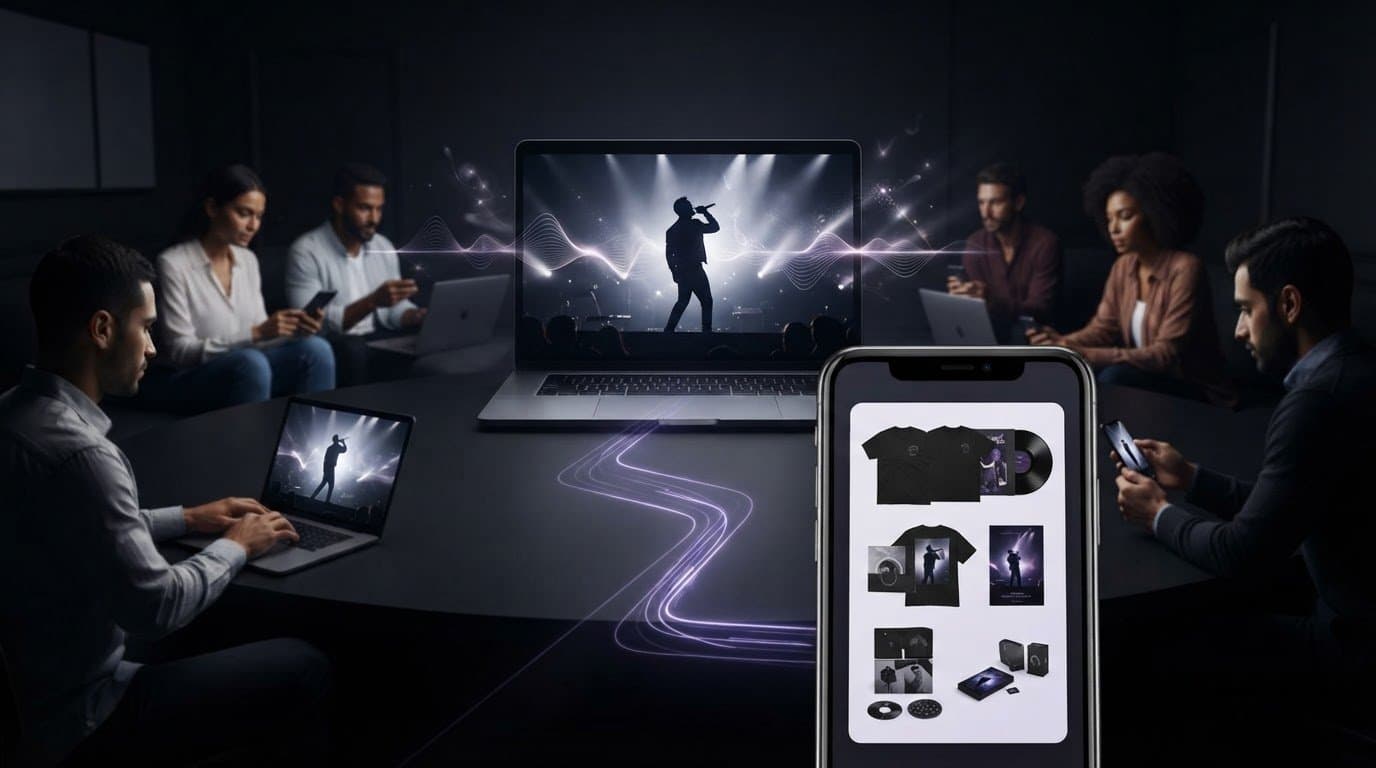
- Test the path from product page to payment. Open the store on a smartphone and a tablet. Check that product information is easy to find, pages load quickly, and fans can complete checkout without confusion. Confirm that the payment gateway works smoothly. A mobile-friendly layout and clear navigation make buying easier for supporters browsing on their devices.
- Match the platform to your fulfillment plan. If you use print-on-demand, consider how orders pass from checkout to production and shipping. If you hold bulk inventory, make sure the store presents available products clearly and lets you manage orders. Compare these workflows before choosing. A smooth process connects a fan’s purchase to the right fulfillment steps without unnecessary manual work.
- Make the choice based on your priorities. Choose a combined music-and-merch platform if keeping those offers together matters most. Choose a separate store if you need a more focused shopping experience for physical products. Before deciding, compare mobile checkout, payment flow, product presentation, fulfillment, and revenue deductions side by side. If a direct-to-fan setup fits your plan, explore a place to bring music and merch together.
OohYeah!: Artist Profile Hosting
OohYeah! brings your artist profile, digital music downloads, merchandise marketplace, and exclusive content access together for fans. Turn to it when you want supporters to discover your music and merch in one place, without separating those offers across different pages.
OohYeah! lets artists retain 100% of sales revenue from music and merchandise, with no commissions. Use your profile to connect fans with releases, merch, and exclusive content, while giving your community a direct way to support your work. It’s a natural next step if you want to build closer fan connections alongside your merch store.
Visit oohyeah.app to explore OohYeah! for your band.
Make Your Next Release a Fan Connection
Your store can grow alongside your music. Treat each release as a chance to learn what fans respond to, deepen that connection, and make your next merch decision with purpose. The best setup for an online band merch store is one you can keep shaping as your band and audience evolve.
When you’re ready to bring your artist profile, digital music downloads, and merchandise together, OohYeah! offers tools to help fans find and support your work in one place. Take the next step at your own pace and choose a setup that fits how you want to connect with your community.
Contact OohYeah! about your merch, and keep building something your fans can feel part of.
Frequently Asked Questions
Can I sell both my music and merch in one place?
Yes. Choose a platform that supports both digital music and merchandise, or connect your music page to a separate store. A combined artist profile can give fans one destination for a new single and a physical release, such as a poster. OohYeah! offers artist profile hosting, digital music downloads, and a merchandise marketplace, which can suit artists who want those offerings together.
What’s a Merch Website?
A merch website is an online storefront where fans browse and buy products connected to a band. It may sit within the band’s main website or operate as a dedicated store. For example, a fan arriving to hear a new track could also find a tour shirt or signed physical release. The key is to make product information and the buying path clear and easy to reach.
Which band merch platform is best for independent musicians?
The best fit depends on how you sell and what fans need from the same page. An independent musician releasing downloads alongside physical products may prefer a platform built around artist profiles and fan support. A band with a larger standalone catalog may prefer a dedicated storefront. Compare how each option presents music, handles checkout, and displays products before choosing.
Which ecommerce platforms are best for selling band merchandise?
Shopify, Bandcamp, and Big Cartel are examples to compare, but the best choice depends on your store’s role. Decide whether merch should live beside your music or in its own shop. Then test checkout on a phone and review how easily you can update listings. A platform that fits your workflow can be more useful than one with features you won’t use.
How much does it cost to start an online band merch store?
There’s no single startup cost: the total depends on design, store setup, production method, shipping, and promotion. To plan an online band merch store, separate one-time setup needs from costs tied to each order. Create a budget for each product and revise it when production or fulfillment choices change. Account for all relevant costs before setting prices.
How do print-on-demand and bulk inventory compare for band merch?
Print-on-demand suits a release with uncertain demand or several designs you don’t want to store. Bulk inventory can suit a product with established demand, especially if you want stock on hand before a tour. For instance, a band could test a new poster design on demand, then consider a bulk order for a proven shirt design. The right method can differ by product.
How do you create designs and choose products for a band merch store?
Start with visuals that belong to your band, such as original tour artwork or a logo you control. Match each design to products fans would use or collect, then ask for feedback on mockups before releasing them. Keep records of who created the artwork and what permissions apply. Avoid recognizable third-party logos, characters, or images unless you have authorization to use them.
How can a band promote its online merch store and increase sales?
Give each promotion a clear destination and track which posts or emails send fans there. For example, use one product page for a tour shirt and keep its link consistent across social posts and your mailing list. After a release, compare visits and orders by channel to see where fans respond. Use that insight to shape your next announcement instead of posting the same message everywhere.