
Acoustic Version Bundle Pricing for Digital Music Fans
Explore acoustic version bundles digital music sales, compare fan savings, set clear discounts, and pair acoustic tracks with digital singles or albums.
November 26, 2026
FRANKLY with Frank Lee
A well-priced bundle can help fans save while giving artists a practical way to sell acoustic releases. With acoustic version bundles in digital music sales, the value comes from pairing recordings or related items at a lower combined price than buying each separately. The offer should feel worthwhile to fans without undervaluing the music.
A clear discount matters when you’re deciding what to buy, but savings are only part of the decision. The bundle should include something you genuinely want, and its contents and value should be easy to understand before checkout.
This guide explains how bundle pricing affects fan savings, why perceived value matters, and how artists can shape offers for direct sales. It covers what to compare with standalone items and how digital downloads can make acoustic music easy to buy and support.
Key Takeaways
- Compare a bundle’s total with its separate items so the savings are clear at checkout.
- Set a discount that feels meaningful to fans while keeping the offer’s value easy to understand.
- Pair acoustic tracks with a digital single or album to create a focused offer fans can choose with confidence.
- Explore OohYeah! Digital Music Downloads and Artist Profile Hosting as direct ways to share music with supporters.
Bundle pricing and fan savings
A useful bundle makes the saving clear and gives each included track a reason to be there. Before setting the price, compare the offer with the cost of buying its components separately.
Digital Store Bundle Support
Bundle support depends on the digital music storefront and its sales tools. Some storefronts let artists package multiple downloads as one offer; others list tracks separately. For a studio acoustic session, decide whether fans should buy the complete set or choose individual recordings. That decision determines the bundle structure and how clearly shoppers can see what they’ll receive.
In the U.S., retailers and chart organizations may apply different eligibility and reporting rules. Bundled tracks count toward certifications or charts only if they meet the relevant organization’s criteria. A bundle purchase does not automatically mean every track counts equally. If merchandise is included, describe the music and physical item as separate components of one purchase. File formats and metadata requirements vary by store, so prepare clear track details, consistent titles, and files accepted by the sales channel.
Bundle Performance Compared With Singles
A standalone acoustic single gives fans a focused choice; a bundle offers more music in one purchase. Compare how each format suits the release: a single can spotlight one stripped-back arrangement, while a collection can group versions from the same studio session. Neither format guarantees stronger sales or streaming. Downloads represent purchases; streams reflect listening activity, so the measures are different.
Independent artists can assemble the recordings, name each track clearly, and publish the offer through a storefront that supports bundles. Keep the included files and purchase description aligned. Avoid artificial sales tactics, such as misleading fans about what they are buying or encouraging purchases solely to influence a chart position. A transparent offer gives supporters a real choice and makes its value understandable before checkout.
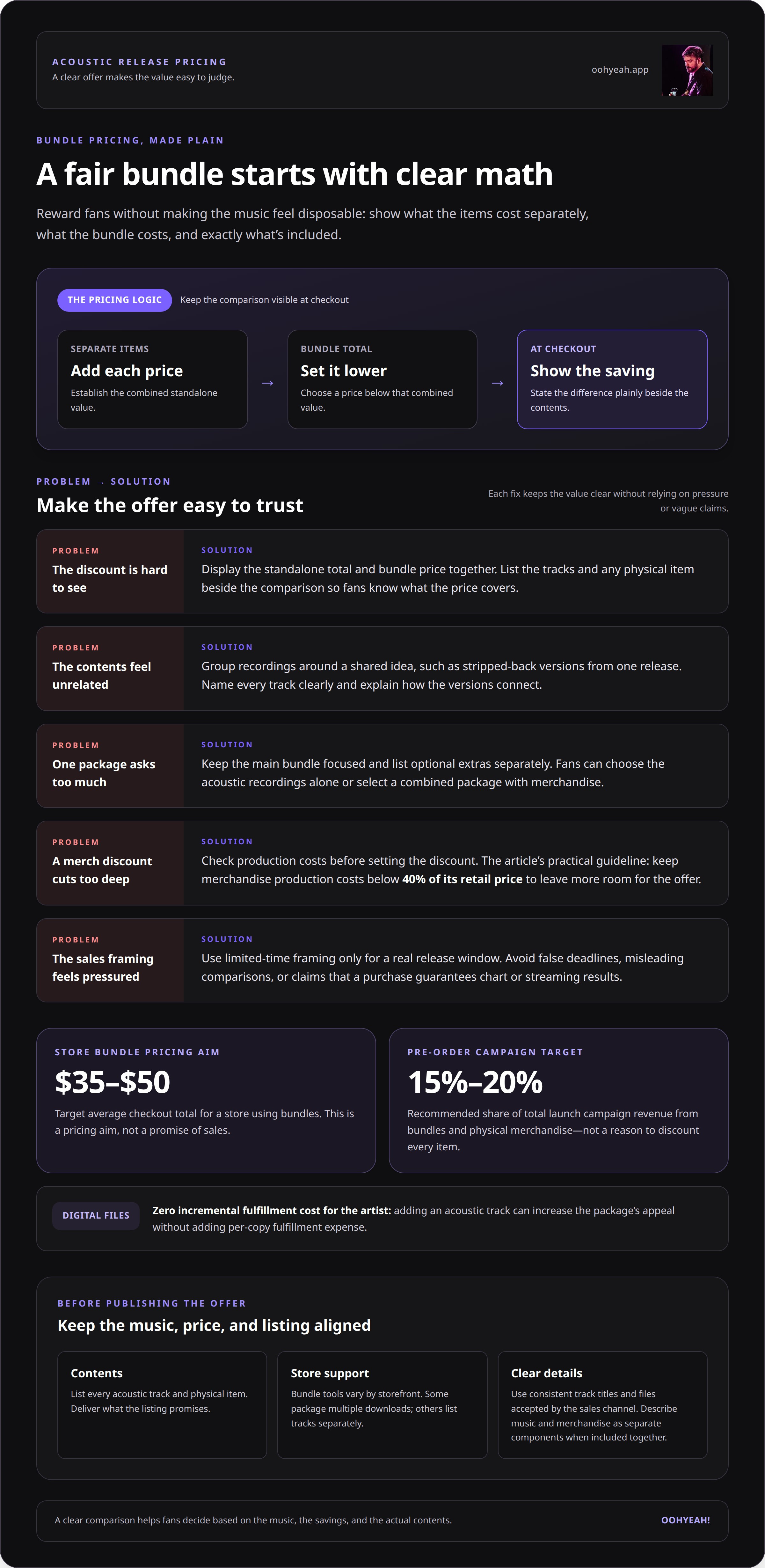
Use that reference when explaining a bundle’s added value, while keeping its contents and terms clear to fans. For a store using bundles, target an average checkout total of $35 to $50; present it as a pricing aim rather than a promise of sales.
Bundle prices and discounts
A fair bundle price rewards fans without making the music feel disposable. Add the standalone prices of the included items, then set a lower bundle price and show the difference clearly at checkout. This lets fans assess the offer and helps artists avoid discounts that obscure the music’s value.
For an offer with physical merchandise, consider production costs before choosing the discount. A practical guideline is to select merchandise with production costs below 40% of its retail price. That leaves more room for a bundle discount while protecting the revenue earned from each sale. Digital files have zero incremental fulfillment cost for the artist, so adding an acoustic track can increase the package’s appeal without adding per-copy fulfillment expense.
- Calculate standalone value: Add each item’s individual price to establish the comparison.
- Choose the discount: Set the bundle total below that combined value, then state the saving plainly.
- Review the mix: Check whether the physical item’s production cost leaves room for the offer.
During a pre-order campaign, the recommended bundle and physical merchandise revenue share is 15% to 20% of total launch campaign revenue. Treat this as a campaign-planning target, not a reason to discount every item. A focused acoustic package can complement full-price singles or albums. Limited-time framing should reflect a real release window, not pressure fans with a false deadline.
For example, pair acoustic recordings with a shirt fans already want, then compare the package price with the separate-item total. Keep the contents and saving visible together. If you offer deeper access to recordings or other extras, explore direct music sales as one way to connect fans with artists.
Presenting both figures together lets fans assess the offer against its stated regular price without guessing what is included. Keep the bundle’s contents beside the pricing so the comparison stays relevant to the music and merchandise on offer. Clear presentation supports a value-first approach, helping buyers decide whether the package suits them.
Fan psychology and perceived bundle value
Fans need to understand what makes a bundle worth choosing. A visible saving helps, but the recordings should also fit together. An acoustic performance can offer a distinct listening experience alongside a studio version. Name each track clearly so supporters know what they’ll receive before buying.
Display both totals, then identify the included music and merchandise. Clear arithmetic makes the offer easier to assess without vague claims about value.
Perceived value also depends on fit. A fan looking for an acoustic take may value it more than an unrelated bonus. Group recordings around a shared idea, such as stripped-back versions from one release, and use track names and a concise description to show why each belongs.
- Make contents specific: List every acoustic track and physical item.
- Show the comparison: State the standalone total beside the bundle price.
- Explain the connection: Describe how the versions relate to the release.
Choice can make an offer more appealing. Keep the main bundle focused and list optional extras separately, rather than requiring every fan to buy more. For example, supporters who want only the acoustic recordings can choose the music, while fans interested in merchandise can select a combined package. Distinct options make each choice easier to assess.
Trust starts with accurate descriptions. If a listing promises acoustic versions, include those recordings. Avoid inflated comparisons with standalone prices and unclear descriptions of bonuses. Fans can then decide based on the music, the savings, and the actual contents, while artists make a fair offer that supports direct connections with listeners.
How do artists bundle acoustic versions with digital singles or albums?
Start with the release plan. Decide whether the acoustic recording will stand alone, accompany a digital single, or join an album package. For example, pair an acoustic version with the original track as a focused bundle. For an album package, place acoustic recordings alongside the main tracklist and label them as distinct versions.
Prepare the release materials before sales open. Give each recording a clear title and write a concise description listing every included track. Make sure the product listing matches the delivered files. Fans should be able to distinguish acoustic versions from standard album recordings before buying.
For a pre-order, align the offer with the release calendar. One suggested window is to open sales three to four weeks before the album’s release date. This gives supporters time to buy before launch while tying the campaign to a clear date. If vinyl is included, plan early because production lead times can stretch over months.
Physical inventory needs its own plan. A recommended target is selling at least 30% of total physical inventory during the pre-order window. Use the window to gauge demand and organize fulfillment for release, while keeping the digital acoustic recordings clearly identified as part of the package.
- Choose the format: Pair the acoustic track with a single or add it to an album offer.
- Prepare the listing: Name the included recordings and explain how they differ.
- Set the timeline: Coordinate the pre-order window with the release date and any vinyl production.
- Track demand: Review pre-orders against planned physical inventory.
After release, keep the offer accurate if its contents change. A clear listing supports direct sales and helps fans choose the package that suits them. Artists ready to share their recordings can set up digital music downloads for supporters.
OohYeah!: Digital Music Downloads
OohYeah! lets artists offer acoustic recordings through digital music downloads and artist profiles. When you’re ready to make a bundle available to supporters, the platform provides a place to bring your music together and present it to fans.
Artists can also use the Merchandise Marketplace to pair music with physical items, or offer Exclusive Content Access for supporters seeking additional material. OohYeah! enables artists to retain 100% of their sales revenue from music and merchandise. That direct model keeps the artist-supporter connection at the center of each purchase.
If you’re preparing an acoustic release, consider which recordings belong in the offer and how fans will discover them. Contact OohYeah! to discuss sharing your music with supporters.
Make Your Next Release a Fan Connection
Successful acoustic version bundles in digital music sales start with the fan experience, not just the file list. Choose the feeling or story you want the release to convey, then shape the offer around that creative purpose. A distinctive acoustic take can bring supporters closer to the music and give the release a voice of its own.
Treat your first bundle as a starting point for future conversations with fans. Notice which songs resonate and how supporters respond. Use those reactions to guide the next release, whether it features another stripped-back performance or takes a fresh creative direction. Each choice can help you create offers that feel personal and true to your work.
Ready to bring your music to supporters? Contact OohYeah! about your music bundles. Keep creating with confidence, and let your next acoustic release open a new connection.
Frequently Asked Questions
What are acoustic version bundles in digital music sales?
Acoustic version bundles are digital offers that package acoustic recordings with related music, such as an original single, an album, or several stripped-back tracks. An artist might pair an acoustic performance with the standard recording, giving fans both arrangements in one purchase. Clear track names and a complete contents list help buyers understand how the versions differ.
What are typical prices for acoustic version digital bundles?
There’s no single price that suits every bundle. The amount depends on the contents, their standalone prices, and the discount the artist chooses. A bundle with one acoustic track differs from a larger collection paired with merchandise. Set a price that reflects what’s included, then make the value clear before checkout.