Sell Your Band’s Back Catalog Direct to Fans With Music and Merch
Learn how selling band back catalog direct to fans can boost support with music, merch, exclusive content, and email list building—all on a page you control.

October 31, 2026
FRANKLY with Frank Lee
Your back catalog can do more than live on streaming platforms. Selling your band’s back catalog directly to fans means offering music, merchandise, and exclusive digital content through a page you control, then inviting supporters to join your email list. Use social media to help people discover the page, and give interested fans a direct way to stay connected.
You’ve already put the work into making music and building a community. Selling your band’s back catalog direct to fans can bring those pieces together, give listeners more ways to support you, and strengthen your connection with them. This article explains how direct-to-fan catalog sales work, what you can offer, and how collecting fan emails can help you reach your audience.
Key Takeaways
- Use social posts to bring interested listeners to a page where they can join your email list and hear from you directly.
- Make your catalog available for direct purchase so fans have a clear way to support your music beyond streaming.
- Pair music with merchandise or exclusive digital content to give supporters more ways to connect with your band.
- Set prices around the value of each release, the costs involved, and what fans receive, then make each offer easy to understand.
Collecting fan emails and owning fan data
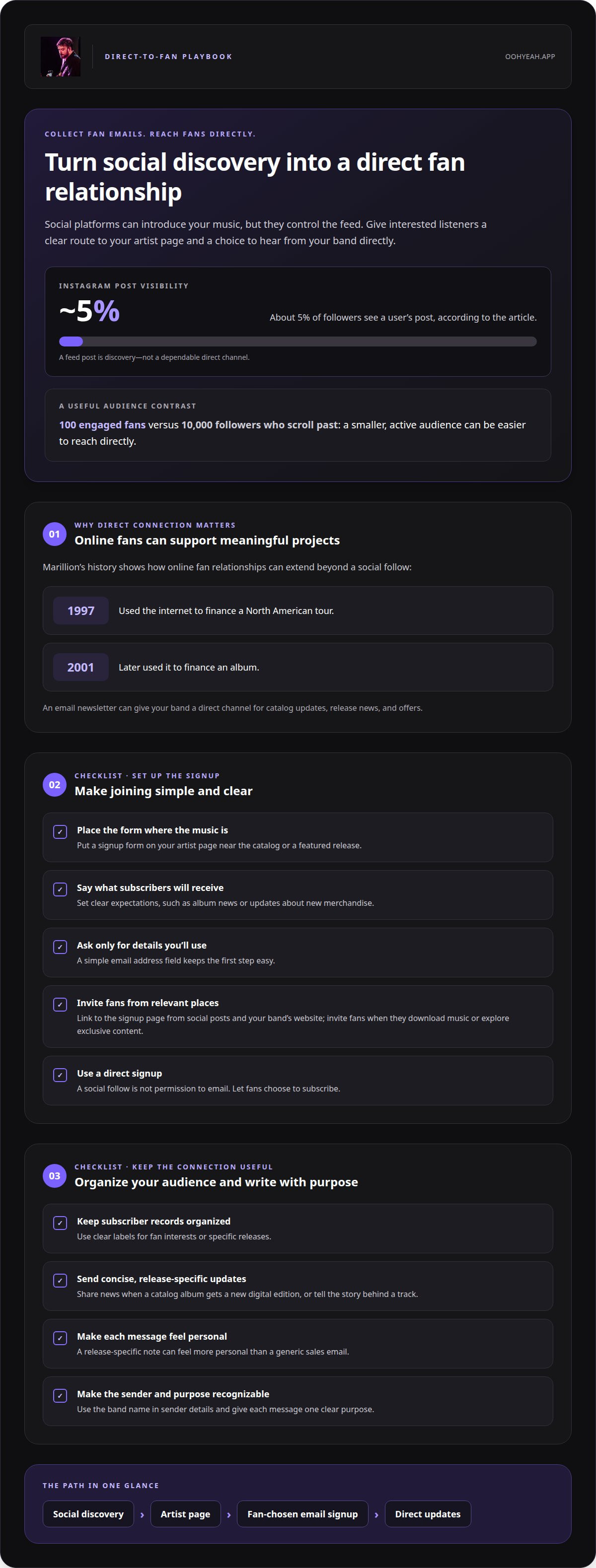
Social platforms can introduce your music, but they control the feed. About 5% of Instagram followers see a user’s post. That makes an artist page and email list valuable routes back to fans. Think of the difference between 100 engaged fans and 10,000 followers who scroll past. A smaller, active audience can be easier to reach directly.
Music history shows that online fan relationships can support meaningful projects. Marillion used the internet to finance a North American tour in 1997. The band later used it to finance an album in 2001. Those examples point to a practical idea: invite listeners to participate beyond a social follow. An email newsletter gives your band a direct channel for catalog updates, release news, and offers.
Make signup useful and clear. Place a form on your artist page near the catalog or a featured release. Explain what subscribers will receive, such as album news or updates about new merchandise. Ask only for details you’ll use. A simple email address field makes the first step easy.
- Link to the signup page from social posts and your band’s website.
- Invite fans to join when they download music or explore exclusive content.
- Keep subscriber records organized, with clear labels for interests or releases.
- Use a direct signup rather than treating a social follow as permission to email.
Make the newsletter worth opening. Send a concise update when a catalog album gets a new digital edition, or share the story behind a track. A release-specific message feels more personal than a generic sales email. Keep the band name recognizable in the sender details, and give each message one clear purpose.
Use social media for discovery, then bring interested listeners to your artist page. There, fans can choose to subscribe and stay connected through future newsletters. This helps your band build a direct relationship with its audience instead of relying only on posts reaching a crowded feed.
Direct-to-fan music sales and artist control
Direct sales let bands set clear offers and connect purchases with specific releases. In 2008, Alexis Petridis described Marillion as the undisputed pioneers of direct-to-fan practices.
Catalog Rights and Sale Risks
Catalog rights determine which recordings and compositions a band can offer. Before selling, identify who controls each master recording and the underlying songwriting rights. Band agreements, publishing arrangements, samples, and guest performances can all affect what the group may sell. Direct sales avoid transferring an entire catalog in one transaction, but you still need clear permissions and accurate product descriptions. Unclear ownership can lead to disputes or interrupted sales.
Pricing Albums, Bundles, and Limited Editions
Set a price for each offer based on its contents and audience. A digital album, a multi-album bundle, and a limited edition provide different value, so describe each separately. Consider production costs, rights obligations, the release’s significance, and what fans receive. Show the contents and price before purchase. For a bundle, name every included album or extra. Describe a limited edition’s actual limits without suggesting scarcity that isn’t real.
Direct sales let bands choose how to present catalog music instead of treating every release as one bulk asset. The trade-off is taking responsibility for clear offers, fulfillment, and buyer questions. Selling music directly to fans works best when each listing identifies the recording, format, and included material. An artist page can keep those details alongside the music and organize downloads for supporters.
Rules for Fan Catalog Sales
For U.S. bands, tax, securities, and consumer protection are separate considerations. Keep complete sales records for tax reporting, describe exactly what buyers receive, and avoid implying that a music purchase promises financial returns. An offer tied to future revenue or investment-like participation raises different securities questions than an album purchase. The offer’s structure matters, so distinguish a straightforward music sale from any shared-revenue arrangement.
Clear terms also support trust. Explain the format, delivery method, and what happens if an order cannot be fulfilled. Don’t market a download as a physical item, or a standard release as a limited edition. Bands building a direct catalog storefront can use artist pages for music sales to present releases and purchase details in one place.
Selling merchandise and digital content
A back catalog can support more than album sales. Pair a release with a band T-shirt, digital booklet, or commentary about a track. These offers give longtime listeners different ways to connect with familiar music. Keep each listing specific: name the album, describe the item, and state what the buyer receives.
Digital content can add context without requiring physical stock. For example, offer a downloadable lyric sheet alongside an album or share a recorded discussion about how a song came together. Make the format clear before purchase. Check that the band has the rights to every recording, image, lyric, and contribution in the package.
Made-to-order merchandise can avoid holding inventory upfront. A supplier produces an item after a fan orders it, which can reduce storage needs but doesn’t remove the need to plan. Consider product quality, production time, shipping, returns, and order updates. A design preview can also help fans understand what they’re buying.
Before listing a shirt or poster, prepare the artwork and describe the item accurately. Avoid promising a delivery date unless the fulfillment arrangement supports it. For a made-to-order T-shirt, explain the design and how the order will be fulfilled. For a digital booklet, identify its file format and contents. Clear descriptions help distinguish downloads from shipped goods.
- Match each item to a specific album, tour, or band story.
- Separate digital downloads from physical merchandise in the catalog.
- Use accurate images and descriptions for every product listing.
- Plan how orders, delivery updates, and buyer questions will be handled.
Bundles can combine formats naturally. One fan might choose an album download with a digital booklet, while another prefers a shirt tied to the same release. Keep the contents distinct and visible so supporters can choose what suits them. The band can offer catalog-related merchandise without making every purchase feel identical.
How should a band price catalog albums, bundles, and limited editions?
Build a pricing structure around what each offer gives fans. A digital album, multi-album bundle, and limited edition serve different needs. List the contents and costs for each, then decide how the price reflects production, rights obligations, and the release’s importance to your audience. Make the value clear, not inflated.
For a catalog album, consider its format and listening experience. A standard digital release should be easy to compare with other albums in your store. A deluxe edition may include additional material, such as liner notes or alternate recordings, if you have the rights. Describe those additions clearly so fans understand what sets the offer apart.
Bundles should reward fans for choosing several related items without obscuring what they’re buying. For example, pair two connected albums with a digital booklet. Show each item separately, then explain how the combined offer differs. Keep the contents consistent across the product description, checkout, and delivery. Fans shouldn’t have to guess what they’ll receive.
Set honest boundaries for limited editions. Explain what makes the release distinct, such as unique artwork or additional recordings. State the actual availability terms plainly, and don’t imply scarcity unless the edition is genuinely limited. If there’s no defined limit, describe the special content instead of calling it scarce. This protects trust and gives the offer a real reason to exist.
- Compare each offer by format, contents, and production needs.
- Make bundle savings or added value easy to understand.
- Keep limited-edition descriptions accurate and specific.
- Review how fans respond, then adjust future offers thoughtfully.
Use fan responses to guide future catalog offers. If supporters ask about a particular album, consider featuring it alone before building a larger bundle. If they value added context, test a release with accompanying notes. Track which descriptions and combinations lead to questions or purchases, then refine the presentation. Create a direct-to-fan catalog page to present your releases and offers together.
OohYeah!: Artist Profile Hosting
OohYeah! gives bands a place to present catalog music and connect it with fan offers. Artist Profile Hosting provides a home for your releases, while Digital Music Downloads let fans buy music directly. The Merchandise Marketplace supports physical merchandise listings, and Exclusive Content Access gives supporters another way to engage with your work.
This can be a practical next step when you’re ready to bring catalog albums, merchandise, and digital extras together in one artist profile. OohYeah! enables artists to retain 100% of sales revenue from music and merchandise. Your band can build a direct presence around its existing work and give fans a clear way to support it.
Visit oohyeah.app to explore OohYeah! for your band.
Give Your Back Catalog a New Path Forward
Your band’s past releases can start fresh conversations with listeners. Choose a release that still matters to your community, then shape a clear invitation around it. A personal note about the album’s story can make the offer feel connected to the music rather than like another routine promotion.
Selling your band’s back catalog directly to fans is also a way to build lasting connections around the music. Let supporters know what their purchase helps make possible, and share updates that reflect your band’s voice. You don’t need a major campaign to get started. Choose one release and a plan your band can stand behind.
OohYeah! can help you bring your direct-to-fan plans together. Contact OohYeah! to discuss your plans and decide how to present your catalog to supporters. Your music has a future beyond its original release. Give fans a way to be part of it.
Frequently Asked Questions
What does it mean to sell a band's back catalog directly to fans?
It means offering previously released music to listeners through a direct purchase or support channel. Rather than relying only on streaming access, a band can offer a catalog album as a download or include it in a broader fan offer. For example, a supporter might buy a digital release while the band shares more about its recording and history.
What are the main ways a band can sell its music catalog directly to fans?
Bands can sell digital albums, individual tracks, or catalog collections through an artist page or music marketplace. Some also pair a release with extras, such as a digital booklet or exclusive material. Choose formats the band can deliver clearly, and label each offer so fans know whether they’re buying a download, accessing content, or supporting a broader release.
How much can a band earn selling its back catalog to fans?
Earnings depend on audience demand, the offer’s price, rights obligations, and how the band reaches buyers. A catalog with active supporters may perform differently from one promoted to a less engaged audience. Estimate revenue by considering likely purchases and the share owed to collaborators or rights holders. Use that estimate for planning, not as a guaranteed result.
Which platforms let bands sell music directly to fans, and what fees do they charge?
Bands can use artist-hosting platforms, music marketplaces, or their own online stores to offer downloads. Compare each platform’s pricing model and terms, including recurring costs, transaction terms, payout details, and sales features. A subscription model, for example, differs from a platform that charges based on sales activity.
What are the steps to launch a direct-to-fan catalog sale?
Choose the releases and confirm the band can offer them. Prepare accurate artwork, descriptions, formats, and delivery details. Select a sales channel, publish the listings, and test the purchase flow before announcing the sale. Keep records of each release’s rights information and who is responsible for buyer questions or delivery issues.
How can bands market a catalog sale and reach existing fans?
Give existing supporters a clear reason to revisit the music. Share a short story about a track, spotlight a release connected to an upcoming show, or ask band members to recommend a favorite album. Use consistent artwork and one clear link in your announcements. If you have a fan club or mailing list, tailor the message to what those listeners follow.