Should you sell a drum kit whole or part it out?
Should you sell drum kit whole or in parts? Keep matching shells together. Compare bundles, separate cymbals, shipping work, and leftover gear.
November 2, 2026
FRANKLY with Frank Lee
Sell a matching drum kit together; separate cymbals, extra snares, and unrelated hardware when each has a clear buyer of its own. If you’re deciding whether to sell drum kit whole or in parts, compare the money you keep after packing and shipping—not just the combined asking amounts—and account for whatever remains unsold.
- Sell drum kit whole or in parts? Keep matching shells together unless damage or missing components justify splitting.
- A complete setup suits beginners; separate cymbals and extra snares suit buyers upgrading specific gear.
- Parting out creates separate listings, packing jobs, and the risk of leftover hardware.
- OohYeah offers zero seller commissions for musicians selling instruments and studio gear.
Should you sell a drum kit whole or part it out?
Keep the matching drums together. Decide separately what to do with the accessories. Selling a shell pack does not mean bundling every cymbal, stand, pedal, and snare you own.
A shell pack is the core set of drums, with the exact contents defined by your listing. Don’t assume buyers know whether the snare, tom mounts, or floor-tom legs are included.
| Selling format | Best for | Main advantage | Main drawback |
|---|---|---|---|
| Complete playable setup | Beginners buying their first acoustic kit | Buyer can assess the whole setup together | Buyer must want the included accessories |
| Matching shell pack, accessories separate | Drummers replacing shells or upgrading individual pieces | Preserves the drum set while separating unrelated gear | Requires distinct listings and clear exclusions |
| Individual drums and components | Buyers replacing missing or damaged pieces | Each listing answers a specific replacement need | Leaves you managing unmatched leftovers |
On the OohYeah music gear marketplace, choose the format before creating your account and listing your gear. A clear package starts with an exact inventory, not a photo of everything in your rehearsal room.
Why this matters
A drum kit is a group of related items, but those items don’t always share a buyer. Someone replacing a crash cymbal doesn’t necessarily need your bass drum. A beginner needs more explanation about what makes the setup playable.
For your 2026 sale, distinguish a coherent instrument from a convenient pile of gear. Keep parts together when they belong together. Separate equipment when the buyer can understand, inspect, and use it independently.
The wrong split creates work after the attractive pieces leave. Before accepting an offer for a single drum, decide what happens to the remaining shells, mounts, and stands.
Sell the complete setup: best for a first-kit buyer
Offer the whole setup when your intended buyer needs drums, cymbals, and supporting hardware together. Spell out what’s included: bass drum, toms, snare, cymbals, stands, pedal, seat, and any necessary mounting pieces. List only what you actually have.
The benefit is a single, clearly defined purchase. The buyer can see how the equipment fits together instead of sourcing every piece separately.
The compromise is choice. An experienced drummer who already owns cymbals or a favorite pedal has less reason to take your entire package. Don’t describe accessories as adding value for everyone; explain their condition and let buyers judge.
Before calling the kit complete, assemble it. Check that stands hold position, clamps tighten, the pedal operates, and every included drum mounts as shown. If a required piece is missing, name it rather than calling the setup ready to play.
Sell the shell pack: best for keeping matching drums together
A shell-pack listing separates the core drums from accessories without breaking up the set itself. This is the practical starting point when the shells match but the cymbals, snare, or hardware came from separate purchases.
Identify each drum’s maker, model when known, finish, and size. Photograph badges and mounting hardware. If a tom differs from the rest, disclose that difference rather than describing the entire group as factory-matched.
Keep the mounts needed to use the drums with the shell pack. Removing a necessary bracket to sell separately makes the remaining listing harder to understand and leaves the buyer sourcing a functional part.
The drawback is that a shell pack is not necessarily a complete playing setup. Say exactly which accessories are excluded, even if those accessories appear in the background of your photos.
For a 2026 listing, use the title to name the drums and the description to define the package. Avoid vague phrases such as everything pictured unless every visible item really is included.
Part it out: best for replacement and repair buyers
Sell individual drums when you have an incomplete, mixed, or damaged set and can describe each surviving piece accurately. A replacement buyer needs details that a whole-kit shopper might overlook: finish, mounting arrangement, included brackets, and any modifications.
Parting out also makes sense for unrelated accessories. A separately purchased snare or cymbal can have its own identity without taking anything essential away from the shell pack.
The disadvantage is unfinished business. Selling the snare does not resolve the remaining stands. Selling a tom does not guarantee a buyer for the bass drum.
Don’t dismantle a useful matching set just because separate asking amounts add up to more. Check completed sales for the exact items, then account for individual packing jobs and unsold pieces. Asking amounts alone do not establish what buyers will pay.
Why the right selling format varies
Use these factors to decide what stays together. None requires guessing a universal resale premium.
- Matching identity: Confirm whether the drums share a model and finish. Disclose replacements and mixed components.
- Functional completeness: Keep necessary mounts, legs, and brackets with the drums they support.
- Accessory identity: Identify cymbals, pedals, and extra snares separately before deciding whether to bundle them.
- Condition: Describe cracks, missing parts, modifications, and mechanical problems item by item.
- Handoff method: A collected setup and separately shipped items require different packing and coordination.
- Your remaining workload: Decide whether you want to manage multiple conversations, parcels, and leftover pieces.
For your 2026 inventory, mark each item as essential to the kit, independently useful, or incomplete. That distinction gives you a selling plan before you start taking offers.
Build the listing plan before splitting anything
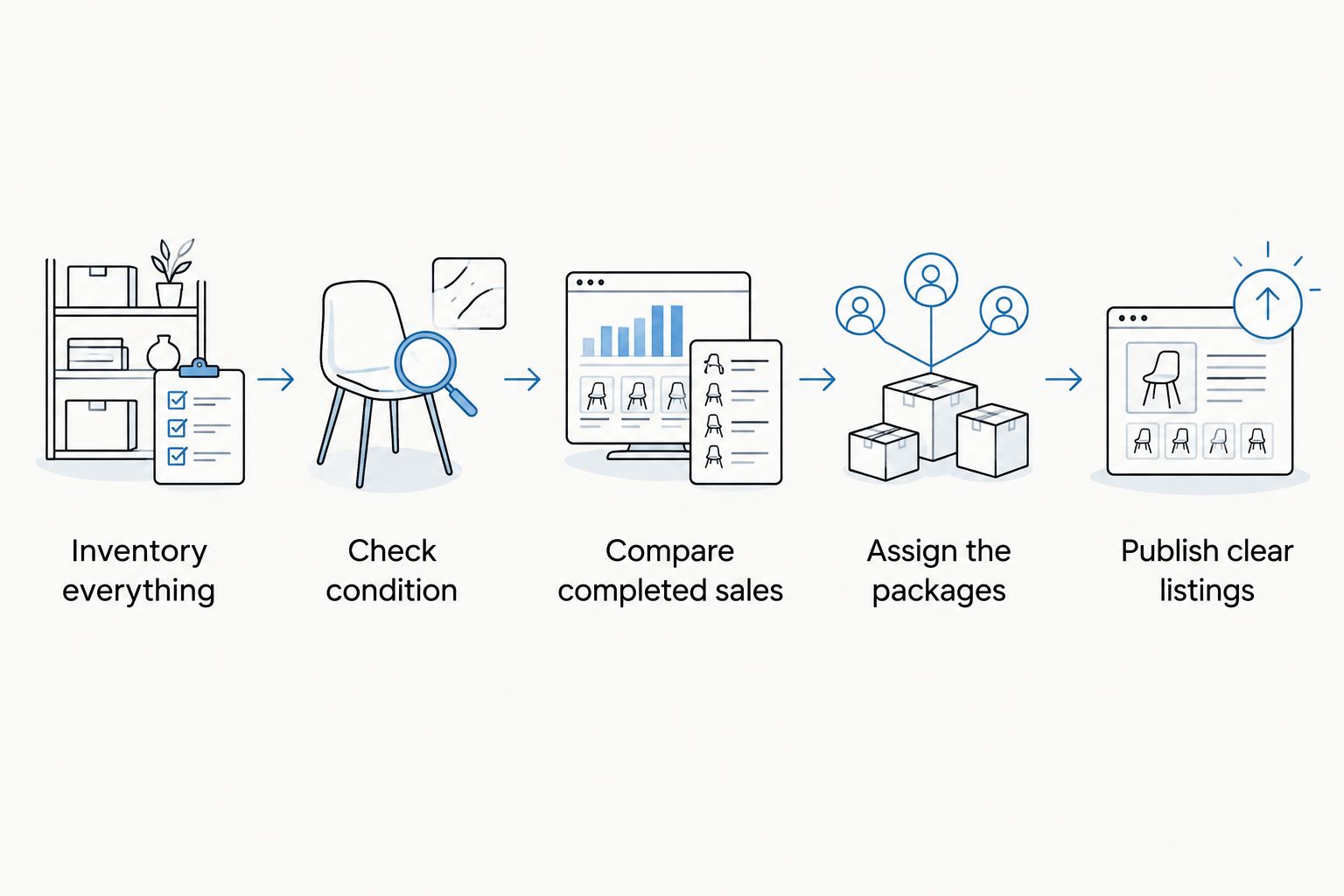
1. Inventory everything
Make 2 inventory lists: drums and accessories. Record identifiers from the equipment itself, not from memory. Note which tom arms, floor-tom legs, clamps, and brackets belong with each drum.
Keep original components distinguishable from replacements. If you cannot confirm a model or manufacturing date, leave that claim out. A clear badge photo is more useful than an unsupported identification.
2. Check condition
Inspect drum shells, bearing edges, hoops, lugs, and mounting points. The bearing edge is the rim of the shell where the drumhead rests; damage there belongs in the description and photos.
Check cymbals for visible cracks, especially around the edge and mounting hole. Test stand locks and pedal movement. Report what you observe without claiming a technical inspection you haven’t performed.
3. Compare completed sales
Compare like with like: matching shell packs against matching shell packs, and individual cymbals against the same identifiable model and size. Separate completed-sale evidence from active listings.
Use the guide to pricing used drum equipment for sale to organize that comparison. Keep condition, included hardware, and handoff method visible beside each comparable item.
4. Assign the packages
Write down what goes into each listing before publishing anything. Keep necessary mounting hardware attached to its package on your inventory sheet, even if you remove it temporarily for photographs or packing.
For every proposed split, answer this question: can the remaining package still be described honestly and used as advertised? If not, revise the split.
5. Publish clear listings
State what is included, what is excluded, and how the buyer will receive it. If you offer both a bundle and individual items, explain that the items overlap and update every affected listing as soon as something sells.
Don’t leave a complete-kit listing active after accepting payment for its snare or pedal. Your 2026 listing needs to describe what you can actually hand over.
Photograph the package, not just the nicest drum
For each drum, capture 4 views: the whole drum, badge, mounting area, and any damage. Add more photographs when those views do not show the condition clearly. Photograph included mounts and legs alongside the relevant drum.
For a complete setup, take an assembled overview and separate detail shots. For cymbals, show both surfaces and close-ups of the edge and mounting hole. Avoid lighting that hides cracks or heavy wear.
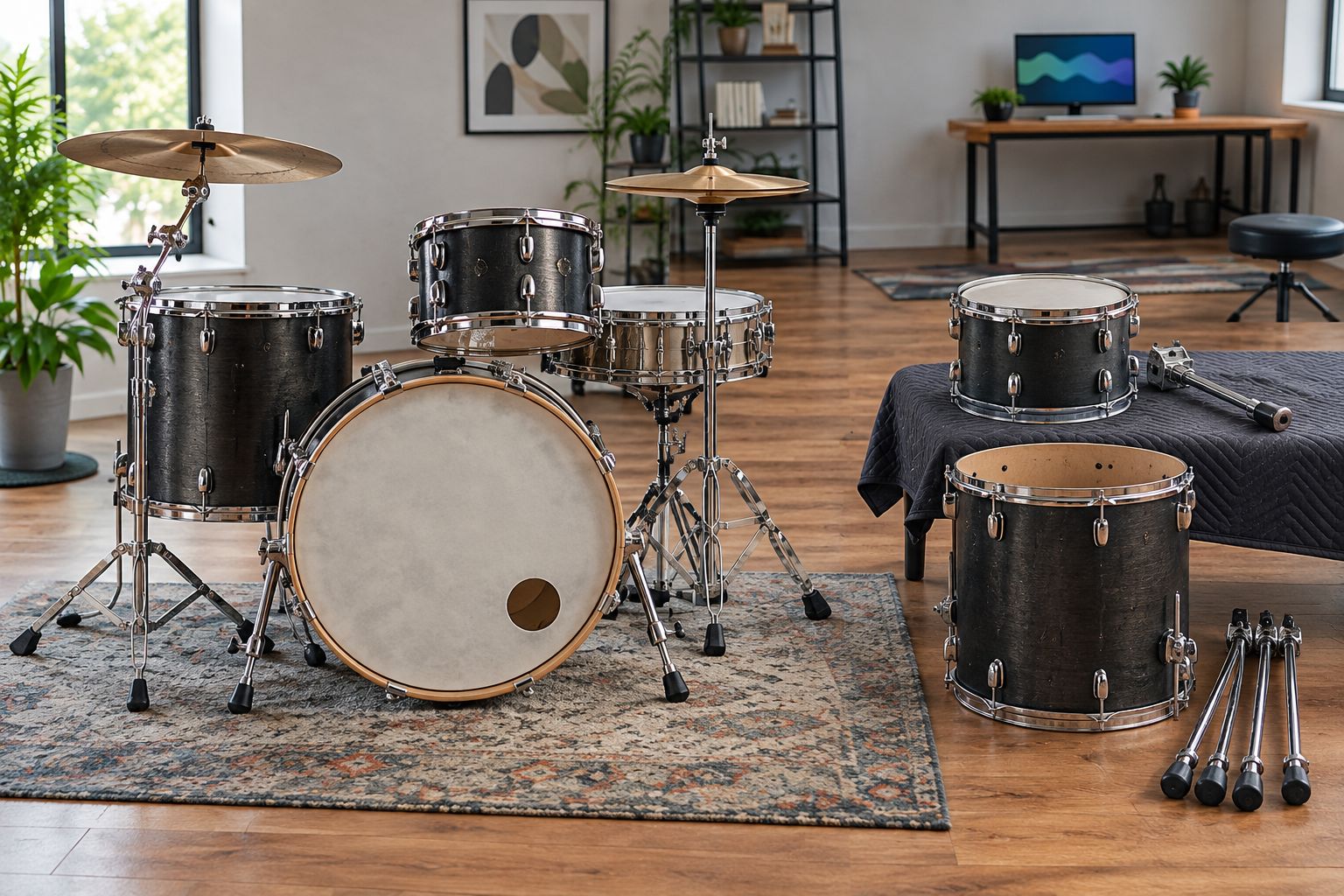
Use captions to distinguish included equipment from background equipment. If a stand supports a drum for the photograph but is not part of the sale, say so directly in the listing.
Will parting out a drum kit make you more money?
Parting out does not guarantee a higher net return. The relevant comparison is the amount you keep after transaction costs, packing materials, shipping you cover, and any unresolved items—not the sum of separate asking amounts.
Use completed-sale comparisons for your specific gear. Don’t assign a universal percentage advantage to splitting a kit; your matching shells, accessory models, and condition determine which comparisons are relevant.
Treat leftover equipment as unsold until it sells. A plan that depends on finding a buyer for every washer, bracket, and worn stand deserves a second look.
Should you sell cymbals separately from the drums?
Sell cymbals separately when you can identify and describe them independently. Give the maker, series when confirmed, diameter, and condition. Disclose cracks, mounting-hole wear, and modifications.
Bundle cymbals when your intended buyer wants a complete playing setup and you can explain the package clearly. Don’t bury a damaged cymbal inside a bundle description; its condition still matters.
Is local pickup better than shipping a drum kit?
Local pickup removes parcel packing from the transaction; shipping requires a packing plan for every included item. Pickup still requires clear handoff arrangements and an agreed inventory.
Before offering shipping, determine packed dimensions and weight using suitable packaging. Do not promise that drums will nest safely inside each other without checking clearance and protecting finishes, edges, and hardware.
List the gear without losing the plot
OohYeah is best for musicians who want a music gear marketplace with zero seller commissions. Create an account, then list the package your inventory supports: complete setup, matching shells, or clearly identified individual items.
Zero seller commissions do not eliminate the physical work of selling drums. You still need accurate condition notes, a packing or pickup plan, and prompt updates when an item sells.
List your drum gear
Create an account and list your kit or individual gear with zero seller commissions.
FAQ
Should I sell my drum kit whole or in parts?
Keep matching shells together and assess accessories separately. Sell a complete setup when your intended buyer needs the included drums, cymbals, and hardware together.
Will I get more money if I sell every drum separately?
Selling every drum separately does not guarantee a higher net return. Compare completed sales and subtract the transaction, packing, and shipping costs you cover, while accounting for unsold pieces.
Should I include my snare drum with the kit?
Include the snare when you are offering a complete setup; consider a separate listing when the snare is an independently identifiable item. State explicitly whether the shell-pack listing includes it.
Can I sell a drum kit with a missing tom?
Yes, you can sell an incomplete drum kit if you name the included drums and disclose the missing component. Do not describe it as a complete matching set.
What measurements should I put in a used drum listing?
List each drum’s diameter and depth, and confirm the dimensions rather than estimating from photographs. Identify included mounting hardware separately.
Should I remove all the hardware and sell it separately?
Keep required mounting hardware with the drums it supports. Separate spare stands or unrelated accessories only when doing so leaves the remaining package accurately described and usable as advertised.
Does OohYeah charge seller commissions for music gear?
OohYeah offers zero seller commissions for music gear sellers. Packing, shipping, and accurate condition descriptions still need to be part of your selling plan.
One last thing
Before publishing your 2026 listing, hide the accessories in your inventory and read the shell-pack description alone. Can a buyer tell exactly which drums, legs, and mounts they will receive?
Sell the package you can explain without a follow-up message. That is a better starting point than splitting everything and trying to repair the listing after the first sale.