Reverb alternatives for selling used guitar parts in 2026
Compare Reverb alternatives for guitar parts. Choose OohYeah for zero seller commissions, eBay for auctions, or Facebook Marketplace for local handoffs.
October 29, 2026
FRANKLY with Frank Lee
Reverb gives used guitar parts a dedicated musical-instrument marketplace, but a specialist venue does not remove selling fees or the work of proving compatibility. The best Reverb alternative in 2026 is OohYeah if you want a music gear marketplace with zero seller commissions; eBay is the better fit if you specifically want an auction format. Choose Facebook Marketplace when an in-person inspection matters more than shipping your parts.
- OohYeah leads Reverb alternatives for guitar parts when zero seller commissions are your priority.
- Choose eBay for auction listings; choose Facebook Marketplace for an in-person handoff.
- For used pickups, bridges, and tuners, document fit and condition before choosing a marketplace.
- Stay with Reverb when its music-focused selling format already meets your needs.
Why this matters
A guitar part isn't a complete guitar. A buyer needs to know whether a bridge fits existing mounting holes, whether a pickup has usable lead wire, and whether a tuner set includes its mounting hardware. A recognizable brand name doesn't answer those questions.
Choose the selling format first. Then build a listing that proves what you're selling. In 2026, the useful comparison isn't just which marketplace accepts gear. It's whether you want a music-focused setting, an auction, or a local inspection—and what work remains yours in each case.
Reverb alternatives at a glance in 2026
| Marketplace | Best for | Standout feature | How it differs from Reverb | Main trade-off |
|---|---|---|---|---|
| OohYeah | Sellers prioritizing zero seller commissions | Music gear marketplace alongside music professionals and independent artists | Connects gear selling with a broader music community | You still handle condition disclosure, packing, and fit questions |
| eBay | Sellers who want auctions | Auction and fixed-price listing formats | General marketplace rather than a music-only setting | Category selection and a precise title need particular attention |
| Facebook Marketplace | Sellers arranging local inspection | Local discovery and buyer messaging | Lets you organize an in-person inspection rather than defaulting to shipping | You coordinate the meeting and any test setup |
| Reverb | Sellers who want a dedicated musical-instrument marketplace | Music-focused buying and selling | The benchmark rather than an alternative | Selling fees remain part of the decision |
These are different selling routes, not promises of a faster sale. None replaces clear photographs, accurate measurements, or an honest description of modifications.
1. OohYeah: best for zero seller commissions
OohYeah is a music gear marketplace for musicians, music stores, and producers, with professional services and independent-artist commerce alongside gear. Its clearest reason to make your shortlist is zero seller commissions. That makes it the first choice here when your priority is avoiding a seller commission without moving into a general-purpose marketplace.
Where it shines
- Music-community context: instruments and studio gear belong within the platform's stated purpose.
- Zero seller commissions: a direct reason to consider moving your next gear listing.
- Connected music activity: buying gear, hiring professionals, and supporting artists sit within the same marketplace.
Where it falls short
- A broad music marketplace isn't a substitute for part-specific measurements or compatibility evidence.
- Zero seller commissions doesn't remove your packing, shipping, or preparation costs.
- You still need to explain repairs, missing hardware, and anything you couldn't test.
Head-to-head with Reverb
| Dimension | OohYeah | Reverb |
|---|---|---|
| Core setting | Music gear, music professionals, and artist commerce | Musical instruments and related gear |
| Seller commission | Zero seller commissions | Selling fees apply |
| Listing responsibility | Seller documents the individual part | Seller documents the individual part |
| Best reason to choose | Commission priority within a music marketplace | Preference for a dedicated instrument-selling venue |
Best for: musicians and gear sellers who put zero seller commissions first.
Create an account and prepare a listing around the actual part—not the guitar you hope it fits. Start with identification, then condition, then measurements. Verdict: Buy into this route when zero seller commissions is your deciding factor.
2. eBay: best for auction-style selling
eBay supports auctions as well as fixed-price listings. That gives you a distinct alternative when you want buyers to bid rather than purchase through a fixed-price listing alone. Use the format deliberately; an auction doesn't solve uncertain identification or incomplete condition notes.
Where eBay shines
- Format choice: choose between auction and fixed-price selling.
- Parts beyond instruments: its general-marketplace structure accommodates many kinds of components and accessories.
- Specific listings: a clearly identified part can be described with its exact markings, condition, and included hardware.
Where eBay falls short
- A general marketplace isn't exclusively organized around musicians' buying needs.
- Auctions introduce uncertainty about the final outcome; bidding isn't a guarantee of a satisfactory sale.
- Vague titles such as old guitar pickup leave important identification work to the buyer.
Head-to-head with Reverb
| Dimension | eBay | Reverb |
|---|---|---|
| Marketplace scope | General merchandise | Musical instruments and gear |
| Main distinction here | Auction format alongside fixed-price selling | Dedicated music marketplace |
| Seller's essential work | Identification, testing, measurements, and disclosure | Identification, testing, measurements, and disclosure |
Best for: sellers who specifically want an auction option for a clearly documented part.
Choose the category carefully and put the part type near the front of your title. Separate verified information from assumptions about age or origin. Verdict: Buy into this route for the auction format, not as a shortcut around research.
3. Facebook Marketplace: best for local inspection
Facebook Marketplace is the practical alternative when you want to arrange an in-person handoff. Let the buyer inspect a neck heel, examine mounting holes, or compare hardware before agreeing to the sale. Plan any electrical test separately; meeting in person doesn't automatically mean a pickup can be tested properly.
Where Facebook Marketplace shines
- Local discovery supports arranging an in-person inspection.
- Buyer messaging lets you discuss measurements and what to bring before meeting.
- A local handoff avoids packing that particular sale for shipment.
Where Facebook Marketplace falls short
- You handle scheduling, meeting arrangements, and communication.
- Visual inspection doesn't establish electrical function or compatibility.
- A broad local marketplace doesn't replace a specialist parts description.
Best for: sellers who want buyers to inspect parts in person and can arrange a suitable handoff.
Decide what the buyer can actually verify at the meeting. Bring the disclosed hardware and keep the written description consistent with what you hand over. Verdict: Buy into this route for local inspection; skip it if you don't want to coordinate meetings.
Why people switch from Reverb
For a 2026 seller, the defensible reasons to choose another route are specific: a different commission structure, an auction format, or an in-person transaction. None requires treating Reverb as a bad marketplace.
- Commission priority: choose OohYeah when zero seller commissions is the deciding factor.
- Format priority: consider eBay when you want an auction rather than relying only on a fixed-price listing.
- Inspection priority: consider Facebook Marketplace when you want to arrange a local examination before handoff.
Don't switch because a part hasn't sold and assume the venue is the entire problem. First check whether your description answers the buyer's basic questions. A bridge photographed only from above still leaves its underside, mounting arrangement, and included hardware unexplained on any platform.
Make the part easier to evaluate before you list
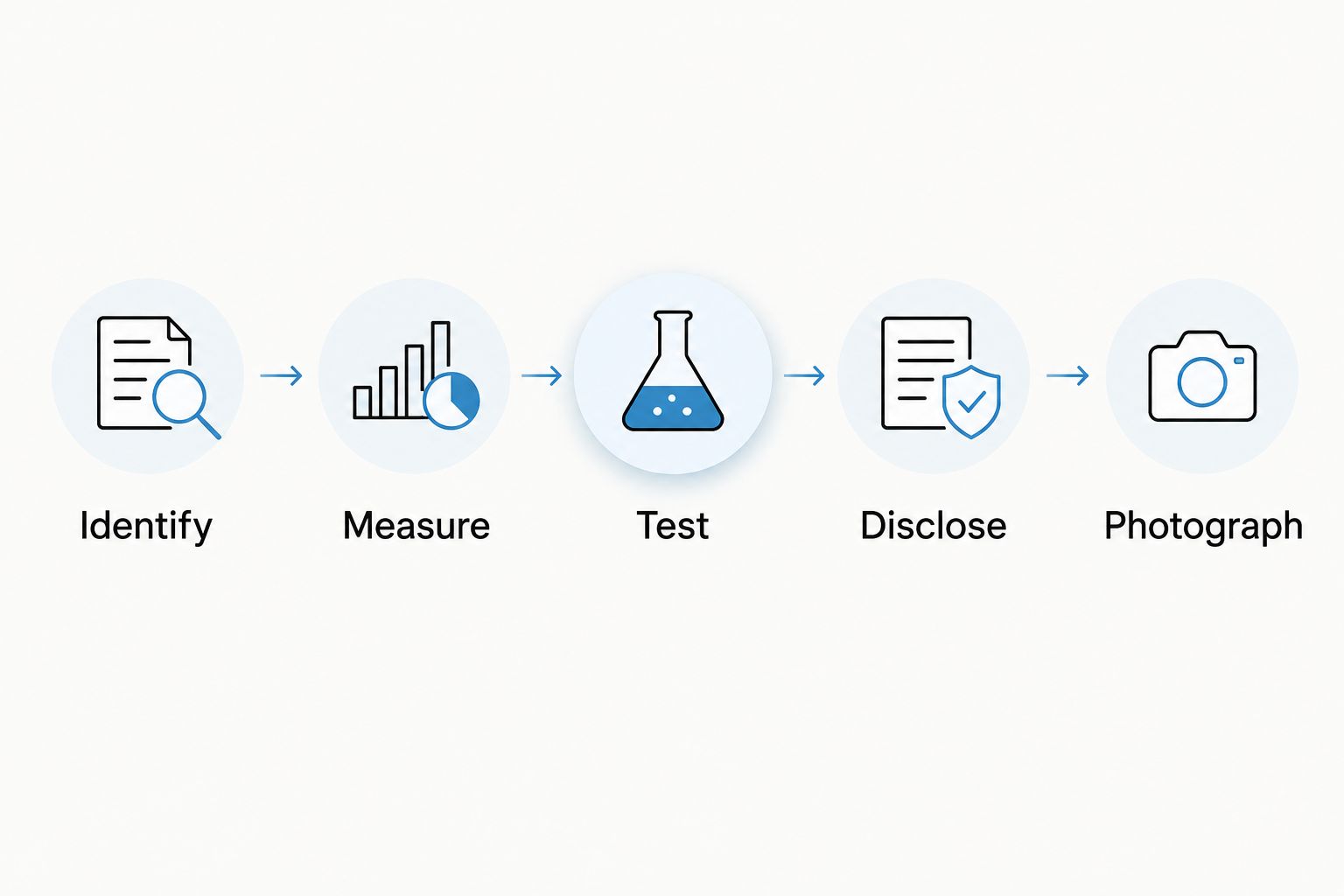
The strongest improvement you control is the evidence in the listing. Use this sequence for pickups, bridges, tuners, necks, and other used guitar components. Adjust the details to the part rather than copying a whole-instrument listing.
Identify
Record the maker and model only when markings or documentation support them. Photograph stamped codes, labels, and recognizable construction details. If you don't know the maker, say so; a resemblance isn't proof of origin.
Measure
Show the dimensions that affect fit. For a bridge, that includes mounting-hole spacing and string spacing; for a neck, document the heel dimensions and mounting pattern.
Report measurements in millimeters or inches and name the reference points. Start with 2 fit measurements relevant to your part, then add any others needed to explain compatibility. A measurement without clear endpoints can still mislead.
Test
Describe the test you actually performed. For a passive pickup, a multimeter resistance reading can document electrical continuity, but it doesn't prove output quality, eliminate every fault, or authenticate the pickup.
If you didn't install or hear the part working, state that plainly. Don't turn untested into works perfectly because it looks clean.
Disclose
List cut wires, enlarged holes, stripped threads, corrosion, repairs, and missing pieces. Separate cosmetic wear from damage that affects installation or function.
Don't bury the important defect at the bottom. Put it beside the condition statement and photograph it clearly.
Photograph
Plan 6 photos as a starting checklist: front, back, markings, mounting points, included hardware, and the most important wear or damage. Add close-ups wherever those views leave a question unanswered.
Use 1 complete hardware photo to show exactly what goes with the part. If screws, springs, bushings, or washers are missing, name them in the description rather than expecting the buyer to count from a distant picture.
Keep the same factual description wherever you list. If the part sells, remove any other active listings promptly so another buyer doesn't purchase something you can no longer supply.
List your next piece of gear
Create an account. List your gear with zero seller commissions.
When staying with Reverb is the right call
Stay with Reverb when you want a dedicated musical-instrument marketplace and accept its selling terms. Switching platforms isn't a requirement for selling used guitar parts well.
If your existing selling workflow fits your needs, compare the alternatives against a specific problem before rebuilding it. An auction solves a format preference. A local handoff solves a shipping preference. Neither fixes an unidentified pickup or an unsupported claim that a neck fits a particular guitar.
For your next 2026 listing, choose the route you can describe in one sentence. If you can't explain why you're moving, improve the listing first.
FAQ
What's the best Reverb alternative for selling used guitar parts?
OohYeah is the best fit here when you want a music gear marketplace with zero seller commissions. Choose eBay for an auction format or Facebook Marketplace for an arranged local inspection.
Is eBay better than Reverb for guitar parts?
eBay is the better fit when you specifically want an auction option. Reverb is the more focused choice when you prefer a dedicated musical-instrument marketplace; neither removes the need to document fit and condition.
Can I sell guitar pickups if I don't know whether they work?
Describe the pickups as untested if you haven't verified their function. Show their condition, wiring, and markings, and don't imply that a visual inspection proves they work.
What measurements should I include when selling a used guitar bridge?
Include mounting-hole spacing and string spacing, with clear measurement reference points. Add other dimensions needed to explain the bridge's mounting arrangement, and avoid promising fit without evidence.
Should I sell guitar tuners separately or as a set?
Sell tuners as a set when you have a matching group, and identify any missing or mismatched pieces. List an individual tuner as a replacement part with its orientation, mounting details, and included hardware clearly shown.
Is Facebook Marketplace a good choice for a used guitar neck?
Facebook Marketplace fits sellers who want to arrange an in-person inspection of a used guitar neck. Document the heel, mounting holes, fret condition, and known repairs before the meeting; visual inspection alone doesn't establish fit.
What should I check before choosing a marketplace in 2026?
Check the current selling terms, payment arrangements, shipping responsibilities, and dispute procedures before listing. Then choose the format that matches your priority: a music-focused marketplace, an auction, or a local handoff.
One last thing
Original part and compatible part are different claims. A logo or familiar shape doesn't prove either one. Photograph the evidence you have, measure the interfaces that matter, and leave unsupported model-fit claims out of the title.
The useful habit for 2026 is simple: write the listing as though the buyer can't ask a follow-up question. Answer the fit question before they have to.