Direct to Fan Merchandise Sales for Indie Bands
Learn how direct to fan merchandise sales for indie bands can grow revenue, simplify buying, and build stronger fan relationships with a focused online store.

November 19, 2026
FRANKLY with Frank Lee
Your merch store should do more than take orders. Direct to fan merchandise sales for indie bands start with one clear online home for merch, music, and digital content, plus a simple way to keep fans updated. Make it easy to browse, buy, and stay connected.
Fans want more than a stream: they want to support the music and feel closer to the band. A focused storefront gives them ways to do both, from buying merchandise or downloads to accessing exclusive content. An email signup can help turn a first purchase into an ongoing relationship.
This guide explains how to organize your online store, choose what to offer, and make the buying path easy to follow. You’ll also learn how to collect fan emails and build direct connections with the people who support your work. Start with the essentials, then shape the store around your music and community.
Key Takeaways
- Build a clear storefront that gives fans simple ways to buy merchandise, music, and digital content.
- Use checkout as an opportunity to invite buyers to join your email list and hear from the band directly.
- Review which offers resonate with fans, then refine your mix of music, merch, and exclusive content.
- Choose a platform that brings artist profiles, downloads, merchandise, and exclusive content together.
Direct sales of music, merchandise, and digital content
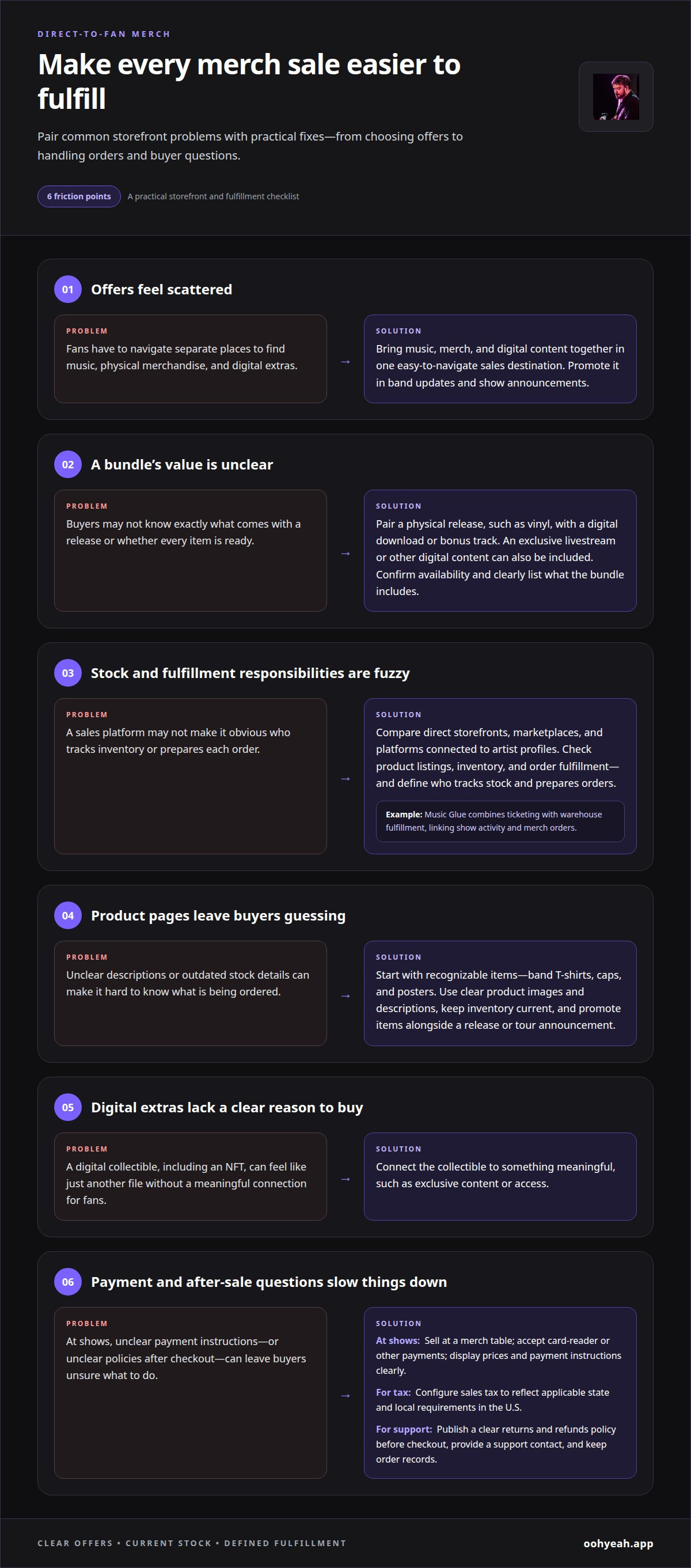
A direct sales platform lets a band sell music, physical merchandise, and digital extras in one place. Choose a setup fans can navigate easily, then promote it in band updates and show announcements.
Music and Merchandise Bundles
Pair a physical release, such as vinyl, with a digital download or bonus track. Fans get a tangible item and access to music. You can also add an exclusive livestream or other digital content to a bundle. Before promoting it, confirm the items are available and clearly list what the bundle includes.
Direct Sales Platforms and Fulfillment
Indie bands can sell merchandise through a direct storefront, a marketplace, or a platform connected to their artist profile. Compare how each handles product listings, inventory, and order fulfillment. Music Glue, for example, combines ticketing with warehouse fulfillment, linking show activity and merch orders. Choose a workflow that makes clear who tracks stock and prepares each order.
Start with recognizable merch such as band T-shirts, caps, and posters. These give fans wearable or displayable ways to support the group. Use clear product images and descriptions, then promote items alongside a new release or tour announcement. Keep inventory information current so buyers know what they’re ordering.
Digital collectibles, including NFTs, work best when they offer more than a file. Connect a collectible to something meaningful, such as exclusive content or access. At live shows, bands can sell merchandise at a table and accept payments through a card reader or another payment method. Display prices and payment instructions clearly at the point of sale.
U.S. sales tax rules depend on applicable state and local requirements. Configure tax collection to reflect the rules that apply to your transactions. For returns and refunds, publish a clear policy before checkout, provide a support contact, and keep order records so the band can respond consistently to buyer issues.
Collecting fan email addresses at checkout
Checkout can start a direct connection, not just complete an order. Add a clear, optional email signup beside the purchase details. Explain what fans will receive, such as release news, tour announcements, or merch updates. Keep the buying steps simple so joining the mailing list isn’t a barrier to purchase.
Connect each merch announcement to a specific item or moment. For example, share a new shirt alongside a single release, then direct fans to the product page from social posts and newsletters. Explain what makes the item relevant, such as its artwork or connection to a tour. A focused message helps musicians engage their audience without sending unrelated updates.
After checkout, send an email confirmation with the order summary, buyer’s email address, and next-step information. Keep receipts separate from promotional messages. A receipt confirms the transaction; a newsletter signup should reflect the fan’s clear choice to receive updates. This distinction keeps communication direct and lets fans control what reaches their inbox.
Build a simple sales funnel around a fan’s first interaction. A social post can introduce a launch, a product page can explain the offer, and checkout can invite the buyer to connect by email. Later messages can share music news or exclusive content. If you offer a membership, explain its benefits before signup rather than burying details in follow-up emails.
Keep an exportable copy of your email list and order records. Use clear labels to distinguish newsletter subscribers from buyers who only received a receipt. That organization helps you understand demand, plan future releases, and move your fan relationships between tools. A storefront that brings music and merch together can make that connection easier; explore artist storefront tools.
Direct-to-fan sales and artist revenue
Direct sales connect a purchase to the band’s earnings and fan relationship. For direct to fan merchandise sales for indie bands, calculate what each product contributes after production, fulfillment, and platform costs.
Production Costs and Artist Earnings
Start by calculating the cost of making each item. Physical merchandise has production and packaging costs, while digital tracks avoid physical stock but still require preparation and delivery. Subtract applicable costs from sales revenue to see what each product contributes. Compare items using the same accounting approach, and account for unsold goods when reviewing a physical release.
A vinyl purchase can also carry value beyond its immediate sale: one market estimate puts a $25 vinyl sale at more than 6,000 Spotify streams. Treat that as an illustration, not a guaranteed outcome. Actual earnings depend on the product’s costs and the terms of each sales channel.
Artist Websites and Storefronts
An artist website gives fans a direct route to merchandise and music. A branded storefront can keep product pages, tracks, and artist updates under one identity. Bandcamp is one platform artists use to sell music and merchandise. Before choosing a sales home, compare how each option presents the band, handles orders, and supports ongoing updates.
A fan platform can bring music and merchandise together in one destination. Clear branding helps fans recognize the official store and find the right release. Keep product descriptions and available options current, especially when a new launch changes what buyers can order.
Inventory and Print-on-Demand Tradeoffs
Print-on-demand avoids storing a large batch, but production and delivery depend on the provider’s workflow. Holding inventory gives the band direct control over stock, but unsold items tie up money and require storage. The tradeoff is flexibility versus control. Consider expected demand, storage capacity, and how quickly the band can restock.
For direct to fan merchandise sales for indie bands, keep inventory information aligned with the storefront. A sold-out item shown as available can create avoidable order problems. Review sales after each release and adjust the next production decision to match what fans actually bought.
Platform Fees and Artist Revenue
There is no single fee that applies to every direct-sales platform. Total charges depend on its pricing model and the payment and fulfillment setup. Compare transaction and payment-processing charges, recurring platform costs, and any fulfillment deductions. Then calculate the revenue remaining after those costs and production expenses.
Ownership matters, too. Read how the platform handles sales records and access to fan information. Clear order data helps artists assess which tracks and products perform, then make better decisions about their next release.
Fan data ownership and direct relationships
Direct relationships grow when independent artists learn who supports each release. Use sales reports and fan responses to make each follow-up more relevant.
Sales Reports and Supporter Data
Review order records to see which releases and products fans choose. Reports can reveal repeat buyers, popular merchandise, and shifts in demand. Use those patterns to plan what to sell next instead of treating every launch as a guess. Organize useful records by product and release so comparisons stay practical.
Sales figures show purchases, not every kind of support. Streaming activity, email replies, and attendance can add context to buyers’ choices. Compare these signals carefully. For example, a popular track may draw attention to an exclusive item, while a merch purchase may indicate interest in future releases.
Fan Data Ownership
Understand what information a selling platform stores and what you can export. Review its account settings and data terms before building your process. Keep an accessible copy of your sales records and email contacts where the platform permits. This gives your band a clearer view of supporter relationships if your tools or storefront change.
Ownership also means handling fan information with care. Keep order details separate from newsletter subscribers, and use contact information for the purpose fans expect. Someone who bought a shirt hasn’t automatically agreed to receive promotional messages.
Fan Engagement and Direct Relationships
Use what you learn about supporters to make communication relevant. If buyers respond to a particular release, share a behind-the-scenes note or exclusive preview connected to it. Independent artists can invite fans to join an email list through social media, then use each update to connect directly with listeners. Keep messages specific to the music or merchandise they care about.
A community doesn’t need a huge following to matter. One example compares 100 engaged fans with 10,000 passive followers, emphasizing the value of genuine support. Patreon is one way artists build paid fan relationships; direct sales and email can serve different needs. Let fans choose how they support the band.
Build a stronger connection between your artist presence and supporters through direct fan engagement tools.
OohYeah!: Merchandise Marketplace
OohYeah! offers indie bands a Merchandise Marketplace to sell merchandise directly to fans. Artists can pair it with Artist Profile Hosting, Digital Music Downloads, and Exclusive Content Access, giving fans one place to discover the band’s work and support it.
Turn to OohYeah! when you want to bring merch, music, and exclusive content together while building direct fan relationships. Artists retain 100% of sales revenue from music and merchandise, helping keep the value of each purchase with the band. Contact OohYeah! to explore a direct-to-fan setup for your music and merchandise.
Make Your Next Release a Direct Connection
A direct-to-fan merchandise sales strategy for indie bands can grow with your music. Start by deciding what you want your storefront to make easier for fans, whether discovering the band or supporting a new release. Then shape the experience around that goal. Keep the path focused, make the message sound like your band, and give supporters a meaningful reason to return.
Your store doesn’t need to solve everything at once. Refine it as you learn which ideas suit your community and how fans respond. The important step is building a direct connection that belongs to your band, rather than waiting for the perfect moment to begin.
Ready to take that next step? Contact OohYeah! about your merch store and start building a storefront that reflects your music. Your next release can open a stronger relationship with the people who believe in your work.
Frequently Asked Questions
How do I set up an online merch store?
Choose a storefront, prepare product listings, and set up a clear checkout. Start with a small catalog, such as a tour poster and one apparel design, so each listing is easy to manage. Add accurate descriptions, product images, and delivery details. Before sharing the store, place a test order if the platform allows it, and confirm the email explains what the buyer ordered.
What can I sell?
You can sell physical merchandise, digital music, and fan-focused extras that suit your band. A release might include a shirt, a digital album, or exclusive behind-the-scenes content. Choose items that connect naturally to your music and audience instead of adding products just to expand the catalog. Make each listing clear about what the buyer receives and whether it’s a physical item or digital access.
What are typical prices and profit margins for band merchandise?
Prices and margins vary with production methods, materials, order quantities, packaging, fulfillment, and platform costs. Estimate each item’s full cost before setting its selling price. For example, compare the cost of producing a batch of shirts with the cost of making each shirt on demand. Then account for unsold inventory and other expenses to understand how much revenue remains from completed sales.
How can indie bands set up an online merch store?
Build the store around one release or campaign, then give fans a direct path from the announcement to the relevant product page. Use consistent band artwork and names across listings so buyers can identify official items. Keep the catalog focused, make checkout instructions easy to follow, and share the store through the band’s usual channels. Review buyer questions to spot confusing product details.
How do bands handle merch production, inventory, and shipping?
Choose a production approach that matches expected demand and the band’s capacity to store and ship products. A small batch gives the band stock on hand but can leave items unsold; print-on-demand reduces stored inventory but relies on an external production workflow. Track quantities as orders arrive, package items securely, and clearly state shipping and return details before checkout.
What merch items sell best for independent bands?
Start with recognizable options such as band T-shirts, caps, and posters, then use sales records to learn which items resonate with your fans.