Recurring Monthly Revenue Models for Solo Singer-Songwriters
Explore recurring monthly revenue models for solo singer songwriters, blending fan memberships, sales, royalties, and live gigs to build steadier income.
October 26, 2026
FRANKLY with Frank Lee
A dependable music income stack rarely comes from one stream. Recurring monthly revenue models for solo singer songwriters can pair fan subscriptions and exclusive content with downloads, merchandise, streaming royalties, and live income. One example independent-artist breakdown assigns direct fan support $4,800 per year, or 8% of income, showing how recurring support can strengthen a wider mix rather than carry it alone.
It’s easy to focus on the next release, stream count, or show. A steadier plan starts with understanding how each income source earns, when payments arrive, and what work it requires. This guide explains how recurring monthly revenue models for solo singer songwriters can combine fan subscriptions, exclusive content, and other income streams. You’ll learn how to build a practical monthly mix around your music and audience without treating any one channel as a guaranteed paycheck.
Key Takeaways
- Build an income mix that balances recurring fan support with sales, royalties, and performance income, each with its own payment rhythm.
- Use a sample revenue breakdown to see how different streams can contribute to an artist’s overall income without relying on one channel.
- Shape membership tiers around meaningful exclusive content fans can look forward to receiving regularly.
- Compare platforms by how well they support music sales, memberships, and direct fan relationships before choosing where to build your income stack.
Combining revenue streams into a monthly income stack
A resilient income mix combines recurring fan support with sales, royalties, and performance income. Each source follows a different path from a listener’s activity to your account, so track them separately.
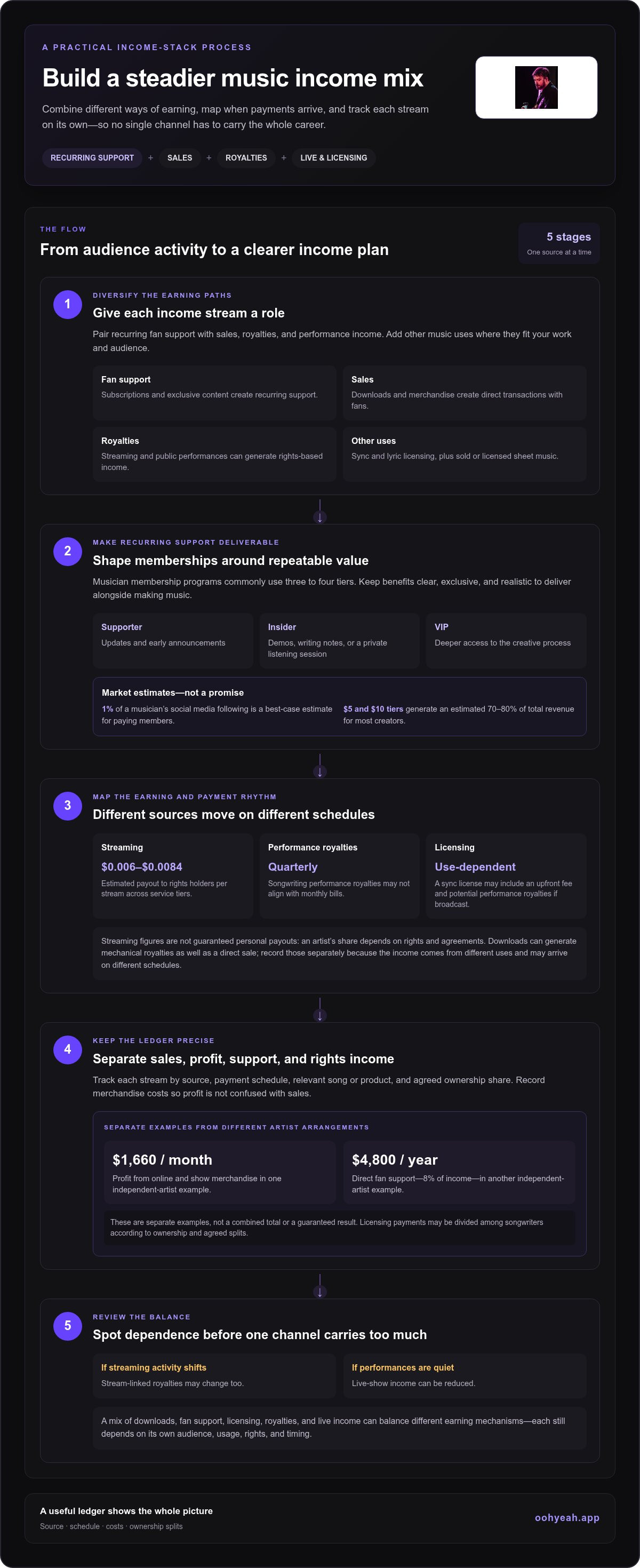
Streaming can build reach, but per-stream estimates show why it works best as one part of a career. Estimated payouts to rights holders range from $0.006 to $0.0084 per stream across service tiers. Your share depends on rights and agreements, so those figures aren’t a guaranteed personal payout. Spotify, Apple Music, and Amazon Music can also generate digital mechanical royalties from interactive streams.
Downloads offer another way to earn from a listener. Digital downloads can generate mechanical royalties, while each sale also creates a direct transaction with a fan. Keep royalty income separate from sales income in your records: the two come from different uses of the music and may arrive on different schedules.
Ancillary Revenue Streams
Additional revenue streams extend beyond recordings and streaming. They include performance royalties, sync and lyric licensing, and sheet music. One composition can earn from distinct uses: public performances on radio, television, streaming services, and live stages may generate royalties. Licensed lyric displays and sold or licensed sheet music create other opportunities. A sync license may bring an upfront fee, plus potential performance royalties if the content is broadcast.
Risks of a Single Revenue Source
Relying on one recurring source leaves your income plan exposed to changes in that channel. If streaming activity shifts, stream-linked royalties may change too; a quiet performance period can reduce live-show income. Build a mix so no single source carries your whole career. Downloads, fan support, and licensing can balance different earning mechanisms, though each depends on its own audience, usage, and timing.
Track each income stream by source and payment schedule. Songwriting performance royalties are paid quarterly, so they may not line up with monthly bills. Separating recurring fan income from quarterly royalties and occasional licensing receipts makes cash flow easier to understand, whether you manage records manually or streamline invoicing and bookkeeping with Timebook. Producers and co-writers may hold agreed shares, so record ownership and split details alongside each stream.
Example singer-songwriter revenue breakdown
A useful breakdown shows the different roles of each income source. Merchandise can produce operating profit, fan support can create recurring income, and licensing can bring payment for a specific use. Treat these as separate examples, not a guaranteed monthly total for any artist. Distinguishing revenue, profit, and ownership helps independent musicians compare cash flow accurately.
One independent-artist example reports $1,660 per month in profit from online and show merchandise. Profit gives a clearer picture than sales alone because it reflects what remains after relevant costs. Records, shirts, and other products can also connect a release to a live performance. Track each item and channel separately to see which activity contributes most to the artist’s income.
Another example assigns direct fan support $4,800 per year, or 8% of income. That figure illustrates how supporters can contribute alongside other music industry earnings. These examples represent different arrangements, so artists should not combine them as though they belong to the same musician.
Licensing adds a distinct income stream. The fee for a song may be divided according to ownership rather than paid entirely to one songwriter, which is why split details matter. The licensing company and any writers who share the composition affect how the money flows.
Use a simple ledger to distinguish sales, profit, recurring support, and rights-based payments. Record the source, the relevant song or product, and each writer’s agreed share. That view helps musicians assess whether their income depends too heavily on one activity, and where they have the ability to develop another. An artist profile for direct fan support can give listeners a clear place to engage with an artist’s work.
Fan subscriptions and exclusive content
Fan subscriptions turn ongoing creative access into recurring support. Musician membership programs commonly use three to four tiers, giving fans different ways to participate. These are market examples, not a required price ladder; match each level to the time and value its benefits demand.
Make every tier easy to understand. A supporter could receive updates and early announcements. An insider tier could add demos, writing notes, or a private listening session. A VIP level might include deeper access to the creative process, such as continuous fan radio broadcasts powered by streaming hosts like ReliaStream. Keep benefits exclusive and repeatable, so members know what they receive and you can deliver without neglecting new songs or your catalog. A best-case estimate suggests 1% of a musician’s social media following may become paying members. Treat that as a scenario, not a forecast.
The $5 and $10 tiers generate 70-80% of total revenue for most creators, according to the market estimate. That points to the value of clear mid-level benefits rather than building a plan around its highest tier. Exclusive content can support fan relationships, but it doesn’t replace royalties from Spotify streams, publishing income, or performance royalties. Keep those rights and revenue records separate. Membership payments come from fan access; royalties come from uses of compositions or recordings, and may be divided among writers and rights holders.
Choose a publishing rhythm you can sustain, such as sharing a demo or songwriting update regularly. Gather member feedback and use it to shape future extras. A strong subscription plan connects fans to your music-making process while protecting time for career-building work. Review each tier’s participation and delivery demands periodically, then adjust benefits if your release schedule or creative capacity changes.
What are the best platforms for selling music, memberships, and fan subscriptions in the U.S?
For a U.S. solo songwriter, the right platform depends on the transaction: streaming discovery, one-time music sales, or recurring fan support. One service may not serve all three goals equally. Choose tools by function, then make each route clear from your artist profile and release pages.
Use Spotify, Apple Music, and Amazon Music for interactive streaming and discovery. Direct-sale platforms serve a different purpose: they let listeners purchase downloads rather than simply stream a track. Compare how each option presents your artist name, organizes releases, and guides listeners toward a next step. Keep recording and songwriting rights clear across every platform, especially when collaborators share ownership.
For memberships, choose a platform that can present recurring tiers and exclusive posts in one place. Consider whether your schedule can support the promised material. A demo, lyric annotation, or studio note can connect fans to the writing behind a release. Distinguish member benefits from public posts, and explain what members receive and how often. The best fit is one your audience can use and you can sustain.
Compare these practical points before choosing:
- Purpose: Match the platform to streaming, downloads, or memberships instead of expecting one channel to do everything.
- Fan journey: Check that a listener can move from hearing a song to finding your releases or membership offer.
- Creative workload: Choose exclusive-content features that fit the updates you can reliably make, such as demos or songwriting notes.
Then connect your selected channels through a clear artist presence, so fans can find music and member content without confusion. Set up a direct space for your music and fan content as part of that platform mix.
OohYeah!: Artist Profile Hosting
OohYeah! gives solo songwriters a place to bring their music and fan offerings together through Artist Profile Hosting. Use it to help listeners find your music, purchase Digital Music Downloads, browse the Merchandise Marketplace, or access exclusive content in one artist-centered space.
That mix can support different parts of an income stack: downloads and merchandise create direct sales, while Exclusive Content Access gives fans a closer connection to your work. OohYeah! lets artists retain 100% of sales revenue from music and merchandise, so those purchases contribute directly to your artist business. It’s a practical next step for musicians building direct relationships with supporters alongside streaming and other royalty sources.
Visit oohyeah.app to explore OohYeah! for your music and fan community.
Build a Sustainable Next Chapter
Build recurring monthly revenue models for solo singer songwriters around how you create and the relationship you want with your fans. Start with one deliberate step: choose a part of your music business to strengthen, then make it easier for listeners to support your work directly. Consistency comes from a structure you can maintain, not from adding every possible channel at once.
For artists ready to create a direct home for their work, OohYeah! offers Artist Profile Hosting, Digital Music Downloads, and a Merchandise Marketplace. These options bring music and fan purchases together in one place. Choose the setup that fits your goals and gives your audience a clear way to engage.
Contact OohYeah! to explore your options, and take your next step with confidence. Your music career can grow on terms that reflect your work, your community, and the future you’re building.
Frequently Asked Questions
How Does the Money Flow?
Income follows the listener’s action and the rights attached to the music. A stream generates recording and composition-related royalties, while a download can bring a direct sale and mechanical royalties. Fan subscriptions pay for ongoing access. Performance royalties may arise when a composition is used publicly, though payment timing can vary. Track each receipt by song, income type, and collaborator share to understand what you earned and what belongs to other rights holders.
What are the types of business models in music?
Music business models include streaming royalties, direct downloads, merchandise sales, fan memberships, live performances, publishing income, and licensing. Each involves a different exchange: a listener streams a recording, buys a product, joins a membership, or hears a composition in public. You can combine several models without treating them as one payment stream. Separate records for sales, rights income, and performance earnings clarify how each contributes.
Which model is the best for me?
The best fit depends on your audience, creative routine, rights, and preferred way to engage fans. Compare recurring monthly revenue models for solo singer songwriters by the work each requires and the kind of support it creates. If listeners ask for deeper access, a membership may suit your work. If your catalog invites direct purchases, downloads can complement streaming. If live shows are central to your career, merchandise and performance income may fit.
What recurring revenue models work best for solo singer-songwriters?
The strongest recurring monthly revenue models for solo singer songwriters fit a repeatable creative habit. Fan subscriptions can offer ongoing access to demos, lyric notes, or updates, while merchandise and downloads support separate purchases. Pair a clear membership benefit with your existing release rhythm rather than promising constant new material. Keep royalty income distinct: streaming and public performance earnings depend on music use, not membership access.
What membership tiers and prices do successful singer-songwriters offer?
These are examples, not a required formula. Set each tier around benefits you can deliver consistently, and make the differences between levels clear before fans join.
How can musicians earn recurring income from subscriptions to exclusive songs or demos?
Musicians can offer subscribers exclusive songs, work-in-progress demos, or notes about how a track developed. Set a simple publishing rhythm, such as sharing a creative-process update alongside selected catalog material. Explain what members receive and keep the promise sustainable across releases. A subscription creates direct income for access; it doesn’t replace royalties if the underlying composition or recording is streamed, performed, or licensed elsewhere.