Overcoming Financial Feast or Famine Cycles in Independent Music
Learn how overcoming financial feast or famine cycles in independent music means tracking cash flow, building recurring revenue, and saving for quiet months.
November 15, 2026
FRANKLY with Frank Lee
A strong release month can hide a fragile music business. Overcoming financial feast or famine cycles in independent music starts with tracking income concentration, cash flow, and the pipeline between releases, not just total sales. A liquid reserve that can cover a three-month quiet stretch gives you more room to plan instead of react.
Creative income often arrives in bursts. A surge in downloads, merchandise sales, or fan support can feel like momentum, but it doesn’t automatically make the months between releases more predictable. The key is spotting instability early, while you still have options.
Here, you’ll learn which business metrics can flag risk, how recurring revenue can smooth uneven income, and how reserves and downside planning can help protect your next move. You’ll also see why feast-and-famine cycles happen and how to build a more resilient business around your music.
Key Takeaways
- Track income concentration, cash flow, and upcoming work to spot instability before a quiet period strains your finances.
- Build steadier earnings by creating ways for fans to support your music between major releases.
- Set aside a liquid reserve and model what you would adjust if expected income falls short.
- Identify the causes of income spikes and gaps so your release schedule, sales channels, and spending plans work together.
Reviewing financial targets and business health
Set a monthly income target from essential costs, then multiply it by 12 to estimate the coming year’s need. In the U.S., self-employed musicians report business income, track eligible expenses, and make quarterly estimated tax payments when required.
Strengthening the Business During Slow Periods
Use a quiet period to improve the systems that support your next release or booking cycle. Separate business and personal accounts, then move savings into a dedicated account so operating cash stays distinct from money reserved for taxes or future expenses. Review cash flow, unpaid invoices, project margins, and upcoming commitments. A 90-day plan can establish a baseline, introduce regular planning, and guide targeted changes.
Developing the Business During Busy Periods
Business development means creating future opportunities while current work is strong. Set aside time for prospect follow-ups, referral relationships, and conversations with past collaborators, even during a packed release or touring schedule. Review accounts and potential follow-on work regularly to see where interest may continue after a project ends. Protecting this work now helps prevent a full calendar from turning into an empty pipeline later.
Strategic Business Reinvestment
Reinvestment means directing business income toward improvements that support future earning capacity. During a strong period, compare purchases or projects against clear goals, such as improving recording quality, preparing release materials, or strengthening fan communication. Weigh each expense against your reserves, expected use, and the work it can support. This keeps spending intentional instead of treating a temporary sales spike as permanent income.
Setting Rates and Negotiating Fees
Set rates by accounting for preparation, performance or studio time, travel, revisions, and the rights requested. For licensing, clarify the intended use, duration, and territory before agreeing to a fee; for gigs and sessions, define the work and payment dates. These terms make offers easier to compare and help protect project margins. Review completed work regularly to see which engagements paid fairly for the time and usage involved.
Recurring, renewal, and expansion revenue
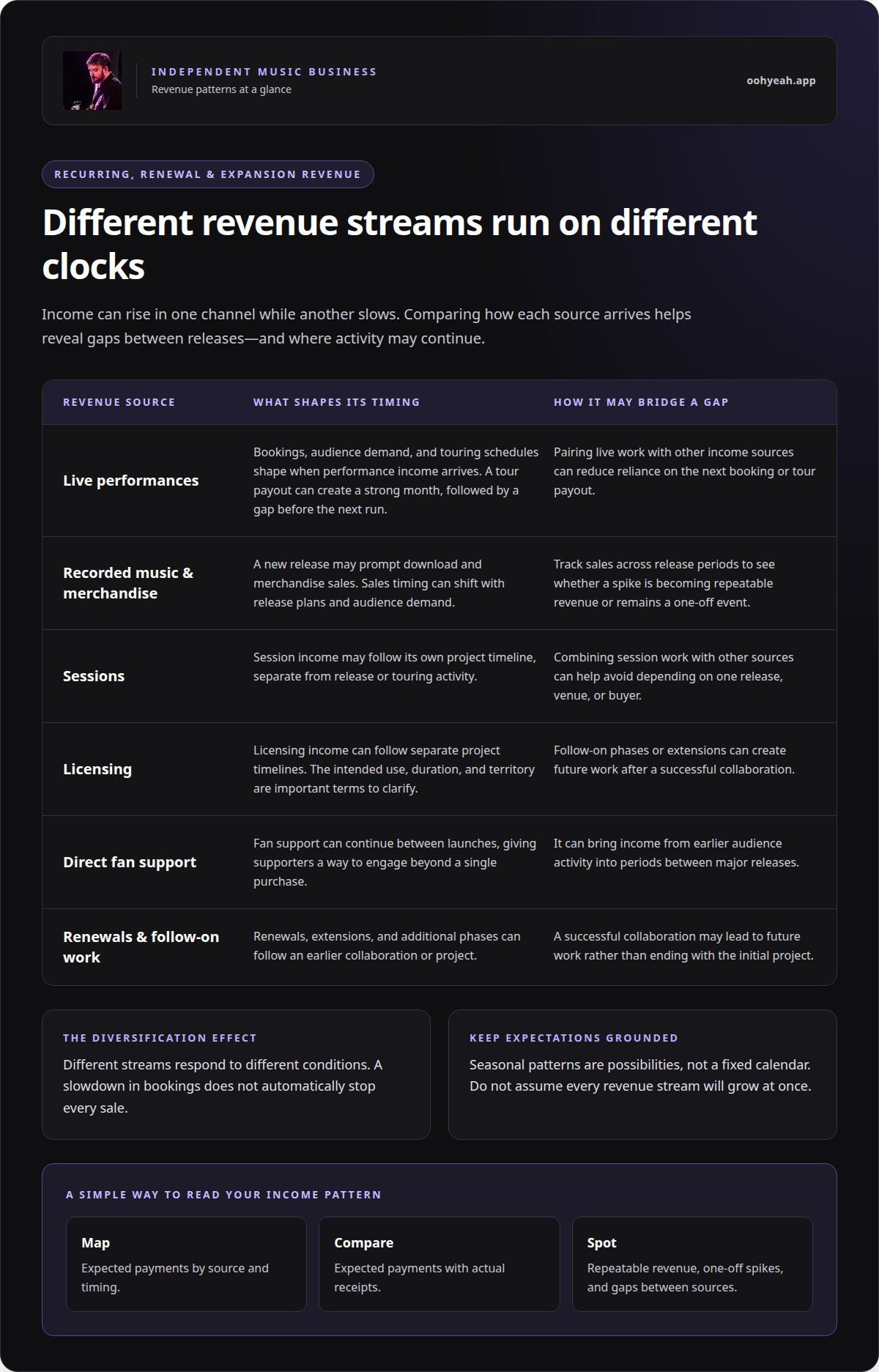
U.S. musicians may earn from live performances, recordings, merchandise, sessions, licensing, and fan support. Timing varies with release plans, bookings, and audience demand, so revenue from one channel can rise while another slows.
Revenue Predictability and Fluctuations
Predictability describes how reliably income arrives, while fluctuations are the rises and dips between payments. A tour payout can make for a strong month, followed by a gap before the next run. Recurring support, renewals, or follow-on work can soften that contrast by bringing income from earlier activity into later periods. Map expected payments by source and timing, then compare the pattern with actual receipts. This shows whether a sales spike is becoming repeatable revenue or remains a one-off event.
Diversifying Revenue Streams
Diversifying means building income from distinct sources instead of relying on one release, venue, or buyer. A musician might combine live shows with session work, licensing, recorded music, merchandise, and direct fan support. Each stream responds to different conditions, so a slowdown in bookings doesn’t automatically stop every sale. Group income by source and review how each channel changes across release and touring periods. This helps identify gaps and prioritize development without assuming every stream will grow at once.
Income Sources and Seasonal Patterns
Seasonal patterns are recurring changes in demand tied to calendars, audience routines, or an artist’s schedule. A summer festival run may bring performance income, while a new release can prompt download and merchandise sales. Sessions and licensing may follow separate project timelines, while fan support can continue between launches. Treat these as possible patterns, not a fixed calendar for every musician. Reviewing past booking, release, and sales dates helps distinguish a predictable seasonal dip from a broader drop in demand.
Renewals, extensions, and follow-on phases can turn a successful collaboration into future work. For artist-to-fan revenue, direct fan support gives supporters another way to engage beyond a single purchase.
Financial reserves and downside scenarios
A liquid reserve can help cover a three-month quiet stretch without forcing rushed decisions. Financial pressure may mount by the sixth week without income, which makes a reserve especially useful. Keep reserve funds accessible and define which costs they must cover, such as rent, utilities, insurance, and essential music-business expenses. A clear purpose distinguishes emergency cash from money set aside for a planned release or equipment purchase.
Set a reserve target using your actual obligations, not an optimistic sales forecast. List essential personal and business costs, then account for income that is already contracted or reliably expected. A delayed tour payout, postponed session, or weaker-than-expected release can create a gap even when future work remains possible. Track when bills and payments are due, because cash can run short before an expected payment arrives.
Downside planning means testing how your finances respond when demand or income falls below plan. Model a quiet stretch lasting three months, then identify which commitments can change and which cannot. You might defer a nonessential purchase, reduce discretionary spending, or adjust release timing while protecting core costs. These choices are easier to make before a shortfall, when you have time to weigh their effect on your work.
Review scenarios regularly as bookings, releases, and payment dates change. A forecast should distinguish confirmed income from hoped-for sales, and fixed commitments from flexible ones. If a tour is delayed, update expected receipts and the reserve runway rather than treating the original payout date as certain. This creates a steadier decision process: you can see how long your available cash will last and which action becomes necessary first.
Use the reserve for its defined purpose, then rebuild it after stronger periods. Record each withdrawal and its reason, such as covering essential costs during a gap between projects. This makes your next review more useful: you can see whether the reserve matched the quiet period and whether your downside assumptions reflected real demand. A reserve supports resilience, but works best alongside a plan to reduce costs and replace delayed income.
Reasons for feast-and-famine cycles
Income swings when earnings depend on a single event instead of a continuing mix of work. A two-week launch can generate an entire year’s income during one sales period, but that spike leaves the next period exposed. The same pattern can follow a tour, a sync placement, or a busy run of sessions. For independent artists, overcoming financial feast or famine cycles in independent music starts with identifying which events carry too much of the annual plan.
Timing also creates pressure. A musician may incur recording, rehearsal, travel, or promotional costs before related revenue arrives. If several expenses cluster around one release, even a strong sales month can leave little cash afterward. As the leader of your project, separate headline earnings from the money left after costs. That distinction shows whether a successful launch strengthened the business or merely covered a brief burst of spending.
Advances, debt, and high-cost touring can deepen these swings when future income must cover current commitments. An advance may create pressure to deliver work or repay funds from later earnings, while borrowed money still requires repayment during slow periods. Touring can bring substantial costs before ticket and merchandise revenue is settled. Compare expected receipts with obligations and cancellation exposure before committing, so one costly plan doesn’t put later projects under pressure.
Dependence on one buyer, venue, release, or platform adds another source of risk. A postponed booking or weaker campaign can affect most of the income plan at once. Map each revenue source by timing and reliability, then note what could interrupt it. Overcoming financial feast or famine cycles in independent music also means building a wider base, so one disruption doesn’t dictate every next move. To give supporters a direct way to engage between releases, offer exclusive content access.
OohYeah!: Digital Music Downloads
OohYeah! gives independent artists a direct way to offer music and connect with supportive fans. Use Digital Music Downloads to make releases available for purchase, then keep fans engaged through Exclusive Content Access. Artist Profile Hosting and a Merchandise Marketplace can bring those offerings together around your music.
These options can add direct sales and fan support to your revenue mix. OohYeah! enables artists to retain 100% of their sales revenue from music and merchandise. Direct sales won’t make income predictable on their own, but they can complement other channels and help fans support the work they value.
If you’re ready to build a more direct connection with your audience, contact OohYeah!.
Build Your Next Move on Purpose
More control over your music business starts with one deliberate decision. Choose a change you can sustain, such as giving fans a new way to engage between releases or setting a regular time to review your plans. Then observe what shifts in your work and income. Small, consistent choices can make financial planning part of your creative practice, rather than a task you revisit only when cash gets tight.
Overcoming financial feast or famine cycles in independent music doesn’t mean every month will look the same. It means building a business that can adapt as opportunities change, without letting one busy period define your expectations. Keep your next move focused on the relationship you want with your audience and the work you want to keep making.
Ready to explore a more direct connection with fans? Contact OohYeah! about steadier income, and keep building on your own terms.
Frequently Asked Questions
Which Metrics Reveal Feast-and-Famine Risk Early?
Watch cash on hand, overdue invoices, upcoming confirmed payments, and the share of income tied to your largest source. A calendar of expected receipts can reveal a gap before it appears in your bank balance. For example, if most planned income depends on one festival booking, a cancellation could leave little backup. Compare expected and actual receipts regularly to catch shifts early.
Why do independent musicians experience feast-or-famine income cycles?
Independent musicians often earn income in bursts because releases, tours, licensing deals, and session work pay on different schedules. A concentrated launch can bring substantial sales, then leave a gap until the next project or payout. Costs may also arrive before income. When work depends on one event or revenue source, a delay can quickly affect the whole budget.
How can musicians create a monthly budget based on irregular income?
Build your budget around essential expenses and conservative income expectations, not your strongest earning month. Set aside money for fixed bills, business costs, taxes, and flexible spending as payments arrive. For example, assign a large performance payout across upcoming months rather than treating it as immediately spendable. Update the plan when bookings change, and distinguish confirmed payments from possible opportunities.
How much should independent musicians keep in an emergency fund?
A useful target is enough liquid savings to cover essential expenses through a three-month quiet stretch. Calculate the amount from core personal and business obligations, rather than past gross income. Include costs that continue without gigs, such as housing, utilities, insurance, and necessary work expenses. Keep this reserve separate from money earmarked for recording, touring, or other planned projects.
What are effective ways to smooth music income between releases and tours?
Build offers that give fans reasons to support your work between major events. A back-catalog download, merchandise item, or exclusive content release can create additional buying opportunities without waiting for a new album or tour. Follow-on work, such as another session with a past collaborator, can also fill a gap. Track which activities continue attracting attention after the initial launch.
How can musicians diversify income through streaming, live shows, teaching, sync licensing, and merchandise?
Develop these channels around your strengths and available time, rather than launching every option at once. For example, a performer with regular audience demand might pair live shows with merchandise, while a skilled instrumentalist could offer lessons between bookings. Streaming, sync licensing, and recorded downloads have different payment triggers and timelines. Track each source separately to see which adds dependable income and which remains occasional.