Limited-Edition Merchandise Drop Strategies for Indie Acts in 2026
Master limited edition merchandise drop strategies for indie acts. Learn how to plan scarcity, connect with fans, and launch successful merch releases in 2026.
October 18, 2026
FRANKLY with Frank Lee
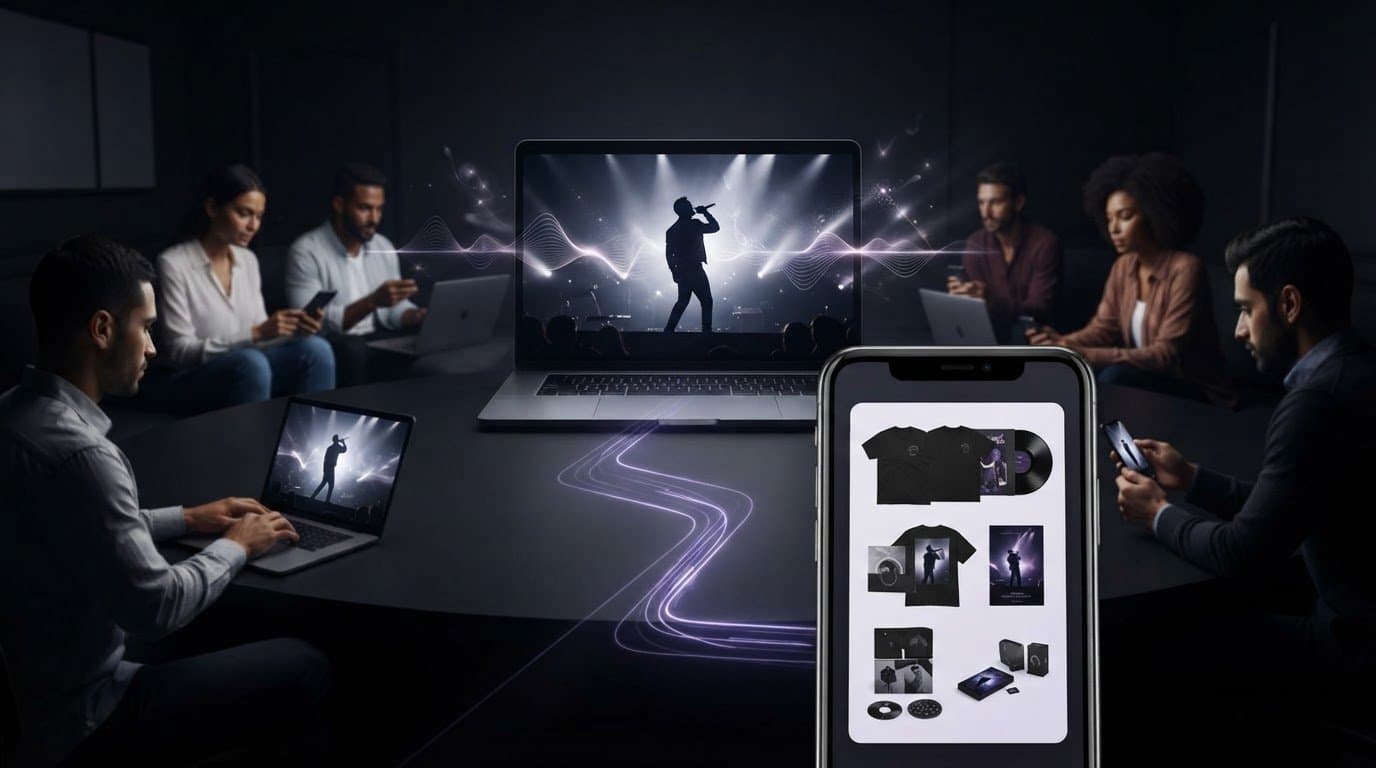
Scarcity alone doesn’t make a merch drop meaningful. Fans pay attention when an item connects to the music, marks a moment, or helps them feel closer to the artist. The best limited edition merchandise drop strategies for indie acts pair that story with clear availability terms and a fulfilment plan you can manage.
You may already feel the tension: order too much, and stock can sit; order too little, and interested fans can miss out. Add design, timing, and promotion, and even a small release can become a coordination job. A focused plan helps you create excitement without relying on pressure or making promises you can’t keep.
This guide shows you how to shape a drop around your sound and identity, choose a manageable format, set transparent terms, and build a repeatable launch timeline. It also explains how OohYeah!’s artist discovery and marketplace can support your music and merchandise, with zero seller commissions, forever. Artists need a signed Artist Agreement before publishing artist content or monetizing. The goal is simple: give fans a genuine reason to care, and give yourself a launch you can deliver.
Key Takeaways
- Make the item meaningful by connecting it to a song, milestone, or shared fan story.
- Use limited edition merchandise drop strategies for indie acts to match your release format with the experience you want fans to have.
- Set clear availability terms so fans know what to expect and you can plan production and fulfilment.
- Build a simple launch sequence that coordinates the reveal, key details, reminder, release, and follow-up.
- Explore how OohYeah!’s artist discovery and marketplace, with zero seller commissions, forever, can support direct fan connection.
Why Limited-Edition Merchandise Drops Can Matter to Indie Acts
A limited-edition drop has a clear boundary. It might be a stated sales window, a production quantity you can honestly stand behind, or both. That boundary describes how the offer is available, not how many fans will want it. Scarcity can help fans know when to pay attention, but it can’t guarantee demand or make an unrelated item feel special.
The strongest limited edition merchandise drop strategies for indie acts start with a connection, not a countdown. Link the item to a song, the story behind a release, a tour milestone, or an image fans recognize from your work. A print inspired by a lyric, for instance, can mean more when you explain the lyric’s context. That story gives supporters a reason to care beyond the fact that the item won’t be available indefinitely.
A limited drop has a defined release boundary; an always-available merch item remains open for fans to find over time. Neither approach is automatically better. Choose based on what the item represents and what you can produce and fulfil without exceeding your capacity.
What makes a merch drop feel worth noticing?
Make the creative connection easy to understand. Tell fans what inspired the item and why you’re releasing it now. A short personal note, original artwork, or detail about a song’s creation can make the offer feel considered, without promising that buying it unlocks a particular experience or outcome.
A defined window also gives people a clear moment to pay attention. Share when the drop opens and closes, using dates and times you can meet. Fans can plan around that window instead of guessing whether the item might appear someday. Explain the connection, the item format, and what the listing says about how buyers will receive it.
When does limited availability help, or hurt, fan trust?
Clear limits build trust; manufactured pressure can damage it. State a quantity only when it reflects a real production limit, and share dates only when they accurately describe the offer. Don’t use a countdown that resets, claim an item will never return unless that’s genuinely your plan, or imply that demand is higher than it is.
Before fans decide, make the practical details visible: whether the offer is time-limited or quantity-limited, how they’ll receive the item, and any terms specific to the listing. If you change the plan, update your message plainly. Honest boundaries let fans choose with confidence and help protect the relationship beyond a single sale.
Design a Limited Merch Drop Around One Strong Idea
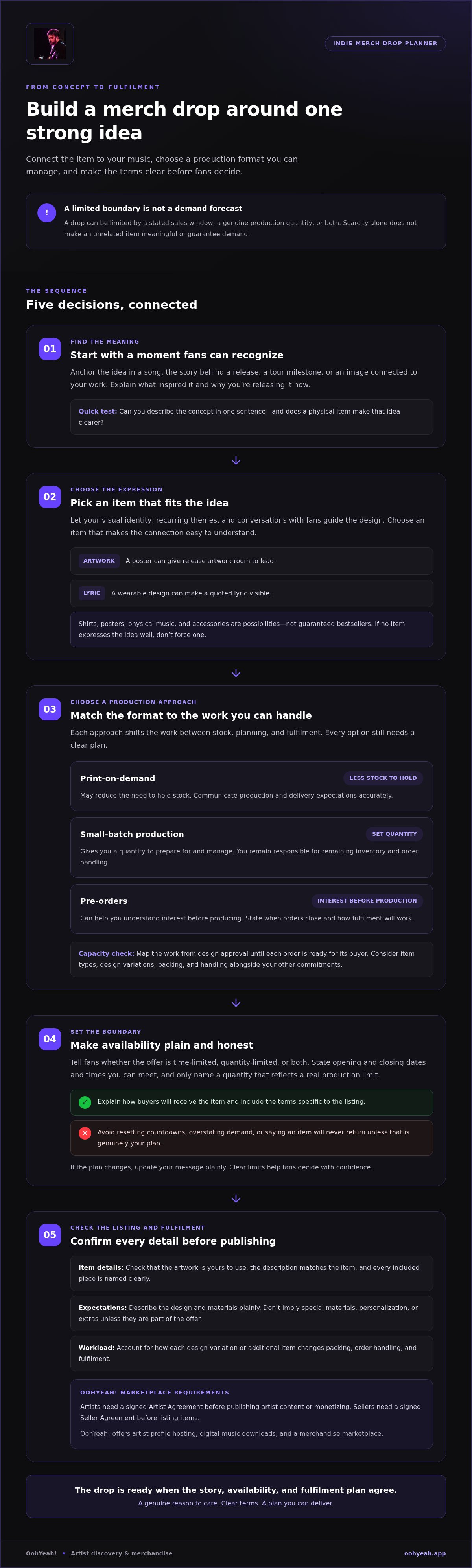
Start with the idea, not the item. What moment, sound, image, or shared experience do you want fans to carry with them? Once you can describe it in a sentence, ask whether a physical item makes the idea clearer. If the concept is about the artwork behind a new release, a poster may give that image room to lead. If it’s about a lyric fans quote back at shows, a wearable design might make the connection visible. If no item expresses the idea well, don’t force one.
A focused drop concept gives fans a clear reason to care and helps you make an offer you can describe honestly. It also limits creative sprawl. One central design or item can be easier to produce, present, and manage than several unrelated options.
Choose an item that fits the music and audience
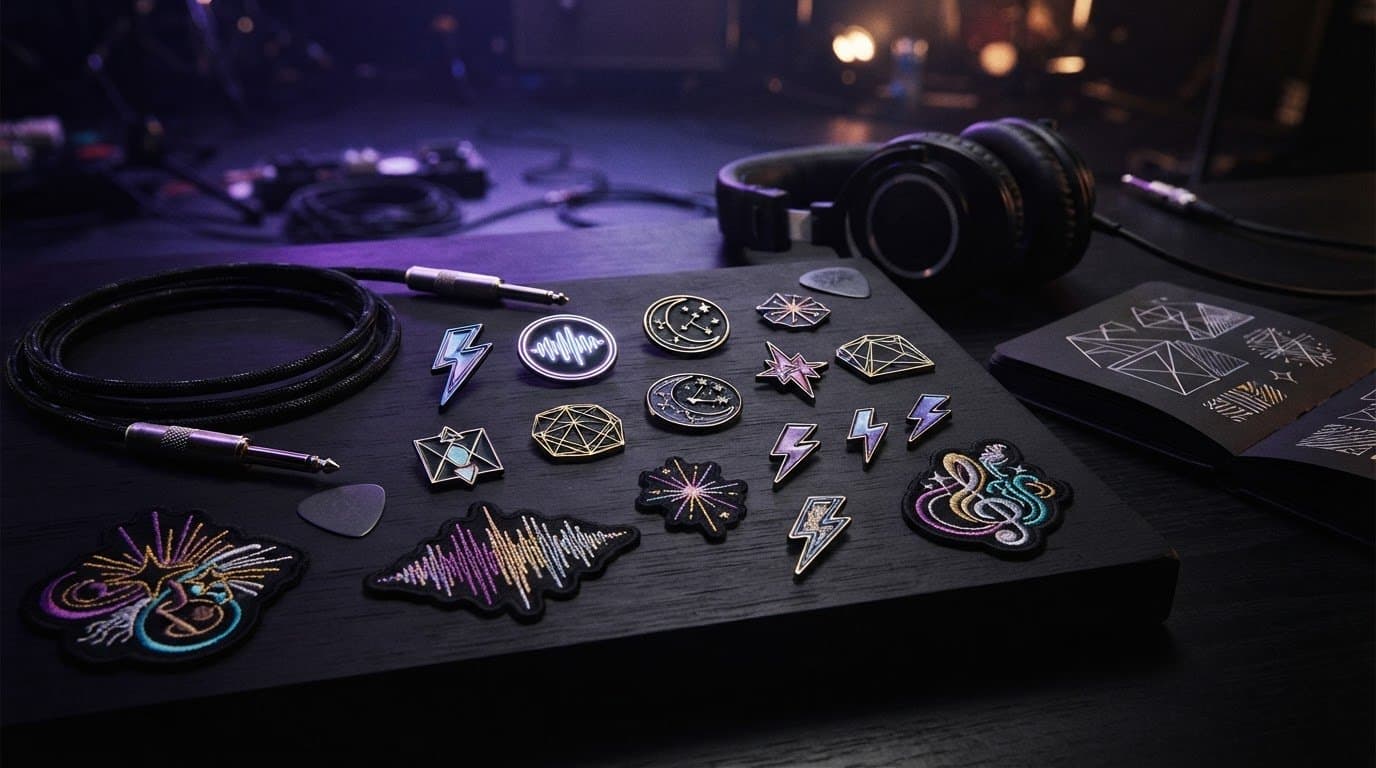
Use your visual identity as a filter. Recurring artwork, colors, symbols, and themes in your music can guide the design. Audience feedback can help too. Look for useful signals in conversations, messages, or questions fans already ask, then decide which ideas still feel true to your act. Shirts, posters, physical music, and accessories are all possibilities, not guaranteed bestsellers. Describe the item plainly, including its design, materials, and exactly what’s included.
Select a production approach that fits your capacity
Production choices shift work between planning, inventory, and fulfilment. Print-on-demand may reduce the need to hold stock, but you still need to communicate production and delivery expectations accurately. Small-batch production gives you a set quantity to manage and prepare for, while leaving you responsible for remaining inventory and order handling. Pre-orders can help you understand interest before producing, but require clear terms about when orders close and how fulfilment will work. Each option still needs a plan.
Before choosing, map the work from design approval to the moment each order is ready to reach its buyer. Consider how many item types, design variations, and fulfilment steps you can handle alongside music and other commitments. One shirt design, for example, can mean fewer decisions than multiple designs across several item categories. If you add physical music or an accessory, account for how each item changes packing and handling.
Check the product details before you publish the offer. Confirm that the artwork is yours to use, that the description matches the item, and that any included pieces are named clearly. Don’t imply special materials, personalization, or extras unless they’re actually part of the offer. These checks protect fans’ expectations and help you keep the workload manageable.
For acts bringing music and merch together online, an artist merchandise marketplace can be part of the plan. OohYeah! offers artist profile hosting, digital music downloads, and a merchandise marketplace. Artists need a signed Artist Agreement before publishing artist content or monetizing, and sellers need a signed Seller Agreement before listing items.
Compare Drop Formats Before You Set Availability
The format determines what fans can expect and what you’ll need to manage. A time window sets when people can order. A quantity cap sets how many orders you’ll accept. A pre-order lets fans place orders before production, while a bundle groups related items into one offer. These options can work alone or together, but each limit must match the offer and the fulfilment plan behind it.
Timed window, quantity cap, or pre-order?
Choose based on what you know and what you can deliver. A known release date can suit a timed window. Uncertain demand may make a pre-order useful for planning production. A fixed cap can fit a genuinely limited quantity or a workload you need to keep within bounds. In every case, state the terms plainly, including production and delivery expectations where relevant.
- Timed window: Fans can order during a stated period. You manage the opening and closing times, then plan fulfilment around the orders received.
- Quantity-capped: Fans know the offer ends when the stated amount is claimed. Track the actual cap and make sure it reflects what you can produce or fulfil.
- Pre-order: Fans order before production. Communicate the order window and realistic production and delivery expectations, then coordinate production with the orders.
- Bundle: Fans choose a combined offer. Explain each component and manage the items or content included.
A cap and a window aren’t interchangeable. “Available until Friday” describes time, not quantity. “Limited to a set number” describes quantity, not how long ordering stays open unless you state both. Don’t advertise a cap you won’t enforce or a closing date you don’t intend to honor. If the plan changes, update the listing and your announcements so fans aren’t relying on outdated terms.
Should you bundle merch with music or exclusive content?
A bundle earns its place when the pieces share a clear connection. A shirt featuring artwork from a release, paired with a digital download of that music, can make the physical design part of a larger release experience. Exclusive content may also fit if it genuinely relates to the item or moment. Combining unrelated products adds complexity without necessarily adding meaning.
Before fans choose, identify every component and explain its availability. Make clear which parts are physical and which are digital, and describe separate delivery expectations accurately. If one component has a different limit or release schedule, say so rather than letting the bundle label blur the details.
Use these limited edition merchandise drop strategies for indie acts to select a format you can explain and manage, not to promise a sales result. A bundle may suit a connected release; a simple window may be easier to coordinate. Let the idea, audience experience, and fulfilment workload guide the choice.
Plan the Drop: A Practical Launch Sequence for Indie Acts
A reliable launch starts before the first teaser. Set the offer, confirm who owns each task, and make sure the information fans see matches what you can deliver. These limited edition merchandise drop strategies for indie acts turn one creative idea into a clear sequence, from planning through post-drop review.
- Set the concept. Define what the item represents, who it’s for, and why you’re releasing it now.
- Plan production and fulfilment. Decide how the item will be produced, what availability terms you can honor, and who will handle packing, delivery updates, and questions.
- Prepare the listing. Write an accurate description, show the actual design, and state the format, quantity or order window, delivery method, and relevant terms.
- Announce with useful context. Explain the idea and share when fans can expect the release details and launch.
- Open the release. Make the offer available as stated. Keep the listing and announcements consistent about its limits and terms.
- Fulfil orders and communicate. Follow the plan, respond to questions through the assigned channel, and tell buyers promptly if timing changes.
- Review the results. Record audience response and operational lessons before deciding whether to repeat or adapt the format.
Build a release timeline fans can follow
Choose announcement and launch dates only after the production plan and listing are ready. Then map a simple communication calendar: reveal the idea, share useful item and availability details, remind fans when the drop opens, and clearly announce when it closes or reaches its stated limit. Use email, social channels, live shows, or your artist profile where they fit your audience. Repeat essential terms consistently rather than relying on a teaser to explain everything.
Before the first announcement, assign responsibility for customer questions, order updates, and fulfilment. One person might manage messages while another prepares orders, or one person may own the whole process. Either way, make the roles clear. Fans should know where to find updates, and the team should know who responds if an order question or delay arises.
Prepare fulfilment and learn from the results
Plan the practical work before orders begin: how you’ll organize orders, prepare packages, communicate delivery information, and handle support. Share only delivery timing you can stand behind. If circumstances change, update buyers directly and explain what has changed without inventing a new date.
After the drop, review listing visits, orders, sell-through, questions, and fulfilment issues. Look for patterns, not a universal benchmark. Did fans ask for details the listing should have included? Did a particular step take more effort than expected? Use what you learn to make the next release clearer and more manageable.
For artists planning a direct merchandise release, OohYeah! is a marketplace for artist discovery and merchandise. OohYeah! has zero seller commissions, forever. Artists need a signed Artist Agreement before publishing content or monetizing, and sellers need a signed Seller Agreement before listing items.
Turn a Merch Drop into a Lasting Fan Connection with OohYeah!
A drop can be a moment of connection, not the end of the conversation. After it closes, share the music, ideas, or next creative step fans can explore. Keep updates grounded in real news rather than manufacturing urgency for another purchase. That approach makes the relationship bigger than one item and gives supporters room to stay connected on their own terms.
OohYeah! brings artist discovery and a marketplace together. Fans can discover artists, stream, follow, and book trending artists, while the marketplace includes merchandise. An artist profile gives fans a place to find your work and keep exploring what you make. A drop can introduce a creative moment; your ongoing music and artist updates give people more ways to follow your path.
Keep the relationship active after the release
After a release, acknowledge the questions and feedback fans shared. A request for a different format or a question about the inspiration behind a design can help shape future creative choices. Share new music, artist updates, and relevant work when you have something genuine to say. Invite listeners to follow your act and discover what comes next, without implying that they need to act immediately.
Choose a marketplace that aligns with your selling principles
Transparent terms matter after the launch, too. OohYeah! has zero seller commissions, forever. Payments are processed by PayPal under PayPal’s terms. Artists need a signed Artist Agreement before publishing artist content or monetizing, and sellers need a signed Seller Agreement before listing items. If you offer a recurring subscription, it is governed by the Subscription Terms. These details help clarify the platform terms as you consider where to share your music and merchandise.
Use limited edition merchandise drop strategies for indie acts to build a release that respects both your creative intent and your fans’ expectations. Then keep the connection alive through honest updates and work that reflects who you are. Discovery and ongoing engagement can continue beyond a single release, without promising a particular sales result or fan response.
Ready to explore a marketplace built around artist discovery and merchandise? Explore OohYeah!
Make Your Next Release a Creative Starting Point
Your next merch idea doesn’t need to be bigger. Let it be more intentional. Use what you learn from each release to notice which details fans connect with, then carry that insight into your next design, song, or shared moment. That turns limited edition merchandise drop strategies for indie acts into an evolving creative practice, not a one-off push for attention.
Choose one idea you’re excited to share. Give it a clear purpose, make room for your fans to respond, and let the next step grow from that connection. You’re building something beyond a product: a relationship shaped by your work and the people who choose to follow it.
Explore OohYeah! as a place to share your music and merchandise with fans. Take the next step at your own pace, and keep creating with confidence.
Frequently Asked Questions
How do indie artists create genuine scarcity for a merch drop?
Set a real quantity cap or order window, then explain why the release has that limit, such as a small production run or a connection to a specific moment. Keep every post and listing consistent with the offer. False countdowns and artificial urgency may win a quick click, but they can weaken trust. Make fulfilment details easy to find, and remember that limited availability doesn’t guarantee demand.
Is print-on-demand a good choice for a limited-edition merch drop?
It can work if reducing the need to hold inventory matters more than controlling every production detail. Timing and available item options depend on the provider you choose, so build those dependencies into your plan. Small-batch production may give you more control over stock, but you’ll need to plan how to store and fulfil it. Choose based on your capacity, quality needs, and release timeline, not a one-size-fits-all rule.
How far in advance should an indie act announce a merch drop?
There’s no universal lead time. Work backward from the intended release date, leaving room to finalize the design, production plan, listing, and fulfilment responsibilities. Announce once you can explain the offer accurately, including how and when fans can order. If production timing remains uncertain, say so clearly and avoid implying a delivery date you can’t support. A dependable update is more useful than a premature promise.
Should I use pre-orders for a limited merch release?
Pre-orders can help you gauge interest before completing a production run, but they also require clear communication and follow-through. Tell fans what the order includes, when you expect to fulfil it, and which terms apply. Treat the date as an expectation only if your production plan supports it. A pre-order is a planning tool, not proof that demand is guaranteed or a reason to promise an unverified delivery date.
What should I include in a limited merch drop listing?
Give fans an accurate description, images that represent the actual item, and the real quantity cap or order window if one applies. State the delivery method, what’s included, any relevant exclusions, and listing-specific terms. Avoid broad claims about quality, shipping, or guarantees that you can’t substantiate. Before publishing, compare the listing with your announcement copy so fans don’t see conflicting details across different channels.
Can I bundle digital music with physical merchandise in a limited drop?
Yes, if the items make sense together and you can clearly explain the offer. Describe each component, including how fans receive the digital music and how the physical item is fulfilled. State any separate availability limits or timing that affect one part of the bundle. Make sure you have the rights and permissions needed for everything included. A bundle can connect a release to an item, but it can’t guarantee sales or exposure.
How do I know whether a limited merch drop worked?
Measure it against the goal you set, not a generic industry benchmark. Review listing visits, orders, sell-through, audience responses, customer questions, and the time or effort fulfilment required. For example, repeated questions about sizing or delivery may show where the listing needs more detail. Note what fans responded to and what slowed your process. Use those observations to refine your next release, without assuming one result predicts future demand.