How to Sell Sheet Music and Guitar Tabs Alongside Albums in 2026
Learn how to sell sheet music and guitar tabs alongside albums to cut fees, bundle your digital products, and grow your direct-to-fan music revenue today.

September 25, 2026
FRANKLY with Frank Lee
Forcing your fans to jump between three different platforms just to buy your music and notation is quietly killing your digital sales. When a supporter wants to learn your latest track, they should not have to leave your ecosystem for a high-commission marketplace. You need a streamlined, professional way to package your creative output. Mastering how to sell sheet music and guitar tabs alongside albums is the ultimate way to build a sustainable, direct-to-fan business in 2026.
You already know how exhausting it is to manage fragmented storefronts, fight technical friction during file delivery, and watch corporate middlemen swallow your profits. You deserve a fair, unified home base for your intellectual property. In this article, you will learn how to unify your digital storefront by selling sheet music, guitar tabs, and albums in one place while keeping 100% of your revenue. We will explore how to eliminate technical headaches, maximize your profit margins, and present your digital assets through a single link that gives your audience immediate access to everything you create.
Key Takeaways
- Discover why combining your audio and notation into a single creative ecosystem drives higher margins without adding shipping costs.
- Master the technical requirements for professional file delivery, including why PDF and .GP files are essential for your audience.
- Learn how to sell sheet music and guitar tabs alongside albums to stop fragmenting your fan experience and losing customers to external marketplaces.
- Stop paying high commissions on small digital goods and keep 100% of your sales revenue by switching to a flat-fee storefront model.
- Use tiered pricing strategies to turn standard digital downloads into high-value bundles that fans actually want to buy.
The Multi-Asset Advantage: Why Selling Notation Boosts Artist Revenue
Your music is not just a recording; it is a creative blueprint. For years, the industry forced you to separate your audio from your instructional assets. You sold albums on one site and uploaded PDFs to another. This fragmentation is a relic of a broken system that hurts your bottom line. In 2026, fans want a direct connection to your process. They want to hear the song and immediately see the notes. By building a unified creative ecosystem, you turn a passive listener into an active student. Learning how to sell sheet music and guitar tabs alongside albums is the most direct path to financial independence.
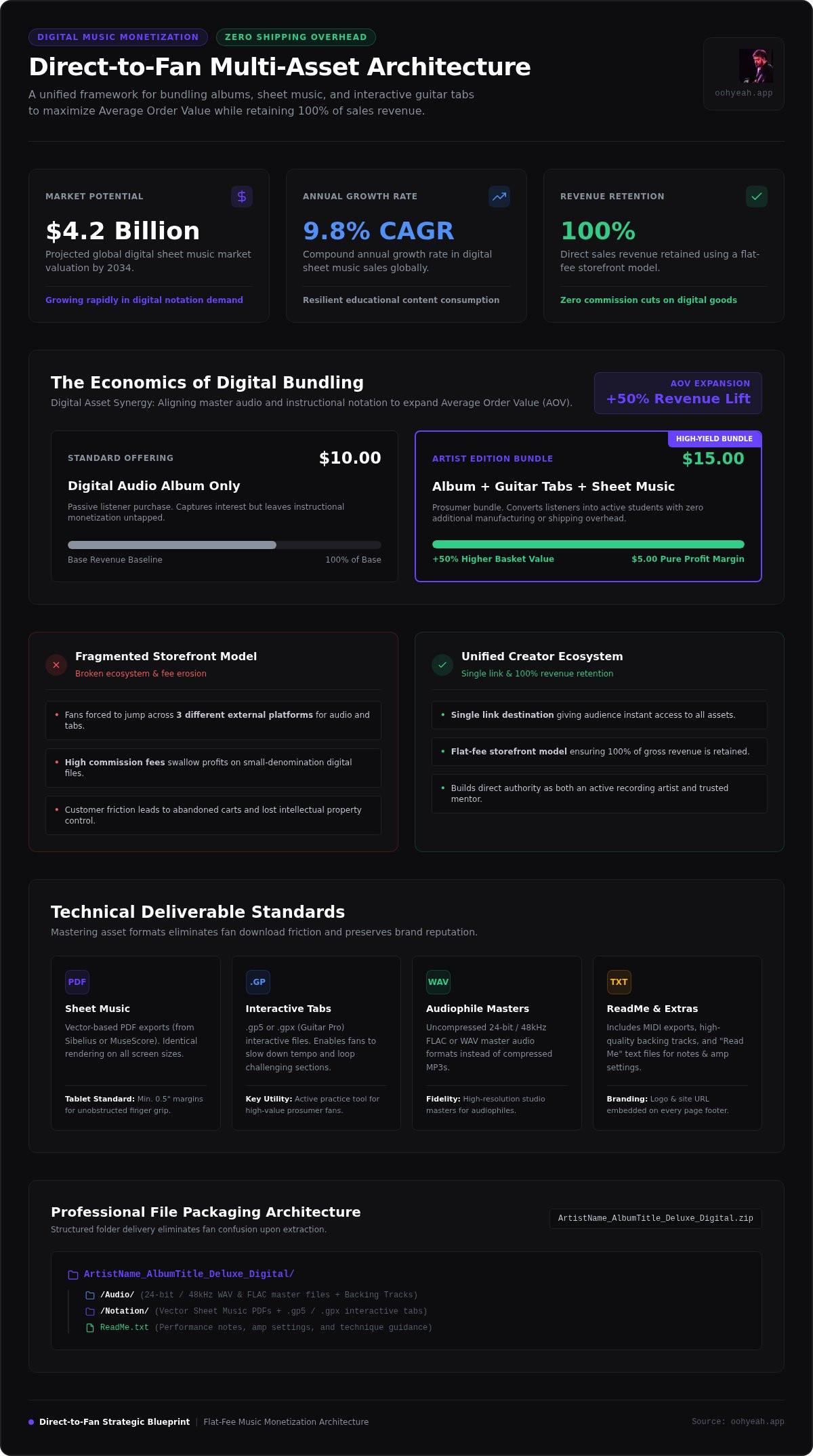
Notation provides a high-margin digital product with zero shipping costs. Unlike physical merch, a digital file has no manufacturing overhead. You create it once and sell it forever. This is the ultimate revenue diversifier for independent artists who need to maximize every release. The global digital sheet music market is projected to reach $4.2 billion by 2034, growing at a CAGR of 9.8%. You can't afford to ignore this segment of your audience.
The Economics of Digital Bundling
Independent growth depends on Average Order Value (AOV). If a fan visits your store to buy a $10 digital album, you've captured their interest. If that same fan sees an "Artist Edition" bundle for $15 that includes the full guitar tabs, you've increased your revenue by 50% with zero extra shipping effort. Digital Asset Synergy is the strategic alignment of audio and instructional files to maximize the lifetime value of every fan interaction.
Tapping Into the "Prosumer" Fanbase
Your most loyal fans are often "prosumers," people who both consume your art and produce their own. These musicians value the "how-to" just as much as the "what." They want to see the evolution of digital sheet music formats and how your specific technique translates to the page. Educational content is the most resilient form of music monetization because it offers long-term utility. When you provide professional-grade notation, you establish yourself as an authority. You aren't just an artist; you're a mentor. This builds a deeper level of trust that keeps fans coming back for every new release.
Preparing Your Digital Assets: Formats and Technical Requirements
Technical friction is the fastest way to lose a fan's trust. If your digital files are messy or incompatible, you aren't just losing a sale; you're damaging your brand. Learning how to sell sheet music and guitar tabs alongside albums requires a professional approach to formatting. You must treat your digital assets with the same care you give your master recordings. Your music deserves better than a cluttered zip file.
Standardizing your files is the first step in understanding how to sell sheet music and guitar tabs alongside albums successfully. PDF remains the absolute king of digital notation. It ensures your layout looks identical on every device, from a massive desktop monitor to a small smartphone screen. This format is so central to the industry that this World Intellectual Property Organization guide highlights digital sheet music sales as a primary revenue driver for modern publishers. Don't settle for low-resolution scans. Use vector-based exports from software like Sibelius or MuseScore to ensure your notes stay crisp at any zoom level.
For audio, stop relying on MP3s. In 2026, listeners expect high-fidelity options. Provide FLAC or WAV files (24-bit/48kHz) to satisfy the audiophiles who support independent creators. When you bundle these with your notation, use a clear folder structure. A zip file named "ArtistName_AlbumTitle_Deluxe_Digital" is professional. Inside, separate the "Audio" and "Notation" files into their own subfolders so fans don't have to hunt for what they bought.
Sheet Music Optimization for Tablets
Most musicians now read from iPads or Android tablets. You need to optimize your PDFs for this reality. Use generous margins, at least 0.5 inches, so fingers don't block the notes when holding the device. Include your logo and website URL in the footer of every page to keep your brand visible. Always include a "Read Me" text file. Use it to explain tricky passages, suggest specific amp settings, or provide performance notes that add value to the purchase.
Guitar Tab File Standards
Static PDFs are good, but interactive files are better. Offering .gp5 or .gpx (Guitar Pro) files is essential because it allows players to slow down the tempo and loop difficult sections. If you want to go the extra mile, include MIDI exports or high-quality backing tracks. This turns a simple tab into a full practice suite. Providing multi-format tab delivery reduces customer support queries because fans can choose the version that fits their specific workflow. You can easily manage these diverse file types by hosting your artist profile on a platform built for modern creators.
Choosing a Unified Storefront vs. Fragmented Marketplaces
Traditional marketplaces are built on a "success tax." The more you sell, the more they take. This model is outdated and predatory for independent creators. When you're figuring out how to sell sheet music and guitar tabs alongside albums, you need to look past the shiny storefront and check the fine print. A 15% or 30% commission on a $5 digital item might feel like a small fee, but it destroys your ability to scale. You shouldn't be penalized for your own growth.
Diversifying your digital products is key to survival in the modern market. Insight from the Berklee College of Music on new media economics highlights that controlling your own digital assets is the foundation of a resilient career. However, that diversification only works if you own the ecosystem. Fragmented marketplaces keep your fan data locked away. This means you can't retarget the person who bought your last album when you release a new tab book. You're effectively renting your audience from a corporation.
The Commission-Free Revolution
Stop paying for the privilege of selling your own work. OohYeah! offers a flat-fee model that ensures you retain 100% of your sales revenue. This is vital for artists with diverse catalogs. If you sell 100 tab books a month, a commission-based platform takes a significant chunk of your profit. On a flat-fee system, your income grows while your costs stay static. Don't fall for the "Discovery" myth. Marketplaces rarely "discover" you; they profit from the fans you worked hard to bring to their platform. You are the driver of your own success.
Platform Feature Checklist
Your digital home base needs to be robust. Look for Artist Profile Hosting that integrates every part of your creative business. You need a platform that handles streaming audio for fans to preview tracks and secure digital delivery for your notation files. The user experience should be seamless. A fan should be able to listen to a song and add the matching guitar tab to their cart without ever leaving your page. This unified approach is the only way to build a professional, long-term music business. Focus on these essentials:
- Instant Delivery: Fans should receive their files the second the payment clears.
- Secure Hosting: Protect your intellectual property with reliable digital asset management.
- Integrated Player: Let fans hear what they are about to learn.
Step-by-Step: Bundling Tabs and Albums for a Successful Launch
Stop treating your notation as an afterthought. Most artists make the mistake of listing music and tabs as separate, disconnected items. This creates friction for the buyer and leads to abandoned carts. Instead, you should focus on a unified launch strategy that highlights the synergy between your audio and your instructional content. A successful release joins these assets together from day one.
Step 1: Create a Unified Product Listing. Build a "Deluxe Digital Edition" for your release. This single product should contain your high-fidelity audio files and your notation PDFs. By mastering how to sell sheet music and guitar tabs alongside albums in one package, you simplify the decision for your fans. They get the full experience without multiple transactions.
Step 2: Set Tiered Pricing. Give your fans choices. Offer a standard album, an "Album + Notation" bundle, and a "Full Discography" option. This structure caters to different levels of fandom and budget. It also makes your premium offers look more attractive by comparison.
Step 3: Host Teaser Content. Use your Artist Profile to provide value before the click. Upload audio snippets and small image previews of your tabs. Let fans see the quality of your transcription. Transparency builds the trust needed for a digital sale.
Step 4: Automate Delivery. Your storefront must handle the heavy lifting. Ensure the platform automatically sends the digital zip file the moment the transaction completes. Instant gratification is a requirement for modern digital goods.
Pricing Strategies for Digital Goods
Use "Anchor Pricing" to guide your fans. By placing a $15 bundle next to a $10 album, the bundle feels like an obvious bargain for only $5 more. Price individual song tabs for casual players, but offer a significant discount for the full album book to encourage larger orders. You can also drive urgency with seasonal promotions or exclusive "Fan-Only" discounts for your most loyal supporters. These tactics reward your community while boosting your average order value.
Marketing Your Unified Storefront
Your social media "Link in Bio" should point to one place: your unified store. Don't send fans on a scavenger hunt across the web. Create video "play-throughs" where you perform a difficult section while the tab scrolls on screen. This proves the accuracy of your notation and creates immediate desire. Encourage your fans to post their own covers using your tabs. This social proof validates your product and builds a community around your music. Ready to launch your creative ecosystem? Build your unified storefront on OohYeah! today and keep every cent you earn.
Scaling Your Independent Music Business with OohYeah!
Scaling a music business requires a foundation that doesn't penalize your growth. Most platforms operate on a percentage-based model. As your sales increase, the platform's cut increases. This "Success Tax" is a barrier to true independence. OohYeah! changes this dynamic by using a flat-fee subscription model. You retain 100% of your sales revenue; standard payment processing fees still apply, but the platform takes nothing from your hard-earned profit. This is the most sustainable way to learn how to sell sheet music and guitar tabs alongside albums while building actual wealth.
Your Artist Profile is your most valuable piece of digital real estate. It's more than just a shop; it's a command center for your brand. By using the Merchandise Marketplace, you can create hybrid offers that bridge the gap between digital and physical products. You can bundle a digital tab book with an exclusive physical item or offer limited-edition downloads. These bundles increase your perceived value and strengthen the bond with your audience. You're no longer just selling a file; you're offering an experience.
Maximizing Your OohYeah! Profile
A professional profile integrates your entire discography with your digital storefront. Fans shouldn't have to search for your content. When they stream a track, the option to buy the notation should be right there in the same interface. You can also use Exclusive Content Access to reward your most dedicated supporters. This creates a recurring revenue stream through Fan Subscriptions, providing stability in an unpredictable industry. Learn the specifics in our Sell Music Directly to Fans: A Step-by-Step Guide.
The Future of Direct-to-Fan Sales
The future of the music industry belongs to the independent creator. By 2026, the shift toward direct-to-fan sales is the standard, not the exception. Independent artists already represent a massive share of the global market. Commission-free platforms are the backbone of this movement. They remove the gatekeepers and put the power back in your hands. You don't need a middleman to manage your relationship with your fans. You need a partner that values equity and transparency. Take control of your career and Start your commission-free journey with OohYeah! today.
Take Control of Your Creative Legacy
Your music deserves a home that respects your work and your wallet. You've learned that fragmented storefronts and high commissions are relics of a broken system. By unifying your digital assets, you provide a professional experience that fans actually enjoy. You've also seen how professional formatting and smart bundling strategies turn single sales into high-value creative ecosystems. Mastering how to sell sheet music and guitar tabs alongside albums is the ultimate way to secure your financial future in 2026.
Stop letting marketplaces tax your success. You need a partner that advocates for your independence through a commission-free marketplace and powerful direct-to-fan sales tools. OohYeah! ensures you maintain 100% revenue retention so you can reinvest in your art. The industry is changing, and the power is shifting back to the people who actually create the music. Don't wait for the old guard to catch up. Join OohYeah! and keep 100% of your sheet music and album sales today. It's time to build a career on your own terms. Your fans are ready; you should be too.
Frequently Asked Questions
Can I sell PDF sheet music on a platform designed for music streaming?
Yes, modern platforms like OohYeah! are built for multi-asset sales. You can host your artist profile and sell digital music downloads alongside PDF notation. This creates a unified storefront where fans don't have to leave the streaming environment to buy your educational materials. It's the most efficient way to manage your creative output without technical friction. You stay in control of your files while fans get immediate access to your work.
How do I protect my digital sheet music from being shared for free?
While no digital file is completely unhackable, professional hosting provides essential security. Use platforms that generate unique, time-sensitive download links for every purchase. You should also add visual watermarks with your branding and website URL to every page of your PDF. Providing high-value interactive files like Guitar Pro formats also encourages fans to buy legitimate copies for the full software features. This combination of security and value protects your intellectual property.
What is the best file format for selling guitar tabs online in 2026?
You should offer a combination of PDF and Guitar Pro (.gp) files. The PDF ensures universal readability on any device or tablet. The Guitar Pro file provides the interactive experience that modern players demand, allowing them to slow down and loop tracks. Providing both formats in a single zip file is the industry standard for learning how to sell sheet music and guitar tabs alongside albums. This multi-format approach satisfies every type of musician.
Should I sell my tabs as individual songs or full album books?
Offer both to maximize your revenue. Individual song tabs cater to casual players who only want to learn one hit. Full album books serve your most dedicated fans and provide a higher average order value. Use tiered pricing to make the full book look like a better deal. This strategy ensures you don't leave money on the table from different segments of your audience. It turns a simple download into a comprehensive educational product.
Is it legal to sell tabs for my own songs if I have a publishing deal?
Review your specific contract, as many modern deals allow artists to retain rights for digital sheet music or require a royalty split. If you are self-published, you own all the rights. Always verify if your publisher has an exclusive arrangement with third-party notation marketplaces before you list your tabs independently. Understanding your rights is the first step toward independence. OohYeah! provides the tools to host these files once you confirm your legal standing.
How much commission do most platforms take from digital notation sales?
Commissions vary wildly across the industry. Major notation marketplaces like ArrangeMe or Musicnotes often take between 50% and 90% of the sale price depending on copyright status. Even general digital storefronts like Gumroad charge a 10% transaction fee plus flat fees. This is why commission-free models are essential for growth. By keeping 100% of your revenue on OohYeah!, you avoid the success tax that eats your profits. You deserve fair pay for your art.
Do I need a separate website to sell sheet music alongside my albums?
No, you don't need a separate site if you use a unified marketplace. Hosting everything on one artist profile reduces technical friction for your fans. It also simplifies your marketing because you only have one link to promote. Learning how to sell sheet music and guitar tabs alongside albums on a single platform keeps your fan data in one place for better retargeting. This streamlined approach builds a stronger, more professional brand for your independent business.
What happens if a fan loses their digital download link?
A professional storefront should automate the recovery process. Most platforms allow fans to log into their account to access their past purchases or request a new link via email. You should choose a provider that handles these customer support queries automatically. This frees up your time to focus on creating music rather than managing technical delivery issues for your supporters. Reliable delivery is the foundation of a good relationship with your fanbase.