How to Sell Music Without a Record Label: A Practical 2026 Guide
Learn how to sell music without a record label in 2026. Build your independent artist system, master distribution, and grow direct-to-fan music sales now.

October 15, 2026
FRANKLY with Frank Lee
What if you could sell music without a record label by building the system a label usually provides, one piece at a time? Learning how to sell music without a record label means more than uploading tracks. You’ll need a plan for your rights, release and discovery channels, and the relationships that bring fans back.
Labels can handle distribution, promotion, and other parts of a release, while independent artists make those decisions themselves. Streaming distribution and direct-to-fan sales serve different purposes: streaming can help listeners discover and play your music, while direct sales give fans a way to buy from and support you.
This guide maps the core responsibilities, compares sales and discovery options, and lays out a practical release plan. You’ll also see how artist profiles, digital downloads, merchandise, and exclusive content can create a direct path for fan support. OohYeah! offers those tools through a recurring artist subscription, without taking commissions on sales. It’s one part of an independent system, not a replacement for every label function.
Key Takeaways
- Learn how to sell music without a record label by connecting rights, release decisions, distribution, promotion, and fan sales into one artist-led plan.
- Prepare your audio, artwork, credits, and permissions before choosing where to release your music.
- Compare direct sales and streaming distribution by what each channel helps you do, then combine them if they serve different goals.
- Map your first release from setting a goal to announcing it, launching, and following up with fans.
- Explore how artist profiles, downloads, merchandise, and exclusive content can support direct fan sales, with OohYeah!’s recurring subscription separate from sales commissions.
What does selling music without a record label actually involve?
Selling music independently means managing the decisions and tasks that take a release from finished recording to listener. You choose how to release it, organize the rights and assets, select distribution and sales channels, promote the music, and decide how to connect with fans. Going without a label removes the label as the central intermediary. It doesn’t remove the work of finding listeners or giving them reasons to return.
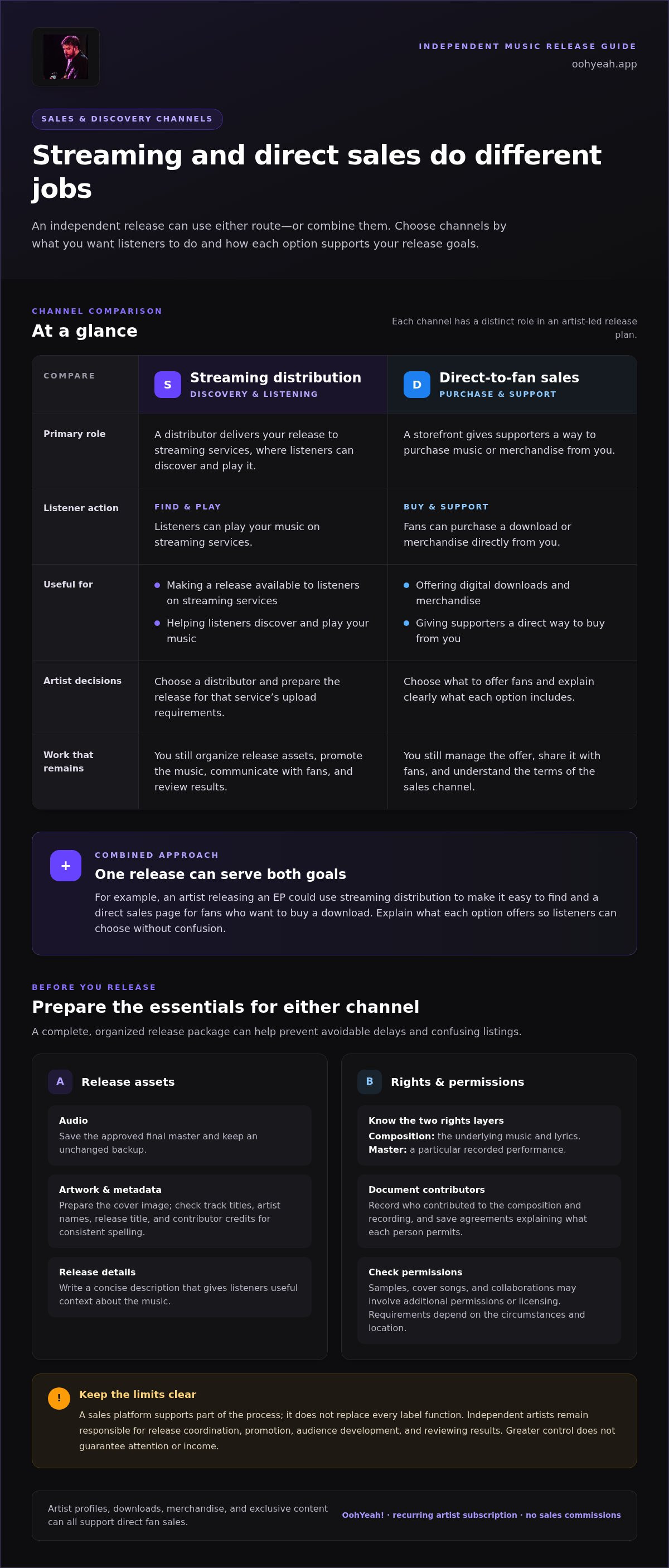
Streaming distribution and direct sales do different jobs. A distributor delivers your release to streaming services, where listeners can discover and play it. A direct-to-fan storefront gives supporters a way to purchase downloads or merchandise from you. You can choose either route or combine them to match your release goals.
Which label functions do independent artists take on?
Labels can coordinate release schedules, organize promotion, develop audiences, and manage commercial plans. On your own, decide which tasks to handle personally and which to delegate to services or collaborators. For a single release, that might mean setting a launch date, preparing promotional materials, sharing updates with fans, and tracking sales. If your release rollout includes a live showcase or hybrid launch concert, working with technical production specialists like Straight Street Event Services can ensure professional sound and staging. A sales platform can support part of the process, but it doesn’t replace every label function.
What control do you gain, and what work remains?
Independence gives you more say over creative direction, release timing, and where your music appears. You can choose a quiet digital release, build anticipation with your community, or offer a download directly to supporters. Those choices don’t guarantee attention or income. You’re also responsible for keeping release assets organized, communicating consistently, and reviewing results so you can make informed decisions next time.
Think of a release as a set of connected choices, not a single upload. For example, an artist releasing an EP might use streaming distribution to make it easy to find and a direct sales page for fans who want to buy a download. Explain what each option offers so fans can choose between streaming and purchasing without confusion.
- Release coordination: Set a schedule and keep audio, artwork, credits, and messaging aligned.
- Marketing and audience development: Share the story behind the release, reach existing listeners, and create ways for new people to discover it.
- Revenue planning: Choose sales channels, understand their terms, and review how each channel supports your goals.
The practical answer to how to sell music without a record label is to build an artist-run system that connects these responsibilities. You gain autonomy, but you also own the follow-through. Control means choosing your path; it doesn’t promise automatic success.
Prepare your music, rights, and release assets before you sell
A smooth release starts before you upload a track or open a sales page. Gather the finished audio, artwork, track titles, contributor credits, and a short description in one place. Then confirm that you have the rights and permissions needed for the music you plan to offer. Taking these steps early can prevent avoidable delays and confusing listings.
Rights have more than one layer. Songwriting rights relate to the underlying composition, such as the music and lyrics. The master recording is a particular recorded performance of that composition. You may control one, both, or neither, depending on who created and financed the work and what your agreements say. Keep the distinction clear when documenting contributors and release permissions.
Check ownership, permissions, and contributor agreements
Write down who contributed to the composition and recording, and keep a copy of any agreement explaining what each person permits. A producer, co-writer, session musician, or featured vocalist may have a role that needs to be documented. Samples, cover songs, and collaborations can involve additional permissions or licensing. Requirements depend on the circumstances and location, so get qualified legal guidance for disputed rights or jurisdiction-specific questions.
Before release, look for gaps rather than relying on memory. If a beat includes a sample, record where it came from and what permission covers its use. If collaborators agreed to split songwriting or recording income, save the terms in writing. This isn’t a substitute for legal advice. It’s a practical way to organize your records and clarify what you’re authorized to sell or distribute.
Create a release-ready package for each channel
Different channels may require different files or steps. A streaming distributor and a digital storefront don’t necessarily use the same upload process, so prepare a complete package and adapt it to each channel’s requirements. Don’t assume a file or image accepted in one place will meet another channel’s specifications.
- Audio: Save the approved final master and keep an unchanged backup.
- Artwork: Store the finished cover image and any alternate versions you’ve prepared.
- Metadata: Check track titles, artist names, release title, and contributor credits for consistent spelling.
- Release details: Write a concise description that gives listeners useful context about the music.
- Rights records: Archive contributor agreements, permission documents, and licensing records alongside the release files.
Release-ready means your final audio, artwork, accurate titles and credits, clear descriptions, and permissions are organized and easy to retrieve. Use a simple folder structure, such as one folder per release with separate subfolders for audio, artwork, metadata, and rights documents. Keep a master copy so you can correct details or prepare another channel listing without rebuilding the package.
Once your files and permissions are in order, create a clear home for direct fan support. For example, an artist profile for music and downloads can connect a release with digital downloads, merchandise, or exclusive content.
Compare direct music sales, streaming distribution, and a combined approach
Choose channels by the job you need them to do. A direct-to-fan storefront gives supporters a way to buy from you. Streaming distribution makes your release available through streaming services. One centers on a purchase and a closer artist-fan connection; the other supports listening and discovery. They can work together rather than compete.
Use this comparison to match a channel to your goal:
| Approach | Purpose | Fan relationship | Format | Artist responsibilities |
|---|---|---|---|---|
| Direct-to-fan storefront | Sell music or related offerings directly to supporters | Creates a clear path for fans to support you directly | Digital downloads, merchandise, or exclusive content, depending on the platform | Present the offer, communicate with fans, and review the platform’s terms and sales reports |
| Streaming distribution | Deliver releases to streaming services | Helps listeners access music where they already stream | Streams through supported services | Prepare and submit release information, promote the release, and understand reporting and payout terms |
| Combined approach | Serve both direct-purchase and streaming-listening goals | Offers fans more than one way to engage | Streaming alongside direct purchases or other fan offers | Keep listings, release details, and fan messaging consistent across channels |
When does direct-to-fan selling make sense?
Direct sales can suit artists with an engaged audience who want to give supporters a clear way to purchase music or access something exclusive. A download offers a way to own a release; merchandise gives fans another way to show support; exclusive content can offer a closer connection. Choose a mix you can create and that reflects what your community values.
OohYeah! is a music marketplace where artists can host profiles, sell digital downloads and merchandise, and offer exclusive content. Artists pay a recurring subscription for platform access and sales tools, and OohYeah! doesn’t take commissions from music or merchandise sales. The subscription is separate from sales, and artists may have other expenses.
When should you add streaming distribution?
Add streaming distribution if making your music available through streaming services supports your discovery and listening goals. It’s a different route from selling a download directly. A listener might stream a song to check it out, then choose to purchase a download or support you in another way. Offering both can make your release easy to access while preserving a direct sales pathway.
Before committing to any service, review its current terms, charges, rights provisions, and payout mechanics. Look beyond the headline fee: understand what triggers charges, how revenue is calculated, and what happens to your release if you stop using the service. The practical answer to how to sell music without a record label may be one channel or a combination. Choose based on your goals, your audience, and the responsibilities you can manage consistently.
Follow a practical step-by-step plan to sell your first release
A first release doesn’t need a complicated campaign. It needs a clear goal, a working path for listeners, and thoughtful communication before and after launch. Use this sequence to plan, launch, and learn, then apply what you learn to your next release.
- Choose one primary goal. Decide what matters most for this release: direct purchases, streaming discovery, or closer fan support. You can offer multiple ways to listen or buy, but one main goal helps shape your message and channel choices.
- Choose your sales and discovery channels. Select a direct-sales option if you want fans to purchase downloads or explore related offers. Add streaming distribution if you want your music available through streaming services. Match the setup to your goal and the time you can give it.
- Prepare your release information. Write a concise description that tells listeners what they’re hearing and what options are available. Name each format plainly, such as a stream, download, merchandise item, or exclusive content, so fans know what they’re choosing.
- Set up the buying path. Make the route from your announcement to the release straightforward. Check that the relevant page opens, the details are accurate, and the purchase steps work as intended. A confusing link or unclear offer can interrupt a fan who’s ready to support you.
- Tell your audience before release. Share the release date and a focused reason to pay attention. Give people useful updates rather than repeating the same announcement. A short studio note, a story about a track, or a preview can help fans feel part of the process.
- Make launch day easy to act on. Post a clear announcement with the correct listening or purchase links. Explain the difference between streaming and buying if you offer both. Thank supporters, and keep the message direct so people can find the option that suits them.
- Follow up and review. Share a post-release update, behind-the-scenes detail, or agreed exclusive that gives fans a reason to return. Then review available visits, sales activity, and audience responses. Look for useful signals, such as which message prompted questions or which channel fans chose. Treat the results as feedback, not a guaranteed forecast.
For a direct-sales pathway, an artist profile can bring downloads, merchandise, and exclusive content together for fans. OohYeah! supports those options through a marketplace where artists pay a recurring subscription and keep all revenue from music and merchandise sales, with no platform commission. The subscription is separate from sales.
Explore OohYeah!’s direct-to-fan marketplace to see how artist profiles, downloads, merchandise, and exclusive content can support a release plan.
Use OohYeah! to build a direct-to-fan music sales hub
Streaming distribution can help listeners find your release on streaming services. A direct-to-fan marketplace serves another purpose: it gives supporters a clear way to access music and support you directly. OohYeah! brings artist profile hosting, digital downloads, merchandise, and exclusive content into one marketplace. Use it as one part of an artist-run release system, alongside the channels and people you rely on for other needs. It isn’t a replacement for every label function, such as talent management or radio promotion.
Give fans one place to discover and support your work
An artist profile can give fans a home base for your work and the ways they can support it. Different options suit different preferences. One listener may want a digital download, another may choose merchandise, while a dedicated supporter may value access to exclusive content. Make each option clear so fans can decide how they want to connect.
- Digital downloads: Offer music for fans who want to purchase and access a release directly.
- Merchandise: Give supporters another way to show their connection to your music.
- Exclusive content: Create an additional way for fans to support your work and engage with what you share.
Use your profile as a destination in your release communication. Point fans there when you announce new music, explain what’s available, and keep the message focused on the choices they can make. A marketplace supports the sales pathway; audience development and promotion still need their own plan.
Understand the platform model before you get started
OohYeah! charges artists a recurring subscription fee for platform access and sales tools. Separately, it takes no commission from music and merchandise sales. Artists keep all revenue from those sales rather than paying a platform commission, but the subscription and any other expenses still belong in your release budget.
Consider the role you want the marketplace to play. You might use an artist profile to offer downloads, merchandise, and exclusive content while using streaming distribution separately for streaming-service availability. Review the relevant terms and include the recurring subscription in your overall budget. This helps you assess the sales channel in the context of your wider release plan.
Ready to create a direct-to-fan destination for your music and support options? Explore OohYeah!’s artist profiles and sales options as one building block in your independent release system.
Make your next release the start of a system you can grow
Your first independent release doesn’t need to solve every challenge at once. Treat it as a starting point. Choose one improvement to carry into the next release, such as making your offer clearer, planning communications earlier, or setting aside time to review what fans respond to. Keep brief notes on what you tried and what you’d change. Over time, small adjustments can turn a one-off launch into a process that fits your music and your community.
That’s the practical heart of how to sell music without a record label: build an approach you can manage, learn from, and shape on your terms. If direct fan sales belong in your plan, build your direct-to-fan music hub with OohYeah!
Your path doesn’t have to look like anyone else’s. Start with the next step you can take, then keep creating and growing with your fans.
Frequently Asked Questions
Can I sell music without a record label and still release it on streaming services?
Yes. Independent artists can sell directly to fans and release music on streaming services. For example, you could offer a paid download through a storefront while arranging streaming availability separately through a distribution service. First, decide whether the release prioritizes purchases, easier listening access, or both. Then compare each service’s current terms, rights provisions, charges, and payout process so you understand what you’re agreeing to.
Do I need to own the master recording to sell a song?
You need the appropriate rights or permissions to sell and distribute the recording, but the master and the song are separate rights. The master is the specific recorded performance; the composition covers the underlying music and lyrics. For example, you might have permission to use a recording while another contributor has rights in the composition. Check contracts and contributor records, and get qualified legal advice if ownership or licensing is unclear.
How much can an independent artist make selling music?
There’s no guaranteed amount. Income depends on factors such as audience interest, format, sales activity, and the expenses tied to your release plan. Separate gross sales from what remains after platform charges, subscriptions, payment costs, and other applicable expenses. For a useful comparison, track each release’s sales and costs in the same record, then review which offers fans responded to. Use that evidence to adjust future plans rather than treating one release as a forecast.
Can I sell cover songs without a record label?
Possibly, but a label doesn’t determine whether you have permission to sell a cover. Requirements can depend on your intended use, how the recording is made and distributed, and the relevant jurisdiction. Permission to perform a song doesn’t automatically cover every recording or sales use. Before listing a cover, identify and obtain the rights and permissions needed for your specific release. Consult a qualified legal professional if the requirements are uncertain.
Is a music distributor the same as a record label?
No. A distributor generally helps deliver music to selected outlets under its service terms. A label may take on a broader role, such as investing in a release or supporting its planning and marketing, depending on the agreement. Using a distributor to make a single available doesn’t automatically provide a promotional campaign or broader artist support. Read the service description and agreement closely so you know what’s included and what remains your responsibility.
Can I sell downloads and merchandise while my music is on streaming services?
Yes, direct sales and streaming availability can often be part of the same independent release plan, provided the relevant rights and service terms allow it. A listener might discover a track through streaming and later want a downloadable copy or merchandise. Make those options distinct and easy to understand. Before offering the same release in multiple places, check for exclusivity clauses, rights restrictions, or other requirements that could affect where and how you sell it.
What should I do if someone uses my music without permission?
Start by preserving evidence: save the page or post, note where the music appears, and gather records showing your connection to the work and recording. Keep relevant messages and agreements together. Next, review the platform’s reporting process and follow its stated steps. The appropriate response can vary by agreement, platform, and jurisdiction, so don’t assume every case has the same solution or timeline. For a serious dispute, seek qualified legal advice.