
How to Sell Limited-Run Cassette Tapes Direct to Fans
Master selling limited run cassette tapes direct to fans. Learn how to manage stock, compare platforms, avoid heavy fees, and fulfill orders with confidence.

October 11, 2026
FRANKLY with Frank Lee
What if the best place to sell a scarce cassette isn’t the biggest marketplace, but a channel that helps you stay close to the fans who want it? Selling limited run cassette tapes direct to fans can keep a release personal, but it works best when you plan the sales route, stock, fees, and fulfillment together.
It’s natural to worry that platform commissions will eat into each sale, demand will exceed your small inventory, or your announcement will disappear in a social feed. A limited run needs a clear offer and a straightforward way to order, without losing the direct fan connection that makes the release matter.
This guide covers how to prepare a cassette release, compare online sales routes, and plan inventory and shipping. You’ll see how options such as Bandcamp, Shopify, and OohYeah! differ. OohYeah! charges artists a recurring subscription and takes no commission on sales, though standard payment processing fees still apply. By the end, you’ll be better equipped to choose a route that fits your run and build a stronger relationship with the people supporting it.
Key Takeaways
- Distinguish a new small-batch release from genuinely out-of-print stock, then verify how many copies are available to sell.
- Use past sales and direct fan interest to shape your release plan before committing scarce inventory.
- Compare online routes by audience access, sales control, fees, discoverability, and the work each puts on your plate.
- Make selling limited run cassette tapes direct to fans easier with clear release details, accurate stock counts, and delivery terms buyers can understand.
- Consider whether an artist profile that brings merchandise, music, and exclusive content together suits your release, and weigh the platform subscription against its commission-free sales model.
Why sell limited-run cassette tapes directly to fans?
A cassette can carry more than music. Its artwork, liner notes, packaging, and physical format can give fans a tangible connection to a release. The format also has a long musical history, from its invention and evolution to its peak popularity, which readers can explore in this overview of the history of cassette tapes. For artists selling limited run cassette tapes direct to fans, the key is to make the release’s story and actual availability easy to understand.
Direct-to-fan cassette sales let artists offer physical music through a direct sales channel while sharing the release’s context with supporters. That connection can make a scarce release feel more personal. It also means the artist is responsible for presenting the item accurately and managing the sale.
What makes a cassette release limited or out of print?
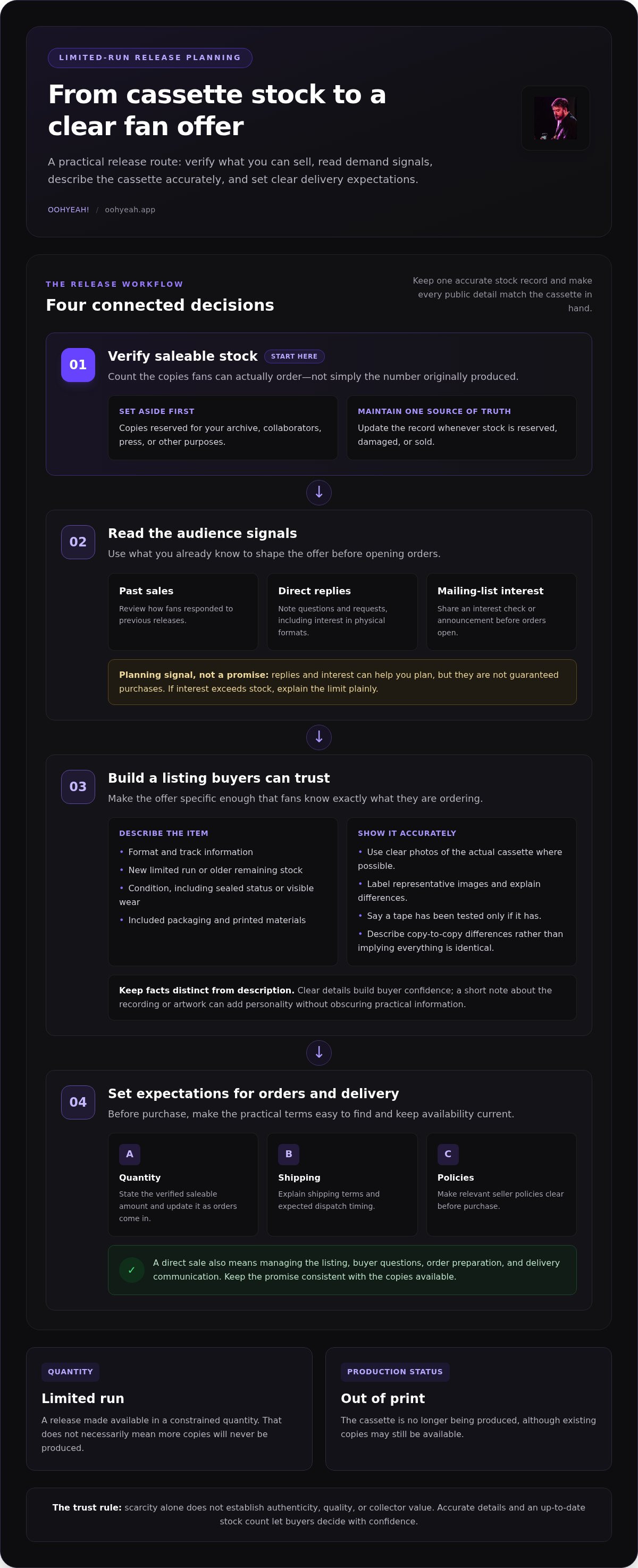
A limited run is a release made available in a constrained quantity. It doesn’t necessarily mean the artist will never produce more. Out of print means the cassette is no longer being produced, though existing copies may still be available. The terms describe different things: one refers to quantity, the other to production status.
Be specific about the stock you’re offering. Say whether the tapes are new, used, or remaining inventory from an older release. Describe condition accurately, including whether a copy is sealed or whether its case or paper inserts show wear. Say a tape has been tested only if it has. A small quantity alone doesn’t prove a cassette is authentic, high quality, or valuable to collectors. Let clear details earn buyers’ confidence.
Why direct sales can suit a scarce physical release
Direct sales give you room to explain what makes a release meaningful. Perhaps it documents a particular period, pairs the music with distinctive artwork, or brings an older recording back into circulation. Keep the story grounded in facts about the release. Fans can then decide what the cassette means to them instead of having to infer its significance from a short product title.
A direct channel can also help you reach people who already know your work. Share release details through the audience connections you’ve built, answer questions, and make the path from interest to purchase clear. This doesn’t guarantee demand, but it gives existing supporters a focused way to discover the cassette instead of relying only on chance exposure.
There’s a trade-off. Direct selling puts the practical work on you: writing the listing, keeping availability accurate, handling buyer questions, preparing orders, and communicating about delivery. That responsibility matters when stock is finite. If copies sell out, an outdated listing or vague description can disappoint fans and undermine the trust a personal release is meant to build. Make the promise match the cassette in hand.
Plan the cassette release around stock, fans, and the offer
A strong release plan starts with what you can actually sell. Count the saleable copies, then set aside any tapes reserved for your archive, collaborators, press, or other purposes. Your available quantity is the number fans can order, not the total number originally produced. Keep one record as your source of truth, and update it whenever stock is reserved, damaged, or sold.
Next, shape the offer around the people most likely to care. Past release sales, direct replies, and mailing-list interest can help you understand demand, but they’re signals, not guarantees. The aim of selling limited run cassette tapes direct to fans is to make a considered offer without promising more copies than you can deliver. Merchandise can also be part of a wider artist-fan relationship, as discussed in this overview of music merchandise as a revenue stream.
Estimate demand before you publish the listing
Review how fans responded to previous releases. Note what sold, which announcements drew questions, and whether listeners asked for physical formats. Then share an interest check or announcement before opening orders. Treat replies as useful planning evidence, not firm commitments to buy. If you mention a quantity in a post or email, keep it consistent with the listing and your verified saleable stock.
For example, if some copies are reserved for collaborators, subtract them before announcing how many are available. If interest exceeds stock, explain the limit plainly rather than implying you can replenish an out-of-print release.
Build a clear cassette listing fans can trust
Give buyers enough detail to know exactly what they’re ordering. State the format, track information, whether the cassette is a new limited run or older remaining stock, its condition, and what packaging or printed materials are included. Separate confirmed details from descriptive language. If details vary between copies, say so instead of suggesting every item is identical.
- Use clear photos of the actual cassette where possible. If you use a representative image, label it and describe any differences.
- Explain the listed quantity and update availability as orders come in.
- State shipping terms, expected dispatch timing, and relevant seller policies before purchase.
Clarity protects both sides. Fans can make an informed choice, and you’re less likely to spend release day answering basic questions or resolving mismatched expectations. A concise listing can still carry personality: add a short note about the recording or artwork, then keep practical details easy to scan.
Once your stock, audience signals, and listing details are aligned, explore OohYeah! for direct-to-fan music and merchandise sales as one way to connect merchandise with your artist presence.
Compare online routes for selling limited cassette stock
The right route depends on where your listeners already shop, how much control you want, and how much time you can give each order. Selling limited run cassette tapes direct to fans can keep the release close to your artist presence, while broader marketplaces and retail offer other ways to reach buyers. Compare the whole arrangement, not just its headline fee: subscriptions, payment processing, shipping materials, and fulfillment time all affect the work and return.
| Route | Audience access | Sales control | Fee structure | Discoverability | Seller workload |
|---|---|---|---|---|---|
| Direct-to-fan marketplace | Best suited to an artist’s existing supporters | Artist-centered presentation and direct fan context | Varies; may involve commissions or a recurring subscription, plus payment processing | Can support repeat engagement; reach often depends on bringing fans to the profile | Seller handles physical order preparation and dispatch |
| General online marketplace | Shoppers browse across many sellers and categories | Listing sits within the marketplace’s format and policies | Check current listing, selling, and payment fees | Marketplace search may surface items to shoppers browsing there | Seller manages listing accuracy, buyer questions, and fulfillment |
| Social-led sales | People who follow or encounter your posts | Personal promotion, but sales depend on the chosen ordering and payment setup | Costs depend on the tools used to take payment and orders | Posts can reach followers, but visibility can vary | Seller coordinates promotion, order details, and delivery |
| Physical retail | Customers shopping in participating stores | Retail placement and terms shape how the cassette is presented | Terms vary by arrangement; account for the retailer’s share and any other agreed costs | Can put stock in front of store visitors, without guaranteeing sales | May involve separate retail coordination and stock management |
Artist-centered marketplaces and general marketplaces
An artist-centered marketplace can give a cassette context alongside an artist profile, music, and other offerings. A general marketplace may put the item in front of people searching its catalog, but the listing competes with unrelated products and gives less room for an artist’s wider story. Neither guarantees discovery. Review current fees, policies, and who handles each fulfillment step before choosing.
OohYeah! lets artists present merchandise alongside digital music and exclusive content. It takes no commission on sales, but artists pay a recurring subscription, and standard payment processing fees still apply. That differs from a commission-based model: compare the subscription and processing costs with your expected sales rather than treating “commission-free” as “cost-free.”
Direct online sales and physical retail
Online marketplaces and social-led sales are different from physical retail distribution. Retail can place cassettes in stores, but it involves a separate relationship and set of terms. Direct online selling keeps the conversation closer to your audience while putting listing and order responsibilities on you. Choose based on your stock size and fans’ habits, not on a promise of guaranteed reach.
Set up a smooth online cassette sale from listing to delivery
A reliable order process protects the fan experience and your limited stock. Before publishing, decide who will check orders, prepare packages, and send buyer updates. Then follow the same steps for every order. Simple routines reduce missed orders and help you manage a short run without turning each sale into a scramble.
Prepare inventory and order handling before launch
Limited-stock listings should match your verified saleable inventory. Set aside damaged copies, promotional stock, and tapes reserved for other purposes before setting the quantity available to buy. If you sell through more than one channel, keep a single inventory record and update every active listing as orders arrive. If stock can’t sync automatically, check and adjust each listing promptly. Pause sales on a channel if you can’t confirm remaining availability.
Before launch, prepare the materials and routine you’ll use for each order. Choose packaging that fits the cassette and helps protect it in transit. Keep order details together so you can confirm the item, address, and shipping option before dispatch. Set a dispatch timeframe you can realistically meet based on your schedule and shipping arrangements, then state it clearly in the listing.
Follow a repeatable workflow
- Confirm stock. Check saleable copies and subtract any new reservations or unavailable items.
- Review the listing. Make sure the description, available quantity, shipping terms, and dispatch expectations are accurate.
- Record each order. Confirm the cassette and buyer details, then reduce available stock across your active sales channels.
- Pack and dispatch. Use the prepared packaging, follow the selected shipping arrangement, and retain the order information you need to track the sale.
- Update the buyer. Send an order confirmation and a dispatch update through the sales channel you’re using.
- Close the loop. After delivery, respond to questions and invite the buyer to share feedback without offering a reward for a particular review.
This workflow makes selling limited run cassette tapes direct to fans more manageable, especially if orders come in through separate channels. A quick stock check before and after a promotion can also catch mismatches before a fan orders a cassette that has already sold.
Keep buyers informed after purchase
Clear communication matters once the order is placed. Confirm what the buyer ordered, share an update when it’s dispatched, and reply promptly to questions about condition, delivery, or order status. If a delay or issue arises, explain what you know and what happens next. Don’t promise a delivery date you can’t control. A concise, honest message is better than leaving supporters to guess.
After the package arrives, a friendly note can thank the buyer and invite feedback. Keep it optional and genuine. Each order is a chance to build trust through follow-through, not just to move a cassette.
For an artist presence that brings merchandise together with music and exclusive content, explore OohYeah! for direct-to-fan sales. Artists pay a recurring subscription, while OohYeah! takes no commission on sales.
Use OohYeah! to connect cassette sales with your artist presence
A cassette can be part of a broader relationship with listeners, not just a one-off item for sale. OohYeah! gives artists a direct-to-fan platform where an artist profile can bring together merchandise, digital music downloads, and exclusive content. That shared presence helps fans connect a physical release with the music and artist behind it.
For artists selling limited run cassette tapes direct to fans, this can create a clear home for more than one part of their work. A listener might discover a digital release, explore exclusive content, and find merchandise through the same artist presence. The cassette still needs its own accurate description and availability details, but its context can sit alongside the rest of your creative work.
Bring your music and merchandise into one artist presence
An artist profile can connect merchandise with digital downloads and exclusive content, giving supporters more ways to engage with an artist. For a cassette release, the surrounding context might explain its place in your catalog or point fans toward related music. Keep descriptions specific to what you’re offering, and make stock and condition clear so the story never replaces essential buying details.
OohYeah! provides artist profiles and a marketplace for music and merchandise. Artists handle physical inventory and fulfillment, including confirming orders, preparing packages, and dispatching tapes. Keep that process clear, whatever online route you use.
Understand the platform economics before choosing
OohYeah! charges artists a recurring subscription rather than taking a commission from each sale. Artists keep 100% of music and merchandise sales revenue without platform commissions. Standard payment processing fees still apply, so commission-free doesn’t mean there are no transaction costs.
Consider the subscription alongside the expenses you manage for a physical release, including production, packaging, and shipping. These costs are separate from the platform’s commission model. Think about whether you’ll use the artist profile and sales tools beyond one cassette release, and weigh that value against your own sales plans. The best fit depends on your audience, goals, and the work you’re prepared to handle.
A practical next step is to consider how you want fans to encounter your music, merchandise, and exclusive content together. Explore OohYeah! and build your direct-to-fan presence.
Turn your next release into a lasting connection
A limited cassette can be a starting point, not a one-time transaction. The way you invite fans into a release can shape how they follow your work, hear what comes next, and choose to support you. Think beyond launch day: what would make this release feel connected to the music and community you’re building?
Choose a manageable next step. Decide where you want fans to discover your work, what you’ll share around the cassette, and how you’ll keep the conversation going after orders are fulfilled. A thoughtful approach to selling limited run cassette tapes direct to fans can turn a short release window into a more personal artist-fan connection.
If you’re ready to bring your artist presence and direct-to-fan plans together, explore OohYeah! and build your direct-to-fan music and merchandise presence. Take the next step at your own pace, and make the release yours from the first announcement to the final note of thanks.
Frequently Asked Questions
Can I sell cassette tapes online if they are out of print?
Yes. You can list remaining out-of-print copies online if you have the stock and the right to sell it. Keep a record of where the copies came from and distinguish the original release from later reissues or other versions, if applicable. If the last copy sells, close or mark the listing unavailable promptly. That update prevents a fan from paying for a cassette you can no longer send.
Should I take preorders for a limited cassette release?
Preorders can help you measure interest before the tapes are ready, but they add tracking and communication work. Clearly label the offer as a preorder, give a realistic dispatch estimate, and explain how you’ll share updates if timing changes. Keep preorder details separate from ready-to-ship stock so buyers understand what they’re ordering. If you can’t reliably track commitments and send updates, wait until the tapes are in hand.
How should I price a limited-run cassette tape?
Build your price around the release’s actual costs and your goals, not another artist’s asking price. Make a simple worksheet that accounts for production, packaging, transaction or platform charges, and the shipping arrangement. Then decide what amount supports your work while making sense for your audience. Check the total buyers will see before they pay, including any shipping charge, and don’t use scarcity alone to justify the price.
How can I avoid overselling a small cassette run?
Use one inventory source of truth, such as a simple stock sheet, and record each sale or reservation as it happens. Selling limited run cassette tapes direct to fans across multiple channels takes extra coordination, so consider assigning stock to each channel instead of offering every copy everywhere. For example, reserve a set quantity for your artist profile and the rest for another marketplace. Reconcile the counts before each promotion.
What should I include in a cassette tape product description?
Identify the exact release before describing why fans might want it. Include the artist and title, version or edition distinction, track sequence, tape format, and the condition of the copy. If it differs from another version, describe that difference plainly and only when accurate. Organize the information around a buyer’s decisions: what the cassette is, what arrives with it, and whether anything about the copy varies.
Can I sell a cassette and a digital download together?
You can present a tape and download together if you can provide both and your sales setup supports the offer. Spell out exactly what the buyer receives, including the audio format and how they’ll access the files. Keep the physical item’s shipping information distinct from the digital delivery instructions. Before publishing, test the instructions from a buyer’s perspective so neither part of the offer is unclear.
How do I ship cassette tapes safely to buyers?
Choose packaging that limits movement and protects the cassette case from pressure during ordinary transit. Before opening orders, pack a sample and check whether the cassette shifts inside or the case presses against the outer packaging. Weigh the complete parcel, not just the tape, when choosing a shipping option. Tell buyers which shipping arrangement applies to their order, and share tracking details when your selected service provides them.