
How to Optimize Artist Profiles for More Direct Music Sales
Learn artist profile optimization for direct music sales with photos, scannable bios, featured tracks, and clear links that turn listeners into supporters.
October 30, 2026
FRANKLY with Frank Lee
Your artist profile should do more than introduce your music. Effective artist profile optimization for direct music sales connects a clear artist identity with a simple path to buy, support, and stay connected. Choose strong photos, make your bio easy to scan, and feature music that gives listeners a reason to take the next step.
A great song can earn attention, but attention alone does not tell fans where to find your music or how to support you directly. A well-organized profile makes those next steps clear while keeping the personality that drew listeners in.
In this guide, you’ll learn how to build a sales-focused artist website, choose profile photos that fit your identity, keep your profiles up to date, and feature music that supports direct sales. Each step can help turn a passing listen into a stronger connection with your audience.
Key Takeaways
- Prepare profile photos that stay sharp across platforms, and keep original files ready for future updates.
- Make your bio, links, and profile details work together so fans can quickly understand your music and what to do next.
- Use an artist website as a central place to feature music, merchandise, and ways for fans to stay connected.
- Choose featured tracks and clear purchase paths that help interested listeners move from discovery to direct support.
Professional profile photography and platform specifications
Include a recognizable profile photo, a concise bio, current music, and direct links to your website, music, and social profiles. Help fans identify you quickly and find a clear next step, such as listening, buying, or joining your mailing list.
- Choose a versatile portrait. Use a clear, recent image that reflects your music and remains recognizable at thumbnail size. Keep your face visible, use uncluttered backgrounds, and choose consistent colors across your website and social profiles. A thoughtful portrait helps fans connect your name, sound, and visual identity.
- Prepare high-resolution files. Aim for a profile photo at least 2000 pixels wide, then save the original in RAW format at 300 DPI. Keep a high-quality master file and create platform-sized copies from it. This protects image quality when profiles crop or resize photos differently.
- Match each platform’s requirements. Image requirements can vary by platform, so check the current specifications before preparing your photo. Check platform specifications before a photo shoot, as requirements can change. Plan framing with cropping in mind: leave enough space around your face so square and circular formats still work.
- Set a practical photography plan. If you’re taking portraits yourself, use natural light, a steady camera, and a clean background. Capture a few expressions and crops, then test them at thumbnail size before updating your profiles.
- Connect your image to useful profile details. Pair the portrait with your artist name, a focused bio, and links to your website, music, and social channels. Make sure the bio and image represent the same current era or release. For example, feature a recent portrait alongside the release you’re promoting, not outdated artwork.
Profile optimization and algorithmic recommendations
Make each profile complete, current, and easy to use. Clear information helps listeners discover your music and decide what to do next.
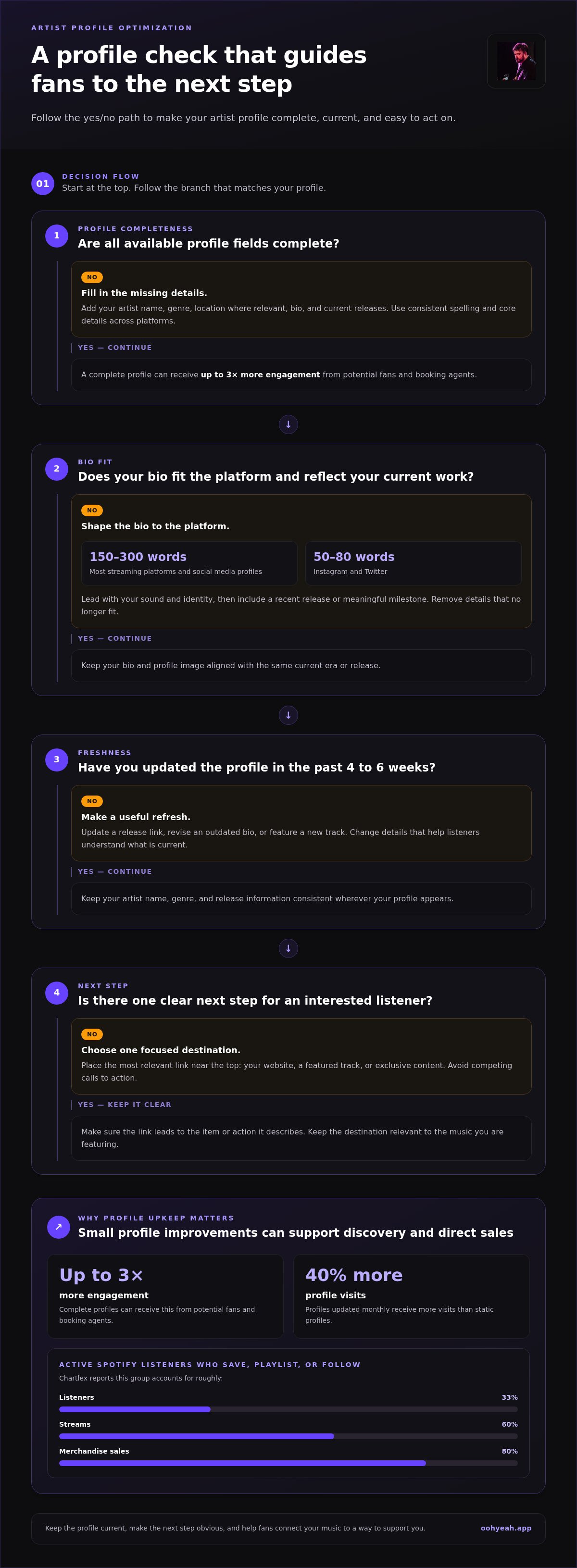
- Complete every available profile field. Add your artist name, genre, location where relevant, bio, and current releases. Use the same spelling and core details across platforms so fans can recognize you. Complete profiles can receive up to three times more engagement from potential fans and booking agents. Treat every blank field as a missed chance to explain your music or guide a listener.
- Shape your bio for each platform. Write 150 to 300 words for most streaming platforms and social media profiles. For Instagram and Twitter, prepare a shorter bio of 50 to 80 words. Lead with your sound and identity, then add a recent release or a meaningful milestone. Keep the wording specific, and remove details that no longer reflect your current work.
Optimize the Artist Profile
Update profile details every 4 to 6 weeks, and make each change useful. Refresh a release link, revise an outdated bio, or feature a new track. Profiles updated monthly receive 40% more profile visits than static profiles. Keep your artist name, genre, and release information consistent; mismatched details can make it harder for listeners to connect your profile with your music.
Focus on Direct Sales and Conversions
Give each profile a clear next step, such as visiting your website, listening to a featured track, or exploring exclusive content. Put the most relevant link near the top, and make sure it leads to the item or action described. Avoid competing calls to action that leave fans unsure. A focused artist page can bring key information together; build a focused artist home for listeners who want to follow your work.
Complete artist profiles can earn up to three times the engagement from potential fans and booking agents, so keep every field aligned with the music and the action you want visitors to take. Chartlex reports that active Spotify listeners who save, playlist, or follow an artist account for roughly 33% of listeners and generate 60% of streams and 80% of merchandise sales. Make it easy for visitors to follow, save, or playlist a track, and keep the profile current so those actions remain relevant.
Which platforms let musicians sell music directly to fans?
Choose where you want to direct sales first, then use discovery platforms to guide listeners there. An artist website can bring music, merchandise, show details, and mailing-list signups together.
- Build a central artist website. Use your site as the home base for your music, merchandise, upcoming shows, and mailing-list signup. Give each offer its own clear path. For example, a fan ready to buy a download shouldn’t have to search through event details to find it. Keep the page focused on your current releases and ways to support your work.
- Use a direct-to-fan marketplace for purchases. Choose a platform that lets fans buy digital music or merchandise directly from your artist page. Present the format and release clearly, then connect the purchase option to the relevant album or track. Keep product descriptions accurate, and make the next step obvious on mobile and desktop.
- Use streaming and social profiles for discovery. Treat listening platforms and social channels as places to introduce your sound and build interest. Feature a track that represents your current work, then direct interested fans to your website or sales page. For example, a post about a new single can lead to its download page rather than a general profile with no clear next action.
- Offer a reason to return. Use your website or artist profile to share updates, mailing-list access, or exclusive material. A behind-the-scenes recording or an early preview can give supporters a closer connection to a release. Explain what fans will find before they click, and keep each link relevant to the content you’re promoting.
- Connect the channels with consistent links. Add the same destination to your artist website, social bios, and profile pages. Use descriptive link labels such as “Download the new album” instead of “Click here.” Test each path from a phone, and remove outdated links when a release or campaign ends. This keeps discovery connected to a current way to support you directly.
How can artists optimize profiles to increase direct sales and conversions?
Create a short route from discovery to purchase. Each profile element should help fans understand what you offer and choose their next step.
- Feature one priority offer. Choose the release or item you want fans to notice first. Give it a clear title, concise description, and visible purchase option. For example, lead with a new album rather than presenting every release equally. A focused page helps listeners understand what you’re promoting without sorting through competing messages.
- Write copy around the listener’s decision. Explain what the fan will receive and why it matters. For a digital album, describe its sound, mood, or standout track. Avoid vague labels such as “new music.” Specific language helps a listener decide whether the release fits their interests before they reach the purchase step.
- Make the purchase path easy to follow. Place the relevant action beside the offer, then remove unrelated links from that part of the page. Check the route from your artist profile to the purchase page. A fan interested in a track shouldn’t have to return to your homepage or search through a menu to find it.
- Connect releases to meaningful context. Add a short story, lyric note, or recording detail that gives fans a reason to explore further. Use genuine milestones carefully. For example, if 500,000 streams marks an important moment in your career, explain what that achievement means to you instead of using it as an unexplained boast.
- Review the path after each campaign. Follow the journey from a social post to the profile, offer, and completed purchase. Note where fans stop, then adjust the copy, placement, or link that creates confusion. Keep the change focused so you can see what improved the experience. Create a profile built for direct music sales and give supporters a clear way to purchase your work.
Chartlex reports that artists with fully optimized Spotify profiles convert listeners to followers at 2-3x the rate of artists with incomplete profiles. Keep profile details complete and aligned with the offer so interested listeners can take the next step.
OohYeah!: Artist Profile Hosting
OohYeah! gives artists a direct place to present their music and connect fans with ways to support it. Its Artist Profile Hosting brings your artist presence together with Digital Music Downloads, a Merchandise Marketplace, and Exclusive Content Access.
Turn to OohYeah! when you want fans to discover your work and support you directly. Artists retain 100% of sales revenue from music and merchandise, so your profile can connect your releases and merchandise with the people who value them.
Use your hosted profile as a clear destination for supporters, then feature downloads or exclusive content that suits your audience. Merchandise offers another way for fans to show support. Keep the profile focused on your current work and the next step you want visitors to take.
Visit oohyeah.app to explore OohYeah! Artist Profile Hosting.
Make Your Artist Profile the Start of a Stronger Connection
Your profile can grow with your music. Treat it as a living part of your creative work, not a page you set up once and forget. As your sound develops, make sure the experience still feels like you and gives fans a clear way to stay involved.
Artist profile optimization for direct music sales works best when each choice strengthens your relationship with your audience. Pay attention to what supporters respond to, then use that insight to shape the releases and experiences you feature. A thoughtful profile can make support feel personal, not transactional.
When you’re ready to put that approach into practice, contact OohYeah! about your artist profile. Keep building on your own terms, and make every connection count.
Frequently Asked Questions
What is artist profile optimization for direct music sales?
It means shaping your artist profiles to help fans move from discovering your music to supporting it directly. Beyond polished visuals, make sure each profile identifies you, reflects your current work, and makes the next action easy to find. For example, a fan who discovers a live clip should be able to find the related release without guessing which album or track it features.
How can artists collect fan emails and promote direct-to-fan sales?
Invite fans to join your mailing list with a clear signup form on your website, and explain what updates they’ll receive. Share useful messages, such as a release note, the story behind a track, or news about new merchandise. Link each message to the specific music or item it describes, so supporters can act without searching through unrelated pages.
What analytics and conversion metrics should musicians track?
Track the journey from social post to profile, offer, and purchase, noting where fans stop. You can also monitor profile visits, engagement, and how effectively listeners become followers.