How to Build a Paid Fan Club for Musicians in 2026
Learn how to build a paid fan club for musicians in 2026. Create sustainable membership tiers, deliver real recurring value, and grow your music income today.

September 28, 2026
FRANKLY with Frank Lee
Your most devoted fans don’t need a flood of exclusive posts. They need a clear reason to stay. If you’re figuring out how to build a paid fan club for musicians, the hard part isn’t opening a membership page. It’s choosing recurring value fans want, then delivering it without turning every week into a content sprint.
Fans need to know what they’re paying for, how often they’ll hear from you, and what happens if plans change. You need a club that strengthens your connection with listeners instead of leaving it at the mercy of social feeds.
This guide will help you shape a membership promise that fits your music and audience, choose manageable benefits, and set clear access expectations. You’ll get a practical launch plan, from testing what listeners value to explaining the offer and maintaining direct relationships after sign-up. The aim isn’t to build the biggest club overnight. It’s to create a fair, sustainable exchange that gives fans a closer connection and gives you recurring support you can keep earning.
Key Takeaways
- Make the membership promise specific: show fans what ongoing support gives them and how it differs from one-off purchases or free updates.
- Choose a core benefit you can deliver consistently, then treat occasional extras as bonuses rather than obligations.
- Compare one membership level with a small number of tiers. Set clear boundaries so every added benefit is distinct and manageable.
- Learn how to build a paid fan club for musicians with a practical launch sequence: test demand, shape the offer, prepare benefits, choose a platform, and invite fans.
- Evaluate whether separate tools or a music marketplace better fits your needs for exclusive content, downloads, merchandise, discovery, and reporting.
What is a paid fan club for musicians, and what should it deliver?
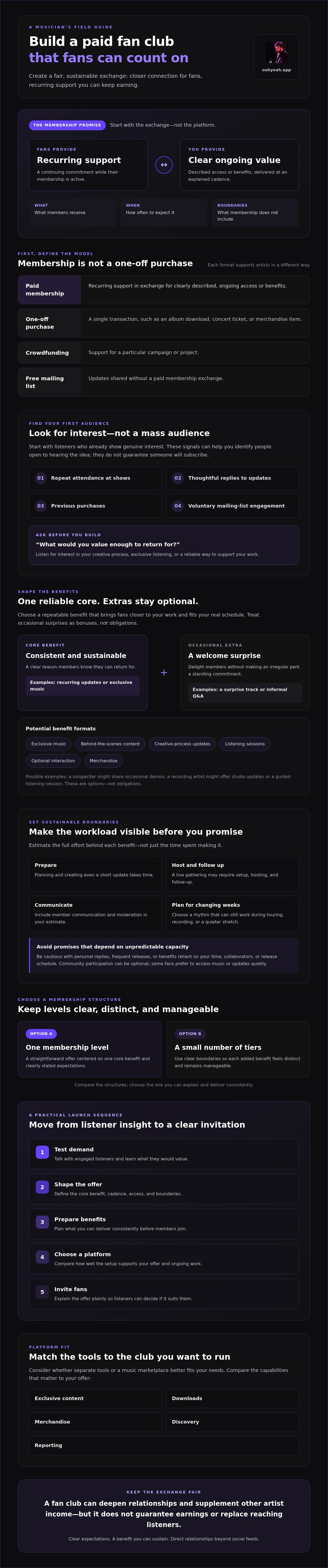
A paid fan club is an ongoing membership: fans provide recurring support in exchange for clearly described access or benefits. When deciding how to build a paid fan club for musicians, start with that exchange, not the platform. Members should know what they’ll receive, how often to expect it, and what the membership doesn’t include. The idea builds on the broader tradition of Official fan clubs, but a paid club needs a clear, continuing value proposition.
A membership differs from a one-off purchase. An album download, concert ticket, or merchandise item is a single transaction. A membership renews, so you need to provide ongoing value and set expectations for access. Crowdfunding usually supports a particular campaign or project, while a free mailing list shares updates without a paid membership exchange. Each can support an artist in a different way.
Ongoing value doesn’t require a huge archive on launch day. It might be a recurring behind-the-scenes update, access to exclusive music, or a way to follow your creative process. Choose something you can sustain. A fan club can supplement other artist income and deepen relationships, but it doesn’t guarantee earnings or replace the need to keep reaching listeners.
Who is most likely to join a musician’s paid fan club?
Start with listeners who already show genuine interest, rather than assuming you need a mass audience. Look for repeat attendance at shows, thoughtful replies to updates, previous purchases, or voluntary engagement with your mailing list. These signals don’t guarantee that someone will subscribe. They can help you identify people who may be open to hearing the idea.
Ask those fans what they’d value enough to return for. A few direct conversations can clarify whether they want closer access to your process, exclusive listening, or a reliable way to support your work. Use their answers to shape the offer, then explain it plainly.
What makes a membership different from a one-time fan purchase?
Membership creates an ongoing commitment on both sides. The fan agrees to recurring support; you agree to provide the stated access or benefits while their membership is active. Spell out the cadence and boundaries. Avoid promising personal replies, frequent releases, or other outcomes you can’t reliably deliver.
Community participation should be optional. Some members may want to talk with other fans, while others may prefer to quietly access music or updates. Let each person choose how involved to be. Clear expectations make the exchange fair and help fans decide whether the membership suits them.
How to design fan club benefits musicians can deliver consistently
A strong membership promise starts with one audience need and one repeatable way to meet it. If you’re learning how to build a paid fan club for musicians, don’t begin by listing every possible perk. Decide what members should look forward to, then choose a delivery rhythm that still works when you’re touring, recording, or taking a quieter stretch.
Benefits can include exclusive music or behind-the-scenes content, listening sessions, optional interaction, or merchandise. None belongs in your offer just because it’s common elsewhere. The best mix is meaningful to fans and realistic for you to maintain. A discussion of the role of fan clubs in the digital age offers context for thinking about direct fan relationships beyond traditional club models.
How should musicians choose benefits fans will value?
Ask engaged listeners what they’d enjoy receiving, which formats suit them, and how they want to take part. Build on your existing strengths: a songwriter might share occasional demos, while a recording artist could offer studio updates or a guided listening session. These are options, not obligations. Focus on benefits that bring fans closer to your work, rather than simply adding more content to your schedule.
Then choose a core benefit you can repeat. Keep occasional extras separate. A surprise track or informal Q&A can delight members, but don’t promise it as a monthly feature unless you’re prepared to deliver it consistently.
How can artists prevent membership promises from becoming unmanageable?
Estimate the full effort behind each perk. Even a short update takes time to plan and prepare. A live gathering may also require setup, hosting, and follow-up. Include moderation and member communication in your estimate. If a benefit depends on unpredictable access to your time, collaborators, or release schedule, reconsider making it a standing promise.
Write the offer in plain language: what members receive, how often they can expect it, where they’ll access it, and what may change if your schedule shifts. Avoid promises of unlimited personal access or fixed creative output you can’t control. A regular update with occasional extras gives fans a fair expectation without locking you into an exhausting production cycle.
Artists who want to bring profiles, digital music downloads, merchandise, and exclusive content together can explore the OohYeah! music marketplace. Check current fan subscription setup and terms before making platform-specific promises to members.
How to set membership levels, boundaries, and a sustainable workload
The right membership structure gives fans a clear choice without creating a second full-time job for you. As you decide how to build a paid fan club for musicians, assess each level by three measures: how easy it is to explain, what extra value it offers members, and how much work it adds. Pricing is your decision. Set it according to the offer, your audience, and the time required, not a universal benchmark.
Should a musician launch one membership or multiple levels?
If you haven’t tested the offer or your capacity, start with one clear membership. Learn which benefits fans use and how much time delivery takes. Add levels only when they serve distinct needs and the benefits don’t blur together.
| Option | Access | Delivery rhythm | Artist effort |
|---|---|---|---|
| One membership | One defined set of benefits for all members | A shared, clearly stated schedule | Lower complexity; one offer to prepare and explain |
| A small number of levels | Each level adds a distinct benefit, such as a different type of content access | State the schedule for each level separately | More preparation, tracking, and communication |
Make the difference between levels tangible and easy to summarize. A higher level should offer a defined extra, not imply guaranteed personal attention or better creative outcomes. If fans can’t quickly tell which option suits them, simplify the structure.
Which boundaries should members understand before joining?
Make the terms visible before anyone subscribes. Explain what’s included, where members access it, when new material is expected, how often billing renews, and how to cancel. Check that your membership platform supports the access and cancellation process you plan to describe.
Set expectations for changes, too. Explain how you’ll communicate a pause, a missed release, or a changed event, and what members can expect next. Don’t promise custom work, private contact, or unlimited availability unless you can reliably provide it. Give members a clear way to ask questions and set a realistic response expectation.
Before launching, map the time behind each benefit, including preparation, delivery, moderation, and member communication. Check whether the schedule still works during a busy stretch. A sustainable club isn’t measured by how much you promise. It depends on clear terms, distinct value, and a workload you can maintain over time.
How to launch a paid fan club: a musician’s step-by-step plan
A focused launch lets you test the membership in real conditions before investing in a large library of content. The practical approach to how to build a paid fan club for musicians is to move in stages, listen closely, and make the offer easy to understand.
- 1. Validate demand. Talk with engaged listeners about what they’d value and whether your idea is clear. Test a short description before building out the club.
- 2. Define the offer. Write a plain-language promise explaining who the club serves, what members receive, how often to expect it, and what isn’t included.
- 3. Prepare the first benefits. Have the initial content or access ready before inviting members. Draft a welcome message with clear instructions for finding it.
- 4. Choose a platform. Check that it supports your planned recurring access, content delivery, member communication, and cancellation expectations. Confirm current terms and available controls before publishing details.
- 5. Invite fans and learn. Start with your most engaged listeners. Track sign-ups, questions, cancellations, and the time fulfillment takes, then adjust what isn’t working.
What should musicians prepare before inviting the first members?
Create a concise landing page that answers three questions: Who is this club for? What do members receive? How does membership work? Keep the benefits and delivery expectations consistent with the offer you tested. Prepare the first member-only material, welcome note, and access instructions so new members know what to do after joining. Set a clear route for questions, too.
How can artists launch without overwhelming their audience?
Invite a small group of engaged fans first, and explain why their support matters without making anyone feel pressured. Share the same membership details through channels you already use, such as artist updates and social posts. Keep the wording consistent. Early questions can show where the page or promise is confusing. Refine it before widening promotion, and use fulfillment time as a reality check on your schedule.
Keep improving after launch. A question repeated by new members may mean your page needs a clearer answer. Cancellations and delivery time can reveal a mismatch between the promise and the experience. For a place to host an artist profile, music, merchandise, and exclusive content, explore OohYeah! for your fan club. Verify current subscription setup and eligibility before describing specific membership controls.
How to run and grow a paid music fan club with the right platform
The right platform should support the membership you’ve designed, not dictate what you promise. As you put your plan for how to build a paid fan club for musicians into practice, compare the work involved as well as the features. Separate tools can give you more choice, but they may mean managing different logins, content locations, and fan journeys. A marketplace can bring artist offerings together, though its membership controls may not fit every model.
What should musicians check before selecting a fan club platform?
Use your membership promise as the checklist. Confirm that a service supports the recurring access model you intend to offer and can host the content members need. If you plan to offer custom merch or promotional items for members, find out more about wholesale options, and consider whether fans can find those alongside the club or will need separate destinations. Check which discovery options and reporting are available instead of assuming every platform provides them.
OohYeah! is a global music marketplace where artists can host profiles, offer digital music downloads and merchandise, and provide exclusive content. Optional fan subscriptions can create a recurring support channel. Artists pay a recurring platform fee, while music and merchandise sales carry no sales commissions. Verify current subscription setup, eligibility, available controls, and artist terms before relying on specific features.
How can a paid fan club keep members engaged over time?
Keep communication predictable and deliver what members signed up for. Engagement doesn’t require constant posting. A thoughtful update or well-prepared piece of exclusive content can be more sustainable than a stream of rushed extras. Invite members to share what they value, then use their feedback to improve the experience without turning every request into a new promise.
Review the club regularly. Consider member questions, renewals, cancellations, and the time each benefit takes to deliver. Keep what strengthens the relationship, clarify what causes confusion, and remove activities that consume effort without serving members. If the workload grows beyond what you can maintain, simplify the offer before adding more.
Explore OohYeah! artist profiles, music, and merchandise to see how a marketplace can bring artist offerings and direct fan support together.
Build a fan club that grows with your music
A lasting fan club isn’t built on a packed content calendar. It starts with a clear promise, benefits you can deliver, and boundaries fans understand. Choose one simple membership to test your idea, or add levels only when they serve distinct fan needs. Then launch with your most engaged listeners and use their questions and feedback to improve the experience.
That’s the practical foundation for how to build a paid fan club for musicians: make recurring value meaningful for fans and sustainable for you. Review what members use, what takes too much time, and whether your offer still reflects the connection you want to build.
OohYeah! supports artist profiles, music downloads, merchandise, and exclusive content. Artists retain 100% of sales revenue from music and merchandise. Explore OohYeah! as a place to share music, merchandise, and exclusive content, and check current subscription setup and terms before describing specific membership options.
Start small, listen to your fans, and build a club that supports both your community and your creative work.
Frequently Asked Questions
How do musicians start a paid fan club?
Start by asking engaged listeners what ongoing access or benefits they’d value, then shape one clear membership promise around their answers. Decide what members receive, how often you’ll deliver it, and how they access and cancel. Prepare the first benefit and a welcome message before inviting fans. The key to how to build a paid fan club for musicians is testing a manageable offer before investing in a large content library.
What should a paid fan club offer its members?
Offer something members value and you can reliably provide, such as exclusive music, behind-the-scenes updates, or access to listening sessions. You don’t need every possible perk. Choose benefits that suit your creative strengths and bring fans closer to your work. Be specific about what’s included and how often to expect it. Treat surprise extras as bonuses, not guaranteed benefits, unless you can consistently deliver them.
How much should musicians charge for a fan club?
Set a price that reflects the value of the membership, your audience, and the work required to deliver its benefits. There’s no universal price that suits every musician. Consider your platform’s fees and payment terms, too, and review those details directly before setting your price. Make the recurring charge and renewal frequency clear before fans join. You can adjust the offer or price as you learn, but communicate any changes plainly.
Do musicians need multiple membership tiers?
No. One clearly explained membership is often the simplest way to test demand and understand the workload. Add tiers only if fans have distinct needs and each level offers a meaningful, easy-to-describe difference. For example, one level might provide exclusive content, while another adds a separate benefit you can reliably fulfill. More choices also mean more access rules and communication, so expand only when the added value justifies the effort.
How often should musicians post exclusive content for members?
Choose a posting rhythm you can maintain through busy and quiet periods, then tell members what to expect. The right schedule depends on your creative process and the format you’re sharing. A thoughtful update on a predictable cadence may serve members better than frequent posts that become difficult to sustain. Include preparation and communication time in your plan. If your schedule changes, let members know rather than quietly missing an expectation.
Can a paid fan club work for an independent musician with a small audience?
Yes. A club can begin with a small group of listeners who already show interest through repeat attendance, replies, or purchases. You don’t need a mass audience to test whether a clear benefit resonates. Start with a manageable offer, listen to member feedback, and keep expectations realistic. Membership can add a direct support stream, but it doesn’t guarantee earnings or replace other ways of reaching listeners and earning income.
What is the difference between a fan club and a fan subscription?
A fan club is the ongoing membership experience, including its benefits, communication, and any community access. A fan subscription is the recurring payment arrangement that can fund that experience and provide access to exclusive artist content. The terms are sometimes used interchangeably, but they describe different parts of the offer. Before joining, fans should understand what they’ll receive, how access works, and how renewals and cancellations are handled.